Creatine Kinase Levels Often Increased with Infliximab

E Theodoraki et al. Inflamm Bowel Dis 2018; 24: 1266-71.  This study with 82 infliximab-treated patients with a mean age of 44 years found elevated CK levels (>180 U/L) in 30.5%, compared with 11% of control group (IBD patients not receiving biologic therapy).  The median CK value in the IFX group was 123.5 U/L compared with 81 U/L in the control group (P<0.0001). All patients had at least 3 CK measurements.  The authors recommend: “Based on our results, we recommend monitoring CK levels and clinical symptoms of muscle pain and weakness in IBD patients on IFX treatment.”

In the associated commentary (pg 1272-3), the authors note that CK is found in mitochondria, mainly in cardiac muscle, brain, skeletal muscle and other visceral tissues. The 2 subunits may create 3 isoenzymes: CK-MB (myocardium), CK-MM (skeletal muscle), and CK-BB (neurons).  CK can be elevated in health and disease but “in the absence of symptoms, usually do not require any further investigations.” In a small number of individuals, elevated CK can be due to macro-CK (macrocretin) due to measurement difficulties with macroenzymes.

My take: This study suggests that elevated CK levels are common in adults receiving IFX and to avoid overreaction.

Sunrise at Amelia Island

“The Fruit Juice Delusion”

From NY Times: The Fruit Juice Delusion

A recent commentary revisits the common misconception of fruit juice being healthy.

Key points:

  • “Americans drink a lot of juice…children consume on average 10 ounces per day, more than twice the amount recommended by the American Academy of Pediatrics.”
  • “One 12-ounce glass of orange juice contains 10 teaspoons of sugar.”
  • Eating whole fruit is “associated with a reduced risk of diabetes, drinking fruit juice is associated with the opposite.”
  • “Juice may also be a ‘gateway beverage’–[to drink] more soda in their school-age years
  • “There is no evidence that juice improves health…Parents should instead serve water and focus on trying to increase children’s intake of whole fruit.”

My take (borrowed from authors): “we have succeeded in recognizing the harm of sugary beverages like soda. We can’t keep pretending that juice is different.”

Related blog posts:


More Acceptance (of livers), Better Outcomes

An important metric of liver transplantation outcome is not readily available: acceptance of organ offers.  A recent study (E Mitchell et al. Liver Transplantation 2018; 24: 803-809) showed a great deal of variability among pediatric liver transplantation centers in this metric.

The authors examined data from 2007-2015 with 4088 unique patients and 27,094 match runs. The range in organ acceptance rates was 5.1% to 14.6% with a median of 8.9%.

Key finding:

  • “Center-level acceptance rates were associated with wait-list mortality, with a >10% increase in the risk of wait-list mortality for every 1% decrease in a centers adjusted liver offer acceptance rate (odds ratio, 1.10, CI 1.01-1.19)

As noted in a previous post, Pediatric Liver Transplantation -Past Time to Split, larger centers generally have higher acceptance rates.

My take: This study adds to the literature regarding the inequities that some patients unknowingly face when listed in some centers.

Related article: HPJ van der Doef et al. Liver Transplantation 2018; 24: 810-9.  This article describes the wait-list mortality of young patients with biliary atresia.  Those listed before age 6 months and with higher MELD scores (>20) were at increased risk. Recognition of these factors may help improve allocation.

Related blog posts:

Hate it when this happens!

Higher Protein In Infant Formula –Doubling the Risk of Excess Body Fat in 6 year-olds

A recent study (thanks to John Pohl for link from twitter feed) (M Totzauer et al. Obesity 2018; https://doi.org/10.1002/oby.22203) indicates that high protein infant formula is associated with an increased risk of obesity.

Full Link: Effect of Lower Versus Higher Protein Content in Infant Formula Through the First Year on Body Composition from 1 to 6 Years: Follow‐Up of a Randomized Clinical Trial

From Abstract:

Methods

In a multicenter, double‐blind European trial, healthy infants (N = 1,090) were randomly assigned to different protein content formulas (upper [HP] and lower [LP] limits of the European Union regulations in 2001) during the first year; breastfed infants (N = 588) were recruited for reference values.

Weight, height, and triceps and subscapular skinfold (SF) thickness were measured repeatedly (N = 650 at 6 years), and body composition was estimated (Slaughter). The 99th percentile of fat mass index reference data were used to assess excess body fat at 6 years.

Results

At 2 and 6 years, the study observed greater sum of SFs (Δ 2 years: 0.5 mm, P = 0.026, Δ 6 years: 0.6 mm, P = 0.045), fat mass index (Δ 2 years: 0.12 kg/m², P = 0.008, Δ 6 years: 0.15 kg/m², P = 0.011), and fat‐free mass index (Δ 2 years: 0.17 kg/m², P = 0.003, Δ 6 years: 0.18 kg/m², P = 0.010) in the HP group compared with the LP group. At 6 years, the HP group had a twofold higher risk than the LP group for excess body fat (adjusted odds ratio: 2.13, P = 0.019).

Conclusions

Infant formula with HP levels induced greater fat mass in children from 2 to 6 years. Lowering the protein content of infant formula may result in a healthier body composition in early childhood.

Amelia Island -Sunrise


Clostridium difficile Guidelines

Clinical Practice Guidelines for Clostridium difficile Infection in Adults and Children: 2017 Update by the Infectious Diseases Society of America (IDSA) and Society for Healthcare Epidemiology of America (SHEA)

Clinical Infectious Diseases, Volume 66, Issue 7, 19 March 2018, Pages e1–e48,https://doi.org/10.1093/cid/cix1085

Summary from Infectious Disease Advisor: Updated C difficile Infection Clinical Guidance From IDSA/SHEA

The comprehensive clinical practice guideline …was endorsed by the Infectious Diseases Society of America (IDSA) and the Society for Healthcare Epidemiology of America (SHEA)…

Recommendations for treatment of CDI in adults… now favors a 10-day course of vancomycin or fidaxomicin rather than metronidazole for first-line therapy of mild/moderate CDI in adults… Fidaxomicin, also a newly recommended first-line therapy for mild/moderate CDI in adults, may reduce the risk for recurrent CDI because of its narrow spectrum compared with vancomycin.

Recommended treatment strategies for recurrent CDI, a complication that occurs in approximately 25% of patients, have also been revised…Following initial CDI treated with a 10-day course of vancomycin, either a several-week tapered and pulsed course of vancomycin or a 10-day course of fidaxomicin is recommended. For most patients, probiotics can be considered because of favorable cost and safety, although definitive efficacy data for probiotics to prevent recurrent CDI are still lacking. For multiply recurrent CDI (ie, at least 3 CDIs), correction of the patient’s underlying intestinal microbiota perturbation with fecal microbiota transplantation (FMT) should be strongly considered..

The diagnosis of CDI… Molecular tests (eg, nucleic acid amplification tests [NAATs], such as polymerase chain reaction), which do not differentiate colonization and infection, are now the most commonly used test for CDI among US hospitals. NAATs have the potential to misdiagnose patients with colonization as having CDI, particularly when used in patients with low likelihood of CDI. Thus, this guideline strongly reinforces the importance of practicing good diagnostic stewardship and limiting C difficile testing to patients with new-onset, unexplained, and clinically significant (ie, at least 3 unformed stools in a 24-hour period) diarrhea…formed stools should not be tested for C difficile, nor should patients be retested within 7 days of a previous negative C difficile test. In pediatric populations, because of the unclear role of C difficile as a cause of diarrhea in infants, children less than 12 months of age should not be tested…

If diagnostic stewardship is not an achievable goal, use of NAAT alone is likely to lead to frequent misdiagnosis of CDI among patients with C difficile colonization. In these cases, NAAT alone should be avoided and a multistep algorithm that incorporates toxin testing is recommended.

Related blog posts:

Cumberland Island 2018

Time-to-diagnosis of Biliary Atresia

A recent study (S Harpavat et al. JPGN 2018; 66: 850-6) identifies race/ethnicity as a factor affecting the timeliness of diagnosis.

Specifically, non-Hispanic white infants were diagnosed earlier than non-Hispanic black infants and Hispanic infants (P=.007); this was related to the timing of referral from the primary care physician.  The authors speculate that this could be related to three factors:

  • lighter colored skin could help identify jaundice more quickly
  • better access to health care
  • implicit bias leading to uneven treatment

The other finding in the study was that after referral, patients referred after 30 days of life had a more expedited diagnosis than those referred prior to 30 days of life.  The authors caution that the histology in these early cases is similar to those who present later, even if their aminotransferases are normal.  In addition, while physicians and parents want to avoid ‘over testing,’ prompt diagnosis, even prior to 30 days of life, may lead to improved outcomes.  Thus, the authors recommend proceeding with liver biopsy if there is clinical suspicion of biliary atresia.

My take: Obtaining objective evidence of cholestasis in infants that are jaundiced beyond 2 weeks of life is important.  This study highlights some of the reasons why the diagnosis is delayed in so many.

Related blog posts:


IBD Shorts July 2018

DJ Gracie et al. Gastroenterol 2018; 154: 1635-46. This study of 405 adults indicated that IBD triggers anxiety and that anxiety triggers IBD. Specifically: “Baseline CD or UC disease activity were associated with an almost 6-fold increase in risk for a later abnormal anxiety score (hazard ratio [HR], 5.77; 95% CI, 1.89-17.7).  In patients with quiescent IBD at baseline, baseline abnormal anxiety scores were associated with later need for glucocorticosteroid prescription or flare of IBD activity (HR 2.08; 95% CI, 1.31-3.30).”

RL Dalal, B Shen, DA Schwartz. Inflamm Bowel Dis 2018; 24: 989-96.  This review provides updated information on epidemiology, diagnosis, and treatment recommendations for pouchitis.

A Alper et al. JPGN 2018; 66: 934-6. Key finding: Celiac disease is “not increased in children with IBD compared with non-IBD children with gastrointestinal symptoms.”  False-positive tTG serology can occur.

AK Shaikhkhalil et al. JPGN 2018; 66: 909-14. The authors showed that using a quality-improvement effort, there was increase utilization of enteral exclusive therapy (EEN).  Baseline 5.was <5% and by completion of intervention, utilization increased to approximately 50%. The interventions to achieve this are specified in this article, including talking points.  EEN is described as “nutrition therapy.” Patients are offered oral EEN and if not adequate by 3-4 days, nasogastric feedings are initiated (~15%).  Interestingly, of those to complete EEN therapy, 97% did not need NG placement.

Pictures from Ameilia Island:

Amelia Island

ICN Travel Toolkit -Tips for Patients with Inflammatory Bowel Disease

ImproveCareNow’s Patient Advisory Committee: ICN Travel Toolkit – a collection of personal stories, plus tips and techniques for traveling with IBD – written by members of the ICN Patient Advisory Council (PAC).

In addition to the tips offered by the PAC (see below), I would recommend that those travelling keep a succinct medical summary with the following (minimum):

  • Diagnosis and extent of disease
  • Other medical problems
  • Physician (contact info)
  • Allergies –food/medicines
  • Current list of medications including dosage and frequency
  • List of prior treatments
  • Previous surgeries

Also, below are other travel -related links, including to the CDC travel website which makes recommendations based on travel destination along with underlying problems.

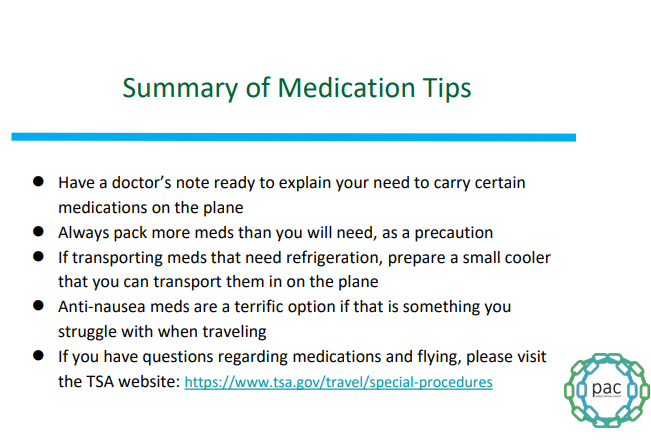
A summary of the ICN travel tips from the PAC PowerPoint Presentation:


Fluid Management for Abdominal Surgery

A recent study (PS Myles et al. NEJM 2018; 378: 2263-74, editorial 2335-6) throws some shade on the idea that restricting IV fluids during surgery results in better outcomes.

With ERAS (enhanced recovery after surgery) procedures, one of the components has been restricting IV fluids during surgery due to concerns that excessive fluid will result in bowel wall edema and slower recovery.  To better determine if a restrictive IV fluid approach or a more liberal approach was better, this RELIEF study randomized approximately 3000 patients who were receiving major abdominal surgery into two arms: a restrictive group and a  liberal group; they received a median of 3.7 liters of IV fluids and 6.1 liters respectively during and up to 24 hours after surgery.

Key findings:

  • Rate of disability-free survival at 1 year was 81.9% in the restrictive group and 82.3% in the liberal group (hazard ratio for death or disability was 1.05, CI 0.88-1.24, P=0.61)
  • Rate of acute kidney injury was 8.6% in the restrictive fluid group compared to 5.0% in the liberal fluid group (P<0.001). Renal replacement therapy was 0.9% in the restrictive fluid group compared to 0.3% in the liberal fluid group (P=0.048).
  • Rates of surgical site infection was 16.5% in the restrictive fluid group compared to 13.6% in the liberal fluid group (P=0.02).  The authors speculate that this could be related to perfusion of surgical anastomosis.

The associated commentary notes that in this age of minimally invasive surgery, a modestly liberal administration of IV fluids does not create substantial fluid retention.

My take: Restrictive fluid regimen during major abdominal surgery resulted in higher rates of kidney injury and surgical site infections.  This study indicates that for ‘enhanced recovery’ that a more liberal fluid regimen is safer.

Related posts: