Antibiotics Given Early in Life Linked to Childhood Obesity…Again

While yesterday’s post discussed quadruple therapy for H pylori/need for multiple antibiotics, today’s post will focus on one of the downsides of antibiotic usage. For several years, this blog has highlighted numerous studies which show a link between antibiotics and later obesity (see related blog posts below).  Another study (FI Scott et al. Gastroenterol 2016; 151: 120-29), using a large database, quantifies this risk further.

This retrospective study used prospectively collected data from The Health Improvement Network (THIN), using a cohort of 21,714 children from the UK.

Key findings:

  • In the cohort, 1306 (6.4%) were obese at age 4 years.
  • Antibiotic exposure was associated with an increased risk of obesity at 4 years, with odds ratio of 1.21. The OR went to 1.41 for 3-5 prescriptions.
  • Antifungal agents were not associated with an increased risk of obesity., OR 0.81

In the discussion the authors make a number of useful points:

  • In the U.S. between 2006-2008, there “were >10 million antibiotic prescriptions…annually for children without clear indication.” Thus, this is modifiable contributing factor to obesity.
  • The risk is modest with “approximately 1.2% absolute and 25% relative increase in the risk of early childhood obesity. This relationship is strongest when considering repeat exposures.”
  • Though this is a large study, the authors had many limitations, as expected in a retrospective study.  These included a lack of awareness of the indication for the antibiotic, potential selection bias, and difficulty adjusting for some confounders like breast feeding and physical activity.

The study is in agreement with data from agriculture.  Numerous studies have highlighted how antibiotics can improve weight gain in industry.  Here are some useful references:

  • Gaskins HR, et al. Antibiotics as growth promotants: mode of action. Animal Biotechnol 2002; 13: 29-42
  • Lassiter CA. Antibiotics as growth stimulants for dairy cattle: a review. J Dairy Sci 1955; 38: 1102-38.
  • Moore P, et al. Use of sulphasuccidine, streptothricin and streptomycin in nutrition studies with the chick. J Biol Chem 1946; 165: 437-41.
  • Cho I, et al. Antibiotics early in life alter the murine colonic microbiome and adiposity. Nature 2012; 488 (7413): 621-26.
  • Cox LM, et al. Altering the intestinal microbiota during a critical developmental window has lasting metabolic consequences. Cell 2014; 158: 705-21.

My take: Farmers have understood that antibiotics fatten up young animals for 70 years.  Yet, this basic information is NOT commonly understood by parents and many physicians. If this risk for obesity were widely known, it would help limit the use of antibiotics for well-recognized indications.

Related blog posts:

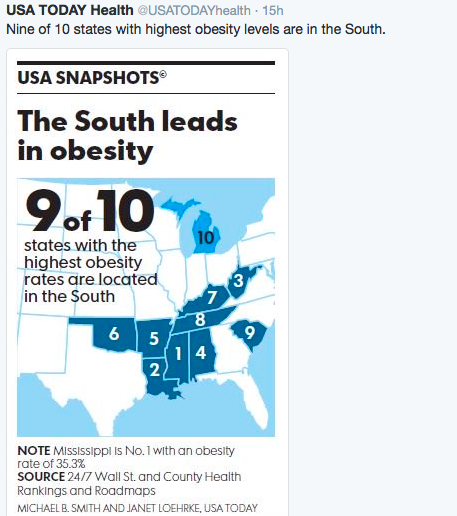
South Leads Obesity

Quadruple Therapy for Helicobacter Pylori Favored in Toronto Guidelines

Toronto consensus guidelines (C Fallone et al. Gastroenterol 2016l 151: 51-69) for H pylori treatment in adults emphasize use of 14 day therapy and use of quadruple regimens.  Specific recommendations included the following:

  • PAMC: PPI/amoxicillin/metronidazole/clarithromycin OR
  • PBMT: PPI/bismuth/metronidazole/tetracycline

Full text link: Toronto Consensus for the Treatment of H Pylori

Abstract:

Background & Aims

Helicobacter pylori infection is increasingly difficult to treat. The purpose of these consensus statements is to provide a review of the literature and specific, updated recommendations for eradication therapy in adults.

Methods

A systematic literature search identified studies on H pylori treatment. The quality of evidence and strength of recommendations were rated according to the Grading of Recommendation Assessment, Development and Evaluation (GRADE) approach. Statements were developed through an online platform, finalized, and voted on by an international working group of specialists chosen by the Canadian Association of Gastroenterology.

Results

Because of increasing failure of therapy, the consensus group strongly recommends that all H pylorieradication regimens now be given for 14 days. Recommended first-line strategies include concomitant nonbismuth quadruple therapy (proton pump inhibitor [PPI] + amoxicillin + metronidazole + clarithromycin [PAMC]) and traditional bismuth quadruple therapy (PPI + bismuth + metronidazole + tetracycline [PBMT]). PPI triple therapy (PPI + clarithromycin + either amoxicillin or metronidazole) is restricted to areas with known low clarithromycin resistance or high eradication success with these regimens. Recommended rescue therapies include PBMT and levofloxacin-containing therapy (PPI + amoxicillin + levofloxacin). Rifabutin regimens should be restricted to patients who have failed to respond to at least 3 prior options.

Conclusions

Optimal treatment of H pylori infection requires careful attention to local antibiotic resistance and eradication patterns. The quadruple therapies PAMC or PBMT should play a more prominent role in eradication of H pylori infection, and all treatments should be given for 14 days.

Related blog posts:

Sullivan's Island, Low Tide

Sullivan’s Island, Low Tide

One Proposal to Reduce Thiopurine Combination Therapy

A recent review (X Roblin et al. Inflamm Bowel Dis 2016; 22: 1496-1501) provided a useful review of thiopurine/biologic combination therapy.  The part of this review that I found intriguing was their Figure 3: “Proposed algorithm that may guide drug discontinuation or de-escalation in patients with IBD who achieved sustained deep remission while on combination therapy.”

  • In those (in sustained deep remission) with an infliximab trough level >5 mcg/mL, this algorithm recommends discontinuation of thiopurine.
  • In those with an infliximab trough level 3-5 mcg/mL and with 6-TGN >250, this algorithm recommends reduction of thiopurine to obtain 6-TGN level >125.
  • In those with an infliximab trough level <2 mcg/mL and with 6-TGN >250, this algorithm recommends discuss stopping infliximab.

The authors acknowledge that this algorithm has not been studied and “needs to be investigated in prospective trials specifically addressing this issue.”

My take: Until more studies emerge, the best way to balance control of IBD and minimize drug toxicity remains uncertain.

Unrelated references:

  • “Crohn’s disease of the ileoanal pouch” AL Lightner et al. Inflamm Bowel Dis 2016; 22: 1502-8.
  • SZ Koh et al. Inflamm Bowel Dis 2016; 22: 1397-1402. This reference describes clinical factors associated with development of Crohn’s disease in patients with IBDU who have undergone ileal pouch (e.g. younger age).

Related blog posts:

Arthur Ravenel Jr Bridge

Arthur Ravenel Jr Bridge

Disease extent and need for higher infliximab dosing

A recent study (JM Shapiro et al. JPGN 2016; 62: 867-72) reviewed 98 pediatric patients treated with infliximab (2012-2014) with inflammatory bowel disease (IBD).

The authors divided their patients into three groups, mainly based on extent of colonic involvement.  In those with limited colonic involvement, they were labelled “limited” disease (n=53).  In those with patchy inflammation involving the entire colon, they were considered to have “moderate” disease (n=27).  In contrast, those with continuous pancolitis were ascribed to have “extensive” disease (n=18).  Overall, Crohn’s disease accounted for 85 patients (87%),  ulcerative colitis for 11 patients (11%), IBDU for 2 patients (2%).  Interestingly, the majority (9 of 11) of those patients without Crohn’s disease were considered to have extensive disease.

Key findings:

  • “Patients with moderate and extensive disease, started taking 5 mg/kg per dose, showed statistically significant shorter times to escalation that those with limited disease.”
  • 70% of those with extensive disease required dose escalation, compared with 58.3% of those with moderate disease and 26.4% of those with limited disease.
  • The authors note that patients (n=8) with extensive disease who started with 10 mg/kg dosing  “exhibited longer treatment durability;” all 8 patients who started on 10 mg/kg dosing remained on this dose at the study’s conclusion.  Among the 10 patients that started on 5 mg/kg dosing, only 7 were on IFX therapy at the study conclusion–3 remained on 5 mg/kg, 4 were escalated to 10 mg/kg; there were 3 patients who stopped IFX therapy (1 infusion reaction, 2 with nonresponse).

My take: This is a small study. Yet, the implication is that early optimal dosing of IFX is likely  helpful, especially in the setting of extensive disease.

Related blog posts:

Chattahoochee River

Chattahoochee River


Better Hydration –Less Obesity?

Perhaps the Dos Equis’ guy’s slogan “Stay Thirsty My Friends” is not such great advice.

According to a study, summarized by NPR, inadequate hydration was associated with increased odds of obesity.  While an association does not prove causation, it adds another potential reason to drink plenty of water.

NPR Story: Thirsty? New Study Links Good Hydration with Slimmer Waistlines

Here’s an excerpt:

A new study published in the Annals of Family Medicineadds to the evidence that hydration may play a role in weight management.

“What we found was that people who were inadequately hydrated had increased odds of being obese,” says study author Tammy Chang of the Department of Family Medicine at the University of Michigan.

The study was based on data collected by a federal health survey, in which researchers had documented weight and height of participants. They also conducted urine tests to establish an objective measure of participants’ level of hydration.

Chang and her colleagues found the odds of being obese were 1.59 times higher for people who were not well-hydrated. And overall, they found that a lack of proper hydration was associated with higher body mass index.

On a neighborhood walk

On a neighborhood walk

Dubin-Johnson Syndrome

From NEJM:

A 48-year-old woman scheduled to receive a laparoscopic cholecystectomy underwent a preoperative evaluation that disclosed conjugated hyperbilirubinemia…

A biopsy specimen revealed coarse, deep-brown, pigmented granules on periodic acid–Schiff staining (Panel B), primarily at the canalicular pole of the hepatocytes and especially in the pericentral zones, with otherwise well-preserved lobular architecture. Expression of the multidrug-resistance–associated protein 2 (MRP2) was absent on anti–MRP2 immunohistochemical analysis (Panel C; see also comparison with control specimen [inset]). A diagnosis of the Dubin–Johnson syndrome was confirmed. This syndrome is an autosomal recessive disorder that is caused by a mutation in MRP2 that results in deficient canalicular expression of MRP2 and impaired secretion of conjugated bilirubin into the bile. Such mutations cause an isolated increase in serum levels of conjugated bilirubin and the appearance of a black liver, without associated sequelae.

Dubin-Johnson

Bioactive Components of Breastmilk

An entire supplement (J Pediatr 2016; 173: S1-S65) provides an in-depth review of the bioactive components of breastmilk.  The two components reviewed most extensively were lactoferrin and milk fat globule membrane (MFGM).

Lactoferrin: this glycoprotein is present in high concentrations in human milk, compared to formulas and cow’s milk.  It is highest in concentration in early lactation.  Its importance lies in its direct antibacterial effects.  It is likely to reduce the risk of necrotizing enterocolitis and sepsis in preterm infants, which has been shown as well with bovine lactoferrin.

MFGM: this triglyceride is derived from a triple phospholipid membrane is absent from infant formulas.  It has a role in both gastrointestinal and immune development.  It appears to convey benefits in “terms of cognitive, metabolic, and health outcomes.”

My take: this supplement provides data that lactoferrin and MFGM “isolated from bovine milk retain bioactivity and are safe and efficacious additions to infant formula”

Related blog posts:

Arthur Ravenel Jr Bridge

Arthur Ravenel Jr Bridge


All Bleeding Stops (part 2)

Several years ago, this blog provided a summary of the guidelines for stopping upper gastrointestinal bleeding (All bleeding stops | gutsandgrowth).  Most of the recommendations are unchanged.  A nice review of this topic (L Laine. NEJM 2016; 374: 2367-76), specifically focused on peptic ulcers, provides a few new pointers.

Two areas with more data:

  1. Transfusion.  “A randomized trial showed lower rates of death (the primary outcome), rebleeding, and adverse events with a transfusion threshold of 7 g per deciliter than with a transfusion threshold of 9 g per deciliter.”
  2. Proton pump inhibitors. “A recent meta-analysis showed that intermittent oral or intravenous proton-pump inhibitor therapy results in outcomes that were non inferior to those after continuous infusion.”  (JAMA Intern Med 2014; 174: 1755-62) For adults, the suggested dosing was 80 mg followed by 40 to 80 mg twice daily for 72 hours.

As before, the author recommends preoperative (30 min prior) erythromycin (250 mg) and states that a nasogastric tube in not needed.  The author also recommends that in patients with idiopathic ulcers (not due to NSAIDs or H pylori) that ongoing (indefinite) use of once-daily maintenance therapy with a proton-pump inhibitor is recommended to prevent rebleeding.

Related blog posts:

Screen Shot 2016-06-16 at 2.33.58 PM

An Overlooked Finding in a Recent Acute Severe Ulcerative Colitis Study

A recent study (S Choshen et al. JPGN 2016; 63: 58-64) examined 283 children who were treated with IV steroids for acute severe ulcerative colitis.  This study focused on steroid dosing.  Their conclusion: “there does not seem to be a consistent superiority of high dose (>2 mg/kg/day) versus standard (1.25 mg/kg/day) or low-dose (1 mg/kg/day) methylprednisolone in pediatric acute severe colitis.”

Before looking into the details a little closer, one finding that was not even discussed in the abstract or discussion was the colectomy rate of 31%.  Previous pediatric studies of patients with ulcerative colitis had found rates generally half that rate but notably included patients with milder presentations of ulcerative colitis.  Thus, this rate of 31% (by 1 year after discharge) is useful information to reference when considering pediatric patients with acute severe colitis (ACS).

This study used datasets from the prospective Outcome of Steroid therapy in Colitis Individuals (OSCI) (n=128) and from the retrospective OSCI study (n=99).

Other results:

  • By day 5 of steroids, 45% had at most mild disease (ie PUCAI <35)
  • 31% had failed IV steroids and required salvage therapy (biologic or calcineurin inhibitor)
  • 20% had colectomy by discharge
  • When examining steroid dosage and outcomes, the authors could not discern any differences in need for salvage therapy, PUCAI <35 at day 5, or need for salvage therapy within 1 year. There was a mild difference in length of stay with 9 days in the low-dose group and 10-days in the high dose group.

My take: This large cohort provides some reassurance that current steroid dosing recommendations are probably right, in that there was no discernible improvement with higher doses.  This is in agreement with previous studies in adults which have not shown advantages of methylprednisolone >60 mg/day.  The high colectomy rate of 31% is worth keeping in mind in this population.

Related blog posts:

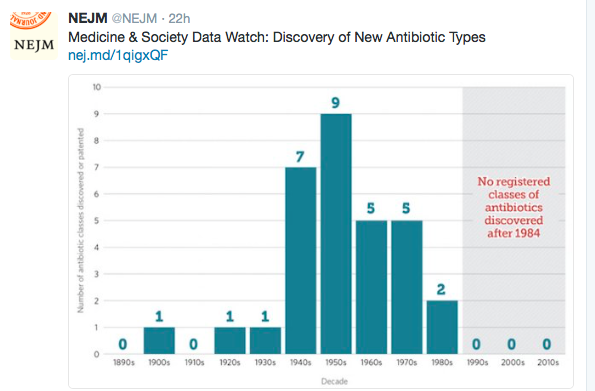
NewAbxDiscovered


Do You Know When Hepatitis C Virus Transmission Peaked?

According to a recent study (AC Spaulding, LS Miller. Lancet Infect Dis. 2016 Mar 30. doi: 10.1016/S1473-3099[16 …), peak transmission of hepatitis C virus (HCV) peaked about 1950, likely due to reuse of metal and glass syringes.

This study counters the idea that HCV transmission was “primarily due to injection drug use, unsafe tattooing, high-risk sex, and travel to high endemic areas during youth,” according to the researchers. Here’s the link: Apportioning blame in the North American Hepatitis C virus epidemic

My take: Will this take away some of the stigma of HCV infection? Probably not.  But, hopefully as the costs for treatment reduce, more individuals can be infection-free and avoid complications related to infections.

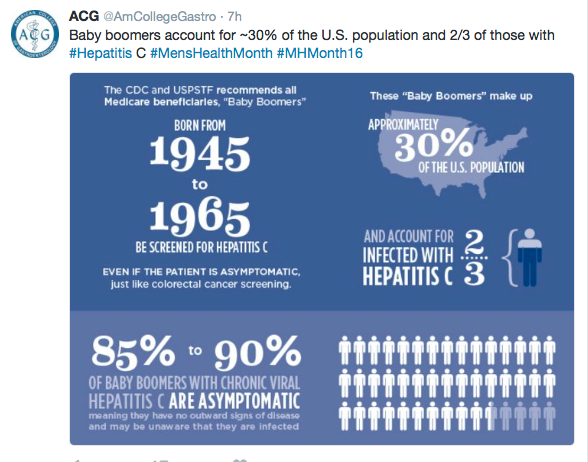
HCV Infections