Paradoxical Immune Mediated Disorders Associated with TNF Inhibitors

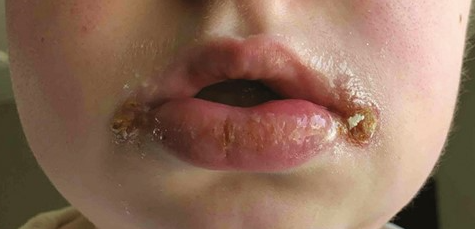
Previously, it has been noted that several immune mediated problems paradoxically can be triggered by the use of TNF inhibitors (eg. infliximab, adalimumab) even though these medications are often used to treat these problems (see posts below).

Using 2 nationwide cohorts (Danish & French), Ward et al (Clin Gastroenterol Hepatol 2024; 22: 135-143. Open Access! Tumor Necrosis Factor Inhibitors in Inflammatory Bowel Disease and Risk of Immune Mediated Inflammatory Diseases) report on the associated risk of developing a number of additional immune mediated inflammatory diseases (IMIDs) after treatment with anti-TNF agents for inflammatory bowel disease (IBD). The Danish and French cohorts comprised 18,258 and 88,786 subjects with IBD. Key findings:

  • Anti-TNF therapy was associated with an increased risk of rheumatoid arthritis, psoriasis, and hidradenitis suppurativa in both the Danish (HR, 1.66) and the French cohort (HR, 1.78), with a pooled HR of 1.76
  • The absolute risk of IMIDs in the Danish cohort was 5.3/1000 person years compared to 3.8/1000 PY those who had not received anti-TNFs; in the French cohort, the rate in anti-TNF exposed was 5.4/1000 PY compared to 3.0/1000 PY in the unexposed group.
  • Anti-TNF therapy was also associated with an increased risk of the IMIDs when compared with azathioprine (pooled HR, 2.94).

The results suggest that anti-TNFs paradoxically increase the risk of IMIDs; however, individuals receiving anti-TNFs are likely at higher risk for these disorders and this could be difficult to control for in a retrospective study.

My take: While anti-TNF agents have been a tremendous advance in the treatment of IBD, in a small number of individuals, these agents appear to trigger a paradoxical reaction.

Related blog posts:

Chattahoochee River at Island Ford. Sandy Springs

Is PPI Use Detrimental Before or After a Diagnosis of Inflammatory Bowel Disease?

N Singh et al. Inflamm Bowel Dis 2023; 29: 1871-1878. Proton Pump Inhibitor Use Before and After a Diagnosis of Inflammatory Bowel Disease

The authors retrospectively utilized the University of Manitoba IBD Epidemiology Database includes all Manitobans diagnosed with IBD between 1984 and 2018 (n=5920). Key findings:

  • Rates of PPI use in control subjects increased gradually from 1.5% to 6.5% over 15 years
  • Persons with IBD had a higher rate of PPI use, peaking up to 17% within 1 year of IBD diagnosis with a rate ratio (RR) of 3.1

The authors noted an abrupt increase in PPI use within 6 months of an IBD diagnosis which could indicate that IBD-related symptoms are being mistakenly treated with a PPI or that IBD may increase reflux-related symptoms. Given the higher rate of PPI use in pre-IBD diagnosis patients, compared to controls, the authors note that “it is possible that their [PPI] use enhances the likelihood of an IBD diagnosis by their role in altering the gut microbiota.” In addition, they note that “a case-control study found that PPIs were associated with an increased risk of pediatric IBD” (NR Schwartz et al. J Pediatr Pharmacol Ther 2019; 24: 489-496).

My take: PPIs are being used more frequently. Whether PPIs are detrimental before or after a diagnosis with IBD is not clear.

Chattahoochee River at Island Ford

IBD Updates

  1. Allopurinol makes thiopurines more effective. A Vasudevan et al. AP&T 2023; https://doi.org/10.1111/apt.17831 Clinical trial: Combination allopurinol-thiopurine versus standard thiopurine in patients with IBD escalating to immunomodulators (the DECIDER study)

This was  a multicenter, randomized, placebo-controlled trial to compare the efficacy and safety of thiopurine-allopurinol versus thiopurine with placebo for adults commencing a thiopurine for IBD in 102 patients. Allopurinol was dosed at 100 mg. Key findings:

  • A higher proportion achieved the primary outcome (improved clinical score and fecal calprotectin <150) in the thiopurine-allopurinol group (50% vs 35%, p = 0.14) and fewer participants stopped their allocated therapy due to adverse events (11% vs 29%, p = 0.02

Related blog posts:

2. Newer treatments and lower colectomy rates in pediatric UC. D Ley et al. AJG 2023; 118:1997-2004 New Therapeutic Strategies Are Associated With a Significant Decrease in Colectomy Rate in Pediatric Ulcerative Colitis. Thanks to Ben Gold for this reference.

Medication exposure and disease outcomes were compared between 3 diagnostic periods: 1988 to 1993 (period [P] 1; pre-IS era), 1994 to 2000 (P2; pre-anti-TNF era), and 2001 to 2011 (P3; anti-TNF era).

  • Key finding: The risk of colectomy at 5 years decreased significantly over time (P1, 17%; P2, 19%; and P3, 9%; P = 0.045, P-trend = 0.027) and between the pre-anti-TNF era (P1 + P2, 18%) and the anti-TNF era (P3, 9%) (P = 0.013). 

Related blog posts:

3. More data indicating that anti-TNF therapy does not increase post-operative complications. D Bajzat et al. Inflamm Bowel Dis 2023; 29: 1971-1980. Safety Analysis of Preoperative Anti-TNF-α Therapy in Pediatric IBD After Intestinal Resection: A Systematic Review and Meta-analysis

In this systematic review, the authors identified 8 eligible articles with 526 pediatric patients with IBD. Key finding: “There is no significant association between preoperative anti-TNF-α therapy and postoperative complications in children with IBD after intestinal resection.”

Related blog posts:

Pics from Island Ford/Chattahoochee River

Disclaimer: This blog, gutsandgrowth, assumes no responsibility for any use or operation of any method, product, instruction, concept or idea contained in the material herein or for any injury or damage to persons or property (whether products liability, negligence or otherwise) resulting from such use or operation. These blog posts are for educational purposes only. Specific dosing of medications (along with potential adverse effects) should be confirmed by prescribing physician.  Because of rapid advances in the medical sciences, the gutsandgrowth blog cautions that independent verification should be made of diagnosis and drug dosages. The reader is solely responsible for the conduct of any suggested test or procedure.  This content is not a substitute for medical advice, diagnosis or treatment provided by a qualified healthcare provider. Always seek the advice of your physician or other qualified health provider with any questions you may have regarding a condition.

Vedolizumab and Infliximab: Expected Dosing When Switching From IV to SC Routes

Z Wang et al. Clin Gastroenterol Hepatol 2023; 3188-3190. Therapeutic Drug Monitoring Can Guide the Intravenous-to-Subcutaneous Switch of Infliximab and Vedolizumab: A Simulation Study

The authors performed population pharmacokinetic (popPK) simulations to determine optimal dosing recommendations.

Key points:

  • Infliximab: “The Q2W SC dosing regimen of infliximab has been selected with the purpose of exceeding a C,trough,ss of 5 mg/L.” This tends to align with 5 mg/kg Q8W IV dosing.
  • Infliximab: “Patients on Q6W or Q8W IV infliximab can safely switch to Q2W SC infliximab…only patients on Q4W IV infliximab need Q1W SC dosing”
  • Vedolizumab: “Only patients on Q4W IV vedolizumab should switch to Q1W SC dosing”
  • Both agents: “Switching 4 instead of 8 weeks after the last IV dose can hit SS[steady state] faster, thereby avoiding the risk of temporary underexposure.”

My take: It is still important to see how switching from IV to SC route affects clinical outcomes in real-world cohorts. This study, though, does provide a good starting point when trying to provide the right dose frequency to achieve good therapeutic troughs.

Related blog posts:

Japanese Maple tree

Disclaimer: This blog, gutsandgrowth, assumes no responsibility for any use or operation of any method, product, instruction, concept or idea contained in the material herein or for any injury or damage to persons or property (whether products liability, negligence or otherwise) resulting from such use or operation. These blog posts are for educational purposes only. Specific dosing of medications (along with potential adverse effects) should be confirmed by prescribing physician.  Because of rapid advances in the medical sciences, the gutsandgrowth blog cautions that independent verification should be made of diagnosis and drug dosages. The reader is solely responsible for the conduct of any suggested test or procedure.  This content is not a substitute for medical advice, diagnosis or treatment provided by a qualified healthcare provider. Always seek the advice of your physician or other qualified health provider with any questions you may have regarding a condition.

AGA Guidance: Biomarkers for Crohn’s Disease

AN Ananthakrishnan, J Adler et al. Gastroenterol 2023; 165: 1367-1399. Open Access! AGA Clinical Practice Guideline on the Role of Biomarkers for the Management of Crohn’s Disease

Key points:

  • Recommendation #2: In patients in symptomatic remission with recent endoscopic evaluation (w/in 3 yrs), a fecal calprotectin <150 μg/g and normal CRP rules out active inflammation, avoiding endoscopic evaluation for assessment of disease activity. However, elevated biomarkers in this setting merit confirmation with endoscopy before treatment adjustment.
  • Recommendations #6, #7: In patients with CD with mild symptoms, neither normal nor elevated biomarkers alone are sufficiently accurate to determine endoscopic activity.
  • Recommendations #8, #9: In patients with CD with moderate to severe symptoms, elevated fecal calprotectin or serum CRP suggests endoscopic activity, precluding routine endoscopic assessment for disease activity. In those with moderate to severe symptoms but normal biomarkers, endoscopic assessment is recommended rather than empiric adjustment in treatment.
  • Recommendation #10: In patients with CD in surgically induced remission in low-risk patients on pharmacologic prophylaxis, a normal fecal calprotectin (<50 mcg/gm) reliably rules out endoscopic recurrence.

More Recommendations:

#1 In patients with CD in symptomatic remission, the AGA suggests a monitoring strategy that combines biomarkers and symptoms, rather than relying on symptoms alone.

#3 In patients with CD in symptomatic remission without recent confirmation of endoscopic remission, the AGA suggests endoscopic evaluation to rule out active inflammation, rather than relying solely on fecal calprotectin or CRP. 

#5 In patients with symptomatically active CD, the AGA suggests a biomarker-based assessment and treatment adjustment strategy, rather than relying on symptoms alone.

My take: This practical guidance will help target endoscopy in patients with Crohn’s disease. In those who are feeling well with normal biomarkers, frequent endoscopic evaluation is a low-value procedure. Similarly, in those with very elevated biomarkers and who are very symptomatic (with normal infectious studies), endoscopic evaluation is often unnecessary. The AGA expert recommendations should help persuade insurance companies to include biomarkers in their coverage.

Summary of all recommendations -see below from Figure 9 and Table 3.

Related blog posts:

Endoscopy of the Ileal Pouch Anal Anastomosis

A Bousvarous et al. JPGN 2023; 77: 691-694. Endoscopy of the Ileal Pouch Anal Anastomosis

This is a terrific review with some good pictures.

  • The authors note that in their practice in their IBD center, a pouchoscopy is performed 1-2 years after ileostomy closure irrespective of symptoms; in those with symptoms, it is performed sooner.
  • Some complications like strictures and ulcers can occur with few symptoms
  • Table 1 reviews common complications like strictures, cuffitis, infectious pouchitis, Crohn’s disease like pouch inflammation, pouch ischemia, and irritable pouch syndrome. Figure 2 provides useful endosopic picture

Related blog posts:

Another article on pouch management/evaluation:

P Santiago et al. Am J Gastroenterol 2023; 118(11):p 1931-1939 | DOI: 10.14309/ajg.0000000000002348. Open access: Classification and Management of Disorders of the J Pouch

Mesalamine in Pediatric Crohn’s Disease is Still Not Effective

DD Young et al. JPGN Reports 2023; e379. Open Access! Natural History of Pediatric Patients With Crohn’s Disease Treated With Mesalamine Therapy

Background: “Despite their [5-aminosalicylates (5-ASA)] lack of efficacy in Crohn disease (CD), they are still used in real-world practice.”

Methods: In this pediatric retrospective study with 61 patients with ileocolonic disease, 24 received concomitant immunomodulator therapy.

Key findings:

  • The majority of patients (85%) required escalation to biologics. 71% of those receiving an immunomodulator required escalation to a biologic and all but 35 of 37 on mesalamine monotherapy required escalation to a biologic
  • There was no difference between those who continued 5-ASA at time of biologic initiation compared to those who did not continue the medication
  • Patients who discontinued 5-ASA had an average annual cost savings of $6741

My take: In those with very mild Crohn’s disease, the best option may be a dietary approach. Mesalamine therapy remains a good option in patients with ulcerative colitis.

Related blog posts:

Disclaimer: This blog, gutsandgrowth, assumes no responsibility for any use or operation of any method, product, instruction, concept or idea contained in the material herein or for any injury or damage to persons or property (whether products liability, negligence or otherwise) resulting from such use or operation. These blog posts are for educational purposes only. Specific dosing of medications (along with potential adverse effects) should be confirmed by prescribing physician.  Because of rapid advances in the medical sciences, the gutsandgrowth blog cautions that independent verification should be made of diagnosis and drug dosages. The reader is solely responsible for the conduct of any suggested test or procedure.  This content is not a substitute for medical advice, diagnosis or treatment provided by a qualified healthcare provider. Always seek the advice of your physician or other qualified health provider with any questions you may have regarding a condition.

More amazing stone work on walking areas in Lisbon

U.S. IBD Prevalence: 7 in 1000

JD Lewis et al. Gastroenterology 2023 Nov;165(5):1197-1205.e2. doi: 10.1053/j.gastro.2023.07.003. Incidence, Prevalence, and Racial and Ethnic Distribution of Inflammatory Bowel Disease in the United States

This “INPUT” (INcidence, Prevalence, Treatment and OUTome in Patients with IBD) study used 4 different data sets to provide “the clearest depiction to date of IBD [epidemiology] in the U.S.

Key findings:

  • The age-, sex- and insurance-standardized prevalence of IBD was 721 per 100,000 population. This equates to estimated 2.39 million Americans with IBD.
  • Sub-category prevalence: the prevalence of IBD per 100,000 population was 812 in White, 504 in Black, 403 in Asian, and 458 in Hispanic Americans.

My take: The prevalence of IBD continues to increase and the U.S. has one of the highest rates in the world.

Related blog posts:

Granulomatous Lung Disease: Case for GI Doctors

JB McCannon et al. NEJM 2023; 389: 1902-1911. Case 35-2023: A 38-Year-Old Woman with Waxing and Waning Pulmonary Nodules

In this case report, A 38-year-old woman was evaluated because of dyspnea, chest discomfort, and waxing and waning pulmonary nodules. She had a prior history of ulcerative colitis. This article reviews reasons for pulmonary nodules including cancer, infection, vasculitis, connective tissue disorders, sarcoidosis and inflammatory bowel disease (IBD) which has a number of pulmonary manifestations including necrobiotic nodules.

In this case, the granulomatous lung disease was attributed to be an extraintestinal manifestation of IBD. She was treated with TNF-alpha targeted therapy which has been effective in a prior case report (J Crohns Colitis 202; 14: 480-489).

My first reaction to this article — I have seen this! However, our case was atypical in that the 15 year old patient presented with respiratory symptoms (no preceding GI diagnosis). It was noted that her gastric wall was severely thickened as an incidental finding on her chest CT which showed extensive tiny pulmonary nodules. Her endoscopy showed disease isolated to her stomach. Both her gastric findings and CT of her chest resolved with infliximab treatment. This included mucosal healing of her stomach on followup endoscopy.

CT scan showing severely thickened gastric wall
Mucosal appearance of stomach with erythema and numerous ulcerations prior to treatment

Related blog post: IBD Update January 2015 (Part 1) NEJM 2014; 371: 2418-27 -case report of 9 yo with  Crohn’s Disease and pulmonary nodules