Therapeutic Drug Monitoring with Ustekinumab

C McDonald et al. Inflammatory Bowel Diseases, Volume 30, March 2024, Pages 423–428. Open Access! Higher Ustekinumab Levels in Maintenance Therapy are Associated with Greater Mucosal Healing and Mucosal Response in Crohn’s Disease: An Experience of 2 IBD Centers

This retrospective study enrolled 47 patients receiving maintenance ustekinumab (UST) for Crohn’s disease. Over one-third of patients (n = 18, 38.3%) were on higher than standard dosing of 90 mg every 8 weeks. The study utilized drug-tolerant ELISA assay for UST trough levels and drug antibody titers.

Key findings:

  • In this observational cohort of patients with CD on maintenance UST, 63.8% of patients (n = 30 of 47) had achieved mucosal healing at time of level assay, and 85.1% (n = 40 of 47) had achieved at least mucosal response.
  • Patients with mucosal healing (n = 30) had significantly higher mean serum UST levels (5.7 µg/mL, SD 6.4) compared with those with no response (1.1 µg/mL, SD 0.52; n = 7, P < .0001).
  • Patients with mucosal healing (n = 30) had significantly higher mean serum UST levels (5.7 µg/mL, SD 6.4) compared with those with no response (1.1 µg/mL, SD 0.52; n = 7, P < .0001)
  • Similarly, for patients with mucosal response (n = 40), we observed a higher mean serum UST trough level (5.1 µg/mL, SD 6.1) compared with those with no response (1.1 µg/mL, SD 0.52; n = 7, P < .0001).
  • There were no antidrug antibodies detected in the cohort.

Discussion:

Unlike anti-TNF therapeutic drug monitoring, “there are few data supporting a correlation between serum ustekinumab levels and MH. The STARDUST randomized control trial34 is studying standard of care compared with treat-to-target ustekinumab therapy and has reported preliminary data at 1-year showing superiority of treat-to-target approaching achieving endoscopic response.”

My take: In this study, patients with UST levels above 2.3 μg/mL had a 10-fold level higher likelihood of mucosal healing and mucosal response. UST therapeutic drug monitoring can help “determine true nonresponse rather than insufficient dosing in patients who have not responded to UST.”

Other studies have suggested higher target levels. Mayo clinic lab site: “Concentrations > or =4.5 mcg/mL are associated with mucosal healing.” Ref: Papamichael K, Cheifetz AS, Melmed GY, et al. Appropriate therapeutic drug monitoring of biologic agents for patients with inflammatory bowel diseases. Clin Gastroenterol Hepatol. 2019;17(9):1655-1668.e3

 Mean through serum ustekinumab levels with standard deviation in patients who had achieved mucosal healing (n = 30), mucosal response (n = 40) or nonresponse (n = 7).

Related blog posts:

Delayed Commentary

I was a little disappointed (aka first world problem) that this commentary appeared in the February print edition of The Journal of Pediatrics about 4 months after the publication of the analyzed study. This blog commented on this study in October: Disparities Are Abundant in Pediatrics -4 Studies on IBD, SUID, Specialty Referrals and in the NICU re: J Smith et al. J Pediatr 2023; 260: 113522.

DJ Spencer. J Pediatr 2024; DOI:https://doi.org/10.1016/j.jpeds.2023.113839. Open Access! Understanding Health Outcomes in Pediatric Inflammatory Bowel Diseases: Contributing Factors that Aren’t so Black and White

“In this issue of The Journal, Smith et al report the results of an historical cohort analysis of 519 children and adolescents with newly diagnosed IBD (2013-2020)… Smith et al ask the question of whether the greater rate of complicated disease in Black patients is related more to delayed diagnosis or access to therapy rather than inherent race-based differences in response to treatment.”

Key points:

  • “In this study, Smith et al importantly identified no difference in initiating standard medical therapies based on race. Specifically, they report no difference in initial corticosteroid usage, time to initiation of maintenance therapy, or time to initiate antitumor necrosis factor therapy. In patients receiving biologics, both Black and White patients received similar loading doses and frequency of therapeutic drug monitoring.”
  • Despite comparable disease presentation and approach to medical therapy in this study cohort, Black patients strikingly remained only one-half as likely to reach corticosteroid-free remission at 12 months compared with White patients (OR 0.52, 95% CI 0.3-0.9).”
  • ” Black patients were less likely to be seen in gastroenterology specialty clinic for follow-up, more likely to present to the emergency department, and more likely to be hospitalized.”
  • “This study described poorer outcomes in Black patients despite similar treatments. However, the authors fail to arrive at a definitive answer as to why this is the case.”

My take: Black patients, even when offered similar IBD treatment, clearly experience inferior outcomes. While access and social determinants of health are important, there may be biological/phenotypic factors (eg. more aggressive disease) that are involved as well. More studies are needed. This editorial is a helpful review -the timing of the editorial in the print edition many months later, though, is a head-scratcher.

Unrelated topic: CDC COVID-19 Recommendation

The Centers for Disease Control and Prevention announced new isolation guidance for Covid-19 this week. At the start of the pandemic, people were recommended to stay home for 10 days after testing positive. At the height of the Omicron wave, that was revised to 5 days. This week, isolation time was revised to 24 hours without a fever and symptoms improving, which is similar to the recommendations for other illnesses.

St Johns Honeymoon Beach

Related blog posts:

Is It RISKy Not To Use Anti-TNF Therapy for Pediatric Crohn’s Disease?

D Geem et al (Senior author: Subra Kugasthasan). Clin Gastroenterol Hepatol 2024; 22: 368-376. Progression of Pediatric Crohn’s Disease Is Associated With Anti–Tumor Necrosis Factor Timing and Body Mass Index Z-Score Normalization

Congratulations to my colleagues at Emory who led/participated in this study.

This study examined 5-year longitudinal data from the pediatric multicenter RISK cohort (n=1075). RISK=risk stratification and identification of immunogenetic and microbial markers of rapid disease progression in children

Key findings:

  • For children with a low BMIz at diagnosis (n = 294), BMIz normalization within 6 months of diagnosis were associated with a decreased risk for surgery (HR 0.47). Patients without BMIz normalization were enriched for genes in cytokine production and inflammation.
  • Unsurprisingly, baseline B2 (stricturing disease) and B2+B3 (stricturing and penetrating disease) were associated with increased risk of surgery with HR, 4.20 and HR, 8.24 respectively
  • Earlier anti-TNF therapy was associated with a lower hazard rate (HR) of needing surgery


My take: It appears that early anti-TNF therapy lowers the risk of surgery. Improved BMI with treatment is another good prognostic variable. There may be an early window in which effective treatment prevents long-term damage to the GI tract in pediatric patients with Crohn’s disease.

This study has overlapping findings (also with RISK cohort) by Adler et al showing early treatment preventing perianal fistulas. Blog post: Early Treatment Can Prevent Fistulas in Pediatric Crohn’s Disease

Related article: JC McCurdy et al. Clin Gastroenterol Hepatol 2024; 22: 377-385. Open Access! Comparative Effectiveness of Biologic Therapies in Preventing Penetrating Complications in Patients With Crohn’s Disease

In this observational retrospective study with 40,693 patients: 93% anti-TNF, 3% UST (ustekinumab), and 4% VDZ (vedolizumab), “Anti-TNF therapy was associated with a lower risk of LPD and PPD [luminal and perianal penetrating disease] compared with VDZ, and lower risk of LPD compared with UST.”

Related blog posts:

IBD Updates: Dual Advanced Therapies in Pediatrics, IL23 agents/Psoriasis

A Yerushalmy-Feler et al. Inflammatory Bowel Diseases, Volume 30, Issue 2, February 2024, Pages 159–166. Open Access! Dual Biologic or Small Molecule Therapy in Refractory Pediatric Inflammatory Bowel Disease (DOUBLE-PIBD): A Multicenter Study from the Pediatric IBD Porto Group of ESPGHAN

In this retrospective study with 62 children (35 Crohn’s disease, 27 ulcerative colitis) with extensive and severe IBD that was refractory to various therapies, the authors examined the outcomes of combination therapies: the dual therapy included an anti-tumor necrosis factor agent and vedolizumab in 30 children (48%), anti-tumor necrosis factor and ustekinumab in 21 (34%) children, vedolizumab and ustekinumab in 8 (13%) children, and tofacitinib with a biologic in 3 (5%) children.

Key findings:

  • Clinical remission was observed in 21 (35%), 30 (50%), and 38 (63%) children at 3, 6, and 12 months, respectively.
  • Normalization of C-reactive protein and decrease in fecal calprotectin to <250 µg/g were achieved in 75% and 64%, respectively, at 12 months 
  • Twenty-nine (47%) children sustained adverse events, 8 of which were regarded as serious and led to discontinuation of therapy in 6.
  • Among the 43% that were receiving steroids at the start of dual therapy, twenty (74%) of them could be successfully weaned within 3 months after the initiation of dual therapy.
  • Only 2 of 23 (8.7%) had endoscopic healing

My take (borrowed partly from authors):

  1. “Dual biologic therapy may be effective in children with refractory IBD. The potential efficacy should be weighed against the risk of serious adverse events” and affordability.
  2. “There are currently no data for identifying the patients that are more likely to benefit from dual therapy….The ideal selection of dual biologic regimens remains to be determined.”

A Al-Janabi et al.JAMA Dermatol. 2024;160(1):71-79. doi:10.1001/jamadermatol.2023.4846 Open Access! Risk of Paradoxical Eczema in Patients Receiving Biologics for Psoriasis

This study examined more than 13,000 patients enrolled in a prospective cohort study from the British Association of Dermatologists Biologics and Immunomodulators Register for adults treated with biologics for plaque psoriasis.

Key findings:

  •  A total of 273 exposures (1%) were associated with paradoxical eczema.
  • The adjusted incidence rates were 0.94 per 100 000 person-years for TNF inhibitors, 0.80 per 100 000 person-years for IL-12/23 inhibitors, and 0.56 per 100 000 person-years for IL-23 inhibitors.  IL-23 inhibitors were associated with a lower risk of paradoxical eczema (hazard ratio [HR], 0.39)

My take (from authors): The overall incidence of paradoxical eczema was low in biologic-treated patients with psoriasis. The risk was lowest in patients receiving IL-23 inhibitors. Increasing age, female sex, and history of AD or hay fever were associated with higher risk of paradoxical eczema.

Chattahoochee River in Sandy Springs, GA

IBD Updates: Extending Mirkizumab Induction, Best Biologic, Fatigue in Pediatric IBD, Adalimumab Success in Patients with Abdominal Abscess

  1. G D’Haens et al. Inflamm Bowel Dis 2024; https://doi.org/10.1093/ibd/izae004. Extended Induction and Prognostic Indicators of Response in Patients Treated with Mirikizumab with Moderately to Severely Active Ulcerative Colitis in the LUCENT Trials

Key findings:

  • Of patients not achieving clinical response during 12-week induction, 53.7% achieved response following extended induction (additional 3 doses of IV infusion every 4 weeks)
  • With “extended induction,” total of 80.3% mirikizumab-treated patients achieved clinical response by W24

2. S Schreiber et al. Inflamm Bowel Dis 2024; 30: S7. NETWORK META-ANALYSIS TO EVALUATE THE COMPARATIVE EFFICACY OF BIOLOGICS FOR MAINTENANCE TREATMENT OF ADULT PATIENTS WITH CROHN’S DISEASE

Methods: A network meta-analysis (NMA) was conducted to evaluate comparative efficacy of licensed biologics. Phase 3 randomized controlled-trials (RCTs) evaluating biologics approved by the European Medicines Agency or United States Food and Drug Administration as of 31 March 2023 for maintenance treatment of adult patients with moderate-to-severe CD were included, i.e. infliximab (IFX) intravenous (IV) and SC, adalimumab (ADL) SC, vedolizumab (VDZ) IV and SC, ustekinumab (UST) SC, and risankizumab (RZB) SC.

Key findings:

  • Among 8 comparator arms, IFX SC 120 mg every 2 weeks (Q2W) showed the highest odds ratio (95% credible interval) vs. PBO for clinical remission during the maintenance phase (3.52 [2.18–5.65]).

My take: This meta-analysis shows a favorable response for IFX SC; however, head-to-head trials are needed to really determine which biologic has the highest efficacy.

3. N Bevers et al. JPGN 2024; 2023; 77: 628-633. Fatigue and Physical Activity Patterns in Children With Inflammatory Bowel Disease

In this cross-sectional study with 104 children (24 with fatigue), biological parameters (CRP, fecal calprotectin) did not discriminate fatigued from non-fatigued patient

4. Y Bouhnik et al. Clin Gastroenterol Hepatol 2023; 21: 3365-3378. Adalimumab in Biologic-naïve Patients With Crohn’s Disease After Resolution of an Intra-abdominal Abscess: A Prospective Study From the GETAID

In this multicenter prospective study with 117 patients, the authors examined the success rate of adalimumab (ADA) in patients with CD with an intra-abdominal abscess resolved without surgery.

Key findings:

  • At W24, the survival rate without abscess recurrence or surgery was 74% (n=87)
  • Abscess drainage was significantly associated with ADA failure at W24 (odds ratio, 4.18)

My take (borrowed from authors): Provided that the abscess was carefully managed before initiating medical treatment, this study showed the high efficacy of ADA in the short and long term in biologic-naïve patients with CD complicated by an intra-abdominal abscess

Adjacent to Honeymoon Beach, St John

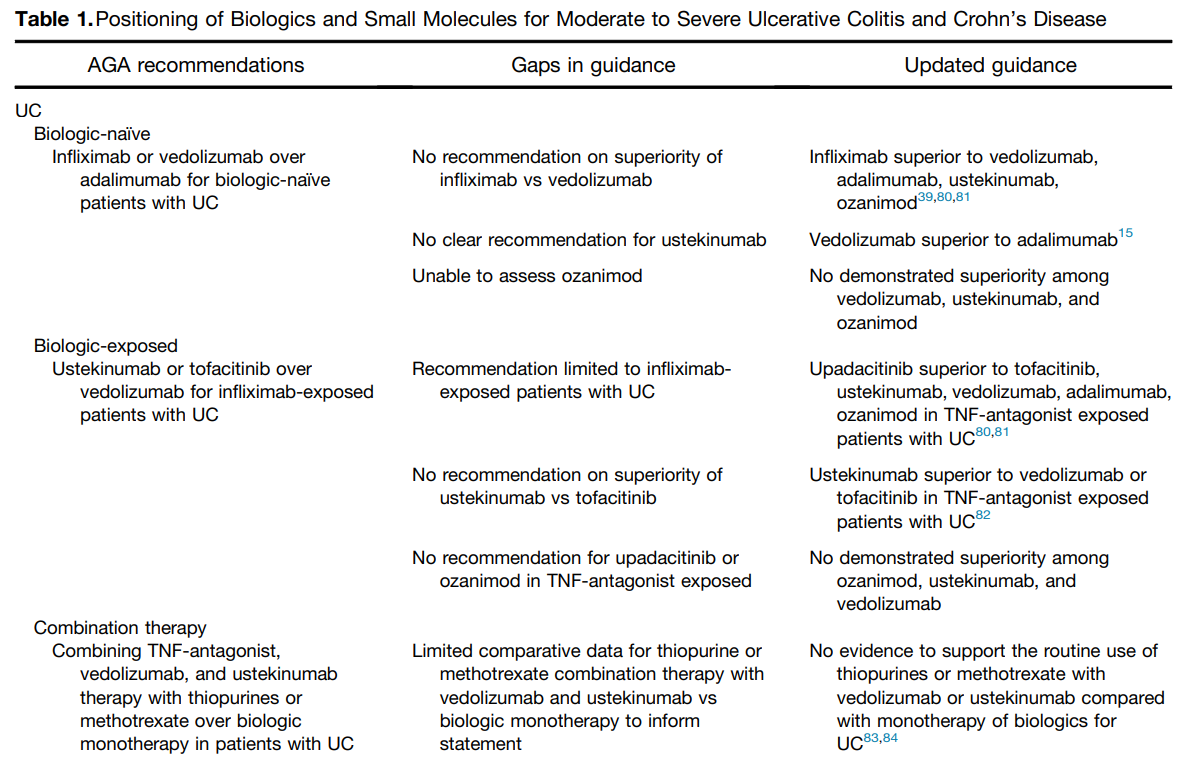
AGA Guideline on Pouchitis Management

Key recommendations

  • AGA recommends metronidazole and/or ciprofloxacin as preferred treatment of pouchitis with duration of treatment 2-4 weeks.
  • For Crohn’s-like disease of the pouch, AGA guideline recommends using either ileal-release budesonide or advanced immunosuppressive agents (eg. Biological therapies and small molecule therapies)
  • “In patients with cuffitis, topical therapies should be the first-line therapy, such as mesalamine suppositories, corticosteroid suppositories, or corticosteroid ointment applied directly to the cuff. Biological therapies and small molecule therapies are recommended in refractory cases

Related blog posts:

Increased Risk of Suicide in Patients with IBD

At a lot of IBD conferences, there is often a lot of focus on health maintenance including discussions on optimizing immunization levels and nutrition. It is often striking how, in comparison, so little attention is focused on emotional health which seems to cause a much greater health burden.

CS Tse et al. Inflamm Bowel Dis 2024; 30: 150-153. Increased Risks for Suicide, Self-Harm, Substance Use, and Psychiatric Disorders in Adults With Inflammatory Bowel Disease: A Nationwide Study in the United States From 2007 to 2017

Background: Patients with IBD are also at an increased risk for chronic opioid use, depression, anxiety, sleep disturbance, and disease-related disability (eg, unemployment), all known risk factors for suicide

Methods: This cross-sectional study uses the Nationwide Emergency Department Sample of the Healthcare Cost and Utilization Project (HCUP) as a public domain representing 80% of the U.S. population. This analysis included more than 260 million emergency department visits across the United States from 2007 to 2017.

Key findings:

  • Inflammatory bowel disease conferred >10-fold risk for suicide deaths, self-harm, substance use, and psychiatric disorders.
  • The absolute numbers of self-harm rates were low (<1% of all-cause inflammatory bowel disease emergency department visits; total 56 suicide deaths). This amounts to about 5 suicide deaths per year (compared to 0.5 per year for patients with celiac disease.
  • The risk of self-harm was higher in patients with Crohn’s disease than ulcerative colitis (RR, 3.3; 95% CI, 1.2-5.4), though the suicide risk was not statistically different (RR, 2.3; 95% CI, 0.8-4.5).
From Table 2: RR of self-harm, suicide, psychiatric disorders, and substance use of adults with inflammatory bowel disease compared with celiac disease in the United States from 2007 to 2017. 
The authors found that rates of self-harm and suicide were the same for patients with celiac disease as the general population (RR 1.0).

My take: Attention to mental health is important component of good care for patients with inflammatory bowel disease.

Related blog posts:

IBD Update -Stem Cells for Perianal Disease, Medicine-Induced VEO-IBD, and Thalidomide for VEO-IBD

AL Lightner et al. Inflamm Bowel Dis 2023; 29: 1912-1919. A Phase I Study of Ex Vivo Expanded Allogeneic Bone Marrow–Derived Mesenchymal Stem Cells for the Treatment of Pediatric Perianal Fistulizing Crohn’s Disease

Seven pediatric patients with perianal Crohn’s disease were treated with mesenchymal stem cells. Key finding: At 6 months, 83% had complete clinical and radiographic healing. This healing rate is higher than “the 50% efficacy reported by the only completed randomized control phase III clinical trial.[ADMIRE study].”

MA Baarslag et al. NEJM 2023; 389: 1790-1796. Severe Immune-Related Enteritis after In Utero Exposure to Pembrolizumab

This case report details severe immune-related gastroenterocolitis after in utero exposure to pembrolizumab, an anti–PD-1 agent; the infant presented at 4 months of life. Extensive testing did not identify any underlying causes of VEO-IBD. This infant required TPN for a short period, but subsequently responded to treatment with glucocorticosteroids and infliximab (with plans to continue until at least 3 years of age). Both programmed death 1 (PD-1) and cytotoxic T-lymphocyte-associated antigen 4 (CTLA-4) immune checkpoint inhibitors are negative regulators of T-cell immune function. Inhibition of these targets, resulting in increased activation of the immune system and can result in medication-induced colitis in the patients who take them and potentially in infants exposed to these agents in utero.

M Bramuzzo et al. Inflamm Bowel Dis 2024; 30: 20-28. https://doi.org/10.1093/ibd/izad018. Efficacy and Tolerance of Thalidomide in Patients With Very Early Onset Inflammatory Bowel Disease

This retrospective study with 39 patients with VEO and 39 patients with pediatric IBD.

Key findings:

  • The treatment persistence at 1, 2, and 3 years was 68.2%, 57.0%, and 50.9% for VEOIBD patients and 81.7%, 60.0% and 33.0% for pIBD patients, respectively 
  • A significantly higher proportion of VEOIBD patients discontinued therapy due to lack of efficacy (48.2% vs 17.2%; P = .03), while AEs were the main reason for discontinuation in pIBD patients
  • A significatively lower number of VEOIBD patients experienced AEs compared with pIBD patients (14 [35.9%] vs 30 [76.9%]; P = .0005).

Treatment persistence:

Treatment persistence

Related blog posts:

Impressive Results for Risankizumab in Refractory Crohn’s Disease

D Alsoud et al Inflamm Bowel Dis 2024; izad315https://doi.org/10.1093/ibd/izad315. Real-world Effectiveness and Safety of Risankizumab in Patients with Moderate to Severe Multirefractory Crohn’s Disease: A Belgian Multicentric Cohort Study

Methods: Data from consecutive adult CD patients who started risankizumab before April 2023 were retrospectively collected at 6 Belgian centers. A total of 69 patients (56.5% female, median age 37.2 years, 85.5% exposed to ≥4 different advanced therapies and 98.6% to ustekinumab, 14 with an ostomy) were included.

Key findings:

  • At week 24, 61.8% (34 of 55) and 18.2% (10 of 55) of patients without an ostomy achieved steroid-free clinical response and remission, respectively.
  • At week 52, these numbers were 58.2% (32 of 55) and 27.3% (15 of 55), respectively. Endoscopic data were available in 32 patients, of whom 50.0% (16 of 32) reached endoscopic response within the first 52 weeks.
  • Results in patients with an ostomy were similar (steroid-free clinical response and remission, 42.9% and 14.3%, respectively).
  • 20.3% (14 of 69) of patients underwent CD-related intestinal resectionsand 18.8% (13 of 69) of patients discontinued risankizumab during followup (median 68 weeks).
  • Risankizumab was well tolerated with no safety issues.

Discussion points: “98.6% of patients in the current study were exposed to ustekinumab compared with less than 20% in the registration trials. This indicates that a previous lack or loss of response to the inhibition of the p40 subunit common to IL-12 and IL-23 does not preclude a potential response from subsequent selective inhibition of IL-23. “

My take: This study shows that risankizumab can be effective in refractory patients, even in those who have received similar type medications (eg. ustekinumab).

Related blog posts:

Disclaimer: This blog, gutsandgrowth, assumes no responsibility for any use or operation of any method, product, instruction, concept or idea contained in the material herein or for any injury or damage to persons or property (whether products liability, negligence or otherwise) resulting from such use or operation. These blog posts are for educational purposes only. Specific dosing of medications (along with potential adverse effects) should be confirmed by prescribing physician.  Because of rapid advances in the medical sciences, the gutsandgrowth blog cautions that independent verification should be made of diagnosis and drug dosages. The reader is solely responsible for the conduct of any suggested test or procedure.  This content is not a substitute for medical advice, diagnosis or treatment provided by a qualified healthcare provider. Always seek the advice of your physician or other qualified health provider with any questions you may have regarding a condition.

Immune Mediated Disorders Associated with TNF Inhibitors Can Involve the Liver Too

Yesterday’s post highlighted immune-mediated disorders likely caused by anti-TNF therapy; this includes rheumatoid arthritis, psoriasis, hidradenitis suppurativa, and chronic recurrent multifocal osteomyelitis. Anti-TNF inhibitors can be the reason for drug-induced liver disease (DILI) including autoimmune hepatitis (AIH) as well. 

  • In one study, 8% of children receiving anti-TNF therapy developed a new elevation in ALT.
  • Most often liver enzyme elevation is mild and transient
  • Differential diagnosis for persistent elevation can be due to DILI, autoimmune liver disease (eg. PSC, AIH), or rarely due to a combination (autoimmune drug-induced liver disease). The latter can improve with drug cessation and with corticosteroid treatment.

Some slides on this topic (courtesy of William. Balistreri):

My take: Serious liver injury related to anti-TNF therapy is rare. When liver enzymes are persistently elevated, consider DILI including anti-TNF agents.

Related blog posts: