I am a pediatric gastroenterologist at GI Care for Kids (previously called CCDHC) in Atlanta, Georgia. The goal of my blog is to share some of my reading in my field more broadly. In addition, I wanted to provide my voice to a wide range of topics that often have inaccurate or incomplete information.
Before starting this blog in 2011, I would tear out articles from journals and/or keep notes in a palm pilot. This blog helps provide an updated source of information that is easy to access and search, along with links to useful multimedia sources.
I was born and raised in Chattanooga. After graduating from the University of Virginia, I attended Baylor College of Medicine. I completed residency and fellowship training at the University of Cincinnati at the Children’s Hospital Medical Center. I received funding from the National Institutes of Health for molecular biology research of the gastrointestinal tract.
During my fellowship, I had the opportunity to work with some of the most amazing pediatric gastroenterologists and mentors. Some of these individuals included Mitchell Cohen, William Balistreri, James Heubi, Jorge Bezerra, Colin Rudolph, John Bucuvalas, and Michael Farrell. I am grateful for their teaching and their friendship. During my training with their help, I received a nationwide award for the best research by a GI fellow.
I have authored numerous publications/presentations including original research, case reports, review articles, and textbook chapters on various pediatric gastrointestinal problems. In addition, I have been recognized by Atlanta Magazine as a "Top Doctor" in my field multiple times.
Currently, I am the vice chair of the section of nutrition for the Georgia Chapter of the American Academy of Pediatrics. In addition, I am an adjunct Associate Clinical Professor of Pediatrics at Emory University School of Medicine. Other society memberships have included the North American Society for Pediatric Gastroenterology Hepatology and Nutrition (NASPGHAN), American Academy of Pediatrics, the Food Allergy Network, the American Gastroenterology Association, the American Association for the Study of Liver Diseases, and the Crohn’s and Colitis Foundation.
As part of a national pediatric GI organization called NASPGHAN (and its affiliated website GIKids), I have helped develop educational materials on a wide-range of gastrointestinal and liver diseases which are used across the country. Also, I have been an invited speaker for national campaigns to improve the evaluation and treatment of gastroesophageal reflux disease, celiac disease, eosinophilic esophagitis, hepatitis C, and inflammatory bowel disease (IBD). Some information on these topics has been posted at my work website, www.gicareforkids.com, which has links to multiple other useful resources.
I am fortunate to work at GI Care For Kids. Our group has 17 terrific physicians with a wide range of subspecialization, including liver diseases, feeding disorders, eosinophilic diseases, inflammatory bowel disease, cystic fibrosis, DiGeorge/22q, celiac disease, and motility disorders. Many of our physicians are recognized nationally for their achievements. Our group of physicians have worked closely together for many years. None of the physicians in our group have ever left to join other groups. I have also worked with the same nurse (Bernadette) since I moved to Atlanta in 1997.
For many families, more practical matters about our office include the following:
– 14 office/satellite locations
– physicians who speak Spanish
– cutting edge research
– on-site nutritionists
– on-site psychology support for abdominal pain and feeding disorders
– participation in ImproveCareNow to better the outcomes for children with inflammatory bowel disease
– office endoscopy suite (lower costs and easier scheduling)
– office infusion center (lower costs and easier for families)
– easy access to nursing advice (each physician has at least one nurse)
I am married and have two sons (both adults). I like to read, walk/hike, bike, swim, and play tennis with my free time.
I do not have any financial relationships with pharmaceutical companies or other financial relationships to disclose. I have helped enroll patients in industry-sponsored research studies.
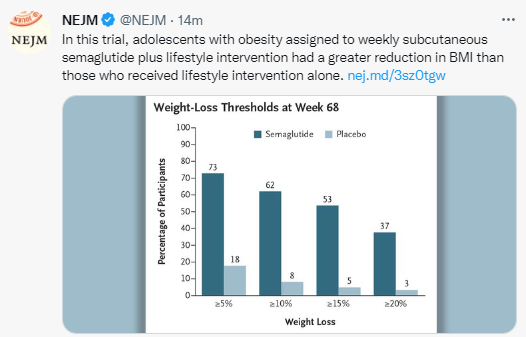
D Weghuber et al NEJM 2022; DOI: 10.1056/NEJMoa2208601. Once-Weekly Semaglutide in Adolescents with Obesity
Methods: In this double-blind, parallel-group, randomized, placebo-controlled trial, we enrolled 201 adolescents (12 to <18 years of age) with obesity (a body-mass index [BMI] in the 95th percentile or higher) or with overweight (a BMI in the 85th percentile or higher) and at least one weight-related coexisting condition. 180 (90%) completed treatment. Participants were randomly assigned in a 2:1 ratio to receive once-weekly subcutaneous semaglutide (at a dose of 2.4 mg) or placebo for 68 weeks, plus lifestyle intervention.
Key findings:
The mean change in BMI from baseline to week 68 was −16.1% with semaglutide and 0.6% with placebo
At week 68, a total of 95 of 131 participants (73%) in the semaglutide group had weight loss of 5% or more, as compared with 11 of 62 participants (18%) in the placebo group
Improvement with respect to cardiometabolic risk factors (waist circumference and levels of glycated hemoglobin, lipids [except high-density lipoprotein cholesterol], and alanine aminotransferase) were greater with semaglutide than with placebo
“The safety of semaglutide in this adolescent population appeared to be consistent with findings among adults with overweight or obesity… Gastrointestinal disorders (primarily nausea, vomiting, and diarrhea) were the most frequent adverse events with semaglutide (occurring in 62% of participants, as compared with 42% in the placebo group) and were generally mild or moderate in severity and of short duration (median duration, 2 to 3 days for nausea, vomiting, and diarrhea in the semaglutide group)”
“Permanent discontinuations because of gastrointestinal disorders were very low. Furthermore, semaglutide did not appear to affect growth or pubertal development during the trial period”
My take: As in adults, treatment with semaglutide results in weight loss.
AGA released new evidence-based guidelines strongly recommending patients with obesity use recently approved medications paired with lifestyle changes.
The following medications, paired with healthy eating and regular physical activity, are first-line medical options and result in moderate weight loss as noted as a percentage of body weight (reported as the difference compared to percent weight loss observed in the placebo group).
Semaglutide (Wegovy®), weight loss percentage: 10.8%
Phentermine-topiramate ER (Qsymia®), weight loss percentage: 8.5%
Liraglutide (Saxenda®), weight loss percentage: 4.8%
Naltrexone-Bupropion ER (Contrave®), weight loss percentage: 3.0%
I read this article shortly after convincing a surgical colleague to explore a well-appearing 6 month old with gastrointestinal bleeding for a Meckel’s diverticulum rather than undergo endoscopy.
In this retrospective cohort study of hospitalized infants (n=56, =/< 12 months) with gastrointestinal bleeding, the authors reviewed endoscopic procedures (EGD, Colonoscopy, Flexible Sigmoidoscopy) with respect to identifying diagnosis and in terms of outcomes.
Key points:
Seven endoscopies identified sources of GIB: gastric ulcers, a duodenal ulcer, gastric angiodysplasia, esophageal varices, and an anastomotic ulcer.
Intervention for bleeding control occurred in just 3 cases (5.4%); two of these had liver disease.
Most (55%) had no abnormalities on endoscopy
The authors detail two fatal cases in which GIB started in the first week of life. Both had complications occurring within 3 hours of endoscopy, one with a gastric perforation and one with necrotizing enterocolitis.
My take: Endoscopy in infants with GIB is rarely beneficial. Supportive care and surgical interventions should be considered, especially in those without underlying liver disease.
Savage Alpine Trail at Denali National Park. Parts of Denali can be seen in the background
Disclaimer: This blog, gutsandgrowth, assumes no responsibility for any use or operation of any method, product, instruction, concept or idea contained in the material herein or for any injury or damage to persons or property (whether products liability, negligence or otherwise) resulting from such use or operation. These blog posts are for educational purposes only. Specific dosing of medications (along with potential adverse effects) should be confirmed by prescribing physician. Because of rapid advances in the medical sciences, the gutsandgrowth blog cautions that independent verification should be made of diagnosis and drug dosages. The reader is solely responsible for the conduct of any suggested test or procedure. This content is not a substitute for medical advice, diagnosis or treatment provided by a qualified healthcare provider. Always seek the advice of your physician or other qualified health provider with any questions you may have regarding a condition.
In the introduction, the authors note: “Gastroesophageal reflux (GER) is a physiological process defined as the passage of gastric contents into the esophagus with or without regurgitation and vomiting, while GER disease (GERD) is pathophysiologic and occurs when GER is associated with troublesome symptoms and/or complications.”
“This distinction between GER and GERD remains enigmatic among survivors in the neonatal intensive care unit (NICU). Reflux-type symptoms (arching, irritability, acute life-threatening events, coughing, failure to thrive, and swallowing difficulties) in this high-risk infant population can be troublesome to the parent and provider, and empiric management using pharmacological and dietary changes are common albeit with consequences.”
Methods: “Infant Gastroesophageal Reflux Questionnaire Revised (I-GERQ-R) and 24-hour pH-impedance data were analyzed from 94 infants…[and] Longitudinal data from 40 infants that received randomized GER therapy (proton pump inhibitor [PPI] with or without feeding modifications) for 4 weeks followed by 1-week washout were analyzed. Relationships between I-GERQ-R and pH-impedance metrics (acid reflux index, acid and bolus GER events, distal baseline impedance, and symptoms) were examined and effects of treatments compared.”
Key findings:
Acid-suppressive therapy with feeding modifications had no effect on symptom scores or pH-impedance metrics. Clearance of refluxate worsened despite PPI therapy.
Correlations between I-GERQ-R and pH-impedance metrics were weak or non-existent, indicating that physicians cannot depend only on the questionnaire to diagnose and treat GERD in premature infants.
My take: This study shows that reflux symptoms are unreliable in establishing a diagnosis of reflux disease in infants. In addition, medical treatments were not beneficial in infants with abnormal pH-impedance metrics. Perhaps, it is time to acknowledge that we cannot even agree what reflux “disease” is in (premature) infants.
Background: Antibiotics and antiepileptics remain the most frequent causes of DILI. DILI may result in severe outcomes (eg liver transplant) in up to 5% of cases and could result in chronic liver disease in ~20%.
This is a terrific review -Figure 1 is particularly helpful. Figure 1 is an algorithm. Prior to using algorithm, review potential hepatoxcity by searching in NIH Livertox website. Next steps:
Calculate pattern of injury (R score). R= ALT/ULN divided by ALP/ULN (ALP =alkaline phosphatase)
Identify suspect drug. Hepatocellular (R >/=5), Mixed (R=2-5), Cholestatic (R</= 2). Examples of hepatocellular include acetaminophen, NSAIDs, Minocycline. Examples of mixed include azathioprine, and sulfasalazine. Examples of cholestatic include amoxicillin/clavulanate, and TMP/SMX
Disclaimer: This blog, gutsandgrowth, assumes no responsibility for any use or operation of any method, product, instruction, concept or idea contained in the material herein or for any injury or damage to persons or property (whether products liability, negligence or otherwise) resulting from such use or operation. These blog posts are for educational purposes only. Specific dosing of medications (along with potential adverse effects) should be confirmed by prescribing physician. Because of rapid advances in the medical sciences, the gutsandgrowth blog cautions that independent verification should be made of diagnosis and drug dosages. The reader is solely responsible for the conduct of any suggested test or procedure. This content is not a substitute for medical advice, diagnosis or treatment provided by a qualified healthcare provider. Always seek the advice of your physician or other qualified health provider with any questions you may have regarding a condition.
This is a very useful review article detailing efforts of insurance companies and pharmacy benefit managers to create hurdles to try to limit the utilization of expensive new medications and how physicians can respond on behalf of their patients.
Key points:
Pharmacy Benefit Managers: “Typically, third-party payers utilize a pharmacy benefit manager (PBM, middleman) to determine whether a drug will be included in their formulary. In the United States, PBMs include Express Scripts, CVS Caremark, or Optum…[these three] control 89% of the market…these companies restrict access to costly medications and generate a profit for themselves.”
Lack of FDA Pediatric Indication: “In pediatrics, the average lag time from approval in adults is 9 years…At this time, none of the newer [IBD] agents such as certolizumab, golimumab, vedolizumab, tofacitinib, ustekinumab, and ozanimod are FDA approved for children.”
Dose Optimization: “TDM [therapeutic drug monitoring] and dose optimization often requires higher doses than those approved by the FDA…result in higher costs for the payer.”
Step Therapy: “A number of insurance companies follow a “step therapy” algorithm, otherwise known as “fail first formularies…cheaper medication is required before use of a more expensive medication.” Two problems with this approach: these policies in essence force clinicians to “prescribe medications they do not feel are appropriate” and “the majority of these policies are inconsistent with IBD treatment guidelines.”
Biosimilar/Non-medical switches: “We generally try to educate patients about the clinical data, and endorse switching to biosimilars without appealing the denial.”
Site of care: “The authors oppose insurance mandated home infusions and suggest appeal of “site of care” switches” due to safety concerns (increase ED visits, infusion reactions), lack of communication with home infusion providers (who often lack pediatric expertise), potential for critical labs not being drawn, and reports of increased loss of response with home infusions.
Peer-to-peer: “The “peer” may not have the appropriate background…Therefore, …it is very important to inform the peer that the discussion will be documented in the medical record. The clinician should ask for the reviewer’s credentials, specialty, and employer (insurance company, pharmacy benefit manager, or third-party review company).”
Next Steps: beyond appeal letters (templates at NASPGHAN & CCFA) and peer-to-peer discussions, next steps include an internal appeal (patient files a formal grievance with insurance provider) or external appeal (State Insurance Commissioner). In addition, treatment can be started in the hospital if there are delays in approvals. Though, this could result in the hospital ‘eating’ the cost, the hospital has extensive resources to advocate for coverage and can utilize charitable funds if needed.
My personal experience with appeals:
For appeal letters, besides including important clinical details, I always try to engage a reviewer’s humanity by explaining how important this approval is for the health of this young boy/girl who faces a lifelong serious illness.
Most peer-to-peer calls go well but tend to be inconvenient. Lately, I have had several “peer-to-peer” calls with pharmacists who are not authorized to approve the treatment and insist that I schedule a 2nd call with another “peer.”
Filing a complaint with the State Insurance Commissioner can be very helpful in getting a quick response. In Georgia: Consumer Complaints. It is important to keep the family informed about the status of authorization. A few families have been more successful/persistent at navigating this process than those with years of experience.
My take: This is a helpful and timely article. Trying to quickly get medications authorized is needed to avoid delays in patient care that could result in harm.
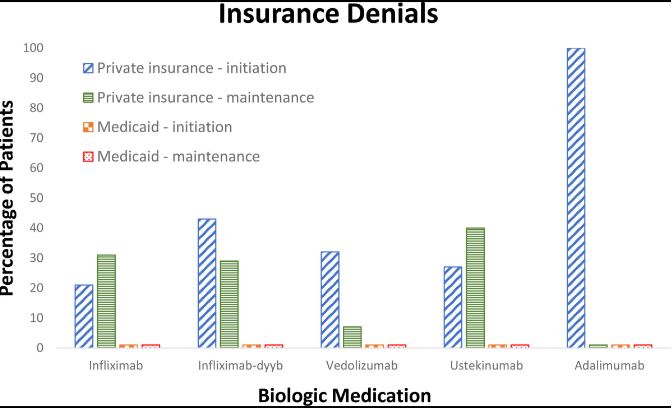
Related article: CA Lepus, JS Hyams. JPGN Reports. 2022; doi: 10.1097/PG9.0000000000000215. Open Access! Barriers From Third-Party Payers to Biologic Use in Pediatric Inflammatory Bowel Disease This study prospectively identified pediatric patients with IBD who were started on a biologic medication at our institution, and third-party payer decisions were recorded:
“The average time between TPI (therapy plan initiation) and biologic initiation (first infusion) was 9.7 days (±3.7 days) for patients with Medicaid, 11.3 days (±5.2 days) for patients with private insurance who had approvals, and 18.8 days (±7.6 days) for patients with private insurance who initially had denials”
“Reasons for denial are generally for use of a specific off-label agent or dosing of an approved agent. These denials lead to delayed treatment, nonmedically sound changes in therapy, and increased administrative burden on providers.”
“Despite the growing body of literature supporting use of [proactive] TDM (therapeutic drug monitoring), third-party private payers customarily deny adjustments unless the patient is symptomatic, a situation that clinicians try to avoid.”
FDA IBD Workshop -Take-Home PointsOff-label does not equate to experimentalFDA Statement: The FD&C Act does not, however, limit the manner in which a physician may use an approved drug. Once a product has been approved for marketing, a physician may prescribe it for uses or in treatment regimens or patient populations that are not included in approved labeling. Such “unapproved” or, more precisely, “unlabeled” uses may be appropriate and rational in certain circumstances, and may, in fact, reflect approaches to drug therapy that have been extensively reported in medical literature
“Good surgeons know how to operate; better surgeons know when to operate. But only the wisest surgeons know when not to operate.”
Key points:
“Qualitative evidence concerning the relationship between QoL and a wide range of disabilities suggests that subjective judgments regarding other people’s QoL are wrong more often than not1,2 and that such judgments by medical practitioners in particular can be biased.3,4 “
“Physicians had treated the severely burned patient Dax Cowart against his express and capacitated refusal of treatment.8 Cowart’s refusal was based in part on his judgment that if he survived, his QoL would be such that death was preferable. His physicians, on the other hand, believed it was their ethical duty to preserve his life regardless of his assessment of its quality. Cowart’s case was one of the first to highlight the importance — ethically, not just medically — of letting the patient’s own QoL valuation guide surgical decision making.”
When physicians do not offer a treatment due to concerns about potential QoL concerns, the “patient may never know that surgery was a possibility because the surgeon dismissed it as not indicated and never offered it.”
“In a recent survey of practicing physicians in the United States, 82.4% of 714 physicians indicated their belief that people with significant disability (as defined by the study) have worse QoL than people without disabilities.3 Yet this judgment directly conflicts with a large body of social science research spanning decades suggesting that people with significant disability, like those with less severe disability, experience QoL that is similar to that of people without disabilities.1,14-17 “
“We are not advocating that surgical interventions should be offered indiscriminately. Rather, we believe that a patient’s candidacy for a proposed treatment should be based on an objective assessment of the likely outcome of the treatment and the value that the patient, rather than the physician, places on that outcome, rather than on a flawed intuitive assessment.”
My take: The authors make a compelling argument that treatment recommendations need to be based on more than a physician’s subjective assessment of a patient’s quality of life.
According to Dr. David Stukus, director of the Food Allergy Treatment Center at Nationwide Children’s Hospital in Columbus, Ohio, the term food sensitivity is used more in marketing than in medicine. “There really is no consensus definition of what a food sensitivity is,”…A food intolerance or sensitivity is different from a food allergy, Dr. Stukus said, which is an immune reaction to certain foods that can cause more severe symptoms like vomiting, hives, shortness of breath or even life-threatening anaphylaxis, usually within minutes of eating even a small amount. There are also more chronic immune reactions to foods, like those from celiac disease, a serious autoimmune condition triggered by gluten.
Aside from the breath tests that gastroenterologists sometimes use to diagnose certain intolerances, like those to lactose or fructose, there aren’t validated tests for food intolerances or sensitivities… The only way to figure out if you are sensitive to certain foods or ingredients is to see how your symptoms change after eliminating them from your diet, ideally with the help of a registered dietitian or physician
Medical organizations, including those in the United States, Europe and Canada, have recommended against using food sensitivity or intolerance tests because there is no good evidence that they work.