I am a pediatric gastroenterologist at GI Care for Kids (previously called CCDHC) in Atlanta, Georgia. The goal of my blog is to share some of my reading in my field more broadly. In addition, I wanted to provide my voice to a wide range of topics that often have inaccurate or incomplete information.
Before starting this blog in 2011, I would tear out articles from journals and/or keep notes in a palm pilot. This blog helps provide an updated source of information that is easy to access and search, along with links to useful multimedia sources.
I was born and raised in Chattanooga. After graduating from the University of Virginia, I attended Baylor College of Medicine. I completed residency and fellowship training at the University of Cincinnati at the Children’s Hospital Medical Center. I received funding from the National Institutes of Health for molecular biology research of the gastrointestinal tract.
During my fellowship, I had the opportunity to work with some of the most amazing pediatric gastroenterologists and mentors. Some of these individuals included Mitchell Cohen, William Balistreri, James Heubi, Jorge Bezerra, Colin Rudolph, John Bucuvalas, and Michael Farrell. I am grateful for their teaching and their friendship. During my training with their help, I received a nationwide award for the best research by a GI fellow.
I have authored numerous publications/presentations including original research, case reports, review articles, and textbook chapters on various pediatric gastrointestinal problems. In addition, I have been recognized by Atlanta Magazine as a "Top Doctor" in my field multiple times.
Currently, I am the vice chair of the section of nutrition for the Georgia Chapter of the American Academy of Pediatrics. In addition, I am an adjunct Associate Clinical Professor of Pediatrics at Emory University School of Medicine. Other society memberships have included the North American Society for Pediatric Gastroenterology Hepatology and Nutrition (NASPGHAN), American Academy of Pediatrics, the Food Allergy Network, the American Gastroenterology Association, the American Association for the Study of Liver Diseases, and the Crohn’s and Colitis Foundation.
As part of a national pediatric GI organization called NASPGHAN (and its affiliated website GIKids), I have helped develop educational materials on a wide-range of gastrointestinal and liver diseases which are used across the country. Also, I have been an invited speaker for national campaigns to improve the evaluation and treatment of gastroesophageal reflux disease, celiac disease, eosinophilic esophagitis, hepatitis C, and inflammatory bowel disease (IBD). Some information on these topics has been posted at my work website, www.gicareforkids.com, which has links to multiple other useful resources.
I am fortunate to work at GI Care For Kids. Our group has 17 terrific physicians with a wide range of subspecialization, including liver diseases, feeding disorders, eosinophilic diseases, inflammatory bowel disease, cystic fibrosis, DiGeorge/22q, celiac disease, and motility disorders. Many of our physicians are recognized nationally for their achievements. Our group of physicians have worked closely together for many years. None of the physicians in our group have ever left to join other groups. I have also worked with the same nurse (Bernadette) since I moved to Atlanta in 1997.
For many families, more practical matters about our office include the following:
– 14 office/satellite locations
– physicians who speak Spanish
– cutting edge research
– on-site nutritionists
– on-site psychology support for abdominal pain and feeding disorders
– participation in ImproveCareNow to better the outcomes for children with inflammatory bowel disease
– office endoscopy suite (lower costs and easier scheduling)
– office infusion center (lower costs and easier for families)
– easy access to nursing advice (each physician has at least one nurse)
I am married and have two sons (both adults). I like to read, walk/hike, bike, swim, and play tennis with my free time.
I do not have any financial relationships with pharmaceutical companies or other financial relationships to disclose. I have helped enroll patients in industry-sponsored research studies.
Health insurance is a complicated financial product, and studyafterstudy has shown that people routinely pick bad plans, even choosing options that leave them worse off financially in every possible scenario…
Many Americans don’t understand terms like “deductible” or “coinsurance” very well. And few are good at predicting what sort of health care needs they will have in the coming year…
A recent study in the Netherlands, which offers insurance to everyone through an Obamacare-like marketplace, found that only 5 percent of Dutch customers did a better job at choosing an ideal plan than they would have by choosing a plan at random… People with less education and income, who tend to be in worse health, were very likely to choose a plan that cost them more to cover their health care — a situation that might leave them skimping on needed medicine or procedures.
My take: This article is so true. When I choose health insurance, this is always a complicated task despite my familiarity and expertise. I would expect that computer-aided decision-making could be developed and be helpful.
Pediatrics has provided free full publication access to what they consider their best 10 articles and 5 influential COVID-19 publications: Pediatrics –2020 Best Articles Link
Among 172 549 apparently healthy children from a retrospective database, the incidence of 30-day mortality, postoperative complications, and serious adverse events were 0.02%, 13.9%, and 5.7%, respectively. Compared with their white peers, AA children had 3.43 times the odds of dying within 30 days after surgery (odds ratio: 3.43; 95% CI: 1.73–6.79)
At age 6 to 7 years, compared with those with a healthy weight, children with overweight had higher metabolic syndrome risk scores by 0.23 SD units (95% confidence interval 0.05 to 0.41) and with obesity by 0.76 SD units (0.51–1.01), with associations almost doubling by age 10 to 11 years. Thus, overweight and obesity from early childhood onward were strongly associated with higher cardiometabolic risk at 11 to 12 years of age.
In addition, obesity but not overweight had slightly higher outcome carotid intima-media thickness (0.20–0.30 SD units) at all ages
Collinson S, Deans A, Padua-Zamora A, Gregorio GV, Li C, Dans LF, Allen SJ. Link to website with PDF availability: Probiotics for treating acute infectious diarrhoea. Cochrane Database of Systematic Reviews 2020, Issue 12. Art. No.: CD003048. DOI: 10.1002/14651858.CD003048.pub4. Thanks to Kipp Ellsworth for this reference.
This review identified “82 studies in 12,127 people (included 11,526 children) with acute diarrhea.” Key findings:
The number of children with diarrhea longer than 48 hours was not different between those taking a probiotic and those taking a placebo
“It was unclear whether taking probiotics shortened the time spent in hospital compared with taking a placebo or no additional treatment .”
My take: Probiotics probably make little or no difference in the setting of acute gastroenteritis/diarrhea. This analysis is based on large trials with low risk of bias.
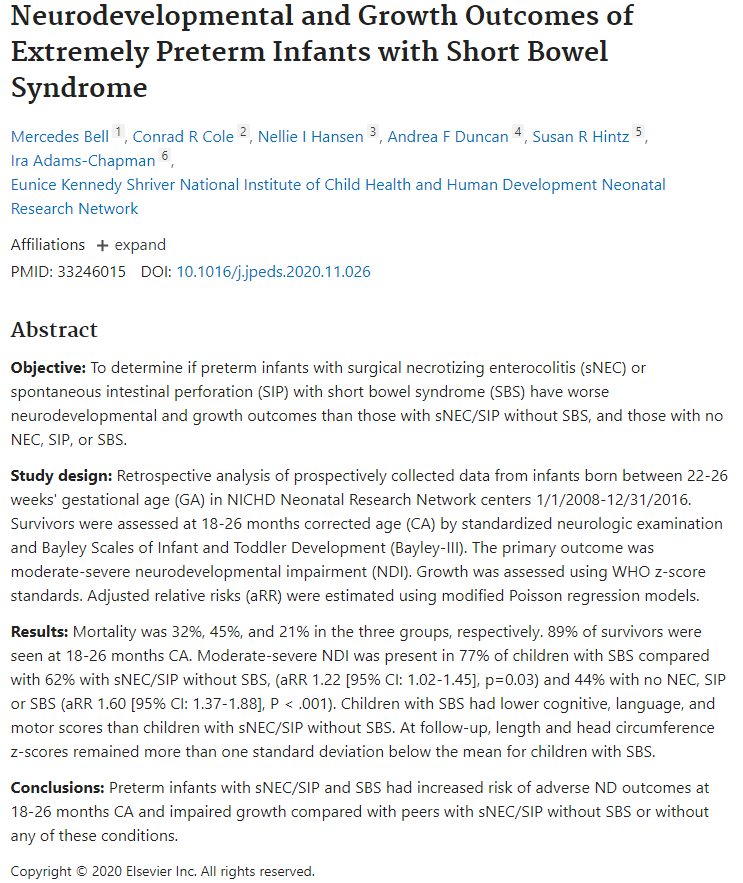
Moderate-severe neurodevelopmental impairment was present in 77% of children with extreme prematurity and with short bowel syndrome compared to 44% with extreme prematurity without necrotizing enterocolitis, spontaneous intestinal perforation or short bowel syndrome.
One of the authors, Ira Adams-Chapman, recently passed away (link to obituary: Ira Adams-Chapman, 1965-2020). She and I were residents together in Cincinnati. She was a terrific person.
Rising case counts and rising test positivity rates mean there is more virus out there — and you need to double down on precautions, especially if you have a high-risk person in your orbit.
Whether your bubble is just your immediate household — or you’ve formed a bubble with others — take some time to check in with everyone and seal the leaks.
Mask up. You’re going to need it for a while.
Watch the clock, and take the fun outside… If you’re spending time indoors with people who don’t live with you, wear a mask and keep the visit as short as possible. (Better yet, don’t do it at all.)
The only way to drive down infection rates for now will be to avoid large indoor gatherings, wear masks, cancel travel and limit your holiday celebrations to just those who live in your home.
The vast majority of patients with Covid-19 will manage the illness at home. Check in with your doctor early in the course of your illness, and make a plan for monitoring your health and checking in again if you start to feel worse.
If you feel sick, you should be tested for Covid-19. A dry cough, fatigue, headache, fever or loss of sense of smell are some of the common symptoms of Covid-19. After you take your test, stay isolated from others and alert the people you’ve spent time with over the last few days, so they can take precautions while you’re waiting for your result.
While every patient is different, doctors say that days five through 10 of the illness are often the most worrisome time for respiratory complications of Covid-19.
The vaccines will be much less effective at preventing death and illness in 2021 if they are introduced into a population where the coronavirus is raging — as is now the case in the United States.
An analogy may be helpful here, says David Leonhardt, who writes The Morning newsletter for The Times. He explains that a vaccine that’s 95 percent effective, as Moderna’s and Pfizer’s versions appear to be, is a powerful fire hose. But the size of a fire is still a bigger determinant of how much destruction occurs.
The print version has some additional advice. From Dr. Fauci: “We have crushed similar outbreaks historically. We did it with smallpox. We did it with polio, We did it with measles. We can do it with coronavirus…The future doesn’t need to be bleak. It’s within our hands to really shape the future, both by public health measures and by taking up the vaccine.”
“Randomized controlled trials published more than a decade ago demonstrated that exclusive enteral nutrition, wherein all table foods are eliminated from a diet and the patient relies on an elemental diet alone for nutrition, was effective in not just inducing clinical remission but also improving inflammatory biomarkers.”
“More recent rigorous studies have demonstrated that the effects of exclusive enteral nutrition can be mimicked either by a selected, less-restrictive diet (such as CD-TREAT4), which is more sustainable, or by combining partial enteral nutrition with an elimination diet that is quite diverse (such as CDED5).”
“Exclusive enteral nutrition (EEN) has been studied the most rigorously of all diets in IBD and has demonstrated the greatest benefit, compared with other diet studies in IBD. EEN requires the intake of elemental, semi-elemental, or polymeric formulas to meet all nutritional requirements without additional intake of food for 6-8 weeks. Studies have been performed mostly in pediatric populations and have shown effectiveness in induction of remission with reduction in inflammatory markers, including C-reactive protein, erythrocyte sedimentation rate, and fecal calprotectin, and even mucosal healing. EEN has not worked out as well for adult populations, because of the poor tolerability of exclusive intake of enteral formulas.”
“Beyond EEN, there are many diets that have been considered … only the SCD and Crohn’s disease exclusion diets have shown improvement in clinical remission and reduction in inflammatory markers.”
“Most dietary studies are underpowered, lack a control arm, and do not include endoscopic endpoints. The current body of evidence remains insufficient to support the use of diet alone for the treatment of IBD.”
My take: Except for exclusive enteral nutrition (EEN) which is quite challenging, dietary therapies have not been proven as effective long-term stand-alone treatments. In patients who choose dietary therapy, careful monitoring is particularly important.
In this systematic review, a total of 995 adult patients were included from 18 observational studies (4 prospective and 14 retrospective), 1 nonrandomized controlled trial, and 1 subgroup analysis of a randomized controlled trial.
Key findings:
Biologic dose de-escalation was associated with relapse rates as high as 50% at 1 year. Overall, clinical relapse occurred in 0%–54% of patients who dose de-escalated biologic therapy (17 studies).
Lower rates of relapse (10%–25%) were reported in studies involving patients with endoscopic and/or histologic remission
These results are in agreement with a previous meta-analysis, which found a 1-year risk of relapse after discontinuation of anti-TNF therapy of 36% in CD and 28% in UC ( Gisbert JP, et al.. Am J Gastroenterol 2016;111:632–47).
My take: This study shows that dose de-escalation of biologic therapy in IBD seems to be associated with high rates of clinical relapse
In this national multicenter retrospective cohort study in 207 adult patients with either active or inactive perianal Crohn’s disease (pCD) who received ustekinumab (2017-2018). The majority had received multiple biologics (~85% had at least 2 anti-TNF agents, 28% had received vedolizumab) and prior anal surgeries (mean 2.8).
Methods: Success of ustekinumab was defined by (i) clinical success at 6 months of treatment assessed by the physicians’ judgment, with (ii) no need for dedicated medical treatment for perianal lesions (antibiotics and/or topics) nor (iii) unscheduled surgical treatment. For perianal disease evaluation, clinical success was defined in the study protocol, by the absence of draining pus for fistulas, and no anal ulcers
Key findings:
In patients with active pCD, success was reached in 57/148 (38.5%) patients.
Among patients with setons at initiation, 29/88 (33%) had a successful removal.
In patients with inactive pCD at initiation, the probability of recurrence-free survival was 86.2% and 75.1% at weeks 26 and 52, respectively.
The absence of ustekinumab optimization was associated with upper odds of success (OR 2.74). “We can suppose in our present study that optimization of treatment was needed in severe refractory patients with no or insufficient response to ustekinumab. Thus, in these nonresponders, success was not achieved despite optimization.”
My take (partly borrowed from authors): “This large multicenter dedicated study adds substantial evidence to the growing literature on ustekinumab effectiveness in refractory CD.” For pCD, optimization of ustekinumab has a low likelihood of improving response.
Between November 1, 2020, and December 13, 2020, the 7-day moving average for daily COVID-19 deaths tripled, from 826 to 2430 deaths per day
As occurred in the spring, COVID-19 has become the leading cause of death in the United States (daily mortality rates for heart disease and cancer, which for decades have been the 2 leading causes of death, are approximately 1700 and 1600 deaths per day, respectively)
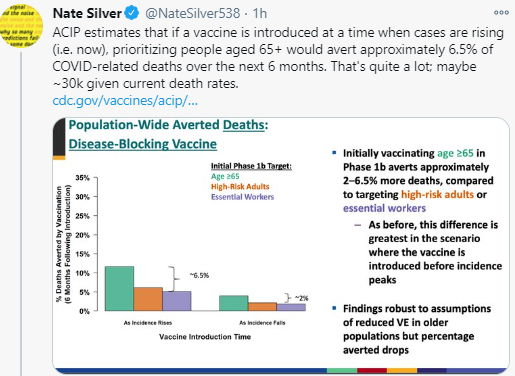
Vaccine Strategy: Nate Silver’s twitter feed suggests that after vaccination of medical personnel, focus of vaccine efforts should rely on age rather than at-risk conditions (which could affect 100 million in U.S). Using an age-based system would also be easier; it would minimize influence and wealth in the distribution of the vaccine.
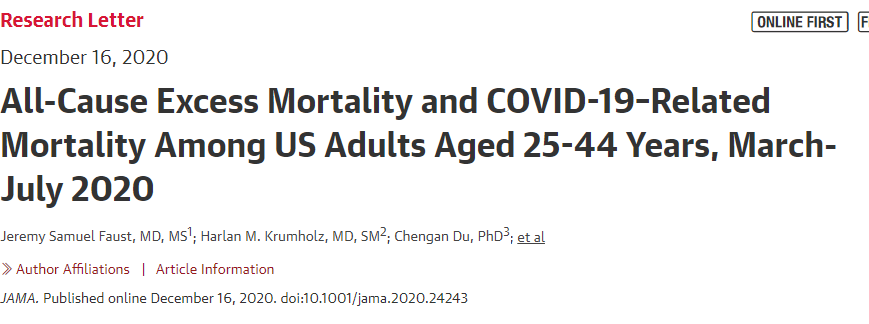
“Excess mortality in younger adults: Among U.S. adults aged 25 to 44, there were 19% more deaths than expected — or 12,000 people — from March through July 2020. In JAMA, the researchers — including Dr. Rochelle Walensky, who has been nominated to lead the CDC — report that 38% of this excess mortality was directly from COVID-19, but that proportion varied by region. Deaths from COVID-19 were similar to or exceeded unintentional deaths from opioids in this age group in 2018 in several areas of the country. The authors write that this may be an underestimate of the COVID-19 mortality burden in younger adults, as they may have been undertested.”
This retrospective study from Finland details the bone health of children with biliary atresia (BA). Key findings:
Out of 49 patients, 7 (14%) were diagnosed with rickets during infancy. Clearance of jaundice [odds ratio 0.055, 95% confidence interval [CI] 0.00266–0.393; P < 0.01] was a protective factor against rickets.
In DXA measurements, median lumbar spine aBMD anthropometrically adjusted z-scores were as follows:
in native liver survivors 0.8 (interquartile range [IQR] −1.9 to 1.4) at 5 and −0.3 (IQR −1.3 to 0.8) at 10 years
in liver transplanted patients 0.4 (IQR −0.2 to 1.1) at 5 and 0.6 (IQR −0.1 to 1.3) at 10 year.
Most BA patients have aBMD within normal range between 5 and 10 years of age irrespective of liver transplantation status.
My take: This study shows that early in life there is frequent bone impairment in children with BA. This generally improves in most children as cholestasis resolves (with or without liver transplantation).