Unknown's avatar

About gutsandgrowth

I am a pediatric gastroenterologist at GI Care for Kids (previously called CCDHC) in Atlanta, Georgia. The goal of my blog is to share some of my reading in my field more broadly. In addition, I wanted to provide my voice to a wide range of topics that often have inaccurate or incomplete information. Before starting this blog in 2011, I would tear out articles from journals and/or keep notes in a palm pilot. This blog helps provide an updated source of information that is easy to access and search, along with links to useful multimedia sources. I was born and raised in Chattanooga. After graduating from the University of Virginia, I attended Baylor College of Medicine. I completed residency and fellowship training at the University of Cincinnati at the Children’s Hospital Medical Center. I received funding from the National Institutes of Health for molecular biology research of the gastrointestinal tract. During my fellowship, I had the opportunity to work with some of the most amazing pediatric gastroenterologists and mentors. Some of these individuals included Mitchell Cohen, William Balistreri, James Heubi, Jorge Bezerra, Colin Rudolph, John Bucuvalas, and Michael Farrell. I am grateful for their teaching and their friendship. During my training with their help, I received a nationwide award for the best research by a GI fellow. I have authored numerous publications/presentations including original research, case reports, review articles, and textbook chapters on various pediatric gastrointestinal problems. In addition, I have been recognized by Atlanta Magazine as a "Top Doctor" in my field multiple times. Currently, I am the vice chair of the section of nutrition for the Georgia Chapter of the American Academy of Pediatrics. In addition, I am an adjunct Associate Clinical Professor of Pediatrics at Emory University School of Medicine. Other society memberships have included the North American Society for Pediatric Gastroenterology Hepatology and Nutrition (NASPGHAN), American Academy of Pediatrics, the Food Allergy Network, the American Gastroenterology Association, the American Association for the Study of Liver Diseases, and the Crohn’s and Colitis Foundation. As part of a national pediatric GI organization called NASPGHAN (and its affiliated website GIKids), I have helped develop educational materials on a wide-range of gastrointestinal and liver diseases which are used across the country. Also, I have been an invited speaker for national campaigns to improve the evaluation and treatment of gastroesophageal reflux disease, celiac disease, eosinophilic esophagitis, hepatitis C, and inflammatory bowel disease (IBD). Some information on these topics has been posted at my work website, www.gicareforkids.com, which has links to multiple other useful resources. I am fortunate to work at GI Care For Kids. Our group has 17 terrific physicians with a wide range of subspecialization, including liver diseases, feeding disorders, eosinophilic diseases, inflammatory bowel disease, cystic fibrosis, DiGeorge/22q, celiac disease, and motility disorders. Many of our physicians are recognized nationally for their achievements. Our group of physicians have worked closely together for many years. None of the physicians in our group have ever left to join other groups. I have also worked with the same nurse (Bernadette) since I moved to Atlanta in 1997. For many families, more practical matters about our office include the following: – 14 office/satellite locations – physicians who speak Spanish – cutting edge research – on-site nutritionists – on-site psychology support for abdominal pain and feeding disorders – participation in ImproveCareNow to better the outcomes for children with inflammatory bowel disease – office endoscopy suite (lower costs and easier scheduling) – office infusion center (lower costs and easier for families) – easy access to nursing advice (each physician has at least one nurse) I am married and have two sons (both adults). I like to read, walk/hike, bike, swim, and play tennis with my free time. I do not have any financial relationships with pharmaceutical companies or other financial relationships to disclose. I have helped enroll patients in industry-sponsored research studies.

Brains and Bowels: Kids with IBD Do Fine in School

Screen Shot 2015-05-04 at 8.11.32 PM

A recent study (Singh H, et al. J Pediatr 2015; 166: 1128-33) showed that overall academic performance was not affected for children with inflammatory bowel disease (IBD).

Study characteristics:

University of Manitoba Database IBD population (n=337) was matched by age, sex, and area of residence to 10 randomly selected controls (n=3093).

Key findings:

  • There were no significant differences in the 2 groups in standardized scores or enrollment in grade 12
  • Lower socioeconomic status and diagnosis with a mental health problem (6-month before or after IBD diagnosis) were independent predictors of worse outcomes

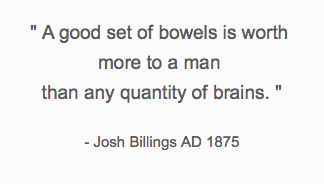
Akin to the quote above, I’ve often felt that it is difficult to think clearly when having severe bowel dysfunction.  At the same time, some of our patients accomplish so much despite their physical setbacks.

Bottomline: This study provides reassurance that children with IBD should be able to complete their course work.

Chicago

Chicago


Tackling Crohn’s Perianal Fistulizing Disease

I am fortunate to work closely with several well-qualified pediatric surgeons and colorectal surgeons.  When faced with perianal fistulas, I have discussions with them to help optimize therapy.  Understanding exactly what and why the surgeons do what they do has not always been clear to me.  Four recent articles provide guidelines for the management of Crohn’s perianal disease.  The color figures in the articles make understanding what is done pretty obvious.

  • Schwartz DA et al. Inflamm Bowel Dis 2015; 21: 723-30. Overview.
  • Ong EMW et al. Inflamm Bowel Dis 2015; 21: 731-36. Focus on imaging.
  • Schwartz DA et al. Inflamm Bowel Dis 2015; 21: 737-52. Critical evaluation of Medications
  • Fichera A, Zoccali M. Inflamm Bowel Dis 2015; 21: 753-58. Critical evaluation of Surgical Approaches

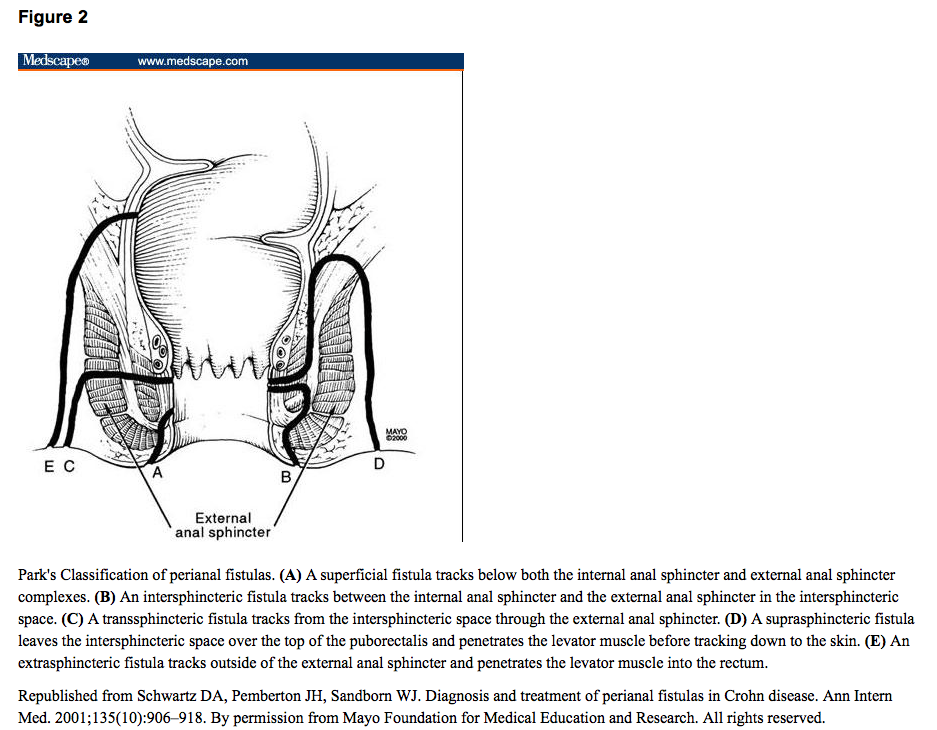
The first guideline provides a summary statement combining aspects of both medical and surgical management.  Basic anatomy and classification are reviewed (a color figure similar to reproduction below helps describe the types of fistula).

Simple vs Complex fistula is reviewed.  A “Simple fistula is a superficial, intersphincteric or low transspincteric fistula that has only 1 opening and is not associated with an abscess and/or does not connect to an adjacent structure such as the vagina or bladder.”  All others are complex fistulas.  The MRI classifcation is also reviewed (Figure 5).

Other points:

  • For fistulizing disease, top-down cotherapy (anti-TNF/immunomodulator) therapy is recommended.  Antibiotics are recommended in the short term.
  • Placement of a draining seton (for complex fistulas) helps to maintain fistula drainage until the track becomes inactive on medical treatment.
  • A treatment algorithm (Figure 7) notes that endoscopy, imaging (EUS or MRI) and exam under anesthesia are key first steps.  Decision tree then divides based on whether there is rectal inflammation, and whether fistula is simple or complex.
  • Surgical options include fistulotomy, fibrin glue, fistula plug, seton placement, advancement flaps and proctectomy.

Bottomline: These set of articles should serve as a useful reference when managing perianal disease.

Related blog posts:


Clindamycin or Trimethoprim-Sulfamethoxazole for skin infections?

It turns out that both clindamycin and trimethoprim-sulfamethoxazole are good choices for uncomplicated skin infections (NEJM 2015; 372: 1093-103).

In this prospective, randomized trial with 524 patients (children and adults), outpatients with uncomplicated skin infections (cellulitis and abscesses) were treated with either clindamycin or trimethoprim-sulfamethoxazole (TMP-SMX) for 10 days.  Abscesses underwent initial incision and drainage.  Both groups had a similar rate of MRSA: 31.8% and 31.9% respectively.

Key findings:

  • The proportion of patients cured was similar in both groups.  Among those with adequate followup, 89.5% of clindamycin group were cured compared with 88.2% of TMP-SMX.
  • Adverse effects were similar as well.  Diarrhea was the most common adverse event and occurred in 9.7% and 10.1% respectively.

Limitations: trial excluded patients with serious coexisting conditions, involved only outpatients, and followup was for 1 month.

The associated editorial (pg 1164-65) suggests that the design of the study may obscure the likelihood that TMP-SMX might be preferred for empirical treatment of skin abscess (if I&D alone is insufficient) and that clindamycin might be more effective for cellulitis.

Take-home point: With the changes in skin infections, including MRSA, this trial indicates that both clindamycin and TMP-SMX are good options for treating uncomplicated skin infections.

Commentary from NEJM Journal Watch, by Larry Baddour, Chair, Division of Infectious Diseases at Mayo Clinic College of Medicine:  “For most patients, however, β-lactam antibiotics with activity against β-hemolytic streptococci and S. aureus (e.g., cephalexin or dicloxacillin) remain the first-line empirical treatment options for nonpurulent cellulitis. Epidemiologic and host factors, however, should continue to influence this decision.”

Nutrition Imbalance for Ventilated Children

A recent study documents a high rate of nutritional problems among a prospective cohort of 20 children on home ventilators and documents a metabolic assessment aimed at improving these problems (Martinez EE, et al. J Pediatr 2015; 166: 350-7, ed 228-29).

In these children the authors did careful nutritional assessment with anthropometry, bioelectrical impedance analysis (BIA), actual energy intake (AEI), and indirect calorimetry in the subject’s home. Indirect calorimetry was used to calculate a measured energy expenditure (MEE).

Indirect calorimetry allows measurement of energy expenditure: (From NASPGHAN Foundation N2U Course 2012, Praveen Goday: “Energy and Protein Metabolism”)

  • “When carbohydrate, protein, and fat are oxidized, oxygen is consumed and carbon dioxide is produced.”
  • “If oxygen consumption and carbon dioxide production can be measured, the energy released in the course of the utilization of these gases (or the energy expenditure can be determined.”
  • “The techniques is referred to as indirect, because gas exchange does not actually measure heat production.”

Key findings:

  • 13 were either underfed (AEI:MEE <90%) or overfed (AEI:MEE >110%)
  • 11 of 19 had suboptimal protein intake
  • 15 subjects were hypo or hypermetabolic

The authors conclude that a “majority of children on home ventilation are characterized by malnutrition, altered metabolic status, and suboptimal macronutrient intake” (especially low protein intake).  The discussion lists many of the study limitations: small number, discrepancies between some of their measuring tools, lack of long-term followup, lack of widespread availability of mobile indirect calorimetry, diverse comorbidities, and reliance of 3-day food records. In addition, the indirect calorimetry must be properly calibrated, performed when patient at baseline state, and feedings held (if on bolus feeds).

Although I think this study makes some important points, I think the ‘high-tech’ approach is overemphasized.  It would be interesting to see how (if at all) these interventions would improve a child who is followed closely by a nutritionist and a GI physician.  While precise measurement of resting energy expenditure, when performed properly, is informative, I think this information is much less helpful than serial basic measurements.

At the same time, there are many limitations on optimal nutrition in these children.  The mobility problems of many kids on home ventilators can make gaining weight problematic for care providers.  It is not practical for all caregivers to manage a 60 kg adolescent.

Recent advice from N2U () regarding children who were tube-fed/wheelchair-bound:

  • In children older than 10 years, if they are receiving 6 cans/day of commercial formula product, they are likely receiving adequate nutrients.
  • In children younger than 10 years, if if they are receiving 4 cans/day of commercial formula product, they are likely receiving adequate nutrients.
  • The newer reduced calorie formulas make it easier to provide adequate nutrients without excessive calories
  • Avoid obesity in these children.  Losing weight can be very difficult in this population.

Bottomline: Children on ventilators often are too heavy or too thin and need to be followed closely.  Whether indirect calorimetry is useful in this regard is not clear to me.

Briefly noted: A high nutrient diet appears to help treat fatigue (Nutrients 20157(3), 1965-1977).  From abstract (thanks to Kipp Ellsworth): A group of 98 children (2–18 years old) with unexplained symptoms of fatigue was examined. Children in the intervention group were asked to follow the diet for three months, whereas the control-group followed their normal diet.  The dietary modifications consisted of green vegetables, beef, whole milk and full-fat butter.

From NPR: Empathy Cards “Please Let Me Be the First to Punch the Next Person Who Says Everything Happens for a Reason”

What’s More Important: Improving Mortality Rate or Survival Rate? (Hint: It is not a trick question)

A recent commentary by Aaron E. Carroll in the NY Times explains “Why Survival Rate is Not the Best Way to Judge Cancer Spending.”  If you don’t understand the difference between survival rate and mortality rate, then it is worth a quick read; it explains the concept of “lead-time bias” and “overdiagnosis bias.” Here’s an excerpt:

Mortality rates are determined by taking the number of people who die of a certain cause in a year and dividing it by the total number of people in a population…

Survival rates describe the number of people who live a certain length of time after a diagnosis…

Let’s consider a hypothetical illness, thumb cancer. We have no method to detect the disease other than feeling a lump. From that moment, everyone lives about four years with our best therapy. Therefore, the five-year survival rate for thumb cancer is effectively zero, because within five years of detection, everyone dies.

Now, let’s assume that we develop a new scanner that can detect thumb cancer five years earlier. We prevent no more deaths, mind you, because our therapy hasn’t improved. Everyone now dies nine years after detection instead of four. The five-year survival rate is now 100 percent.


Ordering Tests and Good Health

A provocative article from the NY Times discusses the fact that more testing does not always lead to good health outcomes.  Here’s an excerpt:

A cadre of test skeptics at Dartmouth Medical School specialize in critically examining our test-based approach to well adult care. If you are confused about mammography, colonoscopy or the PSA test for prostate cancer, these folks deserve much of the blame: They have repeatedly demonstrated that these tests and many others do not necessarily ameliorate a healthy person’s health, any more than standardized testing in grade school improves a child’s intellect…

… systems that rate doctors by how well their patients’ blood pressure is managed are likely to invite trouble. Doctors rewarded for treating aggressively are likely to keep doing so even when the benefits begin to morph into harm…One study found that nursing home residents taking two or more effective blood pressure drugs did remarkably badly, with death rates more than twice that of their peers. In another, dementia patients taking blood pressure medication with optimal results nonetheless deteriorated mentally considerably faster.

Yet no quality control system that I know of gives a doctor an approving pat on the head for taking a fragile older patient off meds. Not yet, at least. Someday, perhaps, not ordering and not prescribing will mark quality care as surely as ordering and prescribing do today.

Related blog posts:

Keeping Up with Clostridium Difficile

It is difficult to keep up with all of the relevant publications regarding Clostridium difficile–there are so many.  This likely reflects its emergence as a frequent and important pathogen.

Recent references:

  1. Sandberg KC et al. “Disproportionate Rise in Clostridium difficile Associated Hospitalizations Among US Youth with Inflammatory Bowel Disease, 19978-2011.” JPGN 2015; 60: 486-92 (editorial 421-22).
  2. Leffler DA, Lamont JT. NEJM 2015; 372: 1539-48.

In the first study, the researchers note that there has been a 5-fold increase in inflammatory bowel disease (IBD) hospitalizations with concomitant Clostridium difficile infection (CDI).  Whereas, the hospitalization without CDI increased 2-fold.  Associated with this 5-fold increase in hospitalizations, there were increased costs and longer length of stays.  Interestingly, IBD patients with CDI had a  lower likelihood (OR 0.31) of colectomy in this study. This epidemiology yields more questions than answers.  Certainly, a significant fraction of this increase is due to the use of more sensitive PCR-based assay. In addition, many of these patients may not be symptomatic due to CDI; it can be difficult to determine if IBD symptoms are due to IBD or due to CDI. Even treatment with antibiotics like vancomycin does not fully differentiate as the response could be nonspecific.

In the second review, severe useful points were made.

Risk factors:

  • Antibiotics –this remains most important risk factor
  • Older age (especially if >65 years)
  • Possible acid suppression -not confirmed in some studies when adjusting for coexisting conditions
  • Inflammatory bowel disease
  • Immunosuppression
  • Chronic kidney disease

Diagnosis:

  • Use of DNA assays has allowed for detection of “low levels of toxigenic organisms of uncertain clinical significance.”  Thus, these assays may detect clinically-insignificant infections.
  • Endoscopy is rarely needed, but sometimes helpful in ovelapping conditions like coexistent CDI from IBD
  • Negative PCR assay has a negative predictive value of “more than 95% in average-risk groups.”
  • Testing and treating persons with solid stools is not recommended

Prevention:

  • Probiotics “have an uncertain effect on the prevention of C difficile infection, and their routine use for the prevention or treatment of active infection is not recommended.”  The authors note that initial favorable studies of antibiotic-associated diarrhea were underpowered and that more recent studies have shown mixed results.  In studies of patients with unusually high rates of CDI, probiotics were shown to confer benefit.

Treatment:

  • Metronidazole and vancomycin remain 1st line treatments.
  • Fidaxomicin use has been limited due to expense, but has been shown to reduce recurrence of CDI in those who do not have the b1/NAP1/027 strain.
  • Alternative antimicrobials, including rifaximin, nitazoxanide and others, are “not recommended except in cases of unacceptable adverse effects.”
  • For recurrent infection, 1st line approach is retreatment with either metronidazole & vancomycin. Second recurrences are often treated with fidaxomicin or tapered vancomycin course.
  • Fecal microbial transplantation –noted to be highly effective and safe as salvage therapy. The precise components that are important are uncertain; however, “the phyla Bactteroidetes and Firmicutes are thought to comprise critical components.”  “More work is neede to understand the possible role for fecal microbial transplantation for primary CDI”

Bottomline: CDI remains an important pathogen and significantly complicates the management of IBD.

Related blog posts:

Another Big Study: No Link between MMR vaccine and Autism (Plus one)

In a study with 95,727 children, there was no link between receipt of the MMR (measles, mumps, rubella) vaccine and autism, even in children at high risk (eg. sibling with autism).

Here’s a summary from USA Today: No link between MMR and Autism

Original JAMA article (free & entire article)

Related blog: “Too many vaccines and autism” is debunked | gutsandgrowth

An unrelated commentary, “Social Distancing and the Unvaccinated,” (NEJM 2015; 372: 1481-83) notes that a recent ruling (Phillips v City of New York) upholds the state’s authority to bar unvaccinated children from school during outbreaks.  This practice is referred to as social distancing to lessen likelihood of further transmission. This “reiterated the Supreme Court decision in the 1905 case Jacobson v. Massachusetts, which clearly found vaccine mandates constitutional.”

GI Care For Kids: Our group has been very supportive of the Crohn’s and Colitis Foundation of America (CCFA) and especially active in staffing the yearly Camp Oasis for more than 20 years.  Throughout the year, there are a number of other events to support CCFA.  This past weekend many of us participated in “Taking Steps.”  Here are a few pictures:

Super Poopers: Ben Gold, Larry Saripkin, Dinesh Patel, Seth Marcus, and Jay Hochman

Super Poopers: Ben Gold, Larry Saripkin, Dinesh Patel, Seth Marcus, and Jay Hochman

Dr. Spandorfer’s team raised a great deal of money (50K) and he/his family were featured in the Atlanta Journal Constitution (Local Family Takes Big Steps to Raise Awareness).  His son, Jack, spoke at the event, and was honored as this year’s hero.  They also had pretty clever T-shirts

With 'Pip" Spandorfer (whose team raised $50,000)

With ‘Pip” Spandorfer (whose team raised $50,000)

Dinesh Patel and Kimberly Sheats

Dinesh Patel and Kimberly Sheats


Briefly Noted: E-Cigarette Use Increasing Rapidly in Kids & Gilead Profits

From NPR (accessed 4/24/15): The statistical findings, published in this week’s issue of Morbidity and Mortality Weekly Report, come from the CDC’s National Youth Tobacco Survey. The latest survey found that the use of e-cigarettes increased from 1.1 percent in 2013 to 3.9 percent in 2014 among middle school students, and from 4.5 percent to 13.4 percent among high school students. That translates to a total of 450,000 middle school students now using e-cigs, alongside 2 million high school students.

Related blog postTobacco 21 & ENDing Combustible Tobacco Use | gutsandgrowth


Also, from NY Times, Gilead is making a lot of money on its Hepatitis C medications ,$4.55 billion in 1st quarter:

Sales of Gilead Sciences’ drugs to treat hepatitis C reached $4.55 billion in the first quarter, far exceeding already lofty Wall Street expectations but likely to focus attention once again on the overall costs to the health care system of the medicines.

Gilead said on Thursday that its new drug, Harvoni, had overall sales in the quarter of $3.58 billion, of which $3.02 billion was in the United States. This was the first full quarter of sales for Harvoni, which was approved in October.

Sales of Sovaldi, the older hepatitis C drug, fell to $972 million in the quarter from $2.27 billion in the first quarter of 2014 because it was supplanted by Harvoni. Combined, hepatitis C drug sales in the first quarter were double that of a year earlier.

University of Chicago

University of Chicago -Midway

Medical Marijuana -Update

While medical marijuana is not a frequent concern of many pediatric gastroenterologists, our nurses have been getting questions with the recent passage of legislation.  In Georgia, as in many states, marijuana is allowed for certain medical conditions. “Georgia’s medical marijuana law [Haleigh’s Hope Act] does not legalize the production or sale of marijuana, it simply decriminalizes its possession by certain qualified individuals.” –GeorgiaCann Website

in Georgia the patient must suffer from one of these qualifying illnesses:

  1. Cancer, when such diagnosis is end stage or the treatment produces related wasting illness, recalcitrant nausea and vomiting.
  2. Amyotrophic Lateral Sclerosis (ALS), when such diagnosis is severe or end stage.
  3. Seizure disorders related to diagnosis of epilepsy or trauma related head injuries.
  4. Multiple Sclerosis, when such diagnosis is severe or end stage.
  5. Crohn’s Disease
  6. Mitochondrial Disease
  7. Parkinson’s Disease, when such diagnosis is severe or end stage.
  8. Sickle Cell Disease, when such diagnosis is severe or end stage.

While I will not be recommending medical marijuana for my patients, here is a link for How to Legally Obtain Medical Marijuana Oil in Georgia (thanks to AM for information).

Also, Georgia Department of Public Health -Low THC Oil Registry Page

Related blog posts:

From CNN:

University of Chicago

University of Chicago