Link: COVID-19 Government website. This site has information on (free) masks, free tests (up to 2 sets of 4 kits), vaccines and treatments.
The website is available in English, Spanish and Chinese. The administration is also making all of these tools available over the phone through the national vaccine hotline at 1-800-232-0233 (TTY 1-888-720-7489), which supports over 150 languages.
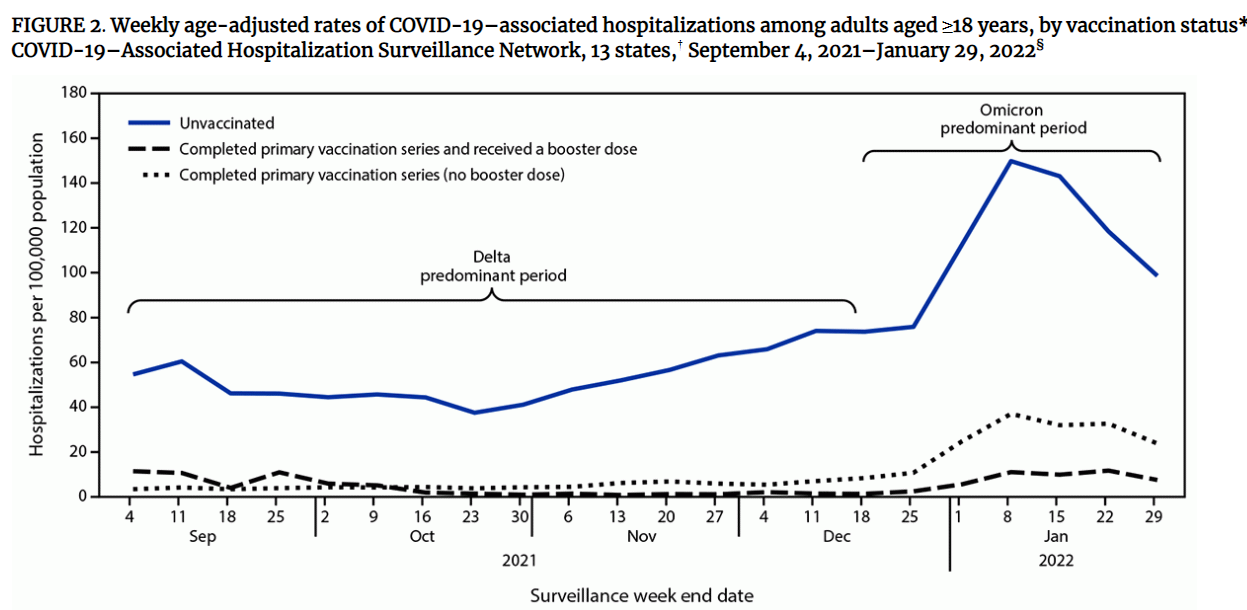
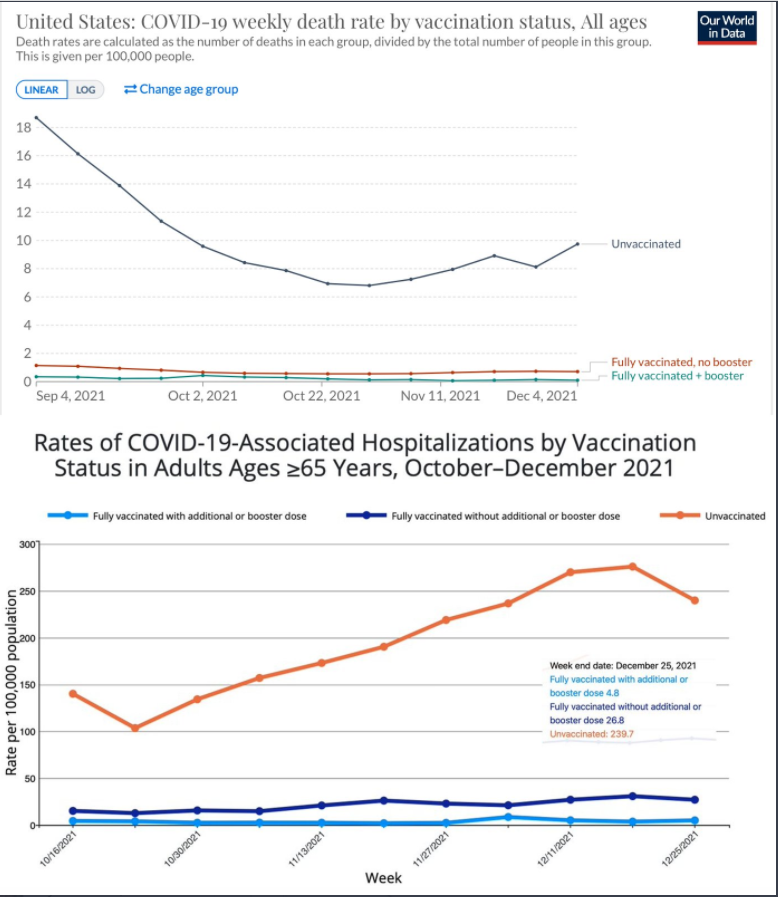
During the omicron wave, hospitalization among unvaccinated adults remained 12 times the rates among vaccinated adults who received booster or additional doses and four times the rates among adults who received a primary series, but no booster or additional dose.
The rate among adults who received a primary series, but no booster or additional dose, was three times the rate among adults who received a booster or additional dose
A previous study conducted before the Omicron-predominant period that showed increased risk for COVID-19–associated hospitalization among certain racial and ethnic groups, including Black adults, and suggested the increased hospitalization rates were likely multifactorial and could include increased prevalence of underlying medical conditions, increased community-level exposure to and incidence of COVID-19, and poor access to health care in these groups
The increase in transmissibility of the Omicron variant might have amplified these risks for hospitalization…the increased risk for hospitalization among Black adults during the Omicron-predominant period might also be due, in part, to lower proportions of Black adults receiving both the primary vaccination series and booster doses
My take: This study shows the value of getting vaccinated and booster shot. I would speculate that many of the unvaccinated have had previous infections and this further indicates that vaccination may provide greater protection than immunity following infection.
“Step therapy is a utilization-management strategy whereby insurers implement tiered treatment pathways for various conditions. Patients (and their physicians) who seek approval for restricted therapies must document unsuccessful attempts at treatment with less expensive therapies in earlier ‘steps.’ Most employer-sponsored insurance plans incorporate requirements for step therapy into their drug formularies.”
The fundamental flaw with step therapy: “Payers have turned to step-therapy protocols because we have failed to address high drug prices at a societal level, instead transferring the problem to the point of care and imposing administrative burdens on physicians and patients.”
While step therapy makes sense with high-cost, low-value medications, it is problematic with high-cost, high efficacy medications. To mitigate some of the harmful effects of step therapy, lawmakers have drafted the Safe Step Act.
“The Safe Step Act also lists five specific circumstances under which insurers would be required to grant an exception to step-therapy protocols. It would require exceptions in cases in which the required treatments have previously been ineffective for the patient, delay of effective treatment would lead to “severe or irreversible consequences,” required treatments are contraindicated, required treatments would prevent the patient from performing activities of daily living, or the patient’s condition is stable on the existing medication and the patient has previously received coverage approval for it. The act would also empower the executive branch to identify other circumstances that might require exemptions. Most of these exceptions, however, could create additional administrative burdens for patients and clinicians that might pose challenges for maintaining continuity of care.”
My take (from authors): “the Safe Step Act focuses on legal action at the individual-prescription level, failing to bring down drug prices while increasing administrative costs.”
My take: It is disgraceful that a prominent physician would jeopardize the health of children and worsen vaccine misinformation more broadly. I think his actions merit review by the ABIM. If you want to share your views with the ABIM: Contact ABIM
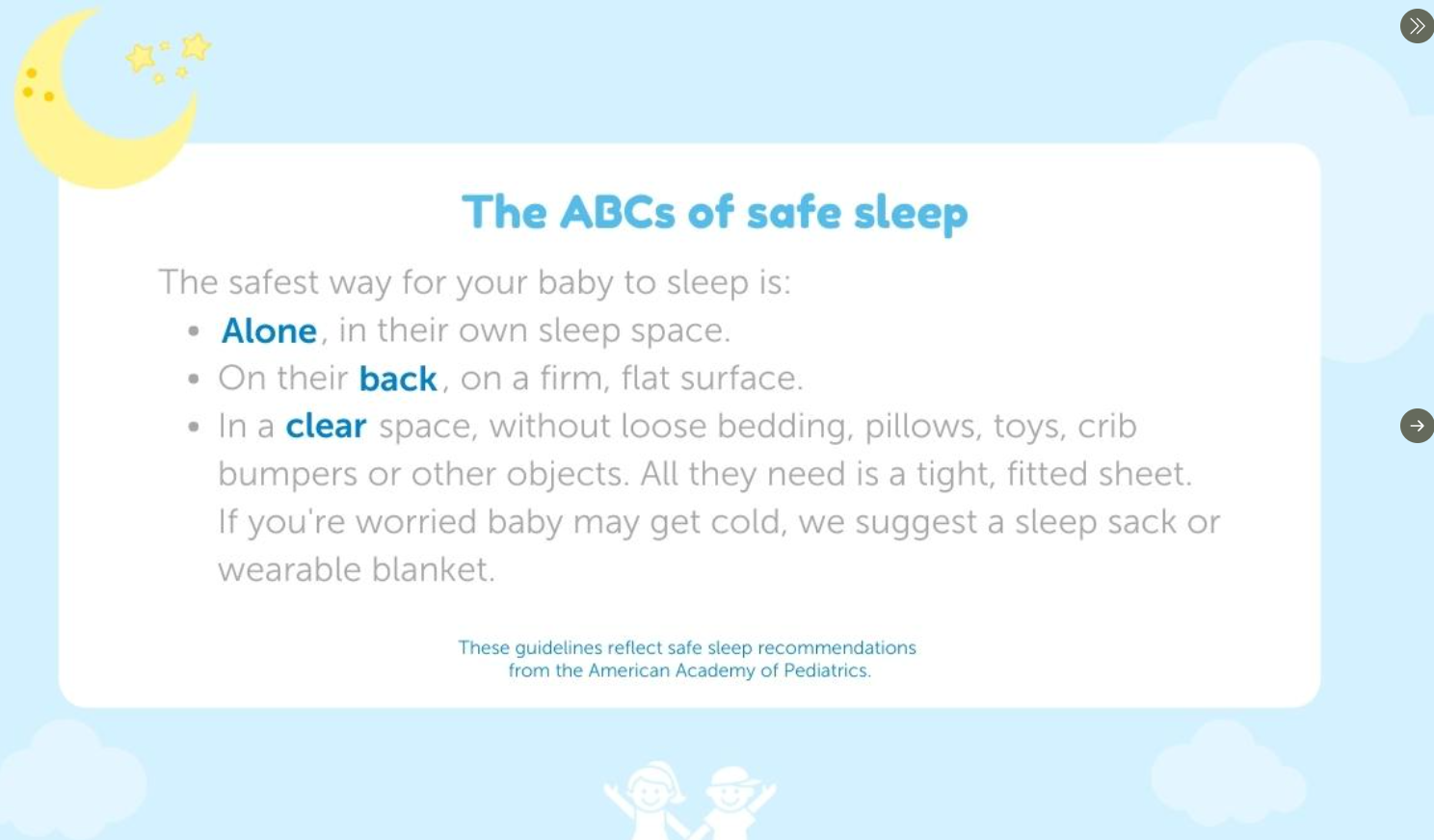
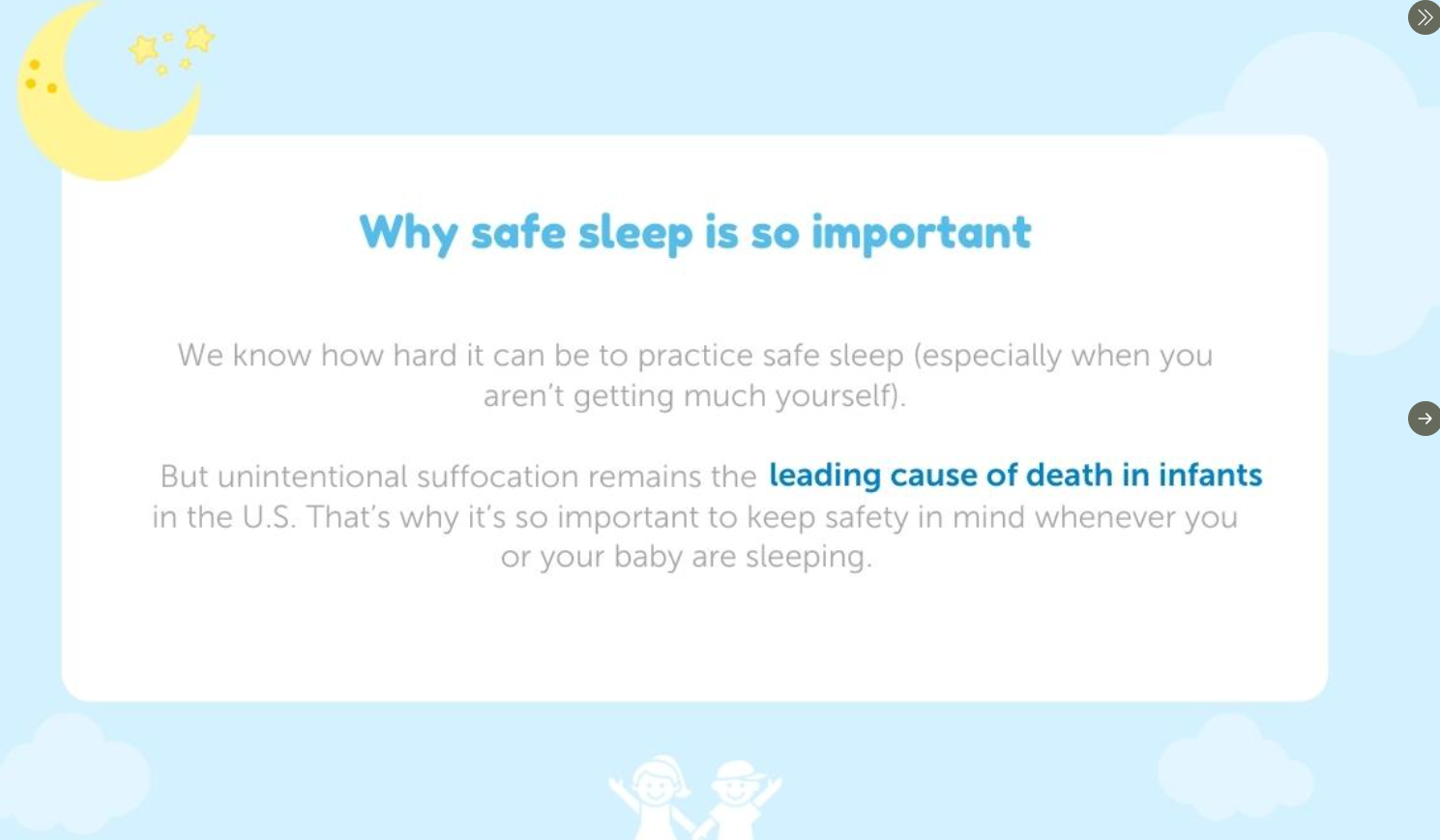
I would urge colleagues when they see infants in the first few months of life to always discuss safe sleep which is the number one cause of mortality in infants. A simple message can be added to standard ‘Smartphrases’ for every infant seen with reflux, colic and formula intolerance.
A terrific website that focuses on this crucial issue: Charlieskids.org; it has videos, do’s and don’ts as well as a link to Cribs for Kids (discounted safe crib website). In addition,this website has a book called “Sleep Baby Safe and Snug” which incorporates updated recommendations on safe sleep practices.
Here are some screenshots from CHOA’s twitter feed on this topic.
Related blog posts:
The High Toll of Sudden Infant Death From 2013-2015, there was an average of 3523 US infants each year who died from SUID (sudden unexpected infant death), peaking at 1-2 months of life. More black infants died of SUID in the first year than black children who died from firearm homicides in all of childhood through age 19 years. SUID deaths from 2013-2015 (10,568) was similar to the total number of motor vehicle-traffic deaths in all of childhood (10,714) and greater than the total number of any of the other causes.
Methods: This interview-questionnaire study used a test-negative case-control design, enrolling persons who received a positive (case-participants) or negative (control-participants) SARS-CoV-2 test result, from among all California residents, without age restriction, who received a molecular test result for SARS-CoV-2 during February 18–December 1, 2021. A total of 652 case- and 1,176 control-participants were enrolled in the study equally across nine multi-county regions in California.
Limitations included the following:
This study did not account for other preventive behaviors that could influence risk (eg distancing)
This analysis relied on an aggregate estimate of self-reported face mask or respirator use across, for some participants, multiple indoor public locations
Estimates do not account for face mask or respirator fit
Data collection occurred before the expansion of the SARS-CoV-2 B.1.1.529 (Omicron) variant
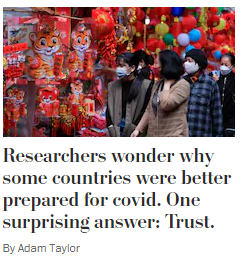
Some of the reasons for America’s difficulties are well known. Despite having one of the world’s most powerful arsenals of vaccines, the country has failed to vaccinate as many people as other large, wealthy nations. Crucially, vaccination rates in older people also lag behind certain European nations.
The United States has fallen even further behind in administering booster shots, leaving large numbers of vulnerable people with fading protection as Omicron sweeps across the country...
These factors were key for pre-coronavirus rankings such as the Global Health Security Index, which in 2019 listed the United States and Britain as most prepared for a catastrophic biological event, like a pandemic — and Vietnam 74th out of 117 countries.
Instead, better outcomes appear to have gone hand in hand with high levels of trust in government and other citizens. Perception of government corruption was correlated with worse outcomes. Researchers measured trust with polling data from the World Values Survey and Gallup...
The pandemic has “eroded trust in the government,” Bang Petersen said. “It actually seems as if the pandemic has worsened the problem that this study identified.”
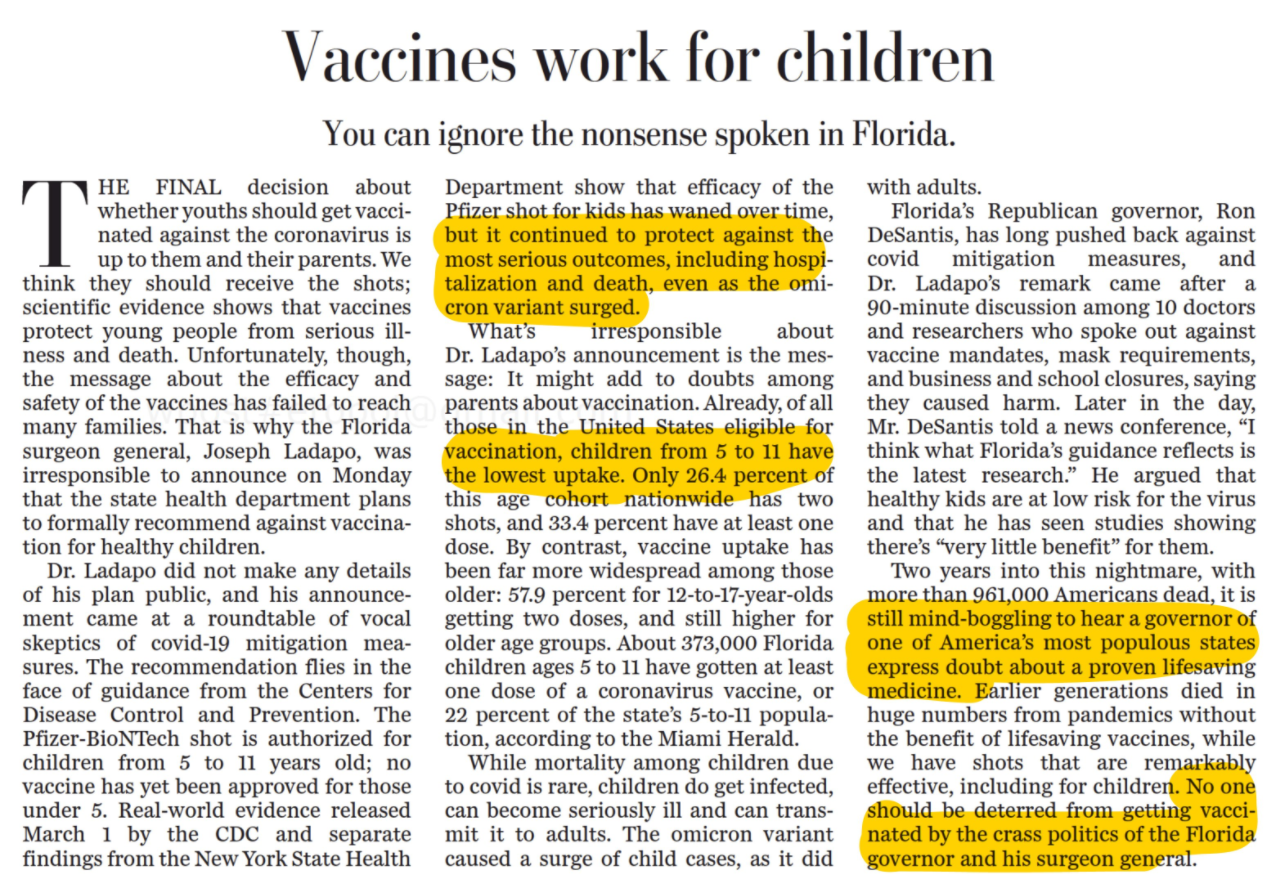
“The AAP recommends COVID-19 vaccination for all children and adolescents 5 years of age and older who do not have contraindications using a COVID-19 vaccine authorized for use for their age.”
“Children with previous infection or disease with SARS-CoV-2 should receive COVID-19 vaccination, according to CDC guidelines.”
“Given the importance of routine vaccination and the need for rapid uptake of COVID-19 vaccines, the AAP supports coadministration of routine childhood and adolescent immunizations with COVID-19 vaccines (or vaccination in the days before or after).”
Also, more data on vaccine effectiveness from Eric Topol’s Twitter feed):
Vaccines reducing Covid deaths by 99% and hospitalizations by 98% with vaccination and a booster











 gutsandgrowth