IBD Updates: Microbiome afer surgery, Anti-TNF agents NOT changing hospitalizations/surgeries, Biobanking Genetics

X Fang et al. Inflamm Bowel Dis 2021; 27: 603-616. Full Text: Gastrointestinal Surgery for Inflammatory Bowel Disease Persistently Lowers Microbiome and Metabolome Diversity

  • Methods: The UC San Diego IBD Biobank was used to prospectively collect 332 stool samples (every 6 months) from 129 subjects (50 ulcerative colitis; 79 Crohn’s disease). Of these, 21 with Crohn’s disease had ileocolonic resections, and 17 had colectomies.
  • Key finding: Intestinal surgeries in IBD patients seem to reduce the diversity of the gut microbiome and metabolome in IBD patients. Colectomy has a larger effect than ileocolonic resection.
  • Limitations: Confounding variables (eg. antibiotics) and selection bias (patients with more severe disease

C Verdon et al. Inflamm Bowel Dis 2021; 27: 655-661. No Change in Surgical and Hospitalization Trends Despite Higher Exposure to Anti-Tumor Necrosis Factor in Inflammatory Bowel Disease in the Québec Provincial Database From 1996 to 2015

Key findings:

  • 34,644 newly diagnosed patients with IBD (CD = 59.5%)
  • The probability of first and second hospitalizations remained unchanged in Québec and the probability of major surgery was low overall but did increase despite the higher and earlier use of anti-TNFs. However, the authors note that “in the present study, biologics use under the public reimbursement plan was 13% in patients with UC and 16% in patients with CD.”
  • My take: This study is provocative but probably misleading; it is quite likely that use of anti-TNF agents do lower the risk of hospitalization and surgery.

K Gettler et al. Gastroenterol 2021; 160: 1546-1557. Full text PDF: Common and Rare Variant Prediction and Penetrance of IBD in a Large, Multi-ethnic, Health System-based Biobank Cohort

  • Methods: The authors used the Mount Sinai BioMe Biobank, which contains genetic data on
    32,595 patients. After rigorous phenotype validation, 19,541 individuals were retained, of whom 339 were IBD patients (273 CD, 28 UC, and 37 individuals who were classified as both) and 19,202 were controls
  • Key findings: In this study, the authors identified several rare VEO-IBD variants with high genetic penetrance using the biobank samples and then replicated results in large case control African American and European data sets.
  • One of the variants with the highest genetic penetrance located in the gene LRBA was predicted to result in a deleterious change to the amino acid structure. Reduced expression of CTLA-4 secondary to the variants we identified in LRBA may result in autoinflammation that contributes to IBD. “Targeting reduced CTLA-4 expression is an exciting treatment venue, because expression of CTLA-4 has been shown to be increased by chloroquine treatment in vitro.”
  • Enteropathy is present in 63% of all known individuals with LRBA deficiency, with 27% having chronic diarrhea as the presenting symptom

Mangroves in John Pennekamp State Park (Key Largo)

For the Next Insurance Appeal: Therapeutic Drug Monitoring in Adalimumab Treatment (Pediatrics) & Satire on Prior Authorizations

There is a lot of data supporting the use of therapeutic drug monitoring (TDM) for anti-TNF agents. A recent study (MJ Kim et al. JPGN 2021; 72: 870-876. Therapeutic Drug Monitoring of Adalimumab During Long-term Follow-up in Paediatric Patients With Crohn Disease) adds to this data and supports increased adalimumab (ADL) dosing if below target values.

In this prospective study of 31 pediatric patients with Crohn’s disease, the authors found correlations between ADL values and the endpoints of clinical remission (CR) and mucosal healing (MH). The authors checked TLs at 4 months, 1, 2, and 3 years. Key findings:

  • The median trough levels (TLs) of ADL were higher in patients in CR (7.6 ± 3.5 μg/mL) than in patients with active disease (5.1 ± 2.2 μg/mL).
  • ADL TLs were significantly higher in patients who achieved MH than in those who did not (14.2 ± 7.6 vs 7.8 ± 5.2 μg/mL). 
  • The optimal cut-point for predicting MH at 1 year of ADL treatment was 8.18 μg/mL
  • MH was noted in 42% at 4 months and 55% at 1 yr; CR was noted in 90% at 4 months and 84% at 1 yr. ADL treatment was associated with positive effects on growth indicators as well.

The authors discuss TDM for anti-TNF therapy, noting that for infliximab, the AGA recommends values >5 mcg/mL and the ACG >7.5 mcg/mL. There are fewer studies of ADL TDM -prior studies have indicated goals of >5.8, >7.1, >8, and >8.1; thus, this study is in agreement with these prior studies.

My take: This study further supports the value of TDM; better drug levels correlate with better outcomes.

Related blog posts:

Fort Jefferson, Dry Tortugas. The fort has reportedly 16 million bricks (I didn’t confirm this figure).

More satireOn Prior Authorizations:

Mediterranean Diet vs Specific Carbohydrate Diet for Crohn’s Disease

It appears that the Mediterranean diet works as well as the specific carbohydrate diet for adults with Crohn’s disease.

A Randomized Trial Comparing the Specific Carbohydrate Diet to a Mediterranean Diet in Adults with Crohn’s Disease (in press -thanks to Kipp Ellsworth for this reference) JD Lewis et al. Gastroenterol 2021; https://doi.org/10.1053/j.gastro.2021.05.047

Abstract:

Background & Aims

This study compared the effectiveness of the Specific Carbohydrate Diet (SCD) to the Mediterranean Diet (MD) as treatment for Crohn’s disease (CD) with mild to moderate symptoms.

Methods

Adult patients with CD and with mild-moderate symptoms were randomly assigned 1:1 to consume the MD or SCD for 12 weeks. For the first 6-weeks, participants received prepared meals and snacks according to their assigned diet. After 6-weeks, participants were instructed to follow the diet independently. The primary outcome was symptomatic remission at week 6. Key secondary outcomes at week 6 included: fecal calprotectin (FC) response (FC <250 μg/g and reduction by >50% among those with baseline FC >250 μg/g) and C-Reactive Protein (CRP) response (high-sensitivity CRP (hsCRP) <5 mg/L and >50% reduction from baseline among those with hsCRP >5mg/L).

Results

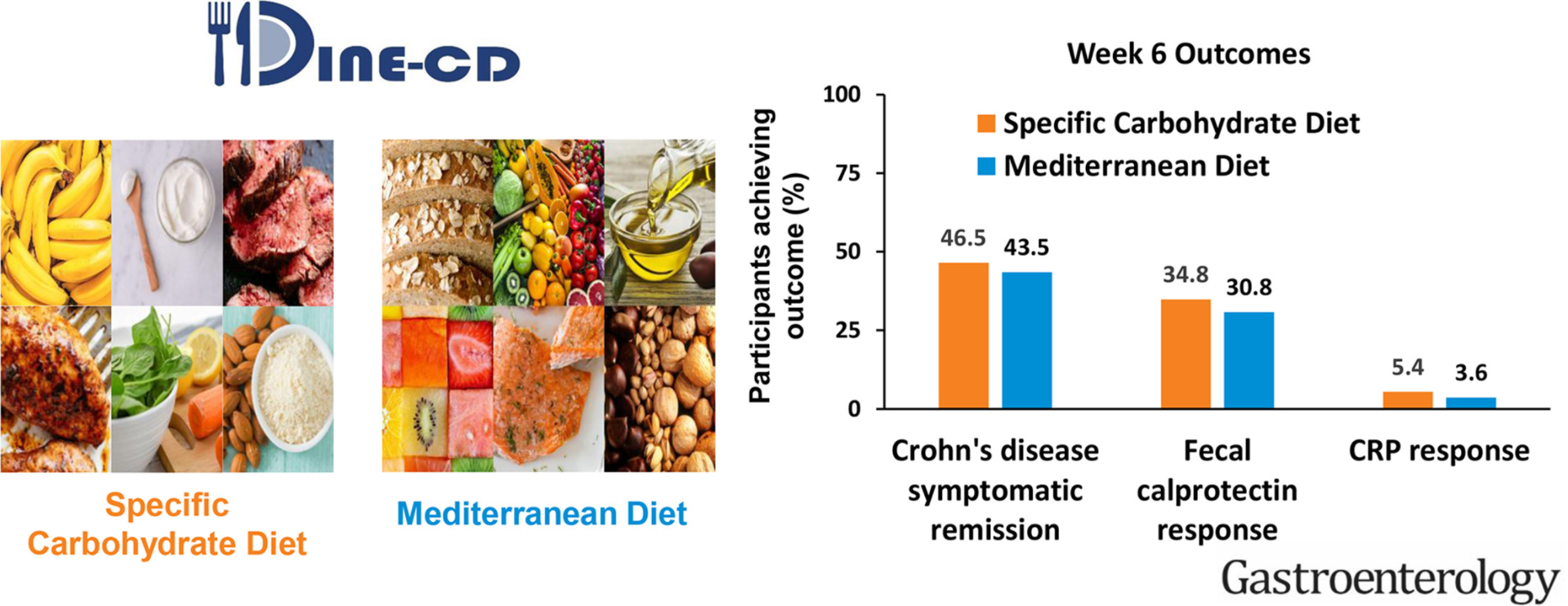
194 patients were randomized, and 191 were included in the efficacy analyses. The percentage of participants who achieved symptomatic remission at week 6 was not superior with SCD (SCD 46.5%, MD 43.5%; P = .77). FC response was achieved in 8/23 participants (34.8%) with SCD and 4/13 participants (30.8%) with MD (P = .83). CRP response was achieved in 2/37 participants (5.4%) with SCD and 1/28 participant (3.6%) with MD (P = .68).

Conclusions

SCD was not superior to MD to achieve symptomatic remission, FC response and CRP response. CRP response was uncommon. Given these results, the greater ease of following the MD, and other health benefits associated with MD, the MD may be preferred to the SCD for most patients with CD with mild to moderate symptoms.

Related blog post:

Trial by Diet Approach for Crohn’s Disease in Children

RS Boneh et al. Clin Gastroenterol Hepato 2021; 19: 752-759. Dietary Therapies Induce Rapid Response and Remission in Pediatric Patients With Active Crohn’s Disease

The authors collected  data from a multicenter randomized trial of the CD exclusion diet (CDED) in children (mean age, 14.2 ± 2.7 y) with Crohn’s disease who were randomly assigned to groups given either exclusive enteral nutrition (EEN, n = 34) or the CDED with 50% (partial) enteral nutrition (PEN) (n = 39). 

The CDED has been discussed previously on this blog; it aims to avoid animal and saturated fat, milk fat, gluten, specific emulsifiers, taurine, red (reduced heme) and processed meat, and certain fibers from some fruits and vegetables. In addition to excluding patients who received competing therapies (eg. steroids, immunomodulators, and biologics), the authors excluded patients with isolated large bowel disease (L2).

Key findings:

  • At week 3 of the diet, 82% of patients in the CDED group and 85% of patients in the EEN group had a dietary response or remission. Median serum levels of C-reactive protein had decreased from 24 mg/L at baseline to 5.0 mg/L at week 3 (P < .001)
  • Among the 49 patients in remission at week 6, 46 patients (94%) had had a diet response or remission by week 3 and 81% were in clinical remission by week 3

The authors note that the rapid response to dietary therapy suggests a role for a ‘trial by diet’. As such, dietary therapy could be used as monotherapy, for patients failing other therapies, or as a bridge to biological therapy. The authors note that the exact reasons for response to dietary therapy are unsettled and could be “due to both foods excluded and foods enriched in the diet.” In addition, they note that diet appears to be a trigger for inflammation and that reintroduction of foods leads to rebound in inflammation (eg. higher calprotectin) and dysbiosis.

My take: This study shows that dietary therapy works quickly. In this small study, the effectiveness of combined CDED with 50% PEN was similar to EEN.

Related blog posts:

Rhododendrum

No Benefit of Combination Therapy with Ustekinumab or Vedolizumab

C Yzet et al. Clin Gastroenerol Hepatol 2021; 19: 668-679. Full Text: No Benefit of Concomitant Immunomodulator Therapy on Efficacy of Biologics That Are Not Tumor Necrosis Factor Antagonists in Patients With Inflammatory Bowel Diseases: A Meta-analysis

In a systematic review, key findings:

  • Combination therapy was not associated with better clinical outcomes in patients receiving vedolizumab (16 studies: OR, 0.84; 95% CI, 0.68–1.05; I2=13.9%; Q test P = .17); n= 933 and n=2378 with combination therapy and monotherapy, respectively
  • Combination therapy was not associated with better clinical outcomes in patients receiving ustekinumab (15 studies: OR, 1.1; 95% CI, 0.87–1.38; I2 = 11%; Q test P = .28); n=856 and n=1926 patients with combination therapy and monotherapy, respectively

Why don’t immunomodulators seem to help? “Unlike anti-TNF, prospective studies as well as post hoc analysis of randomized controlled trial consistently reported a low immunogenicity [with ustekinumab and vedolizumab]…all the prospective studies available to date have shown no impact of immunomodulator on the trough serum level of vedolizumab or ustekinumab.”

Limitation: patients treated with combination therapy in the included studies could be more severe

My take: “This meta-analysis found that overall the use of combination therapy in patients treated with vedolizumab or ustekinumab was not associated with a clinical benefit in comparison with the use of monotherapy.”

————————————————————————————————————————–

What Happens With Double Switches of Infliximab Products

N Trystram et al. Alimentary Pharmacology & Therapeutics, 01 Mar 2021, 53(8):887-899 Outcomes after double switching from originator Infliximab to biosimilar CT-P13 and biosimilar SB2 in patients with inflammatory bowel disease: a 12-month prospective cohort study.

Key findings:

  • Drug persistence was high (94.9%) after 54 weeks in cohort of 158 patients
  • Double switching from the originator Infliximab to CT-P13 and then to SB2 was associated with continued effectiveness; this study did not identify issues related to immunogenicity or safety of anti-TNF therapy after 54 weeks of follow-up.

My take: There is very limited data on repeated infliximab product changes; this small study did not identify any problems. Due to mandates from insurance, more frequent switching is likely to be more widespread and more definitive outcome data will emerge.

Abstract:

Related blog posts:

Combating Anti-Drug Antibodies with Immunomodulators in Pediatric IBD

RJ Colman et al. Inflamm Bowel Dis 2021; 27: 507-515. Favorable Outcomes and Anti-TNF Durability After Addition of an Immunomodulator for Anti-Drug Antibodies in Pediatric IBD Patients

In this retrospective review with 89 patients who developed antidrug antibodies (ADAs), the authors identified 30 who started an immunomodulator (IM) within 3 months of developing an ADA and compared with 59 who did not start an IM. The main IM used was methotrexate (n= 28, 93%)

Key findings:

  • 61 of the 89 patients (69%) had quiescent disease based on physician global assessment at their previous clinic visit
  • The initial anti-TNF was stopped shortly after ADA detection in 36% of the No-IM patients vs none of the IM patients. Thus, anti-TNF agents durability was prolonged in the IM group.
  • Dose intensification was also undertaken at the time of ADA detection: 25 (83%) of IM group and 28 (48%) of non-IM group.
  • At 12 months, steroid-free clinical and biochemical remission on the same anti-TNF occurred in 53.9% of the IM group vs 26.8% in the No-IM group (P = 0.025).
  • Drug levels rose higher (P = 0.003) and ADA levels fell farther (P = 0.037) in the IM group than in the No-IM group
  • Lower ADAs often improved without IM: An ADA level <329 ng/mL had a 76.2% sensitivity and an 83.3% specificity for ADA reversal without IM.

My take: If a patient develops a significantly elevated anti-drug antibody, addition of methotrexate/immunomodulator along with dose intensification increases the likelihood that the anti-TNF agent will continue to be effective.

Related blog posts:

Real-World Experience with Proactive Therapeutic Drug Monitoring in Inflammatory Bowel Disease

A recent large retrospective pediatric study provides further evidence that therapeutic drug monitoring (TDM) in inflammatory bowel disease (IBD) results in better clinical outcomes. One of my partners, Chelly Dykes, is a coauthor and leads our ImproveCareNow team.

JL Lyles et al. Inflamm Bowel Dis 2021; 27: 482-492. Effect of a Practice-wide Anti-TNF Proactive Therapeutic Drug Monitoring Program on Outcomes in Pediatric Patients with Inflammatory Bowel Disease

This single center implemented a practice wide TDM approach in 2014. This study compared a historical pre-TDM group (n=108) to the TDM group (n=206). The primary outcome was sustained clinical remission (SCR22-52), defined as physician global assessment (PGA) of inactive from 22 to 52 weeks and off corticosteroids at 52 weeks. Key findings:

  • The SCR22-52 was achieved in 42% of pre-TDM and 59% of TDM patients (risk difference, 17.6%; 95% CI, 5.4–29%; P = 0.004)
  • The TDM group had an increased adjusted odds of achieving SCR22-52 (odds ratio, 2.03; 95% CI, 1.27–3.26; P = 0.003)
  • The adjusted risk of developing high titer antidrug antibodies (ADAs) was lower in the post-TDM group (hazard ratio, 0.18; 95% CI, 0.09–0.35; P < 0.001)
  • The SCBR22-52 (which was defined by normal CRP along with SCR22-52) was 24.7% in pre-TDM and 42.7% in the TDM group
  • The authors did not identify a significantly higher rate of anti-TNF cessation in either group
  • Only 12% of patients in their practice were receiving combination therapy

In the discussion, the authors review three pivotal studies which also support proactive TDM: TAXIT, TAILORIX, and PAILOT.

My take: While this was an observational study with historical controls, the findings are convincing that proactive TDM is helpful, particularly in patients who are not receiving combination therapy.

Related blog posts:

March 31, 2021

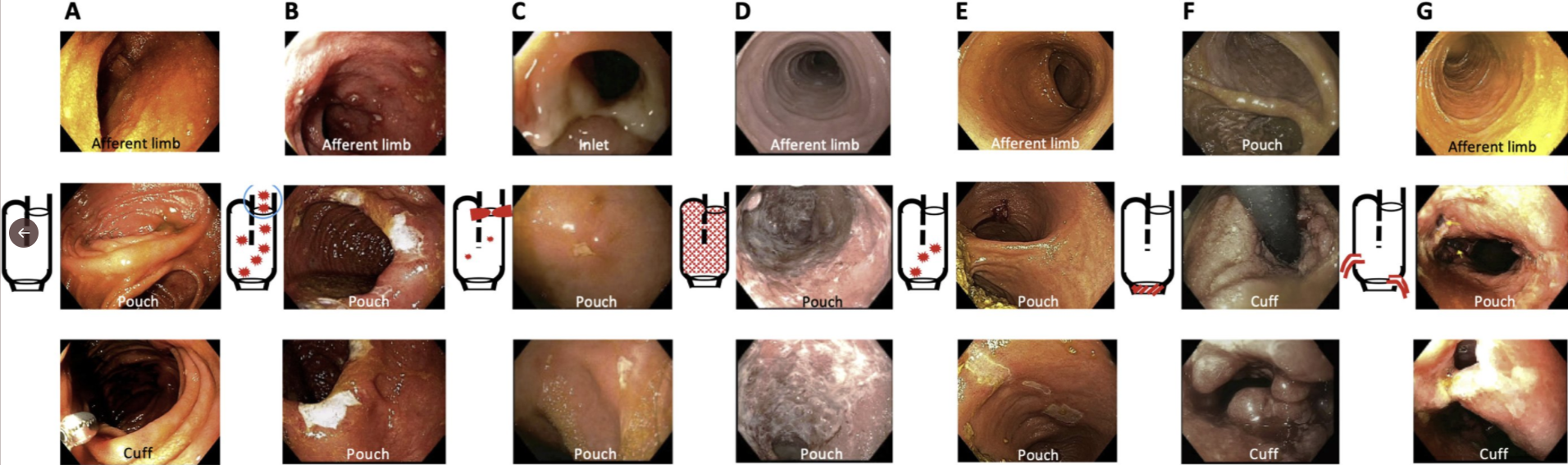
Chicago Classification of J Pouch Outcomes

S Akiyama et al. Clin Gastroenterol Hepatol 2021; https://doi.org/10.1016/j.cgh.2021.02.010 Endoscopic Phenotype of the J Pouch in Patients With Inflammatory Bowel Disease: A New Classification for Pouch Outcomes

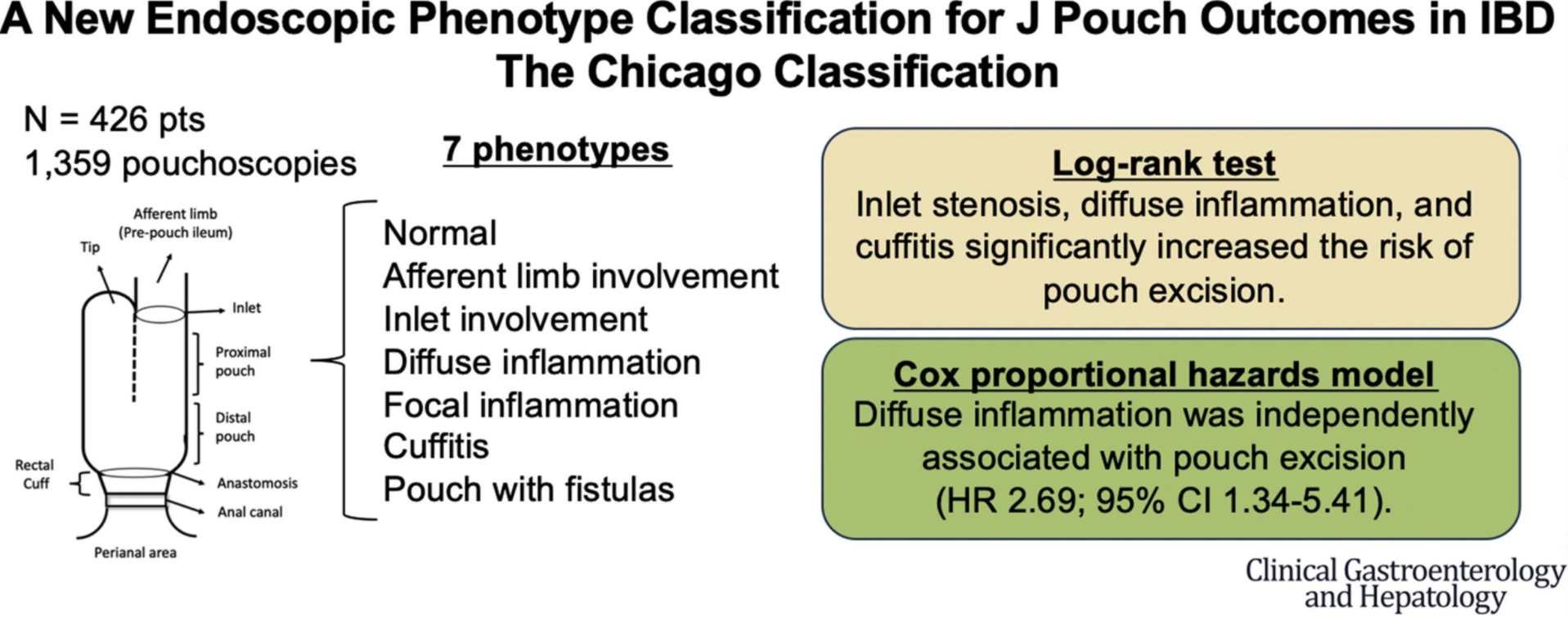
The authors retrospectively reviewed 1359 pouchoscopies and classified them into 7 main pouch phenotypes: (1) normal, (2) afferent limb involvement, (3) inlet involvement, (4) diffuse, (5) focal inflammation of the pouch body, (6) cuffitis, and (7) pouch with fistulas noted 6 months after ileostomy takedown.

Key finding: Diffuse inflammation was associated independently with pouch excision (hazard ratio, 2.69; 95% CI, 1.34–5.41; P = .005).

Related blog posts:

Early Assessment of Acute Ulcerative Colitis with ACE (Albumin, CRP, & Endoscopy)

A recent study showed that admission albumin, CRP and early endoscopy were predictive of outcomes with ulcerative colitis patients admitted for a corticosteroids: RK Grant et al. Inflamm Bowel Dis 2021; 27: 451-457. Full text (free) The ACE (Albumin, CRP and Endoscopy) Index in Acute Colitis: A Simple Clinical Index on Admission that Predicts Outcome in Patients With Acute Ulcerative Colitis

This retrospective study had 235 patients (median age 38 years). 90% had endoscopy at a median of 2 days from admission. Key findings:

  • 155 of the 235 patients (66.0%) responded to steroids
  • 78.1% (25 of 32) of patients with concurrent CRP ≥50 mg/L, albumin ≤30 g/L, and increased endoscopic severity (severe on physician’s global assessment) (maximum score = 3) did not respond to IV steroids (positive predictive value [PPV] 78.1%, negative predictive value [NPV] 87.1%).
  • Comparison with Truelove and Witts Score: 56 of 119 (47.1%) of those classed TWS severe did not respond to steroids. Previously TWS score of acute severe ulcerative colitis (ASUC), defined by at least 6 bloody stools per day plus at least 1 marker of systemic disturbance has been associated with a 19% risk of colectomy during admission.

My take: In patients with ulcerative colitis who present with low albumin and high CRP values, early escalation of medical therapy is highly likely; don’t forget to check a PPD or quantiferon Gold assay early on.

Related blog posts:

Azalea bush (March 2021)