Encouraging Safety Data for Ustekinumab & ESPGHAN Obesity Position Paper

WJ Sandborn et al. Inflamm Bowel Dis 2021; 27: 994-1007. Full text: Safety of Ustekinumab in Inflammatory Bowel Disease: Pooled Safety Analysis of Results from Phase 2/3 Studies

Methods: Data from 6 ustekinumab phase 2/3 CD and UC studies were pooled, and safety was evaluated through 1 year; this included 2574 patients (1733 patient-years of follow-up)

Key Safety findings –Events per 100 patient years -placebo vs ustekinumab respectively:

  • Adverse events: 165.99 [95% CI, 155.81–176.67] vs 118.32 [95% CI, 113.25–123.55])
  • Serious AEs: 27.50 [95% CI, 23.45–32.04] vs 21.23 [95% CI, 19.12–23.51])
  • Infections 80.31 [95% CI, 73.28–87.84] vs 64.32 [95% CI, 60.60–68.21])
  • Serious infections: 5.53 [95% CI, 3.81–7.77] vs 5.02 [95% CI, 4.02–6.19])
  • Malignancies excluding nonmelanoma skin cancer: 0.17 [95% CI, 0.00–0.93] vs 0.40 [95% CI, 0.16–0.83])
  • Major cardiovascular events were rare with 2 in placebo group 0.34 and 2 in the ustekinumab group 0.12

More key findings:

  • No cases of progressive multifocal leukoencephalopathy or reversible posterior leukoencephalopathy
  • Antibodies to ustekinumab were identified in 3.6% of patients

My take: This study showed similar safety between ustekinumab and placebo, but is limited by short followup. The authors note that 5-year data from ustekinumab’s use with psoriasis has found no safety signals for malignancy.

Related blog posts:

Unrelated article: E Verduci et al. JPGN 2021; 72: 769-783: Full text: Role of Dietary Factors, Food Habits, and Lifestyle in Childhood Obesity Development: A Position Paper From the European Society for Paediatric Gastroenterology, Hepatology and Nutrition Committee on Nutrition

Why I Didn’t Like a Study on Resilience Plus One

P Sehgal et al. Inflamm Bowel Dis 2021; 27: 791-796. High Levels of Psychological Resilience Associated With Less Disease Activity, Better Quality of Life, and Fewer Surgeries in Inflammatory Bowel Disease

This cross-sectional study with 229 patients examined the relationship between inflammatory bowel disease (IBD) activity and resilience based on the Connor-Davidson Resilience Scale questionnaire (high resilience score ≥ 35).

Key findings:

  • High resilience was noted in 27% of patients with UC and 21.5% of patients with CD.
  • Among patients with UC, those with high resilience had a mean Mayo score of 1.54, and those with low resilience had a mean Mayo score of 4.31, P < 0.001.
  • Among patients with CD, those with high resilience had a mean HBI of 2.31, and those with low resilience had a mean HBI of 3.95, P = 0.035.
  • In multivariable analysis, high resilience was independently associated with lower disease activity in both UC (P < 0.001) and CD (P = 0.037) and with higher QoL (P = 0.016).
  • High resilience was also associated with fewer surgeries (P = 0.001) among patients with CD.

Reading this study, made me think of Galen’s assertion about a different treatment, circa 100 AD:   “All who drink of this remedy recover in a short time except those whom it does not help, who all die. It is obvious, therefore, that it fails only in incurable cases.” In the case of this study, the remedy is resiliency.

This study is intriguing and adds to the literature that mental health and IBD may be a two-way street: mental health may affect IBD and IBD activity may affect mental health. However, it is difficult to prove causation in a cross-sectional study. Reverse causation is possible; that is higher disease burden may result in lower resilience.

Also, it is not clear to me that resilience is a particularly modifiable factor. Some may interpret this study in a ‘blame the victim’ mode. I think a lot of individuals would think they are resilient but most do not know until they face a difficult situation. Perhaps, Mike Tyson’s assertion is more apt: “Everyone has a plan until they get punched in the mouth.”

My take: This study does not prove that resilience helps prevent IBD activity, though being resilient is nice if you have it.

Plus one: JR Rosh et al. J Crohns Colitis. 2021 May 26; jjab089. doi: 10.1093/ecco-jcc/jjab089. (EPUB). Ustekinumab in Pediatric Patients with Moderately to Severely Active Crohn’s Disease Pharmacokinetics, Safety, and Efficacy Results from UniStar, a Phase 1 Study This was a “multicentre, 16-week, double-blind induction dose-ranging study (NCT02968108), patients aged 2-<18 years; patients were randomized (1:1) to one of 2 weight range-based intravenous induction doses: 130mg vs 390mg in patients ≥40kg and 3mg/kg vs 9mg/kg in patients <40kg. At week 8, all patients received a single subcutaneous ustekinumab maintenance dose of 90mg in patients ≥40kg or 2mg/kg in patients <40kg..” (Kudos to my partner, Stanley Cohen, one of the authors)

Key finding:  Pharmacokinetics were similar to those in adults with Crohn’s disease. However, serum ustekinumab concentrations were lower among those with body weight <40kg…These results suggest a different dosing regimen may be required for patients <40kg

Related blog posts:

Image below from Anne’s Beach (Lower Matecumbe Key, Florida)

Oral Treatment of Celiac Disease & Research Optimist

A long time ago I heard a joke from a mentor about how can you tell if a person is an optimist.  An optimist is a person who finds a pile of manure under the tree on Christmas morning and declares: ‘Oh boy, I’m getting a pony.’

Researchers who are trying to identify oral treatments for celiac disease are probably true optimists. Yet, despite my skepticism, a recent study (D Schuppan et al. NEJM 2021; 385: 35-45. A Randomized Trial of a Transglutaminase 2 Inhibitor for Celiac Disease) provides the best proof yet that an oral treatment may be helpful.

In this 6-week randomized, double-blind, placebo-controlled study with 159 participants, treatment with ZED1227, a selective oral transglutaminiase 2 inhibitor reduced histologic injury compared to placebo; all patients were receiving a diet with 3 grams of daily gluten. Key findings:

  • Treatment with ZED1227 at all three dose levels attenuated gluten-induced duodenal mucosal injury. The estimated difference from placebo in the change in the mean ratio of villus height to crypt depth from baseline to week 6 was 0.44 (95% confidence interval [CI], 0.15 to 0.73) in the 10-mg group (P=0.001), 0.49 (95% CI, 0.20 to 0.77) in the 50-mg group (P<0.001), and 0.48 (95% CI, 0.20 to 0.77) in the 100-mg group (P<0.001)
  • The estimated differences from placebo in the change in intraepithelial lymphocyte density were −2.7 cells per 100 epithelial cells (95% CI, −7.6 to 2.2) in the 10-mg group, −4.2 cells per 100 epithelial cells (95% CI, −8.9 to 0.6) in the 50-mg group, and −9.6 cells per 100 epithelial cells (95% CI, −14.4 to −4.8) in the 100-mg group
  • Adverse events were similar to placebo; 3 (8%) patients in the 100 mg group developed a rash

The need for a treatment besides a gluten-free diet is significant; among adults, 40-50% do not achieve mucosal healing/recovery despite GFD institution; in addition, the diet is difficult and costly.

My take: I think it is still a long journey to find an effective & safe oral treatment for celiac disease.

Related blog posts:

Steroids for Some with Short Gut, Poor Agreement on Endoscopy Findings, and Ending Surprise Bills

Briefly noted:

  1. F Wang et al JPGN 2021; 73: 17-22. Glucocorticoids Improve Enteral Feeding Tolerance in Pediatric Short Bowel Syndrome With Chronic Intestinal Inflammation In this retrospective study with 15 patients who had histologically-confirmed chronic intestinal inflammation, glucocorticoids (budesonide or prednisone) were associated with clinical improvement. Key findings: 7 of the 15 patients gained enteral autonomy. 6 of 7 of those had eosinophilic infiltrates as part of their histologic findings. 11 of 15 had a reduction in parenteral calories.
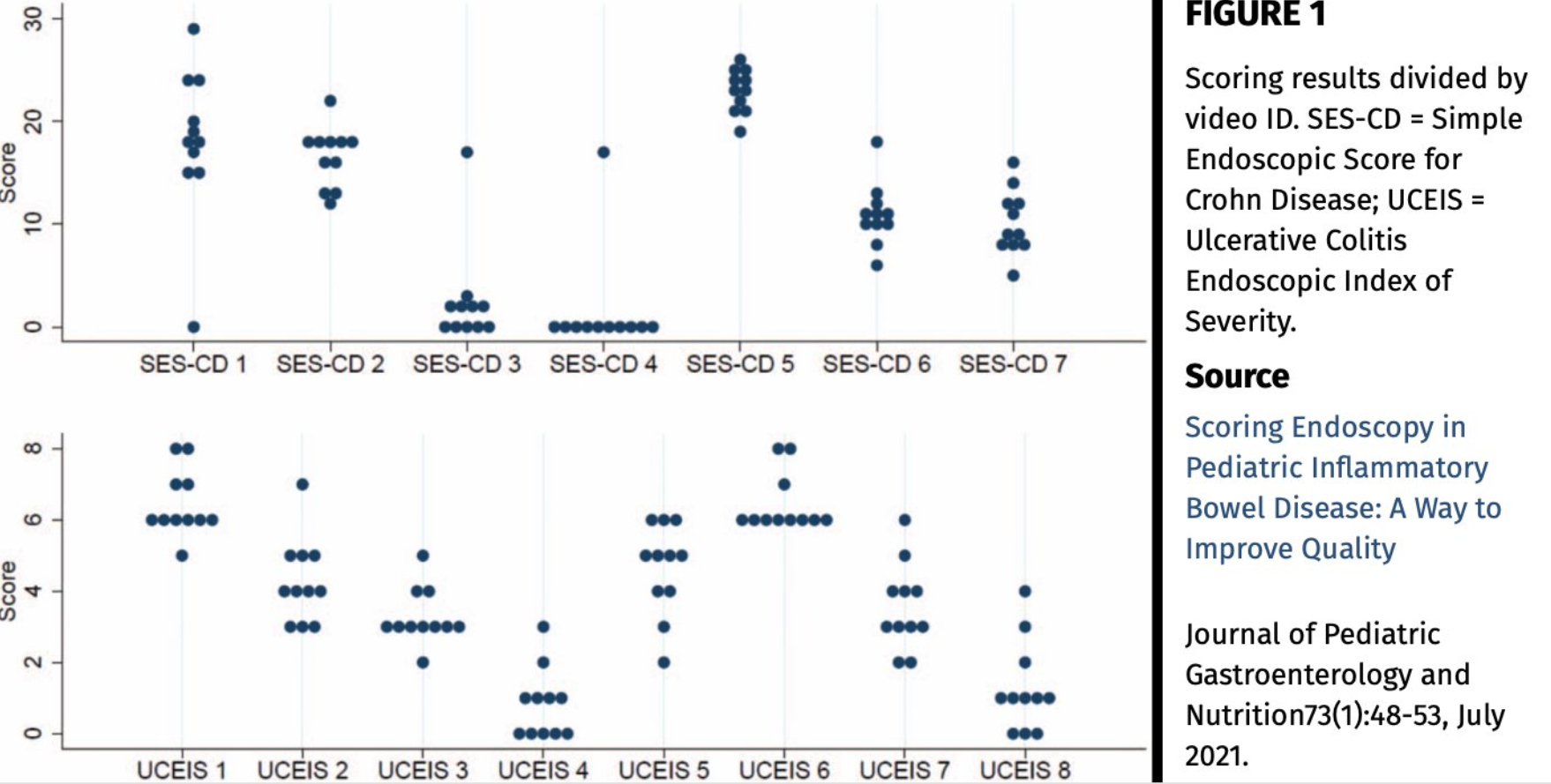
  2. L Norsa et al JPGN 2021; 73: 48-53. Scoring Endoscopy in Pediatric Inflammatory Bowel Disease: A Way to Improve Quality This study showed very poor agreement between 11 pediatric GIs in evaluating videos of 15 endoscopies (see below). Key finding: Intraclass correlation was 0.298 (95% confidence interval [CI]: 0.13–0.55) for ulcerative colitis (UC) and 0.266 (0.11–0.52) for Crohn disease (CD). My take: This study indicates either a need for rigorous training of endoscopists and/or need for AI review of endoscopy.
  3. NY Times 7/2/21: Full text: For Surprise Medical Bills, It’s the Beginning of the End Key issues for regulators: define a standard price for out-of-network care, determine what hospitals and doctors will need to do to notify patients they are not in their insurance network, and establish a complaint system for consumers who believe they were illegally billed.

Related blog posts:

From JGPN twitter feed

Algorithm for Neonatal Acute Liver Failure

K Borovsky et al. JPGN 2021; 73: 80-85. Applying an Age-specific Definition to Better Characterize Etiologies and Outcomes in Neonatal Acute Liver Failure

This single-center retrospective study with 43 patients (over 11 year timeframe) identified etiology and outcomes for neonatal acute liver failure (NALF).

Key findings:

  • Etiologies included viral infection (23%), gestational alloimmune liver disease with neonatal hemochromatosis (GALD-NH) (21%), cardiac-associated ischemia (16%), other ischemia (14%), genetic etiologies (9%), Trisomy 21-associated myelodysplasia (TAM) (7%), hemophagocytic lymphohistiocytosis (HLH) (2%), and not identified (7%)
  • Infants with viral etiologies had the highest alanine aminotransferase (ALT) at presentation (1179 IU/L, interquartile range [IQR] 683–1585 IU/L) in contrast to low levels in GALD-NH (23 IU/L, IQR 18–64 IU/L)
  • Across all etiologies, only 33% were alive at 1 year
  • Among laboratory values at presentation, alpha-fetoprotein (AFP) was significantly higher in patients that survived with their native liver (P = 0.04)

Figure 4 provides a helpful management algorithm for NALF. Figure 4 is similar to the slide below (shared by lead author).

  • -Consider empiric acyclovir in those with INR >/= 2.0 in the first 30 days of life
  • -In those with normal to low elevation of aminotransferases, consider empiric IVIG while undergoing workup. Part of workup should include either MRI or lip biopsy for GALD
  • -In those with moderate to severe elevation of aminotransferases, workup should include assessment for viral, HLH and genetic etiologies. Fulminant viral hepatitis or HLH likely with Ferritin levels >10,000. Hypoglycemia and hyperammonemia is suggestive of metabolic/mitochondrial disorder
  • -Liver biopsy may be needed if etiologies not identified

Related blog posts:

Disclaimer: This blog, gutsandgrowth, assumes no responsibility for any use or operation of any method, product, instruction, concept or idea contained in the material herein or for any injury or damage to persons or property (whether products liability, negligence or otherwise) resulting from such use or operation. These blog posts are for educational purposes only. Specific dosing of medications (along with potential adverse effects) should be confirmed by prescribing physician.  Because of rapid advances in the medical sciences, the gutsandgrowth blog cautions that independent verification should be made of diagnosis and drug dosages. The reader is solely responsible for the conduct of any suggested test or procedure.  This content is not a substitute for medical advice, diagnosis or treatment provided by a qualified healthcare provider. Always seek the advice of your physician or other qualified health provider with any questions you may have regarding a condition.

Pediatric Adoption of “Treat to Target” & Difficulty “Unlearning”

A good article for the next journal club: Clinical Practice Survey of Repeat Endoscopy in Pediatric Inflammatory Bowel Disease in North America (J Moses et al. JPGN 2021; 73: 61-66)

Key findings:

  • 65% of respondents (n=238 of 2300 responded to survey) perform repeat endoscopy to assess for endoscopic remission in pediatric IBD as part of routine clinical practice (usually 9 to 12 months later)
  • “Symptoms are not sufficient to follow IBD patients” was reported by 82% of those who repeat endoscopy
  • “I perform endoscopy based on clinical, biomarker, and/or imaging trends” was reported by 81% of those who do not repeat endoscopy
  • In those inclined to do repeat endoscopy (n=134 total), the authors state there was a significant difference based on years in practice but this is difficult to discern based on the data presented in Table 1; the numbers in both groups are much greater than the number of total patients in each group. They state in the repeat endoscopy group (n=134), the practitioner experience was n=58 (1-5 yrs), n=43 (6-10 yrs), n= 34 (11-15 yrs), and 70 (>15 yrs) and the “no repeat group” (n=67 total) was n=43 (1-5 yrs), n=33 (6-10 yrs), n=21 (11-15 yrs), and n=37 (>15 yrs). Apparently, according to the discussion, those in practice more than 15 years were less likely to recommend a ‘treat-to-target’ endoscopy.
  • There is also a discrepancy in the report with regard to ImproveCareNow participation, stated to be 63% in the abstract and 71% in the results section

Discussion: I would propose that the first part of a journal club start with these two lines from the discussion: “As the paradigm of clinical endpoints has evolved in the management of IBD, there has been a shift from using clinical symptoms to drive major therapeutic decisions to using endoscopic assessment. This lag time to adopt new practices in medicine has been highlighted in research demonstrating the slow adoption of new clinical practices by physicians, possibly related to the difficulty with “unlearning” common practices and shifting to new ones.” As an aside, 77% of the survey respondents were in an academic practice; it would be fun to see how the section chief views this assertion.

While the majority of survey respondents supported repeat endoscopy in all patients, the discussion point above is making a different distinction (“drive major therapeutic decisions”). I think a much higher proportion of practitioners would endorse endoscopy prior to major therapeutic decisions. However, with regard to supporting more widespread routine followup in all of those in clinical remission, the discussion references data from a single retrospective pediatric cohort study with 104 patients (Inflamm Bowel Dis 2017; 23: 1447-1453), that 30% of patients in clinical remission had active disease on endoscopy.

My take: As alluded to in the conclusion, long-term data from prospective studies are needed to determine the benefit (or lack of benefit) of followup endoscopy, especially in patients with combined clinical/biomarker remission.

Related blog posts:

How Likely/Persistent is Eosinophilic Esophagitis with Peanut Oral Immunotherapy

BL Wright et al. Clin Gastroenterol Hepatol 2021; 19: 1151-1159. Gastrointestinal Eosinophil Responses in a Longitudinal, Randomized Trial of Peanut Oral Immunotherapy

Background: “The incidence of EoE during OIT has been estimated at 2.7%.” (AJ Lucendo et al. Ann Allergy Asthma Immunol 2014; 113: 624-629)

Methods: Twenty adults with IgE-mediated peanut allergy were randomly assigned to groups given peanut OIT (n = 15) or placebo (n = 5) in this prospective study. Serial gastrointestinal biopsies were collected at baseline (n = 21, 0 weeks), following dose escalation (n = 10, 52 weeks), and during the maintenance phase (n = 11, 104 weeks)

Key findings:

  • At baseline: 3 of the 21 subjects (14%) had esophageal peak eosinophil counts ≥15 eos/hpf and all subjects had dilated intercellular spaces (DIS)
  • At 52 weeks: OIT induced or exacerbated esophageal eosinophilia (EoE) at 52 weeks with peak eosinophil counts ≥15 eos/hpf in 4 of 7 patients [57%] who did not have EoE at baseline. EoE did not develop in patients receiving placebo
  • At 104 weeks: In 4 of 6 participants (67%), OIT-induced EoE and gastrointestinal eosinophilia resolved by the end of the maintenance phase
  • One patient developed a clinical diagnosis of EoE.

The discussion notes overlap between EoE and IgE-mediated food allergy. The risk of EoE in patients with IgE-mediated food allergy is 118 times that of the general population (4.7% vs 0.04%) (J Allergy Clin Immunol Pract 2017; 5: 369-375). Also, the authors note that in this study all of the peanut allergic subjects had evidence of epithelial barrier dsyfunction.

My take: This small study shows, that for most adult patients, the development of EoE during OIT is often transitory.

Related blog posts:

2021 AGA Guidelines For Crohn’s Disease

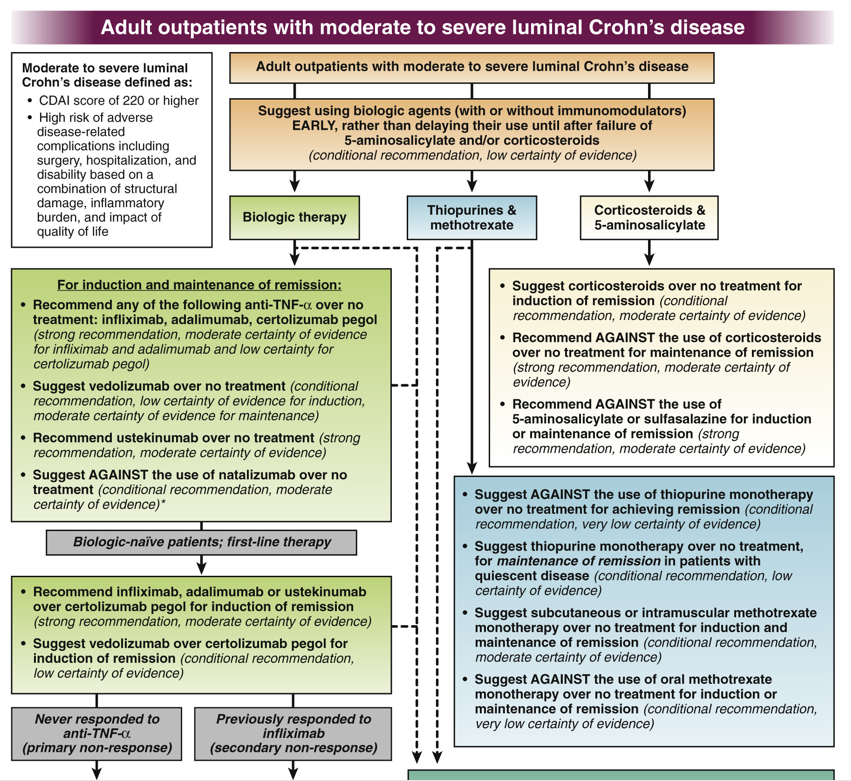
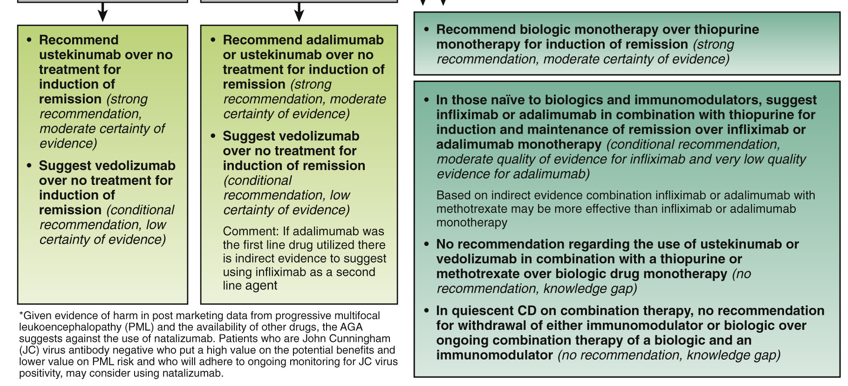
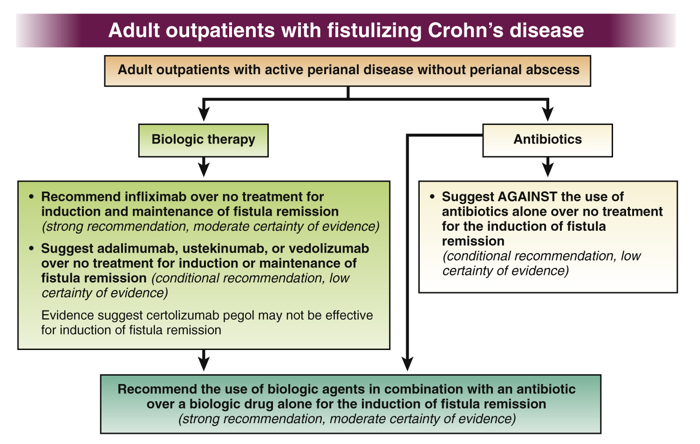
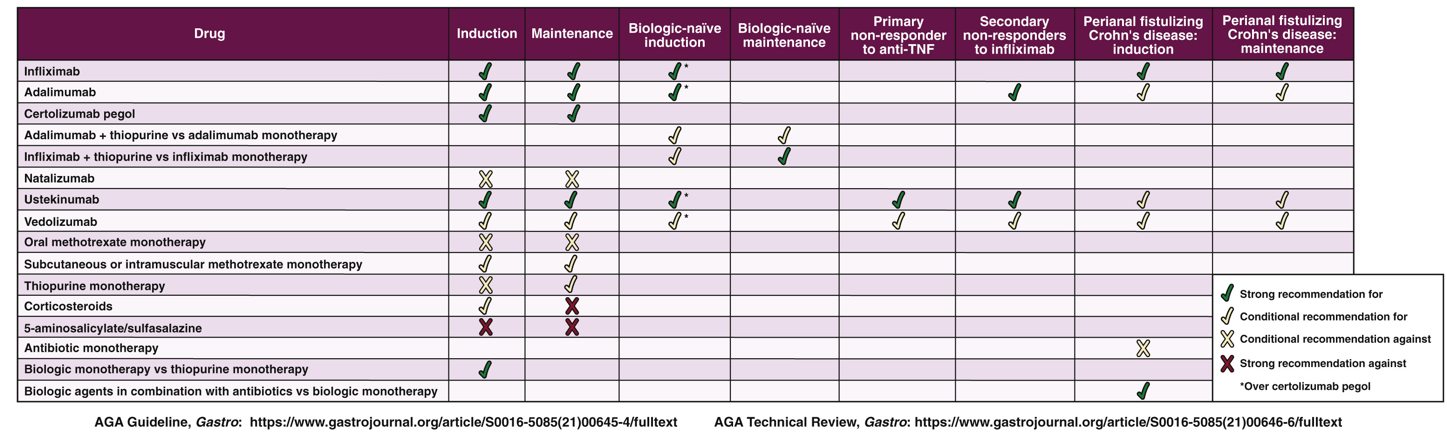
A series of articles details the 2021 AGA Guidelines for Crohn’s disease (CD) including a clinical practice guideline (pg 2496-2508), a clinical decision support tool (2509-2510), a spotlight summary (pg 2511), a technical review (2512-2557), and a review of the recommendations (pg 2557-2262). I will highlight the first article.

JD Feuerstein et al. Gastroenterol 2021; 160: 2496-2508. Full text: AGA Clinical Practice Guidelines on the Medical Management of Moderate to Severe Luminal and Perianal Fistulizing Crohn’s Disease

Full text: Spotlight

For me the most important of their recommendations was #7:

  • In adult outpatients with moderate to severe CD, the AGA suggests early introduction with a biologic with or without an immunomodulator rather than delaying their use until after failure of 5-aminosalicylates and/or corticosteroids.

Other points:

From Spotlight:

Radiomic Imaging in Crohn’s Disease

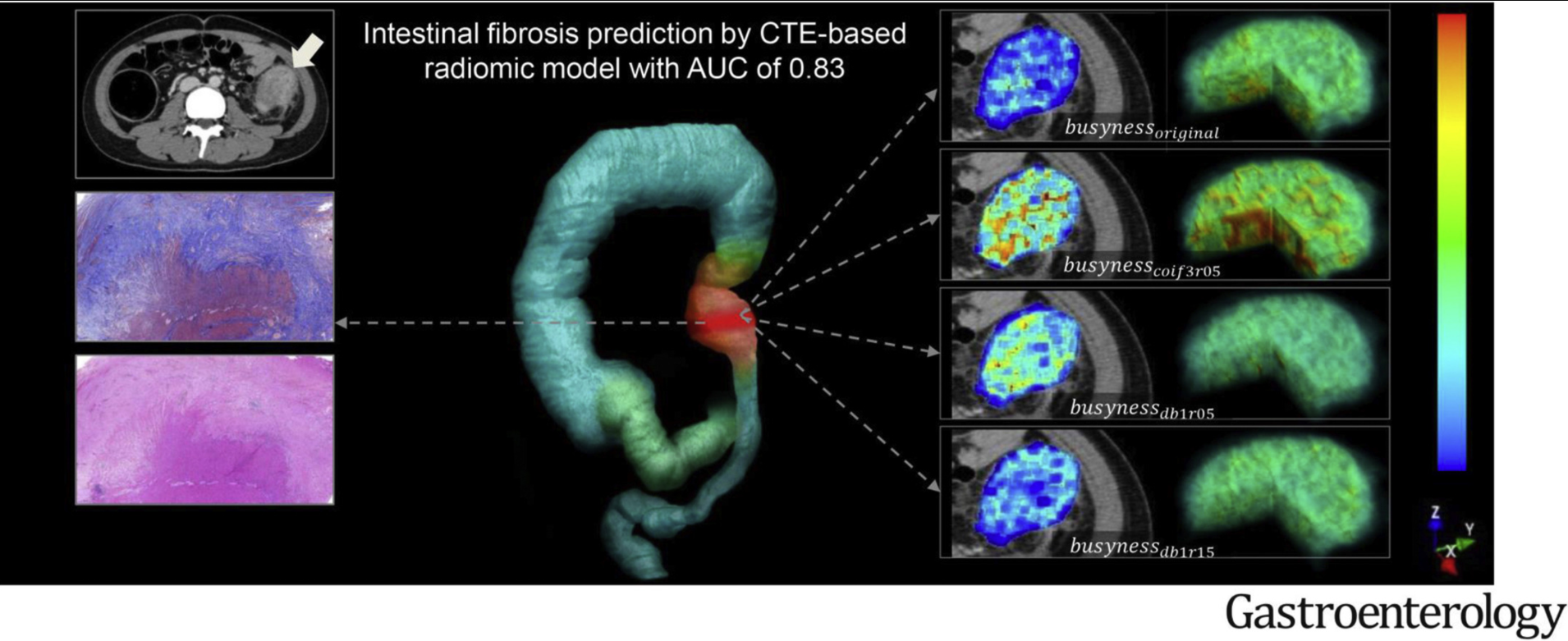
X Li et al. Gastroenterol 2021; 160: 2303-2316. Development and Validation of a Novel Computed-Tomography Enterography Radiomic Approach for Characterization of Intestinal Fibrosis in Crohn’s Disease

Methods: This article describes the development a computed-tomography enterography (CTE)–based radiomic model (RM). This retrospective multicenter study included 167 CD patients who underwent preoperative CTE and bowel resection. 1454 radiomic features were extracted from venous-phase CTE and a machine learning–based RM was developed based on the reproducible features using logistic regression. The RM was validated in an independent external test cohort recruited from 3 centers.

Key findings:

  • In the training cohort, the area under the ROC curve (AUC) of RM for distinguishing moderate–severe from none–mild intestinal fibrosis was 0.888.
  • In the test cohort, the RM had an AUC of 0.816.
  • RM was more accurate than visual interpretations by either radiologist (radiologist 1, AUC = 0.554; radiologist 2, AUC = 0.598; both, P < .001) in the test cohort

My take: This CT approach with RM allowed for accurate characterization of intestinal fibrosis in CD. The images look pretty cool too.