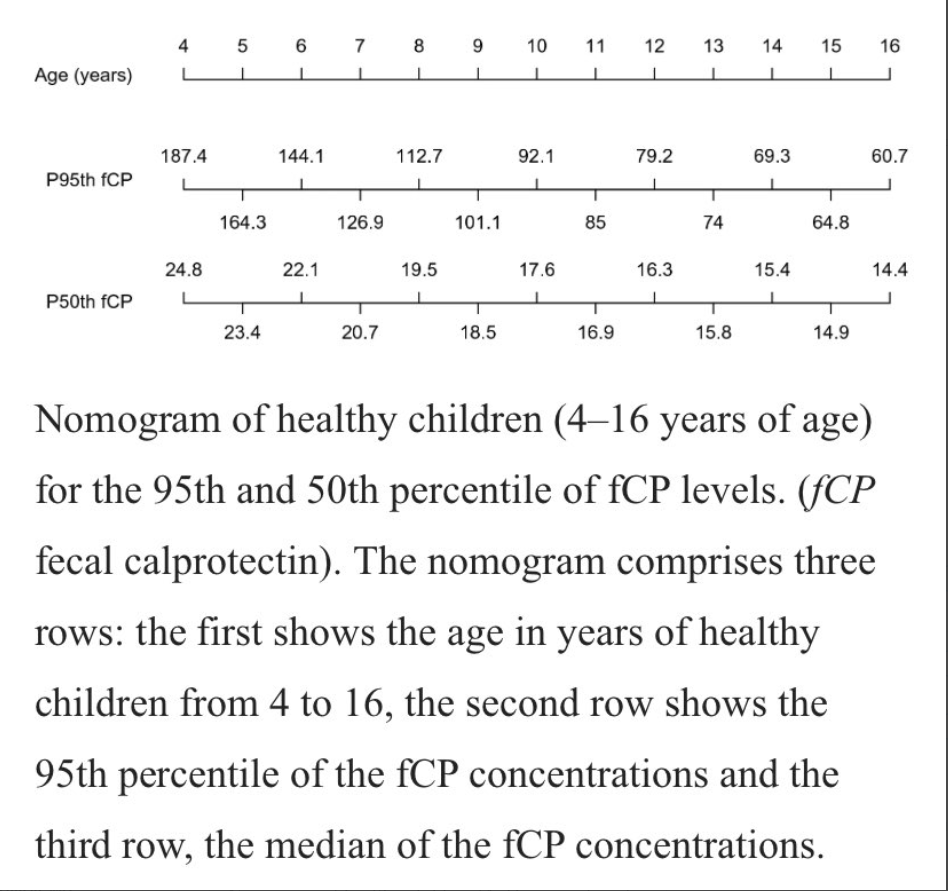
Normative Data for Fecal Calprotectin, age 4-16 yrs

This study collected prospective data from 212 children. Key finding: The median and 95th percentile for fCP were 18.8 mg/kg and 104.5 mg/kg, respectively. “We found a statistically significant association between the 95th percentile of fCP concentrations and age (p < 0.001).”

My take: This is another study showing that calprotectin cut off values need to be higher in younger children.
Related blog posts:

Is GLP2 Worth $300K per Year?

E Ramos Boluda et al. JPGN 2020; 71: 734-739. Experience With Teduglutide in Pediatric Short Bowel Syndrome: First Real-life Data

S Hill. JPGN 2020; 71: 697-698 (editorial) Use of GLP-2 May Herald a New Era of Improved Outcome of Short Bowel Syndrome-associated Intestinal Failure

The study and associated editorial highlight the effectiveness of GLP-2 in a prospective cohort of 17 patients with short bowel syndrome. It is noted that Dr. Hill has received funding from the pharmaceutical manufacturer of the product.

Key findings:

  •  A total of 12 of 17 patients achieved parenteral independence: 3 patients after 3 months of treatment, 4 patients at 6 months, and 5 after 12 months.
  • The percentage able to wean off parenteral nutrition was 17%, 44%, and 60% at 3, 6, and 12 months respectively. Only 1 patient did not exhibit improvement
  • Plasma citrulline levels, a marker for enteral autonomy, increased from a baseline average of 20 micromol/l to 37.5, 46.75, and37.9at 3, 6, and 12 months respectively.
  • Adverse reactions included abdominal pain 30%, nauseas 18%, injection-site reactions 22%, and headache 16%.

Both the editorial and the study comment briefly on the cost of the therapy. The editorial also notes the current recommendation for surveillance endoscopy in view of a hypothetical risk of malignancy.

My take: Is GLP2 Worth the Cost? It probably depends on who is paying and long-term safety data. Perhaps, we will develop tools to improve prediction of which patients will achieve enteral autonomy with GLP2 who would otherwise require ongoing parenteral nutrition.

Related blog posts:

Treating Pediatric Hepatitis C Infections is Cost-Effective. Plus COVID-19 mRNA Vaccine Study

E Greenaway et al. J Pediatr 2020; DOI:https://doi.org/10.1016/j.jpeds.2020.08.088. Free full text: Treatment of Chronic Hepatitis C in Young Children Reduces Adverse Outcomes and Is Cost-Effective Compared with Deferring Treatment to Adulthood

Methods: A state-transition model of chronic HCV was developed to conduct a cost-effectiveness analysis comparing treatment at age 6 years vs delaying treatment until age 18 years

Key findings:

  • After 20 years, treating 10 000 children early would prevent 330 cases of cirrhosis, 18 cases of hepatocellular carcinoma, and 48 liver-related deaths
  • The incremental cost-effectiveness ratio of early treatment compared to delayed treatment was approximately $12 690/quality-adjusted life-years gained and considered cost-effective

My take (=conclusion from authors): Delaying treatment until age 18 years results in an increased lifetime risk of late-stage liver complications. Early treatment in children is cost effective. Our work supports clinical and health policies that broaden HCV treatment access to young children.

Related blog posts:


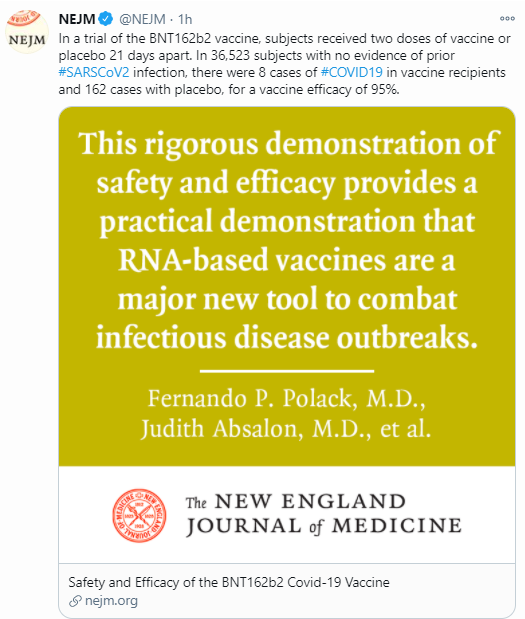
FP Polack et al. NEJM Full text link: Safety and Efficacy of the BNT162b2 mRNA Covid-19 Vaccine

Published data on the Pfizer/BioNTech vaccine

Excess Deaths From COVID-19 and Other Causes

For musical fans: 2020: The Musical YouTube Link (~8 minutes) with Jimmy Fallon and Andrew Rannells


SH Woolf et al.. JAMA 2020; 324: 510-513. Excess Deaths From COVID-19 and Other Causes, March-July 2020

The authors compared deaths from 2014-2020 using data from the National Center for Health Statistics and US Census Bureau.

Key findings:

  • Between March 1 and August 1, 2020, 1 336 561 deaths occurred in the US, a 20% increase over expected deaths (1 111 031 [95% CI, 1 110 364 to 1 111 697]). 
  • Of the 225 530 excess deaths, 150 541 (67%) were attributed to COVID-19
  • The authors conclude that the excess deaths attributed to causes other than COVID-19 could reflect deaths from unrecognized or undocumented infection with severe acute respiratory syndrome coronavirus 2 or deaths among uninfected patients resulting from disruptions produced by the pandemic

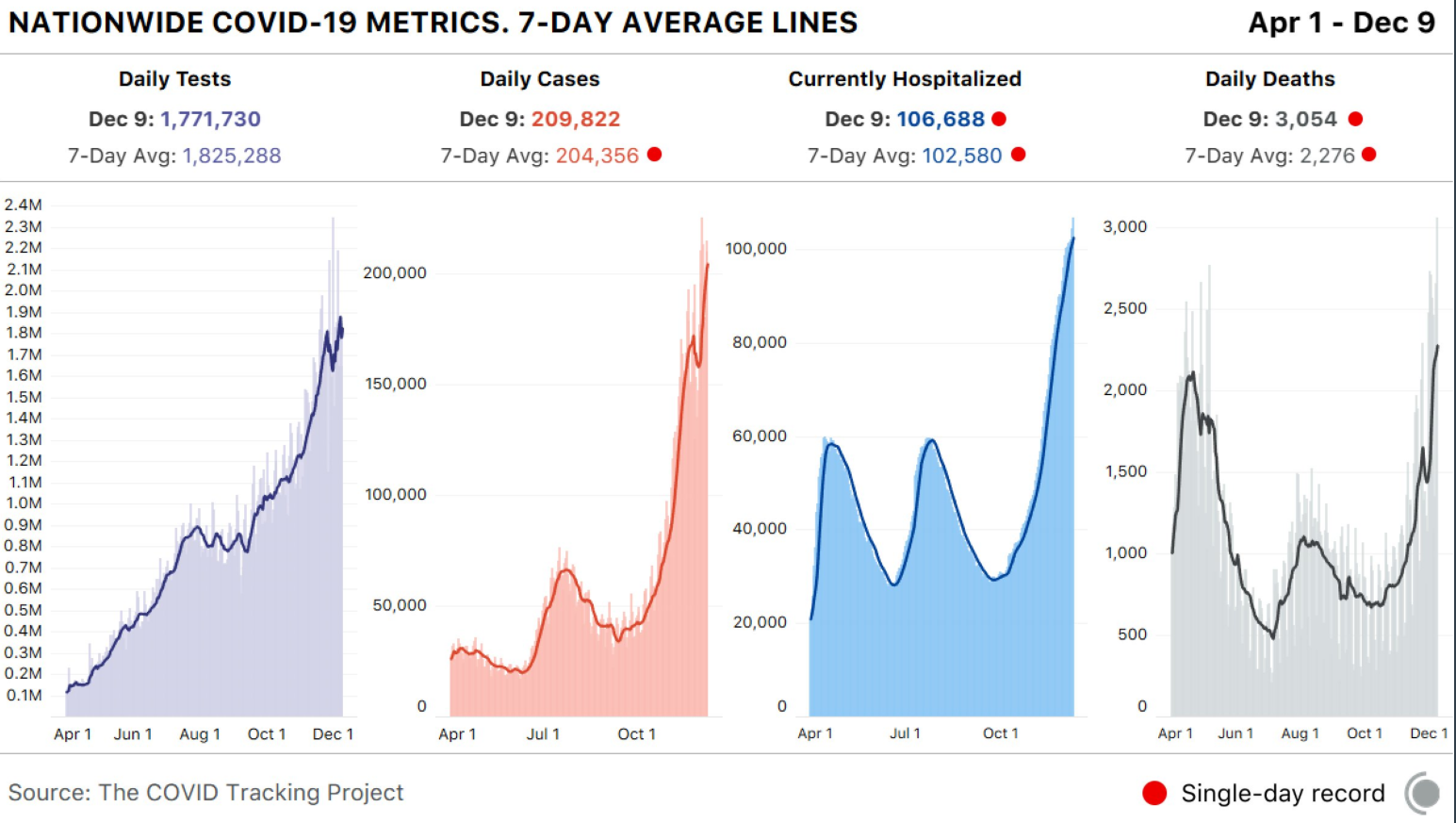
My take: The COVID-19 situation has worsened considerably in the past 2 months and the final toll from this infection will be truly staggering; this unfortunately will include its indirect effects due to deferral of care

Outcome of Zen Magnets v. Consumer Product Safety Commission

PT Reeves, B Rudolph, CM Nylund. JPGN 2020; 71:699-703. Magnet Ingestions in Children Presenting to Emergency Departments in the United States 2009–2019: A Problem in Flux

When the 10th Circuit Court, with judges Gorsuch, Ebel, and Bacharah, rolled back high-powered magnet regulations in 2016, it was expected that this would result in more suffering in children. The referenced article by Reeves et al documents the effects of this decision.

Background: In 2016, the Zen Magnets decision resulted in magnets returning to the market with warning labels “but not performance standards favored by NASPGHAN (ie, making magnets either too large to swallow or too weak to cause harm).” In this study, the authors used data from the National Electronic Injury Surveillance System (NEISS), a database of consumer product injuries.

Key findings:

  • When stratified by time period, suspected magnet ingestion (SMI)per year was 1598 during off-market period (when product was banned) compared with 2826 during on-market period.
  • An estimated 23,756 children (59% males, 42% < 5 years old) presented with a SMI from 2009 to 2019.
  • There was an average annual case increase of 6.1% (P = 0.01).
  •  After 2017, there was a 5-fold increase in the escalation of care for multiple magnet ingestions (estimated n = 1094; CI 505–1686). “Escalation of care” refers to cases designated as ‘treated and transferred,’ ‘treated and admitted/hospitalized,’ or ‘held for observation.’
  • More data on this topic from CPSC 124 page report: (Link) Informational Briefing Package Regarding Magnet Sets

My take: Regulatory action is needed to prevent harm in children from these high-powered magnets.There are two companion bills in Congress which are in committee, one entitled “Magnet Injury Prevention Act.” These are clearly needed given previous judicial branch ruling.

Related blog posts:

Study Confirms High COVID Risk for Healthcare & Essential Workers

M Mutambudzi et al. BMJ 2020 Free Full Text: Occupation and risk of severe COVID-19: prospective cohort study of 120 075 UK Biobank participants 

Using UK Biobank data with 120 075 participants with 271 who had severe COVID-19, key findings:

  • Relative to non-essential workers, healthcare workers (RR 7.43, 95% CI 5.52 to 10.00), social and education workers (RR 1.84, 95% CI 1.21 to 2.82) and other essential workers (RR 1.60, 95% CI 1.05 to 2.45) had a higher risk of severe COVID-19.
  • More specifically, healthcare professionals (doctors, psychologists, pharmacists) (RR 6.19, 95% CI 3.68 to 10.43). The higher risk of severe COVID-19 among healthcare workers was not reduced after adjustment for socioeconomic, work-related, or health and lifestyle-related factors
  • Using more detailed groupings, medical support staff (RR 8.70, 95% CI 4.87 to 15.55), social care (RR 2.46, 95% CI 1.47 to 4.14) and transport workers (RR 2.20, 95% CI 1.21 to 4.00) had the highest risk within the broader groups.
  • Compared with white non-essential workers, non-white non-essential workers had a higher risk (RR 3.27, 95% CI 1.90 to 5.62) and non-white essential workers had the highest risk (RR 8.34, 95% CI 5.17 to 13.47).

My take: This study shows the increased risk of severe COVID-19 among essential workers, particularly in healthcare field and non-white ethnicity was associated with further increased risk.

Wildfires and Human Health

R Xu et al. NEJM 2020; 383: 2173-2181. Full Text: Wildfires, Global Climate Change, and Human Health

This article describes the worsening situation with global wildfires and their direct/indirect effects on human health. In addition, “the interplay between wildfires and climate change is likely to form a reinforcing feedback loop, making wildfires and their health consequences increasingly severe.” The authors conclude that “societal action is requisite… to limit the global temperature increase” and reduce the severity of wildfires and other effects of climate change.

Specific health risks:

  • Direct health effects include burns, injuries, mental health effects, and death due to exposure to flames or radiant heat
  • There is consistent evidence of an increased risk of respiratory events, including hospitalizations and emergency department visits due to asthma, chronic obstructive pulmonary disease, and respiratory infection.
  • Heavy smoke can cause eye irritation and corneal abrasions and can substantially reduce visibility, increasing the risk of traffic accidents.
  • Owing to traumatic experiences, property loss, and displacement, residents in areas affected by wildfires are at an increased risk for mental illness, including post-traumatic stress disorder, depression, and insomnia. The psychological consequences of wildfire events can persist for years, and children and adolescents are particularly vulnerable.
  • Risks of low birth weight and preterm birth are increased

Related article: NY Times (11/29/20): Wildfire Smoke Is Poisoning California’s Kids. Some Pay a Higher Price.

“The fires sweeping across millions of acres in California aren’t just incinerating trees and houses. They’re also filling the lungs of California’s children with smoke, with potentially grave effects over the course of their lives.” This article goes on to detail the personal effects of wildfires on 5 families.

Related blog posts:

Sunset from Sullivan’s Island, SC

“Real-world” Efficacy for Fecal Microbiota Transplantation

CR Kelly et al. Gastroenterol 2020; doi.org/10.1053/j.gastro.2020.09.038 (in press). Fecal Microbiota Transplantation Is Highly Effective in Real-World Practice: Initial Results From the FMT National Registry

Background: “The FMT National Registry was designed to assess FMT methods and both safety and effectiveness outcomes from North American FMT providers.” n=259 with 222 who completed short-term follow-up.

Key findings:

  • All FMTs were done for CDI and 249 (96%) used an unknown donor (eg, stool bank).
  • 90% (n=200) were considered cured at one month. Of these, 197 (98%) received only 1 FMT.
  • Among 112 patients with initial cure who were followed to 6 months, 4 (4%) had CDI recurrence.
  • Safety:  Severe symptoms reported within 1-month of FMT included diarrhea (n = 5 [2%]) and abdominal pain (n = 4 [2%]); 3 patients (1%) had hospitalizations possibly related to FMT. At 6 months, new diagnoses of irritable bowel syndrome were made in 2 patients (1%) and inflammatory bowel disease in 2 patients (1%). Milder adverse events were noted in 45% with symptoms including diarrhea, abdominal pain, bloating or constipation.

My take: Overall, the findings from this prospective registry confirm that FMT works fairly well for CDI. Long-term follow-up will provide more answers on the safety of FMT.

Related blog posts:

Budesonide for Maintaining EoE Remission

A Straumann et al. Gastroenterology 2020; Free Full Text Link: Budesonide Orodispersible Tablets Maintain Remission in a Randomized, Placebo-Controlled Trial of Patients With Eosinophilic Esophagitis

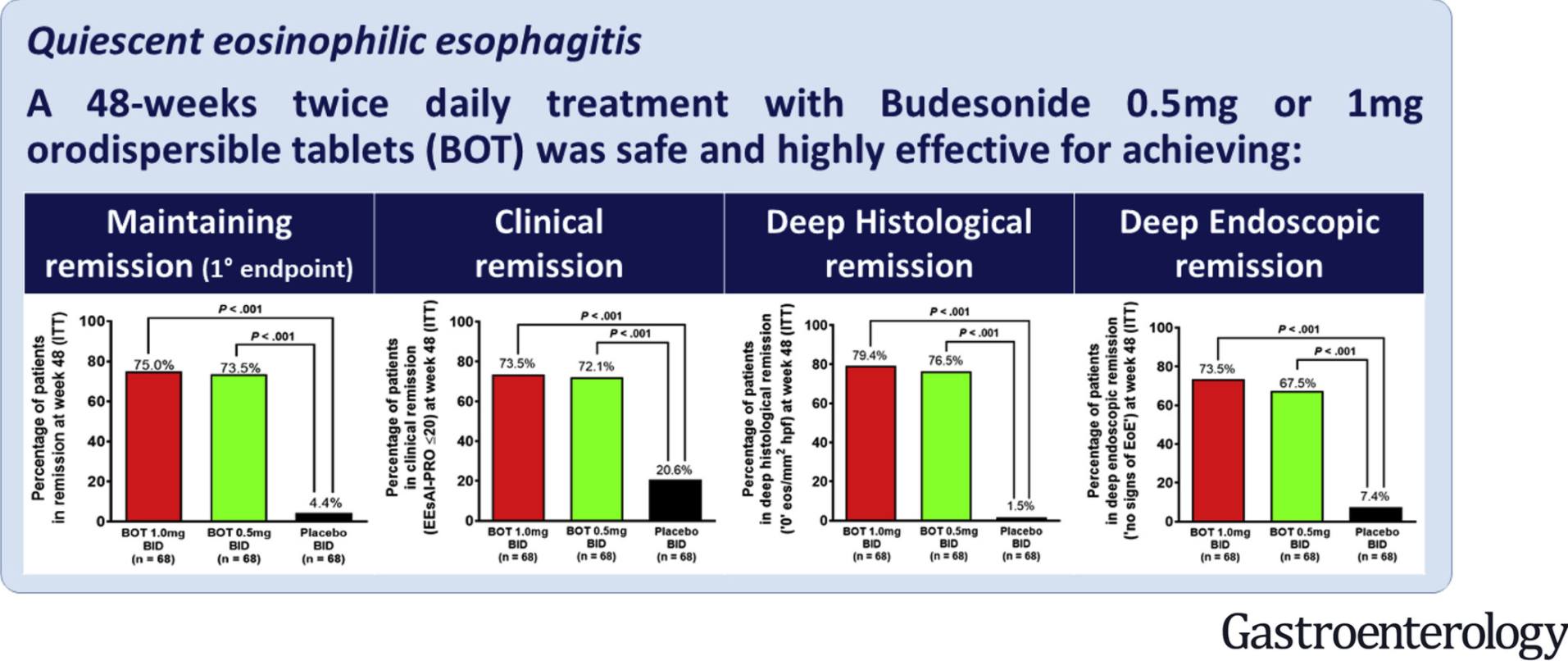
Methods: Two hundred and four adults with EoE in clinical and histologic remission, from 29 European study sites, were randomly assigned to groups given budesonide orodispersible tablet (BOT) 0.5 mg twice daily (n = 68), BOT 1.0 mg twice daily (n = 68), or placebo twice daily (n = 68) for up to 48 weeks

Key Findings:

  • At end of treatment, 73.5% of patients receiving BOT 0.5 mg twice daily and 75% receiving BOT 1.0 mg twice daily were in persistent remission compared with 4.4% of patients in the placebo group (P < .001 for both comparisons of BOT with placebo)
  • Four patients receiving BOT developed asymptomatic, low serum levels of cortisol. Clinically manifested candidiasis was suspected in 16.2% of patients in the BOT 0.5 mg group and in 11.8% of patients in the BOT 1.0 mg group; all infections resolved with treatment

In the discussion, the authors state that “we recommend monitoring symptoms and signs of adrenal insufficiency when administrating topical-acting corticosteroids over prolonged time periods, in particular in children and when using higher dosages.”

My take (from discussion): “EoE requires a proper long-term anti-inflammatory therapy because, without active treatment, the vast majority of patients experience a relapse within the first 100 days after cessation of the medication.”

Related blog posts: