Diagnostic Strategy For Children with Diarrhea and Abdominal Pain

A recent study (E Van de Vijver et al. Pediatrics 2020; 146: e20192235) shows a logical approach for testing children with diarrhea and abdominal pain.

Abstract and video abstract link: Test Strategies to Predict Inflammatory Bowel Disease Among Children With Nonbloody Diarrhea

Methods:

  • Prospective cohort study: n=193, 6 to 18 years who underwent a standardized diagnostic workup.
  • Patients with rectal bleeding or perianal disease were excluded because the presence of these findings prompted endoscopy regardless of their biomarkers.
  • In addition to symptoms, objective measures included C-reactive protein (>10 mg/L), hemoglobin (<−2 SD for age and sex), and fecal calprotectin (≥250 μg/g).

Key findings:

  • Twenty-two of 193 (11%) children had IBD
  • “Triaging with a strategy that involves symptoms, blood markers, and calprotectin will result in 14 of 100 patients being exposed to endoscopy. Three of them will not have IBD, and no IBD-affected child will be missed.

My take: The approach advocated by the authors of reserving a diagnostic endoscopy for children at high risk for IBD based on stool tests/blood tests in addition to symptoms has merit.  I would add a couple caveats:

  1. In this population, I would recommend checking for celiac disease (eg. tissue tranglutaminase IgA antibody, serum IgA level)
  2. I think in individuals with ‘borderline’ elevations of calprotectin (50-250 μg/g), followup testing is needed and if remains persistently elevated, then ileocolonoscopy is likely warranted.  (Calprotectin values in younger children tend to be higher -so this approach is best suited in children >5 years of age)

Related blog posts:

Summarizing the Plus and Minuses of Telemedicine

From The Doctor’s Company (an insurance company): Your Patient Is Logging on Now: The Risks and Benefits of Telehealth in the Future of Healthcare Thanks to John Pohl for sharing this link.

An excerpt:

Foreseeable Major Benefits

  • Increases access to care for most patients, including many patients in rural locations, patients who struggle to cover the peripheral costs of an in-person visit (transportation, childcare, time away from work, etc.), and patients with chronic conditions.
  • Enhances the ability to manage chronic conditions by making more frequent contact easier. This management is already supported by at-home devices that record blood pressure, blood sugar, and other essential data points.
  • Reduces infection risks, not just for COVID-19, but for post-op patients, patients who are immunosuppressed, etc.

Other benefits: Promotes patient satisfaction, and scheduling -fewer no shows

Foreseeable Major Risks

  • The remote exam’s inherent limitations mean physicians must know when to ask patients to come in to avoid missed diagnoses…[may be able to do] risk-stratifying patients with abdominal symptoms by, among other things, watching the patient jump up and down
  • Increases cyber liability, especially when providers are seeing patients from a variety of devices in a variety of locations.
  • Privacy issues come in high-tech forms: Is the video visit interface HIPAA compliant? And in low tech forms: Conversations may be interrupted by household members at either end.
  • Decreases access to care for some patients: … many communities do not have sufficient internet bandwidth; some patients are prevented by a language barrier or lack of technological savvy from accessing a telemedicine portal.
  • Reimbursement is uncertain: Pre-pandemic, “Low reimbursement for telehealth was viewed as a critical disincentive,” say the authors of an opinion piece in JAMA, because “Without payment, it would be difficult for clinicians to afford to provide the service, despite data from previous studies suggesting clinicians were broadly supportive about its use.”

Other drawbacks: Physician-patient relationship –glitches or delays in sound or video can impede the normal flow of conversation—a diagnostic risk, as well as a relational one.

This May Be a Good Time to Be Wearing Glasses

W Zeng et al. JAMA Ophthalmol. Published online September 16, 2020. doi:10.1001/jamaophthalmol.2020.3906. full text  Association of Daily Wear of Eyeglasses With Susceptibility to Coronavirus Disease 2019 Infection

Findings  In this cohort of 276 patients hospitalized with COVID-19 in Suizhou, China, the proportion of daily wearers of eyeglasses was lower than that of the local population (5.8% vs 31.5%).

Meaning  These findings suggest that daily wearers of eyeglasses may be less likely to be infected with COVID-19.


Crohn’s Disease Anastomotic Ulcerations

A recent retrospective study (RP Hirten et al. Inflamm Bowel Dis 2020; 26: 1050-1058Anastomotic Ulcers After Ileocolic Resection for Crohn’s Disease Are Common and Predict Recurrence) showed that anastomotic ulcers occur in over half of Crohn’s disease patients after ileocolic resection and are associated with Crohn’s disease recurrence and are persistent.

Key findings:

  • Anastomotic ulcers were present in 95 (52.2%) subjects. No factors were associated with anastomotic ulcer development.
  • Anastomotic ulcers were associated with disease recurrence (adjusted hazard ratio [aHR] 3.64)

The associated editorial by Philllip Fleshner (pg 1059) identifies are a number of methodologic flaws, noting that less than 20% of all ileocolonic resections were included and marked variability in postoperative assessment (from 29 days to 2897 days).

My take: (borrowed from the editorial) the “findings should convince us that anastomotic ulcers do not represent ischemic changes but are rather a reflection of disease progression.”  Prospective studies with standardized surveillance would be helpful.


What GI Doctors Should Know About Anti-Reflux Surgery

This is a useful review -with helpful diagrams: Full text Ten Things Every Gastroenterologist Should Know About Antireflux Surgery (S Park et al. Clin Gastroenterol Hepatol 2020; 18: 1923-1929)

A couple excerpts:

Selecting Patients for Surgery: Current guidelines fall short in determining appropriate patients who would benefit most from surgery. For instance, the recommendation that a desire to discontinue PPI therapy is a suitable indication for antireflux surgery fails to recognize that 62% of patients end up back on PPIs within 9 years. Furthermore, indicating that those patients who failed medical management would benefit from surgery neglects the fact that the patients who respond best to antireflux surgery are those who have responded well to PPI therapy in the first place

Complications: Late postoperative complaints are more common and often are referred back to the referring gastroenterologist for diagnosis and management. These include late-onset dysphagia (3%–24%), recurrent heartburn (up to 62%), gas-bloat syndrome (up to 85%), and diarrhea (18%–33%).  Anatomic failure of the fundoplication (Figure Below) can present a unique challenge to the clinician because the symptoms and patient presentation (postoperative dysphagia, regurgitation, and heartburn) can be clinically indistinct from the issues seen commonly after this surgery even in the best of circumstances.  Therefore, the gastroenterologist should assess symptoms carefully in a stepwise approach with upper endoscopy, barium swallow, esophageal manometry, and/or ambulatory pH monitoring when appropriate and plan any interventions based on objective findings from focused testing.

Other points:
  • Antireflux Surgery Has No Significant Impact on the Progression of Barrett’s Esophagus to Esophageal Adenocarcinoma: Endoscopic Ablation of Dysplastic Barrett’s Esophagus Still Is Recommended
  • Medical Therapy Is More Cost Effective Than Surgical Treatment if the Cost of the Drug Is Low
  • Several New, Less-Invasive Surgical and Endoscopic Antireflux Procedures Are Now Food and Drug Administration Approved, Available, and Appear Promising

Related blog posts:

Flu Vaccine in Pregnant Women Did NOT Increase Risk of Autism

JV Ludvigsson et al. Annals of Internal Medicine 2020; https://doi.org/10.7326/M20-0167. Full Text: Maternal Influenza A(H1N1) Immunization During Pregnancy and Risk for Autism Spectrum Disorder in Offspring

  • In total, 39 726 infants were prenatally exposed to H1N1 vaccine (13 845 during the first trimester) and 29 293 infants were unexposed.
  • Mean follow-up was 6.7 years .
  • 394 (1.0%) vaccine-exposed and 330 (1.1%) unexposed children had a diagnosis of ASD.

My take (borrowed from authors): This large cohort study found no association between maternal H1N1 vaccination during pregnancy and risk for ASD in the offspring.

Nonceliac Gluten and Wheat Sensitivity: Review

A Khan et al. Clin Gastroenterol Hepatol 2020; 18: 1913-1922. Nonceliac Gluten and Wheat Sensitivity

This useful review notes that ” there is a great deal of skepticism within the scientific community questioning the existence of NCGS as a distinct clinical disorder.”

Key points:

  • The pathogenesis of NCGS is unclear and there is no known biomarker or diagnostic histologic lesion for this condition.
  • In these suspected patients, it is important to first exclude celiac disease and wheat allergy (especially if a rash with eating). If celiac disease is identified, this allows for appropriate longitudinal followup, strict dietary instructions, and potential screening of at-risk family members.
  • Recent studies have shown that GI symptoms in those labelled with NCGS are frequently due to dietary FODMAPs.
  • In a large meta-analysis study with 1312 adults, only 16% of participants experience gluten-specific symptoms using a double-blind placebo-controlled rechallenge.  In addition, 40% of participants experienced a nocebo response (ie. a greater negative effect than usual due to negative expectation from a dietary treatment)
  • In clinical practice, a single blind placebo-controlled rechallenge trial has been recommended for diagnosis

My take: GFD is often unnecessary and ineffective, even in those who have previously identified gluten as a potential food trigger.  Fructans are more likely to induce gastrointestinal symptoms.

Related blog posts:

Misty morning -Chattahoochee River, Island Ford

Put Your Own Oxygen Mask On First

D Atkins. Annals of Internal Medicine 2020; https://doi.org/10.7326/M20-6349. Put Your Own Oxygen Mask On First

Important commentary -here’s an excerpt:

My hope that his colleagues would honor his memory by spending time taking care of themselves. “Selflessness has its price. Skip was so ready to give someone the shirt off his back that he may not have realized when he was also cold. I hope each of you—especially those of you who are doctors and nurses and caregivers—will take time to be selfish when you need to be. Make a lunch date with your Skip to complain about your problems. Put your own oxygen mask on first.”

Alterations in Microbes and Impaired Psychological Function in Patients with Inflammatory Bowel Disease

Briefly noted: F Humbel et al. Clin Gastroenterol Hepatol 2020; 18: 2019-2029. Association of Alterations in Intestinal Microbiota With Impaired Psychological Function in Patients With Inflammatory Bowel Diseases in Remission

In a prospective study with 171 adults with IBD in remission, the authors combined

  1. measures of psychological comorbidities and quality of life (QoL)
  2. microbial analysis with 16S rRNA high-throughput sequencing

Key findings:

  • Microbiomes of patients with higher perceived stress had significantly lower alpha diversity
  • Anxiety and depressive symptoms were significantly associated with beta diversity

My take: This study adds another dimension to the idea of bidirectionality between psychological well-being and course of inflammatory bowel disease.  The microbiome may directly influence both psychological well-being and IBD activity.

Related blog posts:

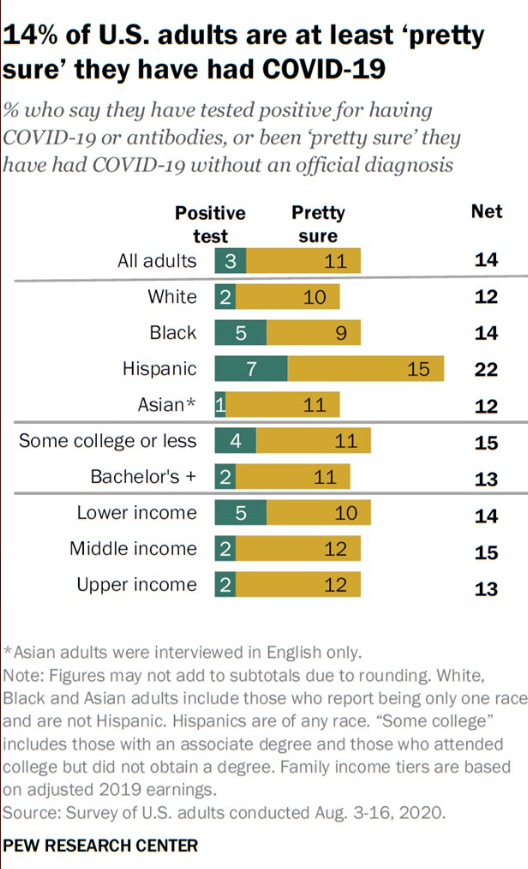
“Positioning Biologic Therapies in the Management of Pediatric Inflammatory Bowel Disease” & 14% of U.S. Infected with COVID-19

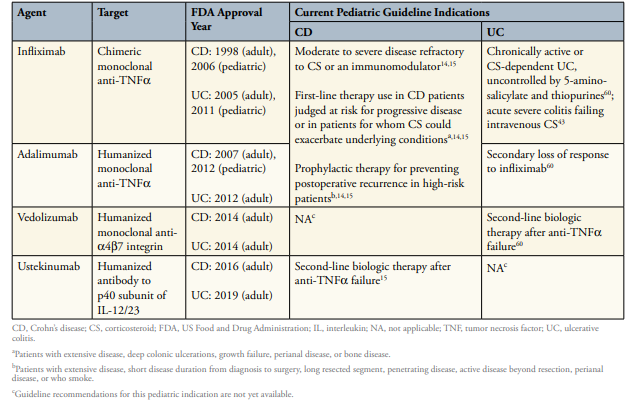
J Breton et al. Gastroenterology & Hepatology 2020; 16: 400-14. Full text: Positioning Biologic Therapies in the Management of Pediatric Inflammatory Bowel Disease

This is a terrific summary of biologic therapies for pediatric inflammatory bowel disease. Compared to adults, the pediatric data is much more limited.  This may affect recommendations.  For example, recent AGA guidelines for moderate to severe ulcerative colitis in adults suggests that either ustekinumab or tofacitinib is generally preferable as a 2nd line agent rather than vedolizumab in patients with primary infliximab failure (Blog post: AGA Guidelines: Moderate to Severe Ulcerative Colitis).  In the chart below, vedolizumab is recognized as a preferred 2nd line agent.

In the section on vedolizumab:

The favorable risk-benefit profile makes vedolizumab an ideal therapeutic choice for pediatric IBD. However, an important limitation is its delayed onset of action, for which corticosteroid use as bridge therapy is often necessary in this population that is already at increased risk of growth failure and bone loss. Recently, Hamel and colleagues published their small, single-center experience of using concomitant tacrolimus between anti-TNFα withdrawal to vedolizumab maintenance as a corticosteroid-sparing bridge therapy in moderate to severe IBD (Ref: Hamel B, Wu M, Hamel EO, Bass DM, Park KT. Outcome of tacrolimus and vedolizumab after corticosteroid and anti-TNF failure in paediatric severe colitis. BMJ Open Gastroenterol. 2018;5(1):e000195).

This article addresses therapeutic drug monitoring:

TDM is a key component of managing IBD patients on anti-TNFα therapy. While  reactive TDM of antiTNFα agents has been adopted by societal guidelines, there is an increasing body of literature to support the benefit of proactive TDM, particularly in pediatric populations

Conclusions from authors: Anti-TNFα agents have revolutionized the management of IBD, positively modifying the natural disease history in children. Importantly, inception cohort studies of pediatric CD and UC (RISK and PROTECT, respectively) have highlighted the variable course of disease and necessity of adopting an individualized approach with early use of biologic therapy in patients at risk of severe disease progression. 

Biologics Used in Pediatric Inflammatory Bowel Disease

Related blog posts:

Disclaimer: This blog, gutsandgrowth, assumes no responsibility for any use or operation of any method, product, instruction, concept or idea contained in the material herein or for any injury or damage to persons or property (whether products liability, negligence or otherwise) resulting from such use or operation. These blog posts are for educational purposes only. Specific dosing of medications (along with potential adverse effects) should be confirmed by prescribing physician.  Because of rapid advances in the medical sciences, the gutsandgrowth blog cautions that independent verification should be made of diagnosis and drug dosages. The reader is solely responsible for the conduct of any suggested test or procedure.  This content is not a substitute for medical advice, diagnosis or treatment provided by a qualified healthcare provider. Always seek the advice of your physician or other qualified health provider with any questions you may have regarding a condition