Does The Degree of Villous Atrophy Affect Long-Term Outcomes with Celiac Disease? Plus One

S Kroger et al. JPGN 2020; 71: 71-7.  This study, conducted from 1966-2014, examined long-term outcomes of individuals diagnosed with celiac disease in childhood. This study examined 906 children and sent questionnaires to 503 adults (212 responded) who were diagnosed in childhood.

Key findings:

  • More recent diagnosis (after 2006) has been associated with children having milder lesions, more often diagnosis due to screening (rather than symptoms) 30% vs. 25%, less anemia (16% vs 21%), less growth disturbances (22% vs. 36%), and lower TTG-2 titers (mean 64 U/L vs 120 U/L.
  • Among adults completing questionnaire, severity of villous atrophy at childhood diagnosis did not predict complications, persistent symptoms, quality of life, or adherence with glute-free diet

RV Lopez et al. JPGN 2020; 71: 59-63. Influence of the 2012 European Guidelines in Diagnosis and Follow-up of Coeliac Children With Selective IgA Deficiency. This study showed that the guidelines were used incorrectly for individuals with selective IgA deficiency, using a 10-fold elevation of TTG IgG instead of TTG IgA. The associated editorial (pg 2 by P Gillett) recommends “we should perform endoscopy in all sIgAD patients.”  In addition, this population may merit followup endoscopy at much lower threshold due to difficulty using serology for follow-up.

My take: Children with severe villous atrophy due to celiac disease can respond fully to a gluten-free diet.  In the small subset of individuals with selective IgA deficiency, a no-biopsy diagnosis is not recommended.

Related blog posts:

“Health Insurance Is Broken”

From The Onion:


Almost every Sunday, I spend hours reading the local AJC and the NY Times — a great way to start the week.

On July 5th, the NY Times review section discussed the topic of ‘The Economy We Need.’ The article discussed rising problems with wealth inequity and associated problems including higher mortality rates.  The first article states that “if income had kept pace with overall economic growth since 1970, Americans in the bottom 90 percent of the income distribution would be making an extra $12,000 per year, on average.”

The greater inequities are the direct result of policy changes and can be changed. The subsequent articles detail myriad issues from tax policy that bolster wealth inequality (eg. lower inheritance taxes), minimum wage which requires many to rely on government assistance, legacy admissions to elite colleges, corporation stock buybacks (which come at the expense of lower benefits/wages), policies that discourage unions, and corporations that have stopped profit sharing (except for the highest-paid executives).

The article with the most relevance for health care providers: NY Times: “Health Insurance Is Broken” by Jeneen Interlandi. Link to online version: Employer-Based Health Care, Meet Massive Unemployment

Key points:

  • “The nation spends an average of $3.5 trillion on health care –more than Japan, Germany, France, China, the United Kingdom, Italy, Canada, Brazil, Spain, and Australia combined — ant still loses more people to preventable and treatable medical conditions than any of those countries do…America has created the most expensive, least effective health care system in the modern world.”
  • The problem has deep roots.  One of the issues with the cost, at least historically, has been “price insensitivity.”  “If the insurer is paying, nobody looks at the bill.”…Hospitals ramped up equipment purchases, workforces, specialty clinics and “passed [the price hikes] from hospitals to insurers to customers.”‘
  • “Employer-based insurance is heavily subsidized by the federal government …[and] are not much different than the ones granted to low-income Americans through Medicaid and the Affordable Care Act.”
  • The country will have to stop making employers the sole source of health care for so many people.”  Alternatives could include single-payer system or ‘public option.’

My take: The U.S. health care system costs too much and has gaping problems with lack of coverage and inequities. These problems have worsened with the current pandemic.

Related article: NY Times:  The U.S. Is Lagging Behind Many Rich Countries. These Charts Show Why.

Related blog posts:

Renal Disease Associated With Fatty Liver Disease & Dexamethasone-COVID-19 Data

Looking for and managing hypertension has been an important component of care in children and adults with nonalcoholic fatty liver disease (NAFLD)/metabolic syndrome.  In addition, hypertension is frequently associated with renal impairment.

As such, it is perhaps not surprising that in both adults and children, there is a high rate of renal impairment.   The data in children is much more sparse than in adults.  A recent retrospective pediatric cohort study (T Yodoshi et al. J Pediatr 2020; 222: 127-33) adds more information to this problem.

More background information:

  • Chronic kidney disease is highly prevalent in adults with NAFLD: 20-55% (J Hepatol 2020; 72: 785-801; Am J Kidney Dis 2014; 64: 638-52)
  • NAFLD is currently the leading indication for concurrent liver and kidney transplantation
  • In adults, the severity of NAFLD histology is associated with renal impairment
  • The first stage of renal impairment is glomerular hyperfiltration. This is hypothesized to be a precursor of intraglomerular hypertension which leads to albuminuria and glomerular filtration rate (GFR) decline/progressive renal dysfunction
  • Early intervention in high risk patients with angiotensin receptor inhibitors may prevent or delay progressive renal disease

Key findings in 179 patients with biopsy-confirmed NAFLD:

  • 82% non-Hispanic, median age 14 yrs
  • 36 (20%) had glomerular hyperfiltration and 26 (15%) had low GFR (w/in 3 months of liver biopsy) based on Schwartz equation
  • Hyperfiltration was independently associated with higher NAFLD activity score (aOR 2.96)

Discussion:

  • Mechanism: The authors speculate that “it is possible that they [renal and liver disease] are both the end result of the same ‘hit.’ The renin-angiotensin system may play a key role….Notably, there is an ongoing…clinical trial investigating an ATI receptor blocker, losartan, for the treatment of NAFLD in children.” Other potential contributors include fructose and insulin resistance.
  • Limitations: This single center biopsy-confirmed population may not be representative of most children with NAFLD.  Also, as this was a retrospective study, more precise measures of renal function were not available.

My take: This study confirms a high rate of renal dysfunction (35%) in children with NAFLD. As such:

  • Children with NAFLD need to have their blood pressure monitored
  • Clinicians should have a low threshold for nephrology referral if suspected renal impairment.

NEJM Recovery Collaborative Group: July 17, 2020
DOI: 10.1056/NEJMoa2021436: Full Link: Dexamethasone in Hospitalized Patients with Covid-19 — Preliminary Report

Form NEJM Journal blog:

In the open-label RECOVERY trial, some 2100 U.K. patients hospitalized with COVID-19 were randomized to usual care plus oral or intravenous dexamethasone (6 mg once daily for up to 10 days), and 4300 were randomized to usual care alone.

Among patients on invasive mechanical support at the time of randomization, the mortality rate within 28 days was significantly lower with dexamethasone than with usual care alone (29% vs. 41%). A benefit was also seen among those on oxygen without invasive ventilation (23% vs. 26%). However, among patients not receiving respiratory support, mortality rates did not differ significantly between treatment groups.


Probiotics in Preemies: Lifesaving Therapy

Lots of studies have indicated that probiotics may be beneficial in premature newborns; the problem is that there are currently no FDA-approved probiotics for preterm infants. The use of probiotics as a non-regulated FDA product leads to the potential risk of contamination due to inconsistent quality control as well as variability in the strains and concentrations.  The risks are not inconsequential as there has been a report of 29-week infant who died from mucormycosis due to probiotic contamination with mold.

Despite the potential problems with probiotics in this population, their usage is increasing as described in a recent multicenter retrospective cohort study (KD Gray et al. J Pediatr 2020; 222: 59-64) which took place between 1997-2016 with 78,076 infants (23-29 weeks gestational age) in 289 NICUs.

Key findings

  • 3626 (4.6%) received probiotics
  • Probiotic use increased over the study period (>10% in 2015 & 2016)
  • By matching 2178 infants who received probiotics with 33,807 without probiotics, the authors determined that those received probiotics had a decrease likelihood of necrotizing enterocolitis (OR 0.62) and death (OR 0.52).  The authors observed an increase in Candida infection (OR 2.23); though, this is an infrequent infection and the absolute difference in risk was <1%
  • Limitations: “similar to many previous studies, there was great variation in probiotic products and organisms, as well as a lack of dosing information, which made it unclear which product, organism, or dose might be most effective.”  Also, other contributing factors like consumption of breastmilk and antibiotic exposure are not detailed in this report.

My take: Probiotics could be life-saving for premature infants. It would be nice if we could find out which strains work and which ones do not as well as to assure safe manufacturing processes.

Related blog posts:

More Iron Infusions, Less Blood Transfusions in Kids with Inflammatory Bowel Disease; COVID-19 Transmission in Children


Briefly noted: AE Jacobson-Kelly et al. J Pediatr 2020; 222: 141-5. In this retrospective multicenter cohort study (2012-2018), the authors used the Pediatric Health Information System administrative database (n= 8007 with 28 260 admissions, <21 yrs of age). Key findings:

  • Anemia was documented in 29.8% of admissions.  IV iron was given in 6.3% of admissions and blood transfusions in 7.4%
  • A steady increase in the proportion of IBD admissions received IV iron, from 3.5% in 2012 to 10.4% in 2018 ( P < .0001), and the proportion of admissions with red cell transfusions decreased over time from 9.4% to 4.4% ( P < .0001).

Related blog posts:


Liver Shorts July 2020

KA Strauss et al. Hepatology 2020; 71: 1923-39. Crigler-Najjar Syndrome Type 1: Pathophysiology, Natural History, and Therapeutic Frontier. This chart review  provides long-term data on phototherapy for  CN1 (n=28) over 30 years, bilirubin metabolism, and results from 17 who underwent liver transplantation at a median age of 16 years.  Background: “In 1952, John Crigler and Victor Najjar described 7 infants from 3 families who developed intractable nonhemolytic jaundice within the first week of life.”  Disorder is due to deficiency of uridine 5′-diphosphate glucuronyltransferase (UGT1A1, OMIM 218800). The report’s Table 1 provides management guidelines. 12 (43%) of patients developed cholelithiasis (pigmented stones) which exacerbated hyperbilirubinemia and resulted in cholecystectomy.

H Dang et al. Hepatology 2020; 71: 1910-22.  This multinational consortium retrospective study reviewed 1676 patients with HCV-related HCC.  They found that in patients who achieved a sustained virological response (SVR) after direct-acting antiviral (DAA) therapy had a significantly higher 5-year survival: 88% vs 66%, P<0.001; after regression analysis, SVR was independently associated with a 63% lower risk of 5-year all-cause mortality.  My take (borrowed from authors) Patients with HCV and HCC who are eligible for HCC therapy should also be considered for DAA therapy.

M Noureddin et al. Hepatology 2020; 71: 1940-52.  This study, a nested case-control analysis, examined a subset from a large prospective cohort of >215,000 adults in Hawaii and California for diet associations with nonalcoholic fatty liver disease (NAFLD); the subset consisted of 2974 patients with NAFLD and 29,474 matched controls.  Key findings: Red meat, processed read meat, poultry and cholesterol consumption were positively associated with NAFLD while dietary fiber was inversely associated with risk. My take: While sugar/fructose intake has been a dietary concern for NALFD, this study indicates that decreasing meat/cholesterol consumption and increasing fiber consumption would be beneficial to reduce risk of NALFD and advanced liver disease.

Myth or Fact: Joint Hypermobility is Related to Pediatric Functional Abdominal Pain & Dr. Roy Link

According to a recent study (RJ Shulman et al. J Pediatri 2020; 222: 134-40), the prevalence of joint hypermobility does NOT differ in children with irritable bowel syndrome, functional abdominal pain, or healthy control children.

Methods (to reach this conclusion):

  • Children (median age ~9.5 years) with irritable bowel syndrome (n=109), functional abdominal pain (n=31), and healthy controls (n=69) completed a prospective 2-week pain and stooling diaries.  In addition, children and parents reported on measures of anxiety, depression, and somatization. Children were recruited from both primary care and tertiary care settings
  • Joint hypermobility was determined using Beighton criteria using a goniometer and examined cutoffs at both ≥4 or ≥6).

Key findings:

  • Beighton scores were similar between the groups, as was the proportion with joint hypermobility.  Beighton scores were not related to abdominal pain or stooling characteristics.
  • Beighton score ≥4: IBS 35%, FAP 36%, healthy controls 36%.
  • Beighton score ≥6: IBS 12%, FAP 13%, healthy controls 9%.
  • Children reported depression more frequently in those with Beighton scores ≥6 and somatization was greater in those with a score ≥4.

Discussion:

  • “It is well-recognized that patients with joint hypermobility syndromes (eg, Ehlers-Danlos syndrome, Marfan) commonly have GI symptoms.” However, joint hypermobility is common —in this study’s healthy control group 36% had a score ≥4 and 9% had a score ≥6.
  • This study is in agreement with a school-based study (n=136) (M Saps et al. JPGN 2018; 66: 387-90).
  • Limitations: This study population had a median age of ~9.5 years; thus, these findings need to be determined in an older children

My take: There does not appear to be an increased risk of functional GI disorders in children with joint hypermobility. Thus, looking for joint laxity/hypermobility in children with abdominal pain is not needed.

Related blog posts:

Also, a link to Dr. Roy (Benaroch).  Roy is an Atlanta pediatrician and he explains, with the help of Batman and Luigi, the term ‘index’ case and when one is considered exposed: Dr. Roy Covid Pathway

COVID-19: Universal Mask Wearing (JAMA) and Israel’s Concerning Experience with Opening Schools

JAMA Editorial (July 14, 2020) JT Brooks, JC Butler, RR Redfield (all authors from CDC), JAMA. Published online July 14, 2020. doi:10.1001/jama.2020.13107Universal Masking to Prevent SARS-CoV-2 Transmission—The Time Is Now

An excerpt:

In this issue of JAMA, Wang et al present evidence that universal masking of health care workers (HCWs) and patients can help reduce transmission of severe acute respiratory syndrome coronavirus 2 (SARS-CoV-2) infections.1 In the largest health care system in Massachusetts with more than 75 000 employees, in tandem with routine symptom screening and diagnostic testing of symptomatic HCWs for SARS-CoV-2 infection, leadership mandated a policy of universal masking for all HCWs as well as for all patients. The authors present data that prior to implementation of universal masking in late March 2020, new infections among HCWs with direct or indirect patient contact were increasing exponentially, from 0% to 21.3% (a mean increase of 1.16% per day). However, after the universal masking policy was in place, the proportion of symptomatic HCWs with positive test results steadily declined, from 14.7% to 11.5% (a mean decrease of 0.49% per day). Although not a randomized clinical trial, this study provides critically important data to emphasize that masking helps prevent transmission of SARS-CoV-2…. the public needs consistent, clear, and appealing messaging that normalizes community masking. At this critical juncture when COVID-19 is resurging, broad adoption of cloth face coverings is a civic duty, a small sacrifice reliant on a highly effective low-tech solution that can help turn the tide favorably in national and global efforts against COVID-19.

Related blog posts:

Some of the uptick in cases likely related to lack of concern and not using masks

Adjustment of azathioprine dose in NUDT15 intermediate metabolizers, COVID-19 in Georgia & COVID-19 Phase 1 Vaccine Study

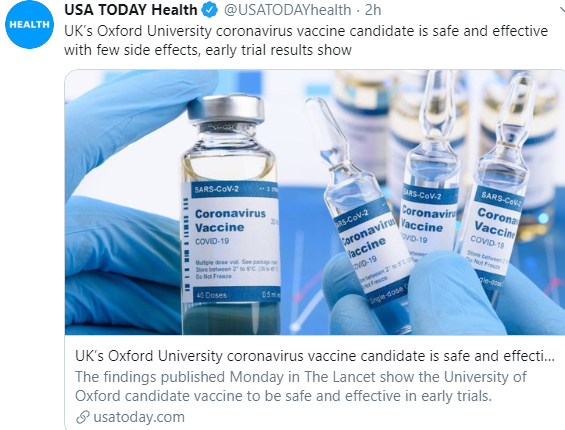
LA Jackson et al. NEJM 2020; DOI: 10.1056/NEJMoa2022483. Link:  An mRNA Vaccine against SARS-CoV-2 — Preliminary Report  The mRNA-1273 vaccine induced anti–SARS-CoV-2 immune responses in all participants (n=45), and no trial-limiting safety concerns were identified.

______________________________________________________________________

COVID-19 in Georgia (Data from 7/13/20):


B Kang et al. AP&T 2020; https://doi.org/10.1111/apt.15810. Thanks to Ben Gold for this reference. Full text: Adjustment of azathioprine dose should be based on a lower 6‐TGN target level to avoid leucopenia in NUDT15 intermediate metabolizers

Background: “In addition to TPMT polymorphisms, a recent genome‐wide association study reported that a missense variant of nudix hydrolase 15 (NUDT15 ), which encodes a novel thiopurine‐metabolizing enzyme, was strongly associated with thiopurine‐induced leucopenia especially in Asians”

Key findings:

  • Among the 167 pediatric patients included, leucopenia was observed in 16% (19/119), 44% (20/45) and 100% (3/3) of the NUDT15 normal, intermediate and poor metabolizers respectively ( < 0.001)
  • There was a positive association between 6‐TGN levels and leucopenia among the NUDT15 intermediate/TPMT normal metabolizers
  • In order to reduce the development of thiopurine‐induced leucopenia (<15%) in NUDT15 intermediate metabolizers, adjustment of azathioprine doses should be based on a lower 6‐TGN target level (<167.1 pmol/8 × 108 RBC)

Limitations: single-center, retrospective study and possible selection bias

My take: While 6-TGN levels between 235-400 are typically considered therapeutic, individuals with intermediate metabolism are at increased risk for leukopenia and may respond at lower levels.  This study indicates that careful dosing and close monitoring is needed for NUDT15 intermediate metabolizers

Related blog posts:

Disclaimer: This blog, gutsandgrowth, assumes no responsibility for any use or operation of any method, product, instruction, concept or idea contained in the material herein or for any injury or damage to persons or property (whether products liability, negligence or otherwise) resulting from such use or operation. These blog posts are for educational purposes only. Specific dosing of medications (along with potential adverse effects) should be confirmed by prescribing physician.  Because of rapid advances in the medical sciences, the gutsandgrowth blog cautions that independent verification should be made of diagnosis and drug dosages. The reader is solely responsible for the conduct of any suggested test or procedure.  This content is not a substitute for medical advice, diagnosis or treatment provided by a qualified healthcare provider. Always seek the advice of your physician or other qualified health provider with any questions you may have regarding a condition

New Agent for Refractory Reflux

In the June issue of Gastroenterology (158: 2015-16), a tribute to George Sachs (1935-2019) recognizes his work in the field of gastroenterology and his development of proton pump inhibitors (PPIs).

Much more work remains as ~30% of patients with gastroesophageal reflux remain symptomatic despite PPI therapy.   In the same issue, IW-3718, a bile acid sequestrant colsevelam with a gastric-retentive formulation was studied in 280 patients (MF Vaez et al. Gastroenterol 2020; 158: 2017-19).

Methods: The authors performed a multicenter, double-blind, placebo-controlled 8-weel treatment trial (2016-17); patients received the study drug (500, 1000, 1500 mg) or placebo twice daily.  The authors enrolled symptomatic patients (≥4 times per week) with erosive esophagitis or pathologic reflux based on Bravo study (pH<4 for ≥4.2% during at least one 24-hour period). They continued PPI therapy which they had been receiving for a minimum of 8 weeks prior to starting study medication.

Key findings:

  • Improvement in heartburn severity scores for placebo, 500, 1000, and 1500 mg groups: 46%, 49%, 55%, and 58%.  The 11.9% difference between 1500 mg group compared to placebo reached statistical significance (P=.04)
  • There was an improvement in weekly regurgitation frequency score as well from baseline to week 8 in 1500 mg group of 17.5% compared to placebo.
  • No serious drug related serious adverse events were identified.  Constipation was noted in 8% of study drug recipients compared 7% for placebo recipients.

Limitations: lack of a centralized review for endoscopy images, high placebo response rate, once daily use of PPI in study, and problems with overlap of functional symptoms

My take: This study shows why a placebo control is needed in reflux studies.  While IW-3718 at higher doses was effective, its response appears much less notable when compared with placebo-recipients.