IBD Updates: Treat-to-Target Uptake, Long-Term Data on Ustekinumab Intensification, and Low Rates of C diff with Tofacitinib (& Clinical Pearl)

JL Yang et al. Inflamm Bowel Dis 2023; 29: 735-743. Utilization of Colonoscopy Following Treatment Initiation in U.S. Commercially Insured Patients With Inflammatory Bowel Disease, 2013-2019

In this study with 39,734 commercially-insured initiators of IBD medications (18-64 year old), 34% had a colonoscopy by 12 months and 42% at 15 months. The authors state that “it is evident that patients without any colonoscopy during this interval are not being followed under an optimal long-term T2T (treat-to-target) paradigm.”

RS Dalal et al. Inflamm Bowel Dis 2023; 29: 830-833. Long-Term Outcomes After Ustekinumab Dose Intensification for Inflammatory Bowel Diseases

This retrospective study examined 123 patients with Crohn’s disease and 40 with ulcerative colitis who had dose intensification with ustekinumab (to either every 4 weeks, n=91, or every 6 weeks, n=72). Dose escalation was effective in both achieving and maintaining corticosteroid-free clinical remission for 61% of patients with Crohn’s disease and 40% with ulcerative colitis at 24 months; endoscopic remission was noted in 43% with Crohn’s disease and 55% with ulcerative colitis.

EV Loftus et al. Inflamm Bowel Dis 2023; 29: 744-751. Open Access! Clostridium difficile Infection in Patients with Ulcerative Colitis Treated with Tofacitinib in the Ulcerative Colitis Program 

Using data from multiple studies with 1157 patients, only 9 tofacitinib patients developed Clostridioides difficile infection (CDI) which was lower than the placebo group. CDI were all mild–moderate in severity and resolved with treatment in 8 patients. Six of 9 patients continued tofacitinib treatment without interruption. The low rate of infection was likely in part due to screening for CDI prior to treatment. In addition, “it is possible than the lower rates of CDI …may be due to better-controlled disease…, thus reducing susceptibility to infection.”

One clinical pearl in the discussion: “When considering treatment [for CDI], initial therapy with oral vancomycin should be considered instead of metronidazole, and treating for at least 21 days should also be considered [in patients with IBD due to]…lower rates of CDI recurrence.”

Related blog posts:

Disclaimer: This blog, gutsandgrowth, assumes no responsibility for any use or operation of any method, product, instruction, concept or idea contained in the material herein or for any injury or damage to persons or property (whether products liability, negligence or otherwise) resulting from such use or operation. These blog posts are for educational purposes only. Specific dosing of medications (along with potential adverse effects) should be confirmed by prescribing physician.  Because of rapid advances in the medical sciences, the gutsandgrowth blog cautions that independent verification should be made of diagnosis and drug dosages. The reader is solely responsible for the conduct of any suggested test or procedure.  This content is not a substitute for medical advice, diagnosis or treatment provided by a qualified healthcare provider. Always seek the advice of your physician or other qualified health provider with any questions you may have regarding a condition.

Lego Art at Tucson Botanical Gardens

Lipid Changes with IBD Medications

JAM Sleutjes et al. Inflamm Bowel Dis 2023; 29: 531-538. Open Access! Lipid Changes After Induction Therapy in Patients with Inflammatory Bowel Disease: Effect of Different Drug Classes and Inflammation

In this prospective study (n=198), the authors examined lipid profile changes at week 10 in patients starting IBD medications: corticosteroids, thiopurines, methotrexate, anti-TNF-α agents, vedolizumab, ustekinumab, and tofacitinib.

Key findings:

  • Relative increases in total cholesterol, HDL-c, and LDL-c were significant after prednisone (+26%, +31%, +12%) and tofacitinib therapy (+20%, +25%, +26%), respectively
  • No changes were observed in other drug classes
  • Findings did not correlate with calprotectin or CRP values, likely indicating a direct medication effect

My take: Recent studies have provided some reassurance regarding tofacitinib and the risk of major adverse cardiovascular events (MACEs) (see posts below). Nevertheless, it seems prudent to monitor lipids in patients receiving JAK inhibitors.

Related blog posts:

The Oro Valley/Tucson Loop shared use bike path extends over 130 car free miles throughout unincorporated Pima County, Marana, Oro Valley, and Tucson. We managed a 40 mile bike trip.

Tofacitinib Outperformed Vedolizumab in Anti-TNF-experienced Ulcerative Colitis

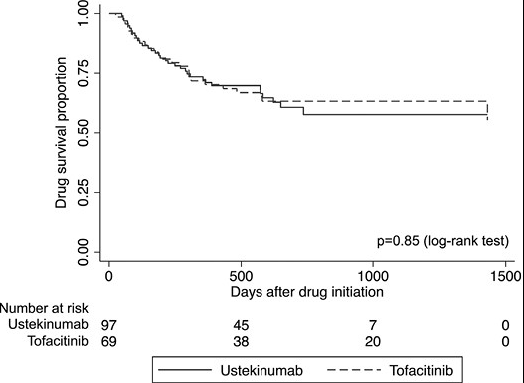
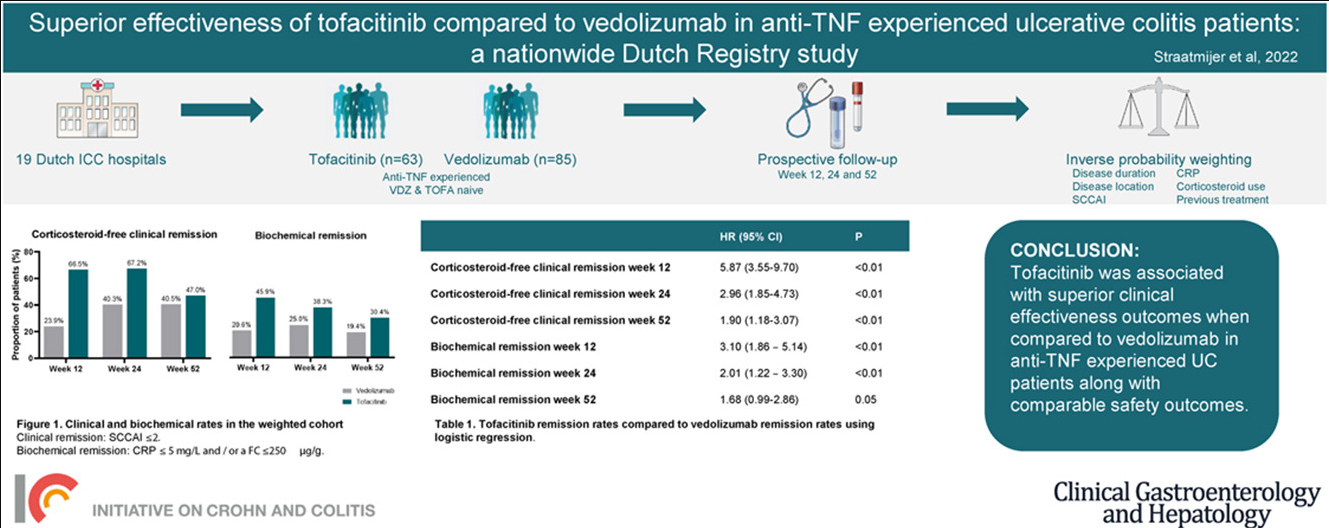
T Straamijer et al. Clin Gastroenterol Hepatol 2023; 21: 182-191. Open Access! Superior Effectiveness of Tofacitinib Compared to Vedolizumab in Anti-TNF-experienced Ulcerative Colitis Patients: A Nationwide Dutch Registry Study

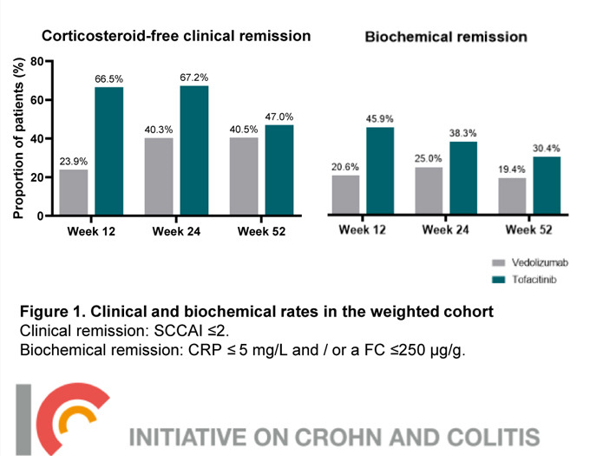
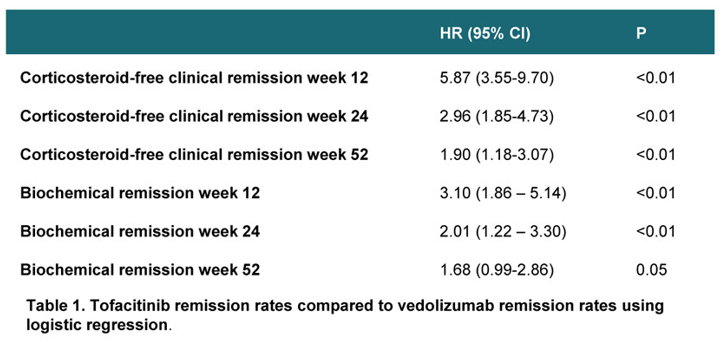
Methods: Adults with ulcerative colitis (UC) previously who failed anti-TNF treatment and initiated vedolizumab (n=83) or tofacitinib (n=65) treatment were identified in the Initiative on Crohn and Colitis Registry in the Netherlands.

Key findings (Vedolizumab is in gray):

  • There was no difference in infection rate or severe adverse events.

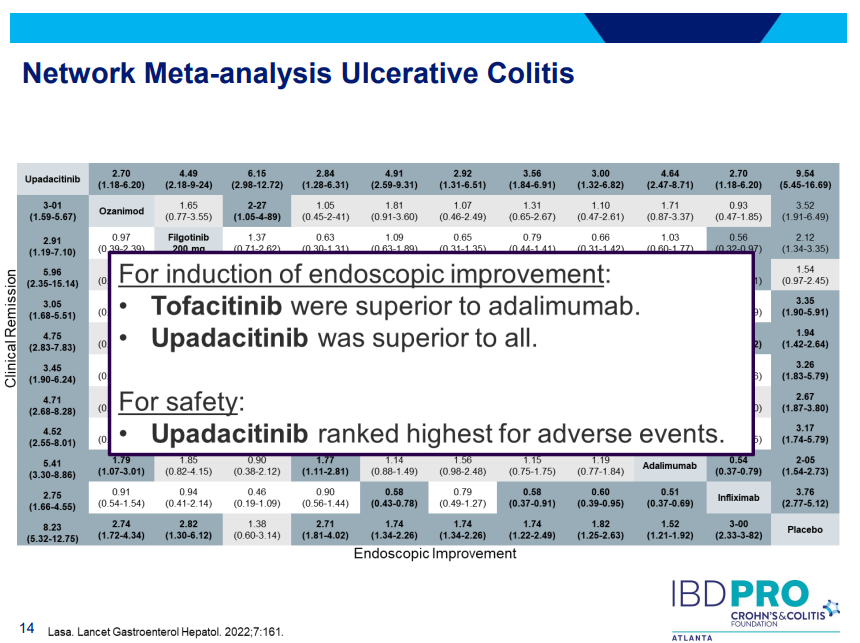
My take: Coupled with more recent reassuring safety data on JAK inhibitors, this study makes a strong case for positioning Tofacitinib (or other JAK inhibitor) earlier in patients with moderate-to-severe ulcerative colitis. Given that vedolizumab outperformed adalimumab in a head-to-head study, this indicates that tofacitinib is a very effective therapy.

Related article: B Chen et al. Gastroenterology 2022; 163: 1555-1568. Efficacy and Safety of Ivarmacitinib in Patients With Moderate-to-Severe, Active, Ulcerative Colitis: A Phase II Study This phase 2 study with 146 patients examined the effectiveness of the selective JAK inhibitor Ivarmacitinib found a week 8 clinical response in 46% of those receiving 8 mg per day. The week 8 clinical remission rate was 22%-24% in the treatment groups compared to 5% in the placebo group.

Related blog posts:

Disclaimer: This blog, gutsandgrowth, assumes no responsibility for any use or operation of any method, product, instruction, concept or idea contained in the material herein or for any injury or damage to persons or property (whether products liability, negligence or otherwise) resulting from such use or operation. These blog posts are for educational purposes only. Specific dosing of medications (along with potential adverse effects) should be confirmed by prescribing physician.  Because of rapid advances in the medical sciences, the gutsandgrowth blog cautions that independent verification should be made of diagnosis and drug dosages. The reader is solely responsible for the conduct of any suggested test or procedure.  This content is not a substitute for medical advice, diagnosis or treatment provided by a qualified healthcare provider. Always seek the advice of your physician or other qualified health provider with any questions you may have regarding a condition.

Treatments for “Bad” Inflammatory Bowel Disease (Part 2) & Reassuring Data on Tofacitinib

As noted yesterday, in my view, “bad” inflammatory bowel disease (IBD) occurs when treatments are not working; though, many would argue that any IBD is bad IBD. Over the next few days, reviewed articles will focus on the problem of IBD that is not responding well to treatment. This article reports on the use of tofacitinib to avoid colectomy in children with severe ulcerative colitis.

BD Constant et al. JPGN 2022; 75: 724-730. Tofacitinib Salvage Therapy for Children Hospitalized for Corticosteroid- and Biologic-Refractory Ulcerative Colitis

This small (n=11) retrospective single-center cohort study of consecutive hospitalized pediatric patients initiating tofacitinib for refractory ulcerative colitis from 2018 to 2021. All patients demonstrated nonresponse to both intravenous corticosteroids and anti-TNF therapy prior to tofacitinib initiation.

Key findings:

  • Eight of 11 patients remained colectomy-free at 90 days following hospital admission and 6 remained colectomy-free over median 182-day follow-up, including 4 of whom remained on tofacitinib
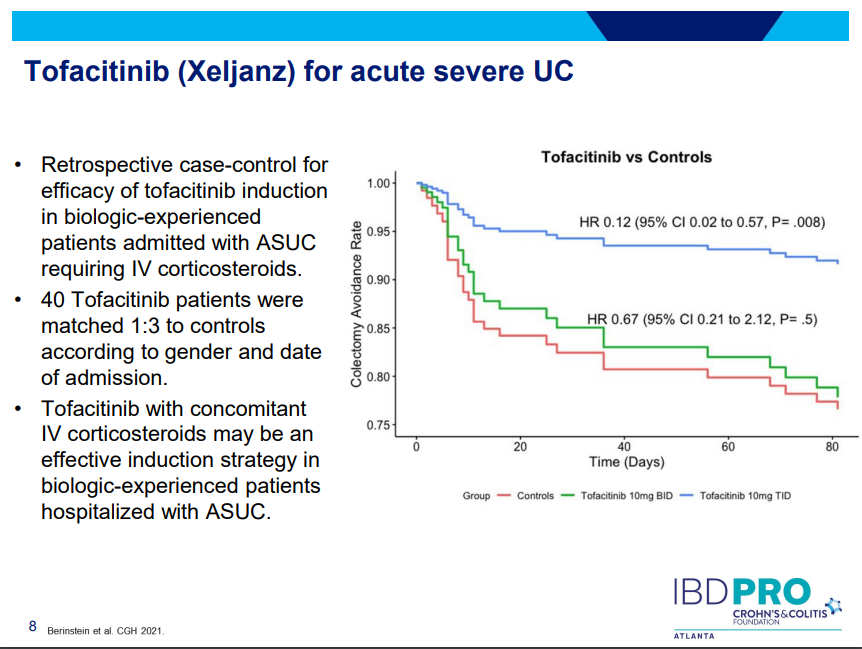
  • The authors note that three patients started with TID dosing and eight received BID dosing (10 mg per dose). The higher dosing was influenced by a case control study by Bernstein et al which showed a 15% 90-day colectomy rate among adults with acute severe ulcerative colitis (ASUC), particularly those dosed at TID (Open Access: Clin Gastroenterol Hepatol 2021; 19: 2112-2120. Tofacitinib for Biologic-Experienced Hospitalized Patients With Acute Severe Ulcerative Colitis: A Retrospective Case-Control Study)
  • “Remission rates peaked at 12-16 weeks and decreased at 6 months…tofacitinib may …bridge to slower-acting and possibly safer long-term therapies such as ustekinumab or vedolizumab”
  • The median time to corticosteroid discontinuation was 89 days
  • No serious tofacitinib-related adverse events were observed

My take: Given the small numbers, this is clearly an area where cooperation (& ImproveCareNow) could be helpful in determining the safety and effectiveness of tofacitinib for pediatric ASUC. Also, if tofacitinib is used as a ‘bridge’ this is likely to present insurance coverage issues.

Related article:

Hoisnard L, Pina Vegas L, Dray-Spira R, et al. Annals of the Rheumatic Diseases Published Online First: 05 October 2022. doi: 10.1136/ard-2022-222824. Risk of major adverse cardiovascular and venous thromboembolism events in patients with rheumatoid arthritis exposed to JAK inhibitors versus adalimumab: a nationwide cohort study Methods: This was a nationwide population-based cohort study (n=15,835) of the French national health data system, the exposed group initiating a JAKi and non-exposed group initiating adalimumab Key findings:  Risk of major adverse cardiovascular events (MACEs) for the exposed versus non-exposed group was not significant: HRw 1.0 (95% CI 0.7 to 1.5) (p=0.99), nor was risk of VTEs significant: HRw 1.1 (0.7 to 1.6) (p=0.63). This study provides reassuring data regarding the risks of MACEs and VTEs in patients initiating a JAKi versus adalimumab, including patients at high risk of cardiovascular diseases.

Related blog posts:

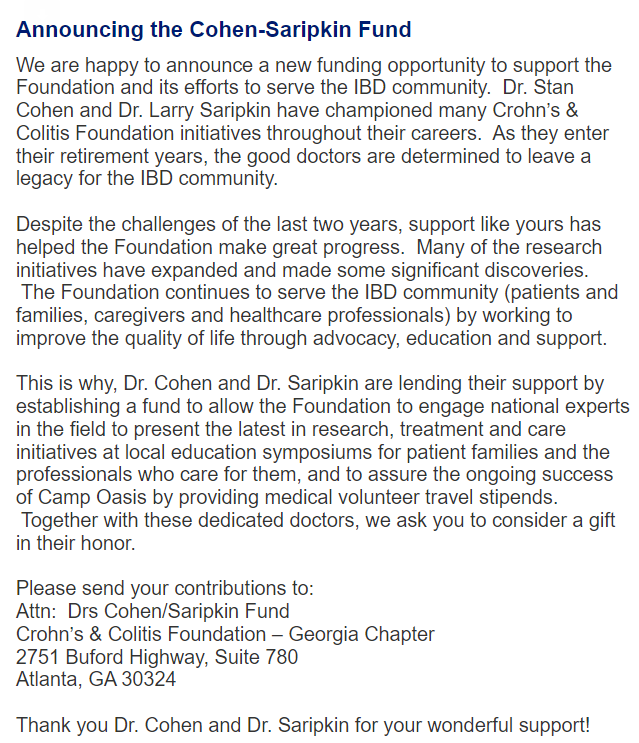
From Crohn’s and Colitis Foundation, Georgia Chapter, December Newsletter: Donate to Cohen-Saripkin Fund

IBD Updates: Probability of Needing a Stoma with Crohn’s Disease, “CEASE” anti-TNF study, Extending Tofacitinib Response Time

AH Everhov et al. Inflamm Bowel Dis 2022; 28: 1160-1168. Open Access! Probability of Stoma in Incident Patients With Crohn’s Disease in Sweden 2003-2019: A Population-based Study

In a nationwide Swedish cohort of 18,815 incident patients with a minimum 5 years of follow-up, 652 (3.5%) underwent formation of a stoma. The 5-year cumulative incidence of stoma formation was 2.5%, with no differences between calendar periods  (2003–2006, 2007–2010, and 2011–2014).

RWM Pauweis et al. Clin Gastroentol Hepatol 2022; 20: 1671-1686. Open Access! Prediction of Relapse After Anti-Tumor Necrosis Factor Cessation in Crohn’s Disease: Individual Participant Data Meta-analysis of 1317 Patients From 14 Studies

C Ma. Clin Gastroentol Hepatol 2022; 20: 1668-1670. Associated editorial. Open Access! To Stop or Not to Stop? Predicting Relapse After Anti-TNF Cessation in Patients With Crohn’s Disease

This study captured data from 1317 patients (including 927 patients stopping infliximab and 390 patients stopping adalimumab) to develop risk prediction models.  “The authors confirm many of the high risk, albeit rather intuitive, factors that are associated with the risk of relapse, including younger age, younger age at diagnosis, smoking, upper gastrointestinal tract involvement, longer disease duration, absence of concomitant immunosuppressant use, previous anti-TNF failure, and absence of clinical remission.”

The editorial notes that even in the lowest risk group, more than 20% had risk of relapse within 1 year; in addition, stopping therapy increases risk of not recapturing remission with restart of treatment. “Stopping anti-TNF therapy is a highly personalized treatment decision and is one that carries considerable risks…therapeutic discontinuation of TNF antagonists should be reserved for the very small minority of patients who are in deep remission, have a strong desire to stop treatment, have no (or very few) characteristics of high-risk CD, can tolerate a substantial disease flare, and are fully informed of the risks of therapeutic withdrawal.”

Related blog posts:

WJ Sandborn et al. Clin Gastroenterol Hepatol 2022; 20: 1821-1830. Open Access! Efficacy and Safety of Extended Induction With Tofacitinib for the Treatment of Ulcerative Colitis

Graphical abstract below shows that 52.2% of patients who did not achieve clinical response to 8 weeks’ treatment with tofacitinib 10 mg BID in the induction studies achieved a clinical response following extended induction (delayed responders). At Month 12 of OCTAVE Open, 70.3%, 56.8%, and 44.6% of delayed responders maintained clinical response and achieved endoscopic improvement and remission, respectively. Corresponding values at Month 36 were 56.1%, 52.0%, and 44.6%.

My take: By extending the treatment induction to 16 weeks to determine response (rather than 8 weeks), the authors showed that 75% of patients with ulcerative colitis in the initial cohort respond to tofacitinib.

Related blog posts:

Increased Risk, Increased Reward (possibly) with Tofacitinib

T Straatmijer et al. Clin Gastroenterol Hepatol 2022; Full text Pre-Proof PDF: Superior effectiveness of tofacitinib compared to vedolizumab in anti-TNF experienced ulcerative colitis patients: a nationwide Dutch Registry study. DOI:https://doi.org/10.1016/j.cgh.2022.04.038

Methods: Ulcerative colitis patients who failed anti-TNF treatment and initiated vedolizumab (n=83) or tofacitinib (n=65) treatment, were identified in the ICC Registry in the Netherlands.

Key findings:

  • Tofacitinib treated patients were more likely to achieve corticosteroid-free clinical remission and biochemical remission at week 12, 24 and 52 compared to vedolizumab treated patients (OR: 6.33, OR: 3.02, and OR 1.86 and OR: 3.27, OR: 1.87, and OR:1.81, respectively).
  • There was no difference in infection rate or severe adverse events.

My take: The response rates with tofacitinib were significantly better than vedolizumab at all time points; however, by 52 weeks, the differences were less pronounced. Nevertheless, the safety profile of vedolizumab is much more favorable than tofacitinib and this is a very important consideration.

Related blog posts -Tofacitinib:

IBD Shorts: Tofacitinib Safety, Vit D post-op, EIM with Vedolizumab

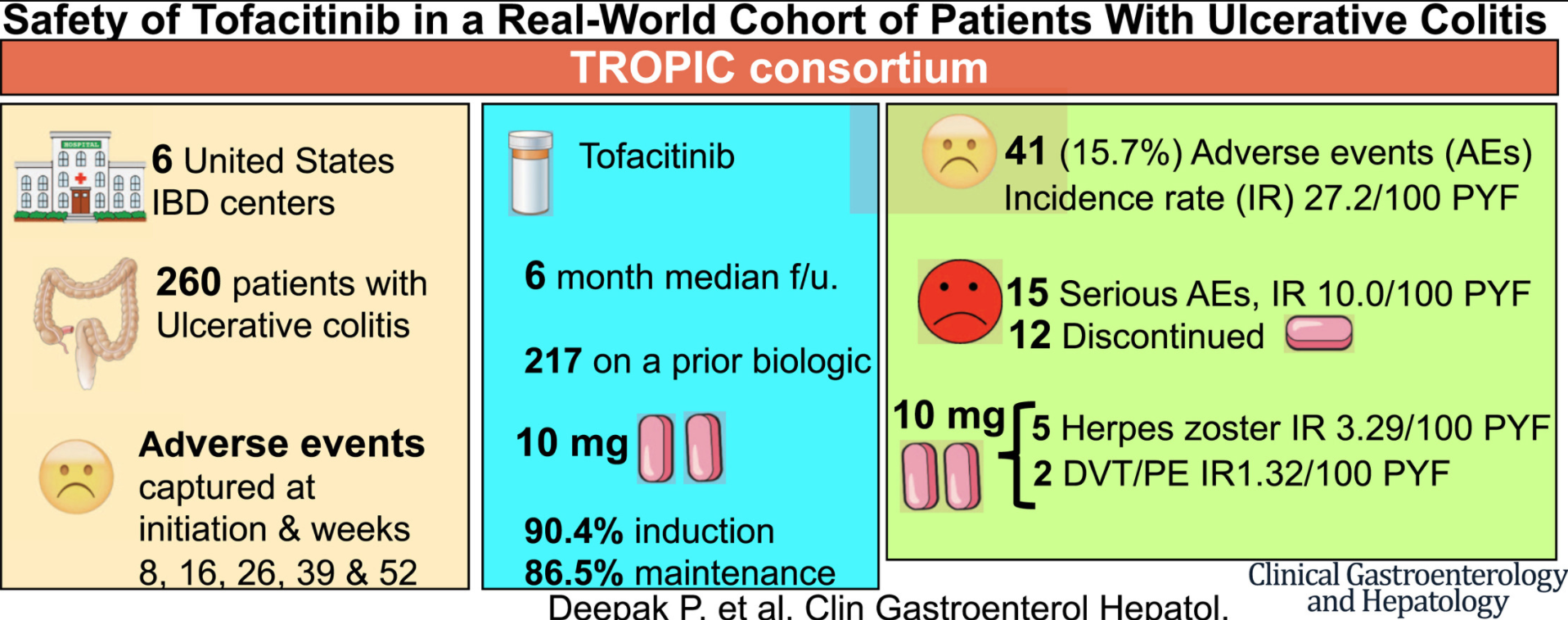
P Deepak et al. Clin Gastroenterol Hepatol 2021; 19: 1592-1601. Full Text: Safety of Tofacitinib in a Real-World Cohort of Patients With Ulcerative Colitis

This study described a ‘real-world’ experience with tofacitinib for Ulcerative Colitis in 260 adults; five patients developed HZ infection and 2 developed VTE (all receiving 10 mg tofacitinib, twice per day).

Related blog posts -Tofacitinib:

JR de Bruyn et al. Clin Gastroenterol Hepatol 2021; 19: 1573-1582. Full Text: High-Dose Vitamin D Does Not Prevent Postoperative Recurrence of Crohn’s Disease in a Randomized Placebo-Controlled Trial

Methods: Patients with CD after ileocolonic resection with ileocolonic anastomosis were assigned randomly to groups given weekly 25,000 IU oral vitamin D (n = 72) or placebo (n = 71) for 26 weeks, at 17 hospitals in The Netherlands and Belgium, from February 2014 through June 2017

Key finding: The cumulative rate of clinical recurrence did not differ significantly between the groups (18.1% in the vitamin D group vs 18.3% in the placebo group; P = .91). Though, the Vit D group achieved higher levels at week 26 (81 vs 43 of 25-OH Vit D)


GP Ramos et al. Inflamm Bowel Dis 2021; 27: 1270-1276. The Impact of Vedolizumab on Pre-Existing Extraintestinal Manifestations of Inflammatory Bowel Disease: A Multicenter Study

Key findings (n=201, retrospective study):

  • Worsening of EIMs after VDZ occurred in 34.8% of patients
  • Peripheral arthritis (PA) (68.2%) was most common EIM
  • Treatment using VDZ was discontinued specifically because of EIMs in 9.5% of patients

Related blog post: Vedolizumab and Extraintestinal Manifestations of IBD

What Can We Conclude from Five Patients Treated with a Combination of Infliximab and Tofacitinib?

Most often a letter to the editor would not grab my attention. A recent letter did: Full Text: Tofacitinib Is Safe and Effective When Used in Combination With Infliximab for the Management of Refractory Ulcerative Colitis (R Gilmore et al. Clin Gastroenterol Hepatol 2021; 1302-1303; reply 1303-1304 by JA Berinstein et al.)

This reported case series with 5 patients with severe ulcerative colitis (UC) who received a combination of tofacitinib and infliximab for at least 90 days were retrospectively reviewed. Tofacitinib dosing was de-escalated to 5 mg twice daily after 8 weeks. Thiopurine therapy was stopped with tofacitinib initiation.

Key findings:

  • Median duration of combination therapy was 9 months (range, 4–12 months). At 90 days, all patients had a reduction in Mayo score of ≥3. Four patients improved clinically and biochemically (Table 1), with 3 patients achieving steroid-free remission.
  • The only adverse event reported was one patient developing varicella zoster.

The authors letter title regarding tofacitinib being “safe and effective” is clearly overstated. The reply notes that in limited experience the group from the University of Michigan had a 50-year-old man develop severe pulmonary and CNS disease due to acquisition of legionnaires disease while on combination tofacitinib and infliximab.

My take: (borrowed from reply) “Efficacy and safety data obtained through rigorous randomized trials are needed…it is possible that long-term use of combination tofacitinib and infliximab will lead to an unacceptable risk of infection.”

Another study of tofacitinib: GR Lichtenstein et al. Inflamm Bowel Dis 2021; 27: 816-825. Tofacitinib, an Oral Janus Kinase Inhibitor: Analysis of Malignancy (Excluding Nonmelanoma Skin Cancer) Events Across the Ulcerative Colitis Clinical Program Key finding: With an exposure of 2576.4 patient years & 124 overall cohort tofacitinib-treated patients, 20 developed a malignancy

Related blog post:

Key West, FL

A New FDA Warning for Tofacitinib

2/4/21: FDA: Initial safety trial results find increased risk of serious heart-related problems and cancer with arthritis and ulcerative colitis medicine Xeljanz, Xeljanz XR (tofacitinib)

“The U.S. Food and Drug Administration (FDA) is alerting the public that preliminary results from a safety clinical trial show an increased risk of serious heart-related problems and cancer with the arthritis and ulcerative colitis medicine Xeljanz, Xeljanz XR (tofacitinib) compared to another type of medicine called tumor necrosis factor (TNF) inhibitors. FDA required the safety trial, which also investigated other potential risks including blood clots in the lungs and death. Those final results are not yet available….

Patients should not stop taking tofacitinib without first consulting with your health care professionals, as doing so may worsen your condition. Talk to your health care professionals if you have any questions or concerns.”

Related blog post: FDA Warning on Tofacitinib (July 2019)

Drug Therapy for Celiac Disease: Case Report

Briefly noted: L Waters et al. Annals Int Med 2020; doi:10.7326/L20-0497. Celiac Disease Remission With Tofacitinib

The authors describe a male with a well-documented case of celiac disease and alopecia areata.  He was placed on tofacitinib off-label for his alopecia areata and it was discovered that his celiac disease had developed “complete histologic and serologic remission…while he was still on a gluten-containing diet.”  Prior to medication, he had confirmation of both severe histologic changes and high tTG IgA titers.

The authors note that tofacitinib inhibits CD8+ T-cell mediated enteropathy in a transgenic mouse model.

My take (borrowed from authors): Tofacitinib has many potential adverse effects but may considered for further study, especially in refractory celiac disease.

Table –From Annals of Internal Medicine Twitter Feed

_______________________________________


For those interested in voting by mail in November -don’t miss the deadline!