‘Dual Immunotherapy’ for IBD

A recent study (MT Dolinger et al. Inflamm Bowel Dis 2021; 27: 1210-1214) and the associated editorial (D Geem, S Kugathasan. Inflamm Bowel Dis 2021; 27: 1361-1362) describe the use of multiple therapies (biologics and small molecule therapy) to target refractory pediatric inflammatory bowel disease. Since the term “combination therapy” is already in broad use for those receiving a biologic agent and an immunomodulator, I plan to refer to these new combinations as ‘dual immunotherapy’ for IBD.

Dolinger et al (Dual Biologic and Small Molecule Therapy for the Treatment of Refractory Pediatric Inflammatory Bowel Disease) described 16 children with dual immunotherapy. Nine (56%) were treated with vedolizumab/tofacitinib, 4 (25%) with ustekinumab/vedolizumab, and 3 (19%) with ustekinumab/tofacitinib. Twelve (75%; 7 ulcerative colitis/IBD-unspecified, 5 Crohn’s disease ) achieved steroid-free remission at 6 months. One patient on 30 mg of vedolizumab/tofacitinib and prednisone daily developed septic arthritis and a deep vein thrombosis.

In the editorial (It Takes Two to Make It Right: Dual Biologic and Small Molecule Therapy for Treatment-Refractory Pediatric Inflammatory Bowel Disease), Geem et al make a number of key points:

  • Except for “anti-TNF medications (infliximab and adalimumab), no other biologic therapies are FDA-approved for children with IBD”
  • “Clinical disease remission is achieved in only 40-60% of patients on anti-TNF medications”
  • With ustekinumab, “limited pediatric data reveal that in patients who have failed at least 1 biologic therapy, 38.6-58% achieve clinical remission by week 52…[And] vedolizumab …demonstrated steroid-free remission in 20% by week 22 in a single-center prospective observational cohort study.”
  • The response to dual immunotherapy is most likely due to the synergistic effects of two medications rather than the start of a new medication. The authors note a prior study which showed a positive experience of adding ustekinumab in 5 children who developed severe paradoxical psoriasis with infliximab and in another subset of pediatric patients, there was improvement with combination vedolizumab/infliximab (Paediatr Drugs 2020; 22: 409-416)

My take (borrowed from editorial): “Given the phenotypic heterogeneity of pediatric IBD and the multiple inflammatory immune pathways implicated in its pathogenesis, the approach of biologic monotherapy–may not be suitable for all patients…patients may require specific combinations…to quell multiple arms of their dysregulated immune response.” More trials are needed to determine the safety of these regimens (especially with regard to malignancy and infections).

Burlington VT (Lake Champlain)

IBD Shorts: Tofacitinib Safety, Vit D post-op, EIM with Vedolizumab

P Deepak et al. Clin Gastroenterol Hepatol 2021; 19: 1592-1601. Full Text: Safety of Tofacitinib in a Real-World Cohort of Patients With Ulcerative Colitis

This study described a ‘real-world’ experience with tofacitinib for Ulcerative Colitis in 260 adults; five patients developed HZ infection and 2 developed VTE (all receiving 10 mg tofacitinib, twice per day).

Related blog posts -Tofacitinib:

JR de Bruyn et al. Clin Gastroenterol Hepatol 2021; 19: 1573-1582. Full Text: High-Dose Vitamin D Does Not Prevent Postoperative Recurrence of Crohn’s Disease in a Randomized Placebo-Controlled Trial

Methods: Patients with CD after ileocolonic resection with ileocolonic anastomosis were assigned randomly to groups given weekly 25,000 IU oral vitamin D (n = 72) or placebo (n = 71) for 26 weeks, at 17 hospitals in The Netherlands and Belgium, from February 2014 through June 2017

Key finding: The cumulative rate of clinical recurrence did not differ significantly between the groups (18.1% in the vitamin D group vs 18.3% in the placebo group; P = .91). Though, the Vit D group achieved higher levels at week 26 (81 vs 43 of 25-OH Vit D)


GP Ramos et al. Inflamm Bowel Dis 2021; 27: 1270-1276. The Impact of Vedolizumab on Pre-Existing Extraintestinal Manifestations of Inflammatory Bowel Disease: A Multicenter Study

Key findings (n=201, retrospective study):

  • Worsening of EIMs after VDZ occurred in 34.8% of patients
  • Peripheral arthritis (PA) (68.2%) was most common EIM
  • Treatment using VDZ was discontinued specifically because of EIMs in 9.5% of patients

Related blog post: Vedolizumab and Extraintestinal Manifestations of IBD

Predicting IBD Outcomes –New Tools

In an observational prospective longitudinal study of with newly diagnosed Crohn’s disease in 156 adults followed for nearly 1.5 years, Yanai et al found that 52 patients (33.3%) had an indolent course of CD, 29 (18.5%) required hospitalizations, and 75 (48%) were recommended to start steroid, immunomodulator, or biologic therapies. An “indolent course” indicated a lack of needing steroids, immunomodulators, anti-TNF agents, hospitalization or surgery.  Key findings:

  • There were 4 factors associated with complicated course in treatment-naïve patients: body mass index <25 kg/m2 (hazard ratio [HR], 2.45; 95% CI, 1.07–5.43; P = .033), serum level of vitamin B12 <350 pg/mL (HR, 2.78; 95% CI, 1.21–6.41; P = .016), white blood cells ≥7 × 103/μL (HR, 2.419; 95% CI, 1.026–5.703; P = .044), and serum level of ALT ≥25 IU/L (HR, 2.680; 95% CI, 1.186–6.058; P = .018).
  • This model discriminated between patients with vs without a complicated course of disease with 90% and 89% accuracy at 6 and 12 months after diagnosis, respectively. A validation cohort demonstrated a discriminatory ability of 79% at 3 months after diagnosis, and a nomogram was constructed (see below)
Points on the nomogram are based on: BMI <25 kg/m2 = 87 or ≥25 kg/m2 = 0, WBC <7 × 103/μL = 0 or ≥7 × 103/μL = 83, vitamin B12 <350 pg/mL = 100 or ≥350 pg/mL = 0, and ALT <25 IU/L = 0 or ≥25 IU/L = 76. The sum score for all variables corresponds with the probability of having an indolent course of disease at different time points after diagnosis.

My take: In this study, low BMI, low Vit B12, high wbc, and high ALT were associated with a more complicated course. These particularly risk factors do not seem intuitive to me. These findings need to be looked at in the pediatric age group, which likely has a lower rate of an indolent course.

G Le Baut et al. Clin Gastroenterol Hepatol 2021; 19: 1602-1610. A Scoring System to Determine Patients’ Risk of Colectomy Within 1 Year After Hospital Admission for Acute Severe Ulcerative Colitis

In this retrospective study of 270 consecutive adult patients with acute severe ulcerative colitis (ASUC) (2002-2017), the cumulative risk of colectomy was 12.3% (95% CI, 8.6–16.8). Key findings:

  • Based on multivariate analysis, previous treatment with TNF antagonists or thiopurines (hazard ratio [HR], 3.86), Clostridioides difficile infection (HR, 3.73), serum level of C-reactive protein above 3.0 mg/dL (HR, 3.06), and serum level of albumin below 3.0 g/dL (HR, 2.67) were associated with increased risk of colectomy
  • The cumulative risks of colectomy within 1 y in patients with scores of 0, 1, 2, 3, or 4 were 0.0%, 9.4% (95% CI, 4.3%–16.7%), 10.6% (95% CI, 5.6%–17.4%), 51.2% (95% CI, 26.6%–71.3%), and 100%. Negative predictive values ranged from 87% (95% CI, 82%–91%) to 92% (95% CI, 88%–95.0%). Findings from the validation cohort were consistent with findings from the derivation cohort.

My take: These findings confirm other studies in patients with ulcerative colitis which have shown that each of these criteria were predictors of severe disease.

Related blog posts:

Paternal Exposure to IBD Medications and Neonatal Outcomes

COVID-19 Vaccine Effectiveness (8/10/21):

————————————————————————————————————-

J Meserve et al. Gastroenterol 2021; 161: 107-115. Full text: Paternal Exposure to Immunosuppressive and/or Biologic Agents and Birth Outcomes in Patients With Immune-Mediated Inflammatory Diseases

Methods: The investigators used a deidentified administrative claims database (OptumLabs Data Warehouse) with a total of 7453 expectant fathers with immune-mediated diseases.

Key findings:

  • As compared to unexposed fathers (3.4% prevalence of major congenital malformations), exposure to immunosuppressives/biologics were not associated with increased risk of major congenital malformations: thiopurines (relative risk [RR], 1.12; 95% confidence interval [CI], 0.66–1.76), methotrexate (RR, 0.67; 95% CI, 0.21–1.55), TNF-α antagonists (RR, 1.14; 95% CI, 0.81-1.57), and non–TNF-targeting biologic agents (RR, 1.75; 95% CI, 0.80–3.24).
  • No association was observed between paternal medication exposure and risk of preterm birth or low birth weight.

Editorial, pg 24-27: S Friedman et al. Full text: Does Fatherhood Matter? Preconception Use of Biologics and Immunomodulators by Fathers With Immune-Mediated Diseases and Birth Outcomes of Their Offspring

“Regarding major congenital malformations, we believe that the results should be interpreted with caution. The numbers of these outcomes are relatively low and the statistical precision of the risk estimates should be taken into consideration.”

My take: Overall, this study is reassuring. Though it is difficult to prove these medications do not have impacts on newborns, if these effects were frequent, it would likely be evident in this type of study.

Anti-TNF Therapy and Lower Rates of Colon Cancer & Financial Hardship Due to IBD

M Aklkhayyat et al. Inflamm Bowel Dis 2021; 27: 1052-1060. Lower Rates of Colorectal Cancer in Patients With Inflammatory Bowel Disease Using Anti-TNF Therapy

Using a selected sample from a database with >62 million patients, this retrospective cohort study determined the rates of colorectal cancer among patients with IBD. Key finding:

Among the IBD cohort, patients treated with anti-TNF agents were less likely to develop CRC; patients with Crohn’s disease: odds ratio, 0.69; 95% confidence interval, 0.66-0.73; P < 0.0001 vs patients with ulcerative colitis: odds ratio, 0.78; 95% confidence interval, 0.73-0.83; P < 0.0001.

My take: This study found an association between anti-TNF therapy and a reduced risk of CRC in patients with IBD.

Related blog posts:

NH Nguyen et al. Inflamm Bowel Dis 1068-1078. National Estimates of Financial Hardship From Medical Bills and Cost-related Medication Nonadherence in Patients With Inflammatory Bowel Diseases in the United States

Using the National Health Interview survey (2015), the authors identified individuals with self-reported IBD and assessed national estimates of financial toxicity. Key findings:

  • 23% reported financial hardships due to medical bills, 16% of patients reported cost-related medication nonadherence, and 31% reported cost-reducing behaviors
  • Approximately 62% of patients reported personal and/or health-related financial distress, and 10% of patients deemed health care unaffordable
  • Inflammatory bowel disease was associated with 1.6 to 2.6 times higher odds of financial toxicity across domains compared with patients without IBD

My take: In addition to the physical and emotional toll of having IBD, there is also significant financial hardships for many.

What Can We Conclude from Five Patients Treated with a Combination of Infliximab and Tofacitinib?

Most often a letter to the editor would not grab my attention. A recent letter did: Full Text: Tofacitinib Is Safe and Effective When Used in Combination With Infliximab for the Management of Refractory Ulcerative Colitis (R Gilmore et al. Clin Gastroenterol Hepatol 2021; 1302-1303; reply 1303-1304 by JA Berinstein et al.)

This reported case series with 5 patients with severe ulcerative colitis (UC) who received a combination of tofacitinib and infliximab for at least 90 days were retrospectively reviewed. Tofacitinib dosing was de-escalated to 5 mg twice daily after 8 weeks. Thiopurine therapy was stopped with tofacitinib initiation.

Key findings:

  • Median duration of combination therapy was 9 months (range, 4–12 months). At 90 days, all patients had a reduction in Mayo score of ≥3. Four patients improved clinically and biochemically (Table 1), with 3 patients achieving steroid-free remission.
  • The only adverse event reported was one patient developing varicella zoster.

The authors letter title regarding tofacitinib being “safe and effective” is clearly overstated. The reply notes that in limited experience the group from the University of Michigan had a 50-year-old man develop severe pulmonary and CNS disease due to acquisition of legionnaires disease while on combination tofacitinib and infliximab.

My take: (borrowed from reply) “Efficacy and safety data obtained through rigorous randomized trials are needed…it is possible that long-term use of combination tofacitinib and infliximab will lead to an unacceptable risk of infection.”

Another study of tofacitinib: GR Lichtenstein et al. Inflamm Bowel Dis 2021; 27: 816-825. Tofacitinib, an Oral Janus Kinase Inhibitor: Analysis of Malignancy (Excluding Nonmelanoma Skin Cancer) Events Across the Ulcerative Colitis Clinical Program Key finding: With an exposure of 2576.4 patient years & 124 overall cohort tofacitinib-treated patients, 20 developed a malignancy

Related blog post:

Key West, FL

IBD Updates: Microbiome afer surgery, Anti-TNF agents NOT changing hospitalizations/surgeries, Biobanking Genetics

X Fang et al. Inflamm Bowel Dis 2021; 27: 603-616. Full Text: Gastrointestinal Surgery for Inflammatory Bowel Disease Persistently Lowers Microbiome and Metabolome Diversity

  • Methods: The UC San Diego IBD Biobank was used to prospectively collect 332 stool samples (every 6 months) from 129 subjects (50 ulcerative colitis; 79 Crohn’s disease). Of these, 21 with Crohn’s disease had ileocolonic resections, and 17 had colectomies.
  • Key finding: Intestinal surgeries in IBD patients seem to reduce the diversity of the gut microbiome and metabolome in IBD patients. Colectomy has a larger effect than ileocolonic resection.
  • Limitations: Confounding variables (eg. antibiotics) and selection bias (patients with more severe disease

C Verdon et al. Inflamm Bowel Dis 2021; 27: 655-661. No Change in Surgical and Hospitalization Trends Despite Higher Exposure to Anti-Tumor Necrosis Factor in Inflammatory Bowel Disease in the Québec Provincial Database From 1996 to 2015

Key findings:

  • 34,644 newly diagnosed patients with IBD (CD = 59.5%)
  • The probability of first and second hospitalizations remained unchanged in Québec and the probability of major surgery was low overall but did increase despite the higher and earlier use of anti-TNFs. However, the authors note that “in the present study, biologics use under the public reimbursement plan was 13% in patients with UC and 16% in patients with CD.”
  • My take: This study is provocative but probably misleading; it is quite likely that use of anti-TNF agents do lower the risk of hospitalization and surgery.

K Gettler et al. Gastroenterol 2021; 160: 1546-1557. Full text PDF: Common and Rare Variant Prediction and Penetrance of IBD in a Large, Multi-ethnic, Health System-based Biobank Cohort

  • Methods: The authors used the Mount Sinai BioMe Biobank, which contains genetic data on
    32,595 patients. After rigorous phenotype validation, 19,541 individuals were retained, of whom 339 were IBD patients (273 CD, 28 UC, and 37 individuals who were classified as both) and 19,202 were controls
  • Key findings: In this study, the authors identified several rare VEO-IBD variants with high genetic penetrance using the biobank samples and then replicated results in large case control African American and European data sets.
  • One of the variants with the highest genetic penetrance located in the gene LRBA was predicted to result in a deleterious change to the amino acid structure. Reduced expression of CTLA-4 secondary to the variants we identified in LRBA may result in autoinflammation that contributes to IBD. “Targeting reduced CTLA-4 expression is an exciting treatment venue, because expression of CTLA-4 has been shown to be increased by chloroquine treatment in vitro.”
  • Enteropathy is present in 63% of all known individuals with LRBA deficiency, with 27% having chronic diarrhea as the presenting symptom

Mangroves in John Pennekamp State Park (Key Largo)

Ustekinumab for Refractory Pediatric Ulcerative Colitis and Updated Adalimumab Dosing

As noted in previous blog posts (see below), adult guidelines for ulcerative colitis favor ustekinumab over vedolizumab for ulcerative colitis patients who have had anti-TNF therapy; recent pediatric guidelines appeared to do the opposite, possibly due to limited data with ustekinumab.

A recent study (J Dhaliwal et al. AP&T 2021; https://doi.org/10.1111/apt.16388. One‐year outcomes with ustekinumab therapy in infliximab‐refractory paediatric ulcerative colitis: a multicentre prospective study) provides prospective data on ustekinumab effectiveness when given to children with UC refractory to other biologics; n=25. Thanks to Ben Gold for this reference.

Key findings:

  •  All patients had failed prior infliximab therapy, and 12 (48%) also had failed vedolizumab.  Five patients discontinued ustekinumab after IV induction (four undergoing colectomy).
  • On intent to treat basis, 44% (n=11) achieved the primary endpoint of steroid‐free remission at week 52, including nine (69%) of 13 who previously treated with anti‐TNF only vs two (17%) of 12 who previously failed also by vedolizumab. Seven of 11 remitters met the criteria for endoscopic improvement.
  • Higher trough levels were not associated with a superior rate of clinical remission; the median (IQR) trough levels (μg/mL) were greater with q4 vs q8 weekly dosing (8.7 [4.6‐9.9] vs 3.8 [12.7‐4.8]) P = 0.02.
  • No adverse events were associated with therapy.

My take: Ustekinumab is a good option for pediatric patients with ulcerative colitis who are refractory to anti-TNF agents. More data are needed to help in positioning therapies.

Also, Humira (adalimumab) is now FDA-approved for children as young as 5 years with ulcerative colitis: FDA Approves Adalimumab as Treatment for Children With Ulcerative Colitis (2/25/21). “This approval is based on results from the phase 3, randomized, double-blind, multicenter ENVISION I (NCT02065557) study.” Abbvie has now updated their Humira dosing recommendations (Reference:  https://www.rxabbvie.com/pdf/humira.pdf). Thanks to Clair Talmadge for this update.

Disclaimer: This blog, gutsandgrowth, assumes no responsibility for any use or operation of any method, product, instruction, concept or idea contained in the material herein or for any injury or damage to persons or property (whether products liability, negligence or otherwise) resulting from such use or operation. These blog posts are for educational purposes only. Specific dosing of medications (along with potential adverse effects) should be confirmed by prescribing physician.  Because of rapid advances in the medical sciences, the gutsandgrowth blog cautions that independent verification should be made of diagnosis and drug dosages. The reader is solely responsible for the conduct of any suggested test or procedure.  This content is not a substitute for medical advice, diagnosis or treatment provided by a qualified healthcare provider. Always seek the advice of your physician or other qualified health provider with any questions you may have regarding a condition.

Clinical Remission: Trust But Verify

A recent study reminded me of the slogan ‘trust but verify.’ This slogan was popularized by Ronald Reagan in nuclear disarmament talks with the U.S.S.R. In contrast, C Sarbagili-Shabat et al (JPGN 2021; 72: 569-573. Moderate-to-severe Endoscopic Inflammation is Frequent After Clinical Remission in Pediatric Ulcerative Colitis) discuss the issue of clinical remission in ulcerative colitis.

This study  prospectively assessed for mucosal healing by endoscopy 3 to 5 months after clinical remission, PUCAI <10, was documented. Key findings:

  • 28 children in continuous clinical remission at time of sigmoidoscopy were included. Mayo 0 was present in 12/28 (43%), Mayo 1 in 2/28 (7%) and Mayo 2 to 3 in 14/28 (50%) endoscopies.
  • Among 23 patients with follow-up through 18 months, remission was sustained in 6/12 (50%) with Mayo score 0 to 1 versus 2/11 (18%) of patients with Mayo 2 and 3
  • 16 (57%) of the patients were receiving 5-ASA treatment

It would have been helpful to have calprotectin values as well. In their discussion, the authors note that “a normal calprotectin is quite convincing with regard to endoscopic remission” and ECCO ESPGHAN guidelines “provide guidance that a colonoscopy should only be performed if fecal calprotectin” is >250 mcg/g.

My take: Clinical remission in ulcerative colitis should be verified. It is reasonable to start with a fecal calprotectin and if elevated to proceed with endoscopic evaluation (colonoscopy or sigmoidoscopy).

Also: new therapy for Crohn’s disease with favorable phase III study. From Pharmacy Times: Risankizumab (Skyrizi) Demonstrates Significant Improvements In Patients with Crohn Disease Two studies, ADVANCE and MOTIVATE showed similar results for Crohn’s disease. In the ADVANCE study: “40% of patients receiving 600 mg, and 32% of patients receiving 1200 mg achieved endoscopic response at week 12, compared to 12% in the placebo group.” In the MOTIVATE study, “29% and 34% of patients receiving 600 mg and 1200 mg achieved endoscopic response, respectively, compared to 11% in the placebo group.”

Related blog posts:

Results in population with reported clinical remission (Sarbagili-Shabat et al JPGN 2021; 72: 569-573)

Getting Lost in the Pathophysiology of Inflammatory Bowel Disease

A recent review (JT Chang. NEJM 2020; 383: 2652-2664. Pathophysiology of Inflammatory Bowel Diseases) provides an in-depth description of the pathophysiology of inflammatory bowel disease (IBD). Digesting the article is akin to putting together a 1000 piece puzzle due to the complex interactions.

Some of the Key Points:

  • Based on genomewide association studies, there are “more than 240 risk variants that affect intracellular pathways recognizing microbial products (eg. NOD2); the autophagy pathway, which facilitates recycling intracellular organelles and removal of intracellular microorganisms (eg. ATG16L1); genes regulating epithelial barrier function (eg. ECM1); and pathways regulating innate and adaptive immunity (eg. IL23R and IL10).”
  • In this article, Figure 1 and 2 describe the intestinal mucosal immune system in health and disease. At baseline, this system promotes an antiinflammatory state “by virtue of active down-regulation of immune responses. For example, unlike macrophages in other parts of the body, intestinal macrophages do not produce inflammatory cytokines” after exposure to bacteria.

Other points:

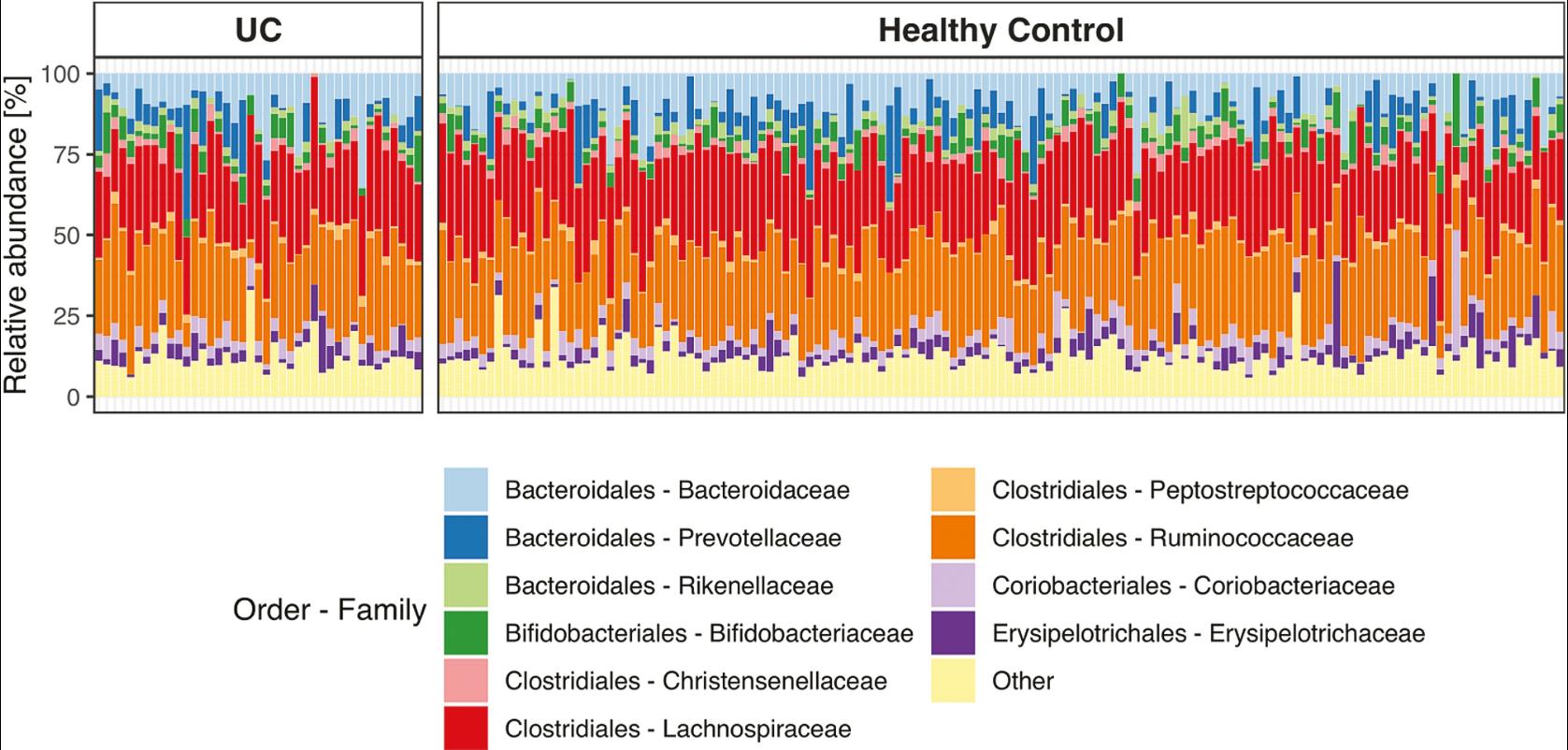
  • Dysbiosis is present with IBD; however, studies have been “unable to infer causal relationships.”
  • Germ-free mice, when given fecal material from patients with IBD have increased susceptibility to colitis as compared to those who received fecal material from a healthy person.
    • Thus, this leads to potential for mitigating intestinal inflammation by modulation of the microbiome.
    • However, the authors note that humans are colonized by trillions of viral, fungal, bacterial, and eukaryotic microbes.
  • Other components of IBD pathophysiology: reduced mucus layer, increased microbial adherence, dysregulation of tight junctions/increased permeability, dysfunctional Paneth cells, TNF, IL23, IL12, IL6, IL 17A, IL17F, IL22, Interferon-gamma, integrins, JAK inhibitors, T-cells

My take: This article is a useful reference detailing the complexity of IBD pathophysiology and tries to summarize a whole textbook of information into 12 pages.

Related blog posts: