Comparative Efficacy of Biologics for Crohn’s Disease

S Singh et al. Clin Gastroenterol Hepatol 2023; 21: 2359-2369. Open Access! Comparative Safety and Effectiveness of Biologic Therapy for Crohn’s Disease: A CA-IBD Cohort Study

There is limited head-to-head data comparing the effectiveness of the biologics used for inflammatory bowel disease. In this study, the authors used a “series of propensity score (PS)-matched cohort studies comparing TNF-α antagonists vs vedolizumab vs ustekinumab in a large, diverse, multicenter, electronic health record (EHR)-based cohort.”

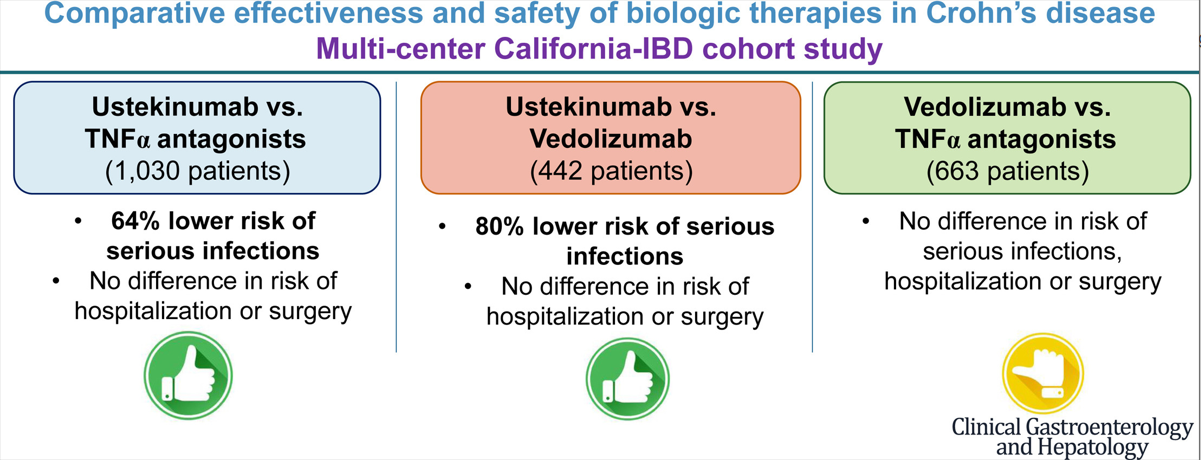
This graphical abstract summarizes the findings, though the first cohort (ustekinumab vs TNFalpha population is actually 1545 not 1030):
Key findings:

  • Ustekinumab-treated patients with CD (n = 515) experienced a lower risk of serious infections (hazard ratio [HR], 0.36), without any difference in the risk of hospitalization (HR, 0.99) or surgery (HR, 1.08) -compared to patients receiving TNF alpha antagonists (n=1030)
  • Ustekinumab-treated patients with CD (n = 221) experienced a lower risk of serious infections (HR, 0.20), without significant differences in risk of hospitalization (HR, 0.76) or surgery (HR, 1.42) -compared to vedolizumab-treated patients (n=221)
  • Compared with TNF-α antagonists (n = 442), vedolizumab-treated patients with CD (n = 221) had a similar risk of serious infections (HR, 1.53), hospitalization (HR, 1.32), and surgery (HR, 0.63).

The increase rate of infections with vedolizumab compared to ustekinumab could be an indication of lower efficacy with vedolizumab as the medication itself has a high safety profile.

In the discussion, the authors comment further on head-to-head studies and lack of these as well. “Biemans et al23 observed that ustekinumab-treated patients were more likely to achieve corticosteroid-free clinical remission (69 patients in each arm, vs vedolizumab; 46.4% vs 29.0%; P = .04) and biochemical remission (42.1% vs 13.2%; P = .01) at 12 months, although these rates were not significant at earlier time points.”

My take: This study provides further evidence that ustekinumab is a good option for Crohn’s disease with regard to both safety and efficacy.

Related blog posts:

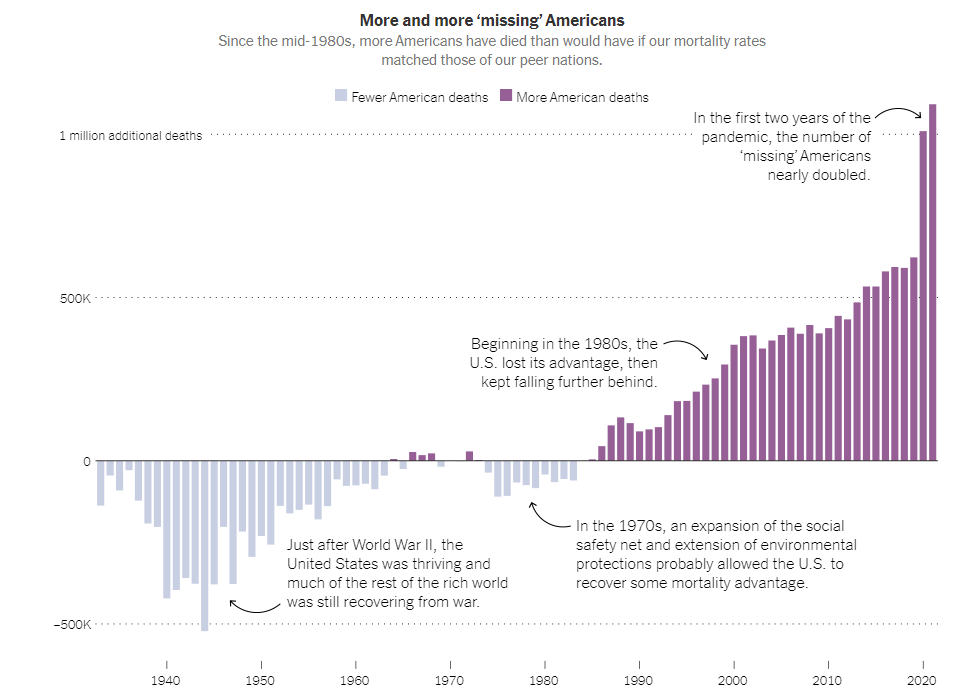
“More Than Half a Million Extra Deaths” Every Year In U.S.

A previous blog post (Life Expectancy Dropping in U.S.) showed an alarming trend in which the life expectancy in the U.S. has dropped to about 76 years, nearly 6 years lower than peer countries

This article discusses this topic further. David Wallace-Wells, NY Times 8/9/23: Why Is America Such a Deadly Place? An excerpt:

“Life expectancy in the United States took an unprecedented turn for the worse, placing it not among its wealthy peers, but below Kosovo, Albania, Sri Lanka and Algeria (and just ahead of Panama, Turkey and Lebanon)…

But the loss is jaw-dropping by another measure — the sheer number of needless deaths. Before the pandemic, roughly a half million more people in America died each year than would have died, on average, in wealthy peer countries. In each of the first two years of the pandemic, the number surpassed one million….

The much larger American anomaly is its deaths among the young and middle-aged — among whom violent deaths, in particular, subtract many more years of life than would almost any natural cause of death, which overwhelmingly strikes much later in life.”

The article describes areas with excess deaths including the following:

  • Overdose deaths
  • Gun-related deaths (accidents, suicides, and homicides)
  • Excess car deaths
  • Accidents (including increased deaths from fires and drowning)
  • Maternal deaths during childbirth
  • Deaths related to chronic disease including diabetes (associated with obesity)

My take: The excess number of U.S. population dying every year is staggering and sadly, little is being done to change it.

“Do Nonprofit Hospitals Deserve Their Tax Exemption?”

G Bai et al. NEJM 2023; 389: 196-197. Do Nonprofit Hospitals Deserve Their Tax Exemption?

Excerpts:

Roughly 60% of community hospitals are incorporated as nonprofit institutions, which means that they don’t have shareholders and cannot distribute dividends…Nonprofit status doesn’t automatically confer tax exemption. Section 501(c)(3) of the Internal Revenue Code authorizes tax exemption for nonprofit organizations pursuing charitable, religious, educational, or scientific missions…In 1969, the IRS adopted the community-benefit standard, which required nonprofit hospitals to promote “the health of a class of persons that is broad enough to benefit the community.”…

An analysis by the Kaiser Family Foundation estimated that the value of nonprofit hospitals’ tax exemption was $28.1 billion in 2020…In 2018, for every $100 of expenses incurred, nonprofit hospitals in aggregate spent $2.30 on charity care, as compared with $3.80 spent by for-profit hospitals. And in 2019, nonprofit and for-profit hospitals had similar Medicaid shortfalls as a share of total expenses…

Many nonprofit hospitals also generate substantial profits from the federal 340B Drug Pricing Program. The 340B program… was designed to help safety-net hospitals serve low-income patients…

Some hospitals have also adopted aggressive revenue enhancing activities, such as declining to offer charity care to eligible patients and suing patients and garnishing wages because of unpaid medical bills. These examples make it clear that nonprofit status provides no assurance that hospitals will behave in accordance with their charitable mission or provide sufficient community benefit to justify favored tax status…

Disclosure might not be sufficient to catalyze changes in hospital behavior, but we believe
greater visibility is a prerequisite for policy action…Many nonprofit hospitals face substantial fiscal challenges, so heavy-handed policies — such as eliminating tax-exempt status across the board — are likely to be counterproductive…Mandating increased financial transparency would give stakeholders and policymakers the flexibility to understand, design, and test approaches to encourage nonprofit hospitals to provide meaningful community benefit

My take: This commentary piece makes a strong argument that many nonprofit hospitals do not deserve to be exempt from taxes.

Related blog posts:

Radishes (seen at a Farmer’s market recently)

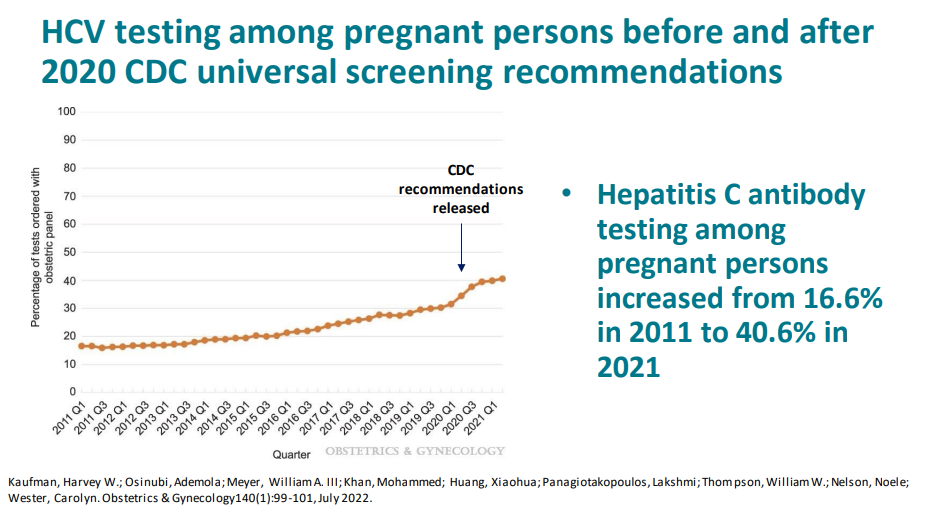
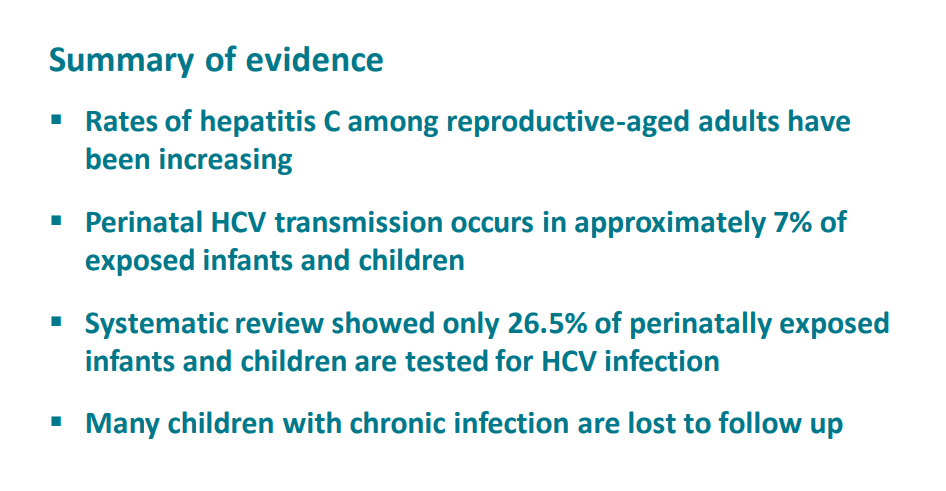
Why CDC is Drafting New Guidelines for Screening Children for Perinatally-Acquired Hepatitis C Infection

EW Hall et al. J Pediatr 2023; 258: 113409. Open Access PDF! Cost-Effectiveness of Strategies to Identify Children with Perinatally Acquired Hepatitis C Infection

In this study, the authors modeled three strategies for screening for Hepatitis C infection in children and compared to baseline testing (current approach): : anti-HCV with reflex to HCV RNA at 18 months among children known to be perinatally exposed.

New strategies:

  • #1: HCV RNA testing at 2-6 months among infants known to be perinatally exposed
  • #2 universal anti-HCV with reflex to HCV RNA at 18 months among all children
  • #3 universal HCV RNA testing at 2-6 months among all infants

Key findings:

  • Each of the 3 alternative testing strategies resulted in an increased number of children tested and improved health outcomes. HCV RNA testing at 2-6 months (test strategy 1) was cost-saving and resulted in a population-level difference in cost of $469 671.
  • More testing in each of the universal comparison strategies resulted in increased QALYs, but also over $38 million to over $129 million

In the discussion, the authors elaborate on why testing at 2-6 months is now the best approach:

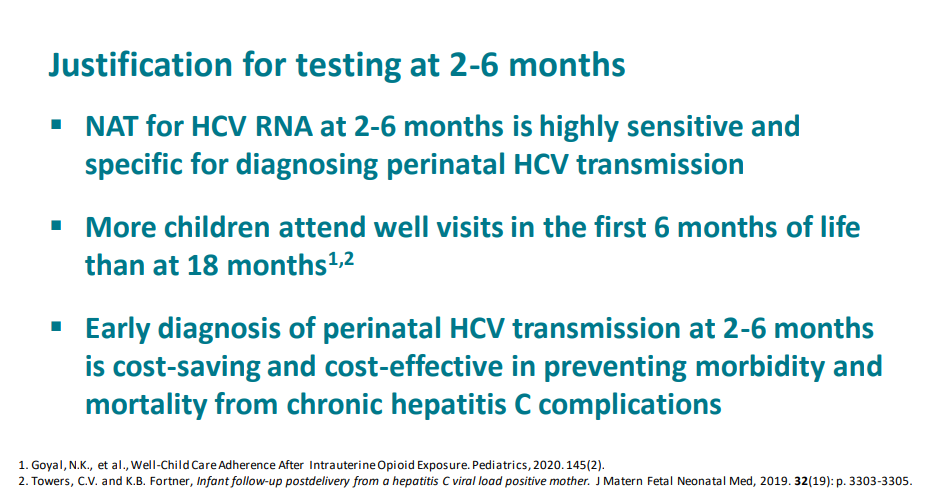
  • “Factors driving these results include pediatric loss to follow up at older ages, high attendance at well-child visits in the first 6 months of life, and highly sensitive nucleic acid testing with reliable results starting at age 2 months.”
  • “One study assessing >150 000 children at 2 health networks spanning 20 states determined children rarely missed 2-month, 4-month, and 6-month well-care visits, whereas 15-month and 18-month visits were attended by less than one-half of publicly insured children”
  • Current recommendations are for all pregnant women receive HCV screening, though currently it is below 50%. The universal testing strategy becomes more cost prohibitive as more women receive HCV testing in pregnancy

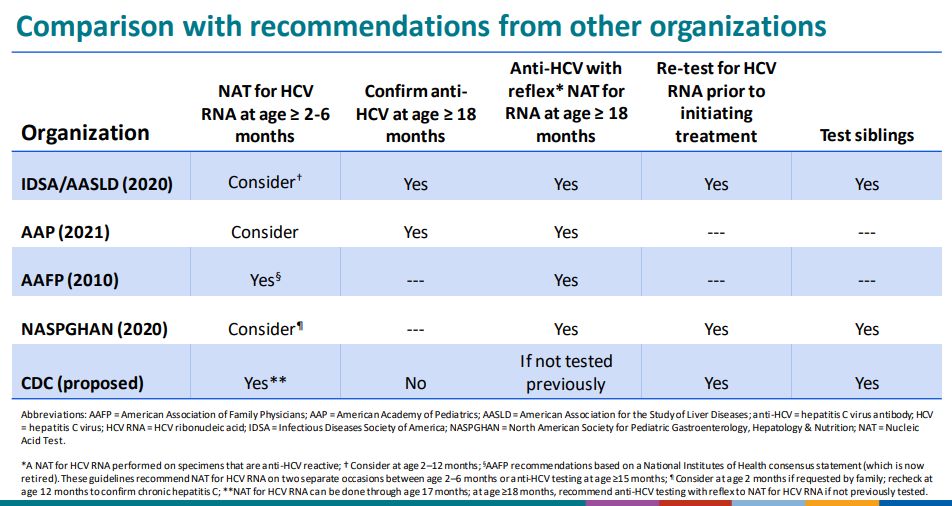
The CDC has undertaken a review and is likely to implement the 2-6 month old testing strategy as a recommendation. The authors of this study are involved in this process. A slide set reviewing the draft recommendations from 12/6/22:

Link 40 Slides: Overview of draft CDC recommendations for perinatal hepatitis C testing

Some selected slides:

My take (borrowed from authors): Testing of perinatally exposed infants at age 2-6 months with a single HCV RNA test will reduce costs and improve health outcomes.

Related blog posts:

Does a Liver Transplantation Improve the Course of Inflammatory Bowel Disease?

AR Safarpour et al. Inflamm Bowel Dis 2023; 29: 973-985. Alterations in the Course of Inflammatory Bowel Disease Following Liver Transplantation: A Systematic Review and Meta-analysis

The authors identifed 25 studies which met inclusion criteria. Key findings:

  • In the analysis of studies with 3-category outcomes (n = 13), the pooled frequencies of patients (n=646) with improved, unchanged, or aggravated IBD course after LT were 29.4%, 51.4% (, and 25.2%.
  • Subgroup analyses revealed that patients with ulcerative colitis (UC), younger age at LT, or shorter duration of follow-up were more likely to have an improved disease course.
  • In the analysis of studies with 2-category outcomes (n = 12), the pooled frequencies of patients (n=672) with improved/unchanged or aggravated IBD course were 73.6% and 24.1%, respectively

My take: Despite the intensification of immunosuppression, most often the course of IBD is unchanged in patients following a liver transplantation.

Related blog posts:

View from L’Jaardin Exotique in Eze, France

Why Didn’t Screening for Biliary Atresia Improve Outcome In This Study?

ZJ Kastenberg et al J Pediatr 2023; 257: 113339. Fractionated Bilirubin Among 252 892 Utah Newborns with and Without Biliary Atresia: A 15-year Historical Birth Cohort Study

This retrospective study (2005-2019) used an administrative data from a large integrated healthcare network in Utah to identify newborns with abnormal fractionated bilirubins. since 2005, all newborns at this healthcare system had a fractionated bilirubin measured.

Key findings:

  • There were 252 892 newborns with fractionated bilirubin assessed, including 26 of those subsequently confirmed to have biliary atresia (BA).
  • Conjugated or direct bilirubin was elevated in all 26 infants with BA and an additional 3246 newborns (1.3%) without BA. The lowest direct bilirubin in the BA group was 0.6, just above cutoff value of 0.5 mg/dL. The conjugated bilirubin cutoff value wa 0.2 mg/dL.
  • The 15-year crude birth prevalence of BA was 0.68 per 10,000 births in this cohort
  • Median time to Kasai HPE was 69.5 days

This study found that all infants with BA have elevated conjugated or direct bilirubin at birth. The authors estimate that a healthcare system with about 30,000 deliveries per year, would have between 450 and 630 newborns that would require a second screen. In this group, 96 per 100,000 screened newborns (~1 in 1000) will have a positive second screen at 2-week well check and need further evaluation.

What I don’t understand about this paper is how the authors omit a discussion of the age of Kasai HPE. How is it that all of these newborns received a fractionated bilirubin and the age of Kasai HPE is not improved compared to other U.S locations that have not implemented universal testing? (Previous data from 15 ChiLDReN sites indicate age of Kasai HPE 65-70 days and unchanged over past 30 years, see blog post: Online Aspen Webinar (Part 5) -Biliary Atresia Diagnosis and Screening).

The authors note that implementation of screening could be improved with newer tests (eg. MMP-7) but that more analysis is needed to determine if screening is cost-effective and avoids harm (eg. subjecting healthy newborns to invasive testing).

My take: If universal screening is implemented, it is imperative to show that it helps and to set up the needed infrastructure to arrange appropriate followup. The first surrogate marker of this effort would be improving the age of surgical intervention.

As an aside, I find the new page numbering by The Journal of Pediatrics to be quite annoying. When you are going through the hard copy of the Journal, it is more difficult to find the articles that are listed in the table of contents because the articles are not ordered by lowest to highest numbered page. Each article is given a single page number like 113339 in this article but inside the article it is numbered page 1–10 (or however long the pages). The article prior could be a lower or higher page number. Until hard copies are eliminated, it would be an improvement if the articles could at least be ordered such that the next article would not have a lower page reference than the preceding article.

Related blog posts:

Castle Hill Park, Nice France

Be Careful with Biliary Atresia Diagnostic Biomarkers

B Aleiri et al. JPGN 2023; 77: 97-102. Matrix Metalloproteinase-7 and Osteopontin Serum Levels as Biomarkers for Biliary Atresia

In this study, serum was assessed from 32 biliary atresia (BA) patients and 27 controls.

Key findings:

  • Median MMP-7 was higher in BA (96.4 vs 35 ng/mL; P < 0.0001) with an optimal cut-off value of 69 ng/mL. Sensitivity and specificity was 68% and 93%, respectively [negative predictive value (NPV) = 71%]
  • Median osteopontin (OPN) was higher in BA (1952 vs 1457 ng/mL; P = 0.0001) and an optimal cut-off of 1611 ng/mL. Sensitivity and specificity was 84% and 78%, respectively (NPV = 81%)

The authors note that numerous studies from Asian countries have shown very high sensitivity and specificity for MMP-7. These studies used different cut-offs based on the testing kit. One limitation of this study was that samples were stored for a median of 12 years and perhaps this affected the results (some prior studies also used banked specimens).

My take: When these levels are very elevated, they are highly suggestive of BA. This study serves as a caution to note that the sensitivity at typical cut off values could be suboptimal

Related blog posts:

Le Jardin Exotique in Eze, France

Prevalence of Elevated ALT in U.S. Adolescents

AK Mischel et al. JPGN 2023; 77: 103-109. Prevalence of Elevated ALT in Adolescents in the US 2011–2018

Using NHANES data for 12-19 year olds, the authors examined rates of elevated ALT. Elevated ALT was defined as >22 U/L (females) and >26 U/L (males)  Key findings:

  • Prevalence of elevated ALT in adolescents was 16.5% overall and 39.5% among those with obesity
  • For White (W), Hispanic (H), and Asian (A) adolescents, prevalence of elevated ALT was 15.8%, 21.8%, and 16.5% overall. In overweight adolescents, 12.8% (W), 17.7% (H), and 27.0% (A), and in those with obesity, 43.0% (W), 43.5% (H), and 43.1% (A) in those with obesity, respectively
  • Prevalence was much lower in Black adolescents (10.7% overall, 8.4% for overweight, 20.7% for obesity)
  • Prevalence of ALT at 2X-ULN was 6.6% in adolescents with obesity
  • Hispanic ethnicity, age, male sex, and higher BMI were independent predictors of elevated ALT

My take: It is hard to get very excited about a mildly elevated ALT value when 1 in 6 adolescents has this as well as ~40% of adolescents with obesity.

Related blog posts:

Bougainvillea in Eze, France
View from Cap d’Ail Trail (near Eze, France)

Only 30% Ready for Transition from Pediatric IBD to Adult Practice

A Foster et al. J Pediatr 2023; 258: 113403. Transition Readiness in Youth with Inflammatory Bowel Disease

In this cross-sectional multicenter study evaluating transition readiness in individuals (n=186, prospectively recruited ) with IBD 16-19 years old, the authors used the validated ON Taking Responsibility for Adolescent to Adult Care (ON TRAC) questionnaire. 

Key findings:

  • ON TRAC scores determined that 26.6% of AYAs at pediatric and 40.4% at adult centers reached the threshold of readiness. The findings are limited by potential nonresponse & sampling bias.
  • Disease remission negatively (P = .03) associated with ON TRAC scores.
  • A significant percentage of AYAs reported moderate-to-severe depression (21.7%) and generalized anxiety (36%); however, neither were significantly associated with ON TRAC scores

The authors suggest that a joint clinic with adult/pediatric providers may be helpful to improve transition.

MB Cohen. J Pediatr 2023; 258. DOI:https://doi.org/10.1016/j.jpeds.2023.113556 Are You Ready to Transition? In commentary on this article, Dr. Cohen writes the following: “a novel finding was that transition readiness was inversely related to disease remission; this confirms what had been previously suggested.1 Patients who are doing well may not be as engaged in developing skills for transition readiness and knowledge about their chronic illness, unlike those with more significant disease or symptoms.”

My take: Many studies show that adolescents and young adults with IBD are not fully prepared to transition to adult medical practices. In my view, it would be better to encourage the young adult to continue engaging with his/her parents until readiness is achieved rather than try to change to a multispecialty clinic.

Related blog posts:

Castle Hill Park, Nice France

Infliximab Injections Coming Soon

  1. L Gianolio et al JPGN 2023; 77(2):p 235-239, August 2023. Effectiveness of Switching to Subcutaneous Infliximab in Pediatric Inflammatory Bowel Disease Patients on Intravenous Maintenance Therapy

Key findings: After switching from IV infliximab to SC 120 mg every other week, 6 of 7 patients remained in clinical remission with no significant changes in laboratory markers and median infliximab trough levels (12.3 µg/mL at baseline; 13.9 and 14.0 µg/mL at 6 and 40 weeks respectively). 

2. Gastroenterology & Endoscopy News (7/31/23) Safety, Efficacy of Subcutaneous Infliximab Supported by Trial

Excerpt:

In this multinational trial, called LIBERTY-CD, the median trough level was 16 mcg/mL, which is higher than that typically associated with IV dosing, according to Dr. Hanauer, who presented the results at Digestive Disease Week 2023 (abstract 1028)… “most professional societies to recommend a trough of 10 mcg/mL,” Dr. Hanauer said….

All patients received induction doses of infliximab by IV at weeks 0, 2 and 6. Those who achieved at least a 100-point reduction in the Crohn’s Disease Activity Index (CDAI), which accounted for 86% of the 396 patients initially enrolled, were randomized in a 2:1 ratio to receive 120 mg of subcutaneous infliximab (CT-P13) or placebo every two weeks.

The proportion of patients meeting the end point of clinical remission, defined on the basis of CDAI, was 62.3% for active therapy and 32.1% for placebo (P<0.0001). The proportion of patients in the active treatment arm achieving an endoscopic response was nearly three times higher than the proportion in the placebo arm (51.1% vs. 17.9%; P<0.0001).

My take: This study shows that SC infliximab (after IV induction) should be effective. A study showing that the SC product is not inferior to the IV dosing would be helpful. It is likely that vedolizumab will receive approval in U.S. for a similar IV induction followed by maintenance subcutaneous therapy in the next year.

Eze, France