Rapid Gut Microbiome Recovery: Diet Outperforms Microbial Transplant

Briefly noted: MS Kennedy et al. Nature (2025). https://doi.org/10.1038/s41586-025-08937-9. Diet outperforms microbial transplant to drive microbiome recovery in mice

Methods:  Here we characterize the trajectory by which the gut microbiome recovers its taxonomic and functional profile after antibiotic treatment in mice on regular chow (RC) or Western Diet (WD).

Key findings: “Only mice on RC undergo a rapid successional process of recovery. Metabolic modelling indicates that a RC diet promotes the development of syntrophic cross-feeding interactions, whereas in mice on WD, a dominant taxon monopolizes readily available resources without releasing syntrophic byproducts. Intervention experiments reveal that an appropriate dietary resource environment is both necessary and sufficient for rapid and robust microbiome recovery, whereas microbial transplant is neither.”

Conclusion (from authors): “Our data challenge widespread enthusiasm for faecal microbiota transplant (FMT) as a strategy to address dysbiosis, and demonstrate that specific dietary interventions are, at a minimum, an essential prerequisite for effective FMT, and may afford a safer, more natural and less invasive alternative.”

My take: This study suggests that the best way to get a “healthy” microbiome is to eat a healthy diet rather than to try to alter with FMT. This finding likely would be the same for probiotics as well.

Related blog posts:

Andaman Sea (Thailand)

When an Inflammatory Bowel Disease Diagnosis is Far Away

JF McLaughin et al. Clin Gastroenterol Hepatol 2025; 23: 825-834. Travel Time to Treating Center Is Associated With Diagnostic Delay in Pediatric Inflammatory Bowel Disease

This was a cross-sectional study of newly diagnosed pediatric patients (n=869) with IBD at 22 United States sites from 2019 to 2022. 57% were diagnosed with CD, 34% with UC, and 4% with IBD-U.

Key findings:

  • Overall, the mean time from symptom onset to diagnosis was 265.9 days
  • Factors associated with longer diagnosis time included CD vs UC (odds ratio [OR], 2.6), and longer travel time to clinic (>1 hour [OR, 1.7], >2 hours [OR, 1.8] each vs <30 minutes)
  • There was no association with race, ethnicity, birth country, gender, parent education, household income, insurance type, health literacy, and health system distrust

The finding that there is a longer diagnostic delay with CD than UC is consistent with prior studies. The longer travel time has not been widely recognized as a factor associated with delayed diagnosis, though it has been associated with other negative outcomes like higher mortality with chronic liver disease.

Regarding the lack of a negative impact from factors like race/ethnicity and income, my suspicion is that this is probably related to several factors:

  • Overall, the pediatric age group has a very high rate of being insured as most children without commercial insurance currently qualify for Medicaid. This helps improve access to needed/timely health care
  • A recent study showed that pediatric GI specialists do not have disparities in treatment compared to pediatric GI providers with an IBD focus; thus, pediatric specialists are more likely to minimize treatment delay (Treatment Disparities in Adult vs. Pediatric IBD Care Related to Provider Specialization)
  • Parents help limit diagnostic delay in their children

My take: There are many places that are far away from pediatric specialists. This results in diagnostic delays.

Related blog posts:

Mai Khao Beach, Phuket, Thailand

Impact of Disease Severity on Eosinophilic Esophagitis Treatment Responses

CC Reed et al. Clinical Gastroenterology and Hepatology 2025; Worsening Disease Severity as Measured by I-SEE Associates With Decreased Treatment Response to Topical Steroids in Eosinophilic Esophagitis Patients

This was a retrospective study with children and adults with eosinophilic esophagitis (EoE). Among 1312 patients, there were 657 (50%), 461 (35%), and 194 (15%) with mild, moderate, and severe disease by I-SEE, respectively. Disease activity was categorized as mild (I-SEE 1–6), moderate (I-SEE 7–14), or severe (I-SEE ≥15).

Key findings:

  • Patients with severe disease were less likely to have histologic response (49% (severe) vs 55% (moderate) vs 64% (mild); P = .03 for <15 eosinophils per high-power field) 
  • Patients with severe EoE also had lower global symptom response rates (53% vs 79% vs 83%, respectively) and higher post-treatment EoE Endoscopic Reference Scores (EREFS; 3.6 ± 2.3 vs 2.4 ± 1.8 vs 1.6 ± 1.6, respectively)

My take: More severe disease is harder to treat with EoE (and most everything else too).

Related blog posts:

Link: I-SEE Tool Scoring Table

Crazy wiring in Chiang Mai, Thailand (but prevalent in many areas of Thailand)

How Gut Bacteria Might Increase Colon Cancer Risk in Young Adults

Will Stone, NPR 4/25/25: Damage from gut bacteria may play a role in the rise in colon cancer in young adults

An excerpt:

It’s unclear why colon cancer cases have doubled in people under 55 over the past two decades, a staggering rise that has alarmed doctors and cancer researchers.

But part of the story could be colibactin, a toxin made by certain strains of E. coli and other bacteria. In a study out this week, researchers have identified a strong link between this DNA-damaging toxin and colon cancer among younger patients.

The team, based at the University of California, San Diego, analyzed tissue samples from close to 1,000 colorectal cancer patients across four continents. They found the majority had cancers bearing mutations that signaled a past encounter with colibactin.

“You can think of it as the weapon system of a bacteria to fight other bacteria and to defend themselves,” says Ludmil Alexandrov, the lead author of the study, which was published in Nature this week.

Strikingly, those under the age of 40 with early-onset colon cancer were three to five times more likely to have these mutations than those in their 70s and older.

The thinking goes that in some people, this bacterial weaponry — technically called a “genotoxin” — can get directed at their gut cells, seeding mutations that put them at increased risk of developing colorectal cancer.

According to their data, this exposure isn’t ongoing when the cancer is diagnosed. Instead, it appears to have happened during childhood.

“Our estimate is that it happens within the first 10 years of life,” Alexandrov says. “So if you get that mutation at age 5, that puts you 20 to 30 years ahead of schedule for getting colorectal cancer.”

While the study shows a strong association, the data can’t prove colibactin caused these patients to develop cancer at a younger age. And researchers in the field don’t expect E. coli, or any single microbe for that matter, to be the skeleton key for the surge in colorectal cancer.

Related article: M Diaz-Gay, et al. Nature https://doi.org/10.1038/s41586-025-09025-8 (2025). Geographic and age variations in mutational processes in colorectal cancer

Related blog posts:

View from plane over Thailand

“A Good Doctor Knows When to Bend The Rules”

Yesterday’s post, Cholangiocarcinoma Risk in Pediatric PSC-IBD Plus one, was updated with the following caveats:

At the same time, the authors acknowledge limitations including a highly-selected patient population (selection bias) and relatively small number of patients. The absolute increase in risk for cholangiocarcinoma is not known. This study did not provide an estimate of the number of patients with IBD-PSC who develop cholangiocarcinoma; it only provides data on those with cholangiocarcinoma (thus no denominator to establish risk).


Daniela Lamas, NY Times 4/20/25 (likely has a paywall): A Good Doctor Knows When to Bend The Rules

An excerpt:

My patient had been intubated with Covid-19 for weeks, her lungs growing stiffer each day. Her sons held vigil at the bedside, pausing only to critique the nurses and health care team. They didn’t like the way the nurse turned their mother. They demanded yet another course of antiviral treatment for Covid-19…The son pulled a pill bottle from his backpack. It was a mixture of herbs that he had ordered off the internet. He wanted me give the supplement to his mother through her feeding tube, along with her other medications…

Doctors may agree to give their patients probiotics because they are harmless, even though the evidence for their effectiveness is weak in most cases. They might prescribe an unnecessary antibiotic. They might even agree to spread out the timing of pediatric vaccinations at a family’s insistence...

For Dr. Brown…he could justify prescribing the drug to build rapport…Dr. Van Scoy sees acceding to requests for unproven medicines as a “slippery slope.” When doctors prescribe medications that they don’t believe in, even ones that pose little risk to the patient, it can cost them the trust of their colleagues…

But when distrust is so entrenched, as is the case in the United States now, that ideal might not be achievable — especially in our conventional clinical practices where doctors have some 15 minutes with each patient…

We ask our patients to trust us implicitly, to believe our diagnoses and to undergo courses of treatment they might not understand. This doesn’t mean that we need to give patients whatever they want just to level the playing field. But we can take their requests seriously, even if we wouldn’t have considered them otherwise.”

My take: In the pediatric GI realm, I am often asked to do low yield procedures (eg. esophagogastroduodneoscopy, colonoscopy), low yield imaging (eg. MRI, CT scans), allergy testing as well as numerous dubious treatments.

One measure of how likely physicians in our group are at ‘bending’ to patient wishes is evident in study that we did looking at the yield from colonoscopy. Among 16 physicians, the diagnostic yield ranged as low as 22% to as high as 86% with an overall diagnostic yield of 48% for colonoscopy. Thus, it is clear that physicians have widely different approaches in accommodating family pressures.

Related blog posts:

Phuket, Thailand
Floating flowers in large vase

Cholangiocarcinoma Risk in Pediatric PSC-IBD Plus one

B Kaj‐Carbaidwala et al. J Pediatr Gastroenterol Nutr. 2025; 80:450–454. Determining the time to cholangiocarcinoma in pediatric‐onset PSC‐IBD

Background: “Cholangiocarcinoma is a devastating disease, with up to 80% mortality and limited treatment options…A large retrospective cohort study reported that cholangiocarcinoma occurred in 1000 per 100,000 (1%) of children with PSC, with all occurring in children over 15 years of age and at a median of 6 years after the PSC diagnosis…Primary sclerosing cholangitis (PSC) is associated with a 400× increased risk of cholangiocarcinoma.”

Methods: Review of n = 175 studies resulted in a cohort of n = 21 patients with pediatric‐onset PSC‐IBD‐cholangiocarcinoma

Key findings:

  • The earliest diagnosis of cholangiocarcinoma was made at 14 years of age.
  • 14% of of patients with pediatric‐onset PSC/IBD developed cholangiocarcinoma within the first 6 months of the second diagnosis
  • 23% of patients with pediatric‐onset PSC/IBD developed cholangiocarcinoma within the first year of the second diagnosis
  • 38% of patients with pediatric‐onset PSC/IBD developed cholangiocarcinoma within the first 2 years.
  • 50% of patients with pediatric‐onset PSC/IBD developed cholangiocarcinoma within the first 7 years
  • 50% of patients were between 14 and 25 years old when diagnosed with cholangiocarcinoma

Based on these data, the authors recommend screening for cholangiocarcinoma in this population of pediatric patients with IBD-PSC. Screening would include ultrasound or magnetic resonance cholangiopancreatography along with serum cancer antigen 19‐9 screening every 6–12 months. At the same time, the authors acknowledge limitations including a highly-selected patient population (selection bias) and relatively small number of patients. The absolute increase in risk for cholangiocarcinoma is not known. This study did not provide an estimate of the number of patients with IBD-PSC who develop cholangiocarcinoma; it only provides data on those with cholangiocarcinoma (thus no denominator to establish risk).

My take: Children, particularly adolescents, with IBD-PSC are at increased risk for both cholangiocarcinoma and colorectal cancer. The optimal surveillance strategy is still unclear. However, particularly in adolescents, I would favor yearly ultrasound and CA 19-9 for cholangiocarcinoma along with a low threshold for frequent colonoscopy (see ESPGHAN guidelines below).

Related blog posts:


In the news: AP 5/4/25: Cuts have eliminated more than a dozen US government health-tracking programs “U.S. Health Secretary Robert F. Kennedy Jr.’s motto is “ Make America Healthy Again,” but government cuts could make it harder to know if that’s happening…..Among those terminated at the Centers for Disease Control and Prevention were experts tracking abortions, pregnancies, job-related injuries, lead poisonings, sexual violence and youth smoking, the AP found.”

Anantara Resort, Mai Khao Phuket

Disclaimer: This blog, gutsandgrowth, assumes no responsibility for any use or operation of any method, product, instruction, concept or idea contained in the material herein or for any injury or damage to persons or property (whether products liability, negligence or otherwise) resulting from such use or operation. These blog posts are for educational purposes only. Specific dosing of medications (along with potential adverse effects) should be confirmed by prescribing physician.  Because of rapid advances in the medical sciences, the gutsandgrowth blog cautions that independent verification should be made of diagnosis and drug dosages. The reader is solely responsible for the conduct of any suggested test or procedure.  This content is not a substitute for medical advice, diagnosis or treatment provided by a qualified healthcare provider. Always seek the advice of your physician or other qualified health provider with any questions you may have regarding a condition.

Menetrier’s Disease in a Pediatric Patient Plus Measles and Influenza Updates

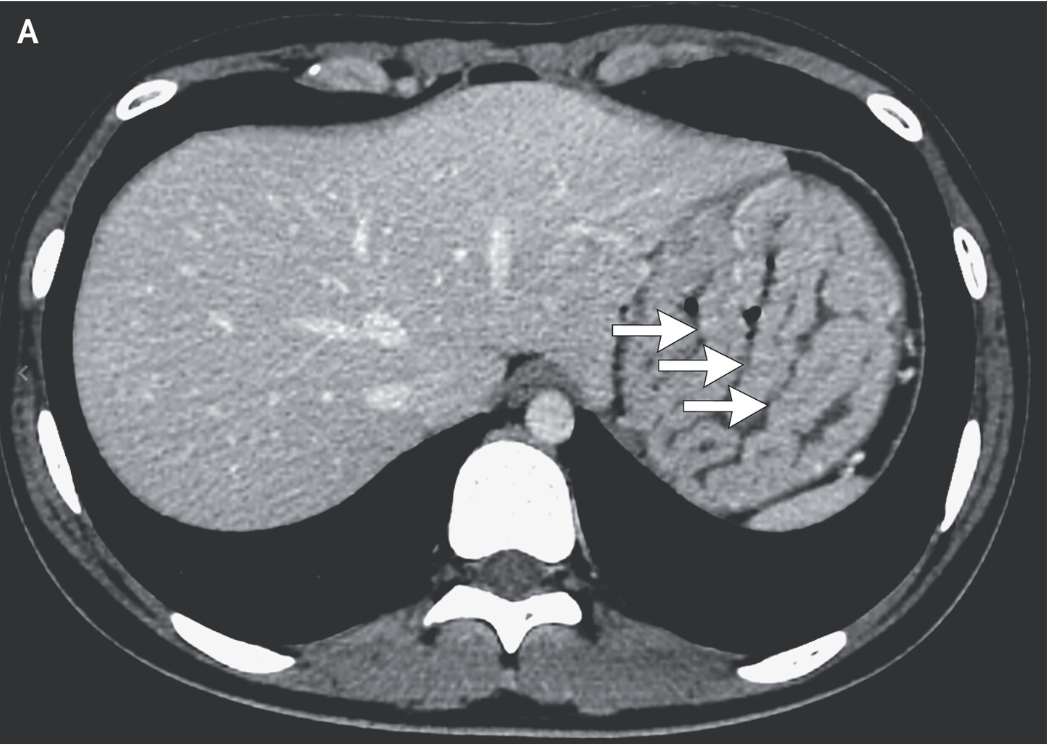
X Wang et al. N Engl J Med 2025;392:1334. Ménétrier’s Disease

  • History: 16-year-old girl was admitted to the hospital with a 2-month history of leg swelling and hypoalbuminemia. She had no gastrointestinal symptoms.
  • Treatment: She was placed on a high-protein diet and medications to eradicate a concurrent infection with Helicobacter pylori. At a 3-month follow-up visit, the patient’s edema and hypoalbuminemia had resolved.

Related blog posts:


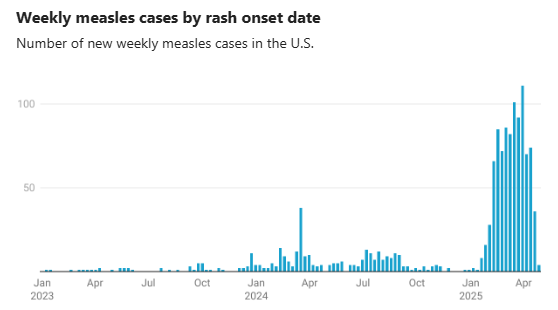
Measles as of Friday May 2nd (per Caitlin Rivers): “According to CDC, a total of 935 confirmed measles cases have been reported by 30 jurisdictions. The previous high was 1,274 in 2019. So far this year, 121 cases (13%) have been hospitalized.”


AP News May 2nd: CDC reports 216 child deaths this flu season, the most in 15 years

“More U.S. children have died this flu season than at any time since the swine flu pandemic 15 years ago, according to a federal report released Friday…It’s a startlingly high number, given that the flu season is still going on. The final pediatric death tally for the 2023-2024 flu season wasn’t counted until autumn…There are likely several contributors to this season’s severity, but a big one is that fewer children are getting flu shots, added O’Leary, a University of Colorado pediatric infectious diseases specialist. The flu vaccination rate for U.S. children has plummeted from about 64% five years ago to 49% this season. Flu vaccinations may not prevent people from coming down with symptoms, but research shows they are highly effective at preventing hospitalizations and deaths, O’Leary said.”

Long-Acting GLP-2 Analogue Glepaglutide Reduces Parenteral Support

PB Jeppesen et al. Gastroenterol 2025; 168: 701-713. Open Access! Glepaglutide, a Long-Acting Glucagon-like Peptide-2 Analogue, Reduces Parenteral Support in Patients With Short Bowel Syndrome: A Phase 3 Randomized Controlled Trial

Background:GLP-2 is a specific, endogenous, intestinal, pro-adaptive factor that plays a key role in enhancing intestinal mucosal morphology, function, and integrity under normal and pathophysiological conditions. The introduction of GLP-2 analogue treatment has been a paradigm shift in the treatment of SBS, targeting the pathophysiology of SBS by aiming to reinforce the structural and functional integrity of the remaining intestine. Exogenous GLP-2 induces significant hyperplasia of the small intestinal mucosal epithelium via stimulation of stem cell proliferation in the crypts and via inhibition of apoptosis in the villi…

The short half-life of 5–7 minutes for circulating native GLP-232 is a significant practical limitation for its use in a therapeutic setting. This is improved for the currently marketed GLP-2 analogue teduglutide, which has a half-life in circulation of approximately 2 hours.33 However, treatment is time-consuming due to the requirement for daily drug product reconstitution and dosing…

Glepaglutide is a novel, long-acting GLP-2 analogue in a stable, aqueous formulation for subcutaneous administration to treat patients with SBS. The stability in aqueous solution allows for dosing of glepaglutide as a ready-to-use liquid formulation. The mean effective half-life is 88 hours,34 which enables extension of the dosing interval beyond daily dosing.”

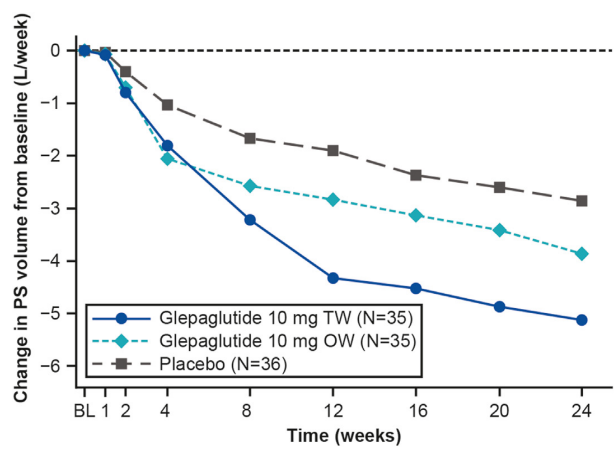
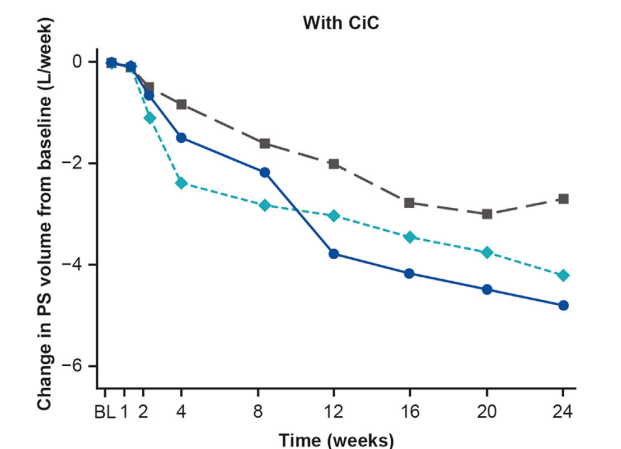
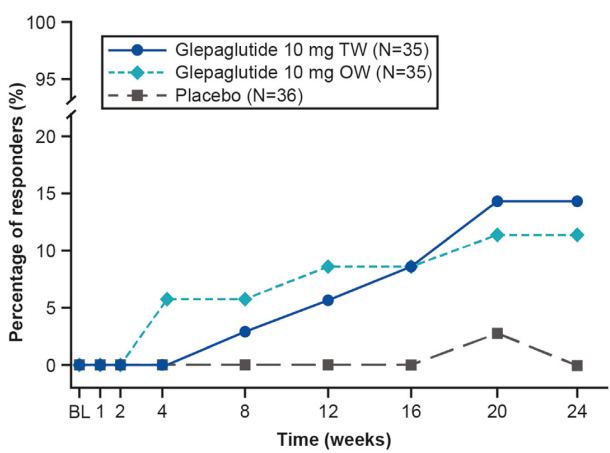
Methods: In this placebo-controlled, randomized, parallel-group, double-blind, phase 3 trial, adult patients (n=106) with SBS with intestinal failure requiring PS ≥3 d/wk were randomized 1:1:1 to 24 weeks of glepaglutide 10 mg twice weekly or once weekly or placebo

Key findings:

  • Glepaglutide twice weekly significantly reduced weekly PS volumes from baseline to week 24 vs placebo (mean change, −5.13 vs −2.85 L/wk; P = .0039; primary end point).
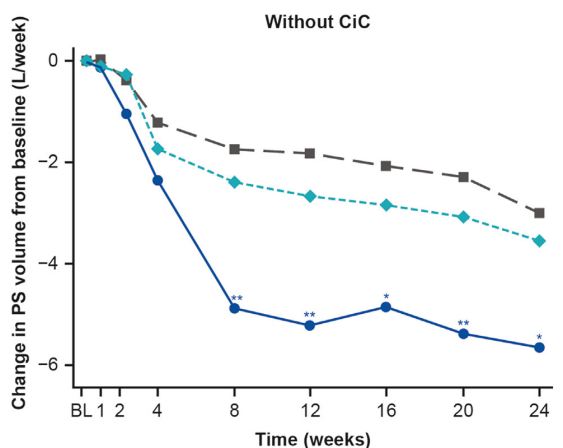
  • The improvement with glepaglutide was more prominent in those without a colon in continuity.
  • Mean concentrations of citrulline (a biomarker for enterocyte mass) increase 47% and 19% from baseline in the TW and OW treatment groups vs 5% in the placebo group
  • Serious adverse events were more common in both glepaglutide groups (28.6% and 11.4% for TW and OW respectively) compared to 5.6% for placebo. Specific risks of the active treatment included injection site reactions (common). Stoma complications (swelling of stoma nipple) along with GI events (nausea, vomiting and pain) were reported in more than 10% of patients. One patient developed cholecystitis and one developed a generalized rash in the active treatment group.
  • 61 of 70 patients (87%) treated with glepaglutide developed anti-drug antibodies. However, the authors found no apparent association with glepaglutide pharmacokinetics.
The improvement in parenteral support was more notable in those without the colon in continuity
Difference compared to placebo: 14.1% more of patients receiving twice weekly dosing and 11.2% more of patients receiving once weekly dosing of glepaglutide achieved enteral autonomy.

My take: This study shows that glepaglutide, like its GLP-2 analogue predecessor teduglutide, reduces the volume of parenteral support for patients with SBS. Due to its longer half-life, less frequent dosing is an added benefit compared to teduglutide.

Drawbacks for this group of medications include the potential for long-term adverse effects, endoscopic monitoring (possibly both upper endoscopy and colonoscopy), substantial costs, and reversion of intestinal failure severity when the medications are stopped.

Related blog posts:

Elevated Fecal Calprotectin Levels in Pediatric Patients with H pylori Infection

P Villalba-Davila et al. J Pediatr Gastroenterol Nutr. 2025;80:617–622 Helicobacter pylori infection is associated with significant elevations to fecal calprotectin, systemic inflammatory markers

In this retrospective study from a high immigrant density community, patients aged 6–18 years old who had an fecal calprotectin (FC) level within 6 months prior to EGD and who were tested for HP infection were included in the study. 

Key findings:

  • Of 129 patients, 37 (28.7%) tested positive for HP infection.
  • The mean FC level was significantly elevated in HP-positive patients (241.2) as compared with HP-negative patients (88.1) (p < 0.001)
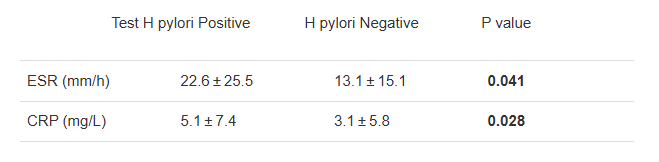
  • HP-positive patients were also found to have small but notably higher elevations of CRP and ESR levels

My take: This study confirms what I have seen in my own practice. Patients with H pylori frequently have elevated calprotectin levels. Checking stool for H pylori may help avoid some colonoscopies. H pylori infection, however, can be present in patients with inflammatory bowel disease as well.

Related blog posts:

Phang Nga Bay, Thailand

Celiac Disease: Lower TTG-IgA Titers Associated with Isolated Duodenal Bulb Presentation

QY Wang et al. JPGN 2025; 80:678–685. Open Access! Low TTG-IgA associated with isolated bulb pathology in pediatric celiac disease: Implications in a no-biopsy approach era

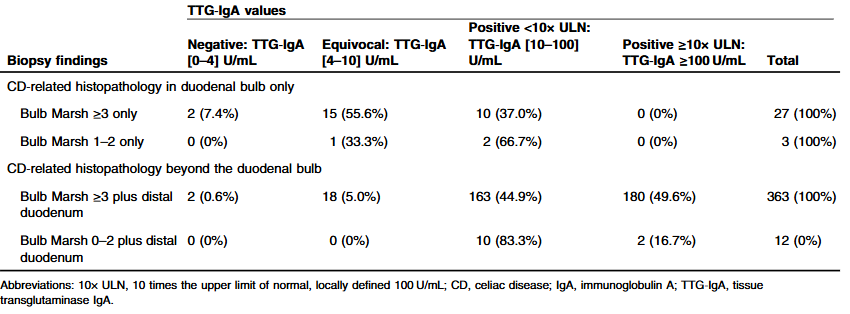
Methods: There were 405 cases included in this retrospective study (mean age = 9.6 years). TTG-IgA values were considered negative if <4 U/mL, equivocal between 4 and 10 U/mL inclusively, and positive if >10 U/mL. At the authors’ institution, TTG‐IgA ≥10× ULN corresponds to ≥100 U/mL.

Key findings:

  • Bulb-restricted CD was present in 7.4% of cases
  • TTG-IgA was negative or equivocal in 60.0% of bulb-restricted CD, compared to 5.3% of distal duodenal CD (odds ratio [OR] = 26.6
  • No bulb-restricted CD cases attained TTG-IgA ≥10× ULN, compared to 48.5% of distal duodenal CD

My take: This study confirms and quantitates what most clinicians have experienced. Isolated duodenal bulb pathology is associated with lower celiac titer abnormalities.

Related blog posts:

Gorgeous stained glass by Margaret Vetter at Piedmont Arts Festival