IBD -Briefly Noted: Intestinal U/S and Anxiety/Depression Not Worsening Pediatric IBD Activity

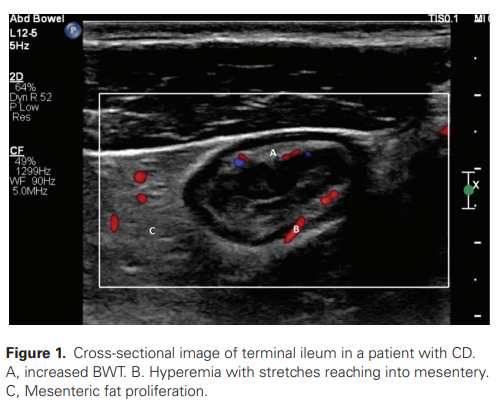
EA van Wassenaer et al. Inflamm Bowel Dis 2022; 28: 783-787. Open Access PDF: Intestinal Ultrasound in Pediatric Inflammatory Bowel Disease: Promising, but Work in Progress

Key points from this review:

  • Research has shown that IUS has the potential to be a valuable additional point-of-care tool to guide treatment choice and to monitor and predict treatment response, although evidence of its accuracy and value in clinical practice is still limited
  • The utility may be operator-dependent as well

My take: Due to low upfront costs, IUS would be appealing adjunct to current monitoring. However, one could envision IUS leading to more downstream studies (& costs), especially if its sensitivity and specificity are not very high.
EJ Brenner et al. Inflamm Bowel Dis 2022; 28: 728-733. Anxiety and Depressive Symptoms Are Not Associated With Future Pediatric Crohn’s Disease Activity

In this internet-based cohort of 9-17 yr olds (n=159, 96% white), the authors found no association between baseline PROMIS Pediatric anxiety score and subsequent sCDAI (change in sCDAI for 3-point change in PROMIS Pediatric −0.89; 95% CI −4.81 to 3.03). This study is in contrast to studies in adults which have shown a bidirectional relationship between anxiety/depression and IBD activity.

My take: It is difficult to know with certainty whether anxiety/depression may trigger IBD activity; more studies are needed. Treatment of mental health is important regardless of its effects on IBD activity.

Related blog posts:

A (Virtual) Reality Without Pain?

NY Times Magazine, Helen Ouyang 5/22/22: Can Virtual Reality Help Ease Chronic Pain?

This lengthy article describes the emerging therapy of virtual reality to help with chronic pain. Some of the article focuses on chronic abdominal pain.

Here are some excerpts:

  • Brennan Spiegel, a gastroenterologist and researcher at Cedars-Sinai .. runs one of the largest academic medical initiatives studying virtual reality as a health therapy…
  • As Daniel Clauw, who runs the Chronic Pain and Fatigue Research Center at the University of Michigan, put it in a 2019 lecture, there isn’t “any drug in any chronic-pain state that works in better than one out of three people.” He went on to say that nonpharmacological therapy should instead be “front and center in managing chronic pain — rather than opioids, or for that matter, any of our drugs…”
  • In November, the Food and Drug Administration gave authorization for the first V.R. product to be marketed for the treatment of chronic pain.…
  • [In one] virtual environment … built specifically for patients with chronic gastrointestinal symptoms…[the patient] used hand controls. Inside a virtual clinic, a robot named Maia — short for “mixed-reality artificial-intelligence assistant” — guided her to a young blond woman, who expressed frustration with abdominal symptoms. [The patient] examined the [virtual] patient with her virtual hands, placing a stethoscope on her stomach to listen to the sounds of digestion. Maia explained how the brain and the gut work together. As she spoke, an image of a brain popped up, connected to intestines by a yellow flashing line. When the brain became stressed, it turned fuchsia in color, and the yellow line to the gut metamorphosed into a stream of fire...
  • Scientists knew that the brain has some control over pain, but that insight was mostly confined to the situations described by Patrick Wall’s and Ronald Melzack’s gate-control theory, which helps explain why, say, a person running from a house on fire may not realize that she sprained her ankle until she is a safe distance away. The brain, so intent on escaping the fire, shuts the gate, blocking pain signals coming up the spinal cord from the ankle. “You could close the gate,” says Clifford Woolf, a neurobiology professor at Harvard Medical School who worked in Wall’s lab, but “essentially there was nothing about the opposite possibility — which is that the brain, independent of the periphery, could be a generator of pain.”
  • “Woolf was conducting his own experiment in Wall’s lab, applying painful stimuli to rats’ hind legs. The animals developed large “fields” of pain that could easily be activated months later with a light tap or gentle warmth, even in spots that weren’t being touched directly. “I was changing the function of the nervous system, such that its properties were altered,” Woolf says. “Pain was not simply a measure of some peripheral pathology,” he concluded; it “could also be the consequence of abnormal amplification within the nervous system — this was the phenomenon of central sensitization.”
  • V.R.’s “unique ability to convey a sense of just ‘being there,’ wherever there happens to be,” as he [Spiegel] puts it in his book “VRx: How Virtual Therapeutics Will Revolutionize Medicine.” “All of its revolutionary potential tumbles out of its ability to compel a person’s brain and body to react to a different reality.” 
  • RelieVRx also has modules that prompt patients to redirect their attention through game play or by allowing scenes — waves washing onto a sunny coast, say — to soothe their nervous systems. The average session lasts seven minutes, and patients are directed to do just one a day for eight weeks…
  • A recently published study by researchers affiliated with the company [AppliedVR], for which they recruited subjects during the pandemic through Facebook ads and pain organizations, reported an average drop in chronic back pain by nearly 43 percent for the RelieVRx group compared with 25 percent for the control group. For those who used RelieVRx, pain also interfered less with their activity and sleep. Three months after the last V.R. session, these gains were mostly found to endure…
  • In chronic pain, the body part that hurts may be undamaged and even seem healthy; what’s altered is the area of the brain that corresponds to its anatomical location...
  • If doctors do start prescribing V.R., there’s another hurdle to clear: Who will pay for it? 

My take: I am looking forward to the pediatric studies which will be needed before this technology can be promoted. I would think pediatric patients with chronic pain may respond even more favorably than adults. If this technology were in our clinic, I am certain that are “no show” rate would be lower.

Related blog posts:

This could be me in a virtual reality. Picture taken at Connie’s Photo Park in Madrid, NM.

“Waste” of a CT Scan

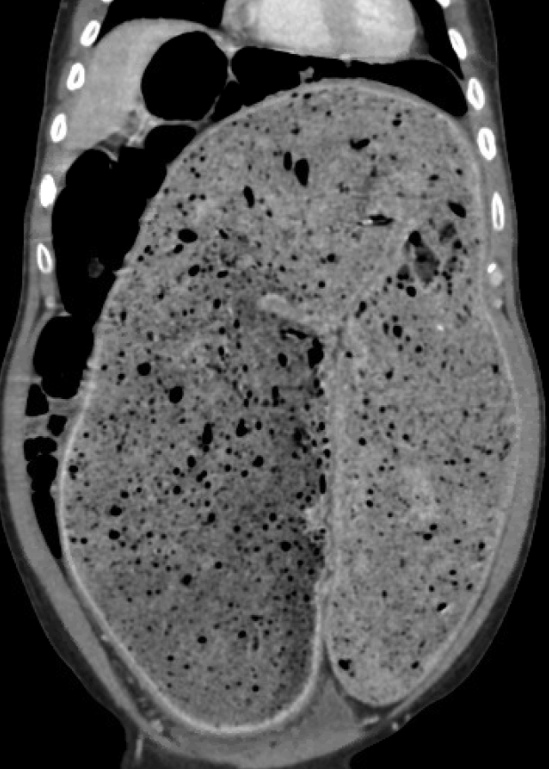
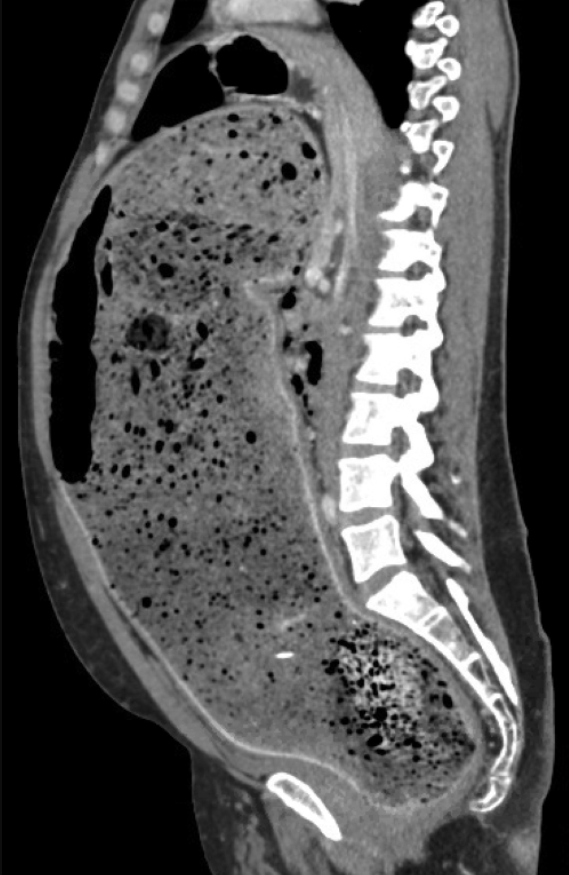
M Alsayid, V Kotwal. Clin Gastroenterol Hepatol 2022; DOI:https://doi.org/10.1016/j.cgh.2021.06.030. Open Access: Chronic Constipation With Fecal Stasis

A 50 year old with a history of abdominal distention for a week and chronic constipation had a CT with intravenous contrast. Ultimately he had a disimpaction under general anesthesia and a flexible sigmoidoscopy.

My view: A complete examination with digital rectal exam (if feasible) or an AXR would have been sufficient for diagnosis.

Blog note: Link for We Can’t Wait App updated in yesterday’s post.

“We Can’t Wait” App

CCFA: We Can’t Wait: New app helps inflammatory bowel disease patients find available restrooms nearby

An excerpt: “The Crohn’s & Colitis Foundation…launched the We Can’t Wait app, which provides an interactive map that allows users to find a restroom near them across the U.S.  Driven by crowd-sourced submissions and major retail and restaurant partners that contributed their restroom location data, the app empowers IBD patients – and all users – with a tool to find restrooms more easily, both in emergency and everyday situations. The app is free and available for download now.  

Related blog post: When you gotta go…looking for a clean bathroom

Improving Mortality in Spain After Nationwide Access to Direct-Acting Antivirals

J Politi et al. Hepatology 2022; 75: 1247-1256. Favorable impact in hepatitis C-related mortality following free access to direct-acting antivirals in Spain

Background: Free treatments for HCV infection with direct-acting antivirals (DAAs) became widespread in Spain in April 2015

Key findings:

  • After the intervention, there was a great acceleration of the downward mortality trend from HCV, whose annual percent change (APC) went from −3.2% (95% CI, −3.6% to −2.8%) to −18.4% (95% CI, −20.6% to −16.3%). There were also significant accelerations in the downward trends in mortality from HCC.

My take: More proof that DAAs can be life-saving.

Related blog posts:

Data on Bridles -They Work!

JA Lavoie et al. JPEN 2022; https://doi.org/10.1002/jpen.2409. Nasogastric Bridles are Associated with Improved Tube-Related Outcomes in Children

Retrospective study: 582 children had NGTs secured traditionally and 173 received nasal bridles 

Key findings:

Children with bridled NGTs were compared to their non-bridled NGT counterparts (all results below with p values <0.02):

  • 16.67 times less likely to experience ≥1 dislodgement (OR=0.06)
  • 2.5 times less likely to have one more ED visit (OR=0.4)
  • 4.76 times less likely to require one more radiographic exposure (OR=0.21)

My take: After learning about bridles at N2U in 2015 (thanks Praveen Goday), they quickly became popular in our institution. They improve NG/NJ outcomes.

Related blog posts:

Disclaimer: This blog, gutsandgrowth, assumes no responsibility for any use or operation of any method, product, instruction, concept or idea contained in the material herein or for any injury or damage to persons or property (whether products liability, negligence or otherwise) resulting from such use or operation. These blog posts are for educational purposes only. Specific dosing of medications (along with potential adverse effects) should be confirmed by prescribing physician.  Because of rapid advances in the medical sciences, the gutsandgrowth blog cautions that independent verification should be made of diagnosis and drug dosages. The reader is solely responsible for the conduct of any suggested test or procedure.  This content is not a substitute for medical advice, diagnosis or treatment provided by a qualified healthcare provider. Always seek the advice of your physician or other qualified health provider with any questions you may have regarding a condition

Can You Give Ustekinumab Subcutaneously After IV Reaction?

J Sunny et al. JPGN Reports: May 2022 – Volume 3 – Issue 2 – p e205 Open Access: Hypersensitivity Reaction to Ustekinumab in Pediatric and Young Adult Inflammatory Bowel Disease Patients: A Case Series

This is a case series of six pediatric patients and young adults who developed hypersensitivity reactions during intravenous infusion with ustekinumab (UST).

Key findings:

  • Hypersensitivity reactions during intravenous (IV) induction dose of UST, ranging from mild allergic reactions to anaphylaxis, with no antibodies detected in the two who had testing
  • Reactions occurred 0-30 minutes after start of infusion
  • Management was with methylprednisolone in 5 of 6 patients, diphendyramine in 3 of 6, and epinephrine in 1. One patient was managed with IV diphenhydramine alone.
  • Four of six continued with UST subcutaneously without reactions. ***Change of formulation of UST from IV to subcutaneous was done in a controlled hospital-based setting. The other two 33% were switched to another biologic due to physician preference and were never exposed to the subcutaneous formulation
  • Although the exact pathogenesis of this infusion reaction remains unknown, it has been attributed to EDTA

My take: It appears that patients with UST hypersensitivity reactions can be changed to SC formulation. The authors recommend to trial a subcutaneous dose of UST in a controlled setting; in addition, they suggest testing with skin prick testing or specific IgE levels to EDTA done by allergy and immunology.

Related blog posts:

Sandia Mountain, near Albuquerque

Genomic Sequencing At Birth

The Economist (5/13/22): Full-genome screening for newborn babies is now on the cards (Behind a paywall).

This article delves into the topic of genome screening at birth and its potential role in supplanting current newborn screening.

Rationale: “Doctors have described more than 7,000 rare diseases, generally defined as those affecting fewer than one in 2,000 people. So, though individually unusual, such illnesses are collectively a serious problem—a long-tail of need which is hard to treat because patients are few in number and their symptoms often picked up too late.”

Background: “A government-owned company called Genomics England … will soon start a pilot project intended to sequence the genomes of 200,000 babies. That could presage a national programme.”

Key points:

  • “On May 4th, at a meeting held in London by Genomics England, Rick Scott, the organisation’s chief medical officer, said discussions with parents and doctors had led his team to conclude that people want any genomic-screening programme for newborns to look for a far narrower set of conditions than BabySeq sought. The most appealing tests were for variants associated with a high probability of childhood illness, and which would benefit from early treatment.”
  • “One particular finding, according to David Bick, a clinical geneticist who advises Genomics England, is that parents want certainty. They feel it is no use being told that a child is “fairly likely” to have a condition. Rather, they want a pretty clear “yes” or “no”.”
  • “Many also do not want to know of adult-onset illnesses that their children may one day suffer. This means rejecting tests which might indicate a newborn’s risk, later in life, of contracting cancer, diabetes or Alzheimer’s disease.”
  • Potential problems: learning about degenerative diseases & mental health problems without suitable treatments, data security, mutations with variable phenotypes (variable age of onset and severity)

My take: Genomic screening could broaden the benefits of newborn screening but identifying all of an individual’s genetic flaws is likely to be more detrimental than beneficial at this point.

Related blog posts:

Bandelier National Monument, New Mexico. Caves in the “tuff” volcanic rock.

Resource for Formula Recall

Recently DHS released a website (multiple languages) with resources/information to help with current formula shortages; some of the information links to information from NASPGHAN. The website has links to several new formulas that are being imported, like Kendamil, Nan, and Bubs, and how they are prepared (mL to ounce converter).

Related blog posts:

Amplified Gut Pain

We could do a lot better than the following:

  • Irritable bowel syndrome (IBS)
  • Non-organic abdominal pain
  • Functional abdominal pain (FAP)
  • Visceral hyperalgesia

Everyday I see families and these terms create more work –not less.

DD Sherry (JAMA Pediatrics 2022; 176: 10-11. Amplified Pain—A Helpful Diagnosis) shares his views on chronic pain terminology with regard to rheumatology, but some of the same lessons should be applied to pediatric gastroenterology:

  • “The primary purpose of any diagnosis is to serve the patient. They want to know what they have, even if we, as scientists, do not know the cause or mechanism. For example, we have no idea why children have juvenile idiopathic arthritis and, even though it has the word idiopathic in it, giving the child and family this diagnosis is reassuring, allows them to stop looking for other reasons for their symptoms, lets them tell others what they have, and allows for therapy to begin.”
  • “Amplified pain, in essence, is when the body takes a signal and amplifies it to become symptomatic. The pain is disproportional, as is, frequently the degree of disability”
  • “Telling patients with amplified pain that their pain is chronic pain,… functional pain…is no help. Many of these children have already been told they are malingering”
  • “Using the term amplified pain is useful, understandable, and rational. These children are not exaggerating their pain complaint.”

My take: A term like amplified gut pain would be an improvement from what we have now. It could be introduced as another term for visceral hyperalgesia or as a childhood variant of IBS or FAP since it is not currently used in the literature.

Related blog posts:

Bandelier National Monument, New Mexico