DR Shores et al. J Pediatr Gastroenterol Nutr. 2025;81:158–161. Navigating the blame game: Exploring necrotizing enterocolitis, preterm nutrition, and the ramifications of a formula shortage
Key points from this commentary:
“Recent lawsuits involving preterm infant formula manufacturers in the United States (Abbott and Mead Johnson) … [a] formula shortage crisis … might ensue if these formulas are pulled from the market”
“Breast milk has long been associated with protection against NEC, possibly due to bioactive molecules that maybe protective. However, infants fed exclusively breastmilk can still develop NEC, highlighting a multifactorial etiology. Mother’s own breast milk provides the best protection against NEC and is the ideal primary form of nutrition for preterm infants…pasteurized donor breast milk provides some protection against NEC and should be offered if mother’s own breast milk is not available”
“Although preterm formula does not protect against NEC, it is the healthcare standard, assuming all medical comorbidities are taken into consideration for individualized care…preterm infant formulas that are specifically formulated to provide the calories, protein and micro-nutrient needs of preterm infants”
“Placing all the blame for the development of NEC on preterm formula manufacturers is not supported by science and is thus unfounded”
“For infants without access to mother’s own or donor breast milk, specialized formulas remain critical to their nutrition and survival….Vilifying formula companies risks provoking further shortages of essential specialized formulas, which could directly harm the very babies we all aim to protect”
National Covid Memorial Wall in London is a visual representation of the UK’s catastrophic loss to Covid-19. There are more than 240,000 individually hand-painted red hearts, each representing a person who died in the UK with Covid-19 as a direct cause of death. Many of the hearts on the Wall have been personalized with individual message
This entire essay is worth reading but may be behind a paywall.
An excerpt:
For most of my colleagues and me, the C.D.C. and the N.I.H. were the medical Mount Olympus, the towering pillars of medical authority. Contrary to right-wing portrayals, these were not dictatorial authorities. These were earned authorities, comprising our best, brightest and most dedicated peers. The formidable talents of these doctors and scientists would have commanded enviable salaries had they taken jobs in industry, but they chose the public sector instead — something that we clinicians were forever grateful for…
While there are some doctors who viewed our public health institutions with disdain — some of them now are running these very organizations — most practicing physicians relied heavily on them to deliver the best care possible to their patients, despite occasional quibbles. What a relief, I always felt, that there were people organizing the things I can’t do — testing new treatments, conducting population studies, keeping tabs on worldwide diseases, issuing guidelines and more.
But now that support is a shell of what it once was. I can no longer automatically rely on these institutions because their scientific North Star, even if imperfect at times, has been replaced by one that seems nakedly political. Remaining staffs are no doubt working valiantly to do their jobs, but they are hobbled by loss of colleagues, resources and reliable leadership. So when I hear that the C.D.C. has changed a vaccine recommendation, I now question whether that’s a recommendation I can trust. When the F.D.A. commissioner says he wants to change how the agency approves or rejects new treatments, I no longer feel sure that science is driving those decisions. It’s hard to convey how profoundly grieved my colleagues and I feel…
Robert F. Kennedy Jr.’s view seems to be that we doctors are shills for corporate interests and government bureaucrats, and that torching our vaunted institutions is the prescription to fix us. Mr. Kennedy’s ire seems oddly directed. I, too, am disgusted by the role of money in health care, but I see it more as a result of the system we’ve set up, rather than the people who labor within it…
Notably missing from Mr. Kennedy’s Make America Healthy Again agenda is any suggestion that we provide universal health care, as most other developed countries do. There is no push to expand Medicare and Medicaid, which help some of our sickest patients. There is no focus on expanding access to early childhood education and supplemental nutrition programs, which offer steep health benefits…[There] is a barely concealed antipathy toward the people who are the engine of these institutions — doctors, scientists, policy wonks…
Every time you go to your doctor or get treated by a nurse, there’s a chorus of researchers, public health workers, policy experts, epidemiologists and advisory panels arrayed behind them, aided by laboratories, databases, websites, early-detection systems and clinical guidelines. Our current government seems determined to wrench this away, handicapping your health care team’s ability to care for you.
My take (borrowed in part from author): Our health care system needs to improve costs, accessibility, and outcomes. Yet, the changes to our healthcare and research under this administration are making matters worse. “So many of our resources are now gone, and those that remain no longer feel trustworthy. Americans’ health will decline at the hands of our federal government. And there’s no vaccine for that.”
Prescription drug denials by private insurers in the United States jumped 25 percent from 2016 to 2023, according to a new analysis of more than four billion claims… compiled for The New York Times by the medical data company Komodo Health, shows that denial rates rose from 18.3 percent to 22.9 percent….
Experts who have studied denials said the skyrocketing costs of popular new weight loss medications and greater automation of the claims process with artificial intelligence may have contributed to the rising rejection rates…
Prior authorization was responsible for about 10 percent of denied claims in the Komodo data. The analysis found that the most common reason for a drug claim to be rejected was that a refill had been requested “too soon,” before the patient was eligible for more medication…
Pricey new GLP-1 weight loss drugs like Ozempic, and other blockbuster medications, may have led insurers to increase restrictions on other drugs as they grappled with ways to offset those growing costs.
My take: Insurance companies and their pharmacy benefit managers are increasing their denials of medications. Presumably, much of this increase is driven by the pursuit of higher profits rather than the pursuit of better patient outcomes.
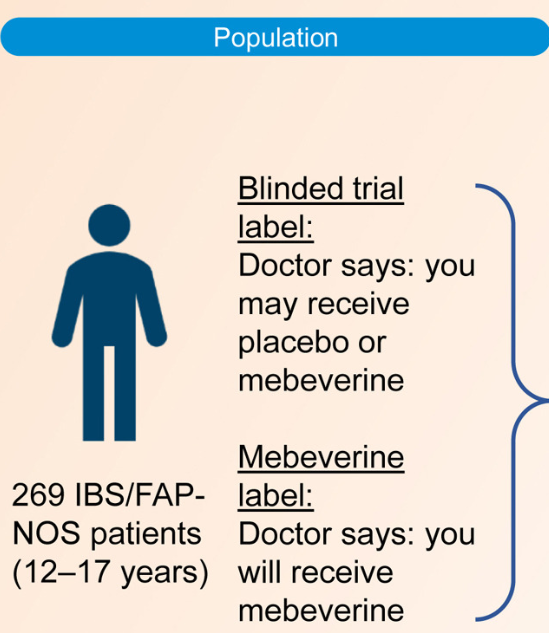
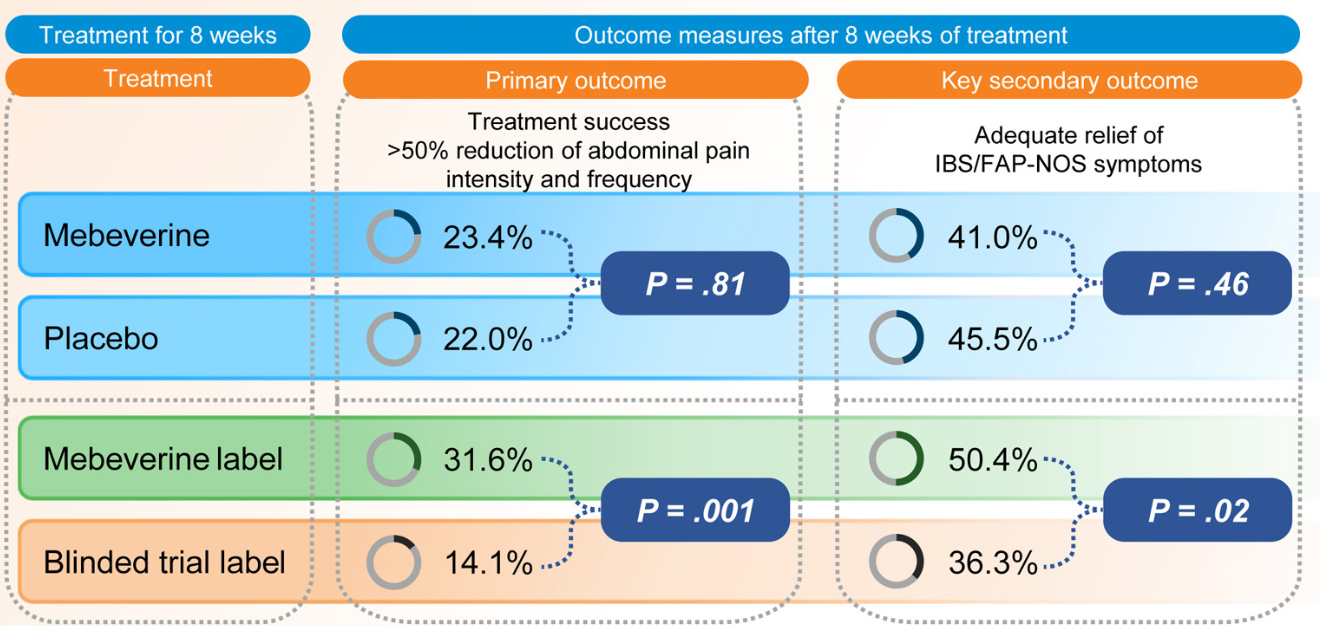
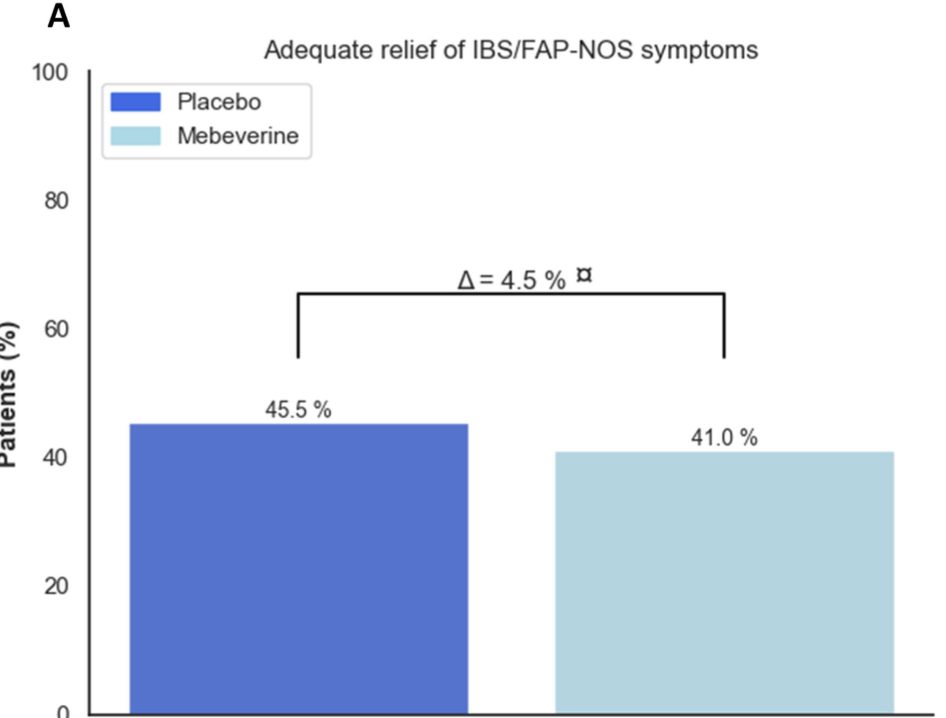
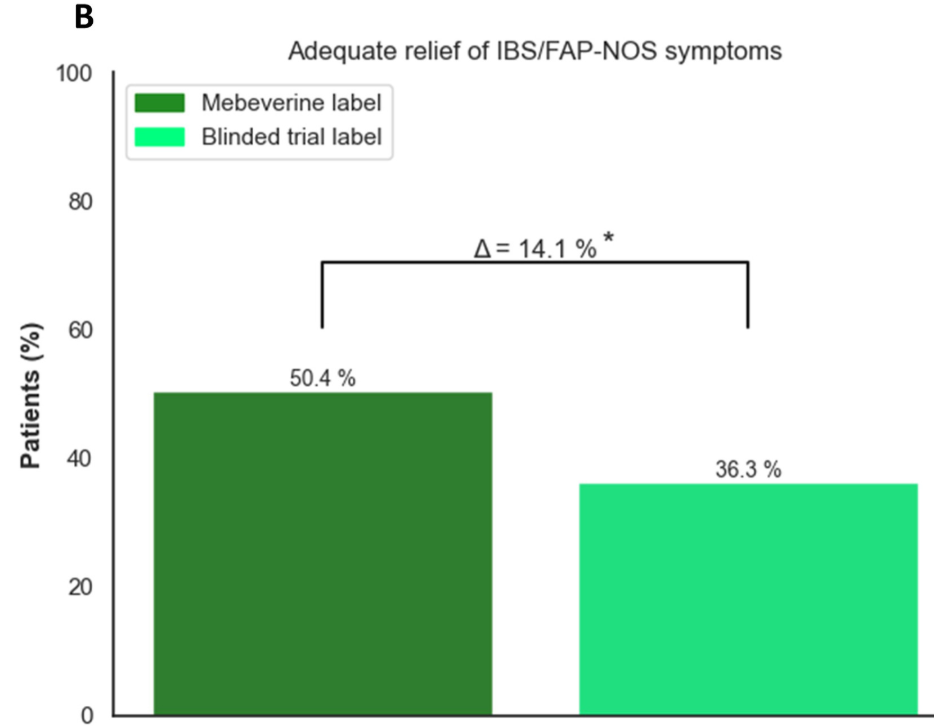
Methods: This was a randomized trial with 12-17 yr olds with irritable bowel syndrome or functional abdominal pain who received mebeverine (200 mg twice daily) or placebo for 8 weeks. Treatment was labeled as “mebeverine or placebo” (blinded trial label) or “mebeverine” (mebeverine label), creating the following 4 groups: (1) mebeverine-blinded trial label, (2) mebeverine-mebeverine label, (3) placebo-blinded trial label, and (4) placebo-mebeverine label. Randomization (1:1:1:1) was masked to physicians, except for drug labeling. Primary end point was treatment success (>50% reduction of abdominal pain intensity and frequency) after 8 weeks. The key secondary end point was adequate relief of symptoms.
Key findings:
Blinded Trial Label: Treatment success was similar between those receiving mebeverine (groups 1 and 2) (n = 31 [23.4%]) and placebo (groups 3 and 4) (n = 30 [22.0%]; odds ratio [OR], 1.08
Effect of Being Informed of Treatment with Active Medication: Treatment success was higher in groups with the mebeverine label (groups 2 and 4) (n = 42 [31.6%]) compared with the blinded trial label (groups 1 and 3) (n = 19 [14.1%]; OR, 2.84
Discussion Points:
“This is the first study evaluating the impact of positive labeling on pain in a pediatric population. Our findings of a doubled treatment effect rate (32.9% vs 15.1%) when children were told they were receiving the active drug, are in line with adult studies showing higher pain reduction with positive labeling..14,19 It underscores the importance of positive expectations in pain management, which operates via multiple mechanisms.”
“Results of previous research has shown that children with IBS can also report symptom relief when they know that they are receiving an inert compound, known as an ‘“’open-label placebo.’22“
“Ethical norms state that ‘“’the use of a placebo without the patient’s knowledge may undermine trust, compromise patient–physician relationship, and result in medical harm to the patient.’26“
My take: This is a fascinating study showing how expectations for treatment can enhance the placebo effect. While the authors and the associated editorial mull over the ethical issues regarding deception of giving placebo without the family’s knowledge, in clinical practice many of the current drugs (eg. antispasmotics, neuromodulators, probiotics) have uncertain benefit and can be given without concern for deception.
Related blog posts:
Good Study, Bad Practice: Placebo for IBS and Functional Abdominal Pain “It is a mistake to consider placebo as a treatment for functional abdominal pain. In many children, pain fluctuates and may improve with reassurance, distraction, healthier diets, and physical activity. However, we also need more effective therapies including pain psychology, dietary approaches and medications. The idea that placebo helps is misleading and undermines the fact that patients with functional disorders need effective treatment.”
It has been recognized for quite some time that physical exercise, while important for health, does NOT play a big role in weight loss (see: Challenging the Obesity Myths, NEJM 2013; 368: 446-54. “Physical education, as typically provided, has not been shown to reduce or prevent obesity”). This article and the associated commentary from NPR provide further evidence of this.
Methods: The authors examined energy expenditure and two measures of obesity (body fat percentage and body mass index, BMI) for 4,213 adults from 34 populations across six continents and a wide range of lifestyles and economies, including hunter-gatherer, pastoralist, farming, and industrialized populations
Key findings:
“Economic development was positively associated with greater body mass, BMI, and body fat, but also with greater total, basal, and activity energy expenditure. Absolute measures of TEE (total energy expenditure) and AEE (activity energy expenditure) are greater in more economically developed populations (Fig. 2), consistent with their larger body size. Body size–adjusted TEE decreased marginally with greater development”
“Estimated energy intake was greater in economically developed populations, and in populations with available data (n = 25), the percentage of ultraprocessed food in the diet was associated with body fat percentage, suggesting that dietary intake plays a far greater role than reduced energy expenditure in obesity related to economic development.”
Commentary from NPR:
“Back in the 1800s, obesity was almost nonexistent in the United States. Over the last century, it’s become common here and in other industrialized nations…One common explanation is that as societies have developed, they’ve also become more sedentary, and people have gotten less active….But in a major new study published in the journal PNAS, Pontzer and an international team of collaborators found that’s not the case…the total calories burned per day is really similar across these populations, even though the lifestyle and the activity levels are really different…it does mean we can’t outrun a bad diet. Pontzer says if we want to tackle obesity, the public health message should focus on changing what’s on our plates.”
My take: This article further supports the idea that a healthy diet is the crucial factor with regard to weight gain. However, numerous studies have shown that physical activity is important for good health, regardless of one’s weight.
A Upton et al. J Pediatr Gastroenterol Nutr. 2025;81:204–211. An ultrasound approach to visualize the “duct at the hilum” in infants undergoing evaluation for biliary atresia
Methods: Ultrasound exams were reviewed from infants undergoing evaluation for biliary atresia at Texas Children’s Hospital during two periods. First, exams performed before 2021 were reviewed to develop a systematic approach to visualize the duct at the hilum (DaH). Second, exams performed during a subsequent 26-month period were reviewed to assess the approach’s diagnostic performance in 64 infants (mean age 25 days).
Key findings:
The approach identified all 12 patients with biliary atresia and excluded 49 out of 52 infants without biliary atresia, for a sensitivity of 1.00 and specificity of 0.94.
There were three false-positive studies (i.e., the DaH was absent, but diagnosis was not BA) in infants with choledochal cyst, Trisomy 18, and an aberrant main portal vein (which interfered with the US examination),
The approach could be performed in feeding infants and often in <5 min.
Discussion:
“First, the DaH was easier to identify when infants were allowed to feed. In some cases, a DaH could be seen in fasting images but was longer and more prominent in subsequent non-fasting images”
“Tthe approach had high sensitivity and could efficiently rule out infants who did not have biliary atresia”
“We have not determined the precise segment of the extrahepatic biliary tree visualized by our approach; however, in contrast to previous reports, we do not think the approach is imaging the “common bile duct.” Rather, the DaH is a segment closer to the liver and could be the common hepatic duct.”
“Larger, multisite studies are needed…we may have overestimated sensitivity because the 12 infants with biliary atresia were all categorized as Japanese Biliary Atresia Society classification Type II or III…Similarly, we may have overestimated specificity because all ultrasound exams were performed by 1 sonographer with 10+ years of experience.”
My take: It does seem that the presence of biliary atresia should be identifiable with ultrasound. However, this likely relies on the skills of the ultrasonographer, especially given the small size of these patients. Thus far, in clinical practice, an ultrasound has been mainly helpful at excluding choledochal cysts/anatomic malformations. A tiny or contracted gallbladder (with fasting) does increase the likelihood of biliary atresia. In my experience, other ultrasound findings like the ‘triangular cord’ sign are less helpful than serum matrix metalloproteinase 7 (MMP-7) tests.
Disclaimer: This blog, gutsandgrowth, assumes no responsibility for any use or operation of any method, product, instruction, concept or idea contained in the material herein or for any injury or damage to persons or property (whether products liability, negligence or otherwise) resulting from such use or operation. These blog posts are for educational purposes only. Specific dosing of medications (along with potential adverse effects) should be confirmed by prescribing physician. Because of rapid advances in the medical sciences, the gutsandgrowth blog cautions that independent verification should be made of diagnosis and drug dosages. The reader is solely responsible for the conduct of any suggested test or procedure. This content is not a substitute for medical advice, diagnosis or treatment provided by a qualified healthcare provider. Always seek the advice of your physician or other qualified health provider with any questions you may have regarding a condition
Mehtods: This international, multicenter, retrospective cohort study consecutively enrolled JAK-inhibitor-treated patients with IBD who subsequently developed acne (aka JAKne).
Key findings:
Among 2183 JAK inhibitor–treated patients with IBD, 272 developed acne
70% of acne cases occurred within the first 3 months of treatment initiation
The crude prevalence rates of acne were 15.9% for upadacitinib, 4.3% for tofacitinib, and 1.9% for filgotinib, with dose-dependent relationships observed for upadacitinib and tofacitinib
Most cases were mild-moderate in severity. Mild (<10% of body surface area) was noted in 68%, Moderate (10-30% of BSA) was noted in 24%, and Severe (>30% of BSA) was note in 8%
Among those who developed acne, areas that were affected included the face in 89%, the back in 33%, the chest in 27% and the scalp in 1%
40% received pharmacologic intervention
18% of patients who developed acne had JAK inhibitor dose reduction or discontinuation
My take: JAKne is a common adverse effect. Early identification, proactive counseling, and timely interventions, such as dose reduction, acne therapies or referral to dermatology, are crucial in managing this side effect.
Disclaimer: This blog, gutsandgrowth, assumes no responsibility for any use or operation of any method, product, instruction, concept or idea contained in the material herein or for any injury or damage to persons or property (whether products liability, negligence or otherwise) resulting from such use or operation. These blog posts are for educational purposes only. Specific dosing of medications (along with potential adverse effects) should be confirmed by prescribing physician. Because of rapid advances in the medical sciences, the gutsandgrowth blog cautions that independent verification should be made of diagnosis and drug dosages. The reader is solely responsible for the conduct of any suggested test or procedure. This content is not a substitute for medical advice, diagnosis or treatment provided by a qualified healthcare provider. Always seek the advice of your physician or other qualified health provider with any questions you may have regarding a condition.
In this useful review, it is noted that IBD was associated with ~9% of cases of chronic nonbacterial osteomyelitis (CNO).
Key points:
“IBD identified before, during, or after CNO diagnosis, has been well-reported as an associated condition.34-37 A review of cases of CNO with IBD showed that the diagnosis of CNO preceded the diagnosis of IBD in over half of the reported cases.38“
“Children with CNO frequently experience a high burden of pain and impaired physical function. CNO can cause permanent deformities in any bone, but especially if there is spinal involvement and diagnosis and treatment are delayed”
“Bone biopsies should be performed if there is clinical suspicion of infection or malignancy, although tissue usually is not needed for diagnosis unless the clinical presentation is atypical”
“MRI is now the standard imaging test that usually starts with targeted examination of the affected area…A whole-body MRI (WB-MRI) should be considered for all patients with CNO at diagnosis when possible, as it may help support a diagnosis of CNO by detecting additional sites of bone inflammation that may be clinically inapparent, particularly vertebral lesions”
“Non-steroidal anti-inflammatory drugs (NSAIDs) are usually first-line treatment for children with CNO, except for those with vertebral lesions, who require systemic treatment… over half of children treated with NSAIDs experience a disease flare within the first 2 years,14 requiring either retreatment with NSAIDs or another systemic medication”
“In the presence of vertebral CNO lesions, or after failing NSAID monotherapy, three categories of systemic treatments are recommended by the Childhood Arthritis and Rheumatology Research Alliance (CARRA)56: 1) synthetic DMARDs, 2) bisphosphonates, or 3) tumor necrosis factor-inhibitor (TNFi) biologic agents with or without methotrexate (to prevent the development of antibodies to the drug)”
“In practice, TNFi tends to be used more if children also have comorbid conditions for which TNFi already is indicated such as inflammatory arthritis and sacroiliitis,7 IBD,4,72 and psoriasis.4,14,24 “
My take: Being familiar with CNO is important for GI physicians as it can occur (rarely) in our patients with IBD. Another important caveat, which is not discussed in this review, is that CNO can occur paradoxically due to the use of TNFi treatment.