Can Ceftriaxone Be Given (Safely) to Infants with Unconjugated Hyperbilirubinemia?

SB Amin. J Pediatr 2023; 254: 91-95. Bilirubin-Displacing Effect of Ceftriaxone in Infants With Unconjugated Hyperbilirubinemia Born at Term

This prospective study with 27 term infants (<7 days) with mild unconjugated hyperbilirubinemia (total bilirubin 6-12 mg/dL) (to convert to micromol/L multiple by 17.1) and with sepsis. Free bilirubin concentrations were measured by the peroxidase method using a UB analyzer and a Zone Fluidics device before (baseline) and 15 minutes after (follow-up) IV ceftriaxone administration on postnatal days 4 to 6.

Key findings:

  • The mean free bilirubin (μg/dL) at follow-up was not different from that at baseline when measured by the UB analyzer (P = .78). The mean free bilirubin was significantly lower at follow-up compared with baseline when measured by the Zone Fluidics device (P = .02). The ratio of a free bilirubin with and without ceftriaxone, an index of displacing effect, was 1.02 (95% CI 0.89-1.14) using the UB analyzer and 0.58 (95% CI 0.30-0.86) using the Zone Fluidics device.

Ceftriaxone has been considered contraindicated in the presence of neonatal unconjugated hyperbilirubinemia due to concern of bilirubin displacement from albumin, resulting in elevated serum free bilirubin (& risk of kernicterus). However, “most of the evidence for the bilirubin-displacing effect of IV ceftriaxone has been derived from in vitro studies.”

My take: This study indicates that there is no significant effect of ceftriaxone in increasing free bilirubin in term infants with mild unconjugated hyperbilirubin

Related blog posts:

Tucson Botanical Gardens

Disclaimer: This blog, gutsandgrowth, assumes no responsibility for any use or operation of any method, product, instruction, concept or idea contained in the material herein or for any injury or damage to persons or property (whether products liability, negligence or otherwise) resulting from such use or operation. These blog posts are for educational purposes only. Specific dosing of medications (along with potential adverse effects) should be confirmed by prescribing physician.  Because of rapid advances in the medical sciences, the gutsandgrowth blog cautions that independent verification should be made of diagnosis and drug dosages. The reader is solely responsible for the conduct of any suggested test or procedure.  This content is not a substitute for medical advice, diagnosis or treatment provided by a qualified healthcare provider. Always seek the advice of your physician or other qualified health provider with any questions you may have regarding a condition.

Lipid Emulsions and Cognitive Outcomes

M Thanhaeuser et al. J Pediatr 2023; 254: 68-74. Open Access: A secondary Outcome Analysis of a Randomized Trial Using a Mixed Lipid Emulsion Containing Fish Oil in Infants with Extremely Low Birth Weight: Cognitive and Behavioral Outcome at Preschool Age

Methods: This was a retrospective secondary outcome analysis of a randomized controlled trial performed between June 2012 and June 2015. Infants with extremely low birth weight received either a mixed (soybean oil, medium chain triglycerides, olive oil, fish oil) or a soybean oil-based lipid emulsion for parenteral nutrition (up to 3 gm/kd/day). At 5 years 6 months of age, data of 153 of 206 infants (74%) were available for analysis.

Key findings:

My take: The discussion highlights the lack of a positive benefit from the mixed emulsion. However, one of the biggest concerns with lipid emulsions occurs in the setting of lipid emulsion restriction due to parenteral nutrition associated liver disease. Because mixed emulsions are better tolerated, this helps minimize lipid restriction which could result in worsened neurocognitive outcomes.

Related blog posts:

Funny-shaped Saguaro, Tucson, AZ

Measurement of Exocrine Pancreatic Insufficiency in IBD and the Real-World

J Fernandez et al. JPGN 2023; 76: 475-479. Prevalence of Exocrine Pancreatic Dysfunction Based on Direct Function Testing in Pediatric Inflammatory Bowel Disease

Methods: Direct stimulated endoscopic pancreatic function test (ePFT) was performed in 74 children with IBD

Key findings:

  • 42 (56.7%) children had either generalized or partial exocrine pancreatic insufficiency (EPI). 
  • Weight z scores were significantly lower in those with abnormal ePFT (Crohn cases: P = 0.008; UC cases: P = 0.046). 

In their discussion, the authors assert: “We can confidently recommend ePFT in established or new IBD patients who have stricturing and/or penetrating CD, weight loss, low weight Z-score, or qualify for the diagnosis of malnutrition.”

My take: In my real-world experience (~30 years), I have yet to have one patient presenting with IBD who needed pancreatic enzyme supplementation to reverse growth failure/malnutrition. As a consequence, I have a difficult time accepting the premise that more than 50% have EPI. To me, this suggests that testing children when they are acutely-ill or malnourished is yielding unreliable results.

Related blog posts:

Tumamoc Hill, Tucson AZ

Acid Suppression and Antibiotics in Infancy Associated with Increased Risk of Celiac Disease

M Boechler et al. J Pediatr 2023; 254: 61-67. Acid Suppression and Antibiotics Administered during Infancy Are Associated with Celiac Disease

Methods: A retrospective cohort study was performed using the Military Healthcare System database. N=968,524 children with 1704 cases of celiac disease (CD) in this group (from 2001 to 2013) with prescription for PPIs, H2RAs or antibiotics in first 6 months of life.

Key findings:

  • PPIs (HR, 2.23; 95% CI, 1.76-2.83), H2RAs (HR, 1.94; 95% CI, 1.67-2.26), and antibiotics (HR, 1.14; 95% CI, 1.02-1.28) were all associated with an increased hazard of CD.
  • The risk is increased by use of multiple categories of these medications and/or if acid suppression medications are used for longer periods

There have been previous studies indicating an increased risk of CD in patients given acid suppression (Lebwohl et al. Dig Liver Dis 2014; 46: 36-40) and conflicting data regarding the use of antibiotics. With regard to acid suppression, recent studies have indicated that these medications in infancy may increase the risk of food allergies as well. The authors speculate in their discussion that the increased risk for CD could be related to changes in protein degradation, mucosal permeability, microbiome changes, and immune reactivity. The authors note that their dataset did NOT show an increased risk of CD associated with C-section delivery.

One of the limitations of this study is that early presentations of CD could lead to prescriptions of agents to to help reduce symptoms rather than the medications increasing the risk of developing CD. However, this is unlikely as gluten introduction is often later in infancy.

My take: Better stewardship of antibiotics and acid blockers is needed. Use of acid suppression medications is associated with an increased risk of celiac disease as well as food allergies.

Related blog posts:

Additional posts on Celiac Disease

Panoramic View of Tucson, AZ from Tumamoc Hill

Florida Narrative Ignoring Inconvenient Data with COVID-19 Vaccine Safety

From MedPage Today (4/12/23): Data Omitted From FL Vax Report?

The Florida Surgeon General’s recommendation that young men shouldn’t get the COVID-19 vaccine was made “despite the state having contradictory data,” according to the Tampa Bay Times.

In October, Florida Surgeon General Joseph Ladapo, MD, PhD, announced that young men shouldn’t get the COVID-19 vaccine, countering CDC guidance. His recommendation was based on an analysis that purported to show an increased risk of cardiac-related death for men ages 18 to 39.

However, draft versions of the analysis obtained by the Tampa Bay Times show that “catching COVID-19 could increase the chances of a cardiac-related death much more than getting the vaccine,” the article stated.

“That data was included in an earlier version of the state’s analysis but was missing from the final version compiled and posted online by the Florida Department of Health,” the Times reported. “Ladapo did not reference the contradictory data in a release posted by the state.”

My take: The approach taken by Florida’s “surgeon general” is one of making sure the facts don’t get in the way of a perfectly good narrative.

Related blog posts:

Is It a Mistake to Use Budesonide for Autoimmune Hepatitis?

A Diaz-Gonzalez et al. Hepatology 2023; 77: 1095-1105. Open Access! Budesonide as first-line treatment in patients with autoimmune hepatitis seems inferior to standard predniso(lo)ne administration

Background: AASLD guidelines also suggest the use of budesonide with azathioprine as an alternative agent (to prednisone with azathioprine) in patients without cirrhosis or a severe acute presentation.1–3 However, particularly in pediatrics, there is concern that it is not as effective.

Methods: This was a retrospective, multicenter study of 105 naive AIH patients treated with budesonide as the first-line drug. The control group included 276 patients treated with prednisone.

Key findings:

  • The biochemical response (BR) rate was significantly higher in patients treated with prednisone (87% vs. 49% of patients with budesonide, p < 0.001). BR was defined as normalization of both serum transaminases and IgG.
  • The probability of achieving BR was significantly lower in the budesonide group (OR = 0.20) at any time during follow-up, and at 6 (OR = 0.51) and 12 months after starting treatment (0.41)
  • Prednisone treatment was significantly associated with a higher risk of adverse events (24.2% vs. 15.9%). These differences vanished when patients with cirrhosis were excluded from the analysis, showing a similar incidence of AEs in both groups (p = 0.119). Of the specific adverse effects, only the presence of osteoporosis was significantly higher in the prednisone group (mainly in those older than 60 years)
  • The authors note that budesonide was “only indicated in 5.4% of patients newly diagnosed with AIH… Budesonide was mainly employed in patients with low baseline transaminases, suggesting that this drug is preferred in patients with less severe disease.”

My take: “The use of budesonide in the real-life setting was low and was associated with a lower probability of achieving BR with respect to prednisone.” It likely needs to be restricted to those with mild disease, and those with adverse events with prednisone. Cost is less of an issue as budesonide can be obtained as a generic (Mark Cuban Costplus pharmacy: Budesonide).

Related blog posts:

If a Gastroparesis Medication Works in the Forest But No One Sees It, Did It Really Work?

MR Ingrosso et al. Gastroenterol 2023; 164: 642-654. Open Access! Efficacy and Safety of Drugs for Gastroparesis: Systematic Review and Network Meta-analysis

The authors examined  29 RCTs (3772 patients). Key findings:

  • Only two medications (neither available in U.S.) were identified as being more effective than placebo for global symptoms of gastroparesis: clebopride (RR, 0.30) followed by domperidone (RR, 0.68) 
  • Oral metoclopramide ranked first for nausea (RR 0.46), fullness (RR 0.67), and bloating. Though, use may result extrapyramidal adverse effects

In the associated editorial (pg 522-524, Drug Treatments for Gastroparesis—Why Is the Cupboard So Bare?), the authors note that the label “gastroparesis” applies to a heterogeneous population.

Key points:

  • I tend to abide by the recommendation proposed by Masaoka and Tack10 some years ago that one should use the term gastroparesis only “when persistently and severely delayed gastric emptying is found in the absence of mechanical obstruction.” 
  • An obsession with gastroparesis as the basic issue among patients with “gastroparesis-like” symptoms has translated into a therapeutic fixation on the acceleration of gastric emptying. This too has led to frustration and disappointment. As already mentioned, symptoms are a poor predictor of the rate of gastric emptying, and a normalization of delayed emptying has not consistently correlated with symptom responses and vice versa.11,12
  • Oblivious to research illustrating how upper gastrointestinal symptoms can result from several other derangements in foregut physiology, such as impaired accommodation of the upper stomach, visceral hypersensitivity, and antropyloric distensibility and dysmotility,13141516

My take: Currently, pharmaceutical agents geared towards symptoms like nausea and sensory disorders are much more promising than prokinetic agents for gastroparesis

Related blog posts:

Sunset in Tucson, AZ at Tumamoc Hill

Thrombosis in Pediatric Patients with Intestinal Failure

G Keefe et al. J Pediatr 2023; 253: 152-157. High Rate of Venous Thromboembolism in Severe Pediatric Intestinal Failure

This retrospective study (n=263) examined the rate of venous thromboembolism (VTE) in pediatric patients who required parenteral nutrition for at least 90 consecutive days.

Key findings:

  • The cumulative incidence of VTE was 28.1%, with a rate of 0.32 VTEs per 1000 catheter-days
  • The number of catheters and early gestational age were noted to be independent risk factors for VTE
  • No patients had progression of thrombus while receiving therapeutic anticoagulation
  • Of those with acute DVTs (n=47), 24 (51%)resolved on repeat imaging, 14 (30%)were stable, and and 9 (19%) had decreased
  • 4.4% (2 of 45) had a major bleed while on anticoagulation

The authors note that the true rate of VTE is likely even higher because only 42% categorized as not having a VTE had undergone dedicated venous imaging.

My take: A lot of patients with intestinal failure develop VTE. Given the risks of treatment, the role of prophylactic anticoagulation remains unclear. This is where a prospective study would be helpful.

Related blog posts:

Little Finger Rock Trail, Tucson, AZ

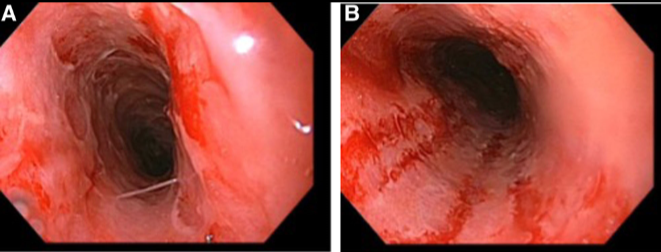
“Tug” Sign For Eosinophilic Esophagitis and EoE Bowel Sounds Tips

EA Pasman et al. Clin Gastroenterol Hepatol 2023; 21: 1108-1110. Quantitative Analysis of Tug Sign: An Endoscopic Finding of Eosinophilic Esophagitis

Background: “Chronic inflammation can lead to tissue remodeling in the esophagus with fibrosis in the lamina propria that is partially responsible for symptoms and complications of EoE.3,4 At times, a firmness to the esophagus can be appreciated with a noticeable force required to obtain biopsies from EoE. This sensation has been described as the “tug” or “pull” sign.5,6

Methods: in this prospective study with 159 patients (128 pediatric, 31 adult), the authors devised a digital force gauge to measure the force required to take biopsy specimens. The study included 88 patients with EoE and 71 controls.

Key finding:

  • EoE patients showed an increase in the mean force required to obtain biopsies: 14.9 Newton (N) compared to 11.6 in control group
  • Peak force was greater in EoE patients: 20.4 N compared to 15 N in control group.
  • The pediatric subgroup had higher peak force in EoE patients: 22.4 N compered to 16.1 N for control group

My take: I had not heard of the term “Tug” sign for EoE, though it is something that is intuitive for GI providers who care for these patients. This study quantifies this problem.

“When you can measure what you are speaking about and express it in numbers, you know something about it; but when you cannot express it in numbers, your knowledge is of a meagre and unsatisfactory kind” –Lord Kelvin 1883

Related topic: Recent bowel sounds episode with Amanda Muir discussed eosinophilic esophagitis. A few pointers:

  • Useful YouTube video explaining how to swallow inhaled steroid (from Glen Furuta/Colorado Chilren’s): How to Use an Inhaler for EoE
  • Budesonide can be administered with 1 tsp honey, 1 tsp maple syrup or with 1 tsp apple sauce
  • Approximate equivalent dose of Flovent 4 puffs of 220 mcg =~1 mg budesonide
  • Elemental feedings are difficult to maintain and used much less, mainly in children who already have enteral tubes.
Little Finger Rock Trail, Tucson AZ
HooDoo Rocks, Mount Lemmon. Tucson, AZ