Appendectomy vs Antibiotics: The Better Choice for Pediatric Appendicitis

Briefly noted: SD St Peter et al. The Lancet, Volume 405, Issue 10474, 233 – 240. Appendicectomy versus antibiotics for acute uncomplicated appendicitis in children: an open-label, international, multicentre, randomised, non-inferiority trial

Methods: Children (n=936) aged 5–16 years with suspected non-perforated appendicitis (based on clinical diagnosis with or without radiological diagnosis) were randomly assigned (1:1) to the antibiotic or the appendectomy group. Treatment failure: Within 1 year of random assignment, n the antibiotic group, failure was defined as removal of the appendix, and in the appendectomy group, failure was defined as a normal appendix based on pathology.

Key findings:

  • Treatment failure occurred in 153 (34%) of 452 patients in the antibiotic group, compared with 28 (7%) of 394 in the appendectomy group 
  • There were no deaths or serious adverse events in either group
  • The relative risk of having a mild-to-moderate adverse event in the antibiotic group compared with the appendectomy group was 4·3 

My take: Appendectomy was superior to antibiotic management of acute non-perforated appendicitis.

Related blog posts:

Bamboo forest at East Palisades Trail, Chattahoochee River, Atlanta

Disclaimer: This blog, gutsandgrowth, assumes no responsibility for any use or operation of any method, product, instruction, concept or idea contained in the material herein or for any injury or damage to persons or property (whether products liability, negligence or otherwise) resulting from such use or operation. These blog posts are for educational purposes only. Specific dosing of medications (along with potential adverse effects) should be confirmed by prescribing physician.  Because of rapid advances in the medical sciences, the gutsandgrowth blog cautions that independent verification should be made of diagnosis and drug dosages. The reader is solely responsible for the conduct of any suggested test or procedure.  This content is not a substitute for medical advice, diagnosis or treatment provided by a qualified healthcare provider. Always seek the advice of your physician or other qualified health provider with any questions you may have regarding a condition.

Efficacy of Azithromycin-Metronidazole Induction in Mild-to-Moderate Pediatric Crohn’s Disease

MT Fioretti et al. J Pediatr Gastroenterol Nutr. 2025;80:300–307. A decade of real-world clinical experience with 8-week azithromycin–metronidazole combined therapy in pediatric Crohn’s disease

Methods: This retrospective study over 10 years examined the efficacy of azithromycin-metronidazole for induction treatment in 44 children. All patients were given metronidazole (15–20 mg/kg/day two times daily, maximum of 1000 mg/day) administered daily for 8 weeks and azithromycin (7.5 mg/kg to a maximum of 500 mg/once a day) administered 5 days per week for the first 4 weeks, followed by 3 days per week for the final 4 weeks as per the initial publications.1718 

Key findings:

  • After 8 weeks, the overall remission rate was 64%.
  • Of the 38 patients who completed the CD AZCRO course, 28 patients (74%) entered remission (Group 1) and 10 (26%) did not (Group 2)
  • After 8 weeks, Group 1 showed improved CRP levels and higher albumin and hemoglobin levels than Group 2. Median FC declined significantly from 650 mcg/g at baseline to 190 mcg/g at Week 8 in Group 1 (p < 0.001).

The authors conclude that “a combination treatment of azithromycin and metronidazole represents an alternative induction therapy for mild to moderate pediatric CD, offering benefits in terms of cost and practicalities compared to EEN and in side effects compared to steroids.”

My take: There are a small number of children with mild Crohn’s disease who could benefit from this induction regimen. An alternative would be the use of a more modest dietary approach (eg. Mediterranean diet)

Related blog posts:

Mai Khao beach, Phuket, Thailand

Disclaimer: This blog, gutsandgrowth, assumes no responsibility for any use or operation of any method, product, instruction, concept or idea contained in the material herein or for any injury or damage to persons or property (whether products liability, negligence or otherwise) resulting from such use or operation. These blog posts are for educational purposes only. Specific dosing of medications (along with potential adverse effects) should be confirmed by prescribing physician.  Because of rapid advances in the medical sciences, the gutsandgrowth blog cautions that independent verification should be made of diagnosis and drug dosages. The reader is solely responsible for the conduct of any suggested test or procedure.  This content is not a substitute for medical advice, diagnosis or treatment provided by a qualified healthcare provider. Always seek the advice of your physician or other qualified health provider with any questions you may have regarding a condition.
Antibiotics and IBD Risk: A Systematic Review

R Duan et al. Clin Gastroenterol Hepatol 2025; 23: 45-58. Open Access! Antibiotic Exposure and Risk of New-Onset Inflammatory Bowel Disease: A Systematic Review and Dose-Response Meta-Analysis

Twenty-eight studies involving 153,027 patients with IBD were included.

Key findings:

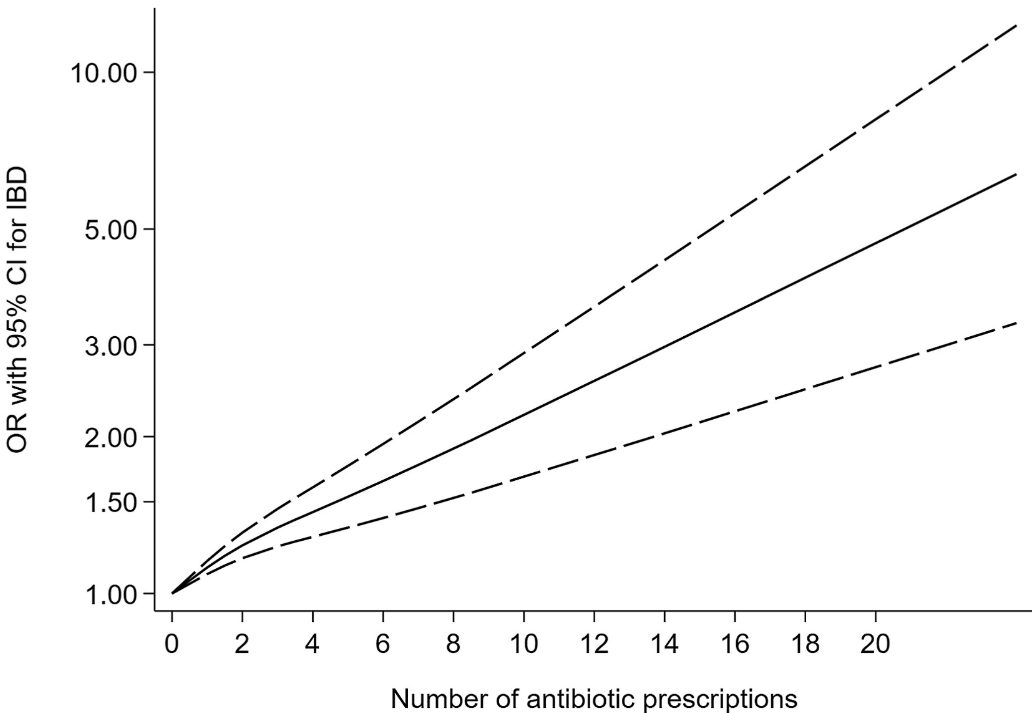
  • Antibiotic exposure was significantly associated with an increased risk of new-onset IBD for prescription-based studies (pooled OR, 1.41; 95% CI, 1.29–1.53) and for questionnaire-based studies (pooled OR, 1.35; 95% CI, 1.08–1.68). ‘
  • This association existed for both Crohn’s disease and ulcerative colitis, as well as in children and adults for prescription-based studies. 

Some of the limitations:

  1. There was statistical heterogeneity was high in the primary analysis, possibly because of inconsistencies in study design
  2. Most studies included a clear lag time, yet an inadequate lag time still creates the possibility of reverse causality.
  3. The authors could not disentangle the risk of antibiotics from the risk of infection in leading to the development of IBD.
Nonlinear dose-response relationship between antibiotic exposure and risk of new-onset IBD (solid black line and short dash black line represent estimated ORs and corresponding 95% CIs of nonlinear relationship)

My take: This is another study showing an association between antibiotic use and new-onset IBD. While this study does not prove causation, it is another reason for good antibiotic stewardship.

Related blog posts:

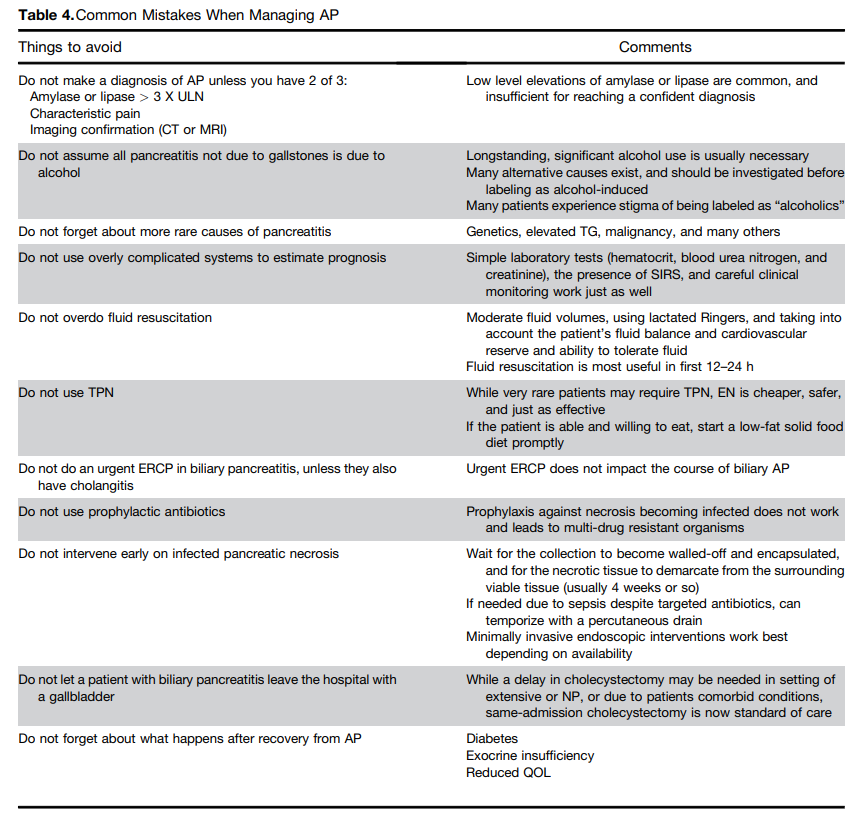
Common Mistakes When Managing Acute Pancreatitis

G Trikudanathan et al. Gastroenterol 2024; 167: 673-688. Open Access (PDF)! Diagnosis and Management of Acute Pancreatitis

While this review focuses on acute pancreatitis in adults, there are areas of overlap with pediatric patients who have acute pancreatitis. Many of the points in this article were reviewed in the lecture by Dr. Freeman (summarized earlier this week).

A couple of details regarding these recommendations:

Nutrition: “Current guidelines recommend initiating early (as soon as tolerated)
oral feeding with solid (low-fat) diet in patients with predicted mild AP and this approach reduces length of hospitalization. Patients with severe AP or NP may be intolerant to oral diet…studies noted that the pancreas is largely insensitive to meal stimulation during AP. Early enteral nutrition (EN) was shown to have a beneficial trophic effect in preserving gut mucosal integrity and reducing gut bacterial translocation. EN was compared with TPN in AP in several RCTs and the results were statistically aggregated in several meta-analyses to
establish the superiority of EN in mortality, multiorgan failure, and rate of infection.”

TPN: “Given the cost burden, risk of catheter-related sepsis, electrolyte and metabolic derangement, and gut barrier failure, currently use of TPN is reserved for patients for whom EN is not possible or is not able to meet the minimum calorie requirements. It should be noted that although all guidelines advise avoiding TPN, it continues to be used.”

Antibiotics: “Current guidelines do not recommend prophylactic antibiotics in predicted severe AP or sterile necrosis because this practice is associated with the development of multidrug-resistant bacteria and fungal superinfection. It can be difficult in severe
pancreatitis to know if clinical deterioration is due to ongoing pancreatitis with SIRS, or due to a new infection. Procalcitonin is useful in distinguishing SIRS from bacterial sepsis. The PROCAP randomized trial used procalcitonin testing at 0, 4, and 7 days and weekly thereafter with a threshold of 1.0 ng/mL to guide initiation, continuation, and discontinuation of antibiotics. The procalcitonin based algorithm decreased the probability of being prescribed an antibiotic and the number of days on antibiotics without increasing infection or harm in patients with AP.”

Progression to Chronic Pancreatitis: “A systematic review and meta-analysis of progression showed that 10% of patients with first episode of AP and 36% of patients with recurrent AP develop CP, with risk being highest among smokers, alcoholic patients, and men.”

Risk of Diabetes: “A prior systematic review and meta-analysis of patients with an index attack of AP found that newly diagnosed diabetes occurred in 15% of individuals within 12 months, and risk increased 2-fold for diabetes after 5 years. The development of
diabetes was not significantly associated with the severity of pancreatitis, etiology of disease, patient age, or gender.”

Related blog posts:


IBD Brief Updates: Anti-TNF Loss of Response, Upadacitinib for ASUC, Risk Factors for Developing IBD

EHJ Savelkoul et al. Inflamm Bowel Dis 2023; 29: 1633-1647. Open Access! Systematic Review and Meta-analysis: Loss of Response and Need for Dose Escalation of Infliximab and Adalimumab in Ulcerative Colitis

Methods: A systematic search was conducted from August 1999 to July 2021 for studies (50 studies identified) reporting loss of response and dose escalation during infliximab and/or adalimumab use in ulcerative colitis patients with primary response

Key findings:

  • Annual loss of response was 10% for infliximab and 13% for adalimumab, with higher rates during the first year.
  • The annual LOR incidences were higher during the first 65 weeks of treatment for both IFX (14%) and ADA (23%).
  • Annual dose escalation rates were 14% (infliximab) and 21% (adalimumab), with clinical benefit in 72% and 52%, respectively

CH Zinger et al. Inflamm Bowel Dis 2023; 29: 1667-1669. Upadacitinib for Acute Severe Ulcerative Colitis

Key finding: 4 patients (age 18-25 yrs) received upadacitinib for acute severe ulcerative colitis (ASUC) after failing to respond to infliximab and IV steroids. 3 of 4 responded to treatment (45 mg/day) between 4 to 8 days. Three months later, two of these patients were in steroid-free clinical-endoscopic remission and one had maintained a clinical response.

In their discussion, the authors note a similar response rate to tofacitinib, another JAK inhibitor, for ASUC; though, the authors speculate that upadacitinib may be efficacious.

N Narula et al. Clin Gastroenterol Hepatol 2023; 21: 2649-2659. Associations of Antibiotics, Hormonal Therapies, Oral Contraceptives, and Long-Term NSAIDS With Inflammatory Bowel Disease: Results From the Prospective Urban Rural Epidemiology (PURE) Study

In a a prospective cohort study of 133,137 individuals between the ages of 20 and 80 from 24 countries, the authors examined the relationship between exposures to antibiotics, NSAIDs and hormonal therapies with the development of IBD over a median 11 year period.

Key findings:

  • Incident IBD was associated significantly with baseline antibiotic (aOR, 2.81; P = .0001) and hormonal medication use (aOR, 4.43; P = .001).
  • Nonsteroidal anti-inflammatory drug users also were observed to have increased odds of IBD (aOR, 1.80 P = .002), which was driven by long-term use (aOR, 5.58; P < .001)
Near Cassis, France

Customized Postoperative Therapy for Biliary Atresia -Does It Help?

S Pandurangi et al. J Pediatr Surg 2023; 58: 1483-1488. Customized Postoperative Therapy Improves Bile Drainage in Biliary Atresia: A Single Center Preliminary Report

This single center retrospective study compared  20 consecutive infants underwent hepatoportoenterostomy (HPE) (beginning in 2017) for biliary atresia (BA) to a historical cohort. Analysis of successful biliary drainage 3 months after HPE (defined as serum total bilirubin (TB) <2 mg/dL) was the primary endpoint; survival with native liver at 2 years was the secondary endpoint.

Protocol:

  • Cefoxitin was administered to all infants following HPE for 3-4 days.
  • Standard protocol: If the stool color normalized (pigmented), the infant received “conventional” treatment with trimethoprim-sulfamethoxazole cholangitis prophylaxis, fat-soluble vitamin supplementation with DEKAsPlus or AquaADEKs (1 mL daily), and ursodeoxycholic acid (5 mg/kg twice daily).
  • Customized protocol: If the stools were acholic (or not consistently pigmented) and </=45 days, the infants received intravenous cefoxitin or piperacillin-tazobactam and methylprednisolone, initial dose 5 mg/kg/day and decreased by 1 mg/kg/day each day thru day 5; then orally treated with dose dropped 0.25 mg/kg weekly. When switched to oral steroids, IV antibiotics were stopped and infant was placed on amoxicillin-clavulanate which was continued until TB <2 mg/dL or discontinuation of corticosteroids (whichever came first).
  • If stools were acholic and infant was >45 days, then the same treatment was given if there was liver inflammation on histology.

Key findings:

  • 8 had pigmented stools after HPE and received standard protocol.
  • 12 had acholic/inconsistent stools. All of those >45 days had liver inflammation; thus, all 12 received the customized protocol. Two infants had two cycles of steroids/antibiotics who had initial response to treatment and then worsened.
  • Sixteen of 20 (80%) infants had successful bile drainage, compared to 8 of 20 (40%) infants in the historical cohort (P = 0.0225)
  • Among the sixteen who have reached two years of age, 11 (68.8%) are alive with native livers versus 10 of 20 (50%) in the historical cohort (P = 0.0970).  This did not achieve statistical significance.

The authors established their protocol based on data from Kings College in 2016 suggesting that steroids appeared effective in younger patients who underwent HPE prior to 45 days (Peg Surg Int 2016; 32: 193-200). The START study showed no significant improvement in biliary drainage between patients receiving corticosteroids and placebo. However, in the group <70 days, 72% of infants receiving corticosteroids achieved biliary drainage compared with 57% of the placebo group (P=0.36).

My take: This is a small sample size. Perhaps, this protocol will help improve outcomes. If so, we still don’t know which factor is more important —the IV antibiotics or the high dose steroids. If these agents are helpful, are there other predictive factors –microbiome? MMP-&?

Related blog posts:

Pictures from the Villa Ephrussi de Rothschild

Acid Suppression and Antibiotics in Infancy Associated with Increased Risk of Celiac Disease

M Boechler et al. J Pediatr 2023; 254: 61-67. Acid Suppression and Antibiotics Administered during Infancy Are Associated with Celiac Disease

Methods: A retrospective cohort study was performed using the Military Healthcare System database. N=968,524 children with 1704 cases of celiac disease (CD) in this group (from 2001 to 2013) with prescription for PPIs, H2RAs or antibiotics in first 6 months of life.

Key findings:

  • PPIs (HR, 2.23; 95% CI, 1.76-2.83), H2RAs (HR, 1.94; 95% CI, 1.67-2.26), and antibiotics (HR, 1.14; 95% CI, 1.02-1.28) were all associated with an increased hazard of CD.
  • The risk is increased by use of multiple categories of these medications and/or if acid suppression medications are used for longer periods

There have been previous studies indicating an increased risk of CD in patients given acid suppression (Lebwohl et al. Dig Liver Dis 2014; 46: 36-40) and conflicting data regarding the use of antibiotics. With regard to acid suppression, recent studies have indicated that these medications in infancy may increase the risk of food allergies as well. The authors speculate in their discussion that the increased risk for CD could be related to changes in protein degradation, mucosal permeability, microbiome changes, and immune reactivity. The authors note that their dataset did NOT show an increased risk of CD associated with C-section delivery.

One of the limitations of this study is that early presentations of CD could lead to prescriptions of agents to to help reduce symptoms rather than the medications increasing the risk of developing CD. However, this is unlikely as gluten introduction is often later in infancy.

My take: Better stewardship of antibiotics and acid blockers is needed. Use of acid suppression medications is associated with an increased risk of celiac disease as well as food allergies.

Related blog posts:

Additional posts on Celiac Disease

Panoramic View of Tucson, AZ from Tumamoc Hill

Early Antibiotics -Minimal Risk for Crohn’s Disease

Previous studies have shown an association between the early use of antibiotics and an increased risk of inflammatory bowel disease. A recent study examined all the children born in Denmark from 1995-2009 and followed them up to 2013 via a prospectively maintained database.

A Mark-Christensen et al. Inflamm Bowel Dis 2022; 28: 415-422. Early-Life Exposure to Antibiotics and Risk for Crohn’s Disease: A Nationwide Danish Birth Cohort Study 

During a median 9.5 years (9.3 million total person-years), CD was diagnosed in 208 of 979,039 children.

Key findings:

  • Antibiotic use in the first year of life was associated with a higher risk of CD (adjusted hazard ratio, 1.4)…with the highest risk with ≥6 courses of antibiotics (adjusted hazard ratio, 4.1)
  • The cumulative risk of CD at the 11th birthday for children exposed to antibiotics in their first year of life was 0.16% compared to 0.11% for children unexposed to antibiotics in their first year of life. 

My take: This study indicates that antibiotics (and/or serious infections) are associated with an increased the risk of pediatric Crohn’s disease but the absolute risk is very low. We still have a lot to learn about how environmental exposures, including diet, infections, antibiotics, and pollution, contribute to the increasing prevalence of inflammatory bowel disease.

Related blog posts:

From Atlanta Botanical Gardens -Thanks to Jennifer for this picture

Can Antibiotics Increase the Risk of Antidrug Antibodies to Infliximab?

A lot of research is looking at how alterations in the microbiome affect a plethora of medical outcomes. Recently, there was a study linking sugar consumption in adolescence with an increased risk of adenomas (full text link: Simple Sugar and Sugar-Sweetened Beverage Intake During Adolescence and Risk of Colorectal Cancer Precursors; Gastroenterol 2021; 161: 128-142).

Now, a study indicates that taking oral antibiotics can influence the risk of developing antibodies to infliximab.

Full text (open access): Antibiotic use differentially affects the risk of anti-drug antibody formation during anti-TNFα therapy in inflammatory bowel disease patients: a report from the epi-IIRN (thanks to John Pohl for this reference)

Citation: Gorelik Y, Freilich S, Gerassy-Vainberg S, et al Antibiotic use differentially affects the risk of anti-drug antibody formation during anti-TNFα therapy in inflammatory bowel disease patients: a report from the epi-IIRNGut Published Online First: 03 August 2021. doi: 10.1136/gutjnl-2021-325185

This study reviewed data from 1946 patients with 363 who developed anti-drug antibodies (ADA). Then, specific pathogen and germ-free C57BL mice were treated with respective antibiotics and challenged with infliximab. ADA were assessed after 14 days.

Key findings:

  • Cox proportional hazard model demonstrated an increased risk of ADA development in patients who used cephalosporins (HR=1.97, 95% CI 1.58 to 2.44), or penicillins with β-lactamase inhibitors (penicillin-BLI, HR=1.4, 95% CI 1.13 to 1.74), whereas a reduced risk was noted in patients treated with macrolides (HR=0.38, 95% CI 0.16 to 0.86) or fluoroquinolones (HR=0.20, 95% CI 0.12 to 0.35).
  • In mice exposed to infliximab, significantly increased ADA production was observed in cephalosporin as compared with macrolide pretreated mice. Germ-free mice produced no ADA.

My take: The combination of retrospective data and mouse studies suggests that taking some antibiotics (mainly penicillins and cephalosporins) could increase the risk of immunogenicity to infliximab and increase the risk of anti-drug antibodies.

Can Necrotizing Enterocolitis Be Prevented with Antibiotics?

Y Li et al. J Pediatr 2020; 227: 128-134. Early Use of Antibiotics Is Associated with a Lower Incidence of Necrotizing Enterocolitis in Preterm, Very Low Birth Weight Infants: The NEOMUNE-NeoNutriNet Cohort Study

Methods:  This study used the NEOMUNE-NeoNutriNet cohort of VLBW infants from 13 neonatal intensive care units (NICUs) in 5 continents (n = 2831). NEC incidence was compared between infants who received early antibiotics and those who did not.

Key finding:

  • The incidence of NEC was 9.0% in the group of infants who did not receive early antibiotics (first 72 hrs) (n = 269), compared with 3.9% in those who did receive early antibiotics (n = 2562)

This type of study is inherently difficult due to measured and unmeasured confounders. In a related commentary, Joseph Cantey (Early Antibiotic Therapy and Adverse Outcomes in Preterm Infants: Time for a Trial!, https://doi.org/10.1016/j.jpeds.2020.07.046) notes that some previous studies have shown an association of antibiotics with increased risk of NEC, presumably due to a selection bias (eg. sicker patients getting antibiotics). Fortunately a randomized prospective trial is underway, the NICU Antibiotics and Outcomes (NANO, NCT03997266). This should help determine more carefully the risks and benefits of antibiotics in this vulnerable population.

My take: We have a lot to learn about modulating the premature infant’s microbiome to prevent necrotizing enterocolitis.

Related blog posts:

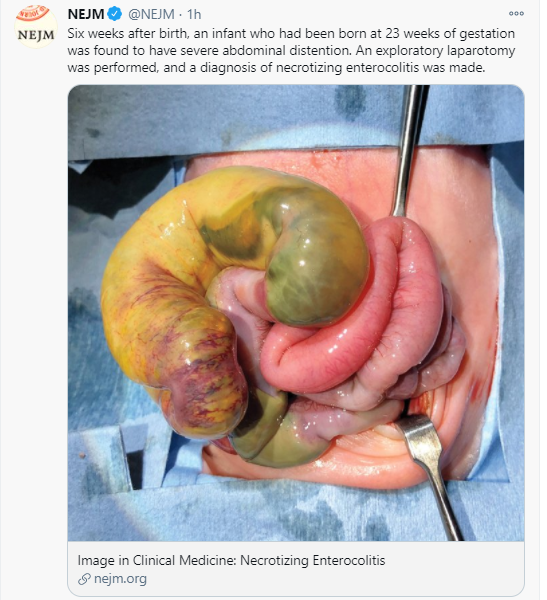
Case report: NEJM 2020; 383: 25: 2461. Patient who weighed 520 gram at birth (23 week gestation) developed NEC; she recovered and all orally fed at time of discharge.