Concurrent Infections in Inflammatory Bowel Disease Flares

Briefly noted: Y Hanada et al. Clin Gastroenterol Hepatol 2018; 16: 528-33.

In this retrospective review with 9247 patients with IBD, the incidence of bacterial pathogens (non-C diff) identified was <3% of those who were tested; in this group (n=25), Aeromonas was detected in 8,Salmonella in 7, Plesiomonas in 4, Campylobacter in 2, and Yersinia in 2.  From authors: “These infections did not have a significant negative impact on patient outcomes.  Given these findings, routine testing for infections other than CDI is not recommended.”

Chattahoochee River

NY Times: Humira’s Best-Selling Drug Formula: Start at a High Price. Go Higher.

NY Times: Humira’s Best-Selling Drug Formula: Start at a High Price. Go Higher.

An excerpt:

Humira is the best-selling prescription drug in the world…The price of Humira, an anti-inflammatory drug dispensed in an injectable pen, has risen from about $19,000 a year in 2012, to more than $38,000 today, per patient, after rebates, according to SSR Health, a research firm. That’s an increase of 100 percent…

How much you actually pay out of pocket, and whether you can afford Humira at all, depend on your insurance and eligibility for discounts…

Humira, which accounted for nearly two-thirds of AbbVie’s $25.6 billion in revenue in 2016, was not simple to develop. It is among a new class of drugs known as biologics, which are made from living cells rather than synthetic chemicals…

Looking at the international picture tells its own story about drug costs. A prefilled carton with two syringes costs $2,669 in the United States, compared with $1,362 in Britain, $822 in Switzerland and $552 in South Africa…

An analysis by the Institute for Clinical and Economic Review found that Humira’s list price would need to be discounted by at least 55 percent to be cost effective for rheumatoid arthritis, its originally approved use.

Dr. Steven D. Pearson, the founder of the institute, which provides cost benefit data to health plans, said competing drugs were overpriced as well.

“Even in a space like this, where there is a lot of competition, we don’t see the prices coming down,” he said. “That speaks to the fact that it doesn’t often function like a free market usually would.”..

AbbVie joined a few of its rivals in saying it would limit price increases to single digits this year, and so only raised Humira by another 9.7 percent this month, roughly four and a half times the inflation rate. For the drug industry, that counts as generosity.

My take: Humira is a very important and effective medication, particularly for inflammatory bowel disease and rheumatoid arthritis. I infer from this article which compares the Humira pricing strategy to that used by Martin Shkreli that if U.S. consumers are to have more affordable pharmaceuticals, government intervention will be needed. AbbVie, like many other pharmaceutical companies, will continue to aggressively price Humira; after all, 8 billion in profits is not as good as 10 billion.

Related blog posts:

#NASPGHAN17 Psychosocial Problems in Adolescents with IBD

This blog entry has abbreviated/summarized this presentation. Though not intentional, some important material is likely to have been omitted; in addition, transcription errors are possible as well.

Slides from syllabus: APGNN Syllabus 2017

Key points:

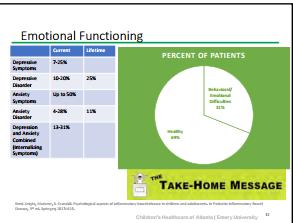
  • ~30% of pediatric IBD patients have anxiety or depression.  This has not been shown to be related to disease activity.
  • Advice for parents: “Listen more and talk less.”
  • Antidepressants, when indicated, are about 6 times more likely to be helpful than detrimental

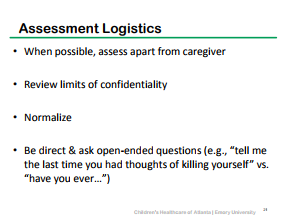
In the following slide, the term “normalize” indicates that checking on emotional health is part of a routine (eg. ‘we ask all our patients to complete this screening’)

Vaccination and Inflammatory Bowel Disease -Resources Targeted for Adult Patients

From a recent Gastroenterology & Hepatology –Full Link:

Gastroenterology & Hepatology  July 2017 – Volume 13, Issue 7; Vaccination of Patients With Inflammatory Bowel Disease.  Francis A. Farraye, MD, MSc

Thanks to John Pohl’s twitter feed for this link that provides recommendations for Adults with IBD.

An excerpt:

G&H  What specific resources for vaccinations are available to help gastroenterologists?

FF  It is helpful for providers to keep a copy of the Crohn’s and Colitis Foundation’s health maintenance recommendations posted in their office. This 1-page checklist (available at http://www.crohnscolitisfoundation.org/science-and-professionals/programs-materials/ccfa-health-maintenance.pdf) includes all recommended vaccines and also comments on other important health maintenance items, such as screening for cervical and skin cancer, depression, and osteoporosis. In addition, Cornerstones Health has a vaccination checklist (available at http://www.cornerstoneshealth.org/wp-content/uploads/2017/06/Monitoring-and-Prevention-3.10.2017.pdf) that can be downloaded, printed, and placed in each examination room to reinforce the importance of vaccination. Primary care providers as well as gastroenterologists can use these checklists as reminders in their busy practices.

Related blog post:

Disclaimer: These blog posts are for educational purposes only. Specific dosing of medications (along with potential adverse effects) should be confirmed by prescribing physician.  This content is not a substitute for medical advice, diagnosis or treatment provided by a qualified healthcare provider. Always seek the advice of your physician or other qualified health provider with any questions you may have regarding a condition.

Surgical Reset for Anti-TNF Therapy with Crohn’s Disease

A recent study (A Assa et al. Inflamm Bowel Dis 2017; 23: 791-97) indicates that after surgery, anti-TNFα treatment is worth another try.

In this retrospective study with 53 children, 18 had “pharmacodynamic failure” with anti-TNFα medications (PK group) and 35 were controls. “Phamacocynamic failure is characterized by either a lack of improvement of CD symptoms or  loss of response after initial improvement in the setting of adequate serum drug levels without ADAs” [antidrug antibodies].

Key findings:

  • Mean age at time of intestinal resection was 14.8 years
  • Median time from resection to anti-TNF initiation was 8 months
  • Compared to the control group, the PK group had similar response to anti-TNF therapy.   “Similar proportions of patients from both groups were in clinical remission on anti-TNF treatment after 12 months and at the end of follow-up (1.8 years)”
  • At 12 months, remission rates were 89% (PK) versus 88.5% (control)

The authors propose an explanation: “A plausible explanation for this finding is that in severely inflamed tissue with high inflammatory burden, local high levels of TNFα serves as a sink for anti-TNFα antibodies and that tissue injury and local hypoxia might further limit drug penetrance to its target.”

My take: This information is useful.  Many patients who have surgery may respond to anti-TNFα therapy subsequently.  The unanswered question: Could more frequent dosing of anti-TNFα therapy have averted surgery in some patients by overcoming areas of intense disease?


More IBD Cases Than Ever in Young Canadian Children

Summary of recent article (Link to full study: Benchimol EI, et al. Am J Gastroenterol. 2017;doi:10.1038/ajg.2017.97) by Healio Gastroenterology: IBD incidence rapidly increasing in young Canadian children

An excerpt:

To evaluate the recent incidence, prevalence and trends in childhood-onset IBD in Canada, Benchimol and colleagues used health administrative data from five provinces to identify children aged younger than 16 years who were diagnosed with IBD between 1999 and 2010. During this period, 3,462 children were diagnosed with Crohn’s disease, 1,382 with ulcerative colitis and 279 with unclassifiable IBD, for an overall IBD incidence of 9.68 (95% CI, 9.11-10.25) per 100,000 children.

Throughout the study period, the annual percentage change in overall IBD incidence remained statistically stable, increasing by just 2.06% per year, but the incidence increased significantly among children aged younger than 5 years, rising by 7.19% per year.

Further, the annual percentage change in the prevalence of IBD increased significantly throughout the study period (4.56%), and at the end of the study period IBD prevalence was 38.25 (95% CI, 35.78-40.73) per 100,000 children.

The investigators noted their findings confirmed the predominant form of pediatric-onset IBD was Crohn’s disease, and that more boys were affected than girls.

My take: While Canada has high prevalence of IBD, I expect that there will be similar trends in epidemiology in multiple regions in young children.  When one looks at the increases in IBD prevalence over the last 100 years (see previous post) and the emergence of IBD in non-Western countries, it is quite alarming.

Also, last week a blog post discussed hepatic problems associated with IBD (Liver problems with IBD): here is full article text link: Hepatic Issues and Complications Associated with IBD

Related blog posts:

Clostridium difficile Infection in Inflammatory Bowel Disease: Expert Updates

A recent clinical practice update (S Khanna et al. Clin Gastroenterol Hepatol; 2017; 15: 166-74) provides some succinct recommendations regarding Clostridium difficile infection (CDI) in Inflammatory Bowel Disease (IBD).

Background: In 2011, the authors note that CDI was associated with 29,000 deaths and is now the most lethal enteric pathogen in the U.S.

Differences in pathogenesis of C diff in IBD compared to those without IBD:

  • Younger age
  • Less frequent antibiotic exposure
  • More often community onset (rather than hospital onset)
  • Higher recurrence (may be related to dysbiosis)

Key recommendations:

  • In patients with IBD flare, test for CDI
  • In patients with CDI and IBD, clinicians should consider “using vancomycin instead of metronidazole.”
  • In patients with recurrent CDI and IBD, consider fecal microbiota transplantation

Figure 4 proposes a management algorithm (for adults).  If uncomplicated CDI, recommended dose of vancomycin was 125 mg q6h. If no improvement in 3-4 days, then “consider escalation of immunosuppression.” For complicated CDI, consider oral vancomycin at 500 mg q6h and IV metronidazole 500 mg q8.  In addition, consider rectal vancomycin and surgery consult.

Complicated CDI includes ICU admission, hypotension, T >38.5, ileus/megacolon, mental status changes, leukocyte count >35,000  or < 2000, or lactate >2.2 mmol/L

Another review article (Y Chen et al. Inflamm Bowel Dis 2017; 23: 200-07) is a meta-analysis that identified six studies.  One of these studies was a case-control study with nearly 400,000 patients (and about 7000 cases of C diff). Key finding: CDI results in nearly a doubling of the risk of colectomy (OR 1.90), mainly in patients with ulcerative colitis.

Related blog posts

Disclaimer: These blog posts are for educational purposes only. Specific dosing of medications (along with potential adverse effects) should be confirmed by prescribing physician.  This content is not a substitute for medical advice, diagnosis or treatment provided by a qualified healthcare provider. Always seek the advice of your physician or other qualified health provider with any questions you may have regarding a condition.


Expert Advice on Clostridium difficile and Inflammatory Bowel Disease

Link: Management of Clostridium difficile Infection in Inflammatory Bowel Disease: Expert Review from the Clinical Practice Updates Committee of the AGA Institute

Abstract: The purpose of this expert review is to synthesize the existing evidence on the management of Clostridium difficile infection in patients with underlying inflammatory bowel disease. The evidence reviewed in this article is a summation of relevant scientific publications, expert opinion statements, and current practice guidelines. This review is a summary of expert opinion in the field without a formal systematic review of evidence.

Best Practice Advice 1: Clinicians should test patients who present with a flare of underlying inflammatory bowel disease for Clostridium difficile infection.

Best Practice Advice 2: Clinicians should screen for recurrent C difficile infection if diarrhea or other symptoms of colitis persist or return after antibiotic treatment for C difficile infection.

Best Practice Advice 3: Clinicians should consider treating C difficile infection in inflammatory bowel disease patients with vancomycin instead of metronidazole.

Best Practice Advice 4: Clinicians strongly should consider hospitalization for close monitoring and aggressive management for inflammatory bowel disease patients with C difficile infection who have profuse diarrhea, severe abdominal pain, a markedly increased peripheral blood leukocyte count, or other evidence of sepsis.

Best Practice Advice 5: Clinicians may postpone escalation of steroids and other immunosuppression agents during acute C difficile infection until therapy for C difficile infection has been initiated. However, the decision to withhold or continue immunosuppression in inflammatory bowel disease patients with C difficile infection should be individualized because there is insufficient existing robust literature on which to develop firm recommendations.

Best Practice Advice 6: Clinicians should offer a referral for fecal microbiota transplantation to inflammatory bowel disease patients with recurrent C difficile infection.


Related blog posts:

screenshot-94

Safer Than You Think: Biologic Therapies for IBD and Risk of Infection and Malignancy

While there have been a number of studies which have highlighted the potential risks of biologic agents, many studies have NOT identified any risk of infection or malignancy.

Another recent systematic review/meta-analysis (S Bonovas et al. Clin Gastroenterol Hepatol 2016; 14: 1385-97) provides reassuring data regarding the following biologics: infliximab, adalimumab, certolizumab, golimumab, natalizumab, and vedolizumab.

The authors identified 49 randomized placebo-controlled studies with 14,590 participants.

Key findings:

  • There was a moderate infection risk with odds ratio of 1.19 (19% increase in odds of developing an infection) and significant increase in opportunistic infections (eg. tuberculosis) OR 1.90
  • Risk of serious infections was NOT increased in patients treated with biologics with OR 0.89.  In studies with low risk of bias, the risk of serious infections had OR of 0.56.
  • No increase in malignancy risk was identified with OR 0.90 but the authors note that data was insufficient in terms of exposure and follow-up to be conclusive.

The authors note that the studies including in this review challenge some of the findings of observational studies. “However, observational studies lack the experimental random allocation of participants…the discrepancies between observational studies and randomized trial evidence might be explained by the inability of observational designs to fully address the complex and important differences between the IBD patients receiving and those not receiving biologics.”

Study limitations include “sponsorship bias -because the trials were supported by pharmaceutical companies and limited followup of 24 months. In addition, most of the trials in the meta-analysis were judged to be at high or unclear risk of bias because of their methodological characteristics.

My take: This study indicates that biologic therapies do not appear to increase the risk of serious infections and may not increase the overall risk of malignancy.

Related blog posts:

Portland Fish Market

Portland Fish Market


GI Educational Cartoons For Children

Diana Lerner and the Medical College of Wisconsin have developed additional GI educational videos.  Previously, they had developed cartoon videos explaining endoscopy (prev post: Terrific Educational Videos on Endoscopy).  Now there are several more.  All of these are in English and some in Spanish.

Topics include inflammatory bowel disease, gastroesophageal reflux, eosinophilic esophagitis, and celiac disease.

Here’s the link:  Pediatric Gastroenterology Cartoons For Kids

Related blog post:

screen-shot-2016-10-23-at-10-39-50-am