Why Carvedilol Is Considered Best Pharmaceutical Agent to Prevent Variceal Bleeding (in Adults)

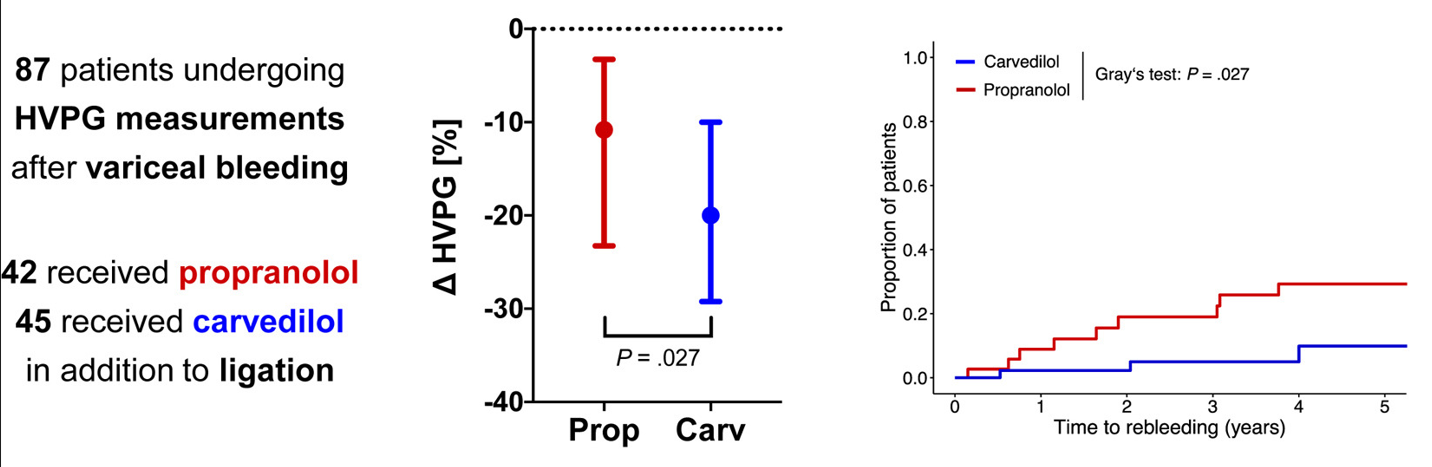
M Jachs et al. Clin Gastroenterol Hepatol 2023; 21: 2318-2326. Open Access! Carvedilol Achieves Higher Hemodynamic Response and Lower Rebleeding Rates Than Propranolol in Secondary Prophylaxis

Associated editorial: J Bosch. Clin Gastroenterol Hepatol 2023; 21:2195-2196. Open Access! Carvedilol as Best β-Blocker for Secondary Prophylaxis of Variceal Bleeding: Are We There, or Not Yet?

Key findings:

  • In a retrospective cohort comprising 87 adult patients receiving NSBB (non-selective beta blocker) in addition to band ligation after variceal bleeding, carvedilol induced more profound decreases in hepatic venous pressure gradient compared with propranolol. The higher rate of chronic hepatic venous pressure gradient response to carvedilol (53.3% vs 28.6%; P = .034) was paralleled by lower rates of variceal rebleeding, liver-related death, and further nonbleeding decompensation.
In the discussion and the editorial, it is noted that there is high-quality evidence that carvediol is superior for primary variceal prophylaxis in adults. “Carvedilol increasingly is used for the prevention of variceal bleeding, 2 and, based on the recent landmark PREDESCI study, overall hepatic decompensation/ascites3 in compensated cirrhosis, because it induces HVPG response (a ≥10% decrease in HVPG is sufficient in primary prophylaxis17) in up to 75% of patients vs 50% when using propranolol. However, it induces more pronounced decreases in blood pressure, which may be detrimental in patients with (refractory) ascites.15

Though there are concerns about dropping blood pressure, the editorial notes that “up to two-thirds of patients with compensated cirrhosis” have high blood pressure. The editorial concludes that “the study still strongly suggests that carvedilol is at least as safe as propranolol…. I am in complete agreement with the authors in suggesting that carvedilol is likely to represent the best NSBB in the treatment of portal hypertension regardless of the clinical scenario, including prevention of decompensation, ascites, first bleeding, or recurrent bleeding.” The author notes that the “recent Baveno VII recommendations declare carvedilol as the preferred NSBB, and support its use in all compensated patients with direct (HVPG ≥10 mm Hg) or indirect signs of clinically significant portal hypertension.”(J Hepatol. 2022; 76: 959-974. Baveno VII: renewing consensus in portal hypertension)

My take: In adults, Carvediol is the best NSBB for portal hypertension. In children, who may be more prone to hypotension, more data is needed.

Related blog posts:

Juan-Les-Pins, France

How Many Cases of Celiac Disease Are We Missing?

A Bhattacharjee et al. JPGN 2023; 77: 240-243. Clinical Features of Children With Serology Negative, Biopsy Positive Celiac Disease

At the start of my training in pediatric gastroenterology, the serological testing was not reliable and as a result, very few cases of children who did not have a ‘classical’ phenotype (eg. abdominal distention, poor growth, anemia) were diagnosed. The main exception was the diagnosis in children already recognized as high risk (eg. children with type 1 diabetes).

This recent retrospective study indicates that even with improvement in celiac serology, there are cases of seronegative celiac disease (SN-CD) that are difficult to diagnose. In this study, SN-CD diagnosis required clinical correlation and either confirmatory genetics or follow up endoscopy on a gluten-free diet. Key findings:

  • Of the 424 patients who met celiac disease (CD) criteria, 4.7% (n = 20) fulfilled the criteria for SN-CD
  • Nearly 65% of SN-CD were IgA sufficient compared with 98.4% in the seropositive group
  • All SN-CD patients were symptomatic whereas 82% of seropositive group was symptomatic

The discussion notes that it has been understood that the sensitivity of TTG IgA is about 95% and specificity about 96%. However, the authors caution that this may be “largely overestimated due to failure to account for verification bias. Only 3.6% of IgA-ATTG negative individuals were referred for biopsy” in Hujoel et al meta-analysis (J Clin Gastroenterol 2021; 55: 327-334); thus, the sensitivity could be as low as 57% based on this meta-analysis. In addition, gluten restriction prior to serological testing can further reduce the sensitivity of serological tests.

An important limitation of the study is proving that SN-CD was in fact SN-CD and not one of the mimics for CD (eg. inflammatory bowel disease, autoimmune disorders, medication effect). However, they noted that their cohort had followup over 6-9 years and with symptom resolution with a gluten free diet.

My take: Identifying SN-CD is difficult since so many children have similar digestive symptoms unrelated to celiac disease. Most children with vague digestive complaints do not need to undergo endoscopy; as such, SN-CD can be easily overlooked.

Related blog posts:

Pilot Study of Elafibranor in Children with NASH (MASH)

NP Goyal et al. JPGN 2023; 77: 160-165. An Open Label, Randomized, Multicenter Study of Elafibranor in Children With Nonalcoholic Steatohepatitis

Ten males [mean 15.1 years, standard deviation (SD) 2.2] with NASH were randomized to once daily treatment with Elafibranor: 80 mg (n = 5) or 120 mg (n = 5). Elafibranor, a dual peroxisome proliferator-activated receptor α/δ agonist, has been proposed as a treatment for nonalcoholic steatohepatitis (NASH, aka Metabolic dysfunction-associated steatohepatitis (MASH)). Key findings:

  • End of treatment mean ALT was 52 U/L (SD 20) for the 120 mg group, with a relative mean ALT change from baseline of −37.4% (SD 23.8%) at 12 weeks.
  • Elafibranor was rapidly absorbed and well tolerated.

My take: I think we are on the verge of identifying medications which will be able to improve outcomes for those with steatotic liver disease.

Related blog posts:

Rock Jumping -from Cap D;Ail Trail (near Eze, France)

REMSWITCH: Infliximab IV to SC Study

A Buisson et al. Clin Gastroenterol Hepatol 2023; 21: 2338-2346. Open Access! Effectiveness of Switching From Intravenous to Subcutaneous Infliximab in Patients With Inflammatory Bowel Diseases: the REMSWITCH Study

In this study, 133 ot 184 patients in clinical remission agreed to switch to subcutaneous infliximab. Key findings:

  •  At visit 3, a relapse occurred in 10.2% (n = 6 of 59), 7.3% (n = 3 of 38), 16.7% (n = 3 of 18), and 66.7% (n = 10 of 15) (P < .001) of patients receiving 5 mg/kg every 8 weeks (5Q8W), 10Q8W, 10Q6W, and 10Q4W, respectively. 
  • Dose escalation to 240 mg every other week led to recapture clinical remission in 93.3% (n = 14 of 15).
  • Infliximab serum levels increased after the switch (P < .0001) except for patients receiving 10 mg/kg every 4 weeks.
  • Conclusion (borrowed from authors): Switching from intravenous to subcutaneous infliximab 120 mg every other week is safe and well accepted, leading to a low risk of relapse in IBD patients except for those receiving 10Q4W; these patients likely require 240 mg every other week

EV Loftus et al. Clin Gastroenterol Hepatol 2023; 21: 2193. Open Access! Therapeutic Drug Monitoring for Subcutaneous Infliximab? Too Early to Conclude (Editorial) This editorial provides a terrific analysis of the above-mentioned study. A few of the points:

  • Reduced (41.7%) or stable (36.8%) serum levels of IFX after the switch (difference: V1-V0) were associated with higher risk of relapse than increased serum levels (>1 μg/mL; 12.7%; P = .020 and P = .019, respectively)
  • Patients receiving IV infusion of IFX 10Q4W had a higher risk of relapse (odds ratio, 12.4; P = .017). In addition to having significantly higher serum levels than in other IFX IV regimens, this group of patients did not see a rise in IFX concentrations at V1, in contrast to other IFX regimens. 
  • Being overweight increases the clearance of CT-P13 SC, with an increase in clearance of 43.2% for a weight increase from 70 to 120 kg. The presence of antibodies to IFX also increases clearance by 39%. Finally, a decrease in serum albumin level (42 g/L vs 3.2 g/L) increases the clearance by 30.1%. 

My take:

  1. Monitoring IFX levels would be helpful in patients switching from IV to SC administration, especially in higher risk groups (eg. high baseline dosing, positive anti-drug antibodies, low serum albumin, overweight individuals)
  2. My experience with SC biologics has been that there is a much higher rate of non-adherence than with IV infusions. If/when SC biologics are used more often, I will need to implement more intensive followup to assure patients receive both the needed medication and the needed monitoring.

Related blog posts:

Festive Street in Antibes, France

Another Health Insurance Predatory Practice and One Doctor’s Quest to Stop It

C Podkul 8/14/23 Propublica (open access!): The Hidden Fee Costing Doctors Millions Every Year

An excerpt:

A powerful lobbyist convinced a federal agency that doctors can be forced to pay fees on money that health insurers owe them. Big companies rake in profits while doctors are saddled with yet another cost in a burdensome health care system…

In August 2017, a federal agency with sweeping powers over the health care industry posted a notice informing insurance companies that they weren’t allowed to charge physicians a fee when the companies paid the doctors for their work. Six months later, that statement disappeared without explanation.

The vanishing notice was the result of a behind-the-scenes campaign by the insurance industry and its middlemen that has largely escaped public notice — but that has had massive financial consequences that have rippled through the health care universe. The insurers’ invisible victory has tightened the financial vise on doctors and hospitals, nurtured a thriving industry of middlemen and allowed health insurers to do something no other industry does: Take one last cut even as it pays its bills.

Insurers now routinely require doctors to kick back as much as 5% if they want to be paid electronically. Even when physicians ask to be paid by check, doctors say, insurers often resume the electronic payments — and the fees — against their wishes...

Dr. Alex Shteynshlyuger, a urologist who runs his own clinic in New York City, made it his mission to take on both the insurers and the federal bureaucracy. He began filing voluminous public records requests with CMS.

My take: This article shows another layer of a broken health care system where the ‘frauds are legal.’

Related blog posts:

NRocks, Circleville, WV

What We Are Learning from the “Blue Poop Challenge”

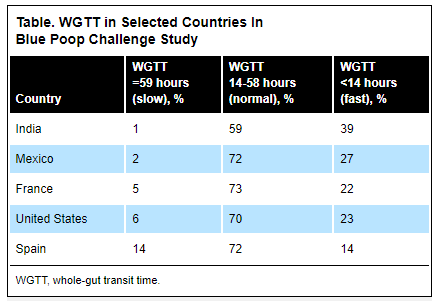
8/21/23 Gastroenterology & Endoscopy News, Open Access! Gut Transit Time Varies by Country

The “Blue Poop Challenge,” (joinzoe.com/bluepoop), a citizen scientist project involving 21,541 volunteers in 17 countries on five continents, is evaluating whole gut transit time (WGTT).  “Findings were based on self-reported WGTT after volunteers consumed blue muffins (84.5 g per muffin x 2, each containing 0.75 g of blue food coloring paste). WGTT was defined as the time elapsing between muffin ingestion and first appearance of blue color in the stool…”

The mean WGTT was 23.9 hours (range, 16.2- 32.0 hours), with country-specific differences, said Dr. Bulsiewicz, reporting the findings at Digestive Disease Week 2023 (abstract Su1612)“…

Fast and slow WGTTs were significantly associated with less healthful diet quality compared with normal WGTT (P<0.001). ‘Lower intakes of plant-based foods were associated with abnormal transit times, which is consistent with the known effect of dietary fiber,‘”

My take: Food-based transit studies are a lot easier to perform than Sitz marker studies. And, of course, who would not want to know if their transit time is faster than their friends?

Related blog posts:

How Common is Bloating?

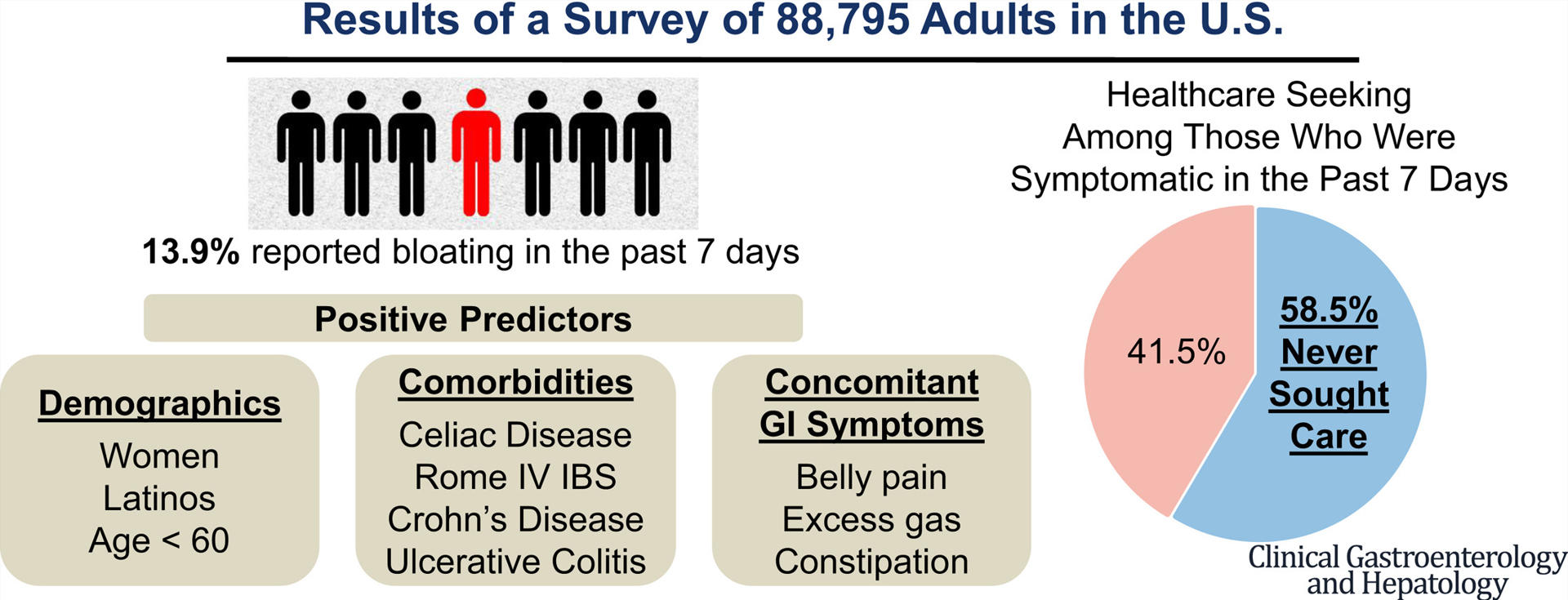
JE Oh et al. Clin Gastroenterol Hepatol 2023; 21: 2370-2377. Open Access! Abdominal Bloating in the United States: Results of a Survey of 88,795 Americans Examining Prevalence and Healthcare Seeking

88,795 completed surveys detailing prevalence of bloating in preceding 7 days.

Key findings:

  • Nearly 1 in 7 (12,324 (13.9%) Americans have experienced bloating symptom in the past week; 58.5% never sought care for bloating—29% of whom were self-managing symptoms or were uncomfortable discussing symptoms with their providers
  • Women and those with comorbidities (eg, irritable bowel syndrome, chronic constipation, ulcerative colitis) and concomitant GI symptoms (eg, abdominal pain, excess gas) had higher odds for bloating (all P < .001) and severe bloating (all P < .001

My take: This study shows that a lot individuals have bloating.

Related blog posts:

I saw this towel at a store. It’s pretty funny, but is someone really going to purchase it?

Is Infantile Colic a Biorhythm Disorder?

TU Egeli et al. JPGN 2023; 77: 171-177. A New Perspective on the Pathogenesis of Infantile Colic: Is Infantile Colic a Biorhythm Disorder?

In this prospective cohort with a colic group (n=46) and a control group (n=49), the key findings:

  • “In the melatonin analysis, the difference between day and night levels was significant in the control group, indicating an established circadian rhythm (P = 0.014). In the colic group, there was no day-night difference (P = 0.216) in melatonin, but serotonin levels were higher at night.”
  • “Day-night variability of H3f3b mRNA levels between the groups was significant, indicating circadian rhythm disturbance in the colic group compared to the control group (P = 0.003).”

The authors note that migraine “has recently been discovered as one of the disease related to biorhythm regulation.” For colic, the authors propose that increases in serotonin, which can cause intestinal distress, contribute to colic, particularly when this is unopposed by increases in melatonin. “Serotonin-melatonin counterbalancing system in the gastrointestinal system generally develops around 3 monhts, and serotonin causes painful intestinal cramps and crying in the evening.”

H3f3b is “expressed in peripheral buccal tissue and is thought to reflect the activity of the central clock.”

My take: If this study is confirmed by others, it could lead to diagnostic testing for colic. Perhaps, then reflux would not be blamed for causing screaming babies. Though, I doubt any effective treatments would be available for biorhythm disturbances in this age group due to safety concerns.

Related blog posts:

“Moral distress” or “Moral Injury” in Medicine

8/2/23 NPR Lisa Doggett: Doctors have their own diagnosis: ‘Moral distress’ from an inhumane health system

This article describes the terms “moral injury” and “moral distress” which contribute to job dissatisfaction for physicians.

Here are excerpts:

The terms “moral distress” and “moral injury” were first used in a military context to characterize the torment felt by soldiers as they tried to process and justify their actions amid the cruelty of war. In more recent years, these terms have been used to describe the feelings of guilt, sadness and defeat felt by health care professionals when we know what our patients need but can’t provide it...

At Austin’s CD Doyle clinic for people who are homeless, where I volunteer, nearly every patient has unmet needs impacting their health…Even in well-resourced private clinics, doctors often feel frustrated that they can’t spend time with patients who need it and have little control over their schedules…

Doctors struggle to meet productivity demands, rushing in and out of exam rooms, working late into the evening to finish documenting in cumbersome electronic medical record systems. Despite some efforts to move away from a “fee-for-service” payment model, in most cases, our system still rewards volume of patients seen over value of care provided…

In Texas and other states, recent legislation, such as abortion bans and prohibitions against gender-affirming care for trans-youth, have introduced new moral dilemmas for doctors. We want to do right by our patients but face added barriers – even the potential for jail time – if we overreach or misinterpret the laws…

A commitment from health care leaders, health insurance plans, and all levels of government to address the nonmedical conditions in which we live, work, learn and play — the social determinants of health that drive 80% to 90% of health outcomes on a population level – would improve the health of individuals and communities. It would also decrease the pressure on doctors to treat medical conditions stemming from unhealthy environments that we can’t change.

A survey published last fall in Mayo Clinic Proceedings showed an alarming increase in physician burnout, with 62.8% of respondents reporting at least one symptom in 2021 compared to just 38.2% in 2020.

Physicians, too, face rates of depression and suicide that are higher than the among the general population. While moral distress doesn’t fully account for the difference, it is a contributing factor for some.

My take: My role as a physician is often constrained by troubling factors out of my control including lack of resources and poor social situations.

Related blog posts:

Garlic from market in Nice, France

But How Well Does It Work in Theory and Eosinophilic Esophagitis Treatments

C Mayerhofer et al. Clin Gastroenterol Hepatol 2023; 21: 2197-2210. Open Access! Efficacy of Elimination Diets in Eosinophilic Esophagitis: A Systematic Review and Meta-analysis

“That’s all well and good in practice… but how does it work in theory?” I saw this quote many years ago when I was visiting the University of Chicago.

This quote came to mind as I was reading this article which showed relatively little change in the efficacy between more and less stringent elimination diets for eosinophilic esophagitis. This meta-analysis included 915 children and 847 adults and assessed the efficacy rates of 4 major dietary treatment regimens in eosinophilic esophagitis: 6-food (SFED), 4-food (FFED), 1-food (OFED), and a targeted elimination diet (TED).

Key findings:

  • The overall rate of histologic remission was 53.8% and in the individual dietary groups was 61.3% for SFED, 49.4% for FFED, 51.4% for OFED, and 45.7% for TED.
  • The overall rate of clinical response was 80.8%, with response rates of 92.8% for SFED, 74.1% for FFED, 87.1% for OFED, and 69.0% for TED.
Percentage of food antigen triggers identified via endoscopic
and clinical evaluation after food re-introduction.

My take: It is clear to me that more restrictive diets can yield better response rates; however, in clinical practice they are difficult to maintain and this study shows that the improvement with more food restrictions may be quite limited.

Another reference on eosinophilic esophagitis: CJ Ketchem et al. Clin Gastroenterol Hepatol. 2023 Aug;21(9):2252-2259. Open Access! Higher Body Mass Index Is Associated With Decreased Treatment Response to Topical Steroids in Eosinophilic Esophagitis. Key finding: Histologic response (n=296) to topic steroids was higher for those who were nonobese compared with obese at fewer than 15 eosinophils per high-power field (61% vs 47%; P = .049); in addition, nonobese patients had significantly greater endoscopic and symptomatic responses.

Related blog posts: