COVID-19: Universal Mask Wearing (JAMA) and Israel’s Concerning Experience with Opening Schools

JAMA Editorial (July 14, 2020) JT Brooks, JC Butler, RR Redfield (all authors from CDC), JAMA. Published online July 14, 2020. doi:10.1001/jama.2020.13107Universal Masking to Prevent SARS-CoV-2 Transmission—The Time Is Now

An excerpt:

In this issue of JAMA, Wang et al present evidence that universal masking of health care workers (HCWs) and patients can help reduce transmission of severe acute respiratory syndrome coronavirus 2 (SARS-CoV-2) infections.1 In the largest health care system in Massachusetts with more than 75 000 employees, in tandem with routine symptom screening and diagnostic testing of symptomatic HCWs for SARS-CoV-2 infection, leadership mandated a policy of universal masking for all HCWs as well as for all patients. The authors present data that prior to implementation of universal masking in late March 2020, new infections among HCWs with direct or indirect patient contact were increasing exponentially, from 0% to 21.3% (a mean increase of 1.16% per day). However, after the universal masking policy was in place, the proportion of symptomatic HCWs with positive test results steadily declined, from 14.7% to 11.5% (a mean decrease of 0.49% per day). Although not a randomized clinical trial, this study provides critically important data to emphasize that masking helps prevent transmission of SARS-CoV-2…. the public needs consistent, clear, and appealing messaging that normalizes community masking. At this critical juncture when COVID-19 is resurging, broad adoption of cloth face coverings is a civic duty, a small sacrifice reliant on a highly effective low-tech solution that can help turn the tide favorably in national and global efforts against COVID-19.

Related blog posts:

Some of the uptick in cases likely related to lack of concern and not using masks

Adjustment of azathioprine dose in NUDT15 intermediate metabolizers, COVID-19 in Georgia & COVID-19 Phase 1 Vaccine Study

LA Jackson et al. NEJM 2020; DOI: 10.1056/NEJMoa2022483. Link:  An mRNA Vaccine against SARS-CoV-2 — Preliminary Report  The mRNA-1273 vaccine induced anti–SARS-CoV-2 immune responses in all participants (n=45), and no trial-limiting safety concerns were identified.

______________________________________________________________________

COVID-19 in Georgia (Data from 7/13/20):


B Kang et al. AP&T 2020; https://doi.org/10.1111/apt.15810. Thanks to Ben Gold for this reference. Full text: Adjustment of azathioprine dose should be based on a lower 6‐TGN target level to avoid leucopenia in NUDT15 intermediate metabolizers

Background: “In addition to TPMT polymorphisms, a recent genome‐wide association study reported that a missense variant of nudix hydrolase 15 (NUDT15 ), which encodes a novel thiopurine‐metabolizing enzyme, was strongly associated with thiopurine‐induced leucopenia especially in Asians”

Key findings:

  • Among the 167 pediatric patients included, leucopenia was observed in 16% (19/119), 44% (20/45) and 100% (3/3) of the NUDT15 normal, intermediate and poor metabolizers respectively ( < 0.001)
  • There was a positive association between 6‐TGN levels and leucopenia among the NUDT15 intermediate/TPMT normal metabolizers
  • In order to reduce the development of thiopurine‐induced leucopenia (<15%) in NUDT15 intermediate metabolizers, adjustment of azathioprine doses should be based on a lower 6‐TGN target level (<167.1 pmol/8 × 108 RBC)

Limitations: single-center, retrospective study and possible selection bias

My take: While 6-TGN levels between 235-400 are typically considered therapeutic, individuals with intermediate metabolism are at increased risk for leukopenia and may respond at lower levels.  This study indicates that careful dosing and close monitoring is needed for NUDT15 intermediate metabolizers

Related blog posts:

Disclaimer: This blog, gutsandgrowth, assumes no responsibility for any use or operation of any method, product, instruction, concept or idea contained in the material herein or for any injury or damage to persons or property (whether products liability, negligence or otherwise) resulting from such use or operation. These blog posts are for educational purposes only. Specific dosing of medications (along with potential adverse effects) should be confirmed by prescribing physician.  Because of rapid advances in the medical sciences, the gutsandgrowth blog cautions that independent verification should be made of diagnosis and drug dosages. The reader is solely responsible for the conduct of any suggested test or procedure.  This content is not a substitute for medical advice, diagnosis or treatment provided by a qualified healthcare provider. Always seek the advice of your physician or other qualified health provider with any questions you may have regarding a condition

Scrutiny Over Expertise with Dietary Guidelines

From NY Times: Scientific Panel on New Dietary Guidelines Draws Criticism from Health Advocates

An excerpt:

More than half the members of a panel considering changes to the nation’s blueprint for healthy eating have ties to the food industry…

Marion Nestle, a nutrition expert at New York University who served on the advisory panel in 1995, said the large number of experts with industry ties reflected the dearth of public funding for nutrition science, which forces many researchers to accept funding from food companies and industry associations. “Anyone who thinks it’s not OK to accept corporate money would never get appointed to that committee,” she said. “That’s considered so biased that you’re too biased to function.”

Despite concerns about this year’s process, Ms. Nestle said she believed the new guidelines would likely resemble the recommendations that were issued five years ago. The bigger issue, she said, is that most Americans will find the guidelines hard to decipher and unsure how to apply them to their own eating habits.

“Every five years, the guidelines get longer and more complicated,” she said. “In my view, the advice is the same: Eat your vegetables don’t gain too much weight and avoid junk foods with a lot of salt, sugar and saturated fat.”

My take: Most well-informed individuals lack confidence that this the administration is working to improve dietary guidelines, regardless of who is selected to be on their committees.

Related blog posts:

Don’t Miss: Annual Aspen Conference on Pediatric Gastrointestinal Disease: Advances in Pediatric Liver Disease and Liver Transplantation (Online)

This year I had planned to go back to what many consider the best learning conference in our field, the Annual Aspen Conference.  This conference alternates yearly between GI topics and liver topics.  What has made this conference so great:

  • Intimate setting
  • Terrific faculty
  • Chance to enjoy the surroundings with friends and families after the lectures

Due to the pandemic, this year’s course will be curtailed and online.  While this changes the setting, it is still a great opportunity and a heck of a lot easier to attend. It will take place 1:00-2:30 pm Tues, Weds, and Thurs next week (July 14-16).  You can register for a day or for all 3 days. Course description and faculty are listed below.

Also, there is a pre-conference SCAVENGER HUNT.  (This appears to be mainly to help with promotion of the conference sponsors.) By participating, attendees will be eligible for  raffle prizes awarded during the webinar:
•  Snowmass Camelback
•  Snowmass Winter Gloves
•  Snowmass Hat
•  Snowmass Socks
The GRAND PRIZE is FREE 2021 CONFERENCE REGISTRATION!

What Our Office Is Recommending: School and Pediatric IBD Patients

We are getting a lot of calls from families trying to figure out what they should be doing for their children with inflammatory bowel disease in regards to school attendance.  Here is what our ICN team has developed:

School guidance during Covid pandemic:

With the flood of information in the lay and scientific media, GI Care for Kids wanted to assure that our patients and families who had children with inflammatory bowel disease (IBD), Crohn’s or ulcerative colitis, had some guidance in making important decisions about beginning the 2020-2021 school year.  Currently, research shows that just having IBD, DOES NOT put a person more at risk for acquiring (i.e. catching) coronavirus (COVID-19) infection.  In addition, research suggests that biologics (e.g. Remicade, Humira) DO NOT seem to increase the risk for more severe Covid related illnesses.

However, steroids, thiopurines (e.g. 6-MP; azathioprine, immuran) and prograf DO appear to have a larger effect on increasing risk for more severe coronavirus infection and COVID-19 disease.  Additional research is being carried out with oldest patients (e.g. > 65 years of age) who appear to be at increased risk for infection and COVID-related disease, and, other co-morbid conditions (e.g. obesity, diabetes, cardiovascular disease) being at highest risk for COVID-19 disease as well.

All patients should practice good hand hygiene, wear masks at all times outside of the house, and observe social distancing.  If your family does not feel that return to a traditional school building is in your child’s best interest, please let us know, and we will help make sure we support you from a medical standpoint. 

For further information on the status of coronavirus in people with IBD world-wide, young or old, please go to: www.covidibd.org.

Additional information about the status of COVID-19 can be found at the following websites:


Also, this:

Facebook link (1:22 min): This is what happens when a Special Effects guy stays at home with his son during lockdown


Disclaimer: This blog, gutsandgrowth, assumes no responsibility for any use or operation of any method, product, instruction, concept or idea contained in the material herein or for any injury or damage to persons or property (whether products liability, negligence or otherwise) resulting from such use or operation. These blog posts are for educational purposes only. Specific dosing of medications (along with potential adverse effects) should be confirmed by prescribing physician.  Because of rapid advances in the medical sciences, the gutsandgrowth blog cautions that independent verification should be made of diagnosis and drug dosages. The reader is solely responsible for the conduct of any suggested test or procedure.  This content is not a substitute for medical advice, diagnosis or treatment provided by a qualified healthcare provider. Always seek the advice of your physician or other qualified health provider with any questions you may have regarding a condition

Emerging IBD Treatment: Selective Jak Inhibitor, Upadacitinib

Two recent large studies examined the use of Upadacitinib, an oral JAK1 inhibitor, for Crohn’s disease and for Ulcerative Colitis.

The first study, “CELEST,” (n=220) is the “first to evaluate the efficacy, safety, pharmacokinetics, and dose-response of upadacitinib immediate-release formulation in patients with moderate to severe CD and refractory to TNF antagonist therapy using PRO-based clinical and endoscopic endpoints… Nearly half of the patients enrolled in CELEST (44% [96/220]) were taking oral corticosteroids at baseline and underwent a mandatory taper starting at week 2.” The key findings are noted in the graphical abstract (below). A couple of additional points:

  • During the induction period, the 24-mg twice-daily dose exhibited the most consistent association with meaningful improvements for multiple clinical and endoscopic endpoints at week 12 or 16
  • Clinical remission was achieved by 13% of patients receiving 3 mg upadacitinib, 27% of patients receiving 6 mg upadacitinib (P < .1 vs placebo), 11% of patients receiving 12 mg upadacitinib, and 22% of patients receiving 24 mg upadacitinib
    twice daily, and by 14% of patients receiving 24 mg upadacitinib once daily, vs 11% of patients receiving placebo.
  • Endoscopic remission was achieved by 10% (in 3 mg group) (P < .1 vs placebo), 8% (in 6 mg and 12 mg groups) (P < .1 vs placebo), 22% (in 24 mg BID group) (P < .01 vs placebo), and 14% (in 24 mg QD group) (P < .05 vs placebo) of patients receiving upadacitinib, respectively, vs none of the patients receiving placebo
  • Upadacitinib was also associated with improvements in quality of life, based on IBDQ, observed as early as week 8
  • AEs reported in this study were consistent with those previously observed in clinical trials with JAK inhibitors. Two patients had myocardial infarction events and 1 patient had a mesenteric vein thrombosis.
  • Limitations: sample size, lack of placebo control during maintenance

The second study, “U-ACHIEVE,” for ulcerative colitis (n=250) notes that in cellular assays upadacitinib is up to 60-fold selective for JAK1 over JAK2 and >100-fold selective over JAK3.  The study incorporated a new definition for the primary endpoint of clinical remission using the adapted Mayo score with a more stringent criterion than previous studies. A consistent dose-response relationship with upadacitinib for this primary endpoint was observed. Other points:

  • Upadacitinib was more effective than placebo for inducing remission in patients with moderately to severely active ulcerative colitis
  • The onset of action was rapid, as shown by improvement in the partial
    Mayo score at week 2
  • Endoscopic improvement at week 8, defined as endoscopic subscore of 1, was achieved in 14.9%, 30.6%, 26.9%, and 35.7% of patients receiving upadacitinib 7.5 mg, 15 mg, 30 mg, or 45 mg, respectively, compared with 2.2% receiving placebo (P ¼ .033, P < .001, P < .001, and P < .001 compared with placebo, respectively)
  • Histologic improvement was demonstrated in all treatment arms
  • The types of AEs reported in this study were similar to those previously observed in clinical trials with JAK inhibitors. In the 45 mg daily arm, one patient developed herpes zoster and one participant developed deep venous thrombosis/pulmonary embolism (26 days after discontinuation of study medication)

My take: Upadacitinib looks quite promising for ulcerative colitis and is likely to be helpful in a smaller subset of patients with Crohn’s disease.  HIgher doses appear to be more effective but are likely to be associated with higher rates of adverse events. Further studies, including pediatric trials, are needed.


Ustekinumab Over Vedolizumab as 2nd Line Agent for Crohn’s Disease

A recent study: Ustekinumab is associated with superior effectiveness
outcomes compared to vedolizumab in Crohn’s disease patients with prior failure to anti-TNF treatment. VBC Biemans et al. Aliment Pharmacol Ther 2020; 52: 123-134.  Thanks to Ben Gold for this reference.

Methods: Crohn´s disease patients, who failed anti-TNF treatment and started
vedolizumab or ustekinumab in standard care as second-line biological, were
identified in the observational prospective Dutch Initiative on Crohn and
Colitis Registry.  128 vedolizumab- and 85 ustekinumab-treated patients fulfilled
the inclusion criteria. Median age in the cohorts were 37 and 39 respectively.

Key findings (at 52 weeks):

  • After adjusting for confounders, ustekinumab-treated patients were more likely to achieve corticosteroid-free clinical remission (odds ratio [OR]: 2.58, 95% CI: 1.36-4.90, P = 0.004), biochemical remission (OR: 2.34, 95% CI: 1.10-4.96, P = 0.027), and combined corticosteroid-free clinical and biochemical remission (OR: 2.74, 95% CI: 1.23-6.09, P = 0.014).
  • Safety outcomes (infections: OR: 1.26, 95% CI: 0.63-2.54, P = 0.517; adverse events: OR: 1.33, 95% CI: 0.62-2.81, P = 0.464; hospitalisations: OR: 0.67, 95% CI: 0.32-1.39, P = 0.282) were comparable between the two groups

My take: This study indicates that ustekinumab is likely a more effective 2nd line agent for Crohn’s disease.

Related blog posts:

Phase 3 Trial of Budesonide for Eosinophilic Esophagitis & COVID-19 Deaths in U.S.

NY Times article:  U.S. Coronavirus Cases Are Rising Sharply, but Deaths Are Still Down

This article explains why deaths from COVID-19 have not increased despite increasing number of infections.  Three main reasons: increased testing -detects many with less severe symptoms, younger population are being infected, and new treatment approaches may be helping.  However, “the dip in coronavirus mortality will not necessarily last. As more people socialize, those with milder infections might end up ferrying the pathogen to vulnerable individuals…Recent upswings in coronavirus case numbers leave experts apprehensive of what’s to come. Death, when it occurs, tends to trail infection by about two to four weeks.”


The Budesonide Oral Suspension (BOS) resulted in 62% of BOS patients meeting the threshold of < 15 eos/hpf compared to 1% of placebo patients. From lead author, Ikuo Hirano: “the results of the BOS trial showed that BOS successfully treated both the symptoms and signs of EoE. The positive results will hopefully lead to an approved, safe and effective therapy for EoE.”

Abstract from ACG Meeting October 2019:

Abstract: Efficacy of Budesonide Oral Suspension for Eosinophilic Esophagitis in Adolescents and Adults: Results From a Phase 3, Randomized, Placebo-Controlled Trial

Introduction: Eosinophilic esophagitis (EoE) is a chronic immune-mediated disease for which there is an unmet clinical need for new therapies. The safety and efficacy of budesonide oral suspension (BOS) for the treatment of EoE has been demonstrated in a previous phase 2 study. The current phase 3 study evaluated the efficacy and safety of BOS in a large cohort of patients with EoE. 

Methods: This randomized, double-blind, placebo-controlled trial (SHP621-301; NCT02605837) investigated the safety and efficacy of BOS in patients (11–55 years) with EoE and dysphagia. Patients were randomized 2:1 to 2.0 mg BOS or placebo twice daily (b.i.d.) for 12 weeks (Figure 1). Co-primary endpoints were histologic (peak eosinophil count ≤6 eosinophils/high-powered field [eos/hpf]) and dysphagia symptom (≥30% decrease in symptoms as measured by the Dysphagia Symptom Questionnaire [DSQ]) responses after 12 weeks of therapy. Secondary endpoints included change in DSQ score and change in EoE Endoscopic Reference Score (EREFS) from baseline to final treatment period. Safety was also assessed.

Results: A total of 322 patients were randomized (BOS, n=215; placebo, n=107), of whom 318 patients received at least one dose of double-blind therapy (BOS, n=213; placebo, n=105) (Table). The primary outcomes were achieved, with significantly more histologic and symptom responders in the BOS-treated than the placebo-treated group (53.1% vs 1.0%, p< 0.001; 52.6% vs 39.1%, p=0.024, respectively; Figure 2). Improvements in mean DSQ score from baseline to week 12 were significantly greater in the BOS group (n=197) than the placebo group (n=89) (−13.0 vs −9.1; p=0.015). Similarly, improvements in mean EREFS scores were significantly greater with BOS (n=202) than placebo (n=93) (−4.0 vs −2.2; p< 0.001). In total, 61.0% of patients reported a treatment-emergent adverse event (TEAE) (BOS, 61.0%; placebo, 61.0%). Only 2.5% of patients experienced a TEAE leading to dose discontinuation (BOS, 1.4%; placebo, 4.8%). Few patients had severe or serious TEAEs on BOS or placebo.  No life-threatening TEAEs were reported.

Discussion: This phase 3 trial demonstrated the efficacy of BOS as induction therapy for EoE. BOS resulted in significant improvements in histologic, symptomatic and endoscopic endpoints compared with placebo. The majority of TEAEs were mild to moderate and comparable between placebo and BOS. A double-blind, placebo-controlled maintenance study (SHP621-302) is ongoing.

Related blog posts:

Island Ford, Sandy Springs


Eosinophilic Esophagitis -Up to Date Dietary Management Review

A recent terrific review article (H Bashaw et al. JPEN 2020; https://doi.org/10.1002/jpen.1738) provides a good advice on nutritional therapy for eosinophilic esophagitis (Thanks to Kipp Ellsworth for sharing this reference).

Full text: Tutorial: Nutrition Therapy in Eosinophilic Esophagitis—Outcomes and Deficiencies

An excerpt:

  • “Diet elimination addresses the root cause of inflammation, treats EoE by removing the underlying trigger(s) of inflammation, and is a preferred approach for many patients… A registered dietitian is essential to ensure adequate macronutrients and micronutrients are present in the diet and to educate families in learning to read labels and prevent contamination.”
  • ” Each type of elimination diet is associated with inherent nutrition risks.” Table 1 lists the potential nutrient deficiencies with each diet.

While the response rate is lower with fewer food group elimination, “the benefits of eliminating fewer foods from the diet include improved adherence, greater dietary variety, and a shorter time frame for reintroduction, with fewer endoscopies needed to identify triggers”

My take: As with topical steroids and PPI treatment, dietary treatment for EoE has to be maintained to be effective.  Concerns for adherence with medications are applicable for dietary therapy as well.

Related blog posts:

IBD Update -July 2020

X Roblin et al. Gut 2020; DOI: 10.1136/gutjnl-2019-319758 Addition of azathioprine to the switch of anti-TNF in patients with IBD in clinical relapse with undetectable anti-TNF trough levels and antidrug antibodies: a prospective randomised trial. Key Findings:

  • Rates of clinical failure and occurrence of unfavourable pharmacokinetics were higher in monotherapy compared with combination therapy
  • At 24 months, survival rates without clinical failure and without appearance of unfavourable pharmacokinetics were respectively 22% versus 77% and 22% versus 78% (p<0.001 for both) in monotherapy versus combination therapy

RC Ungaro et al. Clin Gastroenterol Hepatol 2020; 18: 1152-60.  The authors retrospectively analyzed 3178 patients with Crohn’s disease and found that stopping mesalamine therapy in individuals who were starting biologic therapy did NOT increase their risk of adverse clinical events.  They caution that their findings should be validated in a prospective study.

J Wang et al. AP&T. https://doi.org/10.1111/apt.15766. Full Text: Risk factors and treatment outcomes of peristomal pyoderma gangrenosum in patients with inflammatory bowel disease Key finding: “Complete resolution with topical corticosteroids and calcineurin inhibitors alone were low (14% and 13% respectively). Higher rates of complete resolution were reported with anti‐tumour necrosis factor (TNF) agents (63%) and surgical interventions (80%).”

B Verstockt et al. Clin Gastroenterol Hepatol 2020; 18: 1142-51. The authors found that expression of 4 genes in colon tissue could be used to predict which patients will enter endoscopic remission with vedolizumab therapy.  Given the increasing number of expensive therapies for IBD, the ability to predict likely success with treatment rather than selecting empirically would be a huge advance.

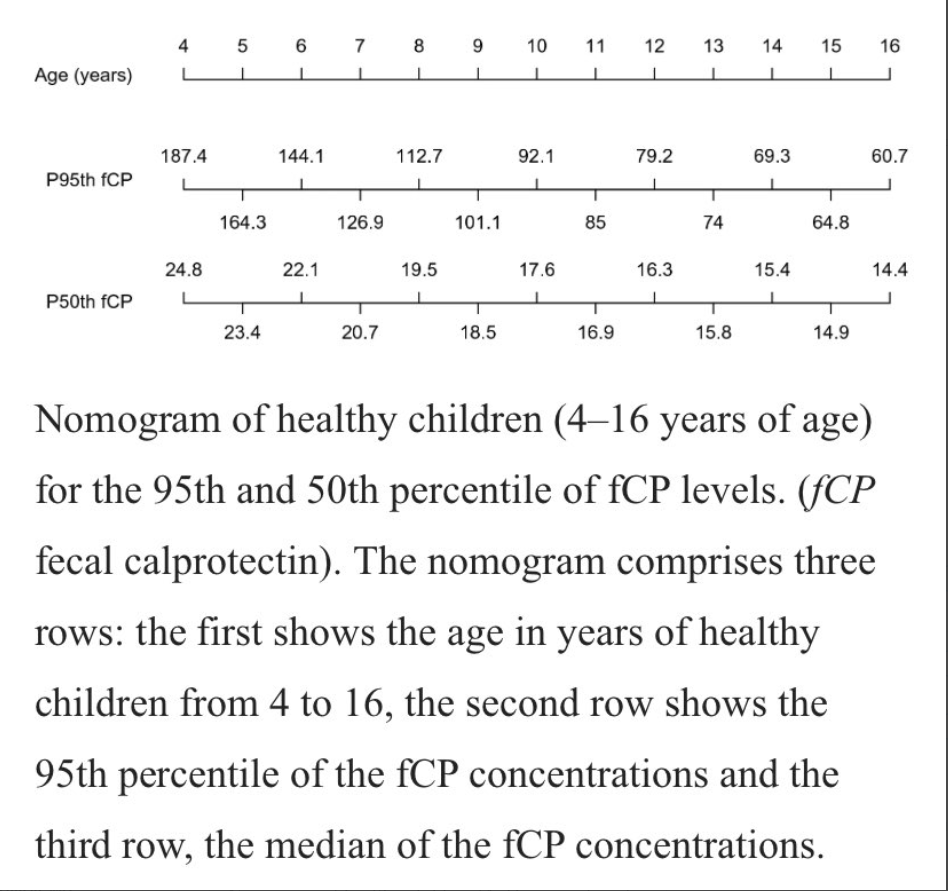
ST Leach et al. JPGN 2020; 70: 580-5. The authors found that fecal calprotectin was overall the best fecal biomarker for pediatric Crohn’s disease (=156 patients); however, FA12  (aka S100A12) at 5 mcg/g predicted mucosal healing with greater specificity (87% vs 70%) –though this is related in part to the cut-off values. For calprotectin to have greater specificity (>90%), a cut-off of <100 mcg/g lowered the sensitivity to 63%. FA12 also performs better in younger children as calprotectin levels are higher in this age group in healthy children.