Warnings of Hepatitis B Vaccine Policy Shift

Despite the enormous benefits of hepatitis B vaccination, it appears that this administration has its sights on changing the policy of administration at birth.

NY Times 9/16/25: C.D.C. Vaccine Advisers May Limit Hepatitis B Shots for Newborns

An excerpt:

Committee members, some of whom are vaccine skeptics, are likely to recommend restricting the use of the shots at birth or delaying them until later in childhood…

“Unless the mother is hepatitis-B-positive, an argument could be made to delay the vaccine for this infection,” Martin Kulldorff, the committee’s chair, said at its previous meeting in June.

Vaccine experts at the C.D.C., who normally would be deeply involved in preparing for this week’s meeting, have been sidelined and given no more information than the public about the meeting’s agenda or possible outcomes…

Before 1991, when newborns were not all vaccinated for hepatitis B, about 20,000 babies became infected each year. Routine immunization at birth cut the number of newborn infections … There are now fewer than 20 children per year who acquire the disease from their mothers.

Only about half of the cases before 1991 were a result of transmission from an infected mother. The other half “weren’t getting it from becoming sex workers, and they weren’t getting it from being intravenous drug users,” Dr. Paul Offit, director of the Vaccine Education Center at Children’s Hospital of Philadelphia, said…

From 2015 to 2017, about 21,000 infants were born to pregnant women with hepatitis B antibodies, but fewer than half were identified through prenatal screening, according to the C.D.C.

My take: If routine immunization at birth is stopped, there will be a lot more hepatitis B infections and subsequent complications. Some infections will be acquired at birth and some later due to missed opportunities to provide protection later on.

Related blog posts:

Brooklyn Botanic Garden

Do We Need to Reimmunize Patients (with IBD or Celiac) with Low Hepatitis B Surface Antibody Levels?

JA Ulrich et al. Clin Gastroenterol Hepatol 2023; 21: 2901-2907. Open Access! Effectiveness of Hepatitis B Vaccination for Patients With Inflammatory Bowel and Celiac Disease

In 2022, a study in JPGN showed that the rate of Hepatitis B virus (HBV) vaccination and immunity was similar in individuals with and without celiac disease (CD). In addition, there was no increased risk of HBV infection detected in CD patients. Thus, routinely checking hepatitis B status in all patients with CD was no longer justified. (See: Celiac Disease, Hepatitis B and Paul Harvey).

The same researchers in this study expand their findings to inflammatory bowel disease (IBD) and CD. In this retrospective cohort (2000-2019), using the Rochester Epidemiology Project which includes data from 162,847 residents. Key findings:

  • 1264 incident cases of IBD/CD, only 6 HBV infections were diagnosed before the index date; 5 of the 6 had risk factors including IV drug use or living in endemic region.
  • No new HBV infection developed in any of 1258 patients with IBD/CD during a median follow-up of 9.4 years
  • The proportion of patients with HBV-protective titers (≥10 mIU/mL) decreased with time before plateauing, with protective titer rates of 45% at 5 up to 10 years and 41% at 15 up to 20 years after the last HBV vaccination. The control population with protective titers also decreased similarly with time though was consistently higher than the levels of patients with IBD/CD within 15 years after the last HBV vaccination

Context/Discussion:

  • Only 16% of vaccine recipients have measurable protective titers by age 18 years, according to the CDC.32
  • “Time-related waning of Ab levels to HBV after vaccination has unclear clinical significance. Although screening persons for HBV immunity by using anti-HBs titers is widely accepted, prior study results have shown that cellular immunity can also provide long-term HBV protection, even in the setting of nonprotective titers.”
  • Reactivation of HBV is a well-documented complication of immunosuppression in patients with IBD, and screening for dormant infection is of paramount importance at diagnosis
  • Limitations: the study population had a low rate of HBV acquisition; thus, the study findings may not apply to areas with higher risk for HBV.

My take: This study shows that treating low hepatitis B surface antibody levels with reimmunization is likely NOT needed in either the IBD or the celiac disease population, except perhaps in those at high risk. Checking HBV status prior to immunosuppressive therapy, though, is still needed to prevent reactivation of HBV in those at risk.

Related blog posts:

Chalk Art in Sandy Springs:

Disclaimer: This blog, gutsandgrowth, assumes no responsibility for any use or operation of any method, product, instruction, concept or idea contained in the material herein or for any injury or damage to persons or property (whether products liability, negligence or otherwise) resulting from such use or operation. These blog posts are for educational purposes only. Specific dosing of medications (along with potential adverse effects) should be confirmed by prescribing physician.  Because of rapid advances in the medical sciences, the gutsandgrowth blog cautions that independent verification should be made of diagnosis and drug dosages. The reader is solely responsible for the conduct of any suggested test or procedure.  This content is not a substitute for medical advice, diagnosis or treatment provided by a qualified healthcare provider. Always seek the advice of your physician or other qualified health provider with any questions you may have regarding a condition.

Treats (Tips) and Tricks for Using IBD Drugs in Patients with Hepatobiliary Comorbidities

S Massironi et al. Inflamm Bowel Dis 2023; 29: 1477-1487. Use of IBD Drugs in Patients With Hepatobiliary Comorbidities: Tips and Tricks

This review article makes a number of useful points:

  • Almost all of the IBD medications (Anti-TNF, Vedolizumab, Ustekinumab, Tofacitinib, Ozanimod) should not be used in patients with untreated hepatitis B surface antigen positivity. Antiviral prophylaxis is recommended even patients with inactive disease (HBV DNA <2000 IU/mL/normal ALT) starting 2 weeks prior to immunosuppression up to 12 weeks after immunosuppression discontinuation.
  • Anti-TNF, Vedolizumab, and Ustekinumab can be safely used in patients with cirrhosis, tofacitinib requires a dose reduction, and ozanimod is NOT recommended
  • Autoimmune hepatitis may be triggered (rarely) by use of anti-TNFs; however, these agents have been uses off-label as a rescue therapy for AIH as well.
  • Anti-TNFs do not appear worsen liver function in PSC and may be associated with improvement in MASH (NASH)
  • Drug-induced liver injury (DILI) is common with anti-TNFs, often seen between the second and fifth doses. It is “generally transient and asymptomatic.” DILI may occur with ustekinumab, tofacitinib and ozanimod.
  • Tofacitinib may have a favorable effect on PSC. A retrospective study with 5 patients reported a 28% and 39% decrease respectively in total bilirubin and alkaline phosphatase within 6 months of starting therapy, A separate study with 42 patients showed a non-significant drop in alkaline phosphatase from 150 U/L to 132 U/L at 12 month followup.
  • The authors note that in patients with cirrhosis and posttransplantation, “vedolizumab and ustekinumab should be preferred due to their safer profile linked to infectious risk.”
  • “Patients with hepatobiliary disorders are often excluded from pivotal trials.” This contributes to a significant knowledge gap for patients with these comorbid conditions which are frequent in patients with IBD

My take: I don’t think I will be too popular if I hand out copies of this article to the kids I see later today –despite the useful advice. (This post was meant to be published on Halloween)

Related blog posts:

Disclaimer: This blog, gutsandgrowth, assumes no responsibility for any use or operation of any method, product, instruction, concept or idea contained in the material herein or for any injury or damage to persons or property (whether products liability, negligence or otherwise) resulting from such use or operation. These blog posts are for educational purposes only. Specific dosing of medications (along with potential adverse effects) should be confirmed by prescribing physician.  Because of rapid advances in the medical sciences, the gutsandgrowth blog cautions that independent verification should be made of diagnosis and drug dosages. The reader is solely responsible for the conduct of any suggested test or procedure.  This content is not a substitute for medical advice, diagnosis or treatment provided by a qualified healthcare provider. Always seek the advice of your physician or other qualified health provider with any questions you may have regarding a condition.

Favorite Posts 2022

Thank you to those who have helped me this past year with this blog –colleagues, friends and family. Wishing all of you a good 2023. Here are some of my favorite posts from this past year:

GI:

Nutrition:

Liver:

Endoscopy:

Health Policy:

Humor:

Good News Story: The Remarkable Hepatitis B Vaccine Story

W-Q He, GN Guo, C Li. Hepatology 2022; 75: 1566-1578. The impact of hepatitis B vaccination in the United States, 1999-2018

In the past 30 years, the hepatitis B vaccine has been included in infant immunization schedules in the U.S. The authors studied a large, comprehensive, and nationally representative data set (NHANES data from 1999-2018) to assess its efficacy.

Key findings:

  • HBV vaccination was associated with reduced risk of all-cause mortality (HR, 0.78; 95% CI, 0.68–0.90) and cancer-related mortality (HR, 0.76; 95% CI, 0.58–1.00) 
  • The highest vaccination uptake was found among those born after 1991, at 86.5%.
  • Vaccinated participants had higher prevalence of vaccine-induced immunity than the unvaccinated (47.2% vs. 7.4%). Among those born after 1991, vaccine efficacy (VE) was found at 58% (95% CI, 18%–79%) overall and 85% for those aged ≥20 years (mean age, 22), whereas no effect was found among those born prior to 1990

Context for these findings is noted in the associated editorial (pgs 1365-1367):

HBV remains one of the most deadly viruses worldwide with nearly 1 million deaths yearly and nearly 300 million people chronically-infected. The vast majority of unvaccinated children less than 1 year of age become chronically-infected. In the U.S., 98% of children acquired HBV through vertical transmission “including 26% of pediatric cases who were born in the USA or Canada”

My take: This study shows that HBV vaccine maintains strong protection for 20 years and protects against cancer and death.

Related blog posts:

Los Poblanos Ranch, Alburquerque

Lessons Learned from Children In the Hepatitis B Virus Research Network

SJ Schwarzenberg et al. JPGN 2022. 74: 431-433. Lessons Learned from Children Enrolled into the Hepatitis B Virus Research Network Multi-Center Prospective Study

This NIDDK-funded Hepatitis B Research Network (HBRN) was established in 2009 and enrolled 362 patients. 97% of participants were born in countries where HBV is endemic or in North America to mothers born from these countries.

Key points:

  • Due to revised criteria for ALT values, most pediatric patients have elevated ALT and do not meet the definition of immune-tolerant
  • Spontaneous flares (ALT >400 in males and >350 in females) in untreated children…did not lead to hepatic decompensation
  • Hepatocellular carcinoma was not identified in this cohort, though HBRN centers reported historical experiences. Only one patient developed cirrhosis over 4 years of followup.

Clinical Recommendations from Authors:

  • Screen for HBV in children with unexplained serum aminotransferases regardless of immunization history
  • Screen for HBV in children with normal aminotransferases if they or their parents are from an area where HBV is endemic or other risk factors
  • In those with HBV, monitor aminotransferases and HBV levels every 6 months
  • Obtain genotype in children with HBV
  • Consider treatment if ALT >2 x ULN over 3-6 mo. Treatment should follow AASLD guideline
  • Recommend AGAINST treatment at the start of a flare
  • Recommend counseling to promote healthy weight and avoidance of at-risk alcohol use

Related blog posts:

Disclaimer: This blog, gutsandgrowth, assumes no responsibility for any use or operation of any method, product, instruction, concept or idea contained in the material herein or for any injury or damage to persons or property (whether products liability, negligence or otherwise) resulting from such use or operation. These blog posts are for educational purposes only. Specific dosing of medications (along with potential adverse effects) should be confirmed by prescribing physician.  Because of rapid advances in the medical sciences, the gutsandgrowth blog cautions that independent verification should be made of diagnosis and drug dosages. The reader is solely responsible for the conduct of any suggested test or procedure.  This content is not a substitute for medical advice, diagnosis or treatment provided by a qualified healthcare provider. Always seek the advice of your physician or other qualified health provider with any questions you may have regarding a condition.

Celiac Disease, Hepatitis B and Paul Harvey

Growing up, I heard a number of Paul Harvey broadcasts on the radio. Often there would be an important twist at the end and he would conclude with ‘and that’s the rest of the story.’

This came to mind after reading a recent article on celiac disease and hepatitis B infection:

N Habash et al. JPGN 2022; 74: 328-332. Celiac Disease: Risk of Hepatitis B Infection

Methods:

  • A cross-sectional study using the National Health and Nutrition Examination Survey (NHANES) database (2009–2014) 
  • And a retrospective analysis of HBV infection in two cohorts: Mayo Clinic cohort (1998–2021) and the Rochester Epidemiology Project cohort (REP; 2010–2020)

Key findings:

  • Based on NHANES database, the rate of HBV infection in the United States was  0.33%
  • Of 93 patients with CD, 46 (49%) were vaccinated for HBV and of the remaining 19,422 without CD, 10,228 (53%) were vaccinated
  • Twenty-two (48%) vaccinated patients with CD had HBV immunity and 4405 (43.07%) vaccinated patients without CD had HBV immunity
  •  In NHANES data, there were no cases of HBV infection in patients with CD. Among the 3568 patients with CD seen at Mayo Clinic and 3918 patients with CD in the REP database, only four (0.11%) at Mayo Clinic and nine (0.23%) of the REP patients had HBV infection.

This finding is probably applicable to other conditions in which HBV immunity is ascertained.

My take: In contrast to other small studies, this study showed that the “rate of HBV vaccination and immunity was similar in individuals with and without CD.” In addition, there was no increased risk of HBV infection detected in CD patients. Thus, testing for HBV is not necessary in patients with CD.

And that’s the rest of the story.

Related blog post

Should All Pediatric Patients with Hepatitis B Undergo Routine Surveillance for Hepatocellular Carcinoma?

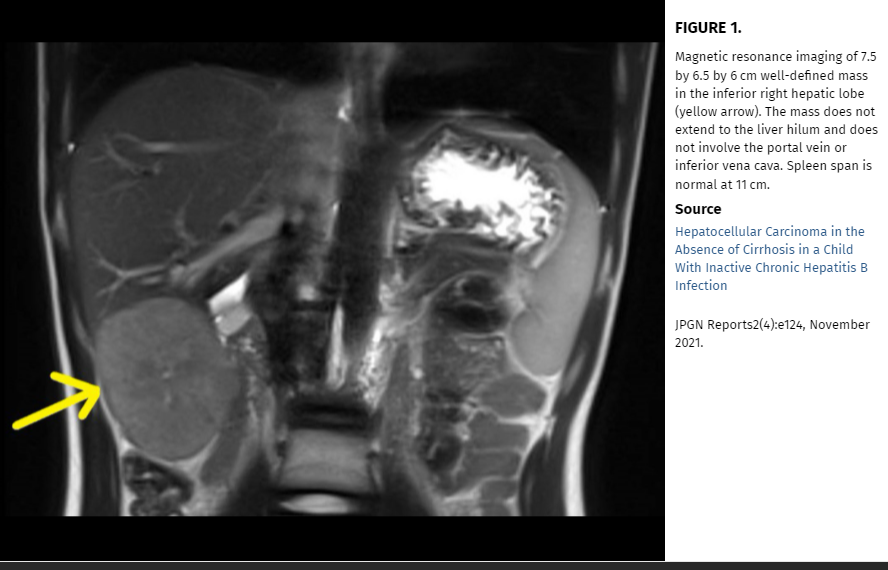
C Rajan et al. JPGN Reports: November 2021 – Volume 2 – Issue 4 – p e124. Open Access: Hepatocellular Carcinoma in the Absence of Cirrhosis in a Child With Inactive Chronic Hepatitis B Infection

In this case study, the authors “describe an unusual case of a child with chronic hepatitis B infection who developed HCC in the absence of active hepatitis or cirrhosis.” Based on their case report, they advocate for “regular HCC surveillance for all children with chronic hepatitis B, regardless of presence or absence of hepatitis or cirrhosis.”

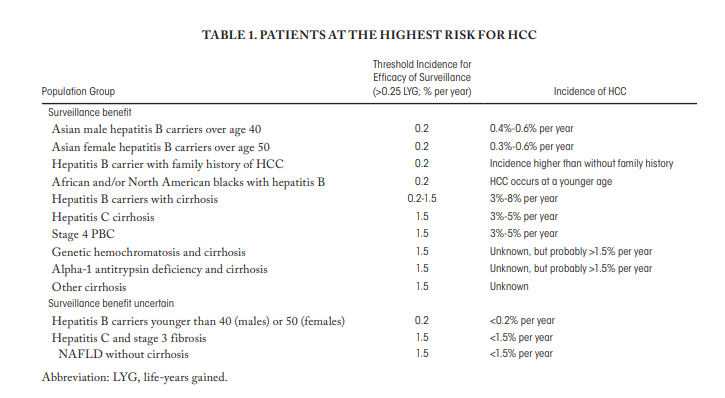
However, the authors suggestions to expand surveillance to all children with hepatitis B is NOT aligned with current expert opinion (by most experts). This potential recommendation deserves (deserved) more commentary in their discussion. The AASLD recommends offering surveillance when the risk of HCC is at least 1.5% per year and the incidence is greater than 0.2% per year, which includes patients with cirrhosis and some non-cirrhotic hepatitis B carriers [7]. In a study from Taiwan (blog post: HBV Vaccination Prevents Cancer), the authors showed the beneficial effects of vaccination: HCC incidence per 105 person-years was 0.92 in the unvaccinated cohort and 0.23 in the vaccinated birth cohorts. This study also showed how rare HCC cases are in children; thus, showing benefit of vaccination was impressive.

The AASLD guidelines on HCC (Link to PDF: Diagnosis, Staging, and Management of
Hepatocellular Carcinoma: 2018 Practice Guidance by the American Association for
the Study of Liver Diseases
) notes the following high risk categories:

My take: This case report is helpful in emphasizing the risk of HCC in patients with HBV, even in those without significant risk factors. However, at this time most experts do not recommend surveillance in those with a low risk of developing HCC.

Related blog posts:

Disclaimer: This blog, gutsandgrowth, assumes no responsibility for any use or operation of any method, product, instruction, concept or idea contained in the material herein or for any injury or damage to persons or property (whether products liability, negligence or otherwise) resulting from such use or operation. These blog posts are for educational purposes only. Specific dosing of medications (along with potential adverse effects) should be confirmed by prescribing physician.  Because of rapid advances in the medical sciences, the gutsandgrowth blog cautions that independent verification should be made of diagnosis and drug dosages. The reader is solely responsible for the conduct of any suggested test or procedure.  This content is not a substitute for medical advice, diagnosis or treatment provided by a qualified healthcare provider. Always seek the advice of your physician or other qualified health provider with any questions you may have regarding a condition.

Celiac Disease and Lack of Response to Hepatitis B Immunization

A Aneja et al. JPGN Reports February 2021 – Volume 2 – Issue 1 – p e046: Open Access: Clinical Characteristics of Children With Celiac Disease Not Responding to Hepatitis B Vaccination in India

Methods: The study population from consisted of 3 groups—50 newly diagnosed CD children (group 1), 50 previously diagnosed CD children who were on gluten free diet (GFD) >3 months (group 2), and 100 age and gender matched healthy controls (group 3).

Key findings:

  • Positive anti-HBs response was found in 46% in newly diagnosed CD children, 60% in CD children on GFD, and 83% in healthy controls (P < 0.001)
  • Ongoing gluten intake has significant impact on protective immune response to Hepatitis B vaccine
  • 44 out of 45 (97.77%) nonresponders from CD group seroconverted after a single booster dose

My take: Check Hep B immune response in patients with celiac disease.

Related blog post: Improving Care Process in Celiac Disease

Hepatitis B: Natural History and Difficulty Treating Immunotolerant Children

S Mo et al. JPGN 2021; 73: 150-155. Natural History of Chronic Hepatitis B Infection Among Chinese Children and Young Adults: A Single-Center Experience

Key findings:

  • Of the 353 patients, there were immune-tolerant 112 (34%), HBeAg-positive immune-active 47 (14%), and inactive carrier 82 (25%). The remaining 88 patients (27%) did not fit into a particular category with 26 of 88 patients meeting the criteria for inactive carrier except for mildly elevated alanine aminotransferase
  • Among 179 patients followed for ≥5 years, the spontaneous seroconversion rate was 38% (from HBeAg-positive to HBeAg-negative along with anti-HBeAb positivity)

In their discussion, the authors make two key points:

  1. “No substantial benefit from anti-viral therapy” has been evident in children in the immuno-tolerant phase (MM Jonas et al. Hepatology 2016; 63: 307-318.)
  2. The updated AASLD guidelines “strongly recommend anti-viral therapy for HBeAg-positive pregnant women with a serum HBV DNA >200,000 IU/mL”

G Mieli-Vergani et al. JPGN 2021; 73: 156-160. Peginterferon Alfa-2a (40KD) Plus Lamivudine or Entecavir in Children With Immune-Tolerant Chronic Hepatitis B

As noted above, antiviral therapy has not been shown to be effective in children who are in the immuno-tolerant phase; however, the authors of this study explored whether combination therapy could be effective in a randomized, controlled, multicenter study (n=59).

  • Key finding: At 24 weeks post-treatment, 1 of 26 patients in the antiviral treatment group experienced HBsAg loss (vs none of 33 patients in the control group)

My take: These studies reinforce the notion that children in the immuno-tolerant phase of HBV infection do not benefit from antiviral therapy. Prevention of infection is the most promising strategy.

Related blog posts:

Confirmation Bias diagram. From Steve Stewart-Williams