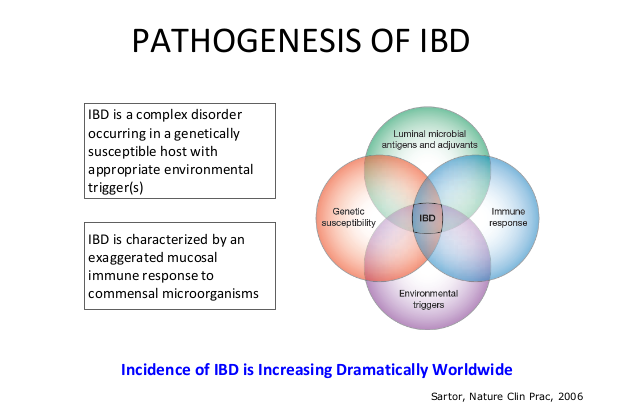
This “INPUT” (INcidence, Prevalence, Treatment and OUTome in Patients with IBD) study used 4 different data sets to provide “the clearest depiction to date of IBD [epidemiology] in the U.S.
Key findings:
The age-, sex- and insurance-standardized prevalence of IBD was 721 per 100,000 population. This equates to estimated 2.39 million Americans with IBD.
Sub-category prevalence: the prevalence of IBD per 100,000 population was 812 in White, 504 in Black, 403 in Asian, and 458 in Hispanic Americans.
My take: The prevalence of IBD continues to increase and the U.S. has one of the highest rates in the world.
On May 30, 2018, the US Food and Drug Administration (FDA) expanded the indication of tofacitinib (Xeljanz; Pfizer), an oral Janus kinase (JAK) inhibitor, for the treatment of adults with moderately to severely active ulcerative colitis. However, the optimal dosing remains unclear.
In this “real-world” study by Yu et al, a retrospective review of 162 patients was conducted (2012-2022). 52% continued 10 mg twice daily while 48% underwent dose de-escalation to 5 mg twice daily. The primary outcome was evidence of UC disease activity–related events: hospitalization/surgery, corticosteroid initiation, tofacitinib dose increase, or therapy switch.
Key findings:
Cumulative incidence rates of UC events at 12 months were similar in patients with and without dose de-escalation (56% vs 58%; P = .81)
An induction course with 10 mg twice daily for more than 16 weeks was protective of UC events (hazard ratio [HR], 0.37) while ongoing severe disease (Mayo 3) was associated with UC events (HR, 6.41)
Twenty-nine percent of patients with UC events had their dose re-escalated to 10 mg twice daily, with only 63% able to recapture clinical response at 12 months
Discussion Points:
“Although the product label recommends dose de-escalation after 8 or 16 weeks, clinical practice is variable in the real-world setting… In this retrospective real-world study of moderate to severe UC patients with almost half undergoing dose de-escalation, we observed that more than half of patients experienced a UC disease activity–related event within 12 months after dose de-escalation, particularly in patients with an induction course of fewer than 16 weeks and active endoscopic disease at 6 months after induction…”
” Although dose de-escalation is preferable for long-term maintenance therapy to reduce the potential lifetime risk of medication-related adverse events [eg. VTE], it must be balanced with sustained remission to prevent short- and long-term disease-related complications.”
“In the OCTAVE study which reported higher rates of long-term remission, patients de-escalated only after having shown clinical and endoscopic remission after 52 weeks on tofacitinib 10 mg twice daily”
My take (borrowed from authors): “Emphasis should be placed on clinical and endoscopic evidence of improvement before consideration of dose de-escalation to ensure the highest probability of treatment success.” This advice, though, may conflict with product labelling which states that “tofacitinib induction with 10 mg twice daily beyond 16 weeks is not recommended; in fact, it is recommended to stop after 16 weeks if adequate response has not been achieved.”
Disclaimer: This blog, gutsandgrowth, assumes no responsibility for any use or operation of any method, product, instruction, concept or idea contained in the material herein or for any injury or damage to persons or property (whether products liability, negligence or otherwise) resulting from such use or operation. These blog posts are for educational purposes only. Specific dosing of medications (along with potential adverse effects) should be confirmed by prescribing physician. Because of rapid advances in the medical sciences, the gutsandgrowth blog cautions that independent verification should be made of diagnosis and drug dosages. The reader is solely responsible for the conduct of any suggested test or procedure. This content is not a substitute for medical advice, diagnosis or treatment provided by a qualified healthcare provider. Always seek the advice of your physician or other qualified health provider with any questions you may have regarding a condition.

On meta-analysis of 13 studies (3756 patients; median follow-up, 12 months; 41% with variants), HLA-DQA1∗05 variants were associated with 75% higher risk of immunogenicity compared with non-carriers (relative risk, 1.75) with considerable heterogeneity (I2 = 62%) (low certainty evidence).
In addition, patients with HLA-QQA1*05 variants had clinical loss of response (LOR) in 67% compared to 30% in those without this variant (wild-type); thus, a 124% higher risk of LOR.
Positive and negative predictive values of HLA-DQA1∗05 variants for predicting immunogenicity were 30% and 80%, respectively
Proactive therapeutic drug monitoring, but not concomitant use of IMMs, IMIDs, and TNF-α antagonist-type, modified this association.
My take:
The ~40% of individuals with HLA-DQA1*05 variants are at higher risk of LOR and are more likely to benefit from both therapeutic drug monitoring and probably from use of combination (with immunomodulator) therapy.
The positive predictive value (30%) is low indicating that the majority of patients with these variants will not develop anti-drug antibodies within 12 months.
In those with negative testing for HLA-DQA1*05 (~60%), the higher negative predictive value indicates a patient is more likely to do well with monotherapy.
HLA-DQA1*05 testing is available commercially (usually part of Celiac HLA typing).
This is the Initiation Well at Quinta da Regaleira in Sintra, Portugal. It is pretty cool because it seems to start at ground level and then goes down many floors. There is an exit to a number of tunnels at the lower level.
This population-based administrative data cohort study provides annual IBD hospitalization rates in Alberta, Canada.
Key findings:
From 2002-2003 to 2018-2019, all-cause hospitalization rates decreased from 36.57 to 16.72 per 100 IBD patients (Average Annual Percentage Change (AAPC), −4.18%)
Inflammatory bowel disease–related hospitalization rate decreased from 26.44 to 9.24 per 100 IBD patients (AAPC, −5.54%)
The absolute number of hospitalizations, however, likely did not improve because this is affected by the increase in IBD prevalence. In Alberta, there was a 3-fold increase from 2002 to 2018 (general population increased 1.4 fold during this period)
“The last 2 decades have seen the introduction of several advanced therapies with novel mechanisms of action.22 The introduction of these therapies has been accompanied by changes in management strategies that include earlier introduction of advanced therapies based on risk stratification, treat-to-target, and monitoring strategies.5,23–26 These advancements include risk stratification, allowing for earlier introduction of advanced therapies; proactive clinical management algorithms to monitor disease activity; and therapeutic drug monitoring allowing for continued concentration-based dosing.23–26The net effect of these medical advances shifted IBD management from the hospital to the outpatient setting.27“
This retrospective study of 1693 prior authorizations (PAs) from 2020-2021. Key findings:
1397 PA initially approved, 209 first-level PAs approved, 23 second-level PAs approve, and 11 external review requests approved. In total 97% (1640 of 1697) were approved
Dose escalations had the lowest approval rate of 67.6%
FDA approval had favorable OR for PA approval of 4.45
The median time to biologic initiation was 21 days, with appeals causing further delays to initiation
Median Days to Determination by Insurance Level:
Prior authorization: 11 days
First level appeal: 29 days
Second level appeal: 51 days
External review request: 73 days
My take: The PA process usually results in few denials (if pursued) but does result in significant delays in therapy. At the same time, these newer therapies have been associated with improvement in hospitalizations rates.
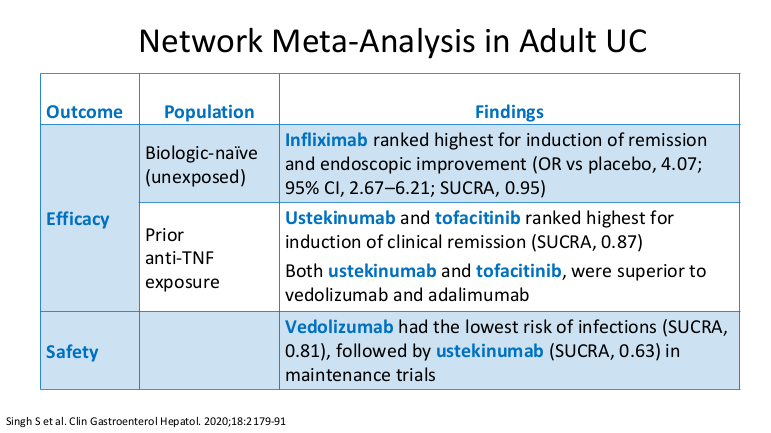
On network meta-analysis of 14 RCTs, upadacitinib was more effective than all agents in achieving symptomatic remission at weeks 2 (range of RR, 2.85–6.27), 4 (range of RR, 1.78–2.37), and 6 (range of RR, 1.84–2.79).
This study has a number of limitations including the following:
Potential differences in patient-level characteristics between these trials
Symptoms may not always correlate with endoscopic findings
Data from some medications (eg. tofacitinib) were incomplete and not included
My take: This study indicates an impressive early symptomatic response to upadacitinib compared to other agents for ulcerative colitis.
In this retrospective study with 133 children (2008-2019), typical dosing of thiopurines: azathioprine 2-2.5 mg/kg/day and 6-mercaptopurine 1.5 mg/kg/day. Patients with previous or concomitant treatment with 5-ASA were allowed in the study. 62% (n=83) of the cohort had pancolitis. Key Findings:
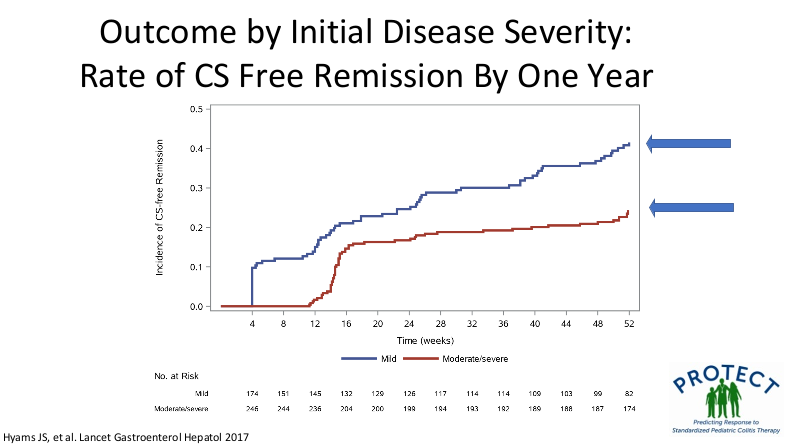
Seventy-four patients (56%) had CS-free clinical remission at week 52 without rescue therapy
In the cohort in clinical remission, 67 and 51 patients had both CRP and calprotectin measurements at 1 year and end of follow-up. Sufficient biomarker response (CRP <1 mg/dL, calprotectin <250 mcg/g) was achieved by 44 (66%) and 44 (86%) at those two time points.
The likelihood of remaining free of rescue therapy among thiopurines-treated patients was 83%, 62%, 45%, and 37% at 1, 2, 3, and 4 years, respectively
8 of 133 (6%) stopped thiopurine therapy due to adverse effects
In their discussion, the authors make several points regarding efficacy and safety of thiopurines.
Many experts have advocated use of anti-TNF therapy agents for ulcerative colitis especially when 5-ASA medications are not effective.. This is based on higher efficacy and safety. With regard to safety, the authors note an “extremely low risk of lymphoma” citing a study from Israel in which children were followed until age of 30 years. No cases of hepatosplenic T-cell lymphoma were identified and the lymphoma rate was not statistically significant (O Atia et al. J Crohns Coliitis 2022; 16: 786-795 Open Access! Risk of Cancer in Paediatric onset Inflammatory Bowel Diseases: A Nation-wide Study From the epi-IIRN).
The authors note a recent review “rejected the hypothesis that initiation of biologic treatment later in the disease course correlates with lower response and remission rates in UC patients.”
Based on the efficacy and safety, the authors advocate for use of thiopurines “either early in the treatment course or as part of a de-escalation therapy…Thiopurines should be considered in the treatment of UC patients before the initiation of biologic drugs in most children.”
My take: In the U.S., it appears that thiopurine monotherapy, and even combination therapy, in pediatrics with IBD is used infrequently. Anti-TNF therapy with therapeutic drug monitoring is used routinely in patients if a 5-ASA is ineffective or not a good option. This article is a reminder that thiopurines are still a reasonable option. This would have been a good opportunity for a commentary in JPGN to add some context to this article regarding the role of these agents.
AGA guidelines for moderate-to-severe ulcerative colitis: “In adult outpatients with moderate to severe UC in remission, AGA makes no recommendation in favor of or against using biologic monotherapy or tofacitinib rather than thiopurine monotherapy for maintenance of remission.”
R Paknikar et al. NEJM 2023; 389: 1321-1326. Digging into the Histology
In this case report, a 33-year-old man (from the midwest) with ulcerative colitis (diagnosis seven years prior) who was receiving treatment with tofacitinib (a Janus kinase inhibitor) presented to the hospital with fatigue (x 8 months) and bloody diarrhea. He also had had fevers (x 4 months), 23 lb weight loss, and drenching night sweats. Before tofacitinib, treatment had included adalimumab and azathioprine. He had undergone a sigmoidoscopy two months prior to presentation.
His workup included a CXR showing diffuse reticulonodular opacities, a CT scan showing thickening in the colon and extensive infection workup. On the third hospital day, he had a perforation and resection which led to the diagnosis of invasive histoplasmosis.
My take: This article is useful for understanding how to workup secondary infections in IBD patients on long-term immunosuppressive agents.
One example: “testing for 1,3-β-d-glucan can serve as an adjunctive test for invasive fungal infections caused by fungi expressing 1,3-β-d-glucan in their cell walls, including candida, aspergillus, Pneumocystis jirovecii, Histoplasma capsulatum, and coccidioides; such testing has a high negative predictive value for infection with these organisms. In contrast, cryptococcus and blastomyces produce very low levels of 1,3-β-d-glucan in their cell walls and are therefore not readily detected by serum testing for the cell-wall antigen.”
CT showed shows diffuse wall thickening in the rectosigmoid colon and extravasation of extraluminal contrast material (arrow) into the area adjacent to the sigmoid colon, with layering of the contrast material, findings that are thought to indicate a perforation.
This was a systematic review of prospective controlled trials (n=27) of solid food diets for the induction or maintenance of remission in IBD.
Key findings:
For induction of remission in Crohn’s disease (CD), the Mediterranean diet was similar to the Specific Carbohydrate Diet (low certainty of evidence), and partial enteral nutrition (PEN) was similar to exclusive enteral nutrition (very low certainty of evidence).
PEN reduced risk of relapse (very low certainty of evidence), whereas reduction of red meat or refined carbohydrates did not (low certainty of evidence).
For ulcerative colitis, diets were similar to controls (very low and low certainty of evidence).
My take: Most of the dietary treatments for IBD have low to very low certainty of evidence regarding their effectiveness. Dietary changes are very likely to be helpful but more studies with rigorous endpoints are still needed.
Figure 1 from editorial: The NOVA classification of food
A total of 1,068,425 participants were included (13,594,422 person-years) among 5 cohort studies published between 2020 and 2022. The average age of participants ranged from 43 to 56 years. Key findings:
Crohn’s disease: During follow-up, 916 participants developed CD, and 1934 developed UC. There was an increased risk for development of CD for participants with higher consumption of ultra-processed foods compared with those with lower consumption (HR, 1.71; 95% CI, 1.37–2.14; I2 = 0%) and a lower risk of CD for participants with higher consumption of unprocessed/minimally processed foods compared with those with lower consumption (HR, 0.71; 95% CI, 0.53–0.94; I2 = 11%).
Ulcerative colitis: There was no significant association between risk of UC and ultra-processed foods (HR, 1.17; 95% CI, 0.86–1.61; I2 = 74%) or unprocessed/minimally processed foods (HR, 0.84; 95% CI, 0.68–1.02; I2 = 0%).
The associated editorial by Fitzpatrick et al, notes that “there are plausible mechanisms that explain the associations of higher UPFs and development of CD, such as: (1) displacing the intake of minimally processed foods and subsequently reducing exposure to beneficial micronutrients, antioxidants, and phytochemicals; (2) driving overconsumption of total calories7; and (3) increasing exposure to non-nutritive food substances that have been implicated in the development of CD in pre-clinical studies…The notion is that a lower UPF intake is better, but a cutoff value remains elusive.”8
My take (borrowed from editorial): “the population studies have indicated that the extremes of UPF intake are related to risk of CD and that such associations are underpinned by plausible biological mechanisms, suggesting causality.”
In 2012, this blog highlighted a study which showed that “only 31.1% of 206 patients with IBD would have been eligible to participate in any of the selected RCTs.” (Post: According to the study which you would never qualify for…).
This study utilized data for children initiating biologics from two prospective real‐world cohorts and one retrospective cohort.
Key findings:
Only 62 of 164 (38%) children with moderate–to‐severe disease would have been eligible for inclusion in the original RCTs.
The steroid-free remission rate was higher in the eligible children (51%) than in the ineligible children (31%; OR 2.3 [95%CI 1.2–4.5]; p = 0.01)
The main exclusion criterion was prohibited previous therapies (47%)
My take (borrowed from authors): “Remission rates were higher among eligible children raising the concern that results presented in regulatory RCTs in paediatric IBD do not necessarily reflect the patient‐mix in the real‐world and should be interpreted with caution when applied to clinical practice.”