Unknown's avatar

About gutsandgrowth

I am a pediatric gastroenterologist at GI Care for Kids (previously called CCDHC) in Atlanta, Georgia. The goal of my blog is to share some of my reading in my field more broadly. In addition, I wanted to provide my voice to a wide range of topics that often have inaccurate or incomplete information. Before starting this blog in 2011, I would tear out articles from journals and/or keep notes in a palm pilot. This blog helps provide an updated source of information that is easy to access and search, along with links to useful multimedia sources. I was born and raised in Chattanooga. After graduating from the University of Virginia, I attended Baylor College of Medicine. I completed residency and fellowship training at the University of Cincinnati at the Children’s Hospital Medical Center. I received funding from the National Institutes of Health for molecular biology research of the gastrointestinal tract. During my fellowship, I had the opportunity to work with some of the most amazing pediatric gastroenterologists and mentors. Some of these individuals included Mitchell Cohen, William Balistreri, James Heubi, Jorge Bezerra, Colin Rudolph, John Bucuvalas, and Michael Farrell. I am grateful for their teaching and their friendship. During my training with their help, I received a nationwide award for the best research by a GI fellow. I have authored numerous publications/presentations including original research, case reports, review articles, and textbook chapters on various pediatric gastrointestinal problems. In addition, I have been recognized by Atlanta Magazine as a "Top Doctor" in my field multiple times. Currently, I am the vice chair of the section of nutrition for the Georgia Chapter of the American Academy of Pediatrics. In addition, I am an adjunct Associate Clinical Professor of Pediatrics at Emory University School of Medicine. Other society memberships have included the North American Society for Pediatric Gastroenterology Hepatology and Nutrition (NASPGHAN), American Academy of Pediatrics, the Food Allergy Network, the American Gastroenterology Association, the American Association for the Study of Liver Diseases, and the Crohn’s and Colitis Foundation. As part of a national pediatric GI organization called NASPGHAN (and its affiliated website GIKids), I have helped develop educational materials on a wide-range of gastrointestinal and liver diseases which are used across the country. Also, I have been an invited speaker for national campaigns to improve the evaluation and treatment of gastroesophageal reflux disease, celiac disease, eosinophilic esophagitis, hepatitis C, and inflammatory bowel disease (IBD). Some information on these topics has been posted at my work website, www.gicareforkids.com, which has links to multiple other useful resources. I am fortunate to work at GI Care For Kids. Our group has 17 terrific physicians with a wide range of subspecialization, including liver diseases, feeding disorders, eosinophilic diseases, inflammatory bowel disease, cystic fibrosis, DiGeorge/22q, celiac disease, and motility disorders. Many of our physicians are recognized nationally for their achievements. Our group of physicians have worked closely together for many years. None of the physicians in our group have ever left to join other groups. I have also worked with the same nurse (Bernadette) since I moved to Atlanta in 1997. For many families, more practical matters about our office include the following: – 14 office/satellite locations – physicians who speak Spanish – cutting edge research – on-site nutritionists – on-site psychology support for abdominal pain and feeding disorders – participation in ImproveCareNow to better the outcomes for children with inflammatory bowel disease – office endoscopy suite (lower costs and easier scheduling) – office infusion center (lower costs and easier for families) – easy access to nursing advice (each physician has at least one nurse) I am married and have two sons (both adults). I like to read, walk/hike, bike, swim, and play tennis with my free time. I do not have any financial relationships with pharmaceutical companies or other financial relationships to disclose. I have helped enroll patients in industry-sponsored research studies.

#NASPGHAN17 Eosinophilic Esophagitis Session

This blog entry has abbreviated/summarized these presentations. Though not intentional, some important material is likely to have been omitted; in addition, transcription errors are possible as well.

This is a long post –highlighting four separate talks on eosinophilic esophagitis.

PPI Use in Esophageal Eosinophilia: Recommendations from the recent AGREE conference

Glenn Furuta  Children’s Hospital of Colorado

Key points:

The term PPI-REE (proton pump inhibitor-responsive eosinophilic esophagitis) may not be needed.  PPI-REE is quite similar to eosinophilic esophagitis based on molecular and clinical features.  The main difference being that this subset responds to PPI therapy.


Characterization of CYP2C19*17 Polymporphisms Among Children with PPI Responsive EoE and EoE

James Franciosis et al.  Nemours Children’s Hospital Orlando

My take: This cool presentation offered a potential explanation of why some patients respond to PPIs (so called “PPI-REE”) from those with EoE that does not respond to PPIs.  This is pertinent because on a molecular basis the disease appears to be the same.  The difference in PPI-REE from EoE may be how the patient metabolizes PPI.  Those EoE patients who metabolize PPIs “extensively” are much less likely to respond to this therapy.

Eosinophilic esophagitis: Now an “Oldie” -But with increased interest and new research, a “Goodie”

Chris Liacouras  Children’s Hospital of Philadelphia

This lecture covered an enormous amount of material.  Here are a few slides.

Final Lecture (from November 3rd presentation):

Key points:

  • Endoflip is a new tool that helps determine esophageal distensibility.  Improved distensibility indicates less fibrostenotic disease which is one long-term goal.
  • Response to treatment has been correlated in improvement in Endoflip measurements.
  • There are no FDA approved medications at this point for EoE, though topical steroids may be approved soon.

#NASPGHAN17 Why Rome IV Criteria are important

More information from this year’s annual NASPGHAN meeting.

This blog entry has abbreviated/summarized this presentation. Though not intentional, some important material is likely to have been omitted; in addition, transcription errors are possible as well.

The following slides highlight a terrific lecture by Carlo DiLorenzo (Nationwide Children’s Hospital).  Subsequently, I’ve included slides from Miranda van Tilburg (UNC); I was unable to attend her lecture and found some of the slides via twitter.

Key points:

  • Rome IV criteria are helpful, particularly with less common presentations like rumination
  • There has been an increase in nausea.  Morning nausea can be equated as a marker of anxiety until proven otherwise.
  • There is improved wording. “After appropriate medical evaluation, the symptoms cannot be attributed to another condition” may help facilitate the diagnosis of irritable bowel syndrome, for example, in patients with IBD who are in remission.

From Miranda Tilburg:

#NASPGHAN17 Psychosocial Problems in Adolescents with IBD

This blog entry has abbreviated/summarized this presentation. Though not intentional, some important material is likely to have been omitted; in addition, transcription errors are possible as well.

Slides from syllabus: APGNN Syllabus 2017

Key points:

  • ~30% of pediatric IBD patients have anxiety or depression.  This has not been shown to be related to disease activity.
  • Advice for parents: “Listen more and talk less.”
  • Antidepressants, when indicated, are about 6 times more likely to be helpful than detrimental

In the following slide, the term “normalize” indicates that checking on emotional health is part of a routine (eg. ‘we ask all our patients to complete this screening’)

#NASPGHAN17 Presentation: Reducing Hospitalization in Intestinal Failure Patients

This blog entry has abbreviated/summarized this presentation. Though not intentional, some important material is likely to have been omitted; in addition, transcription errors are possible as well.

Risk Factors for Hospitalization Among Pediatric Intestinal Failure Patients

Tatyana Hofmekler, Janet Figueroa, Hilina Kassa, Rene Romero, Andi Shane.

Dr Hofmekler is now part of GI Care for Kids (my group) and provided a terrific presentation.

NASPGHAN Annual Mtg 2017

Key points:

  • In this study, there were no social or demographic factors which were identified which were associated with increased hospitalization
  • Having a colon and an ileocecal valve lowered the risk of hospitalization
  • The use of SBBO treatment was associated with increased hospitalization though this may have been a marker of more severe disease
  • Vascular catheter infections were reduced compared to study at same institution previously but remained an important risk factor for hospitalization

My take: this study illustrates the challenges in reducing hospitalization.  While the authors did not identify social/demographic factors, my experience is that there are some families who are much more capable than others in taking care of children with complex problems.  If all children had the best parents, that would truly allow the hospitalization rate to be reduced much lower.


#NASPGHAN17 Presentations at Annual Meeting: GGT in PSC, Nutrition for Intestinal Failure

This blog entry has abbreviated/summarized this presentation. Though not intentional, some important material is likely to have been omitted; in addition, transcription errors are possible as well.

Improvement in GGT Predicts Event-free Survival in Primary Sclerosing Cholangitis Regardless of Ursodeoxycholic Acic Treatment. 

Mark Deneau et al. (Grand Watkins Prize).

Key points:

  • PSC is difficult to study due to its rarity and due to its slow progression; thus surrogate biomarkers are needed.
  • Alkaline phosphatase is not a good biomarker in children
  • GGT level at one year after diagnosis was predictive of prognosis
  • Ursodeoxycholic acid does not appear to be effective

Optimizing Nutrition in Intestinal Failure

Justine Turner, University of Alberta

Key points:

  • Human milk is an ideal “formula” for infants, including those with intestinal failure
  • Oral feedings are important
  • Combination of bolus feeds and continuous feeds is reasonable
  • SMOFlipid allows higher lipid dose administration without hepatoxicity; this may improve cognitive outcomes
  • Amino acid based formulas have higher osmolality which can contribute to diarrhea

Patients with >50% of small bowel and >50% of colon were most likely to achieve enteral autonomy (GIFT registry)


#NASPGHAN17 Annual Meeting Notes (Part 2): Year in Review

This blog entry has abbreviated/summarized this presentation. Though not intentional, some important material is likely to have been omitted; in addition, transcription errors are possible as well.

This first slide shows the growth in NASPGHAN membership:

Year in Review

Melvin Heyman  Editor, JPGN

This lecture reviewed a number of influential studies that have been published in the past year.  After brief review of the study, Dr. Heyman summarized the key take-home point.


Consequences of Individual Mandate Repeal

Link: NY Times: Obamacare’s Insurance Mandate Is Unpopular. So Why Not Just Get Rid of It?

An excerpt: Without the mandate, the C.B.O. has said for years, premiums would spike, and millions fewer Americans would have health insurance. The budget office’s most recent estimate, published last week, said that the ranks of the uninsured would rise by 13 million over 10 years, and that average premiums would be 10 percent higher than under current law.


#NASPGHAN17 Annual Meeting Notes (Part 1): Neurostimulation for RAP, PSC-IBD, Organoids

This blog entry has abbreviated/summarized these presentations. Though not intentional, some important material is likely to have been omitted; in addition, transcription errors are possible as well.

William Balistreri Prize: Katja Kovaic et al. Neurostimulation for functional abdominal pain disorders in children –a randomized, double-blind, sham-controlled trial. This study enrolled 104 patients.  Lancet Gastroenterol Hepatol 2017; 2: 727-37.

Summary slide:

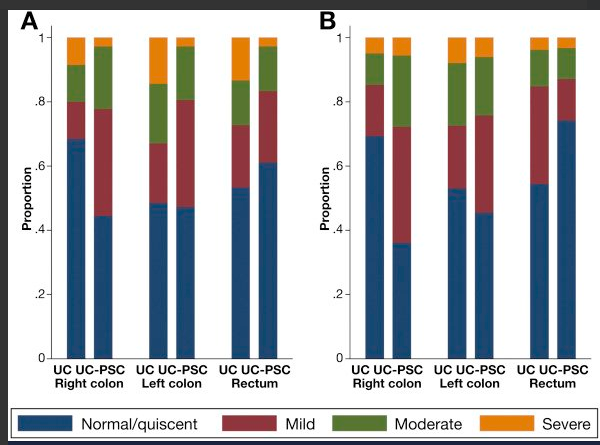
Fellow Research Award: Symptoms Underestimate Endoscopic Activity in PSC-IBD. Amanda Ricciuto et al. Hospital for Sick Children.

Key points:

  • In patients with IBD-PSC, clinical remission based on clinical symptoms is not reliable indicator of histologic remission.
  • Patients with PSC-IBD are more likely to have active endoscopic disease even when in “clinical remission”
  • Calprotectin levels (not PUCAIs) are helpful in confirming clinical remission.  A calprotectin <93 mcg/g was optimal level in determining clinical remission
  • Better control of disease could improve clinical outcomes (eg. colon cancer, liver progression)

Keynote Address: Organoids: Current and future promise for changing treatment of gastrointestinal and liver disorders.  James Wells Cincinnati Children’s Hospital Medical Center.

This was a terrific lecture.

  • Example of use of pluripotent stem cell usage: Diabetes. Phase 1 study has been started.
  • Organoids are in essence miniature versions of organs in a dish and with complex combination of cell types.
  • Organoids allow easier testing on these tissues for treatment and diagnosis of diseases
  • Organoids will allow for personalized testing of medications.  Some patients will respond differently.  This technology could be used to grow a specific organoid for a specific person and determine response on the organoid before giving to the patient.
  • Can engraft organoids into mice which can provide blood supply and allow larger organoids.
  • Clinical projects for organoids: Hirschsprung’s,  H pylori, Clostridium difficile, Short bowel syndrome, Fatty liver disease

#NASPGHAN17 IBD Treat to Target and Tight Control

More information from this year’s annual NASPGHAN meeting.

This blog entry has abbreviated/summarized these presentations. Though not intentional, some important material is likely to have been omitted; in addition, transcription errors are possible as well.

IBD Treat to Target: Treat the Patient or Treat the Disease

Robert Baldassano  Children’s Hospital of Philadelphia

I missed the first few minutes of this presentation, even though I had highlighted this as one of my top priorities.  So, if anyone reading this post has some additional comments, they are certainly welcome.

Key points:

  • Do not rely on symptoms alone to assess patient improvement.
  • Best surrogate marker: calprotectin.  Frequent calprotectin levels can help determine objective improvement; it is much more helpful than CRP as ~25% of patients do not elevate their CRP levels
  • Therapeutic drug monitoring is important in improving outcomes. Dose optimization improves response rate and durability of infliximab response.
  • Evolving targets in ulcerative colitis.  Even histologic activity, in the absence of endoscopic activity, is associated with relapsing disease
  • Dr. Baldassano indicated that he no longer is starting patients on thiopurine therapy. There are “36 phase 3 trials underway.” Thus, many promising options for those who may burn through current treatments
  • This lecture reviewed data from the RISK study showing that early (1st 90 days w/in diagnosis) TNF therapy helps prevent penetrating disease (related post: CCFA Update 2017/RISK study)

Another presentation by Philip Minar et al (Cincinnati Children’s Hospital Medical Center) shows that CD64 suppression is an early biomarker of response to infliximab therapy.

#NASPGHAN17 Is it time to stop using thiopurine therapy?

This blog entry has abbreviated/summarized this presentation. Though not intentional, some important material is likely to have been omitted; in addition, transcription errors are possible as well.

Safety in Pediatric IBD Therapy: Is it time to stop using thiopurines?

Jeffrey Hyams  Connecticut Children’s Medical Center

Key points from this lecture:

  • Dr. Hyams:  “There are better options than thiopurines in 2017 due to infrequent but serious risks”
  • The DEVEVOP study showed that anti-TNF agents did NOT increase the risk of lymphoma or hemophagocytic lymphohistiocytosis (HLH).  In contrast, these risks do occur with thiopurines –this is infrequent but remains significant.
  • Therapeutic drug monitoring may obviate the need for combination/dual therapy which has been shown to improve response rates to anti-TNF agents; methotrexate may work for combination therapy and may be safer than thiopurines
  • If a thiopurine is used as part of combination therapy, short duration (~6 months) is likely to have low risks
  • In addition to Dr. Hyams, Dr. Baldassano, in his discussion of treat to target (discussed in subsequent post), echoed the sentiment that he no longer recommends thiopurine therapy

Dr. Hyams slides list some of the relative risks of thiopurine therapy.  To understand these risks, the absolute risk is probably more helpful.

My take: This lecture did not focus on the main benefit of thiopurines which is its use in combination therapy. Many experts consider combination therapy to be the standard of care for adults with Crohn’s disease.  The advantages of combination therapy are mainly due to improved durability of anti-TNF therapy and lower antidrug antibodies.  How this benefit stacks up against the risks discussed in this lecture and whether this benefit can be supplanted by the use of therapeutic drug monitoring is uncertain.


Related blog posts:

Disclaimer: These blog posts are for educational purposes only. Specific dosing of medications (along with potential adverse effects) should be confirmed by prescribing physician.  This content is not a substitute for medical advice, diagnosis or treatment provided by a qualified healthcare provider. Always seek the advice of your physician or other qualified health provider with any questions you may have regarding a condition.