IBD Updates: Rising Burden of IBD, Calprotectin in Severe Colitis, Postoperative Therapeutic Drug Monitoring, Formula Choice for EEN

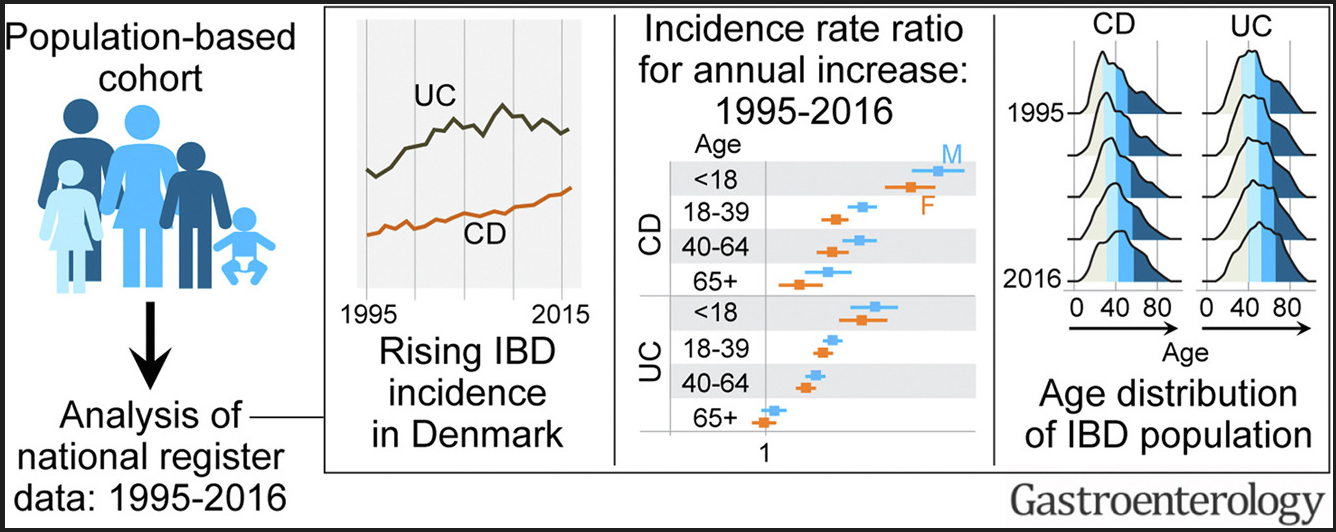
M Agrawal et al. Gastroenterol 2022; 163: 1547-1554. Open Access! The Rising Burden of Inflammatory Bowel Disease in Denmark Over Two Decades: A Nationwide Cohort Study

Key findings:

  • Between 1995 and 2016, the incidence rate (95% confidence interval) per 100,000 person-years rose from 9.1 (8.3–10.0) to 17.8 (16.8–19.0) for CD, and from 21.0 (19.8–22.3) to 28.4 (27.0–29.8) for UC.
  • The highest increase in CD and UC incidence rates occurred in children and young adults, respectively.
  • The prevalence of IBD doubled from 1995 to 2016; the greatest increase (2.5-fold) was in UC prevalence among individuals aged >40 years. During this period, the median age of the IBD population increased by 6 to 7 years.

Y Pan et al. Inflamm Bowel Dis 2022; 28: 1865-1871. Utility of Therapeutic Drug Monitoring for Tumor Necrosis Factor Antagonists and Ustekinumab in Postoperative Crohn’s Disease

In this retrospective study (n=130), therapeutic drug levels in the postoperative period were associated with improved outcomes for anti-TNF agents (infliximab (IFX) or adalimumab (ADA) but NOT for ustekinumab (UST):

  • In patients with IFX ≥3 µg/mL, higher rates of deep remission (39% vs 0%; P = .02) existed compared with those with IFX less than 3 µg/mL. This was true for clinical remission (44% vs 9%; P = .04) and objective (83% vs 62%; P = .1) remission. 
  •  In patients with ADA ≥7.5 µg/mL, rates of deep (42% vs 0%; P = .02), clinical (42% vs 0%; P = .02), and objective (88% vs 40%; P = .007) remission were higher than patients with lower concentrations.
  • For UST, rates of deep (28% vs 17%; P = 1.0), clinical (33% vs 33%; P = 1.0), and objective (70% vs 67%; P = 1.0) remission were similar between patients regardless of drug concentration.

S Sasidharan et al. Inflamm Bowel Dis 2022; 28: 1833-1837. Fecal Calprotectin Is a Predictor of Need for Rescue Therapy in Hospitalized Severe Colitis

In this retrospective study (n=147), a fecal calprotectin >800 mcg/g independently predicted the need for inpatient medical rescue therapy (odds ratio, 2.61; 95% CI, 1.12-6.12). An admission calprotectin >800 mcg/g independently predicted surgery within 3 months (odds ratio, 2.88; 95% CI, 1.01-8.17). My take: This is the least surprising study I’ve read this past month —those with more severe colitis, based on calprotectin values, were more likely to need more intensive treatments.

R Dawson et al. Inflamm Bowel Dis 2022; 28: 1859-1864. Comparing Effectiveness of a Generic Oral Nutritional Supplement With Specialized Formula in the Treatment of Active Pediatric Crohn’s Disease

In this retrospective pediatric study (n=171), the authors found that a generic oral supplement (Fortsip) was as effective as a specialized formula (Modulen IBD) for enteral nutrition. “No difference was demonstrated in remission rate (Fortisip n = 67 of 106 [63%] vs Modulen IBD n = 41 of 64 [64%], P = .89), nonadherence rate (Fortisip n = 7 of 106 [7%] vs Modulen IBD 3 of 64 [5%], P = .57) or method of administration.” The main difference in outcome was a lower expense in the group receiving the generic formula. My take: This study is in agreement with previous studies.

Related blog posts:

Quality Improvement: Fewer Xrays for Constipation

ME McSweeney et al. J Pediatr 2022; 251: 127-133. A Quality Improvement Initiative to Reduce Abdominal X-ray use in Pediatric Patients Presenting with Constipation

Key findings:

  • In total, 6723 patients completed new patient gastroenterology visits for a primary diagnosis of constipation between 2013 and 2019. Of these, 993 (14.8%) patients had abdominal radiographs taken within 24 hours of their initial visit. Over the 7 years of this project, a mean frequency of abdominal radiograph use decreased from 24% to less than 11%.
  •  No increases in subsequent emergency department visits or hospitalization for constipation within 30 days of patients’ initial visits were seen.
  • One of the keys to improvement was providing data to individual providers

The authors note that routine radiographs are NOT recommended by expert guidelines in patients presenting with functional constipation.

My take: The trend of using radiographs less frequently shows that a QI project can help avoid low value testing though more than 10% is still too high.

Related blog posts:

Unfavorable Trends in Reflux Management of Infants & Update on USNWR Rankings

T Achler et al. J Pediatr 2023; 252: 141-145. Trends and Correlates of Early-Life Exposure to Acid-Suppressant Therapy in Israel (2005-2020)

In this retrospective study from Israel with nearly 600,000 children, key findings:

  • The incidence rate of acid-suppressant medication use increased by 2.8-fold from 18.2 per 1000 in 2005 to 51.0 per 1000 in 2020
  • Primary care providers accounted for 74.8% of prescribing physicians in 2005 vs 96.1% in 2020, whereas the prevalence of prescribing gastroenterologists decreased from 18.8% to 2.8%
  • Other factors associated with increased use: first born child, male sex, multiple births and greater socioeconomic status; this latter group is more likely driven by health-seeking tendency rather than financial disparity due to national health insurance

Comments: This high use of acid suppression medications in infancy has been reported in multiple other studies despite the lack of efficacy in prior studies. Pediatricians, more than pediatric gastroenterologists, may be less familiar with the GERD guidelines and potential adverse effects of acid suppression (including association with an increase food allergies).

My take: This Israeli study shows that pediatric gastroenterologists are using acid blockers less in infants while pediatricians are using them more often. It is interesting that after the first child, parents are less likely to seek medical attention & are more tolerant of reflux symptoms.

Related blog posts:

Siesta Key, FL –what are the qualifications for driving a vehicle in FL?

Related blog post: U.S. News & World Report’s Flawed Rankings Plus One

Brief Updates: H pylori Resistance Rates, VEDOKIDS, Increasing Bariatric Surgery in Kids

F Megraud et al. AJG 2022; doi: 10.14309/ajg.0000000000002045 Open Access: Rates of Antimicrobial Resistance in Helicobacter pylori Isolates From Clinical Trial Patients Across the US and Europe. Resistance rates were established in isolates from 907 participants. Overall, 22.2% were resistant to clarithromycin, 1.2% to amoxicillin, and 69.2% to metronidazole.

O Atia et al. Lancet Gastroenterol Hepatol 2022; DOI:https://doi.org/10.1016/S2468-1253(22)00307-7. Outcomes, dosing, and predictors of vedolizumab treatment in children with inflammatory bowel disease (VEDOKIDS): a prospective, multicentre cohort study

Methods: VEDOKIDS was a paediatric, multicentre, prospective cohort study done in 17 centres in six countries. We report the 14-week outcomes as the first analyses of the planned 3-year follow-up of the VEDOKIDS cohort

Key findings:

  • 32 (42%) of 77 children with ulcerative colitis and 21 (32%) of 65 children with Crohn’s disease were in steroid-free and exclusive enteral nutrition-free remission at 14 weeks.
  •  In children who weighed less than 30 kg, the optimal drug concentration associated with steroid-free and exclusive enteral nutrition-free clinical remission was 7 μg/mL at week 14, corresponding to a dose of 200 mg/m2 body surface area or 10 mg/kg

USAToday 11/14/22: More teens are getting weight loss surgery but some experts think more needs to be done

And of course, an important story from The Onion: Arsonist Worried He Forgot To Turn Stove On Before Leaving House

Disclaimer: This blog, gutsandgrowth, assumes no responsibility for any use or operation of any method, product, instruction, concept or idea contained in the material herein or for any injury or damage to persons or property (whether products liability, negligence or otherwise) resulting from such use or operation. These blog posts are for educational purposes only. Specific dosing of medications (along with potential adverse effects) should be confirmed by prescribing physician.  Because of rapid advances in the medical sciences, the gutsandgrowth blog cautions that independent verification should be made of diagnosis and drug dosages. The reader is solely responsible for the conduct of any suggested test or procedure.  This content is not a substitute for medical advice, diagnosis or treatment provided by a qualified healthcare provider. Always seek the advice of your physician or other qualified health provider with any questions you may have regarding a condition.

FDA Approves Pharmaceutical Fecal Transplant Product

FDA News Release (11/30/22): FDA Approves First Fecal Microbiota Product

“Rebyota is approved for the prevention of recurrence of Clostridioides difficile infection (CDI) in individuals 18 years of age and older. It is for use after an individual has completed antibiotic treatment for recurrent CDI.”

“Rebyota is administered rectally as a single dose [150 mL]. Rebyota is prepared from stool donated by qualified individuals….The effectiveness of Rebyota was evaluated in an analysis of data from a randomized, double-blind, placebo-controlled, multicenter study….the overall estimated rate of success in preventing recurrent CDI through 8 weeks was significantly higher in the Rebyota group (70.6%) than in the placebo group (57.5%).”

My take: As pharmaceutical companies gain approval for fecal transplant products, I would anticipate a significant increase in costs. This product seemed to have a fairly low success rate compared to placebo.

Related blog posts:

White Sands National Park. New Mexico.

Improving Reflux While You Sleep

JM Schuitenmaker et al. Clin Gastroenterol Hepatol 2022; 20: 2753-2762. Open Access! Sleep Positional Therapy for Nocturnal Gastroesophageal Reflux: A Double-Blind, Randomized, Sham-Controlled Trial

Methods: This was a double-blind, randomized, sham-controlled trial in patients (n=100) with nocturnal symptoms of gastroesophageal reflux. Patients were advised to sleep in the left lateral decubitus position and were assigned randomly (1:1) to an electronic sleep positional therapy wearable device (applied with an adhesive sticker), programmed to either produce a vibration when in the right lateral position (intervention) or only during the first 20 minutes (sham).

Key findings:

  • In the intention-to-treat analysis, the rate of treatment success (defined as a 50% or more reduction in the nocturnal reflux score) was 44% in the intervention group (22 of 50) vs 24% in the sham group (12 of 50) 
  • There was increased time sleeping in the left lateral decubitus position (intervention 60.9% vs sham 38.5%)

My take: In those with nocturnal heartburn, this appears to be a helpful nonpharmacological tool.

Website for the company (side sleep technologies) that makes the device: The Left ” Your body will be conditioned to sleep at least 80% on your left within a week.” (I do not have any financial relationship with this company).

Related blog posts:

Disclaimer: This blog, gutsandgrowth, assumes no responsibility for any use or operation of any method, product, instruction, concept or idea contained in the material herein or for any injury or damage to persons or property (whether products liability, negligence or otherwise) resulting from such use or operation. These blog posts are for educational purposes only. Specific dosing of medications (along with potential adverse effects) should be confirmed by prescribing physician.  Because of rapid advances in the medical sciences, the gutsandgrowth blog cautions that independent verification should be made of diagnosis and drug dosages. The reader is solely responsible for the conduct of any suggested test or procedure.  This content is not a substitute for medical advice, diagnosis or treatment provided by a qualified healthcare provider. Always seek the advice of your physician or other qualified health provider with any questions you may have regarding a condition.

Short Bowel Syndrome is a Full Time Job

C Belza et al. J Pediatr 2022; 250: 75-82. Carrying the Burden: Informal Care Requirements by Caregivers of Children with Intestinal Failure Receiving Home Parenteral Nutrition

This was a cross-sectional study of caregivers of children (n=34) with intestinal failure receiving long-term parenteral nutrition. 97% of caregivers were the child’s mother and median duration of providing care among respondents was 3.4 years.

Key findings:

  • Caregivers reported a median of 29.2 hours per week (IQR, 20.8-45.7 hours per week) of direct medical care. 6.1 hours was spent on providing PN and care of the central venous catheter. 6.3 hours was spent on enteral nutrition and enteral tube care.

In the associated editorial (pgs 10-12 by S Mauskar, JG Berry. Open Access! “Failing to Support Families’ Burden of Care for Children with Intestinal Failure“), the authors note that in the U.S. there has been a growing population of children at home with greater medical complexity and reliance on medical technology and that the need for home nursing support “greatly exceeds the supply, leaving many families on their own to care for their children.”

They also note that the medical literature (over the last 25 years) on caregiver burden for children notes it is associated with “marital discord, loss of employment, and financial struggle…In the U.S. a substantial portion of children with medical complexity assisted with technology live in single-parent households, in poverty, and are exposed to adverse childhood events…very vulnerable to the effects of high caregiving burden.”

My take: This study shows that while we have an effective treatment for intestinal failure, the burden of this treatment is very high even with care coordination and social worker help. Understanding this burden could help medical providers be more empathetic for the family who is struggling with home medical care (eg. child with recurrent admissions for central line infections).

Related blog posts:

Island Ford National Recreational Area. Sandy Springs, GA

When Are UGI Polyps Important for Familial Adenomatous Polyposis?

According to ESPGHAN guidelines -see blog: What I Like About ESPGHAN Familial Adenomatous Polyposis Position Paper

  • Recommendation 5: Despite the presence of gastric polyps in children, and the
    later risk of duodenal polyposis and ampullary cancer in adult practice, there is no justification to commence routine UGI surveillance until the age of 25 years.
    (weak recommendation, low-quality evidence, consensus agreement 90%)

A recent study questions this recommendation: T Middleton, I Sugarman. JPGN Reports Feb 2023: doi: 10.1097/PG9.0000000000000269. Open Access: Upper Gastrointestinal Screening of Polyp Load in Children With Familial Adenomatous Polyposis: Is It Required?

Methods: A prospective record of all upper GI endoscopies in children (aged 9 to 17) with FAP was kept across a 12-year period

Key finding:

  • Thirty-eight esophagogastroduodenoscopies (79%) identified at least 1 gastric or duodenal polyp in 22 (79%) patients; 10 (36%) patients had gastric adenomas
  • Eight (29%) patients showed very high numbers of polyps
  • All 21 patients who had duodenal polyps had adenomas
  • No patients had malignancy

My take: This is a provocative study. Is there a benefit for the patient in identifying gastric/duodenal polyps at a younger age?

Figure 1

Treatments for “Bad” Inflammatory Bowel Disease (Part 3)

D Tarabar et al. Inflamm Bowel Dis 2022; 28: 1549-1554. A Prospective Trial with Long Term Follow-up of Patients With Severe, Steroid-Resistant Ulcerative Colitis Who Received Induction Therapy With Cyclosporine and Were Maintained With Vedolizumab

As noted previously, in my view, “bad” inflammatory bowel disease (IBD) occurs when treatments are not working; though, many would argue that any IBD is bad IBD. Today’s post concludes several reviewed articles that focus on the problem of IBD that is not responding well to treatment.

Methods: Seventeen steroid-resistant adult UC patients were treated with cyclosporine in combination with vedolizumab, with a follow up of 52 weeks. Only 2 patients in this chort had failed infliximab therapy. The authors administered IV cyclosporine at a dose of “2 to 4 mg/kg/d IV for 7 days, titrated to a goal trough level of 300 to 400 ng/mL.” In those with a response, patients were started on oral therapy along with IV vedolizumab. During oral therapy (for 8 weeks), goal trough levels were 150 to 250 ng/mL (measured weekly).

Key findings:

  • Fifteen (88%) of 17 patients initially responded to cyclosporine and were started on vedolizumab
  • At week 10, 11 (73%) of 15 patients had achieved endoscopic remission with a Mayo score of ≤1. 
  • At week 26, 14 (93%) of 15 of the patients were in clinical remission and 11 (73%) were in endoscopic remission.
  • At week 52 of follow-up, 10 (71%) of 14 of these patients continued to be in endoscopic remission and 11 (79%) of 14 were in clinical remission.
  • Colectomy-free survival rate was 82% (n = 14 of 17) at 1 year and mean C-reactive protein, erythrocyte sedimentation rate, and fecal calprotectin levels were 3.2 mg/L, 16.1 mm/h, and 168.3 µg/g, respectively

My take: Cyclosporine is a fast-acting medication and thus appropriate as a salvage therapy in those with severe disease. Concerns for adverse effects have led most pediatric GIs to favor infliximab for refractory severe UC. However, in selected patients, it could be a useful “bridge” to slower-acting long-term treatments. It is possible (likely) that insurance issues would be less with cyclosporine than tofacitinib as a bridge therapy.

**An alternative agent to cyclosporine is tacrolimus. Hamel B, Wu M, Hamel EO, Bass DM, Park KT. Outcome of tacrolimus and vedolizumab after corticosteroid and anti-TNF failure in paediatric severe colitis. BMJ Open Gastroenterol. 2018;5(1):e000195 (“Positioning Biologic Therapies in the Management of Pediatric Inflammatory Bowel Disease” & 14% of U.S. Infected with COVID-19)

Related blog posts:

Disclaimer: This blog, gutsandgrowth, assumes no responsibility for any use or operation of any method, product, instruction, concept or idea contained in the material herein or for any injury or damage to persons or property (whether products liability, negligence or otherwise) resulting from such use or operation. These blog posts are for educational purposes only. Specific dosing of medications (along with potential adverse effects) should be confirmed by prescribing physician.  Because of rapid advances in the medical sciences, the gutsandgrowth blog cautions that independent verification should be made of diagnosis and drug dosages. The reader is solely responsible for the conduct of any suggested test or procedure.  This content is not a substitute for medical advice, diagnosis or treatment provided by a qualified healthcare provider. Always seek the advice of your physician or other qualified health provider with any questions you may have regarding a condition.

Island Ford National Recreational Area, Sandy Springs GA

Treatments for “Bad” Inflammatory Bowel Disease (Part 2) & Reassuring Data on Tofacitinib

As noted yesterday, in my view, “bad” inflammatory bowel disease (IBD) occurs when treatments are not working; though, many would argue that any IBD is bad IBD. Over the next few days, reviewed articles will focus on the problem of IBD that is not responding well to treatment. This article reports on the use of tofacitinib to avoid colectomy in children with severe ulcerative colitis.

BD Constant et al. JPGN 2022; 75: 724-730. Tofacitinib Salvage Therapy for Children Hospitalized for Corticosteroid- and Biologic-Refractory Ulcerative Colitis

This small (n=11) retrospective single-center cohort study of consecutive hospitalized pediatric patients initiating tofacitinib for refractory ulcerative colitis from 2018 to 2021. All patients demonstrated nonresponse to both intravenous corticosteroids and anti-TNF therapy prior to tofacitinib initiation.

Key findings:

  • Eight of 11 patients remained colectomy-free at 90 days following hospital admission and 6 remained colectomy-free over median 182-day follow-up, including 4 of whom remained on tofacitinib
  • The authors note that three patients started with TID dosing and eight received BID dosing (10 mg per dose). The higher dosing was influenced by a case control study by Bernstein et al which showed a 15% 90-day colectomy rate among adults with acute severe ulcerative colitis (ASUC), particularly those dosed at TID (Open Access: Clin Gastroenterol Hepatol 2021; 19: 2112-2120. Tofacitinib for Biologic-Experienced Hospitalized Patients With Acute Severe Ulcerative Colitis: A Retrospective Case-Control Study)
  • “Remission rates peaked at 12-16 weeks and decreased at 6 months…tofacitinib may …bridge to slower-acting and possibly safer long-term therapies such as ustekinumab or vedolizumab”
  • The median time to corticosteroid discontinuation was 89 days
  • No serious tofacitinib-related adverse events were observed

My take: Given the small numbers, this is clearly an area where cooperation (& ImproveCareNow) could be helpful in determining the safety and effectiveness of tofacitinib for pediatric ASUC. Also, if tofacitinib is used as a ‘bridge’ this is likely to present insurance coverage issues.

Related article:

Hoisnard L, Pina Vegas L, Dray-Spira R, et al. Annals of the Rheumatic Diseases Published Online First: 05 October 2022. doi: 10.1136/ard-2022-222824. Risk of major adverse cardiovascular and venous thromboembolism events in patients with rheumatoid arthritis exposed to JAK inhibitors versus adalimumab: a nationwide cohort study Methods: This was a nationwide population-based cohort study (n=15,835) of the French national health data system, the exposed group initiating a JAKi and non-exposed group initiating adalimumab Key findings:  Risk of major adverse cardiovascular events (MACEs) for the exposed versus non-exposed group was not significant: HRw 1.0 (95% CI 0.7 to 1.5) (p=0.99), nor was risk of VTEs significant: HRw 1.1 (0.7 to 1.6) (p=0.63). This study provides reassuring data regarding the risks of MACEs and VTEs in patients initiating a JAKi versus adalimumab, including patients at high risk of cardiovascular diseases.

Related blog posts:

From Crohn’s and Colitis Foundation, Georgia Chapter, December Newsletter: Donate to Cohen-Saripkin Fund