Excluding those who died within the first 3 months, the 10‐year patient survival and graft survival rates were 92.6% and 77.1%, respectively, in the PSC with IBD (PSC‐IBD) group and 97.1% and 83.2% in the isolated PSC group, respectively.
The rate of recurrent PSC was 21% in the PSC‐IBD group and 11% in the isolated PSC group
Thus, it appears that having pre-existing IBD did not significantly influence survival after transplantation.
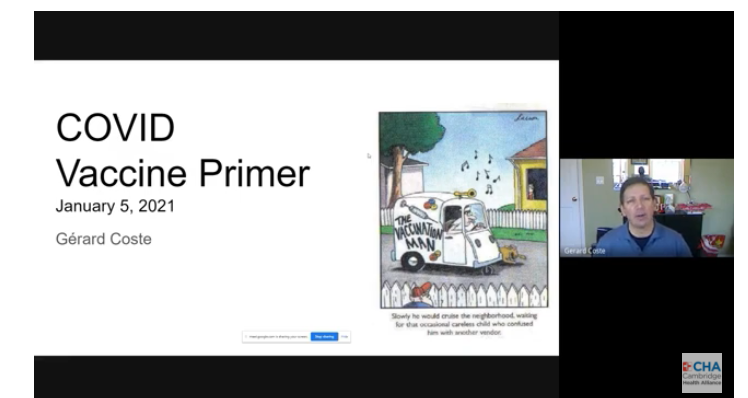
“A doctor researched the safety of the COVID-19 vaccinations not only to counsel his patients and staff but also to make his own decision about whether to get the vaccine.
Carey Goldberg of WBUR has the story about how most of the staff at the Cambridge Health Alliance COVID-19 clinic in Somerville, Massachusetts, “got to yes.”
22 minute presentation: COVID Vaccine Primer available at NPR website is a really good presentation (for more widespread adoption)
Topical steroids were most effective in inducing histologic remission: 54.8% compared to 36.1% for PPIs and 18.5% for empiric elimination diet; histologic remission and response was 67.7%, 49.7%, and 48.1% respectively.
Topical steroids were most effective in inducing clinical and histologic remission or response (in 67.7% of patients), followed by empiric elimination diets (in 52.0%), and PPIs (in 50.2%).
However, PPIs were the first-line treatment for 76.4% of patients, followed by topical steroids (for 10.5%) and elimination diets (for 7.8%).
My take: This data (and others) indicate that topical steroids are most effective pharmacologic therapy; at some point, I expect that they will become the most frequently used.
“Layering two less specialized masks on top of each other can provide comparable protection [to N95]. Dr. Marr recommended wearing face-hugging cloth masks over surgical masks, which tend to be made with more filter-friendly materials but fit more loosely. An alternative is to wear a cloth mask with a pocket that can be stuffed with filter material, like the kind found in vacuum bags.”
“The committee strongly recommends that adults with moderate‐to‐severe CVS receive a tricyclic antidepressant (TCA) such as amitriptyline, as a first‐line prophylactic medication. “
Topiramate, Aprepitant, “Zonisamide or levetiracetam and mitochondrial supplements (Coenzyme Q10, L‐carnitine, and riboflavin) are conditionally recommended as alternate prophylactic medications, either alone or concurrently with other prophylactic medications.”
“For acute attacks, the committee conditionally recommends using serotonin antagonists such as ondansetron, and/or triptans such as sumatriptan or newer agents such as aprepitant (NK1 receptor antagonist) to abort symptoms.”
Evidence, dosing regimens, and algorithms are detailed in article
Sample ED CVS Protocol (for Adults):
____[name]____________ has an established diagnosis of Cyclic Vomiting Syndrome
Operational definition
* A recurring pattern of discrete episodes of severe vomiting, accompanied by profound nausea and/or severe abdominal pain * Patient returns to usual health status between episodes (may have inter‐episodic nausea and or dyspepsia) * In some patients, CVS episodes resemble a migraine attack * Patients may be restless, anxious, and distressed * Patients are not customarily dehydrated until late in the episode
Therapeutic goal
Rapid recognition and intervention may decrease severity of the attack and promote prompt resolution of symptoms
ED management
1. Clinical assessment: Pulse/Temp/BP/Weight, consciousness, and hydration 2. Laboratories/evaluation: CBC, urea, creatinine, LFT’s, lipase, glucose, and electrolytes EKG Urine analysis Diagnostic imaging at discretion of attending physician
Treatment
1. Intravenous fluids a. IV saline bolus if clinically dehydrated b. IV D5NS at 100%‐150% maintenance (suggested rate is 200 cc/h for a 70 kg adult.) 2. For vomiting and nausea a. IV ondansetron 8 mg IV × 1—may repeat q 4‐6 h if ondansetron is ineffective b. Consider diphenhydramine 50 mg IV and metoclopramide 10 mg IV c. Consider IV fosaprepitant 150 mg if available 3. For sedation a. IV lorazepam 1‐2 mg and b. IV diphenhydramine 50 mg for additional sedation 4. For migraine‐like presentation a. Sumatriptan nasal 20 mg (head forward technique) or b. Sumatriptan subcutaneous injection 6 mg/0.5 mL 5. For pain a. IV ketorolac 30 mg if > 60 minutes from onset; may repeat 15 mg q 6 h x 2 (maximum 60 mg/d) b. Opioids may be considered as part of an ongoing treatment plan in refractory patientsa
Reassess
1. Treatment failure—intensify treatment as indicated above or admit patient 2. Positive treatment response—discharge a. Continue ondansetron (soluble tablets) q 6‐8 h × 24‐48 h if initially effective b. Continue lorazepam × 24‐48 h if initially effective c. Continue NSAIDs for pain as needed
Disclaimer: This blog, gutsandgrowth, assumes no responsibility for any use or operation of any method, product, instruction, concept or idea contained in the material herein or for any injury or damage to persons or property (whether products liability, negligence or otherwise) resulting from such use or operation. These blog posts are for educational purposes only. Specific dosing of medications (along with potential adverse effects) should be confirmed by prescribing physician. Because of rapid advances in the medical sciences, the gutsandgrowth blog cautions that independent verification should be made of diagnosis and drug dosages. The reader is solely responsible for the conduct of any suggested test or procedure. This content is not a substitute for medical advice, diagnosis or treatment provided by a qualified healthcare provider. Always seek the advice of your physician or other qualified health provider with any questions you may have regarding a condition
The study utilized data and plasma markers from 110,761 individuals from Copenhagen, Denmark, and 334,691 individuals from the UK Biobank. GRS scores were from 0 to 6 based on three common genetic variants: PNPLA3, TM6SF2, and HSD17B13.
Key finding:
A GRS of 5 or 6 (compared to GRS of 0) for fatty liver disease confers up to a 12‐fold higher risk of cirrhosis and up to a 29‐fold higher risk of HCC in individuals from the general population
Only 0.5% of individuals had a GRS of 5 or 6. “A GRS of 4 [or more] which still conveyed large risks (cirrhosis, OR =5.2; HCC, OR =3.3) was found in approximately 5% of this population.”
Using a GRS of 4 or more, the positive predictive value of GRS-based test in the Danish population is “0.008 for cirrhosis and 0.003 for HCC. In other words, among 1000 persons with GRS greater than or equal to 4, only 8 will develop cirrhosis and 3 will develop HCC.”
My take: This study confirms that specific genetic variants increase the risk of complications from fatty liver disease. However, poor predictive value will likely preclude routine application.
Methods: Data were obtained from the second National Firearms Survey, conducted online 30 July 2019 to 11 August 2019. Respondents (n=4030) were asked, “Has a physician or other health care practitioner ever spoken to you about firearm safety?”
Key finding:
Of all respondents, 7.5% (95% CI, 6.6% to 8.6%) had ever discussed firearm safety with a provider (12.0% [CI, 9.9% to 14.6%] of those living with children vs. 5.3% [CI, 4.4% to 6.3%] in homes without children)
In the comments to this brief study, several useful points were made.
#1: Train physicians on this topic: “1. This is not taking a position regarding gun ownership; 2. Access to firearms is associated with suicide, accidents, and firearm-related violence; 3. State laws regarding safe firearm storage; 4. Principles of safe storage; 5. Principle of separate ammunition storage; 5. Concept of removing firearms to another location (e.g., a relative) when children are small.”
#2 We can do better. “It’s not that hard to ask the question or put into your intake questionnaire; Is there a gun in the house? and if yes is the answer, follow-up”
Related blog posts:
No Exaggeration: Too Many Children Are Dying in the U.S. “The sad fact is that a child or adolescent in the United States is 57% more likely to die by the age of 19 years than those in other wealthy nations.” This is due mainly to more deaths from MVAs and from gun violence.
Our office has participated in research for a 30 cal infant formula that is heading to the market in 2021. Nutricia is calling the formula Fortini. Link to website: Fortini (I have no financial ties/interest to this product or company).
I think having a commercial high calorie infant formula is advantageous and overcomes some of the limitations of concentrating infant formulas. Advantages:
This formula will eliminate problems with incorrect mixing and contamination. Despite careful oral and written instructions, many parents incorrectly prepare high calorie formulas
This formula, compared with concentrating a standard formula, is likely to have improved tolerability (less hyperosmolar) and better nutrient balance (eg. proper protein content)
The main potential disadvantage is going to be cost. I do not know the cost of the new formula but would be surprised if it is not significantly higher than concentrating a standard formula. At the same time, if the formula is able to improve tolerance and improve poor growth, there could be ‘downstream’ savings with less medical intervention/hospitalizations.
45% had mild (ALT <2 x ULN), 21% moderate (ALT 2-5 x ULN), and 6.4% severe liver injury (SLI) (ALT >5 x ULN).
Patients with SLI had a more severe clinical course, including higher rates of intensive care unit admission (69%), intubation (65%), renal replacement therapy (RRT; 33%), and mortality (42%).
In multivariable analysis, peak ALT was significantly associated with death or discharge to hospice (OR, 1.14; P = 0.044), controlling for age, body mass index, diabetes, hypertension, intubation, and RRT
Going into this new year, the more concerning effects of COVID-19 pandemic for the liver is likely to be the increase is severe chronic liver disease related to alcohol (and perhaps fatty liver disease too). The second article (BL Da et al. Hepatology 2020; 72: 1102-1108. Coronavirus Disease 2019 Hangover: A Rising Tide of Alcohol Use Disorder and Alcohol‐Associated Liver Disease) discusses the expectation of increased liver disease due to alcohol use disorder (AUD) and alcohol-associated liver disease (ALD). Key points:
In China, reports indicate a “>2-fold increase in harmful drinking after COVID-19, an effect likely repeated in the United States where an estimated 12.7% of the population has AUD and ALD is responsible for the highest hospitalization cost burden among all chronic liver diseases (CLDs).”
Increased alcohol use is likely to worsen other chronic liver diseases in addition to ALD
In addition, all of these effects are compounded by avoidance of health care facilities and delays in care
My take: COVID-19 infections have direct effects on the liver. However, the increased use of alcohol as well as weight gain are likely to be more important in terms of liver-related morbidity and mortality.
A long time ago in a galaxy far far away, I was taught that children with esophageal atresia would have reflux for life due to dysmotility following repair. Thus, these children presumably should remain on acid blockers indefinitely. It turns out that this was fiction (just like Star Wars).
In this retrospective study with 48 children, the authors had the following key points:
Microscopic esophagitis was found in 33 (69%)
Pathological esophageal acid exposure on MII-pH was detected in 12 (25%)
The presence of long-gap esophageal atresia was associated with abnormal MII-pH.
The authors conclude that “histological esophagitis is highly prevalent at 1 year after esophageal atresia repair, but our results do not support a definitive causative role of acid-induced GERD. Instead, they support the hypothesis that chronic stasis in the dysmotile esophagus might lead to histological changes.”
My take: Along with endoscopy, pH probe testing can be helpful in selecting which children with esophageal atresia should continue with PPI therapy.
It is very difficult to try to understand potential toxic substances in our environments. Some of the reasons for this are that there are always numerous simultaneous exposures and harm from substances can accrue over long periods. Once a substance is identified, it can take a long time to develop convincing evidence and even longer time frames to try to enact policy changes.
Background/Methods: Per- and polyfluoroalkyl substances (PFAS) are widespread and persistent pollutants that have been shown to have hepatotoxic effects in animal models. However, human evidence is scarce. PFAS chemicals have a myriad industrial/household applications which include nonstick cookware and products that confer resistance to stains. According to the editorial (MC Cave, pg 1518-21), some refer to PFAS as “forever chemicals” due to their decades-long half-lives.
The study authors used data from 1105 mothers and their children (median age 8.2 years) from the European Human Early-Life Exposome cohort. Key findings:
High prenatal exposure to PFAS resulted in children who were at higher risk of liver injury (odds ratio, 1.56; 95% confidence interval, 1.21–1.92)
PFAS exposure is associated with alterations in key amino acids and lipid pathways characterizing liver injury risk.












 gutsandgrowth