NASPGHAN Postgraduate Course 2014 -Liver Module

This blog entry has abbreviated/summarized the presentations. Though not intentional, some important material is likely to have been omitted; in addition, transcription errors are possible as well.  I’ve attached the course syllabus as well:

PG Course Syllabus – FINAL

Primary Sclerosing Cholangitis –Dennis Black (Le Bonheur Children’s Hospital)

  • Up-to-date review provided
  • GWAS (genome-wide association study) identified 16 significant risk loci which account for only 7.3% of overall risk; environmental influences need to be worked out
  • Pediatric studies –total of 328 patients reported to date

Is pediatric disease the same disease as in adults?

  • Incidence in pediatrics: 0.23/100,000 incidence vs 1.1/100,000 in adults
  • Mean age at diagnosis 13 years in pediatrics.
  • 30% of pediatric patients have overlap with autoimmune hepatitis which is higher than in adult patients.

Other pointers:

  •  Discussed “Autoimmune cholangitis.” Imaging needed in autoimmune hepatitis to look for primary sclerosing cholangitis.
  • IBD Association with PSC: IBD occurs in about 55% of PSC patients. If PSC diagnosed first, usually with right-sided colitis.  If IBD diagnosed first, than pancolitis is more commonly noted.
  • Add IgG4 as part of workup to rule out IgG4 cholangiopathy (sensitive to immunosuppression).

Treatment:

  • Supportive care for cholestasis (vitamins, pruritus management, etc
  • Monitoring for complications (rare cases of cholangiocarcinoma in pediatric population).  14 drugs tested to date –mainly in adults.  “All without proven positive impact on long-term outcome.”
  • Ursodeoxycholic acid –widely used but controversial because higher doses associated with worsened outcomes in adult study (Lindor et al).  Ongoing study in pediatric population with ursodeoxycholic acid.
  • Vancomycin (Aliment Pharm 37: 2013; 604.  Adults n=35). Both Flagyl and Vanc seemed to be helpful. Uncontrolled pediatric studies with vancomycin reviewed. Vancomycin study in the works for pediatric/adults.
  • No prospective randomized controlled trials in children and very little data in adults. Hard endpoints –very difficult in children/not practical in children (eg. portal hypertension, transplant, death).

PSC and Transplantation: PSC 2.6% of total transplants –long-term outcome is similar.

Related Blog Posts:

The Jaundiced Infant –Saul Karpen (Emory)

  •  “We don’t estimate jaundice very well… Our eyes do an awful job.”
  • Breastmilk Jaundice: Archives of Disease in Childhood 1978; 53: 506-16.  Only 12 of 853 had jaundice beyond 3 weeks of life.
  • Cholestasis. One of the best studies looking at etiology was recently published:  Hoerning A, et al Front Pediatr. 2014; 2: 65. N=82.  Only 1 patient had CMV.  41% had biliary atresia.

Biliary atresia (BA):

  • Reviewed study indicating that liver biopsy was most accurate means of making diagnosis of biliary atresia (blog comment: this study result may not be accurate in all settings as the interpretation relies on the ability/reliability of pathologist).  High utility of stool pigment & ultrasound (including flow).
  • In retrospective study (Pediatrics 2011; 128 e1428-33), all the BA patients had elevated direct bilirubin by 24-48 hrs of life.
  • Genetic panels and whole exome sequencing (~$4-7K) are happening now. Cost-effective.

Take-home message: Molecular understanding possible for conjugated/unconjugated hyperbilirubinemias. Direct bilirubin >1 is abnormal

Related blog posts:

Acute Liver Failure –Estella Alonso (Children’s Hospital of Chicago) (pg 43)

Points:

  • Few patients receive a full diagnostic workup (J Pediatr 2009;155:801‐6)–especially with regard to metabolic and autoimmune disorders.
  • Reviewed etiologies –most frequently “indeterminant” especially in younger patients.  Acetaminophen is most frequent etiology in teenagers and adults.
  • Systemic inflammation is common in acute liver failure (Bucuvalas, J JPGN 2013;56: 311–315). Soluble IL2 receptor alpha –significantly higher in patients that died.  Immune regulation important aspect regarding survival. Should steroids be used in cases with high inflammation?

Prognosis: Squires et al. J Pediatr 2006;148:652-8, Lee et al. JPGN 2005;40:575-81, Baliga et al. Liver Transpl 2004;10:1364-71

  • 33% ‐53% survival with native liver
  • 61% survival including LT
  • 70%‐80% after LT
  • Multiorgan failure is most common etiology of death. Bleeding is “a rare cause of mortality.”

Management:

  • Reviewed including coagulopathy/bleeding, cardiovascular collapse, hepatic encephalopathy/cerebral edema
  • Pediatric N-acetylcysteine Trial Squires, et al Hepatology 2013;57:1542‐9 N=182.  Patients with NAC seemed to do worse, but not statistically proven.  This study has stopped the widespread use of NAC in acute liver failure.
  • Discussed approach to neurological complications in ALF. Hussain et al, JPGN 2014;58:449‐56. Retrospective study (n=18). Early EEGs obtained. Hypertonic saline may be more effective than mannitol.  Hypothermia may be helpful adjunct.
  • Timing of Transplantation discussed (pg 54 in syllabus). Difficult to predict spontaneous survival.

Related blog posts:

Disclaimer: These blog posts are for educational purposes only. Specific dosing of medications/diets (along with potential adverse effects) should be confirmed by prescribing physician/nutritionist.  This content is not a substitute for medical advice, diagnosis or treatment provided by a qualified healthcare provider. Always seek the advice of your physician or other qualified health provider with any questions you may have regarding a condition.

This Year's Pumpkin

This Year’s Pumpkin

NASPGHAN Postgraduate Course 2014 -3rd Module

This blog entry has abbreviated/summarized the presentations. Though not intentional, some important material is likely to have been omitted; in addition, transcription errors are possible as well.  All of the speakers had terrific presentations.  The course syllabus is attached:

PG Course Syllabus 2014

The 3rd Module had a “potpourri” of GI problems.

Extraesophageal Manifestations of Gastroesophageal Reflux –Ben Gold, MD (GI Care For Kids, Atlanta) (pg 86)

Is reflux really the scurge of the earth and the cause of every malady known to human-kind in the head, neck, and lungs…?

Key points:

Airway protection: “Aerodigestive disease reflexes are intact by 38 weeks gestation.”

Central deglutition apnea: a normal protective mechanism to prevent aspiration during swallowing. (Hasenstab KA, Jadcherla, S. J Pediatr 2014; 165:250-255).  No proof at present that central apnea is caused by reflux though there is a biologic plausibility.

“Although reflux causes physiologic apnea, it causes pathologic apneic episodes in only a very small number of newborns and infants.”  “When reflux causes pathological apnea, the infant is more likely to be awake and the apnea is more likely to be obstructive in nature.”

Laryngeal Reflux:

  • Chronic cough, chronic laryngitis, hoarseness, and asthma may be associated with GERD BUT the data showing a relation between reflux and upper airway disease are weak
  • Airway symptoms attributed to reflux in adults include hoarseness, chronic cough, and globus sensation
  • Affected adults rarely have typical reflux symptoms
  • The sensitivity of laryngoscopic findings to identify reflux disease are poor. Sherman et al. Am J Gastroenterol. 2009;104:1278-95. Vandenplas et al. J Pediatr Gastroenter Nutr. 2009;49:498-547.

Asthma:

“Chronic cough, chronic laryngitis, hoarseness and asthma are multifactorial disease processes and acid reflux can be an aggravating cofactor.” GER is an unlikely contributor to asthma if reflux testing is negative.

“Two NIH-funded blinded, randomized placebo-controlled trials (RCT), one in adults (using esomeprazole), one in children (using lansoprazole) showed NO difference in asthma outcomes comparing placebo and acid suppression therapy”

Multi-Channel Intraluminal Impedance/pH probe studies: Pediatric studies are critically needed to determine if knowing the amount of nonacid reflux changes treatment or outcome

Proton Pump Inhibitors can cause gastric bacterial overgrowth (Rosen R et al JAMA Pediatr 2014; JAMA Pediatr. doi:10.1001/jamapediatrics.2014.696)

Ben Gold (speaker) and Jay Hochman prior to 5K Run

Ben Gold (speaker) and Jay Hochman prior to 5K Run

Related blog posts:

EoE: PPI, PPI-REE, TCS, OVB, SFED, 4FED….…Alphabet Distress — Sandeep K Gupta, MD (Indiana University) pg 105 in Syllabus

Treatment endpoints discussed -histologic, symptomatic, fibrosis, etc.

  • Proton pump inhibitor responsive eosinophilic esophagitis (PPI-REE) may work by blocking STAT6 binding to Eotaxin-3 promoter rather than by acid suppression (PLos ONE 2012;7:e50037).  PPIs work (eos <6/hpf) in in 30-40%.  May need high dose to work long-term (Dr Molina-Infante – DDW 2014)
  • Topical corticosteroids (TCS) -higher dose = better response.  (Budesonide. Gupta SK, Vitanza J, Collins, MH Clin Gastro Hepatol 2014 [ePub], Fluticasone. Butz BK. Gastroenterology 2014). Clinical symptoms do not correlate with histologic response. Discussed long term safety concerns.
  • Reviewed diets -elemental, targeted, 4-food elimination and 6-food elimination.

Related blog posts:

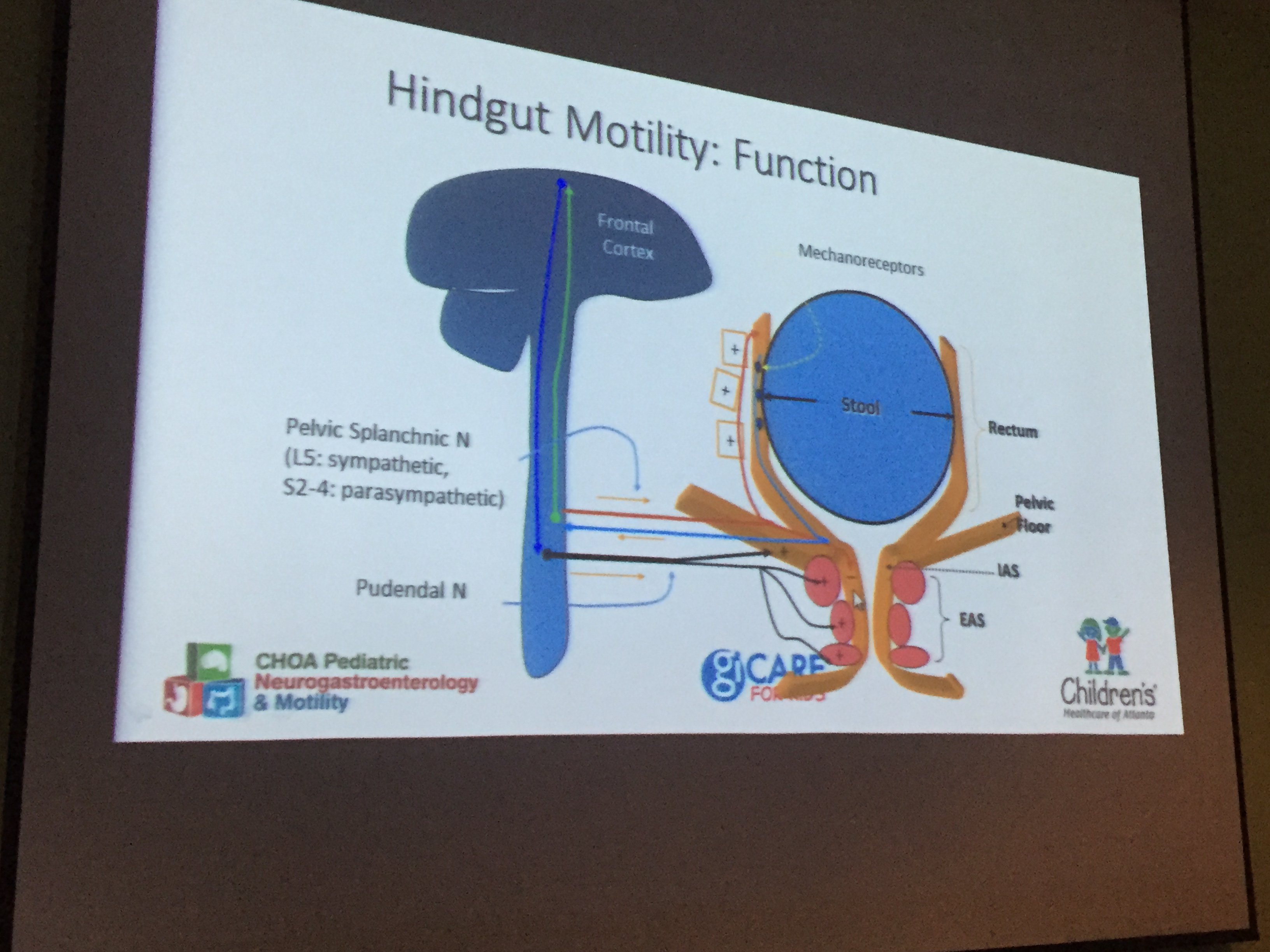
“Gotta keep on movin”: New tricks and treatments for motility disorders –Carlo DiLorenzo (Nationwide Children’s Hospital) pg 116 in Syllabus

Key points:

  1. Most important motility study is a normal study.  If normal study, then there is more concern for sensory dysfunction.   Look for significant findings on motility studies not minor changes.
  2. Key to confirm if motility disorder is present. Hx/o small intestinal transplant in medical child abuse/Munchausen syndrome by proxy (Trans Proc 1996; 28: 2790)
  3. New tool: wireless motility capsule (J Pediatr. 2013;162:1181-7)
  4. Easier to obtain full thickness biopsies (Gastrointest Endosc 2011;73:949-54)

Treatments reviewed -“try everything”

  • prucalopride (JPGN 2014; 57: 197-203
  • cisapride -still available
  • lubiprostone (JPGN 2014;58:283–291)
  • linaclotide boxed warning not for <17 years of age –though has been used by motility specialists
  • cyproheptadine (J Pediatr 2013; 163: 261-7) –use in dyspepsia
  • fludrocortisone -used in orthostatic intolerance
  • augmentin -for small bowel motility (JPGN 2012;54: 780–784)
  • octreotide -for bowel motility
  • pyridostigmine (Colorectal Disease 2010 12, 540–548)
  • iberogast
  • botulinum toxin (Gastrointest Endosc. 2012 ;75:302-9)
  • treat bacterial overgrowth
  • surgery: Jube, GJ tube, ileostomy. “Every child with pseudoobstruction on TPN needs a gastrostomy and an ileostomy –(me, now)”
  • gastric electrical stimulation
  • emerging treatment: Elobixibat (for constipation) Expert Opin. Investig. Drugs

Related blog posts:

What’s New in the Diagnosis and Management of Constipation –Manu Sood (Children’s Hospital of Wisconsin) -page 130 in Syllabus

Reviewed recent guidelines from NASPGHAN

“Miralax is considered a 1st line agent”

Outcomes in children with constipation:

  • Almost 50% of patients experienced at least one relapse in first 5 yrs.
  • Almost 20% of children were symptomatic at 10 yrs. follow up (Bongers ME, et al. Pediatrics. 2010)

Pointers:

  • Slow transit is common
  • Rectal compliance does not predict success with treatment. Van den Berg MM, et al. Gastroenterology 2009.  Patients with mega-rectum may have motility disturbance as well.
  • Success rates for antegrade continence enemas (ACE) 65% to 89%. Colon manometry can help predict ACE success.  Up to 40% may be able to stop ACE w/in 2 years

Related blog posts:

N4K –Nutrition4Kids

I wanted to let followers of this blog know of a website which was developed under the guidance of one of my partners, Stan Cohen.  The website Nutrition4kids.com has a wealth of information and resources on nutrition topics.  In addition to Dr. Cohen, the group of medical advisors includes Mel Heyman, Bailey Koch, Kylia Crane, David Cohen, W Allan Walker, and Kathleen Zelman.  The official rollout for the website was this past week.

About N4K (from website): N4K is a personal, trustworthy, and expert guide to learning about and making the right food choices for your individual child regardless of age, cultural norms, medical conditions or food sources. Parents trying to feed their kids well are faced with inconsistent and misleading labelling of food products. “All Natural,” “Reduced Fat,” “Reduced Sugar,” “Made with Real Fruit,” “Green” and other terms are all but useless when making good food choices.

“Decision Fatigue” & 1000 Posts

This post is number 1000!  I don’t think this fact is related to “decision fatigue.”

From NY Times –here’s the link: Decision Fatigue for Physicians

Here’s an excerpt:

The phenomenon of “decision fatigue” has been found in judges, who are more likely to deny bail at the end of the day than at the beginning. Now researchers have found…As the day wears on, doctors become increasingly more likely to prescribe antibiotics even when they are not indicated.

For the study, published in JAMA Internal Medicine, scientists analyzed diagnoses of acute respiratory infections in 21,867 cases over 18 months in primary care practices in and near Boston.

In two-thirds of the cases, antibiotics were prescribed even though they were not indicated… Over all, compared to the first hour, the probability of a prescription for antibiotics increased by 1 percent in the second hour, 14 percent in the third hour and 26 percent in the fourth.

For pediatric gastroenterologists, what do you think happens more often (or less often) due to decision fatigue?  excessive/less testing? excessive/less use of medications (like proton pump inhibitors)?

For Halloween yesterday –some people had some great outfits.

That's Dinesh under that mask

That’s Dinesh under that mask

Malpractice Reform, Defensive Medicine, and Real World Costs

A recent study (NEJM 2014; 371: 1518-25) showed that tort reform has little effect on medical costs, imaging rates, or admission by emergency room physicians.

One frequently heard argument in controlling medical costs is that fear of malpractice lawsuits drive physicians to order unnecessary care (“defensive medicine”); as such, if tort reform is broadly enacted this would presumably be an “easy” way to lower medical costs. To examine this issue more closely, the authors examined three states which changed the malpractice standard for emergency care from “ordinary negligence” to “gross negligence.”

  • Texas (in 2003)
  • Georgia (in 2005)
  • South Carolina (in 2005)

Using a 5% random sample of Medicare fee-for-service beneficiaries, the authors examined all ER visits to hospitals in the three reform states along with neighboring (control) states from 1997-2011 (total of 9 states examined).

Key finding: “We found no reduction in the rates of CT or MRI utilization or hospital admission in any of the three reform states and no reduction in charges in Texas or South Carolina.  In Georgia, reform was associated with a 3.6% reduction (95% confidence interval, 0.9 to 6.2%).”

While these reforms caused little changes in practice intensity and charges, the authors note that the Texas reforms, which affected other specialties as well, were associated with a 60% overall reduction in malpractice claims and 70% reduction in malpractice payments.

While the goal of tort reform may have been driven by costs, there could be other potential effects:

  • Physician job satisfaction
  • Improved physician regional supply
  • Reduction in claims
  • Less compensation for injured patients

Overall, the “effect of malpractice reform on the quality of care has been mixed.”

Take-away points (from authors)

  • “Physicians are less motivated by legal risk than they believe themselves to be”
  • “When legal risk decreases, the ‘path of least resistance’ may still favor resource-intensive care.”
  • “Malpractice reform may have less effect on costs than has been projected.”

Related blog post200 years of Health Law | gutsandgrowth


Rewarding Restraint vs. Reality

Congratulations to Jeff Lewis, MD.  He has been selected from the Georgia Dept. of Public Health to receive the Maternal & Child Health Treating Children with Special Healthcare Needs Award.  This award will be presented at the Georgia- American Academy of Pediatrics Annual Awards Luncheon at Pediatric on the Perimeter on Friday Oct. 31, 2014 from Noon-1:30 pm.

Previously this blog noted the low usage of bronchiolitis guidelines (If a Guideline Falls in The Woods, and No One Hears It …) More information on this subject and why it is important has been published (J Pediatr 2014; 165: 786-92, ed 655-57).

Why this is important:

  1. Bronchiolitis is one area that has been well-studied and the evidence is strong regarding unnecessary medications and evaluations.
  2. Bronchiolitis is common.  It is the fourth most common reason for hospital care in US children’s hospitals.
  3. Four of five “Choose Wisely” targets in pediatrics focus on bronchiolitis care, including not routinely ordering chest xrays (in uncomplicated cases), avoiding bronchodilators, not using systemic corticosteroids, and not using pulse oximetry when off supplemental oxygen.

However, when one looks at Figure 1 (from the study) -resource utilization over time and Figure 2 – heat map for adjusted use by 42 separate hospitals –it is apparent that only about 5 of the hospitals are successful in at least 3 of 5 areas (albuterol, racemic epinephrine, steroids, chest radiographs, and antibiotics).  The data from these figures is derived from 64,994 hospitalizations that were analyzed.

Median hospital use of nonrecommended tests/treatments:

  • Albuterol 52.4% with range: 3.5% to 81%
  • Racemic epinephrine 20.1% with range: 0.6% to 78.8%
  • Corticosteroids 10.9% with range: 4.1% to 46.6%
  • Chest xray: 54.9% with range 24.1% to 76.6%
  • Antibiotics: 38.4% with range 27.1% to 50.1%

From editorial: “Many of us practice in environments that reward “doing more” as a sign of thoroughness and better clinical care.  Nowhere is this truer than in our acadmeic centers…we need a culture change in our training centers toward role modeling and rewarding restraint in testing and treatment as part of high value care efforts.”

Take-home message: If excessive testing and treatments is rampant for problems like bronchiolitis in which they have been proven to be of low value, what chance is there for restraint in more murky areas?

Related blog post: Trying to make Cents out of Value Care |


Clinical Science Year in Review in Pediatric GI – NASPGHAN 2014

For many participants at NASPGHAN, the “year in review” presentations are a highlight.  This year was no exception.

This blog entry has abbreviated/summarized this presentation. Though not intentional, some important material is likely to have been omitted; in addition, transcription errors are possible as well.

William Balistreri –Clinical Science Year in Review 

Lay press remains excellent source of information.

Benefit of microbiome. (from NPR) Now there is elephant poop coffee -$645/lb ($70/cup).  Link: No. 1 Most Expensive Coffee Comes From Elephant’s No. 2 : The ... Collecting elephant poop is probably a less ideal job than what most of us have.  As for coffee, “make mine de-crap.”

Elephant Microbiome Collector

Topic of the year: Hepatitis C

  • 25 years since identification of Hepatitis C in 1989
  • Now approaching cure (Related blog post: Wiping out Hepatitis C | gutsandgrowth). All-oral highly effective regimen –newest regimen as easy as one pill per day for 8-12 weeks. Direct-acting antivirals (DAAs). Moving past 1st generation of DAAs: telaprevir/boceprevir with interferon/ribavirin.(refs = Pawlotsky, Gastroenterology 146:1176, 2014 and Schmidt, Clinical Gastroent Hepatol 12:728, 2014)
  • New drugs for HCV –just in time –increasing risk of HCV complications. Ann Intern Med 2014; 160: 293.
  • Goal –SVR –sustained virological response
  • Reviewed large number of articles: Sofosbuvir, Simeprevir, Sofosbuvir/Ledipasvir (Harvoni).  3-D regimen: ABT-450, ABT-267, ABT-333 –will be approved in coming weeks (Related blog post:Have You Heard of Harvoni? | gutsandgrowth)
    • Gane, NEJM 368:34, 2013
    • Zeuzem, NEJM 370:1993,2014
    • Kowdley, N Engl J Med 370:1879, 2014
    • Lawitz, Lancet 383:515, 2014
    • Feld, New England Journal of Medicine, 370:1594, 2014
  • Mild side effects with newer drug therapies
  • Awaiting pediatric studies.
  • Costly $1000/pill –“if dog swallows it,” may have to look for it in the stool
  • Stay updated with recommendations: www.hcvguidelines.org  (AASLD/IDSA)

Hepatitis B –success of vaccination.

  • Preventing perinatal transmission with HBIG/vaccine. JAMA 2013; 310: 974. Those born after 1984, with much lower HCC. Ann Intern Med 2014; 160: 828; Hepatology 2014; 60: 448
  • Give antivirals (eg. telbivudine) for HBeAg-positive mothers prior to delivery. (Related blog post: Hepatology Update -Summer 2014 | gutsandgrowth) Greenup, Journ of Hepatology 61:502, 2014 AND Zhang, Hepatology 60:468, 2014
  • Antiviral therapy lowers the risk of HCC. Hepatology 2014; 147: 143 (Wu et al).
  • Make sure children with IBD are being screened for hepatitis B. ~13% may not be immune. Moses, Am J Gastro 107:133, 2012

Trend of the Year: Social Media

  • Genome sequencing –tremendous advance. Families may push for this option on their own.
  • Magnets –banned. Social media allowed this problem to be quickly identified. (Related blog post: Buckyball Recall –It’s Official | gutsandgrowth)
  • Social media allows family to share information and get answers. Internet blogging allows families to reach out to scientists.
    • Schumacher, Pediatrics 133:e1345, 2014
    • Enns, Genetics in Medicine, March 2014
  • BiliCam –can take picture with mobile phones.

Biliary Atresia

Threat of the Year: Obesity along with NAFLD

  •  NAFLD can have significant liver histologic abnormalities even with normal ALT levels. J Pediatr 2014; 164: 707.
  • Clinical burden of NAFLD is not restricted to liver-related morbidity or mortality Armstrong, HEPATOLOGY 59:1174, 2014. Also, concern for obstructive sleep apnea and cardiovascular disease.  Sundaram, J Pediatr 164:699, 2014. Pacifico, HEPATOLOGY 59:461, 2014
  • Elastography is promising tool. Xanthakos, J Peds 164:186, 2014
  • Current treatment –lifestyle changes. Snacking contributes to fatty liver. Sleep curtailment is associated with obesity. Spaeth. SLEEP 36:981, 2013, Taveras, Pediatrics 133:1013, 2014, Mitchell, Pediat 131:e1428, 2013
  • Increased antibiotics in early life associated with obesity due to alteration of microbiome. Bailey, JAMA Pediatrics, Sept 29, 2014
  • Suggestion for future: “Diet Water.”

Diet Water.jpg

For those who want to learn more from Dr. Balistreri directly, I would recommend the Aspen Conference:

Aspen Meeting

Related link: Dr. Balistreri’s Review of the Growth and Development of the Pediatric Gastroenterology Specialty.


Wrongful Conviction: HCV Acquitted of Causing Diabetes & a Word on Ebola

First about Ebola –here’s the Ebola recommendation from the NEJM editors regarding quarantine:

An excerpt:

The governors of a number of states, including New York and New Jersey, recently imposed 21-day quarantines on health care workers returning to the United States from regions of the world where they may have cared for patients with Ebola virus disease. We understand their motivation for this policy — to protect the citizens of their states from contracting this often-fatal illness. This approach, however, is not scientifically based, is unfair and unwise, and will impede essential efforts to stop these awful outbreaks of Ebola disease at their source, which is the only satisfactory goal…We should be honoring, not quarantining, health care workers who put their lives at risk not only to save people suffering from Ebola virus disease in West Africa but also to help achieve source control, bringing the world closer to stopping the spread of this killer epidemic.

Take-home message: Read the entire editorial why quarantine is not the right approach for asymptomatic returning health care workers.

Direct Ebola Risk to Health Care Workers

Direct Ebola Risk to Health Care Workers

Now in followup to yesterday’s post about HCV and diabetes:

Even Perry Mason would have had a difficult time proving hepatitis C virus (HCV) did not cause diabetes until a recent publication (Hepatology 2014; 60: 1139-49, editorial 1121-23).

In this study using population-based data from the U.S. National Health and Nutrition Examination Survey (NHANES) with 15,128 adult participants, the authors show that the prevalence of diabetes and prediabetes did not differ by HCV status.  The authors used standardized definitions for diabetes and prediabetes and adjusted for major confounders.  The authors did note a relationship between elevated alanine aminotransferase (ALT) with diabetes regardless of HCV status.  In their cohort, 56.7% had normal glucose, 32.8% had prediabetes, 3.2% had undiagnosed diabetes, and 7.3% had diagnosed diabetes.  The mean age progressively increased in these groups: 40.8 years, 51.9 years, 58.9 years, and 59.2 years respectively.

Among those with diabetes, 10.5% were HCV RNA-negative and 12.0% were HCV RNA-positive –unadjusted for ALT values; the unadjusted HCV antibody status was nearly identical at 10.5% and 10.2% respectively. After adjustment, the OR for being HCV RNA-positive was 1.06 (P=0.53) with confidence limits of 0.59-1.90.

In examining the evidence, the editorial and the discussion review previous evidence of a significant association between HCV infection, insulin resistance, and diabetes.  The odds ratio for this association (HCV and diabetes) was estimated to be about 1.7.  The problems with this association were the following:

  • Much of the work was reported from tertiary care centers
  • Advanced liver disease (of any type) is a well-established risk factor for type 2 diabetes (T2DM)
  • Many studies may have included patients with nonalcoholic fatty liver disease which is another risk factor for diabetes
  • These studies did not control for ALT values

Bottomline (from editorial): This study “calls one to reconsider the dogma on the role of IR [insulin resistance] in the pathogenesis of HCV infection and its association with T2DM.” If there is an association, it is much smaller than previous estimates.

Related blog post: Treating HCV Helps Diabetics | gutsandgrowth

Diabetes and Hepatitis C –A Bad Combination

Until recently (see next post tomorrow), it has been well-recognized that there is a connection between chronic hepatitis C infection and diabetes mellitus (DM) (related previous post: Treating HCV Helps Diabetics | gutsandgrowth).  More data confirms that the development of diabetes is associated with increased risk of poor outcomes in HCV-infected patients.

  • Hepatology 2014; 60: 807-14
  • Hepatology 2014; 60: 823-31

In the first study, the authors used a nation-wide cohort comprising >99% of the Taiwanese population.  Among a random sample of 1 million enrollees, 6,251 adult chronic HCV patients were identified from 1997-2009.  Among those who developed DM during the study period (not before), after adjustment for confounding variables, diabetes was an independent predictor for cirrhosis (hazard ratio (HR) =2.5, P<0.001) and hepatic decompensation (HR=3.56, P+0.003).

In the second study, the authors identified consecutive chronic HCV-infected patients with cirrhosis who were hospitalized between 2006-2008 (n=348).  At baseline, 40% had DM.  DM was independently associated with development of ascites (P=0.057), renal dysfunction (P=0.004), bacterial infections (P=0.007), and hepatocellular carcinoma (P=0.016).  The authors suggest that improving diabetes control may improve the outcome of cirrhosis.

Take-home message: New-onset diabetes is a marker for progressive liver disease in patients with chronic HCV infection.  Whether diabetes has a causal role in HCV patient deterioration remains unclear.

Also noted, from Healio Gastroenterology, a recent study suggests that sofusbuvir/ledipasvir reduces HCV-related complications, here’s link: Sofusbuvir/ledipasvir Abstract

NASPGHAN Awards 2014

I wanted to congratulate/recognize this year’s awardees at NASPGHAN and to summarize some of the associated presentations.

This blog entry has abbreviated/summarized the presentations. Though not intentional, some important material is likely to have been omitted; in addition, transcription errors are possible as well.

Major Awards:

  1. Harry Shwachman Award: Peter Whitington (Children’s Hospital of Chicago) This award is given for major life long scientific contribution to the field of pediatric gastroenterology.
  2. Distinguished Service Award: Melvin Heyman (UCSF Division Chief and JPGN editor). This award is given for excellence and service in the field of pediatric gastroenterology.
  3. AAP Murray Davidson Award: Jeffrey Hyams (Division Chief Connecticut Children’s)This award is given to an outstanding clinician, scientist and educator.

Fellow Research Award: “Bile Acid Signatures in Children Confer Protection From Clostridium Difficil Infection” ME Tessier et al (Baylor College of Medicine). Conclusions: Stool bile acids profiles are different in children with C difficile infection and could be a predisposing factor.  C diff toxins may alter bile acid profiles via inducing epithelial FGF-19 production.

Young Investigator Award “Analysis of Candidate Genes by Whole Exome Sequencing in Very Early-Onset IBD” J Kelsen (CHOP), et al. VEO-IBD cohort. Excellent presentation! (Related blog post: Just the Beginning: Mutations in Very Early Onset ..)

  • Children <5 years/extensive controls.
  • Mutation Findings: IL10RA/IL21R variants, RAG2/PIK3R1 variants
  • Presentation included phenotypic description (clinical and immunity/functional analysis)
  • Gut microbiome development being studied as well
  • Trying to combine microbiome data with genomic data.

William Balistreri Prize “A Prospective Newborn Screening Study for Biliary Atresia” Sanjiv Harpavat (Baylor College of Medicine) et al.   Excellent talk!

Background: 67 infants with biliary atresia (2007-2014) on retrospective review—ALL had elevated conjugated/direct bilirubin levels in first 24-48 hours of life. (Related blog post: Diagnosing biliary atresia earlier | gutsandgrowth)

Repeat testing at 2 weeks can identify those infants that need to be followed closely.  Workup needed for those who remained abnormal at 2 weeks of life.

This algorithm was studied at 4 different hospitals in Houston with 2-12% premature infants)

In newborn period:

  • N=11,636 –121 abnormal on newborn testing (based on hospital’s normative values -usually direct bilirubin >0.4)
  • When repeated at 2 weeks: 102 of these 121 were normal/only 12 continued to test high (2 with BA, 1 A1AT, 1 Rh disease, 8 resolved).  The two patients detected with biliary atresia is in line with the expected frequency of ~1 in 5000.
  • 7 missed retesting. 3 died (congenital heart disease), 2 missed followup, 2 had PCP refuse retesting.
  • Testing results: 100% sensitivity. Good specificity with repeat testing.

Baylor Workup approach to cholestasis:

  • 3-4 day evaluation
  • Day 1: liver panel, A1AT typing, U/S, CXR
  • Days 2-4: liver biopsy/percutaneous cholangiogram, +/- Kasai

Current AAP recommendation (per Ronald Sokol) is for all infants to have fractionated bilirubin.

Take-home message: How can we diagnose every infant on time? Possibly check every infant for direct/conjugated bilirubin in first 48 hours.

Young Clinical Investigator Award: “Poop-MD: A mobile health application accurately identifies acholic stools.” Douglas Mogul

Problem of delayed diagnosis has been improved in some studies with stool color cards. With emergence of smart phones (80% of 18-35 year olds have smart phones), opportunity to identify echoic stools with new technology.

  • PoopMD. Software determines whether stool is bloody, acholic, etc. Can email doctor and place reminder. FREE app.
  • Parents takes the picture of stool and then app analyzes.
  • Pilot study with 45 initial photographs reviewed by panel of 7 pediatricians
  • When at least 6 physicians agreed on stool color as being acholic (n=7), this was tested against app
  • App: 100% sensitivity for acholic stools. 89% specificity.
  • Working on Spanish version and improved interface.

Other awards:

NASPGHAN Foundation Awards

NASPGHAN Foundation Awards

Sponsored Awards

Sponsored Awards