I am a pediatric gastroenterologist at GI Care for Kids (previously called CCDHC) in Atlanta, Georgia. The goal of my blog is to share some of my reading in my field more broadly. In addition, I wanted to provide my voice to a wide range of topics that often have inaccurate or incomplete information.
Before starting this blog in 2011, I would tear out articles from journals and/or keep notes in a palm pilot. This blog helps provide an updated source of information that is easy to access and search, along with links to useful multimedia sources.
I was born and raised in Chattanooga. After graduating from the University of Virginia, I attended Baylor College of Medicine. I completed residency and fellowship training at the University of Cincinnati at the Children’s Hospital Medical Center. I received funding from the National Institutes of Health for molecular biology research of the gastrointestinal tract.
During my fellowship, I had the opportunity to work with some of the most amazing pediatric gastroenterologists and mentors. Some of these individuals included Mitchell Cohen, William Balistreri, James Heubi, Jorge Bezerra, Colin Rudolph, John Bucuvalas, and Michael Farrell. I am grateful for their teaching and their friendship. During my training with their help, I received a nationwide award for the best research by a GI fellow.
I have authored numerous publications/presentations including original research, case reports, review articles, and textbook chapters on various pediatric gastrointestinal problems. In addition, I have been recognized by Atlanta Magazine as a "Top Doctor" in my field multiple times.
Currently, I am the vice chair of the section of nutrition for the Georgia Chapter of the American Academy of Pediatrics. In addition, I am an adjunct Associate Clinical Professor of Pediatrics at Emory University School of Medicine. Other society memberships have included the North American Society for Pediatric Gastroenterology Hepatology and Nutrition (NASPGHAN), American Academy of Pediatrics, the Food Allergy Network, the American Gastroenterology Association, the American Association for the Study of Liver Diseases, and the Crohn’s and Colitis Foundation.
As part of a national pediatric GI organization called NASPGHAN (and its affiliated website GIKids), I have helped develop educational materials on a wide-range of gastrointestinal and liver diseases which are used across the country. Also, I have been an invited speaker for national campaigns to improve the evaluation and treatment of gastroesophageal reflux disease, celiac disease, eosinophilic esophagitis, hepatitis C, and inflammatory bowel disease (IBD). Some information on these topics has been posted at my work website, www.gicareforkids.com, which has links to multiple other useful resources.
I am fortunate to work at GI Care For Kids. Our group has 17 terrific physicians with a wide range of subspecialization, including liver diseases, feeding disorders, eosinophilic diseases, inflammatory bowel disease, cystic fibrosis, DiGeorge/22q, celiac disease, and motility disorders. Many of our physicians are recognized nationally for their achievements. Our group of physicians have worked closely together for many years. None of the physicians in our group have ever left to join other groups. I have also worked with the same nurse (Bernadette) since I moved to Atlanta in 1997.
For many families, more practical matters about our office include the following:
– 14 office/satellite locations
– physicians who speak Spanish
– cutting edge research
– on-site nutritionists
– on-site psychology support for abdominal pain and feeding disorders
– participation in ImproveCareNow to better the outcomes for children with inflammatory bowel disease
– office endoscopy suite (lower costs and easier scheduling)
– office infusion center (lower costs and easier for families)
– easy access to nursing advice (each physician has at least one nurse)
I am married and have two sons (both adults). I like to read, walk/hike, bike, swim, and play tennis with my free time.
I do not have any financial relationships with pharmaceutical companies or other financial relationships to disclose. I have helped enroll patients in industry-sponsored research studies.
Recently, Amy Baxter, who is the inventor and CEO of BuzzyHelps.com, VibraCool.com , Distraction cards, and DuoTherm, gave a terrific update on chronic pain and new ways to help. She has given a TED talk on this topic as well with about 1 million views
Needle phobia has broader health impacts like lowering immunization rates in adults
Pain is contextual and often related to fear. Many individuals with fear of vaccines and blood draws do fine with extensive tattooing
Exercise helps pain gradually. 10 minutes of exercise twice a day in which one raises their heart rate is sufficient
Focus on function/activities not on pain levels. Expect some pain after insults/injuries.
Distraction is useful. During intense pain, one can count the “holes” in the letters to relievepain. [23 letters bolded in last two sentences, see 2nd to last slide)
Justin Schmidt helped advance pain science by allowing himself to be stung by multiple insects and describing the type of pain induced. (Schmidt JO. 1983 Archives of Insect Biochemistry and Physiology. 1 (2): 155–160)
Previous efforts to eliminate pain with “non-addictive” narcotics and describe pain as a 5th vital sign were big mistakes. Focus should be on getting more comfortable rather than eliminating pain
Gate control of pain -motion helps limit pain
Focusing on pain increases pain. Focus on valued activity and movement reduces pain
“Pain is the opinion of the brain about how safe you are.” Sometimes you have to tell the brain that everything is fine
Counting “holes” in letters helps as a distraction during severe pain
This is a terrific review of obesity and current management options, including surgery and medications. The review provides a thorough explanation of some of the reasons why we are having so many more children with obesity. The article personalizes the problems by focusing on one teen, Alexandra, who underwent sleeve gastrectomy.
Here are a few excerpts (from this lengthy article):
In response to so many grim facts, the A.A.P. in January released its first “clinical practice guideline” for those who care for children who have obesity. The academy now recommends that they immediately start “intensive health behavior and lifestyle treatment,” which it labels “the foundation” of obesity management; this approach supersedes the former strategy of “watchful waiting.” For older youth in certain circumstances — those with a higher B.M.I., say — drugs and, in cases of severe obesity, surgery should be made available as options...
The tenacity ofbody weight can be traced to our biology. Humans evolved to resist losing body fat so that we don’t become extinct, says Rudolph Leibel, chief of the pediatric molecular genetics division at Columbia University’s medical center…
A small number of children with severe obesity are born with leptin deficiency, a gene mutation identified by Sadaf Farooqi, a professor at the University of Cambridge’s Institute of Metabolic Science. Their appetites seem to be bottomless. Though it’s rare, Farooqi cites the extreme effect of this mutation as a clear illustration of the “very strong” impact that biology has upon appetite….Ghrelin, a hunger hormone, increases when food intake is restricted, making us eat more. Insulin, another important hormone, helps turn the food we eat into energy and controls things like blood sugar that influence how much we eat…“We don’t decide whether we’re going to be hungry or not, whether we’re going to have a craving or not….
Genetics may determine more than 70 percent of children’s body weight…But if our genes didn’t change significantly in the last century, why, then, are children getting bigger?No one knows for sure. One likely explanation, however, is the evolutionary mismatch between our genes and our surroundings…
The amount of readily accessible food has expanded immensely, making it easier than ever to eat — open a phone app, say, or go to a drive-through. Plenty of Americans can consume as much as they want, whenever they want.
Today nearly 70 percent of what children eat is ultraprocessed food… Ultraprocessed foods appeal to parents too: They’re cheap, last for years in pantries and freezers and require little preparation. “All food companies are trying to sell products,” Nestle says. “That’s the system, and if the system makes kids fat, well, too bad. Collateral damage.”..Over the past few decades, the variety of food items in some supermarkets has risen to more than 40,000 from 7,000…
Adolescents who have had bariatric surgery — most of them white and female — experienced weight loss similar to what adults lost: around 25 percent of their B.M.I. And while nearly 90 percent of these teenagers needed diabetes medications before the operation, none did afterward…Only a tiny fraction of the teenagers with severe obesity who qualify actually receive the operation…
The latest glucagon-like peptide-1 receptor agonists — as a group, commonly referred to as Ozempic — are the true game changers, a class of drugs that are making possible a degree of weight loss not seen before with medications. The pharmaceutical company Novo Nordisk manufactures GLP-1s for weight loss, one of which is semaglutide and sold under the brand name Wegovy. (Ozempic is the brand name for a lower-dose version of semaglutide that is prescribed to treat diabetes)…
The major studies of children and these drugs have enrolled many fewer adolescent subjects than adults, but no new safety concerns have emerged. In addition to semaglutide’s principal side effects of nausea, vomiting and diarrhea — reported by two-thirds of study participants — more serious ones include gallstones and pancreatitis. Wegovy comes with a caution about possible thyroid cancer, and the F.D.A. mandates that it include a warning about the possibility of suicidal ideation, because it acts on the brain…If patients discontinue the medicines, the weight returns…older drugs in its class have been used to treat diabetes for nearly two decades. But for any new medicine, the long-term risks remain uncertain…
For now, most adolescents who qualify for semaglutide probably won’t be able to get the drug at all [due to cost and drug shortages]….
[At the same time] a greater awareness of the drawbacks that can accompany the medicalizing of obesity, have fueled popular body-positivity movements like Health at Every Size, which seek to disentangle weight from health…
But despite the risks that can accompany obesity treatments — and despite the fact that the data doesn’t always present a clear picture — the prevailing attitude within the medical establishment is that, on balance, the potential negative consequences of obesity are too evident to ignore
If you regularly read the NEJM, what did you think about this article? Personally, I could relate a lot to the commentary.
The article starts off with the author, at the time in his 40s, chiding a colleague who was considering retiring at age 64 despite being very capable. His colleague responded: “My patients’ illnesses are starting to get to me.” Now, the author in his 70s has a different perspective.
Some excerpts:
Having just retired myself at 71, I now understand exactly what he meant…As a young physician, I was able to compartmentalize illness: it was something that happened to my patients, not to me. I could understand their illnesses, but I never saw myself in their place. I would try to alleviate their suffering, but my primary task was to diagnose and treat their condition.
I needed the distance from their suffering to be able to face the same situation with the next patient. Empathizing was not considered “professional,” but I think the real reason for avoiding it was that it undermined our defenses against the disappointment of failing in our mission to cure disease…”
Objectivity helped me cope with the stress of dealing with my patients’ life-threatening and life-changing situations. It enabled me to see my work in a more intellectual and less emotional light…
But as I grew older, this distinction became harder to maintain… My patients and their problems became more difficult to compartmentalize as separate from me. I started to feel the “extra-medical” aspects of their illnesses much more acutely than I had when I was younger — the unfairness of disease, the inevitability of age and the breakdown of the body.”
My take: As I have become older, it is harder to compartmentalize some of the suffering that I have witnessed. Even though this can help with empathy, I would rather forget a few of these experiences.
Correction:Yesterday’s post was updated after an astute observation from one of my colleagues (Jordan) to note that the pictured instrument was in fact a harpsichord rather than a piano. A harpsichord’s sound is derived from plucking a string whereas a piano’s sound comes after a hammer strikes a chord.
Thanks to Ben Gold for this reference. Also, congratulations to Jose Garza -our motility specialist and a coauthor of this study.
15 motility specialists completed their interpretation of 40 consecutive HRM (high resolution manometry) and 40 FLIP (functional lumen imaging probe panometry) studies. All were part of a FLIP study group. Key findings:
Overall, there were high levels of interrater agreement and accuracy in the interpretation of HRM and FLIP metrics and moderate-to-high levels for motility classification in FLIP
There were no FLIP diagnoses of normal EGJ opening in patients with established achalasia and no FLIP diagnoses of achalasia in patients with normal EGJ opening and contractility. This was true with HRM as well.
In non-obstructive motor disorders, raters frequently indicated that they would request alternate confirmatory testing before invasive management
My take: This is a reassuring study indicating that with the most consequential esophageal findings, there is excellent agreement among motilist interpretation. Previous studies of colonic manometry, in contrast, have found much lower levels of agreement.
Briefly noted: Case report of a 17 yo with Crohn’s disease who developed urticaria and pruritus approximately 6 hours after her very first infliximab infusion; the patient was diagnosed with Alpha-Gal and responded to change to adalimumab which is not glycosylated with alpha-gal.
Sigal Music Museum (Greenville, SC) -has a large number of very old harpsichords and pianos. A harpsichord plucks strings to make the sound whereas a piano has a small hammer that strikes the strings to make the sound. This musical instrument is a harpsichord.
One of our excellent APPs ,Alison Miller, recommended a movie this week called “Take Care of Maya.” It is available on Netflix.
While this is a one-sided account, it provides a well-documented perspective of a family accused of medical child abuse. It is probably a good idea for anyone involved from the medical side of child abuse to watch this movie; it will help them understand a family’s, often awful, experience with this process and may help with providing better care.
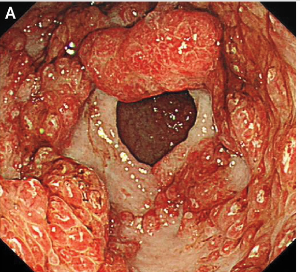
This case report describes a 17 yo with sore throat, odynophagia chest pain, and dysphagia associated with vaping. His symptoms resulted in hospitalization and he underwent an EGD on day 4 after symptoms had not improved with multiple empiric therapies.
EGD findings included .
Circumferential erosive or exudative lesions) esophagitis with bleeding found throughout the entire esophagus. Given the lack of infectious etiologies, the authors made a diagnosis of vaping-associated esophagitis
H pylori gastritis
My take: When adolescent patients present with esophageal symptoms, inquiring about exposure to vaping along with medications known to cause pill-esophagitis, is worthwhile.
Methods: A systematic search was conducted from August 1999 to July 2021 for studies (50 studies identified) reporting loss of response and dose escalation during infliximab and/or adalimumab use in ulcerative colitis patients with primary response
Key findings:
Annual loss of response was 10% for infliximab and 13% for adalimumab, with higher rates during the first year.
The annual LOR incidences were higher during the first 65 weeks of treatment for both IFX (14%) and ADA (23%).
Annual dose escalation rates were 14% (infliximab) and 21% (adalimumab), with clinical benefit in 72% and 52%, respectively
Key finding: 4 patients (age 18-25 yrs) received upadacitinib for acute severe ulcerative colitis (ASUC) after failing to respond to infliximab and IV steroids. 3 of 4 responded to treatment (45 mg/day) between 4 to 8 days. Three months later, two of these patients were in steroid-free clinical-endoscopic remission and one had maintained a clinical response.
In their discussion, the authors note a similar response rate to tofacitinib, another JAK inhibitor, for ASUC; though, the authors speculate that upadacitinib may be efficacious.
In a a prospective cohort study of 133,137 individuals between the ages of 20 and 80 from 24 countries, the authors examined the relationship between exposures to antibiotics, NSAIDs and hormonal therapies with the development of IBD over a median 11 year period.
Key findings:
Incident IBD was associated significantly with baseline antibiotic (aOR, 2.81; P = .0001) and hormonal medication use (aOR, 4.43; P = .001).
Nonsteroidal anti-inflammatory drug users also were observed to have increased odds of IBD (aOR, 1.80 P = .002), which was driven by long-term use (aOR, 5.58; P < .001)
Background/Methods: Risankizumab (RZB) and ustekinumab (UST), interleukin (IL)-23 and IL-12/23 inhibitors, respectively, are approved treatments for moderately to severely active Crohn’s disease (CD); direct comparison between the two is ongoing. The authors indirectly compared efficacy of RZB versus UST using data from phase 3 trials (three trials for each medication):
Induction: Higher proportions of patients achieved clinical and endoscopic outcomes with RZB vs. UST, resulting in significantly (p ≤ 0.05) greater percent differences between groups for CDAI remission (15%) and endoscopic response (26%) and remission (9%)
Rates of response and remission following induction therapy with RZB (600 mg) or UST (6 mg/kg). *p ≤ 0.05 for RZB versus UST. Relative effect measures are shown as the percent difference between treatment groups; absolute effect measures are the proportions of patients achieving each outcome in each treatment group. BF biologic failure, CCF conventional care failure, CDAI Crohn’s Disease Activity Index, IV intravenous, PBO placebo, RZB risankizumab, UST ustekinumab
Maintenance: rates of CDAI remission were similar (range − 0.3% to − 5.0%) for RZB vs. UST; however, endoscopic response and remission rates appeared more favorable (see Figure 2 below)
Rates of response and remission following maintenance therapy with RZB (180 mg or 360 mg) or UST (90 mg Q8W). *p ≤ 0.05 for RZB versus UST. Relative effect measures are shown as the percent difference between treatment groups; absolute effect measures are the proportions of patients achieving each outcome in each treatment group. BF biologic failure, CCF conventional care failure, CDAI Crohn’s Disease Activity Index, PBO placebo, Q8W every 8 weeks, Q12W every 12 weeks, RZB risankizumab, SC subcutaneous, UST ustekinumab
My take: Since this was not a direct randomization trial, these results are not definitive. However, in this indirect analysis, risankizumab appears to be superior to utekinumab in effectiveness of for Crohn’s disease.
Disclaimer: This blog, gutsandgrowth, assumes no responsibility for any use or operation of any method, product, instruction, concept or idea contained in the material herein or for any injury or damage to persons or property (whether products liability, negligence or otherwise) resulting from such use or operation. These blog posts are for educational purposes only. Specific dosing of medications (along with potential adverse effects) should be confirmed by prescribing physician. Because of rapid advances in the medical sciences, the gutsandgrowth blog cautions that independent verification should be made of diagnosis and drug dosages. The reader is solely responsible for the conduct of any suggested test or procedure. This content is not a substitute for medical advice, diagnosis or treatment provided by a qualified healthcare provider. Always seek the advice of your physician or other qualified health provider with any questions you may have regarding a condition.
This population-based administrative data cohort study provides annual IBD hospitalization rates in Alberta, Canada.
Key findings:
From 2002-2003 to 2018-2019, all-cause hospitalization rates decreased from 36.57 to 16.72 per 100 IBD patients (Average Annual Percentage Change (AAPC), −4.18%)
Inflammatory bowel disease–related hospitalization rate decreased from 26.44 to 9.24 per 100 IBD patients (AAPC, −5.54%)
The absolute number of hospitalizations, however, likely did not improve because this is affected by the increase in IBD prevalence. In Alberta, there was a 3-fold increase from 2002 to 2018 (general population increased 1.4 fold during this period)
“The last 2 decades have seen the introduction of several advanced therapies with novel mechanisms of action.22 The introduction of these therapies has been accompanied by changes in management strategies that include earlier introduction of advanced therapies based on risk stratification, treat-to-target, and monitoring strategies.5,23–26 These advancements include risk stratification, allowing for earlier introduction of advanced therapies; proactive clinical management algorithms to monitor disease activity; and therapeutic drug monitoring allowing for continued concentration-based dosing.23–26The net effect of these medical advances shifted IBD management from the hospital to the outpatient setting.27“
This retrospective study of 1693 prior authorizations (PAs) from 2020-2021. Key findings:
1397 PA initially approved, 209 first-level PAs approved, 23 second-level PAs approve, and 11 external review requests approved. In total 97% (1640 of 1697) were approved
Dose escalations had the lowest approval rate of 67.6%
FDA approval had favorable OR for PA approval of 4.45
The median time to biologic initiation was 21 days, with appeals causing further delays to initiation
Median Days to Determination by Insurance Level:
Prior authorization: 11 days
First level appeal: 29 days
Second level appeal: 51 days
External review request: 73 days
My take: The PA process usually results in few denials (if pursued) but does result in significant delays in therapy. At the same time, these newer therapies have been associated with improvement in hospitalizations rates.