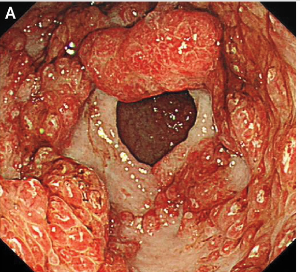
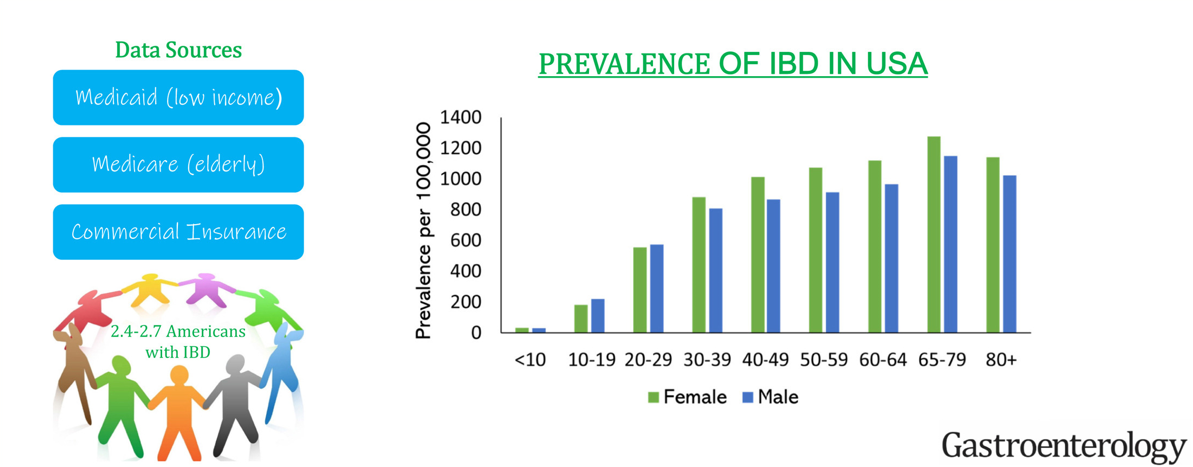
Comparative Efficacy: Infliximab vs. Ustekinumab

ECL Wong et al. Inflamm Bowel Dis 2023; 29: 1015-1023. Open Access! Comparative Efficacy of Infliximab vs Ustekinumab for Maintenance of Clinical Response in Biologic Naïve Crohn’s Disease

This post hoc analysis included data from separate trials examined the response of 220 biologic-naïve CD participants to either inflximab biosimilar or ustekinumab.

Key findings:

  • Clinical remission: One-year clinical remission (CR) and corticosteroid-free CR rates were similar between infliximab-treated and ustekinumab-treated patients (CR, 66 of 110 [60.0%] vs 63 of 110 [57.3%]; adjusted odds ratio [aOR], 1.15), corticosteroid-free CR, 11 of 28 (39.3%) vs 27 of 51 [52.9%]; aOR, 0.58)
  • Endoscopic response/remission:  infliximab-treated participants were more likely to achieve 1-year endoscopic response (43 of 92 [46.7%] vs 6 of 30 [20.0%], aOR, 3.59) and endoscopic remission (31 of 92 [33.7%] vs 4 of 30 [13.3%]; aOR, 3.35)

In the discussion, the authors note only 1 head-to-head study in CD with ustekinumab. “The SEAVUE trial (NCT03464136) compared adalimumab and ustekinumab among biologic-naïve CD patients. Ustekinumab demonstrated similar efficacy for the achievement of clinical and endoscopic outcomes compared with adalimumab.23 Similar rates of CR at 1 year were reported in SEAVUE (64.9% ustekinumab vs 61% adalimumab) as in our analysis (57.3% ustekinumab vs 60% infliximab)…ustekinumab demonstrated longer retention and lower immunogenicity and has practical advantages over adalimumab, including less frequent dosing intervals (every 8 weeks for ustekinumab vs every 2 weeks for adalimumab) while providing similar efficacy.”

My take: This study suggests that infliximab may be a little better than ustekimumab in biologic-naive patients due to the higher endoscopic response; however, the study was unpowered to provide a definitive answer. A prior study suggested similar endoscopic healing rates (P Riviere et al. Inflamm Bowel Dis 2023; 29: 923-931).

Related blog posts:

Waters off the Cap d’Ail Trail (near Eze, France)

More Data: Upadacitinib “is Effective and Safe” Plus 2 in Kids

S Friedberg et al. Clin Gastroenterol Hepatol 2023; 21: 1913-1923. Open Access! Upadacitinib Is Effective and Safe in Both Ulcerative Colitis and Crohn’s Disease: Prospective Real-World Experience

Methods: “We performed a prospective analysis of clinical outcomes on upadacitinib in patients with UC and CD using predetermined intervals at weeks 0, 2, 4, and 8 as part of a formalized treatment protocol.” 84 met inclusion criteria  (44 UC patients, 40 CD patients) -though complete data was available for only a fraction of these. All of the patients had received prior anti-TNF therapy and 89% had received 2 or more advanced therapies. 

Key findings:

  • Ulcerative colitis: At 4 and 8 weeks of treatment, 19 of 25 (76.0%) and 23 of 27 (85.2%) achieved clinical response and 18 of 26 (69.2%) and 22 of 27 (81.5%) achieved clinical remission, respectively. Of those who previously were tofacitinib-exposed, 7 of 9 (77.8%) achieved clinical remission by 8 weeks.
  • Crohn’s disease: In CD, 13 of 17 (76.5.%) achieved clinical response and 12 of 17 (70.6%) achieved clinical remission by 8 weeks. Of those with increased fecal calprotectin and C-reactive protein levels, 62% and 64% normalized by week 8, respectively. 
  • Results were seen as early as week 2 in both UC and CD, with clinical remission rates of 36% and 56.3.%,
  • Acne was the most commonly reported adverse event, occurring in 24 of 105 patients (22.9%) (Table 4). Six patients stopped upadacitinib due to adverse effects.

My take: “In this large real-world experience in medically resistant patients with UC or CD, we report that upadacitinib is rapidly effective and safe, including in those who had prior tofacitinib exposure.” In pediatrics, the effectiveness of this upadacitinib is a logical target for ImproveCareNow. More pediatric data will be needed to garner FDA approval.

Related articles:

LV Collen. Inflamm Bowel Dis 2023; 29: 1175-1176. Rapid Clinical Remission With Upadacitinib in a Pediatric Patient With Refractory Crohn’s Disease A pediatric patient with Crohn’s disease refractory to anti-tumor necrosis factor therapy, vedolizumab, ustekinumab, and 6-mercaptopurine achieved rapid clinical remission with upadacitinib.

A Bousvaros, BAR Schmidt, M Kurtz. Gastroenterology & Hepatology 2023; 19: 401-403. Open Access! “Treatment of Genital Crohn’s Disease with Upadacitinib in a Male Child: A Case Report”. This report describes the rapid response to upadacitinib in a 12 yo with refractory Crohn’s ileocolitis (x 5 yrs) with associated “granulomatous lymphangitis” affecting the penis and scrotum. It notes that “anti-TNF therapy was described as the most effective treatment, with either improvement or resolution of scrotal swelling in most patients. However, intermittent penile swelling persisted in a subset of the patients.18“…”Although data on the use of JAK inhibitors to treat pediatric IBD are limited, the fact that these are small molecules with wide systemic effects suggests that JAK inhibitors may be useful in the treatment of extraintestinal manifestations of IBD….[and]  that JAK inhibitors such as upadacitinib may play an important role in the treatment of such refractory patients.”

Related blog posts:

On an adventurous day, we climbed the Nietzsche trail to get from the coast to the top of Eze, France.

AGA Guidance on Extraesophageal Gastroesophageal Reflux

JW Chen et al. Clin Gastroenterol Hepatol 2023; 21: 1414-1421. Open Access! AGA Clinical Practice Update on the Diagnosis and Management of Extraesophageal Gastroesophageal Reflux Disease: Expert Review

Some the “best practice advice:”

  • #3 Currently, there is no single diagnostic tool that can conclusively identify GER as the cause of EER symptoms. Determination of the contribution of GER to EER symptoms should be based on the global clinical impression derived from patients’ symptoms, response to GER therapy, and results of endoscopy and reflux testing.
  • #4 Consideration should be given toward diagnostic testing for reflux before initiation of proton pump inhibitor (PPI) therapy in patients with potential extraesophageal manifestations of GERD, but without typical GERD symptoms. Initial single-dose PPI trial, titrating up to twice daily in those with typical GERD symptoms, is reasonable.
  • #6 In patients with suspected extraesophageal manifestation of GERD who have failed one trial (up to 12 weeks) of PPI therapy, one should consider objective testing for pathologic GER, because additional trials of different PPIs are low yield.
Proposed Diagnostic Algorithm by Authors

Related commentary: R Yadlapati, WW Chan. Clin Gastroenterol Hepatol 2023; 21: 1395-1398. Modern Day Approach to Extraesophageal Reflux: Clearing the Murky Lens

This commentary identifies huge gaps in our understanding of extraesophageal reflux (EER):

  • Clinical value of upper GI endoscopy
  • Diagnostic thresholds of reflux monitoring to use for EER (Is it the same as GERD?)
  • Significance of nonacidic or weakly acidic reflux
  • Whether focus should remain on distal esophageal reflux or proximal reflux

My take: If a patient has normal amounts of reflux, can they still have extraesophageal reflux symptoms? If so, how does one objectively gauge success?

Related blog posts:

Disclaimer: This blog, gutsandgrowth, assumes no responsibility for any use or operation of any method, product, instruction, concept or idea contained in the material herein or for any injury or damage to persons or property (whether products liability, negligence or otherwise) resulting from such use or operation. These blog posts are for educational purposes only. Specific dosing of medications (along with potential adverse effects) should be confirmed by prescribing physician.  Because of rapid advances in the medical sciences, the gutsandgrowth blog cautions that independent verification should be made of diagnosis and drug dosages. The reader is solely responsible for the conduct of any suggested test or procedure.  This content is not a substitute for medical advice, diagnosis or treatment provided by a qualified healthcare provider. Always seek the advice of your physician or other qualified health provider with any questions you may have regarding a condition.

Early Postoperative Anti-TNF Therapy

JE Axelrad et al. Inflamm Bowel Dis 2023; 29: 888-897. Early Initiation of Antitumor Necrosis Factor Therapy Reduces Postoperative Recurrence of Crohn’s Disease Following Ileocecal Resection

This retrospective cohort study identified 1037 patients with Crohn’s disease who underwent ileocecal resection (ICR). Only 5.4% were younger than 18 yrs at the time of surgery. In this cohort, 278 (26%) received a biologic agent as prophylaxis to prevent recurrence with 80% receiving an anti-TNF agent. In those receiving an anti-TNF agent, 35% were started on therapy within 4 weeks of surgery and 65% were started between 4 and 12 weeks. Recurrence was defined by endoscopy (≥ i2b Rutgeerts score) or radiography (active inflammation in neoterminal ileum). Key findings:

  • After adjusting for factors associated with postoperative recurrence (POR), compared with no biologic prophylaxis, the initiation of an anti-TNF agent (n=223) within 4 weeks following an ICR was associated with a reduction in POR (adjusted hazard ratio, 0.61).
  • Prophylaxis after 4 weeks following an ICR or with vedolizumab or ustekinumab was not associated with a reduction in POR compared with those who did not receive prophylaxis –though sample size with vedolizumab (n=27) and ustekinumab (n=28) was very limited
  • Most patients receiving biologic prophylaxis had prior anti-TNF exposure including 73% of the anti-TNF group, 96% of the vedolizumab group, and 93% of the ustekinumab group.

In their discussion, the authors note that their findings reinforce previous studies which showed beneficial effects of anti-TNF therapy for POR, including the PREVENT trial. This randomized controlled trial with infliximab initiation within 45 days postoperatively in high risk individuals reduced endoscopic recurrence at 18 months (22.4% compared with 51% in placebo group).

My take: Anti-TNF therapy, even in those with prior exposure, likely improves outcomes in patients with Crohn’s disease following ileocecal resection. This study indicates that starting therapy within the first 4 weeks is more beneficial.

Related blog posts:

Watersound, FL

Price Per Poop with Vibrating Capsule and New AGA Constipation Guidelines

SS C Rao et al. Gastroenterol 2023; 164: 1202-1210. Randomized Placebo-Controlled Phase 3 Trial of Vibrating Capsule for Chronic Constipation

Methods: This was a a phase 3, double-blind, placebo-controlled trial of patients with chronic constipation, who were randomized to receive either a vibrating or placebo capsule, once daily, 5 days a week for 8 weeks. The primary efficacy end points were an increase of 1 or more complete spontaneous bowel movements per week (CSBM1 responder) or 2 or more CSBMs per week (CSBM2) from baseline during at least 6 of the 8 weeks

Key findings:

  •  A greater percentage of patients receiving the vibrating capsule achieved both primary efficacy end points compared with placebo (39.3% vs 22.1%, P = .001 for CSBM1; 22.7% vs 11.4% P = .008 for CSBM2).
  • Spontaneous bowel movements per week, adjusted mean change: 1.40 vs 1.24 per placebo (0.16 per week difference)

The capsule used is 24 mm x 11 mm and includes a motor for vibrations, a battery, a computer chip and a latex-free plastic shell.  The control group had received a dissolvable sham capsule.

I looked up cost of this new treatment and it is approximately $89/month which equates to $139 price per poop (PPP). To my knowledge, the PPP is a new metric –I have not seen it previously. For the vibrating capsule, I derived this figure by dividing the monthly cost into a weekly cost and dividing it by 0.16 (mean difference in weekly stooling with vibrating capsule). The PPP may be competitive with some of the constipation medications which cost in the range of ~$500 per month on GoodRx (like prucalopride and linaclotide) but is much more costly than senna products which can be purchased for ~$5/month.

My take: The vibrating capsule is an expensive way to help with constipation

Related article: L Chang, WD Chey, AJ Lembo et al. Gastroenterol 2023; 164: 1086-1106. Open Access! American Gastroenterological Association-American College of Gastroenterology Clinical Practice Guideline: Pharmacological Management of Chronic Idiopathic Constipation

Gastroenterol 2023; 164: 1107. Open Access! Clinical Decision Support Tool

These guidelines for adults with constipation are similar to guidelines published in 2020 with the addition of prucalopride.

IBD Updates: Treat-to-Target Uptake, Long-Term Data on Ustekinumab Intensification, and Low Rates of C diff with Tofacitinib (& Clinical Pearl)

JL Yang et al. Inflamm Bowel Dis 2023; 29: 735-743. Utilization of Colonoscopy Following Treatment Initiation in U.S. Commercially Insured Patients With Inflammatory Bowel Disease, 2013-2019

In this study with 39,734 commercially-insured initiators of IBD medications (18-64 year old), 34% had a colonoscopy by 12 months and 42% at 15 months. The authors state that “it is evident that patients without any colonoscopy during this interval are not being followed under an optimal long-term T2T (treat-to-target) paradigm.”

RS Dalal et al. Inflamm Bowel Dis 2023; 29: 830-833. Long-Term Outcomes After Ustekinumab Dose Intensification for Inflammatory Bowel Diseases

This retrospective study examined 123 patients with Crohn’s disease and 40 with ulcerative colitis who had dose intensification with ustekinumab (to either every 4 weeks, n=91, or every 6 weeks, n=72). Dose escalation was effective in both achieving and maintaining corticosteroid-free clinical remission for 61% of patients with Crohn’s disease and 40% with ulcerative colitis at 24 months; endoscopic remission was noted in 43% with Crohn’s disease and 55% with ulcerative colitis.

EV Loftus et al. Inflamm Bowel Dis 2023; 29: 744-751. Open Access! Clostridium difficile Infection in Patients with Ulcerative Colitis Treated with Tofacitinib in the Ulcerative Colitis Program 

Using data from multiple studies with 1157 patients, only 9 tofacitinib patients developed Clostridioides difficile infection (CDI) which was lower than the placebo group. CDI were all mild–moderate in severity and resolved with treatment in 8 patients. Six of 9 patients continued tofacitinib treatment without interruption. The low rate of infection was likely in part due to screening for CDI prior to treatment. In addition, “it is possible than the lower rates of CDI …may be due to better-controlled disease…, thus reducing susceptibility to infection.”

One clinical pearl in the discussion: “When considering treatment [for CDI], initial therapy with oral vancomycin should be considered instead of metronidazole, and treating for at least 21 days should also be considered [in patients with IBD due to]…lower rates of CDI recurrence.”

Related blog posts:

Disclaimer: This blog, gutsandgrowth, assumes no responsibility for any use or operation of any method, product, instruction, concept or idea contained in the material herein or for any injury or damage to persons or property (whether products liability, negligence or otherwise) resulting from such use or operation. These blog posts are for educational purposes only. Specific dosing of medications (along with potential adverse effects) should be confirmed by prescribing physician.  Because of rapid advances in the medical sciences, the gutsandgrowth blog cautions that independent verification should be made of diagnosis and drug dosages. The reader is solely responsible for the conduct of any suggested test or procedure.  This content is not a substitute for medical advice, diagnosis or treatment provided by a qualified healthcare provider. Always seek the advice of your physician or other qualified health provider with any questions you may have regarding a condition.

Lego Art at Tucson Botanical Gardens

Data on Fecal Microbiota Transplantation for Ulcerative Colitis and Case Report of Vancomycin for Refractory Ulcerative Colitis

NEH Chehade et al. Inflamm Bowel Dis 2023; 29: 808-817. Efficacy of Fecal Microbiota Transplantation in the Treatment of Active Ulcerative Colitis: A Systematic Review and Meta-Analysis of Double-Blind Randomized Controlled Trials

HS Almomen, B Al-Bawardy. Inflamm Bowel Dis 2023; 29: 837-838. Oral Vancomycin Induced and Maintained Clinical and Endoscopic Remission in Ulcerative Colitis and Primary Sclerosing Cholangitis Post-liver Transplantation

In the first study by Chehade et al, the authors analyzed six RCTs involving 324 patients. Key findings:

  • Compared with placebo, FMT has significant benefit in inducing combined clinical and endoscopic remission (odds ratio, 4.11; 95% confidence interval, 2.19-7.72; P < .0001)
  • clinical remission with FMT was 46.2% compared 22.5% for placebo
  • clinical response with FMT was 51.6% compared to 30.1% for placebo
  • endoscopic remission with FMT was 18.9% compared to 6.1% for placebo
  • endoscopic response with FMT was 36.7% compared to 22.4% for placebo

Discussion Points:

  • “The studies included in our article indicate that there is a shift in the microbiota composition of responders in the FMT group to resemble the profile of healthy donors”
  • FMT delivery via upper GI tract was equally effective as delivery via lower GI tract in these studies in inducing combined remission
  • The understanding of FMT effectiveness for IBD is in its infancy.”

In the case report by Alomomen et al, a 34 year old with refractory ulcerative colitis and PSC (post-transplant) had not responded to infliximab, vedolizumab, adalimumab, tofacitinib or 10 months of ustekinumab (every 4 weeks). In addition, he was receiving tacrolimus therapy due to his liver transplant. His colonoscopy demonstrated a continuous Mayo 3 colitis. Subsequently, vancomycin therapy was added to his treatment (500 mg BID); he continued ustekimumab. Six months afterwards, his fecal calprotectin had dropped to 277 from 1600 and his CRP and hemoglobin had normalized. Repeat colonoscopy demonstrated complete endoscopic healing.

My take: There are many patients who do not respond to current IBD therapies. These two studies show that both FMT and vancomycin could be useful in selected patients.

Related blog posts:

Lego Art at Tucson Botanical Gardens
Lego Lion
Lego Panther

Disclaimer: This blog, gutsandgrowth, assumes no responsibility for any use or operation of any method, product, instruction, concept or idea contained in the material herein or for any injury or damage to persons or property (whether products liability, negligence or otherwise) resulting from such use or operation. These blog posts are for educational purposes only. Specific dosing of medications (along with potential adverse effects) should be confirmed by prescribing physician.  Because of rapid advances in the medical sciences, the gutsandgrowth blog cautions that independent verification should be made of diagnosis and drug dosages. The reader is solely responsible for the conduct of any suggested test or procedure.  This content is not a substitute for medical advice, diagnosis or treatment provided by a qualified healthcare provider. Always seek the advice of your physician or other qualified health provider with any questions you may have regarding a condition.

How Long to Hold Biologics and Small Molecule Drugs Perioperatively

BL Cohen et al. Clin Gastroenterol Hepatol l2023; 21: 1148-1151. How to Manage Targeted Immune Suppressants (Biologics and Oral Small-molecule Drugs) Perioperatively for Inflammatory Bowel Disease and non-Inflammatory Bowel Disease surgery


This article makes pragmatic recommendations with regard to surgery timing in individuals taking medications that target the immune system.

Key points:

  • Several recent large studies have “observed no association between biologic exposure and postoperative infectious outcomes.”
  • The primary risk factor for infectious complications has been corticosteroid/glucocorticoid use.
  • For IBD Surgery: “If patients are deriving therapeutic benefit, including reducing the need for steroids, we propose continuing treatment until surgery…It may be practical to perform the surgery mid to late dosing interaval in the case of biologics with longer half-lives…Our expert opinion is that therapy may be resumed 14 days postoperatively or when recovered from infectious complications.”
  • For Non-IBD surgery: “Expert opinion suggests medications may be re-dosed by 14 days postoperatively if there have been no complications. Consideration should be given to resuming oral small molecules earlier given their short half-lives.”
  • Emergency or urgent surgeries “should be performed promptly regardless of targeted immune suppressant use.”
David Yetman Trail (Tucson)

Disclaimer: This blog, gutsandgrowth, assumes no responsibility for any use or operation of any method, product, instruction, concept or idea contained in the material herein or for any injury or damage to persons or property (whether products liability, negligence or otherwise) resulting from such use or operation. These blog posts are for educational purposes only. Specific dosing of medications (along with potential adverse effects) should be confirmed by prescribing physician.  Because of rapid advances in the medical sciences, the gutsandgrowth blog cautions that independent verification should be made of diagnosis and drug dosages. The reader is solely responsible for the conduct of any suggested test or procedure.  This content is not a substitute for medical advice, diagnosis or treatment provided by a qualified healthcare provider. Always seek the advice of your physician or other qualified health provider with any questions you may have regarding a condition.

One If By Colon and Two If By Capsule For Clostridioides difficile

Well, this study is not exactly Paul Revere territory; nevertheless, the blog title seemed better than “Eat Shit for C diff.”

BP Vaughn et al. Clin Gastroenterol Hepatol 2023; 21: 1330-1337. Effectiveness and Safety of Colonic and Capsule Fecal Microbiota Transplantation for Recurrent Clostridioides difficile Infection

Methods: Clinical outcomes and adverse events after FMT performed for rCDI at 6 sites (n=269) were captured in a prospective registry. FMT was performed using either freeze-dried/encapsulated or frozen-thawed/liquid.  

The authors note that the cohort with a mix of academic and private practices reflects real-world use of FMT. Since the study products were free of charge, providers and patients selected treatment based on their preference (65% selected oral capsule).

Key findings:

  • At 1 month, rCDI cure rate was 91% for FMT-colonoscopy and 84% for FMT-capsule (no significant difference, p=0.12)
  • At 2 months, rCDI were 83% and 81% for FMT-colonoscopy and FMT-capsule respectively
  • Use of non-CDI antibiotics increased failure rates: 28% at 2 months compared to 10% who did not receive antibiotics
  • One serious adverse event was related to colonoscopy (aspiration pneumonia), otherwise no new safety signals were identified

My take: This study indicates similar effectiveness of FMT-capsule to FMT-colonoscopy. FMT-capsule is easier and avoids risks associated with colonoscopy. But, it does require patients to eat (encapsulated) feces

Related blog posts:

More Pics from Tucson -above picture near Wasson Peak

When Will Intestinal Ultrasound for IBD Become Practical?

M Allocca et al. Gastroenterol 2023; 164: 851-855. Open Access! Intestinal Ultrasound in the Assessment and Management of Inflammatory Bowel Disease: Is It Ready for Standard Practice?

This short article outlines the indications, availability, technical skills, cost-effectiveness and potential value of intestinal ultrasound (IUS). Some key points:

  • Goal: “IUS is used as a first-line investigation and can avoid or delay the need for more invasive and expensive testing (CT, MRI, or colonoscopy). Thus, costs are minimized and patient convenience is optimized”
  • Availability: “IUS is quite widespread in many European countries, but its uptake has been significantly less in other parts of the world, including the United States. Limitations to its use include the absence of standardized and reproducible protocols, lack of local expertise, and the perception that IUS is an operator-dependent tool, feasible only by highly experienced operators. In reality, however,…. studies specifically addressing sonographer variability demonstrate substantial agreement for color Doppler signals and almost perfect agreement for bowel-wall thickness, as the most relevant IUS parameter.”
  • Expertise: Trainees “have to perform at least 300 supervised ultrasound examinations in Italy and 400 in Germany to achieve full competency…It is believed that learners can achieve competency in IUS after approximately 200 supervised examinations, but it is important to acknowledge that a formal learning curve and the criteria for competency assessment have not yet been fully defined”

My take: Despite all the interest in this useful point-of-care tool, for IUS to become more widespread in the U.S. it will need to be incorporated in training programs. The threshold for competency is not achievable with a weekend seminar. It will be interesting to see how this test affects cost, management, and outcomes. Will it reduce or increase other cross sectional imaging testing? Is the information from IUS more useful than a calprotectin (stool biomarker) which could also be a point-of-care test?

Related blog posts:

The Oro Valley/Tucson Loop shared use bike path extends over 130 car free miles throughout unincorporated Pima County, Marana, Oro Valley, and Tucson.