“A Smarter Way to Reduce Gun Deaths” Plus Two

N Kristof, NY Times (1/24/23): A Smarter Way to Reduce Gun Deaths

Some excerpts:

In 2021 a record 48,000 Americans were killed by firearms, including suicides, homicides and accidents. So let’s try to bypass the culture wars and try a harm-reduction model familiar from public health efforts to reduce deaths from other dangerous products such as cars and cigarettes.

Harm reduction for guns would start by acknowledging the blunt reality that we’re not going to eliminate guns any more than we have eliminated vehicles or tobacco, not in a country that already has more guns than people. 

Recommendations from article:

  • We can try to keep firearms from people who are under 21 or who have a record of violent misdemeanors, alcohol abuse, domestic violence or some red flag that they may be a threat to themselves or others
  • To keep ineligible people from buying firearms, we need universal background checks
  • A pillar of harm reduction involving motor vehicles is the requirement of a license to drive a car. So why not a license to buy a gun?… In Massachusetts, which has one of the lowest gun mortality rates in the country, an applicant who wants to buy a gun must pay $100 for a license, be fingerprinted, undergo a background check and explain why he or she wants a gun. If the permit is granted, as it typically is after a few weeks, the bearer can then go to a gun store and buy the firearm. There is then an obligation to store it safely and report if it is stolen.
  • Smoking and alcohol cause more deaths in U.S. –both are regulated, not banned. “Because we’ve worked to reduce vehicle deaths and haven’t seriously attempted to curb gun violence, firearms now kill more people than cars.”
  • Background checks to purchase ammunition… this should be possible without creating burdens for gun owners who have already gone through background checks to buy weapons
  • Waiting periods and limits on how many guns one can purchase at a time may also help. We also need to crack down on untraceable ghost guns and on firearms made by 3-D printers; ghost guns are already a growing source of weapons for criminals
  • Warning labels: One proposed ammunition label has a photo of a bloody face and states that a gun increases the risk of someone in a home being killed
  • Increase costs of ownership to cover the damage associated with weapons: raise cost of guns through taxes/fees

This article proposes a lot of practical interventions that if implemented would likely reduce gun violence.

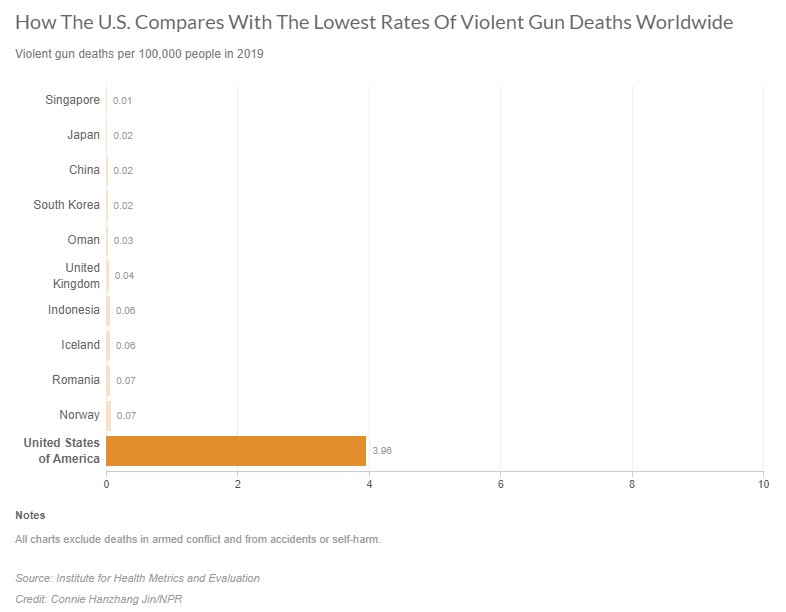
Related article: NPR Jan 24, 2023: Gun violence deaths: How the U.S. compares with the rest of the world The chart below shows how the U.S compares to gun violence in countries with low levels of gun violence. The U.S. compares favorably with Mexico, El Salvador, Guatemala, Venezuela, The Phillipines and Iraq. However, many violent places have lower gun violence than U.S. including Syria, Somalia, Afganistan, Iran, Pakistan, Yemen, and Libya.

Related blog posts:

Atlanta Botanical Gardens

From NPR article.

Aslo, gun violence is widespread and is more common in ‘red’ states than ‘blue’ states despite the widely-held notion that gun violence occurs mainly in large urban centers.

Axios 1/27/23: Not an anomaly: 2020’s red states have higher murder rates Murder rates in red states have outpaced blue states by an average of 23% over the past two decades.

2023 ACG Celiac Guidelines for Adult and Children

A Rubio-Tapia et al. Am J Gastroenterol 2023;118:59–76. Open Access! American College of Gastroenterology Guidelines Update: Diagnosis and Management of Celiac Disease Thanks to Ben Gold for this reference.

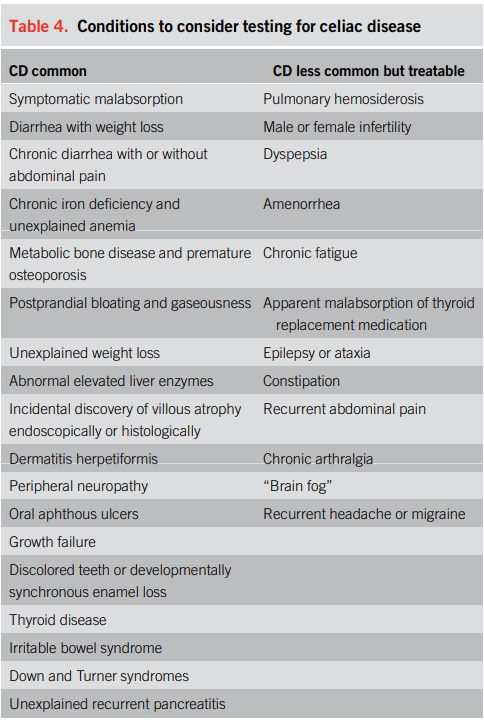
Here are some of the recommendations from updated ACG Celiac Guidelines:

Comments: The authors favor a non-biopsy approach for Celiac diagnosis in children with very elevated serology but not in adults. In adults, they cite a paucity of literature. “One multicenter international study of adults found that a 10-fold elevation of TTG IgA had a positive predictive value of 95% for CD (50). Given the life-long treatment implications of a GFD, this may be unacceptably low.”

The authors suggest assessing for mucosal healing after 2 years of treatment in all patients though they indicate a low quality of evidence for this recommendation. In those undergoing endoscopy, biopsies of the duodenal bulb along with at least 4 post-bulbar biopsies are recommended.

Figure 3 provides an algorithm for non-responsive celiac disease.

Related blog posts:

Liver Briefs: HLH in Infancy, Maralixibat for Alagille Syndrome, Liver Disease Due to Inborn Errors of Immunity

N Hadzic et al. J Pediatr 2022; 250: 67-74. High Prevalence of Hemophagocytic Lymphohistiocytosis in Acute Liver Failure of Infancy In this retrospective study of pediatric acute liver failure (PALF, n=78) in children <24 months of age: Thirty of the 78 children had the HLH phenotype and underwent genetic assessment, which demonstrated positive findings in 19 (63.3%), including 9 (30%) with biallelic primary HLH mutations and 10 (33.3%) with heterozygous mutations and/or polymorphisms. The mortality in this group was 33% (n=10). The authors conclude that targeted genetic analysis (ie perforin, SIAP, XIAP, and GRA) or whole exome sequencing should become a standard part of PALF workup.

Related blog posts:

BM Kamath et al. J Pediaatr 2023; 252: 68-75. Open Access! Maralixibat Treatment Response in Alagille Syndrome is Associated with Improved Health-Related Quality of Life. Twenty of the 27 patients (74%), all with moderate-to-severe pruritus at enrollment, achieved an Itch-Reported Outcome (Observer) treatment response at week 48. “The significant improvements in pruritus seen with maralixibat at week 48 of the ICONIC study are clinically meaningful and are associated with improved HRQoL.”

Related blog posts:

D Sharma et al. Hepatology 2022; 76: 1845-1861. Tip of the iceberg: A comprehensive review of liver disease in Inborn errors of immunity This articles reviews inborn errors of immunity (IEI) and their liver manifestations. This includes the following:

  • T-cell/B-cell deficiency: SCID, CD40 ligand deficiency, DOCK8 deficiency, IL-21R deficiency, and Activated P13K delta syndrome
  • Antibody deficiency: CVID, X-linked aggamoglobulinemia
  • Phagocytic disorders: CGD
  • Primary Immune Regulatory Disorders: STAT1 GOF, STAT3 GOF, IPEX, APECED
  • Others: Wiskott-Aldrich syndrome, Immunodeficiency-centromeric instability-facial anomalies syndrome, Hepatic veno-occlusive disease with immunodeficiency, STAT3-deficient hyper IgE syndrome

In patients with IEIs with liver abnormalities, one needs to consider infectious etiologies (eg. HAV, HBV, HCV, HEV, CMV, EBV, HSV, cryptosporidium, liver abscess), autoimmune disorders (eg. AIH), drug-induced liver disease, and sclerosing cholangitis

Royal Terns at Siesta Key, FL

Poster Child for Gaming Pharmaceutical Regulations: Humira

NY Times 1/29/23): How a Drug Company Made $114 Billion by Gaming the U.S. Patent System “AbbVie for years delayed competition for its blockbuster drug Humira, at the expense of patients and taxpayers. The monopoly is about to end.”

This article details how AbbVie has perfected the use of patent protections to extend its monopoly over adalimumab; this has been to the detriment of many patients , employers and taxpayers who bear the additional costs. Key points:

  • In 2016, a blockbuster drug called Humira was poised to become a lot less valuable. The key patent on the best-selling anti-inflammatory medication, used to treat conditions like arthritis, was expiring at the end of the year…Through its savvy but legal exploitation of the U.S. patent system, Humira’s manufacturer, AbbVie, blocked competitors from entering the market.
  • Since the end of 2016, the drug’s list price has gone up 60 percent to over $80,000 a year, according to SSR Health, a research firm.
  • Patents are good for 20 years after an application is filed. Because they protect patent holders’ right to profit off their inventions, they are supposed to incentivize the expensive risk-taking that sometimes yields breakthrough innovations. But drug companies have turned patents into weapons to thwart competition. AbbVie and its affiliates have applied for 311 patents, of which 165 have been granted, related to Humira, according to the Initiative for Medicines, Access and Knowledge, which tracks drug patents. A vast majority were filed after Humira was on the market.
  • The article notes that one employer has been flying a patient receiving Humira to the Bahamas to pick up her medication.
  • AbbVie … will have a new way to make more money from the drug. Under the terms of the legal settlements… AbbVie will earn royalties from the knockoff products that it delayed.
  • In the longer run, though, AbbVie’s success with Humira may boomerang on the drug industry. Last year, the company’s tactics became a rallying cry for federal lawmakers as they successfully pushed for Medicare to have greater control over the price of widely used drugs that, like Humira, have been on the market for many years but still lack competition.

My take: It makes me mad when I read this article. First of all, there are a lot of patients harmed by this gaming. Second, it is outrageous that the cost of this expensive medication was raised 60% over the last 6 years (and going up 8% more in 2023). Third, I am disappointed to learn that AbbVie will still make money off biosimilars because I am looking forward to NOT using Humira because of these tactics. Lastly, I hope that this does prompt legislative/regulatory changes to limit this practice going forward.

Related article: USA Today (1/30/23) Why drugmakers have raised prices on nearly 1,000 drugs so far this year Average medication increase for 2023 is 5%. “Nearly half of new drugs cost $150 000 per year in 2020 and 2021. Fewer than 10% of new drugs launched at that price in 2008.”

Related blog posts:

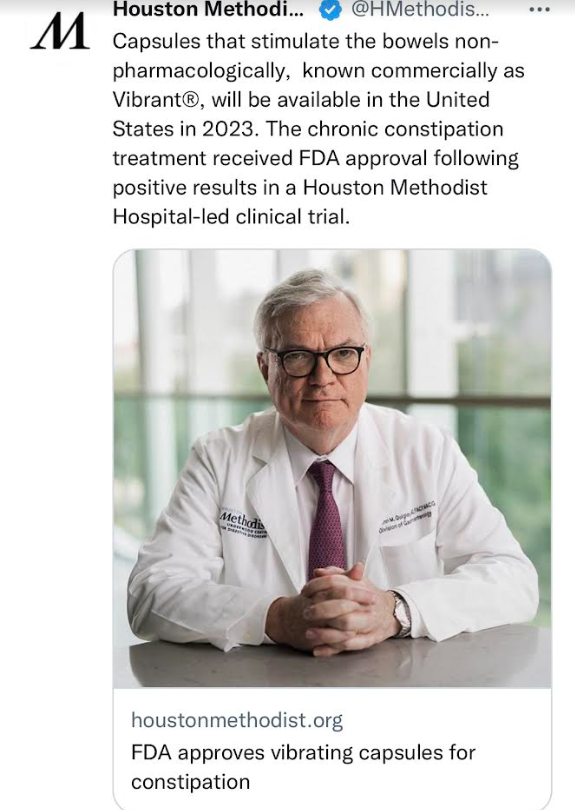
Picking Apart the SERENE-CD Study & Constipation Vibrating Capsule FDA Approved

Several recent letters to the editor provide some insight into some of the shortcomings of the SERENE-CD study which reported that higher adalimumab induction dosing and proactive therapeutic drug monitoring (TDM) were not associated with improved outcomes.

“The rerandomization design of SERENE CD, which selectively enrolled patients with clinical response at week 12 to the TDM vs CA part of the study, may have resulted in the exclusion of those who would have benefited the most from early adjustment of their anti-tumor necrosis factor (TNF) dose. The rerandomization design and the late adaptation of the proactive strategy at week 12 were 2 significant aspects of the design that may have led to the negative results. On the other hand, PAILOT, which showed beneficial effects of proactive TDM, randomized patients as early as week 4 and assessed the outcome at week 72. This is distinct from the 1-year time frame used in most other studies, including SERENE CD.8 A properly designed, adequately powered clinical trial is needed before we can make a judgement on the use of proactive TDM in patients with inflammatory bowel disease. Until then, the jury remains out.”

“The study design only allowed patients in the TDM group with adalimumab concentrations of ≥5 and ≤10 μg/mL to be escalated to 40 mg every week if their CD activity index was ≥220 or their high-sensitivity C-reactive protein level was ≥10 mg/L.. The goal of proactive TDM is to attain a threshold concentration regardless of disease activity. This design probably led the 2 groups to have similar drug concentrations at week 56…

Second, a rather low targeted drug concentration of 5 μg/mL was used, although previous studies have suggested that higher concentrations are more appropriate.5678 A study from Ungar et al5 showed that adalimumab concentrations of 8–12 μg/mL are required to achieve mucosal healing in 80%–90% of patients with IBD, and the prospective PANTS (The Personalised Anti-TNF Therapy in Crohn’s Disease Study) study identified an adalimumab concentration of 12 μg/mL at week 14 associated with remission at both week 14 and week 54.8..

Third, dose escalation for the TDM group could only happen at weeks 14, 28, or 42 (and not earlier and more often). In the PAILOT RCT, proactive TDM based on adalimumab concentration evaluations started as early as week 4 followed by week 8 and every 8 weeks thereafter until the end of the follow-up at week 72.3 Fourth, there was a rather short follow-up of the patients (44 weeks).”

” Even with the assumption of a 30% benefit of proactive TDM and that 20% of patients would have low drug levels in the absence of symptoms, the sample size for 80% power would range from 1228 to 2170. Thus, although SERENE CD1 and other clinical trials3,4 have suggested a lack of benefit of proactive TDM in adults with inflammatory bowel disease, all were likely substantially underpowered to do so.”

My take: While the SERENE-CD results have suggested that a strategy of proactive TDM may not be helpful, there are a lot of reasons to disregard these findings. Achieving a therapeutic level is a fundamental principle and proactive TDM, particularly in pediatrics, is well-supported by other studies.

Related blog posts:

Also noted:

Why Vonoprazan Is More Effective For Erosive Esophagitis Than a Proton Pump Inhibitor

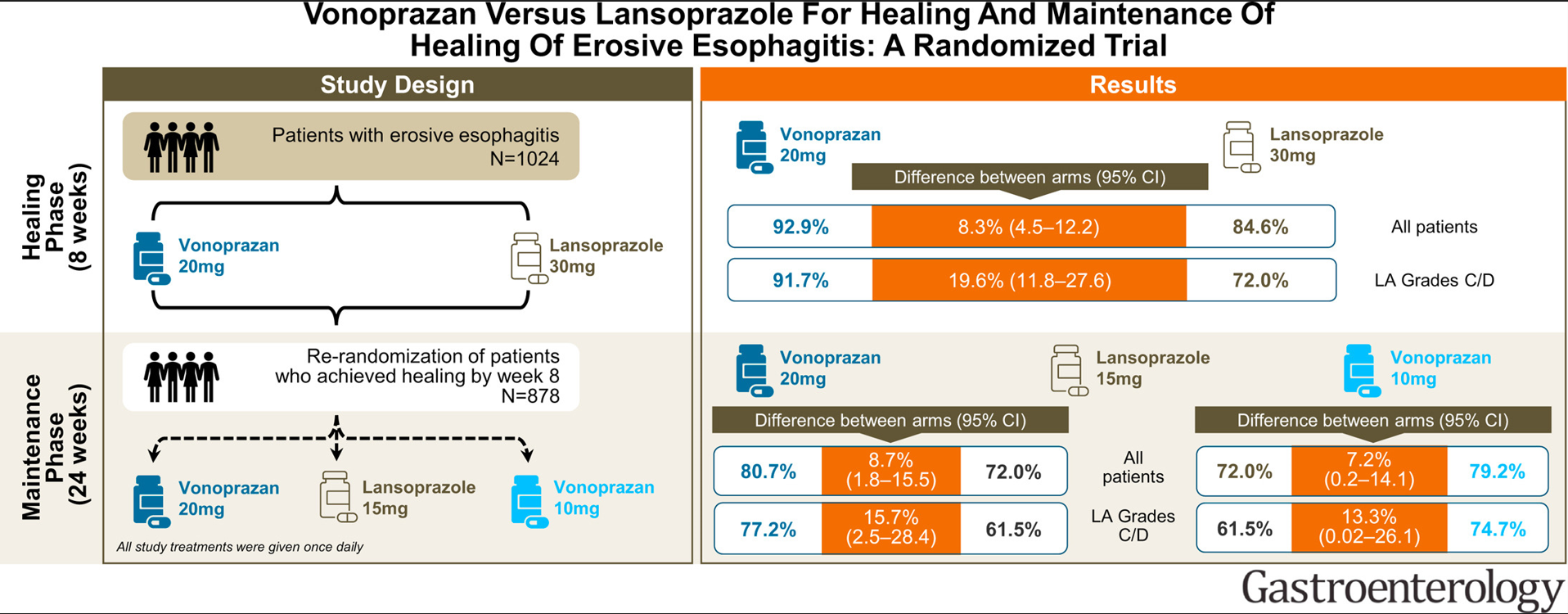
L Laine et al. Gastroenterol 2023; 164: 61-71. Open Access! Vonoprazan Versus Lansoprazole for Healing and Maintenance of Healing of Erosive Esophagitis: A Randomized Trial

Editorial: DA Katzka, PJ Kahrilas. Gastroenterol 2023; 164: 14-15. Open Access! Potassium-Competitive Acid Blocker Suppression of Gastric Acid in Erosive Esophagitis: Is Stronger and Longer Better?

Methods: Adults with erosive esophagitis were randomized to once-daily vonoprazan, 20 mg, or lansoprazole, 30 mg, for up to 8 weeks (healing phase, n=1024). Patients with healing were rerandomized to once-daily vonoprazan, 10 mg, vonoprazan, 20 mg, or lansoprazole, 15 mg, for 24 weeks (maintenance phase, n=878). 

Key findings: (see graphical abstract)

  • In the healing phase, vonoprazan was noninferior to lansoprazole in the primary analysis and superior on the exploratory analysis of healing: 92.9 vs 84.6% (difference, 8.3%). It is noted that studies in Asian populations found smaller differences in healing between these medications.
  • Vonoprazan had superior healing Los Angeles Classification Grade C/D esophagitis at week 2 (difference, 17.6%)
  • Vonoprazan was superior with regard to maintenance of healing Grade C/D esophagitis (20 mg vs lansoprazole (difference, 15.7%) and 10 mg vs lansoprazole (difference, 13.3%).
  • The entire group maintenance healing rates in this trial were lower than in a prior randomized trial in Japan. In the current study at 24 weeks, vonoprazam 20 mg, vonprazan 10 mg and lansoprazole 15 mg had maintenance of healing in 81%, 79%, and 72% respectively compared with 98%, 95%, and 83% in the trial from Japan

The editorial provides a lot of insight into this now FDA-approved therapy for H pylori. Vonoprazan’s application to expand FDA approval is underway: FDA Accepts Review of NDA for Vonoprazan From Phathom Pharmaceuticals (June 3, 2022).

Key points from editorial:

  • Among their shortcomings, PPIs are far from perfect in healing high-grade (Los Angeles class C and D) esophagitis, resulting in the common practice of twice-daily dosing. Furthermore, up to 35% of patients with Los Angeles class C and D esophagitis remain unhealed at 8 weeks, even with twice-daily PPI use.5,6
  • Mechanism of action: Vonoprazan is a potassium-competitive acid blocker (PCAB) . It, reversibly binds to the α-subunit of H+, K+-ATPase to compete with potassium binding. Vonoprazan is acid stable, eliminating the need for enteric coating and allowing for rapid onset of action. Because it achieves high and sustained (half-life is approximately 9 hours) concentrations rapidly in the parietal cell secretory canaliculi, maximal acid inhibition is achieved quickly after a single dose.
  • Because it is not metabolized through the hepatic CYP2C19 or CYP3A4 enzymes, vonoprazan is much less prone to drug–drug interactions.
  • Safety: For the issue of long-term adverse events associated with PPI use…, the proposed mechanisms for these primarily relate to the effects of chronic acid inhibition and/or hypergastrinemia, and there is no reason to think that a PCAB would be any different than a PPI.

My take: There are a lot of individuals with ongoing heartburn & reflux despite PPI treatment. It is likely that vonoprazan will be targeted for patients with more severe erosive esophagitis and refractory symptoms. It is likely that the cost to U.S. patients will be substantially higher than the cost of PPIs.

Related blog posts:

Maternal Mortality in Georgia

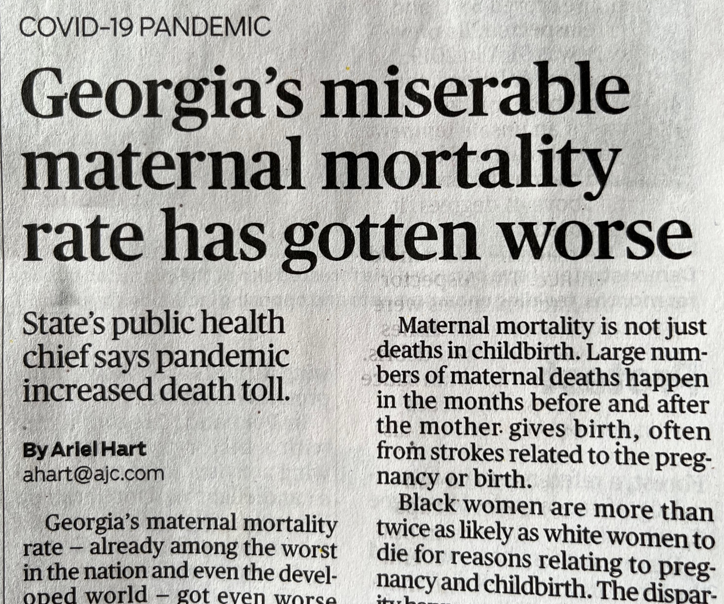
Dr. Kathleen Toomey, Commissioner and State Health Officer at Georgia, in an AJC report (Jan 21, 2023):

“We are going to see an increase in maternal mortality during the time of COVID,” Toomey said. “It’s sad but not unexpected.

Toomey spoke during budget hearings at the state Capitol, saying her agency is pivoting away from an all-hands-on-deck pandemic focus. She said her department would use some of its available bandwidth now to focus on the maternal mortality issue.

For the years 2018-2020, DPH posted pregnancy-related deaths for white women at 22.7 deaths per 100,000 births, and pregnancy-related deaths for Black women at 48.6 deaths per 100,000 births. It did not post overall figures for those years.

In another study (see below) on maternal mortality, it is noted that the mortality rate was 62% higher in states with restrictive abortion policies, likely related to poor availability of health care.

The Commonwealth Fund report (12/4/22): The U.S. Maternal Health Divide: The Limited Maternal Health Services and Worse Outcomes of States Proposing New Abortion Restrictions

My take: Improving maternal mortality should be near the top of the list of priorities and is a good area to try to mitigate health care disparities.

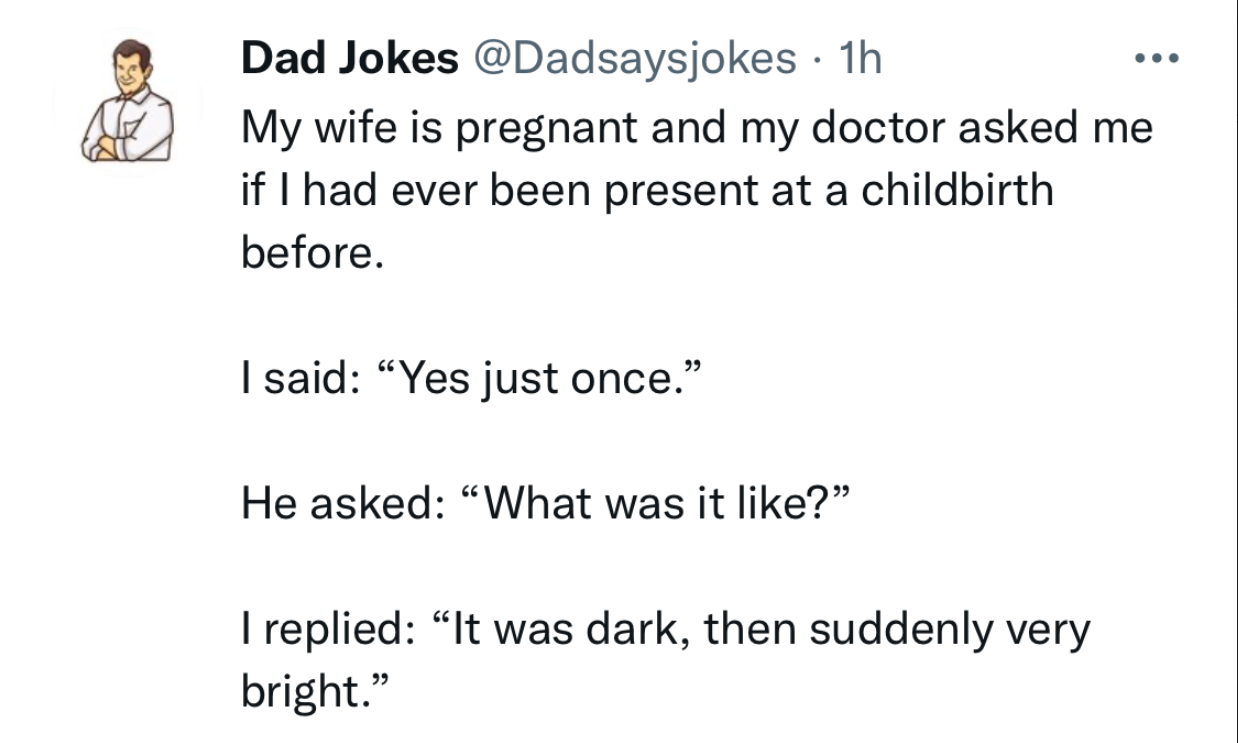
And on a lighter note –Tonight Show Interview with George Santos (Jon Lovitz). Thanks to Steven Liu for sharing this.

Meckel’s Scan: “Who are you going to believe, me, or your lying eyes?”

The title quote is generally attributed to Groucho Marx. YD Neugut, I Novak. J Pediatri 252; 30. Open Access! The Continued Importance of the Meckel Scan (50 Years Ago in The Journal of Pediatrics)

This brief article is a quick review of the continuing importance of the Meckel scan, 50 years after the publication: Jaros R, Schussheim A, Levy LM. Preoperative diagnosis of bleeding Meckel’s diverticulum utilizing 99m technetium pertechnetate scinti-imaging. J Pediatr 1973;82:45-9.

However, I take exception to this one line (hence this post’s title): “Now, premedication with H2 antagonists often is used to enhance tracer uptake into gastric tissue, and a Meckel scan has high sensitivity and specificity, both approaching 100%.3

On planet Earth, the test’s sensitivity does NOT approach 100%. It would be more accurate to cite several references regarding the test’s sensitivity. For example, Kwak et al, in a retrospective review of 360 children (368 scans), found a sensitivity of only 65% (J Nuclear Med 2013; 54 (supplement 2) 535. Utility of Meckel’s scan: Retrospective review of 368 cases).

My take: A Meckel’s scan is very helpful when it is abnormal due to its high specificity. However, its sensitivity is suboptimal and many children need surgery for a Meckel’s diverticulum even with a negative scan.

Related blog posts:

Legacy bicycle trail in Sarasota, FL.

Combination Therapy for Eosinophilic Esophagitis

MA Buendia et al. JPGN Reports 3(4):p e273, 2022. DOI: 10.1097/PG9.0000000000000273. Relapse of Eosinophilic Esophagitis on Dupilumab

Yesterday’s post reviewed the landmark study leading to dupilumab’s FDA approval. Today’s case report shows that we have a lot we need to learn about its use.

The authors present a case report of a patient with eosinophilic esophagitis (EoE) who had ongoing active EoE while receiving topical steroids (TS) and PPI (and previously dietary elimination therapy). He achieved remission after the addition of dupilumab. “When his TS were weaned after achieving remission, his disease relapsed with worsening of his dysphagia and a peak eosinophilic count (PEC) of 55 eosinophils per high power field (eos/hpf). Upon restarting TS to his ongoing dupilumab, symptoms fully resolved, and he achieved histologic remission (PEC 10 eos/hpf).”

My take: This study indicates that there are some patients need dupilumab and topical steroids in combination, rather than monotherapy. Reliable biomarkers to more easily determine response and/or to predict optimal therapy are clearly needed.

Sunset at Siesta Key, FL

Landmark Dupilumab Study for Eosinophilic Esophagitis

ES Dellon et al. NEJM 2022; 387; 2317-2330. Dupilumab in Adults and Adolescents with Eosinophilic Esophagitis

This study was pivotal for receiving FDA approval of dupilumab (dupixent) for the treatment of EoE (the only FDA approved therapy). Background: “Dupilumab, a fully human monoclonal antibody, blocks interleukin-4 and interleukin-13 signaling, which have key roles in eosinophilic esophagitis..Standard-of-care treatments for eosinophilic esophagitis include food elimination diets, proton-pump inhibitors (PPIs), swallowed topical glucocorticoids (applied to the esophagus by swallowing), and, in the case of strictures, esophageal dilation.11,12 However, the rates of response are variable (30 to 40% of patients may not have a response to first-line treatments).”

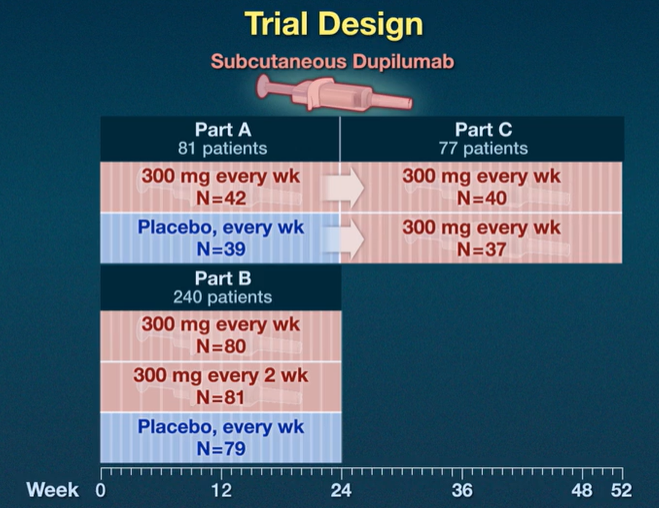
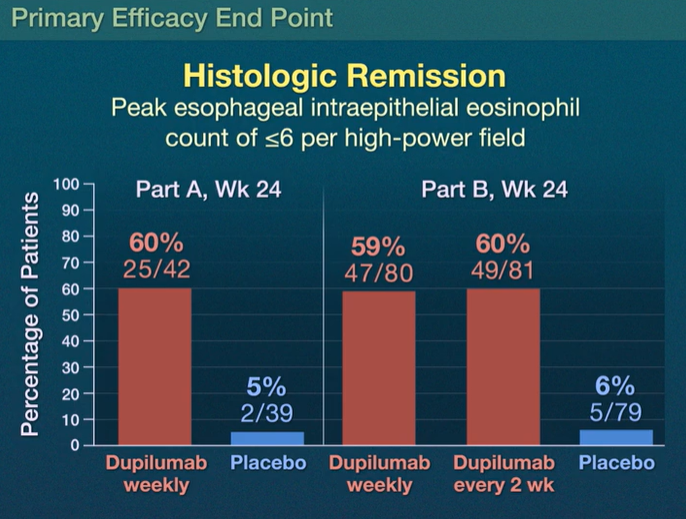
Key findings from three-part study (see images below):

  • Part A: Histologic remission occurred in 25 of 42 patients (60%) who received weekly dupilumab and in 2 of 39 patients (5%) who received placebo
  • Part B: Histologic remission occurred in 47 of 80 patients (59%) with weekly dupilumab, in 49 of 81 patients (60%) with dupilumab every 2 weeks, and in 5 of 79 patients (6%) with placebo 
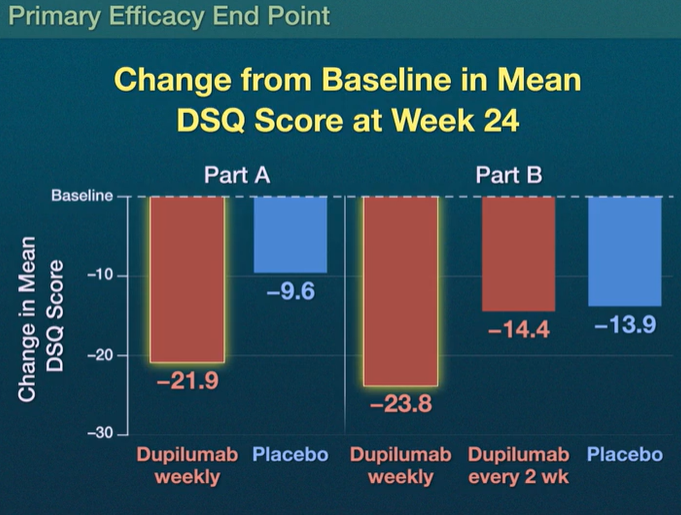
  • Dysphagia Symptom Questionnaire (DSQ) scores:  the scores improved with weekly dupilumab as compared with placebo, with differences of –12.32 (95% CI, –19.11 to –5.54) in Part A and –9.92 (95% CI, –14.81 to –5.02) in Part B (both P<0.001) but not with dupilumab every 2 weeks (difference in Part B, –0.51; 95% CI, –5.42 to 4.41)
  • The most common adverse effect was injection site reactions. There were 10 serious adverse events; none of these “were considered by the trial investigators to be related to the trial regimen.”

In the associated commentary, (pg 2379-2380), Dr. Alex Straumann notes that since EoE is localized to the esophagus, whether a patients should be treated with a systemically acting medication, “particularly in light of the fact that topical glucocorticoids have been shown to be as efficacious as systemically acting prednisone.”

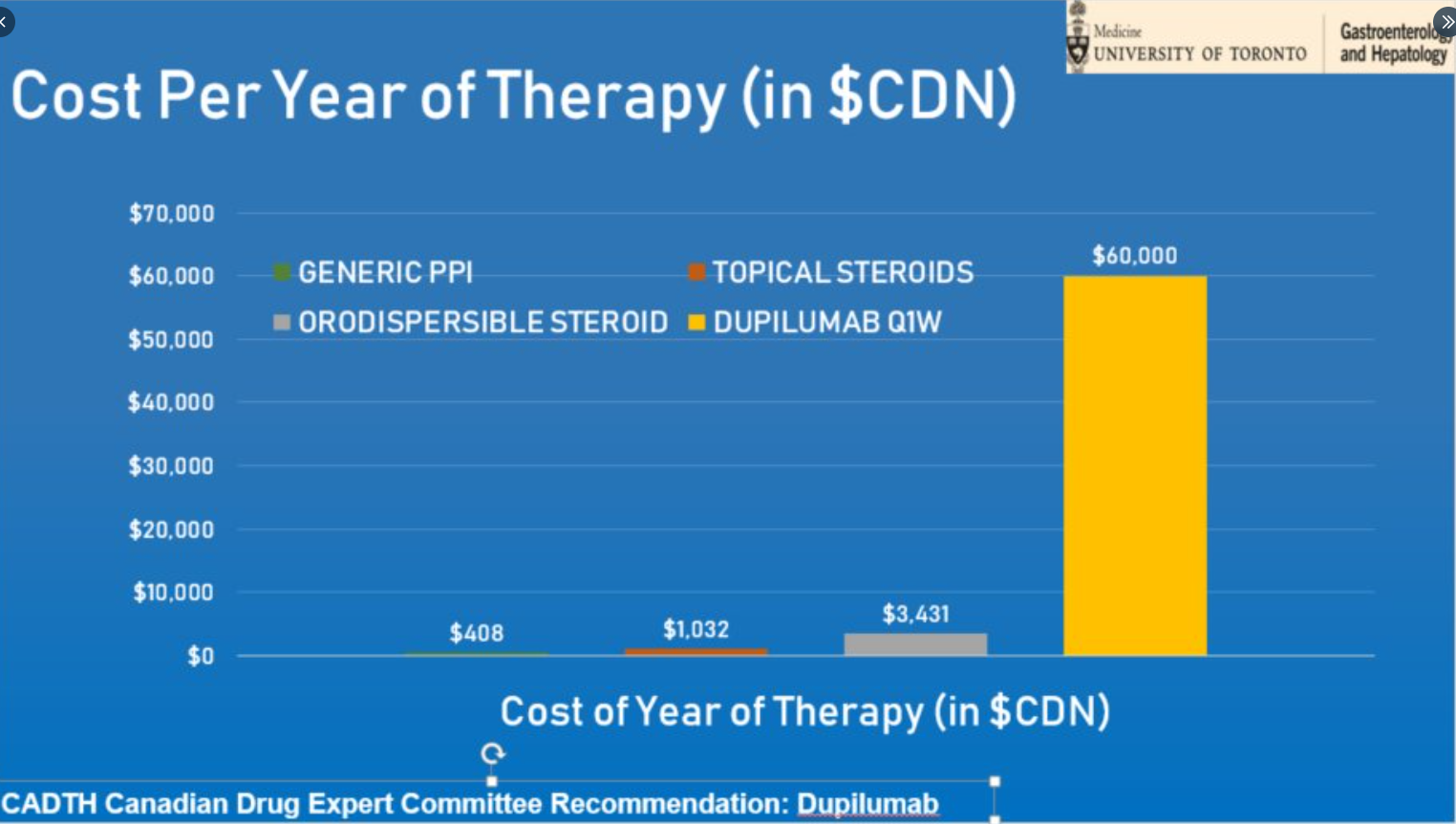
My take (borrowed in part from editorial): It remains unclear whether dupilumab “is better than the good old topical glucocorticoids in improving disease outcomes, particularly in light of considerable costs associated with this treatment.” Due to its cost (see below), dupillumab is likely best situated as a 2nd line treatment at this time for most patients.

Related blog posts:

Cost comparison (from Laura Targownwik on twitter):