Lately, there has been a lot of ‘buzz’ about the potential use of point-of-care bowel sonography (aka intestinal ultrasound). This study (2019-2021) prospectively enrolled patients with a high likelihood of Crohn’s disease (CD) and compared handheld bowel sonography (HHBS), MRE (all patients, n=85, had ileocolonoscopy)
Key findings:
Sensitivity, specificity, positive predictive values, and negative predictive values for CD diagnosis were 87.50%, 91.89%, 93.33%, and 85% for HHBS; and 91.67%, 94.59%, 95.65%, and 89.74% for MRE, without significant differences in terms of diagnostic accuracy (89.41% for HHBS vs 92.94% for MRE, P = NS)
Magnetic resonance enterography was superior to HHBS in defining CD extension (r = 0.67; P < .01) with a better diagnostic performance than HHBS for detecting location (k = 0.81; P < .01), strictures (k = 0.75; P < .01), abscesses (k = 0.68; P < .01), and fistulas (k = 0.65; P < .01).
My take: In this study, MRE was clearly superior at defining CD complications. This study suggests that HHBS could be an effective screening tool but is not likely a definitive imaging study. In terms of bedside monitoring, it would be helpful to see how clinical monitoring with HBSS compares with a highly sensitive marker like a calprotectin. I also worry that HBSS could perform more poorly with more widespread application due to potential increase in operator error.
Methods: Direct stimulated endoscopic pancreatic function test (ePFT) was performed in 74 children with IBD
Key findings:
42 (56.7%) children had either generalized or partial exocrine pancreatic insufficiency (EPI).
Weight z scores were significantly lower in those with abnormal ePFT (Crohn cases: P = 0.008; UC cases: P = 0.046).
In their discussion, the authors assert: “We can confidently recommend ePFT in established or new IBD patients who have stricturing and/or penetrating CD, weight loss, low weight Z-score, or qualify for the diagnosis of malnutrition.”
My take: In my real-world experience (~30 years), I have yet to have one patient presenting with IBD who needed pancreatic enzyme supplementation to reverse growth failure/malnutrition. As a consequence, I have a difficult time accepting the premise that more than 50% have EPI. To me, this suggests that testing children when they are acutely-ill or malnourished is yielding unreliable results.
This single center retrospective study reviewed 640 colonoscopies in symptomatic children.
Key findings:
Thirty-three children had isolated histologically-defined terminal ileitis. Seventeen children were diagnosed with CD and 18 children had idiopathic terminal ileitis (3 lost to followup)
Children with CD had higher prevalence of abnormal C-reactive protein levels, severe inflammation, and radiological evidence of bowel wall thickening compared with children with idiopathic ileitis.
Two children with idiopathic ileitis were later diagnosed with CD; the remaining 13 did not develop CD over a follow-up period of 83 months.
From the data presented, it appeared that the center had a low rate of ileal intubation (316 colonoscopies were excluded for this reason)
75% of those with histologic ileitis had normal endoscopic appearance
When our group looked at colonoscopies (n=374) in our outpatient endoscopy center, we identified isolated ileitis in 10% (6% grossly abnormal, 4% with only histologically abnormal) (related blog post: Our Study: Provider Level Variability in Colonoscopy Yield). Higher rates of ileal intubation (90% in our study) should be considered a quality metric given that 5-10% of children may have disease isolated in ileum.
My take: This study provides reassurance that most children with histologic ileitis will not progress to CD if the ileum is visually-normal (in the absence of abnormal blood tests and/or imaging).
Using a database with 10,777 pediatric patients (2007-2018) with more than 28,000 patient years, there were 5 lymphomas reported. 4 had received thiopurines and none received anti-TNF monotherapy.
My take: This is a very reassuring study for the safety of anti-TNF agents.
In this retrospective study with 92 patients (182 colonoscopies), the authors found “minimal variability between degree of inflammation among biopsy fragments within and among different colorectal segments in UC, suggesting that even a single biopsy would adequately reflect the inflammation of the entire colorectum.”
My take: This study suggests that taking biopsies from every segment of the colon (when it looks uniform) is usually not needed, unless the purpose is to look for dysplasia. Also, it is worth recognizing that individuals with primary sclerosing cholangitis often have greater histologic activity in the right colon.
In this retrospective observational cohort study (n=140 children), patients were started on 5 mg/kg/dose during induction. 78 children had “optimized dosing” with an infliximab level drawn prior to 3rd dose. A level <15 mcg/g was considered subtherapeutic. It is noted that combination therapy was much higher in the standard (not optimized) group (95% vs 42%).
Key findings:
Combined corticosteroid-free clinical and biomarker remission (CRP < 5 mg/L) was higher in the optimized compared to the standard cohort [65/78 (83%) vs 25/62 (40%), P < 0.001]. Remission rates correlated with trough levels; those in clinical remission had a median level of 3.6 compared to 2.0 in those without clinical remission.
The median post-induction trough was higher in the optimized group 4.2 mg/L vs 1.9 mg/L.
The optimized group were significantly more likely to achieve a therapeutic level (5 mg/L or greater): 44% vs 18%.
My take:
The “optimized” group was not very well optimized –only 44% had a therapeutic level >5, but still performed much better than the standard group (which more often had combination therapy). This indicates a need to start with higher doses and reinforces the need for therapeutic drug monitoring.
This study further shows that 5 mg/kg dosing is inadequate. In the standard group, even with combination therapy, only 18% achieved therapeutic levels.
This article will be another one to include to try to persuade insurance companies that kids are different and need higher doses of infliximab.
Though inconvenient for families, dosing more frequently is more effective than higher doses for improving trough levels (ie 5 mg/kg q4 wks results in better trough levels than 10 mg/kg q8 wks).
Here are some additional references on this topic (from a recent appeal):
For pediatrics, studies have shown that utilizing dosing of 5 mg/kg/dose results in subtherapeutic dosing in around 80%, especially if low albumin. This places patients at high risk for developing antibodies to infliximab and complications from Crohn’s disease.
LE Bauman et al Inflamm Bowel Dis 2020 Feb 11;26(3):429-439.Improved Population Pharmacokinetic Model for Predicting Optimized Infliximab Exposure in Pediatric Inflammatory Bowel Disease. The authors identified 228 pediatric patients with IBD and developed a pharmacokinetic model using weight, albumin, sedimentation rate and antibodies to infliximab (ATI) to help predict infliximab dosing that would achieve a therapeutic trough level (>5 mcg/mL). In their study, they also simulated 1000 patients and found thatonly 24% of patients receiving 5 mg/kg q8weeks achieved a therapeutic level; this increased to 56% for 10 mg/kg q8weeks
Frymoyer A, Piester TL, Park KT. JPGN.2016;62(5):723-727. Infliximab dosing strategies and predicted trough exposure in children with Crohn’s disease. Only 21% of children in this modeling study achieved a trough level >3 if the albumin was 3 or lower. The goal for trough level is NOW >5.
JM Shapiro et al. JPGN 2016; 62: 867-72.Durability of Infliximab Is Associated With Disease Extent in Children With Inflammatory Bowel Disease. In this study with 98 pediatric patients, 70% with extensive disease required dose escalation.
Ungar B, Levy I, Yavne Y, et al. Clin Gastroenterol Hepatol.2016;14(4):550-557.e552. Optimizing Anti-TNF-alpha therapy: serum levels of Infliximab and Adalimumab are associated with mucosal healing in patients with inflammatory bowel diseases. Getting good levels important to achieve healing/remission.
NV Castelle et al. Clin Gastroenterol Hepatol 2022; 20: 465-467.Patients With Low Drug Levels or Antibodies to a Prior Anti-Tumor Necrosis Factor Are More Likely to Develop Antibodies to a Subsequent Anti-Tumor Necrosis Factor. Good levels are associated wtih fewer antibodies to infliximab.
On a recent trip to Florida, we picked up more than 40 sand dollars on a morning beach walk. This was during a cold snap, at low tide and after a storm.
Disclaimer: This blog, gutsandgrowth, assumes no responsibility for any use or operation of any method, product, instruction, concept or idea contained in the material herein or for any injury or damage to persons or property (whether products liability, negligence or otherwise) resulting from such use or operation. These blog posts are for educational purposes only. Specific dosing of medications (along with potential adverse effects) should be confirmed by prescribing physician. Because of rapid advances in the medical sciences, the gutsandgrowth blog cautions that independent verification should be made of diagnosis and drug dosages. The reader is solely responsible for the conduct of any suggested test or procedure. This content is not a substitute for medical advice, diagnosis or treatment provided by a qualified healthcare provider. Always seek the advice of your physician or other qualified health provider with any questions you may have regarding a condition.
This review looks at the potential role of salt in relation to the epidemiology of inflammatory bowel disease. The general focus is that the prevalence/incidence of IBD has been increasing and there must be environmental/dietary factors involved. Could salt be one of those causal factors or is it merely a temporal association?
Key points:
Ultra-processed foods make up more than half of the daily caloric intake in developed countries such as the United States! and Canada and between one-third to one-fifth of diets in middle-income countries such as Brazil and Mexico.. Ultra-processed foods involve “fractioning of whole foods into substances, chemical modifications of these substances, frequent use of cosmetic additives and sophisticated packaging that allow producers to create highly profitable, convenient, and hyperpalatable products.” Ultra-processed foods are typically high in sugar, unhealthy fats, and salt and low in dietary fiber, protein, vitamins, and minerals. They are also calorie dense. For Americans, the primary source of sodium in the diet is from commercially processed foods.
At present, the typical American consumes over 40% more salt on a daily basis than is re-commended. Added salt is a key component of UPFs, whose increased consumption has been closely linked to this rise in the IBD incidence. Even though salt is a key component of UPFs, it has received limited attention in the investigation of IBD...Excess salt contributes to greater monocyte and T-cell-driven inflammation and a parallel loss of immunoregulatory mechanisms involving M2 macrophages and Tregs in the Th17 axis.
The authors argue that improvement in IBD with exclusive enteral nutrition is another factor indicating a potential role for salt reduction as beneficial. “Although these ultra-processed liquid nutrition formulas were high in sugars, emulsifiers, and carrageenan, they were very low in sodium content.”
My take: It is not clear what impact salt has on IBD. However, too much salt causes problems well beyond hypertension and may contribute to several inflammatory conditions, including IBD, asthma, and rheumatoid arthritis.
Unrelated website information: IBD-EII is a website which has tried to organize/summarize some of the more important IBD articles including a timeline of these publications and evidence for specific medications.
Atlanta Botanical Gardens. Garden Nights, Holiday Lights exhibit
Several recent letters to the editor provide some insight into some of the shortcomings of the SERENE-CD study which reported that higher adalimumab induction dosing and proactive therapeutic drug monitoring (TDM) were not associated with improved outcomes.
“The rerandomization design of SERENE CD, which selectively enrolled patients with clinical response at week 12 to the TDM vs CA part of the study, may have resulted in the exclusion of those who would have benefited the most from early adjustment of their anti-tumor necrosis factor (TNF) dose. The rerandomization design and the late adaptation of the proactive strategy at week 12 were 2 significant aspects of the design that may have led to the negative results. On the other hand, PAILOT, which showed beneficial effects of proactive TDM, randomized patients as early as week 4 and assessed the outcome at week 72. This is distinct from the 1-year time frame used in most other studies, including SERENE CD.8 A properly designed, adequately powered clinical trial is needed before we can make a judgement on the use of proactive TDM in patients with inflammatory bowel disease. Until then, the jury remains out.”
“The study design only allowed patients in the TDM group with adalimumab concentrations of ≥5 and ≤10 μg/mL to be escalated to 40 mg every week if their CD activity index was ≥220 or their high-sensitivity C-reactive protein level was ≥10 mg/L.. The goal of proactive TDM is to attain a threshold concentration regardless of disease activity. This design probably led the 2 groups to have similar drug concentrations at week 56…
Second, a rather low targeted drug concentration of 5 μg/mL was used, although previous studies have suggested that higher concentrations are more appropriate.5, 6, 7, 8 A study from Ungar et al5 showed that adalimumab concentrations of 8–12 μg/mL are required to achieve mucosal healing in 80%–90% of patients with IBD, and the prospective PANTS (The Personalised Anti-TNF Therapy in Crohn’s Disease Study) study identified an adalimumab concentration of 12 μg/mL at week 14 associated with remission at both week 14 and week 54.8..
Third, dose escalation for the TDM group could only happen at weeks 14, 28, or 42 (and not earlier and more often). In the PAILOT RCT, proactive TDM based on adalimumab concentration evaluations started as early as week 4 followed by week 8 and every 8 weeks thereafter until the end of the follow-up at week 72.3 Fourth, there was a rather short follow-up of the patients (44 weeks).”
” Even with the assumption of a 30% benefit of proactive TDM and that 20% of patients would have low drug levels in the absence of symptoms, the sample size for 80% power would range from 1228 to 2170. Thus, although SERENE CD1 and other clinical trials3,4 have suggested a lack of benefit of proactive TDM in adults with inflammatory bowel disease, all were likely substantially underpowered to do so.”
My take: While the SERENE-CD results have suggested that a strategy of proactive TDM may not be helpful, there are a lot of reasons to disregard these findings. Achieving a therapeutic level is a fundamental principle and proactive TDM, particularly in pediatrics, is well-supported by other studies.
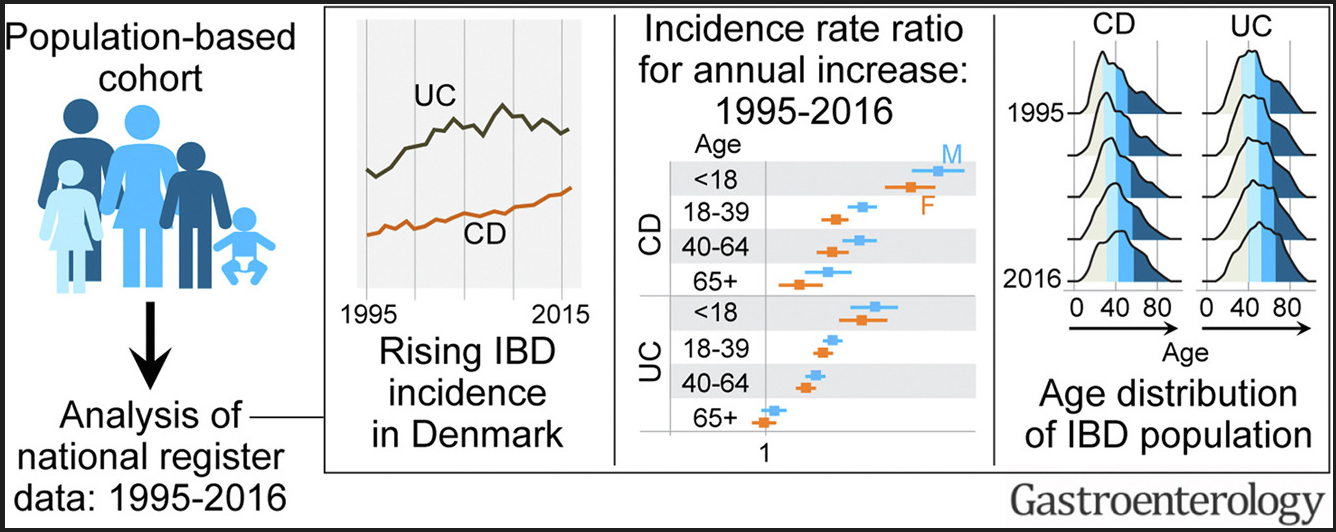
Between 1995 and 2016, the incidence rate (95% confidence interval) per 100,000 person-years rose from 9.1 (8.3–10.0) to 17.8 (16.8–19.0) for CD, and from 21.0 (19.8–22.3) to 28.4 (27.0–29.8) for UC.
The highest increase in CD and UC incidence rates occurred in children and young adults, respectively.
The prevalence of IBD doubled from 1995 to 2016; the greatest increase (2.5-fold) was in UC prevalence among individuals aged >40 years. During this period, the median age of the IBD population increased by 6 to 7 years.
In this retrospective study (n=130), therapeutic drug levels in the postoperative period were associated with improved outcomes for anti-TNF agents (infliximab (IFX) or adalimumab (ADA) but NOT for ustekinumab (UST):
In patients with IFX ≥3 µg/mL, higher rates of deep remission (39% vs 0%; P = .02) existed compared with those with IFX less than 3 µg/mL. This was true for clinical remission (44% vs 9%; P = .04) and objective (83% vs 62%; P = .1) remission.
In patients with ADA ≥7.5 µg/mL, rates of deep (42% vs 0%; P = .02), clinical (42% vs 0%; P = .02), and objective (88% vs 40%; P = .007) remission were higher than patients with lower concentrations.
For UST, rates of deep (28% vs 17%; P = 1.0), clinical (33% vs 33%; P = 1.0), and objective (70% vs 67%; P = 1.0) remission were similar between patients regardless of drug concentration.
In this retrospective study (n=147), a fecal calprotectin >800 mcg/g independently predicted the need for inpatient medical rescue therapy (odds ratio, 2.61; 95% CI, 1.12-6.12). An admission calprotectin >800 mcg/g independently predicted surgery within 3 months (odds ratio, 2.88; 95% CI, 1.01-8.17). My take: This is the least surprising study I’ve read this past month —those with more severe colitis, based on calprotectin values, were more likely to need more intensive treatments.
In this retrospective pediatric study (n=171), the authors found that a generic oral supplement (Fortsip) was as effective as a specialized formula (Modulen IBD) for enteral nutrition. “No difference was demonstrated in remission rate (Fortisip n = 67 of 106 [63%] vs Modulen IBD n = 41 of 64 [64%], P = .89), nonadherence rate (Fortisip n = 7 of 106 [7%] vs Modulen IBD 3 of 64 [5%], P = .57) or method of administration.” The main difference in outcome was a lower expense in the group receiving the generic formula. My take: This study is in agreement with previous studies.
Generally, in my view, “bad” inflammatory bowel disease (IBD) occurs when treatments are not working; though, many would argue that any IBD is bad IBD. Over the next few days, reviewed articles will focus on the problem of IBD that is not responding well to treatment.
In this retrospective study with 69 children with Crohn’s disease (CD) from 25 centers, the authors looked at the effectiveness of ustekinumab (UST) dose escalation which entailed reducing frequency to less than every 8 weeks. Most children were biologic (98.6%)- and immunomodulator (86.8%)- experienced.
Key findings:
Clinical response and remission were observed at 3 months after UST escalation in 46 (67%) and 29 (42%) children, respectively.
Fecal calprotectin level from 1100 (500–2300) to 515 (250–1469) µg/g (P = 0.012) 3 months post-escalation
Endoscopic and transmural healing were achieved in 3 of 19 (16%) and 2 of 15 (13%) patients, respectively
In their discussion, the authors note that UST has not received FDA approval despite the fact that it has become a common second- and third-line biologic therapy for pediatric CD.
My take: This study supports the common practice of escalation of UST for children with active CD despite treatment at every 8 weeks.
Related Ustekinumab Studies:
J Meserve et al.Clin Gastroenterol Hepatol 2022; 20: 2728-2740. Open Access! Effectiveness of Reinduction and/or Dose Escalation of Ustekinumab in Crohn’s Disease: A Systematic Review and Meta-analysis In this article with 15 cohort studies in 925 adults with CD with inadequate response or loss of response to standard dose ustekinumab, on meta-analysis, 55% of patients achieved clinical response [with dose escalation]…61% of patients were able to achieve endoscopic response, including 29% who achieved endoscopic remission. Dose interval shortening alone recaptured response in 57% patients.
RS Dalal et al. Clin Gastroenterol Hepatol 2022; 20: 2399-2401. Predictors and Outcomes of Ustekinumab Dose Intensification in Ulcerative Colitis: A Multicenter Cohort Study This retrospective study looked at 108 adult patients with UC who had ustekinumab escalation; more than 40% required dose intensification. “Similar to our findings in Crohn’s disease, >50% of dose-intensified patients achieved corticosteroid-free remission….Patients with minimal/no response to induction had lower odds of remission after intensification.”
S Dansese et al.Clin Gastroenterol Hepatol 2022; 20: 2858-2867. Open Access! Early Symptomatic Improvement After Ustekinumab Therapy in Patients With Ulcerative Colitis: 16-Week Data From the UNIFI Trial This study, a post hoc analysis of UNIFI trial, found that an early (2 week) symptomatic remission with ustekinumab in 20.2% (P = .012) vs placebo (12.9%). The more extensive results reviewed in the article (Figure 2) showed increasing symptomatic remission rates at week 4 (32.9%), week 8 (44.7%), and week 16 (53,1%) with IV dose of 6 mg/kg. The biologic-naive group had higher symptomatic remission rates (69% at week 16).
Deepdene Park, Atlanta. Part of Olmstead Linear Park
Disclaimer: This blog, gutsandgrowth, assumes no responsibility for any use or operation of any method, product, instruction, concept or idea contained in the material herein or for any injury or damage to persons or property (whether products liability, negligence or otherwise) resulting from such use or operation. These blog posts are for educational purposes only. Specific dosing of medications (along with potential adverse effects) should be confirmed by prescribing physician. Because of rapid advances in the medical sciences, the gutsandgrowth blog cautions that independent verification should be made of diagnosis and drug dosages. The reader is solely responsible for the conduct of any suggested test or procedure. This content is not a substitute for medical advice, diagnosis or treatment provided by a qualified healthcare provider. Always seek the advice of your physician or other qualified health provider with any questions you may have regarding a condition.