What Happens When Infliximab is Stopped in Patients in Deep Remission Plus One

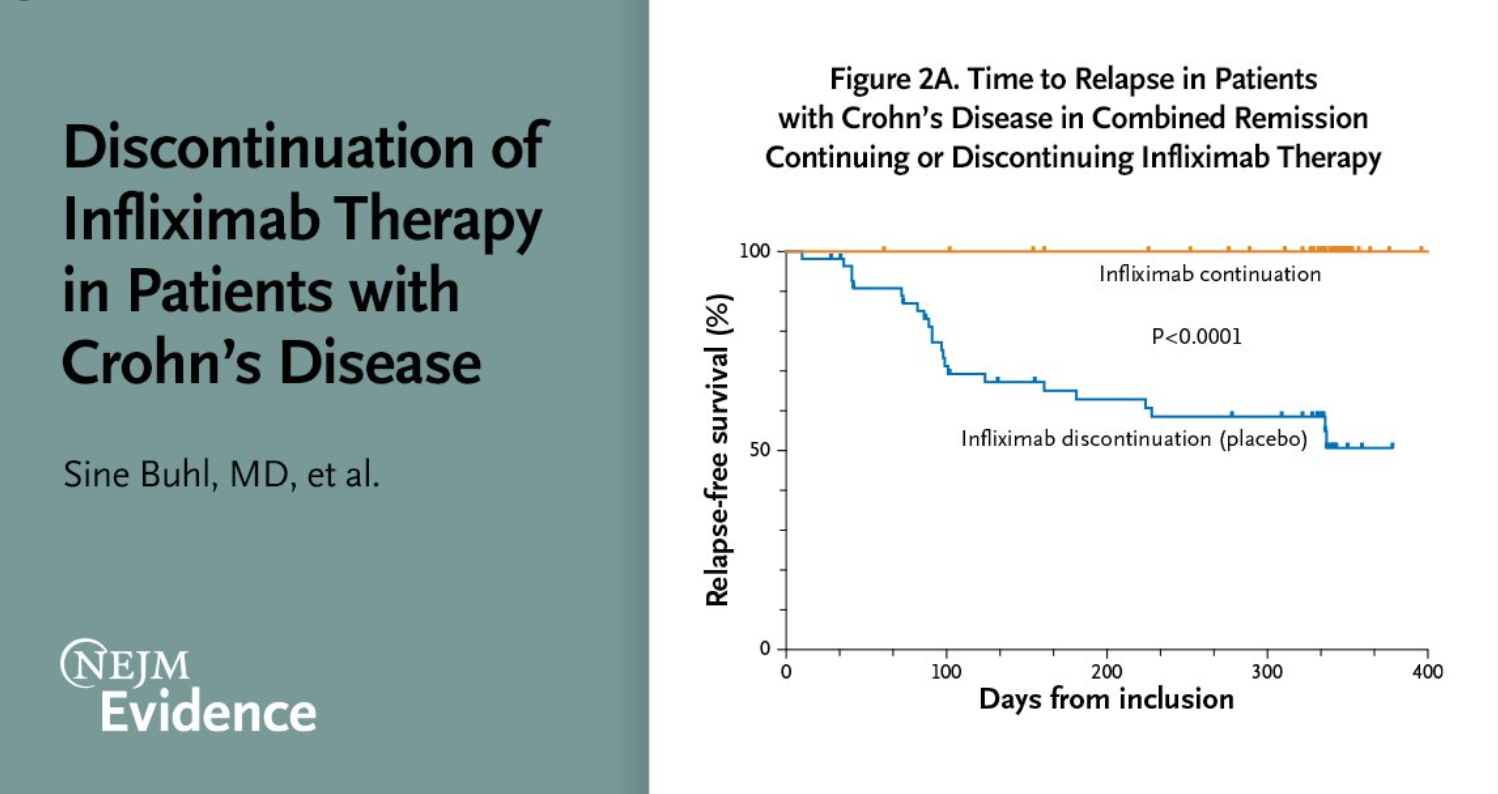
S Buhl et al. NEJM 2022; DOI:https://doi.org/10.1056/EVIDoa2200061. Discontinuation of Infliximab Therapy in Patients with Crohn’s Disease

Design: This was a multicenter, randomized, double-blind, placebo-controlled withdrawal study of infliximab in patients (n=115) with Crohn’s disease who were in clinical, biochemical, and endoscopic remission after standard infliximab maintenance therapy for at least 1 year. Patients were randomly assigned 1:1 to continue infliximab therapy or to receive matching placebo for 48 weeks.

Key finding:

  • At the end of the trial at week 48, relapse-free survival was 100% in the infliximab-continuation group and 51% in the infliximab-discontinuation group

My take (borrowed from authors): Discontinuation of infliximab for patients with Crohn’s disease receiving long-term infliximab therapy and in clinical, biochemical, and endoscopic remission leads to a considerable risk of relapse

Related blog posts:

Figure from NEJM Evidence Twitter Feed

S Sassine et al. AJG 2022; Volume 117 – Issue 4 – p 637-646. doi: 10.14309/ajg.0000000000001650. Risk Factors of Clinical Relapses in Pediatric Luminal Crohn’s Disease: A Retrospective Cohort Study

Key findings–The following variables were associated with clinical relapse:

  • female sex (adjusted hazard ratio [aHR] = 1.52, P = 0.0007)
  • exposure to oral 5-ASA (aHR = 1.44, P = 0.04),
  • use of immunomodulatory agents compared with tumor necrosis factor-alpha inhibitors (methotrexate aHR = 1.73, P = 0.003; thiopurines aHR = 1.63, P = 0.002)
  • presence of granulomas (aHR = 1.34, P = 0.02)
  • increased eosinophils on intestinal biopsies (aHR = 1.36, P = 0.02)
  • high levels of C-reactive protein (aHR = 1.01, P < 0.0001)
  • fecal calprotectin (aHR = 1.08, P < 0.0001)
  • low serum infliximab levels (<7 mcg/mL) (aHR = 2.32, P = 0.001).

Head-to-Head (Sort of): Infliximab vs Ustekinumab for Crohn’s Disease

N Narula et al. Clin Gastroenterol Hepatol 2022; 20: 1579-1587. Comparative Efficacy and Rapidity of Action for Infliximab vs Ustekinumab in Biologic Naïve Crohn’s Disease

Using a post hoc analysis of 2 large Crohn’s disease (CD) trial with 420 biologic-naive adult patients, the authors found the following Key Findings:

  • At week 6, a comparable number of patients achieved clinical remission with infliximab compared with patients treated with ustekinumab (44.9% vs 37.9%; adjusted odds ratio [aOR], 1.22)
  • At week 6 the clinical response rates were not significantly different (58.4% infliximab vs 54.9% ustekinumab; aOR, 1.25)
  • At week 6, 42.3% infliximab vs 34.7% ustekinumab had fecal calprotectin level less than 250 mcg/L in those with increased values at baseline

My take: A true head-to-head trial, rather than a post-hoc analysis, would more definitively determine relative efficacy and relative time to response. This study indicates that both agents have similar efficacy by week 6.

Related blog posts:

Fountain at Forsyth Park in Savannah

Biologics in Children with Very Early Onset Inflammatory Bowel Disease

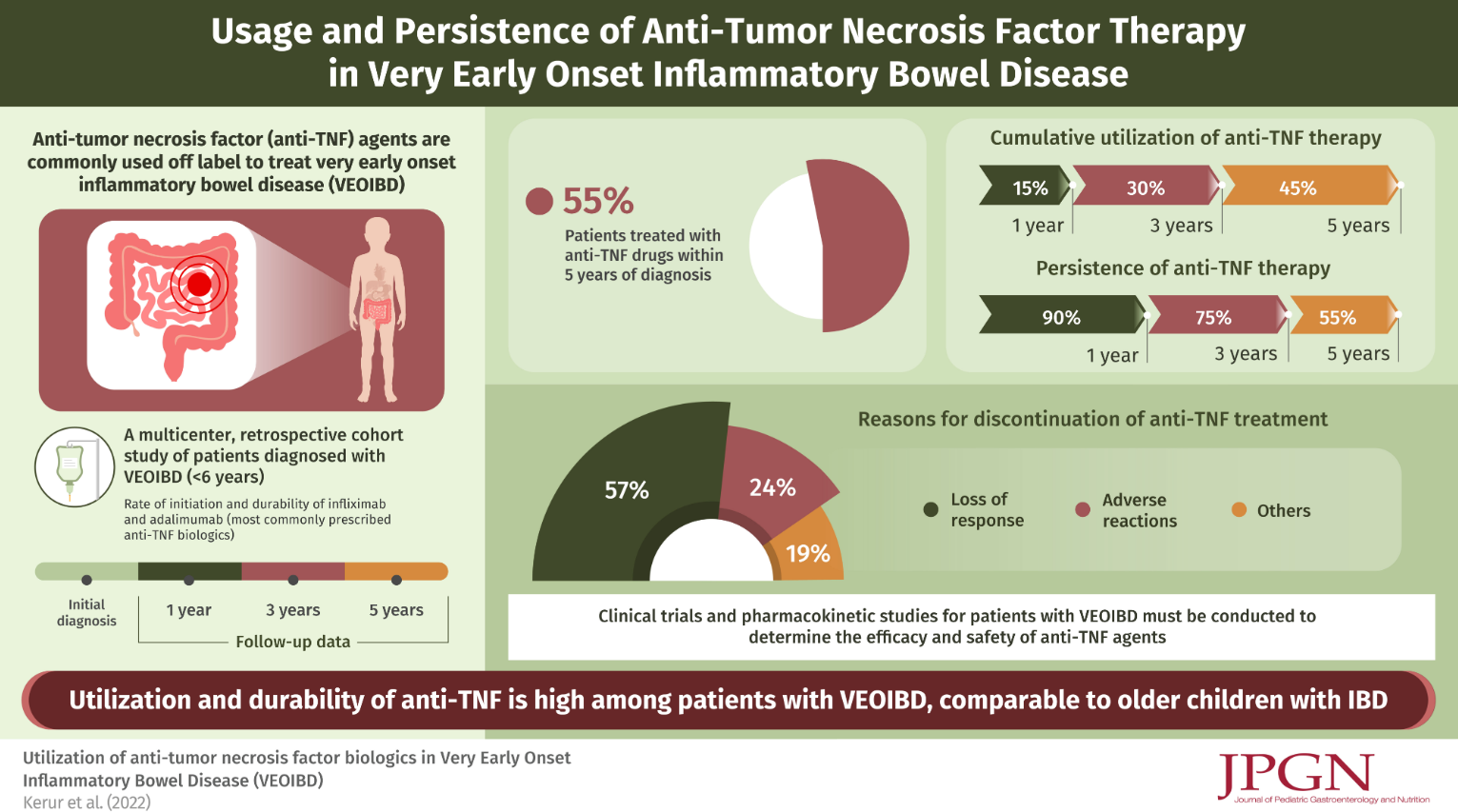
B Kerur et al. JPGN 2022; 75: 64-69. Utilization of Antitumor Necrosis Factor Biologics in Very Early Onset Inflammatory Bowel Disease: A Multicenter Retrospective Cohort Study From North America

In this retrospective study, 120 of 294 children with VEO-IBD (diagnosed 2008 and 2013, PRO-KIDS network) received anti-TNF therapy (96% infliximab). 101 of these 120 had adequate data recorded. It is noted that additional data on this cohort has been previously published (IBD Updates: Outcomes of VEO-IBD, PIANO Study Update, and Insurance-Disparity Relationship). Key findings:

  • Anti-TNF durability was 90% at 1 year, 75% at 3 years, and 55% at 5 years
  • Patients with Crohn’s disease had better durability than those with UC/IBD-U (Hazard ratio 0.17)
  • The most common reason for discontinuation of anti-TNF were loss of response in 24 (57%) children
  • 67 (66%) received combined therapy with an immunomodulator and this was associated with improved anti-TNF durability (Hazard ratio 0.30). However, authors note this was in era preceding widespread therapeutic drug monitoring.
  • The majority of children in the current study did not undergo testing for monogenic mutations

My take: Data for use of anti-TNF agents in this age group (< 6 yrs) has been limited. This study suggests similar effectiveness of anti-TNF agents in VEO-IBD compared to older groups. Given this groups increased risk for monogenic mutations, it is still a good idea, if feasible, to test for these disorders.

Related blog posts:

Outcomes with Enteral Nutrition

Notice: At this time, gutsandgrowth intends to post blogs 2-3 times per week rather than daily.

——————————————————————————————————————

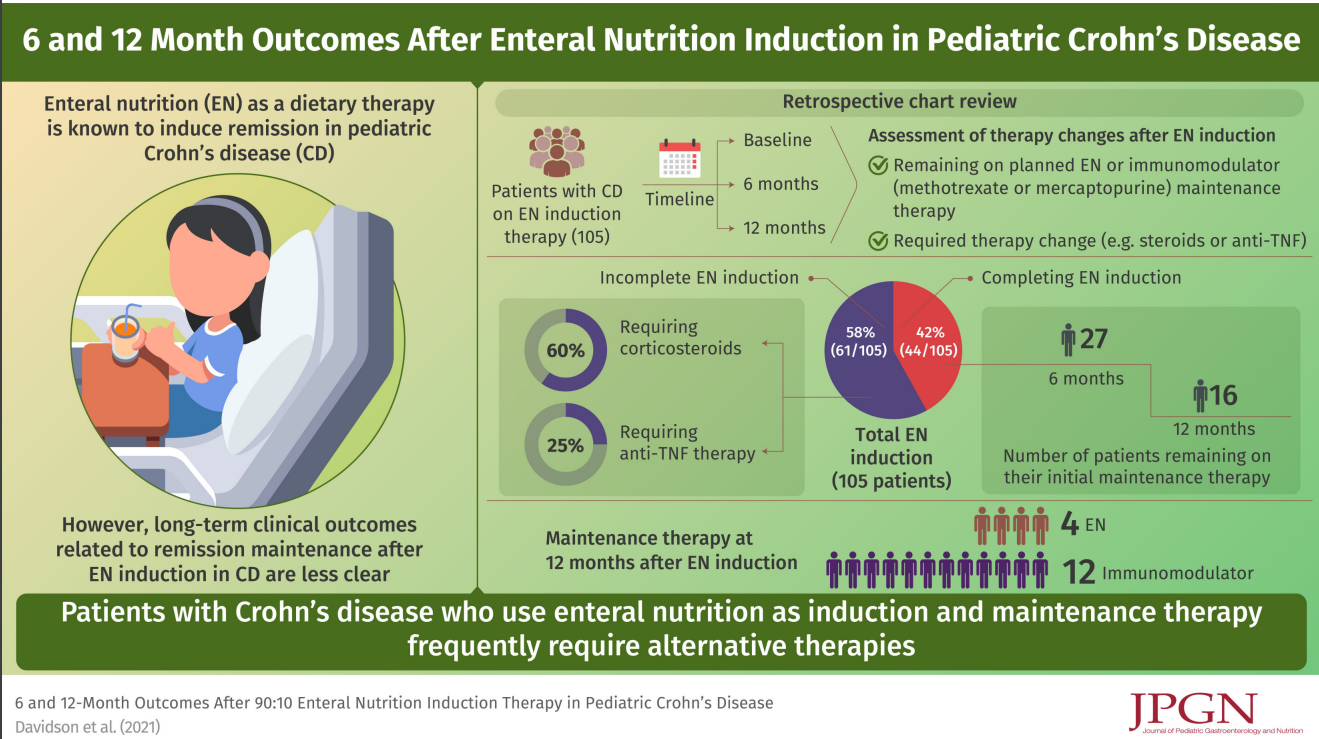
N Davidson et al. JPGN 2022; 75: 70-75. 6- and 12-Month Outcomes after 90:10 Enteral Nutrition Induction Therapy in Pediatric Crohn’s Disease

In this retrospective study (2013-2018), the authors examined outcomes in 105 children treated with a 90:10 enteral feeds (90% formula).

Key findings:

  • 44/105 (42%) patients completed 8–12 weeks
  • After induction, 18 continued EN maintenance with a 80:20 then 70:30 protocol; however, only 10 remained on EN at 6 months and 4 remained on EN at 12 months

The associated editorial (pg: 1-2) make several points:

  1. While EEN is effective and safe, this study and others have shown poor adherence
  2. It is unclear how exclusive enteral nutrition needs to be in order to be effective. And, many patients instructed to receive 90% of their calories as formula are likely consuming higher amounts of table foods
  3. We still are working out which foods need to be excluded

My take: This study shows that EEN is NOT a practical option for most patients beyond induction. Only 4 patients remained on EEN at 12 months.

Related blog posts:

Ustekinumab Efficacy in Crohn’s Disease With Concurrent Autoimmune Skin Disease

E Fradkov et al. Inflamm Bowel Dis 2022; 28: 895-904. Efficacy of Ustekinumab in Crohn’s Disease With and Without Concurrent Autoimmune Skin Disease

This retrospective study reviewed 395 CD patients received ustekinumab therapy (79 CD-ASD (autoimmune skin disease), 316 CD-none). ASD included atopic dermatitis, eczema, psoriasis/psoriaform dermatitis and alopecia. The skin disease group also included those with cutaneous manifestations of Crohn’s disease: erythema nodosum, pyoderma gangrenosum, pyostomatitis vegetans, Sweet’s syndrome, granulomatous vasculitis, and leukocytoclastic vasculitis. 55 of the 79 with CD-ASD had psoriatic disease, 20 had eczema, 11 had erythema nodosum, 8 had pyoderma gangrenosum.

Key findings:

  • Ustekinumab had greater efficacy in CD-ASD when evaluated by fecal calprotectin (P = .0337) and CRP (P = .078). For calprotectin, the values decreased by 61% after at least 5 months of therapy (394 to 164) in the CD-ASD group compared to 11% in the group without skin disease (365 to 265)
  • The CD-ASD group also showed better outcomes in Likert scores of endoscopy (P = .016), histopathology (P = .074), and imaging (P = .094). 

My take: Ustekinumab appears to be particularly effective in patients with concurrent skin disease.

Related posts:

Chattahoochee River near Morgan Falls

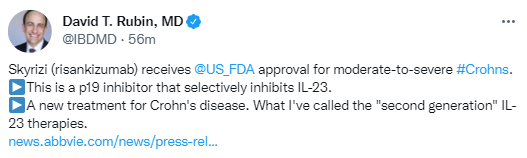
Risankizumab Receives FDA Approval for Crohn’s Disease

Abbvie Press Release: SKYRIZI® (risankizumab-rzaa) Receives FDA Approval as the First and Only Specific Interleukin-23 (IL-23) to Treat Moderately to Severely Active Crohn’s Disease in Adults

– Third approved indication for SKYRIZI (risankizumab-rzaa) is supported by safety and efficacy data from two induction and one maintenance clinical trials evaluating SKYRIZI in moderately to severely active Crohn’s disease, ADVANCE, MOTIVATE and FORTIFY1-4

– As early as week 4 in the induction studies, clinical response and clinical remission were achieved by significantly more subjects treated with SKYRIZI versus placebo, as were co-primary endpoints of endoscopic response and clinical remission at week 12 and week 521-4

About SKYRIZI® (risankizumab-rzaa)
SKYRIZI is an interleukin-23 (IL-23) inhibitor that selectively blocks IL-23 by binding to its p19 subunit.9,10 IL-23, a cytokine involved in inflammatory processes, is thought to be linked to a number of chronic immune-mediated diseases, including Crohn’s disease.10 The approved dose to treat adults with moderately to severely active Crohn’s disease is 600 mg administered by intravenous infusion over at least one hour at week 0, week 4, and week 8, followed by 360 mg administered by subcutaneous injection at week 12, and every 8 weeks thereafter.4 SKYRIZI is also approved in the U.S. to treat moderate to severe plaque psoriasis in adults who are candidates for systemic therapy or phototherapy, as well as to treat active psoriatic arthritis in adults, and the recommended dosage is 150 mg administered by subcutaneous injection at week 0, week 4, and every 12 weeks thereafter.4 Phase 3 trials of SKYRIZI in psoriasis, Crohn’s disease, ulcerative colitis and psoriatic arthritis are ongoing

Related blog posts:

The Curtain or The Box: Therapeutic Dilemmas

X Roblin et al. Inflamm Bowel Dis 2022; 28: 720-727. Swapping Versus Dose Optimization in Patients Losing Response to Adalimumab With Adequate Drug Levels

Many times, treatment decisions are like on “Let’s Make a Deal.” That is, should I stick with what I’ve got or should I try for something better & sometimes wind up with a goat. In this referenced article, patients were under maintenance therapy with adalimumab (ADA) monotherapy (40 mg every 14 days) and had experienced a secondary loss of response (LOR) despite trough levels > 4.9 μg/mL. In this nonrandomized prospective study, patients were either swapped to vedolizumab (VDZ) or optimized on adalimumab (ADA) treatment.

Key findings:

  • At 24 months, 11 out of 70 patients (16%) in the swap group discontinued treatment compared with 36 out of 61 (59%) patients in the optimization group (P < 0.001)
  • In the optimization group, treatment discontinuation was positively associated with baseline fecal calprotectin >500 μg/g (HR, 3.5)
  • In patients selected for optimization, 56% (34/61) remained on ADA at 1 year and 41% (25/61) at 2 years

In their discussion, the authors state “current guidelines recommend switching to another class of biologics in case of LOR to ADA with therapeutic drug levels.” However, the authors note that their therapeutic level cut-off of >4.9 mcg/mL is lower than the latest recommendations. In addition, in their conclusion, they note that due to limited biologic options, “ADA optimization strategy might be considered” in a subgroup.

My take: Despite better results in the patients that swapped to VDZ in this study, I think it is important to assure adequate drug levels before choosing a new drug class. For ADA, expert recommendations have suggested a level of 8-12 as therapeutic and to avoid discontinuation if ADA level is less than 10. In this study, more than 40% remained on ADA two years after LOR in those with dosing optimization.

Related blog post:

Disclaimer: This blog, gutsandgrowth, assumes no responsibility for any use or operation of any method, product, instruction, concept or idea contained in the material herein or for any injury or damage to persons or property (whether products liability, negligence or otherwise) resulting from such use or operation. These blog posts are for educational purposes only. Specific dosing of medications (along with potential adverse effects) should be confirmed by prescribing physician.  Because of rapid advances in the medical sciences, the gutsandgrowth blog cautions that independent verification should be made of diagnosis and drug dosages. The reader is solely responsible for the conduct of any suggested test or procedure.  This content is not a substitute for medical advice, diagnosis or treatment provided by a qualified healthcare provider. Always seek the advice of your physician or other qualified health provider with any questions you may have regarding a condition.

Panoramic View -Sandia Mountain, NM

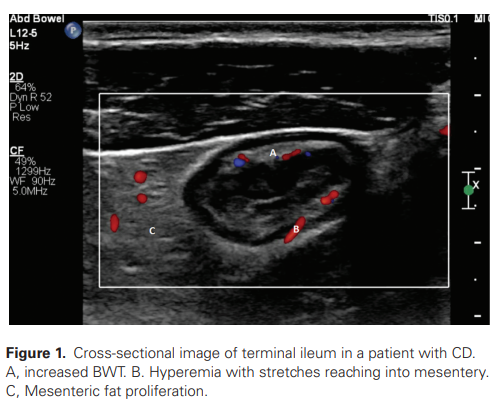
IBD -Briefly Noted: Intestinal U/S and Anxiety/Depression Not Worsening Pediatric IBD Activity

EA van Wassenaer et al. Inflamm Bowel Dis 2022; 28: 783-787. Open Access PDF: Intestinal Ultrasound in Pediatric Inflammatory Bowel Disease: Promising, but Work in Progress

Key points from this review:

  • Research has shown that IUS has the potential to be a valuable additional point-of-care tool to guide treatment choice and to monitor and predict treatment response, although evidence of its accuracy and value in clinical practice is still limited
  • The utility may be operator-dependent as well

My take: Due to low upfront costs, IUS would be appealing adjunct to current monitoring. However, one could envision IUS leading to more downstream studies (& costs), especially if its sensitivity and specificity are not very high.

EJ Brenner et al. Inflamm Bowel Dis 2022; 28: 728-733. Anxiety and Depressive Symptoms Are Not Associated With Future Pediatric Crohn’s Disease Activity

In this internet-based cohort of 9-17 yr olds (n=159, 96% white), the authors found no association between baseline PROMIS Pediatric anxiety score and subsequent sCDAI (change in sCDAI for 3-point change in PROMIS Pediatric −0.89; 95% CI −4.81 to 3.03). This study is in contrast to studies in adults which have shown a bidirectional relationship between anxiety/depression and IBD activity.

My take: It is difficult to know with certainty whether anxiety/depression may trigger IBD activity; more studies are needed. Treatment of mental health is important regardless of its effects on IBD activity.

Related blog posts:

Can You Give Ustekinumab Subcutaneously After IV Reaction?

J Sunny et al. JPGN Reports: May 2022 – Volume 3 – Issue 2 – p e205 Open Access: Hypersensitivity Reaction to Ustekinumab in Pediatric and Young Adult Inflammatory Bowel Disease Patients: A Case Series

This is a case series of six pediatric patients and young adults who developed hypersensitivity reactions during intravenous infusion with ustekinumab (UST).

Key findings:

  • Hypersensitivity reactions during intravenous (IV) induction dose of UST, ranging from mild allergic reactions to anaphylaxis, with no antibodies detected in the two who had testing
  • Reactions occurred 0-30 minutes after start of infusion
  • Management was with methylprednisolone in 5 of 6 patients, diphendyramine in 3 of 6, and epinephrine in 1. One patient was managed with IV diphenhydramine alone.
  • Four of six continued with UST subcutaneously without reactions. ***Change of formulation of UST from IV to subcutaneous was done in a controlled hospital-based setting. The other two 33% were switched to another biologic due to physician preference and were never exposed to the subcutaneous formulation
  • Although the exact pathogenesis of this infusion reaction remains unknown, it has been attributed to EDTA

My take: It appears that patients with UST hypersensitivity reactions can be changed to SC formulation. The authors recommend to trial a subcutaneous dose of UST in a controlled setting; in addition, they suggest testing with skin prick testing or specific IgE levels to EDTA done by allergy and immunology.

Related blog posts:

Sandia Mountain, near Albuquerque

Guselkumab: Expanding the GALAXI of Treatments for Crohn’s Disease

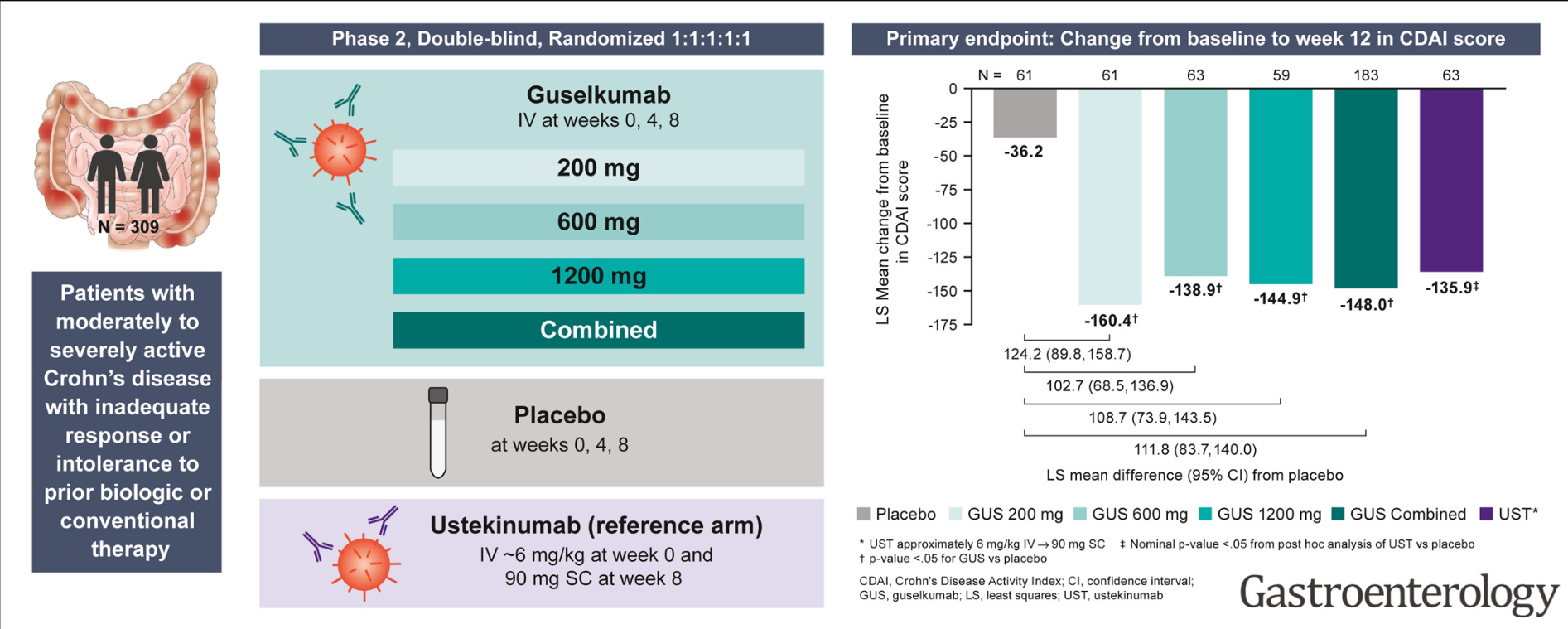
WJ Sandborn et al. Gastroenterol 2022; 162: 1650-1664. Open Access: Guselkumab for the Treatment of Crohn’s Disease: Induction Results From the Phase 2 GALAXI-1 Study

Background: Guselkumab, a selective p19 interleukin-23 antagonist, is approved for the treatment of plaque psoriasis and psoriatic arthritis.

Methods: GALAXI-1, a phase 2, double-blind, placebo-controlled study, randomized patients with moderate to severe Crohn’s disease 1:1:1:1:1 to intravenous guselkumab 200 mg, 600 mg, or 1200 mg at weeks 0, 4, and 8; intravenous ustekinumab approximately 6 mg/kg at week 0 and 90 mg subcutaneously at week 8; or placebo. n=309 with ~50% having disease refractory to prior biologics

Key findings:

  • At week 12, significantly greater reductions in Crohn’s Disease Activity Index from baseline (least squares means: 200 mg: –160.4, 600 mg: –138.9, and 1200 mg: –144.9 vs placebo: –36.2; all, P < .05) and significantly greater proportions of patients achieved clinical remission in each guselkumab group vs placebo
  • Improvement compared to placebo was evident as early as week 4
  • Safety event rates were generally similar across treatment groups

My take: This is an exciting time for practitioners taking care of patients as there are an increasing number of pharmacologic and dietary treatments for inflammatory bowel disease. With guselkumab, there may be an overlapping mechanism with ustekinumab which targets IL-12/23.

Related blog post: Emerging Data on Risankizumab for Crohn’s Disease