Shorts: Hep E in Urine, Genetics in Autoimmune Enteropathy, EndoFlip Findings in EoE

D Ying et al. Hepatology 2023; 77: 1722-1734. Urine is a viral antigen reservoir in hepatitis E virus infection

Key findings:  HEV Ag was specifically taken up by renal cells and was disposed into urine, during which the level of Ag was concentrated >10‐fold, resulting in the higher diagnosing sensitivity of urine Ag than serum Ag. Moreover, Ag in urine appeared 6 days earlier, lasted longer than viremia and antigenemia, and showed good concordance with fecal RNA in a rabbit model.

F Charbit-Henrion et al. Clin Gastroenterol Hepatol 2023; 21: 1368-1371. Open Access! Genetic Diagnosis Guides Treatment of Autoimmune Enteropathy

Background: Autoimmune enteropathy (AIE) is a severe form of enteropathy characterized by chronic diarrhea refractory to any exclusion diet and associated with autoimmunity…In a recent cohort of 40 AIE patients, anti-enterocyte antibodies were reported in only 14% (4/28) of the cases, likely caused by the high frequency of patients with primary hypogammaglobulinemia…30%–50% of adult AIE can display anti-transglutaminase antibodies. The common histopathologic presentation of AIE includes intestinal villous atrophy with variable lymphocytic infiltration and various features of follicular lymphoid hyperplasia, cryptitis, graft-versus-host disease-like lesions, and loss of Paneth and goblet cells.

Key findings: Pathogenic variants were identified in 20/48 adult patients (41.6%); most common variants: CTLA4LRBASTAT3, and STAT1; 12/20; 60% of those with variants. Thus, specific therapeutics were available for more than half of the patients who received a molecular diagnosis

Representative endoscopic aspects in patients with CTLA4 variants and AIE.

NV Hoffmann et al. Clin Gastroenterol Hepatol 2023; 21: 1188-1197. Esophageal Distensibility Defines Fibrostenotic Severity in Pediatric Eosinophilic Esophagitis

Key finding: In this prospective pediatric cohort (n=59) with EoE, distensibility index (DI) <4.5 mm2/mmHg predicted grade 2 rings on endoscopy. Lower DI was associated with increased risk of food impaction but did not correlate with eosinophilic count. DI was “superior to diameter in assessing fibrostenotic severity.”

Related blog posts:

Seronegative Villous Atrophy

“Tug” Sign For Eosinophilic Esophagitis and EoE Bowel Sounds Tips

EA Pasman et al. Clin Gastroenterol Hepatol 2023; 21: 1108-1110. Quantitative Analysis of Tug Sign: An Endoscopic Finding of Eosinophilic Esophagitis

Background: “Chronic inflammation can lead to tissue remodeling in the esophagus with fibrosis in the lamina propria that is partially responsible for symptoms and complications of EoE.3,4 At times, a firmness to the esophagus can be appreciated with a noticeable force required to obtain biopsies from EoE. This sensation has been described as the “tug” or “pull” sign.5,6

Methods: in this prospective study with 159 patients (128 pediatric, 31 adult), the authors devised a digital force gauge to measure the force required to take biopsy specimens. The study included 88 patients with EoE and 71 controls.

Key finding:

  • EoE patients showed an increase in the mean force required to obtain biopsies: 14.9 Newton (N) compared to 11.6 in control group
  • Peak force was greater in EoE patients: 20.4 N compared to 15 N in control group.
  • The pediatric subgroup had higher peak force in EoE patients: 22.4 N compered to 16.1 N for control group

My take: I had not heard of the term “Tug” sign for EoE, though it is something that is intuitive for GI providers who care for these patients. This study quantifies this problem.

“When you can measure what you are speaking about and express it in numbers, you know something about it; but when you cannot express it in numbers, your knowledge is of a meagre and unsatisfactory kind” –Lord Kelvin 1883

Related topic: Recent bowel sounds episode with Amanda Muir discussed eosinophilic esophagitis. A few pointers:

  • Useful YouTube video explaining how to swallow inhaled steroid (from Glen Furuta/Colorado Chilren’s): How to Use an Inhaler for EoE
  • Budesonide can be administered with 1 tsp honey, 1 tsp maple syrup or with 1 tsp apple sauce
  • Approximate equivalent dose of Flovent 4 puffs of 220 mcg =~1 mg budesonide
  • Elemental feedings are difficult to maintain and used much less, mainly in children who already have enteral tubes.
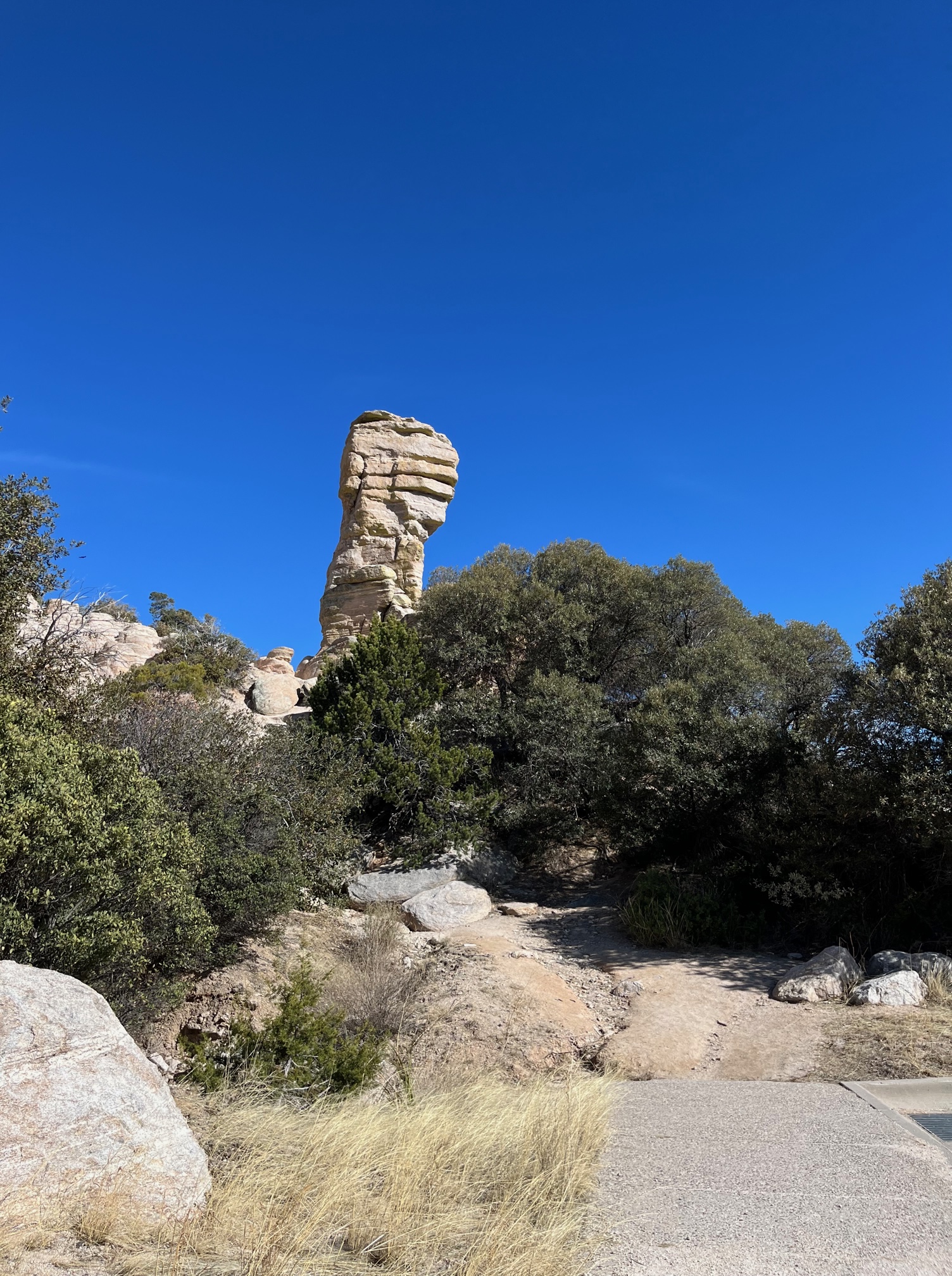
Little Finger Rock Trail, Tucson AZ
HooDoo Rocks, Mount Lemmon. Tucson, AZ

The Eosinophilic Esophagitis Diagnostic Cup is Half Empty with the Esophageal Sponge

JA Alexander et al. Clin Gastroenterol Hepatol 2023; 21: 299-306. Open Access! Use of the Esophageal Sponge in Directing Food Reintroduction in Eosinophilic Esophagitis

Methods: In this prospective non-blinded trial, 22 responders to 6-food elimination diets underwent sequential food reintroduction guided by esophageal sponge cytology

Key findings:

  • At the post food reintroduction evaluation, sponge cytology and biopsy histology were in agreement in 59% (13/22) of cases using a cutoff of <15 eos/hpf and 68% (15/22) of cases using a cutoff of <6 eos/hpf. With the cutoff of <15 eos/hpf, the median absolute difference was 38 eos/hpf.
  • Interestingly, the authors noted a high rate (23%) of dietary responders who had dietary reintroduction without a dietary trigger being identified; this is possibly related in part to lower sponge sensitivity, and possibly due to a short food reintroduction period of 2 weeks prior to testing.

The authors in their discussion note that it is unclear whether the values from the sponge or from the biopsy is more reliable.

My take: This is a disappointment for those of us waiting for a reliable non-invasive measure of EoE activity. Those with abnormal sponge results are fairly likely to have abnormal endoscopy; however, many of those with normal values with sponge testing are likely to have active EoE.

Related blog posts:

Combination Therapy for Eosinophilic Esophagitis

MA Buendia et al. JPGN Reports 3(4):p e273, 2022. DOI: 10.1097/PG9.0000000000000273. Relapse of Eosinophilic Esophagitis on Dupilumab

Yesterday’s post reviewed the landmark study leading to dupilumab’s FDA approval. Today’s case report shows that we have a lot we need to learn about its use.

The authors present a case report of a patient with eosinophilic esophagitis (EoE) who had ongoing active EoE while receiving topical steroids (TS) and PPI (and previously dietary elimination therapy). He achieved remission after the addition of dupilumab. “When his TS were weaned after achieving remission, his disease relapsed with worsening of his dysphagia and a peak eosinophilic count (PEC) of 55 eosinophils per high power field (eos/hpf). Upon restarting TS to his ongoing dupilumab, symptoms fully resolved, and he achieved histologic remission (PEC 10 eos/hpf).”

My take: This study indicates that there are some patients need dupilumab and topical steroids in combination, rather than monotherapy. Reliable biomarkers to more easily determine response and/or to predict optimal therapy are clearly needed.

Sunset at Siesta Key, FL

Landmark Dupilumab Study for Eosinophilic Esophagitis

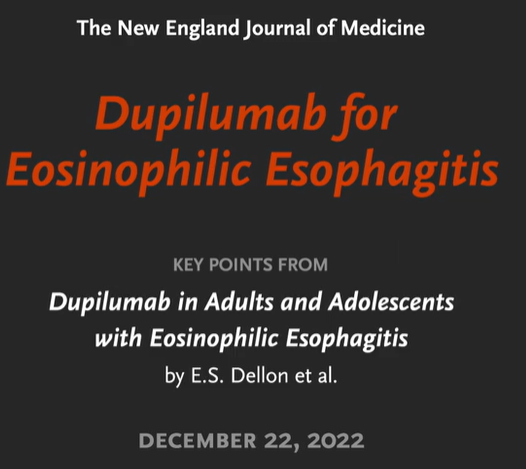
ES Dellon et al. NEJM 2022; 387; 2317-2330. Dupilumab in Adults and Adolescents with Eosinophilic Esophagitis

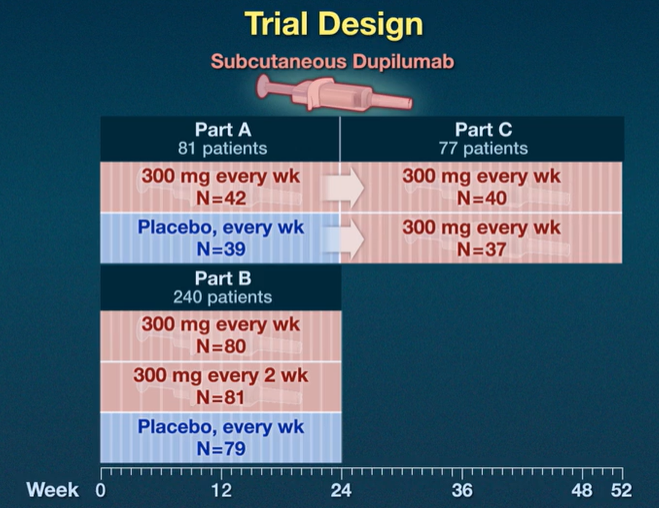
This study was pivotal for receiving FDA approval of dupilumab (dupixent) for the treatment of EoE (the only FDA approved therapy). Background: “Dupilumab, a fully human monoclonal antibody, blocks interleukin-4 and interleukin-13 signaling, which have key roles in eosinophilic esophagitis..Standard-of-care treatments for eosinophilic esophagitis include food elimination diets, proton-pump inhibitors (PPIs), swallowed topical glucocorticoids (applied to the esophagus by swallowing), and, in the case of strictures, esophageal dilation.11,12 However, the rates of response are variable (30 to 40% of patients may not have a response to first-line treatments).”

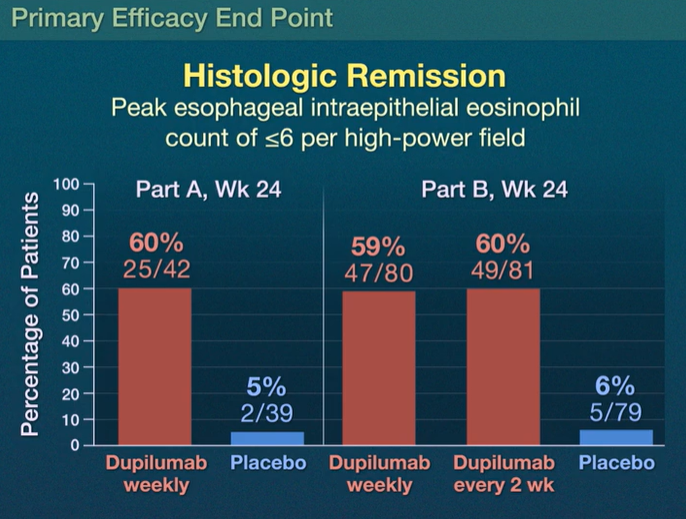
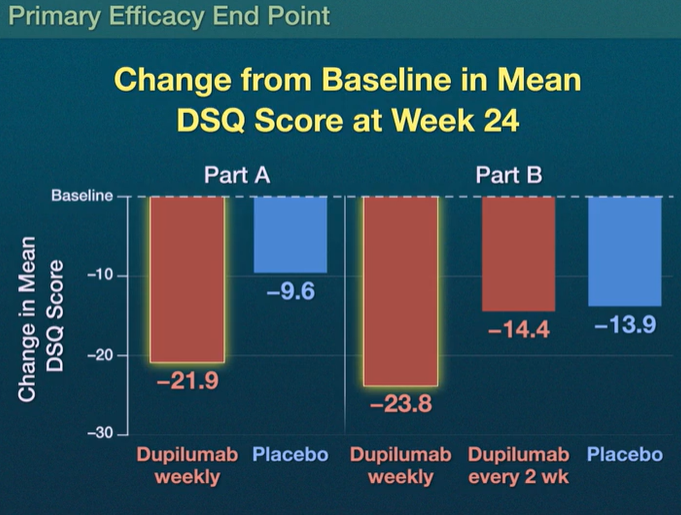
Key findings from three-part study (see images below):

  • Part A: Histologic remission occurred in 25 of 42 patients (60%) who received weekly dupilumab and in 2 of 39 patients (5%) who received placebo
  • Part B: Histologic remission occurred in 47 of 80 patients (59%) with weekly dupilumab, in 49 of 81 patients (60%) with dupilumab every 2 weeks, and in 5 of 79 patients (6%) with placebo 
  • Dysphagia Symptom Questionnaire (DSQ) scores:  the scores improved with weekly dupilumab as compared with placebo, with differences of –12.32 (95% CI, –19.11 to –5.54) in Part A and –9.92 (95% CI, –14.81 to –5.02) in Part B (both P<0.001) but not with dupilumab every 2 weeks (difference in Part B, –0.51; 95% CI, –5.42 to 4.41)
  • The most common adverse effect was injection site reactions. There were 10 serious adverse events; none of these “were considered by the trial investigators to be related to the trial regimen.”

In the associated commentary, (pg 2379-2380), Dr. Alex Straumann notes that since EoE is localized to the esophagus, whether a patients should be treated with a systemically acting medication, “particularly in light of the fact that topical glucocorticoids have been shown to be as efficacious as systemically acting prednisone.”

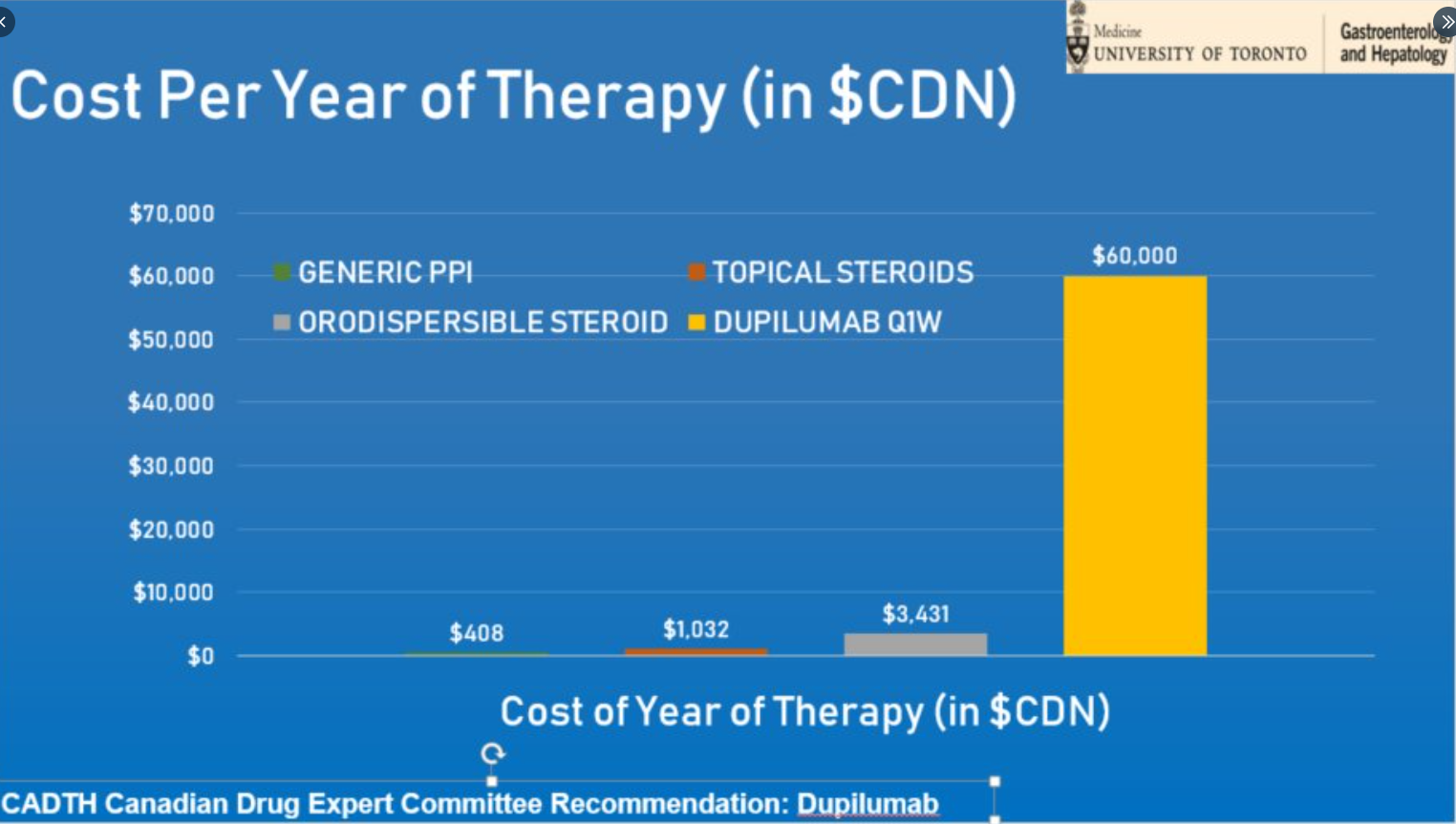
My take (borrowed in part from editorial): It remains unclear whether dupilumab “is better than the good old topical glucocorticoids in improving disease outcomes, particularly in light of considerable costs associated with this treatment.” Due to its cost (see below), dupillumab is likely best situated as a 2nd line treatment at this time for most patients.

Related blog posts:

Cost comparison (from Laura Targownwik on twitter):

Favorite Posts 2022

Thank you to those who have helped me this past year with this blog –colleagues, friends and family. Wishing all of you a good 2023. Here are some of my favorite posts from this past year:

GI:

Nutrition:

Liver:

Endoscopy:

Health Policy:

Humor:

Updated Nomenclature for Eosinophilic Gastrointestinal Diseases

ES Dellon et al. Clin Gastroenterol Hepatol 2022; 20: 2474-2484. Open Access! International Consensus Recommendations for Eosinophilic Gastrointestinal Disease Nomenclature

This article has 91 authors! Using Delphi surveys, the authors recommend the following:

  • “EGID” was the preferred umbrella term for disorders of gastrointestinal (GI) tract eosinophilic inflammation in the absence of secondary causes
  • Involved GI tract segments will be named specifically and use an “Eo” abbreviation convention: eosinophilic gastritis (now abbreviated EoG), eosinophilic enteritis (EoN), and eosinophilic colitis (EoC)
  • For EoN, “it is desirable, but not required, to name specific locations of small bowel involvement, if these are known…The abbreviation for eosinophilic duodenitis should be “EoD”… for eosinophilic jejunitis should be “EoJ”….eosinophilic ileitis should be “EoI”
  • The term “eosinophilic gastroenteritis” is no longer preferred as the overall name (but can be used to indicate involvement of both the stomach and small bowel)
  • When >2 GI tract areas are involved, the name should reflect all of the involved areas

Newsflash Articles: Untreated Eosinophilic Esophagitis Worsens and the Severely-Damaged Esophagus Does Not Work Well

NC Chang et al. Clin Gastroentol Hepatol 2022; 20: 1701-1708. Open Access! A Gap in Care Leads to Progression of Fibrosis in Eosinophilic Esophagitis Patients

In this retrospective review with 701 patients, 95 (14%) had a gap in care (mean time without care, 4.8 ± 2.3 years). Key findings:

  • Patients post-gap had higher endoscopic severity (2.4 vs 1.5; P < .001) and smaller esophageal diameters (11.0 vs 12.7 mm; P = .04).
  • Strictures were more prevalent with longer gap time (P < .05 for trend). Each additional year of gap time increased odds of stricture by 26%, even after accounting for pre-gap dilation. Additionally, of 67 patients without pre-gap fibrosis, 25 (37%) had at least one fibrotic feature (stricture, narrowing, or requiring dilation) post-gap.

DA Carlson et al. Clin Gastroenterol Hepatol 2022; 20: 1719-1728. Esophageal Dysmotility Is Associated With Disease Severity in Eosinophilic Esophagitis

Consecutive adult patients with EoE (n=199) completed a 16-cm functional luminal imaging probe (FLIP) during endoscopy were evaluated in a cross-sectional study. Key findings:

  • Mucosal eosinophil density was similar between abnormal contractile responses (CRs) and normal CRs (median 34 vs 25)
  • Abnormal CRs more frequently had reduced esophageal distensibility (distensibility plateau <17 mm in 56% vs 32%), with more severe ring scores, and a greater duration of symptoms (median, 10 y vs 7 y)

Thus, abnormal esophageal CRs were related to EoE disease severity, especially features of fibrostenosis. This study suggests that esophageal wall remodeling, rather than eosinophilic inflammatory intensity, was associated with esophageal dysmotility in EoE.

My take: Despite my satirical title, I think these articles are helpful by documenting that ongoing EoE results in worsening esophageal dysfunction/dysmotility (especially if not treated). In addition, they provide insight into the natural history/pathophysiology of EoE.

Related blog posts:

Near Seward, AK. Sea lions and birds flock to this island

How Useful Are 3-site Esophageal Biopsies for Eosinophilic Esophagitis

JB Wechsler et al. Clin Gastroenterol Hepatol 2022; 20: 1971-1976. Defining the Patchy Landscape of Esophageal Eosinophilia in Children With Eosinophilic Esophagitis

Design: The authors prospectively obtained 3-site esophageal biopsies based on rigorous endoscopic measurements of the proximal, mid, and distal esophagus and gastroesophageal junction. Biopsies were reviewed by a pathologist, and those with at least 15 eosinophils per high-power field were considered active EoE.  

Key findings:

  • 304 endoscopies in 167 patients had active EoE. The entire cohort was 217 patients (n=596 endoscopies)
  • Among the 304 endoscopies with active EoE, 9 had focal eosinophilia restricted to the mid esophagus, and 8 were restricted to the proximal esophagus
  • Distal + proximal biopsies had the highest diagnostic sensitivity for a 2-site combination (~98% sensitivity)

Based on this study, the authors recommend “3-site biopsies for optimal disease assessment of active EoE in children.”

My take: I think recommendations to add more and more biopsies is premature until we have evidence that identifying “focal” inflammation in the mid-esophagus has some clinical usefulness/improves outcomes. To me, a 2% increase in sensitivity over 2-site biopsies is negligible & in all likelihood, a 4-site biopsy protocol would increase the yield even further.

Related blog posts:

Stream near Byron Glacier

Eat More Chicken? (for EoE)

JB Wechsler et al. Clin Gastroenterol Hepatol 2022; 20: 1748-1756. A Single-Food Milk Elimination Diet Is Effective for Treatment of Eosinophilic Esophagitis in Children

Design: A prospective observational single-center study in 41 children with EoE treated with the 1-food elimination diet (1FED). Upper endoscopy with biopsies was performed after 8 to 12 weeks of treatment. The primary end point was histologic remission, defined as fewer than 15 eosinophils per high-power field.

Key findings:

  • Histologic remission occurred in 21 (51%) children, with a decrease in peak eosinophils per high-power field from a median of 50
  • Endoscopic abnormalities improved in 24 (59%) patients, while symptoms improved in 25 (61%). Improved symptoms included chest pain, dysphagia, and pocketing/spitting out food
  • Interestingly, in terms of all symptom resolution, this was higher in the group of nonresponders 8 (40%) than in the responders 4 (19%)
  • Younger patients (mean 7 yrs vs 12 yrs) and patients with IgE-mediated food allergies tended to be more likely to fail dairy elimination in this study
  • One key caveat is that most patients continued PPI during study; thus it is unknown if stopping a PPI before starting dairy elimination would have changed treatment response. 90% of patients were receiving PPIs at enrollment

My take: This study should prompt more widespread use of dairy elimination as a first line treatment prior to consideration of medications for long-term treatment. This study also reinforces the concept that symptom improvement remains an inadequate indicator of response. Perhaps, Chick-Fil-A marketing needs to be used for our EoE patients to shun cows (cow’s milk in this case).

Related blog posts:

Kenai Fjords National Park, near Seward Alaska