Clinical Practice Advice: Pancreatic Necrosis

Recently the AGA published expert practice advice for pancreatic necrosis: TH Baron et al. Gastroenterol 2020; 158: 67-75.

Link to full-text PDF:  American Gastroenterological Association Clinical Practice Update: Management of Pancreatic Necrosis.  The link includes 5 figures which provide algorithms based on their recommendations.

I’ve copied their 15 best practice advice below and highlighted the most useful.  Early in the course of pancreatic necrosis, it can be difficult to discern if an infection is present due to a robust inflammatory response; some findings suggestive of infection include gas in the collection, bacteremia, sepsis, or clinical deterioration.  Generally, surgical, endoscopic or radiologic intervention is more optimal when there is a walled-off pancreatic necrosis (WON) which typically takes 4 weeks or more.

Best Practice Advice 1

Pancreatic necrosis is associated with substantial morbidity and mortality and optimal management requires a multidisciplinary approach, including gastroenterologists, surgeons, interventional radiologists, and specialists in critical care medicine, infectious disease, and nutrition. In situations where clinical expertise may be limited, consideration should be given to transferring patients with significant pancreatic necrosis to an appropriate tertiary-care center.

Best Practice Advice 2

Antimicrobial therapy is best indicated for culture-proven infection in pancreatic necrosis or when infection is strongly suspected (ie, gas in the collection, bacteremia, sepsis, or clinical deterioration). Routine use of prophylactic antibiotics to prevent infection of sterile necrosis is not recommended.

Best Practice Advice 3

When infected necrosis is suspected, broad-spectrum intravenous antibiotics with ability to penetrate pancreatic necrosis should be favored (eg, carbapenems, quinolones, and metronidazole). Routine use of antifungal agents is not recommended. Computed tomography–guided fine-needle aspiration for Gram stain and cultures is unnecessary in the majority of cases.

Best Practice Advice 4

In patients with pancreatic necrosis, enteral feeding should be initiated early to decrease the risk of infected necrosis. A trial of oral nutrition is recommended immediately in patients in whom there is absence of nausea and vomiting and no signs of severe ileus or gastrointestinal luminal obstruction. When oral nutrition is not feasible, enteral nutrition by either nasogastric/duodenal or nasojejunal tube should be initiated as soon as possible. Total parenteral nutrition should be considered only in cases where oral or enteral feeds are not feasible or tolerated.

Best Practice Advice 5

Drainage and/or debridement of pancreatic necrosis is indicated in patients with infected necrosis. Drainage and/or debridement may be required in patients with sterile pancreatic necrosis and persistent unwellness marked by abdominal pain, nausea, vomiting, and nutritional failure or with associated complications, including gastrointestinal luminal obstruction; biliary obstruction; recurrent acute pancreatitis; fistulas; or persistent systemic inflammatory response syndrome.

Best Practice Advice 6

Pancreatic debridement should be avoided in the early, acute period (first 2 weeks), as it has been associated with increased morbidity and mortality. Debridement should be optimally delayed for 4 weeks and performed earlier only when there is an organized collection and a strong indication.

Best Practice Advice 7

Percutaneous drainage and transmural endoscopic drainage are both appropriate first-line, nonsurgical approaches in managing patients with walled-off pancreatic necrosis (WON). Endoscopic therapy through transmural drainage of WON may be preferred, as it avoids the risk of forming a pancreatocutaneous fistula.

Best Practice Advice 8

Percutaneous drainage of pancreatic necrosis should be considered in patients with infected or symptomatic necrotic collections in the early, acute period (<2 weeks), and in those with WON who are too ill to undergo endoscopic or surgical intervention. Percutaneous drainage should be strongly considered as an adjunct to endoscopic drainage for WON with deep extension into the paracolic gutters and pelvis or for salvage therapy after endoscopic or surgical debridement with residual necrosis burden.

Best Practice Advice 9

Self-expanding metal stents in the form of lumen-apposing metal stents appear to be superior to plastic stents for endoscopic transmural drainage of necrosis.

Best Practice Advice 10

The use of direct endoscopic necrosectomy should be reserved for those patients with limited necrosis who do not adequately respond to endoscopic transmural drainage using large-bore, self-expanding metal stents/lumen-apposing metal stents alone or plastic stents combined with irrigation. Direct endoscopic necrosectomy is a therapeutic option in patients with large amounts of infected necrosis, but should be performed at referral centers with the necessary endoscopic expertise and interventional radiology and surgical backup.

Best Practice Advice 11

Minimally invasive operative approaches to the debridement of acute necrotizing pancreatitis are preferred to open surgical necrosectomy when possible, given lower morbidity.

Best Practice Advice 12

Multiple minimally invasive surgical techniques are feasible and effective, including videoscopic-assisted retroperitoneal debridement, laparoscopic transgastric debridement, and open transgastric debridement. Selection of approach is best determined by pattern of disease, physiology of the patient, experience and expertise of the multidisciplinary team, and available resources.

Best Practice Advice 13

Open operative debridement maintains a role in the modern management of acute necrotizing pancreatitis in cases not amenable to less invasive endoscopic and/or surgical procedures.

Best Practice Advice 14

For patients with disconnected left pancreatic remnant after acute necrotizing mid-body necrosis, definitive surgical management with distal pancreatectomy should be undertaken in patients with reasonable operative candidacy. Insufficient evidence exists to support the management of the disconnected left pancreatic remnant with long-term transenteric endoscopic stenting.

Best Practice Advice 15

A step-up approach consisting of percutaneous drainage or endoscopic transmural drainage using either plastic stents and irrigation or self-expanding metal stents/lumen-apposing metal stents alone, followed by direct endoscopic necrosectomy, and then surgical debridement is reasonable, although approaches may vary based on the available clinical expertise.

Related blog post: NASPGHAN 2017 Postgraduate Course Part 1 -includes slides on pancreatic fluid collection management


 

Neurocognitive Function with Pediatric Intestinal Failure

Lately, there have been a lot of articles on neurocognitive function.  The latest (A Gold et al. JPGN 2020; 70: 225-31) describes the myriad of problems facing children with intestinal failure (IF). The authors literally used 12 different measures of neurocognitive and academic measures –though not all 28 subjects had each of these measures (Table 2).

Caveats:

  • The authors specifically excluded 5 children with severe neurodevelopmental problems that precluded participation in standardized assessment and 10 children who were transplant recipients.
  • Also, when judging the results, it is important to keep in mind that their cohort had a good maternal education level; 68% were college graduates.

Key findings:

  • 13 of 28 (46%) received a diagnosis of cognitive/learning DSM diagnosis
  • 29% met diagnostic criteria for a learning disability, 7% for ADHD, and 11% for intellectual disability; comparison Canadian prevalence rates are 4%, 5%, and 1% respectively
  • The number of first-year septic episodes was associated with poorer outcomes; ≥2 or more episodes increased the likelihood.
  • Sustained cholestasis was associated with poor outcomes
  • The average level of intellectual functioning in their sample of 28 children was within 1 standard deviation of the population mean

There are a lot of risk factors for neurodevelopment impairment in these children with IF: prematurity, nutritional status/specific nutrient deficiencies, cholestasis, need for anesthesia/surgeries

My take: More than half of children with IF had neurodevelopemental impairment.  In this cohort, recurrent sepsis in the first year of life and sustained cholestasis were associated risk factors.

Related blog posts:

Sunrise in Sandy Springs


Antibiotic Selection for Suspected Central Line Infections

A recent study (BP Raphael et al. JPGN 2019; 70: 59-63) describes 309 central line-associated bloodstream infections (CLABSI) in 90 children were dependent on parenteral nutrition (median age 3.8 years).

Key findings:

  • 60% of isolated organisms were gram-positive, 34% were gram-negative, and 6% fungi.
  • For gram-positive organisms, 51% were sensitive to methicillin
  • For gram-negative organisms, 71% were sensitive to piperacillin-tazobactam, 97% to cefepime, and 99% to meropenem

Based on these findings, the authors advocate the following:

  • “Vancomycin and cefepime provide improve coverage over vancomcyin piperacillin-tazobactam for” CLABSI
  • Empiric use of vancomycin and meropenem “may be justified” in septic shock “where maximal probability of cure outweighs risks of long-term drug resistance”
  • If there is an increased fungemia risk, such as prior fungal infections, shock, or immunodeficiency, the authors recommend adding fluconazole

Another advantage of cefepime over piperacillin-tazobactam is a reduced risk of acute kidney injury which has been associated with the latter.

My take: Individual institutions may have variable organism sensitivity.  In the absence of institutional data, this recommendations are a good starting point.

Related blog post: #NASPGHAN19 Intestinal Failure Session Part 1

Disclaimer: This blog, gutsandgrowth, assumes no responsibility for any use or operation of any method, product, instruction, concept or idea contained in the material herein or for any injury or damage to persons or property (whether products liability, negligence or otherwise) resulting from such use or operation. These blog posts are for educational purposes only. Specific dosing of medications (along with potential adverse effects) should be confirmed by prescribing physician.  Because of rapid advances in the medical sciences, the gutsandgrowth blog cautions that independent verification should be made of diagnosis and drug dosages. The reader is solely responsible for the conduct of any suggested test or procedure.  This content is not a substitute for medical advice, diagnosis or treatment provided by a qualified healthcare provider. Always seek the advice of your physician or other qualified health provider with any questions you may have regarding a condition.

Old Montreal

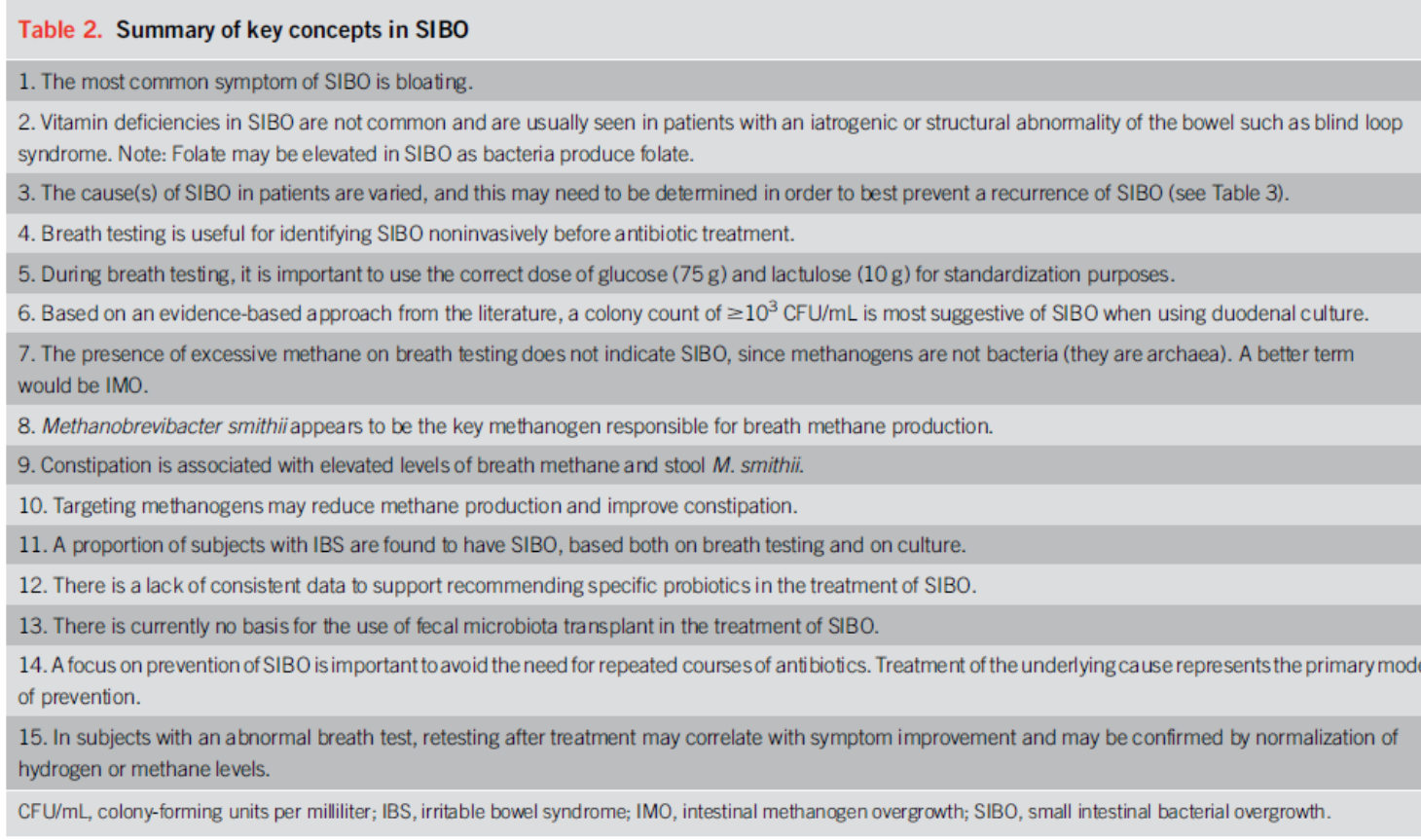
ACG Guideline for Small Intestinal Bacterial Overgrowth

Link to full PDF: ACG Clinical Guideline: Small Intestinal Bacterial Overgrowth

M Pimentel et al. Am J Gastroenterol 2020;00:1–14. https://doi.org/10.14309/ ajg.0000000000000501; published online January 8, 2020

One key point is that the authors acknowledge that almost all of their recommendations are based on a very low level of evidence.  In fact, only one of their 6 recommendations in Table 1 is considered to have more evidence and it is rated as low level of evidence.

The article provides an in-depth review of small intestinal bacterial overgrowth including underlying homeostasis mechanisms/pathophysiology (Tables 3 & 4) and treatments.  For those needing treatment, the authors list options in Table 5 including rifaximin, amoxicillin-clavulanic acid, ciprofloxacin, doxycycline, metronidazole, neomycin, norfloxacin, tetracycline, and trimethoprim-sulfamethoxazole.

Image Available from Lizzie Aby Feed

Related blog posts:

Disclaimer: This blog, gutsandgrowth, assumes no responsibility for any use or operation of any method, product, instruction, concept or idea contained in the material herein or for any injury or damage to persons or property (whether products liability, negligence or otherwise) resulting from such use or operation. These blog posts are for educational purposes only. Specific dosing of medications (along with potential adverse effects) should be confirmed by prescribing physician.  Because of rapid advances in the medical sciences, the gutsandgrowth blog cautions that independent verification should be made of diagnosis and drug dosages. The reader is solely responsible for the conduct of any suggested test or procedure.  This content is not a substitute for medical advice, diagnosis or treatment provided by a qualified healthcare provider. Always seek the advice of your physician or other qualified health provider with any questions you may have regarding a condition.


IBD and Immune-Mediated Diseases

J Burisch et al. Clin Gastroenterol Hepatol 2019; 17: 2704-12.  In this nationwide cohort from Denmark with 14,377 adult patients with IBD (median age 45.8 yrs) and 71,885 controls; immune-mediated diseases (IMID) were present in 22.5% of those with IBD.

Most common IMID:

  • psoriasis
  • asthma
  • type 1 diabetes
  • iridocyclitis

Other IMID:

  • multiple sclerosis
  • pyoderma gangrenosum
  • rheumatoid arthritis
  • ankylosing spondylitis,
  • celiac
  • primary scelorsing cholangitis,
  • primary biliary cholangitis
  • sarcoidosis
  • Graves’ disease

Findings:

  • Patients receiving infliximab were at a reduced risk of developing an IMID with aOR of 0.52 for Crohn’s disease (CD) and 0.47 for Ulcerative Colitis. (UC)
  • 80.3% of IMID were noted prior to onset of IBD
  • The presence of IMID was associated with an increased risk of surgery in patients with CD with aOR of 2.30 but not in patients with UC

My take: About 1 in 4 patients with IBD have at least 1 other immune-mediated disease.  The presence of an immune-mediated disease is associated with a higher likelihood of needing a biologic therapy and with surgery in patients with Crohn’s disease. In patients with numerous immune-mediated diseases, one needs to consider the possibility of other etiologies (eg. CTLA4 defiency)

Related blog posts:

Saint Jerome (not far from Montreal)

This blog, gutsandgrowth, assumes no responsibility for any use or operation of any method, product, instruction, concept or idea contained in the material herein or for any injury or damage to persons or property (whether products liability, negligence or otherwise) resulting from such use or operation. These blog posts are for educational purposes only. Specific dosing of medications (along with potential adverse effects) should be confirmed by prescribing physician.  Because of rapid advances in the medical sciences, the gutsandgrowth blog cautions that independent verification should be made of diagnosis and drug dosages. The reader is solely responsible for the conduct of any suggested test or procedure.  This content is not a substitute for medical advice, diagnosis or treatment provided by a qualified healthcare provider. Always seek the advice of your physician or other qualified health provider with any questions you may have regarding a condition

Real-World Vedolizumab: Better Than Expected

Two recent studies indicate that vedolizumab is performing better than expected in the “real world.”

  • JL Koliani-Pace et al. Inflamm Bowel Dis 2019; 25: 1854-61
  • DM Faleck et al. Clin Gastroenterol Hepatol 2019; 17: 2497-2505.

In the first study, the researchers used 2 data sets (VICTORY cohort, n=1087, & the Truven cohort, n=2574)  to compare vedolizumab in two separate eras; the early era was May 2014-June 2015  and the later era was July 2015-June 2017.

Key findings:

  • Patients with Crohn’s disease (CD) in the VICTORY cohort during the second era had better clinical remission rates: 40% vs 31% and better mucosal healing rates 58% vs 42%
  • Later era patients with ulcerative colitis (UC) in the Truven database had lower rates of IBD-related hospitalization (22.4% vs. 9.6%) and surgery (17.2% vs. 9.4%)
  • In the later era, patients were more likely to be biologic naive.

This study indicates that, overall, patients treated in the first era were likely more sick and less likely to respond to vedolizumab.  The authors’ note that this could be a ‘warehouse effect’ whereby “patients treated within the first year of a drug’s approval are likely representative of a select group of high-risk patients who are refractory to currently available therapies and are being warehoused on ineffective and undesirable therapies (ie. chronic steroid) to bridge them through until a promising agent is approved by the FDA.”

In the second study, the authors retrospectively examined 650 patients with CD and 437 with UC who were treated between 2014-16.  Patients who had a more recent diagnosis of CD (≤2 years) fared better than those with more long-standing disease.

Key findings:

  • Early-stage CD vs. later-stage CD clinical remission rates: 38% vs 23%
  • Early-stage CD vs. later-stage CD with corticosteroid-free remission: 43% vs 14%
  • Early-stage CD vs. later-stage CD with endoscopic remission: 29% vs. 13%
  • UC disease duration did not associate with response to vedolizumab

My take: Taken together, these studies indicate that vedolizumab in the real world may outperform the results of the landmark studies which helped garner FDA approval.  In patients who are less sick and have not been considered refractory to multiple treatments, response rates to vedolizumab are higher.

Related blog posts:

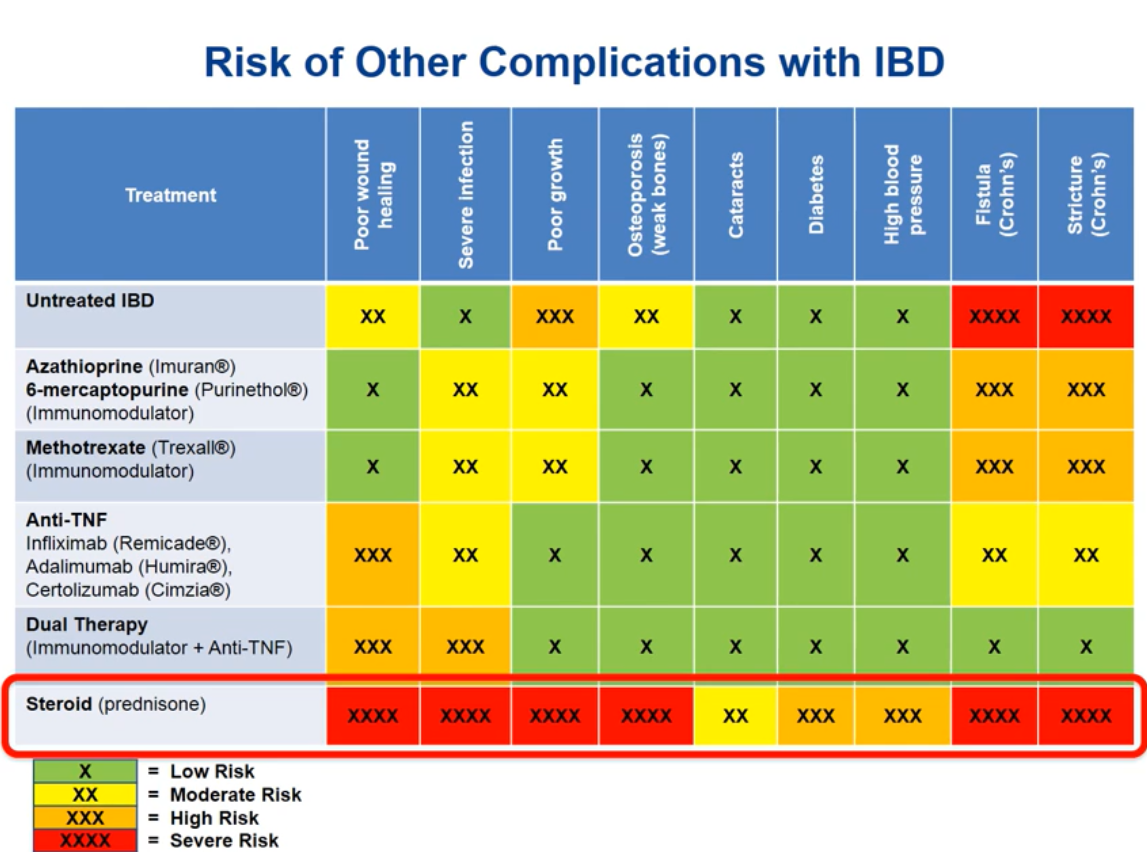
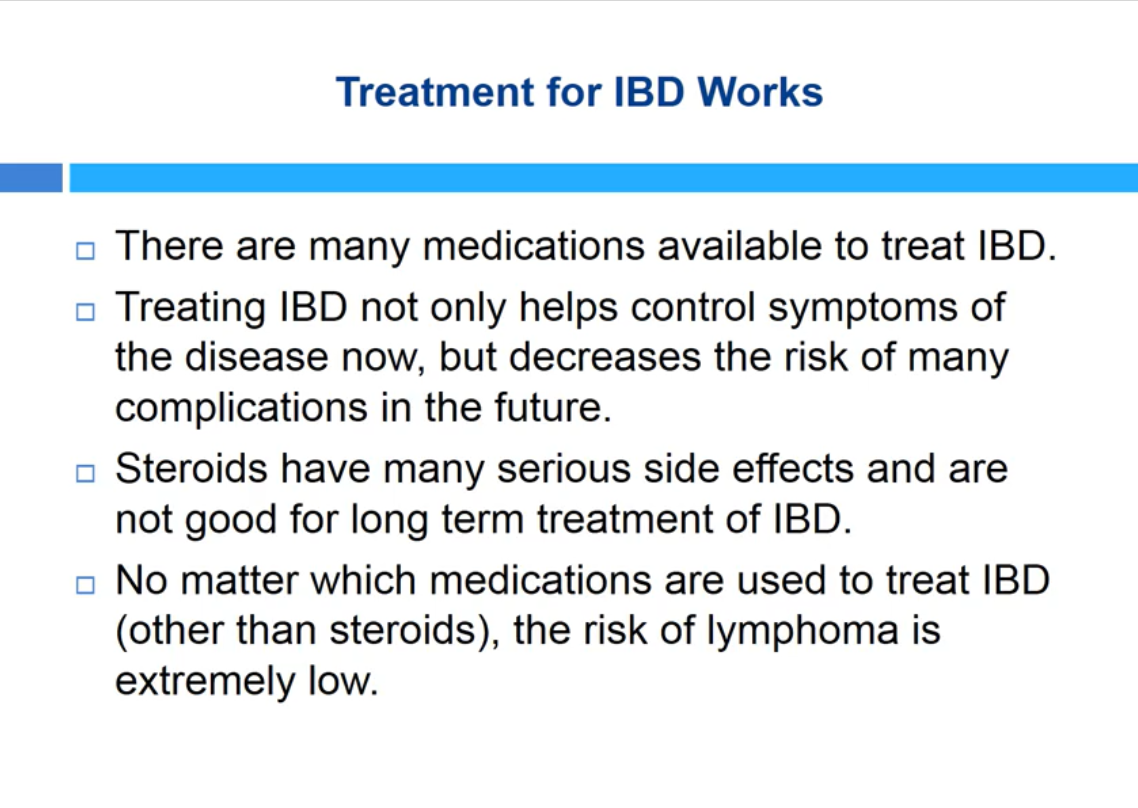
Video for Patients: Benefits and Risks of IBD Treatment & Risks of Untreated IBD

A recent study (NE Newman, KL Williams, BJ Zikmunde-Fisher, J Adler. JPGN 2020;70: e33-36) highlights work to communicate the benefits and risks of the treatment for inflammatory bowel disease (IBD) along with the risks of untreated IBD.  “We developed a simple video aid to illustrate competing risks associated with medications and underling disease in context of inflammatory bowel disease…Those who viewed the video aid had more realistic perceptions than those who did not view it.”

Here is a link to the ~13 minute online video: IBD: Risk of Disease and Treatments

Overall, the presentation is very helpful and thoughtful.  I think this would be an excellent overview for families.  For practitioners, a few points that could benefit from some nuance are noted below some screenshots.  It is worth stating that the authors had started this project a few years ago and some of the points below are related to more information that has emerged.

In the section of treatment benefits (above), the presentation suggests that thiopurines (azathioprine, 6-mercaptopurine) and methotrexate both are effective in about 50%; this is probably an overestimate; in addition, methotrexate as monotherapy is definitely less effective (if effective at all) for ulcerative colitis .  Also, it would be worthwhile to indicate that anti-TNF monotherapy with therapeutic drug monitoring may help achieve similar benefits as dual therapy.

In the section of colon cancer, the authors provide useful data that current treatments lower this risk substantially.  It is notable that more recent reports suggest that there have been improvements in the rates of colon cancer associated with IBD.

Overall, the section on lymphoma is very good.

In the section on other complications, the presentation suggests that there may be impaired wound-healing with anti-TNFs.  I think this risk is overstated in this slide. Also, I think the risk of severe infection with thiopurines is a little bit higher than stated; though, this can be mitigated with careful monitoring.

I think this summary slide could be improved by noting that the overall risk of serious cancers is likely lowered by treating IBD.  Since colon cancer is a fairly common cancer and IBD treatment reduces the risk, this likely outweighs the increased risk of other cancers (eg. lymphoma) which are much less common.

Another link to video: https://tinyurl.com/IBDTreatments

Related posts:

Disclaimer: This blog, gutsandgrowth, assumes no responsibility for any use or operation of any method, product, instruction, concept or idea contained in the material herein or for any injury or damage to persons or property (whether products liability, negligence or otherwise) resulting from such use or operation. These blog posts are for educational purposes only. Specific dosing of medications (along with potential adverse effects) should be confirmed by prescribing physician.  Because of rapid advances in the medical sciences, the gutsandgrowth blog cautions that independent verification should be made of diagnosis and drug dosages. The reader is solely responsible for the conduct of any suggested test or procedure.  This content is not a substitute for medical advice, diagnosis or treatment provided by a qualified healthcare provider. Always seek the advice of your physician or other qualified health provider with any questions you may have regarding a condition.

PERSUADE Study: I Guarantee That It Will …

Peppermint oil (PO) products have been promoted for irritable bowel syndrome (IBS) for quite a long time.  When I have recommended PO as a possible treatment, I frequently say that “I guarantee that it will….give you fresh breath.  It might help your stomach symptoms.”

A recent randomized, double-blind “PERSUADE” study (Zsa Zsa R. M. Weerts et al Gastroenterol 2020; 158: 123-36) shows that PO likely has some efficacy for stomach symptoms in IBS. This trial enrolled 189 patients & 178 completed study (mean age, 34 years, 78% female) from the Netherlands.  Subjects were divided in three groups -instructed to take the study capsule 3/day for 8 weeks:

  • 182 mg small-intestinal release PO-SI
  • 182 mg ileocolonic release PO-IC
  • Placebo

The primary endpoint was at least a 30% decrease in the weekly average of worst daily abdominal pain

Key findings:

  • The primary endpoint did NOT differ significantly between the three groups: PO-SI with 46.8%, PO-IC with 41.3%, and Placebo with 34.4% response.
  • The PO-SI but not PO-IC was associated in secondary improvements compared to placebo in abdominal pain (P=.06), discomfort (P=.02), and IBS severity (P=.02).
  • Adverse events were mild with PO, but more common than placebo. Adverse events included heartburn, belching, and headache.
  • The authors calculate that the number needed to treat with PO-SI would be 8 which is higher than recent ACG monograph which suggested an NNT of 4 (Am J Gastroenterol 2018; 113: 1-18).  Even an NNT of 8 compares favorably with other treatments: linaclotide 6, plecanatide 10, and eluxadoline 12.5.

Limitations:

  • the studied population was mainly young adult, predominantly white and female; thus the findings may not be generalized to other groups
  • the peppermint smell could have undermined blinding despite presentation in capsule form
  • relatively short duration study

The associated editorial by BD Cash (pgs 36-37) notes that PO medicinal use began in 1753 by Carl Linnaeus.  PO is thought to work via smooth muscle calcium channel antagonism.  The findings of working in the small intestine and not ileocolonic release could “spur additional therapeutic development.”

My take (borrowed in part from editorial): “These results reaffirm that PO can improve viscerosensory symptoms of IBS …and is well-tolerated… [It is] clearly not a gangbuster as a monotherapy.”  While the findings show modest effect, the findings are supported by a “robust” study as this is the first randomized, double-blind placebo-controlled clinical trial of PO.

Related blog posts:

Also, fidaxomicin has received FDA approval for pediatric use for C diff infections:

The Best Information We Have To Date on the Emerging Coronavirus

The NEJM has made the information it has on the emerging coronavirus open access.  Here are the links:

An excerpt from the editorial:

For the third time in as many decades, a zoonotic coronavirus has crossed species to infect human populations. This virus, provisionally called 2019-nCoV, was first identified in Wuhan, China, in persons exposed to a seafood or wet market. The rapid response of the Chinese public health, clinical, and scientific communities facilitated recognition of the clinical disease and initial understanding of the epidemiology of the infection. First reports indicated that human-to-human transmission was limited or nonexistent, but we now know that such transmission occurs, although to what extent remains unknown. Like outbreaks caused by two other pathogenic human respiratory coronaviruses (severe acute respiratory syndrome coronavirus [SARS-CoV] and Middle East respiratory syndrome coronavirus [MERS-CoV]), 2019-nCoV causes respiratory disease that is often severe.1 As of January 24, 2020, there were more than 800 reported cases, with a mortality rate of 3%…

Both SARS-CoV and MERS-CoV infect intrapulmonary epithelial cells more than cells of the upper airways.4,6 Consequently, transmission occurs primarily from patients with recognized illness and not from patients with mild, nonspecific signs. It appears that 2019-nCoV uses the same cellular receptor as SARS-CoV (human angiotensin-converting enzyme 2 [hACE2]),3 so transmission is expected only after signs of lower respiratory tract disease develop…

It is likely that 2019-nCoV will behave more like SARS-CoV and further adapt to the human host, with enhanced binding to hACE2.