Methods: Between 2007 and 2019, pregnant women with IBD were enrolled in a prospective, observational, multicenter study across the United States (PIANO registry).
Key findings:
Exposure was to thiopurines (242), biologics (642) or both (227) versus unexposed (379)
Medication exposure did not increase the rate of congenital malformations, spontaneous abortions, preterm birth, LBW, and infections over the first year of life
Higher disease activity was associated with risk of spontaneous abortion (HR 3.41, 95% CI 1.51-7.69) and preterm birth with increased infant infection (OR 1.73, 95% CI 1.19-2.51)
My take: This study provides some reassurance that treatments for IBD are unlikely to affect neonatal outcomes; however, increased IBD activity does affect outcomes
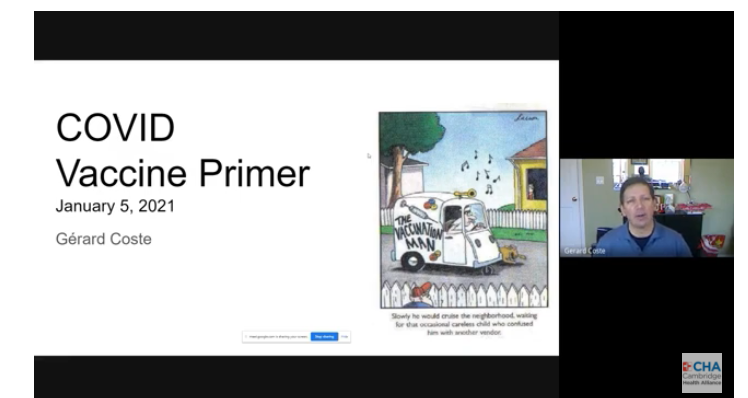
Our hospital system has been arranging frequent staff meetings to provide situational updates amid the pandemic. On 12/2/20, Evan Anderson (infectious disease) provided an an excellent update on COVID-19/rollout of vaccines.
Key Points:
mRNA vaccines have been remarkably effective, both ~95% and also effective against severe disease (>90%)
Severe reactogenicity occurs >2%. Systemic symptoms like fatigue, myalgia, and chills are more common after 2nd dose
Local reactions are typically more pronounced than flu vaccine but less pronounced compared to shingles vaccine (Shingrix)
Not wise to vaccinate entire care areas at same time
No need to check antibody titers after vaccination
Current contraindications: Pregnant women and children due to lack of data (Pfizer vaccine may be approved for those older than 12 yrs)
Study participants were allowed to take antipyretics
Slides used with permission.
Current pandemic situation in metro Atlanta (slide from Dan Salinas)
Top curve is total cases and bottom curve is ICU beds –both thru 11/27/20
This is a really lousy clinical practice guideline but a pretty good review of small intestinal bacterial overgrowth (SIBO). The reason why it is lousy: it provides virtually no recommendations on how to define/diagnose SIBO, does not recommend specific testing and equivocates on specific treatments.
Here are a few of the “best practice advice” as examples:
#1 The definition of SIBO as a clinical entity lacks precision and consistency; it is a term generally applied to a clinical disorder where symptoms, clinical signs, and/or laboratory abnormalities are attributed to changes in the numbers of bacteria or in the composition of the bacterial population in the small intestine
#5 A major impediment to our ability to accurately define SIBO is our limited understanding of normal small intestinal microbial populations
#6 Controversy remains concerning the role of SIBO in the pathogenesis of common functional symptoms, such as those regarded as components of irritable bowel syndrome
#9 There is a limited database to guide the clinician in developing antibiotic strategies for SIBO
While not providing ‘best practical advice,’ the article does provide details regarding limitations in testing, underlying pathogenesis, and potential treatment regimens for adults.
This study evaluated neurodevelopmental outcomes using Bayley Scales. the authors provided a secondary outcome analysis of a double-blind randomized trial of 206 extremely low birth weight infants. Participants received either SMOFlipid or soybean oil-based lipid. Lipids were dosed at </+ 3 g/kg/day.
Key findings:
Parenteral nutrition using a mixed lipid emulsion (SMOF) containing fish oil did not improve neurodevelopment of extremely low birth weight infants at 12 and 24 months corrected age
At 24 months of age, specifically, there was again no significant differences in any of the following areas (median values):
cognitive: SMOF: 95 & soybean oil: 95
language: SMOF: 89 & soybean oil 89
motor scores: SMO 94 & soybean oil: 94
Limitations: One of the reasons why this study did not find any difference is that it was not powered for assessment of neurodevelopmental outcomes. The authors provide other potential reasons:
DHA in SMOFlipid provided 43 mg/kg/d, while more than the soybean-lipid, is at the lower end of published fetal accretion rates (40-67 mg/kg/day)
DHA deficits may not have been pronounced enough in this study to see an effect of SMOFlipid on neurodevelopement
Full feeds were reached after 23 days (IQR, 17-37 days); thus, it is possible that infants with longer term dependency on parenteral nutrition would benefit more
My take: SMOFlipid has not been proven to have more favorable long-term neurocognitive effects than intralipid. However, for children with prolonged need for parenteral nutrition, SMOFlipid is more likely to allow full dosing which in itself may be an important contributor to better outcomes. That is, soybean-lipid emulsions are more likely to be reduced due to cholestasis and this could lead to nutritional deprivation.
This study used multicenter data from the Society of Pediatric Liver Transplantation on first-time pediatric (aged <18 years) liver transplant recipients (n = 3801) in the US and Canada (1995-2016).
Key findings:
7.4% developed HAT within the first 90 days of transplantation.
Of those who were retransplanted, 20.7% developed recurrent HAT.
Those less than 1 year had the highest risk OR 1.20).
Lower Risk for HAT:
Recipients with split, reduced, or living donor grafts had decreased odds of HAT (OR, 0.59; P < .001 compared with whole grafts)
Adolescents aged 11-17 years (OR, 0.53; P = .03).
HAT increased risk of graft failure and mortality:
Fifty percent of children who developed HAT developed graft failure within the first 90 days of transplantation (adjusted hazard ratio, 11.87; 95% CI, 9.02-15.62)
Mortality risk (w/in 90 days after transplantation): adjusted hazard ratio, 6.18 (95% CI, 4.01-9.53).
The finding that split grafts had lower rates of HAT may be related to the fact that these grafts more typically come from larger donors with larger vessels. Historically, split grafts had been described as a risk factor for HAT. The authors note that high-performing centers with the lowest incidence of HAT “also tend to have high rates of living and split transplants, suggesting that surgical expertise may play a role in the decreased risk of HAT in select recipients with technical variant grafts.”
Increased rates of HAT among those who were retransplanted, in some, could be related to thrombophilic conditions; thus, consideration of anticoagulation protocol could be needed
My take: Continued efforts are needed to reduce HAT due to its impact on liver transplantation outcomes. One of the biggest risk factors is age. While this would seem to be a nonmodifiable factor, improving recognition and treatment of biliary atresia could help.
This retrospective study of children, n=85, 2 months to 5 years (2007-2019) examined the effectiveness of intrapyloric botulinum toxin injection (IPBI) in children with feeding difficulties; many had vomiting (n=66) or retching (n=25). Dosing per report: 6 units/kg to a maximum of 100 units, divided in 4 injections around the pylorus. 100 units were diluted in 1 mL of normal saline to create a 10 unit/0.1 mL solution. The study excluded 27 patients who had IPBI but had insufficient data/follow-up or other disease processes.
Key findings:
57 patients (67%) had partial or complete improvement in symptoms after IPBI. 10 (18%) patients were reported to have a complete response.
Twenty-six patients (31%) received repeat IPBI within 1 year, with only 6 patients receiving IPBI more than twice
“Baseline gastric emptying results did not predict IPBI response”
Limitations:
Retrospective study from a tertiary referral center
Lack of control group
Relatively small numbers –about 7 children per year. Given the large number of children with feeding problems followed by the Boston group, this is a highly-selected group
Lack of standardized evaluation to determine improvement
The authors state that time alone is not likely the reason for observed improvements because “our general practice at our institution is to pursue IPBI when other medical interventions have failed, and indeed these patients had been followed by our group for an average of slightly more than 1 year before receiving IPBI”
My take: Overall, I am impressed with the innovative ideas from Boston Children’s for pediatric patients with feeding problems. Yet, I am skeptical with regard to the use of IPBI for feeding difficulties; though, there may be a subset of children who benefit. Many children with complex feeding problems improve without the use of IPBI. Clearly, a randomized trial would be helpful.
Disclaimer: This blog, gutsandgrowth, assumes no responsibility for any use or operation of any method, product, instruction, concept or idea contained in the material herein or for any injury or damage to persons or property (whether products liability, negligence or otherwise) resulting from such use or operation. These blog posts are for educational purposes only. Specific dosing of medications (along with potential adverse effects) should be confirmed by prescribing physician. Because of rapid advances in the medical sciences, the gutsandgrowth blog cautions that independent verification should be made of diagnosis and drug dosages. The reader is solely responsible for the conduct of any suggested test or procedure. This content is not a substitute for medical advice, diagnosis or treatment provided by a qualified healthcare provider. Always seek the advice of your physician or other qualified health provider with any questions you may have regarding a condition
Key finding: The incidence of an NAFLD diagnosis significantly increased over time, with 36.0 per 100 000 in 2009 and 58.2 per 100 000 in 2018 (P < .0001), based on study of a large integrated health care system in southern California
This randomized study with 28 children with acute severe ulcerative colitis (ASUC) (PUCAI > /= 65) tried to determine if antibiotics with IV corticosteroids resulted in improved outcomes compared to IV corticosteroids alone. Most in the antibiotic group received the following for 3 weeks:
Vancomycin 250 mg 4/day (if less than 8 years, then 125 mg 4/day)
Amoxicillin 50 mg/kg/day divided into 3/day dosing (max 500 mg/dose)
Doxycycline 2 mg/kg/dose 2/day (children less than 7 years rec’d ciprofloxacin 10 mg/kg 2/day -max 250 mg/dose)
Key findings:
The mean day-5 PUCAI was 25 ± 16.7 in the abx/steroid combination group vs 40.4 ± 20.4 in the steroid monotherapy group (P = 0.037)
Median calprotectin values were lower in the abx combination group at day 5 (1202 vs. 2170, P=0.24) and at discharge (1210 vs 1840, P=0.695)
The need for 2nd line rescue therapy was low in both groups: 19% in abx group and 17% in the steroid group
Within 1 year, 3/16 (19%) in the abx combination group had had a colectomy compared with 2/12 (17%) in the steroid monotherapy.
The authors found no correlation between microbial features/microbiome at admissioin and clinical response 5 days later
In their discussion, the authors note that if antibiotics had a treatment benefit as high as 30% in avoiding second-line treatment (ie, 14% in intervention arm), “randomization of 1228 children would be required to show such a difference with a power of 80%.”
My take: I agree with the authors who state that “antibiotics cannot be routinely recommended until larger studies demonstrate a reduced need for second-line treatment or colectomy.”
Disclaimer: This blog, gutsandgrowth, assumes no responsibility for any use or operation of any method, product, instruction, concept or idea contained in the material herein or for any injury or damage to persons or property (whether products liability, negligence or otherwise) resulting from such use or operation. These blog posts are for educational purposes only. Specific dosing of medications (along with potential adverse effects) should be confirmed by prescribing physician. Because of rapid advances in the medical sciences, the gutsandgrowth blog cautions that independent verification should be made of diagnosis and drug dosages. The reader is solely responsible for the conduct of any suggested test or procedure. This content is not a substitute for medical advice, diagnosis or treatment provided by a qualified healthcare provider. Always seek the advice of your physician or other qualified health provider with any questions you may have regarding a condition
Methods: Cluster randomized clinical trial. The Fit Study (2014-2017) randomized 79 California schools (n=28 641 students) to BMI screening and reporting (group 1), BMI screening only (group 2), or control (no BMI screening or reporting [group 3]) in grades 3 to 8. The setting was California elementary and middle school
Key findings:
Among 6534 of 16 622 students with a baseline BMI in the 85th percentile or higher (39.3%), BMI reporting had no effect on BMIz score change (−0.003; 95% CI, −0.02 to 0.01 at 1 year and 0.01; 95% CI, −0.02 to 0.03 at 2 years)
Weight dissatisfaction increased more among students having BMI screened at school (8694 students in groups 1 and 2) than among control participants (5674 students in group 3).
My take: Tackling obesity will require a lot more than measuring BMIs. An interesting follow-up study would be to see if schools who reported BMIs were more likely to take other measures, such as providing nutritional counseling, improving school lunch selection, and providing opportunity for more activity/exercise.
Overall, this article details the estimated shortage of hepatologists in the coming years.
Key points:
One of the more interesting suggestions in this article is the need to change the name of specialty training from “transplant hepatology” to “advanced hepatology” to more accurately reflect the type of liver conditions managed by hepatologists.
In 2018, the adult and pediatric workforce included 7,296 and 824 hepatology providers, respectively, composed of hepatologists, gastroenterologists, and advanced practice providers whose practice was ≥50% hepatology
The modeling analysis projects that in 2023, 2028, and 2033, there will be shortages of 10%, 23%, and 35% adult hepatology providers, respectively, and 19%, 20%, and 16% pediatric hepatology providers, respectively
The authors note that there are many challenges when predicting workforce needs. The main reasons for the predicted shortfall with hepatology include the following:
Older age of current clinicians
Increasing amount of liver disease (~34% increase from 2018 to 2033), particularly fatty liver disease. This is happening among adults and children.