Put Your Own Oxygen Mask On First

D Atkins. Annals of Internal Medicine 2020; https://doi.org/10.7326/M20-6349. Put Your Own Oxygen Mask On First

Important commentary -here’s an excerpt:

My hope that his colleagues would honor his memory by spending time taking care of themselves. “Selflessness has its price. Skip was so ready to give someone the shirt off his back that he may not have realized when he was also cold. I hope each of you—especially those of you who are doctors and nurses and caregivers—will take time to be selfish when you need to be. Make a lunch date with your Skip to complain about your problems. Put your own oxygen mask on first.”

Alterations in Microbes and Impaired Psychological Function in Patients with Inflammatory Bowel Disease

Briefly noted: F Humbel et al. Clin Gastroenterol Hepatol 2020; 18: 2019-2029. Association of Alterations in Intestinal Microbiota With Impaired Psychological Function in Patients With Inflammatory Bowel Diseases in Remission

In a prospective study with 171 adults with IBD in remission, the authors combined

  1. measures of psychological comorbidities and quality of life (QoL)
  2. microbial analysis with 16S rRNA high-throughput sequencing

Key findings:

  • Microbiomes of patients with higher perceived stress had significantly lower alpha diversity
  • Anxiety and depressive symptoms were significantly associated with beta diversity

My take: This study adds another dimension to the idea of bidirectionality between psychological well-being and course of inflammatory bowel disease.  The microbiome may directly influence both psychological well-being and IBD activity.

Related blog posts:

“Positioning Biologic Therapies in the Management of Pediatric Inflammatory Bowel Disease” & 14% of U.S. Infected with COVID-19

J Breton et al. Gastroenterology & Hepatology 2020; 16: 400-14. Full text: Positioning Biologic Therapies in the Management of Pediatric Inflammatory Bowel Disease

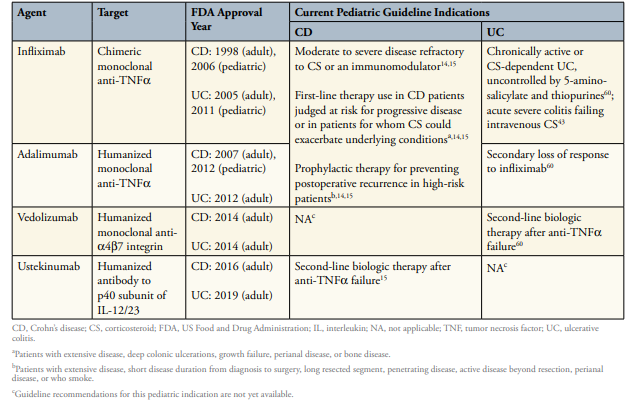
This is a terrific summary of biologic therapies for pediatric inflammatory bowel disease. Compared to adults, the pediatric data is much more limited.  This may affect recommendations.  For example, recent AGA guidelines for moderate to severe ulcerative colitis in adults suggests that either ustekinumab or tofacitinib is generally preferable as a 2nd line agent rather than vedolizumab in patients with primary infliximab failure (Blog post: AGA Guidelines: Moderate to Severe Ulcerative Colitis).  In the chart below, vedolizumab is recognized as a preferred 2nd line agent.

In the section on vedolizumab:

The favorable risk-benefit profile makes vedolizumab an ideal therapeutic choice for pediatric IBD. However, an important limitation is its delayed onset of action, for which corticosteroid use as bridge therapy is often necessary in this population that is already at increased risk of growth failure and bone loss. Recently, Hamel and colleagues published their small, single-center experience of using concomitant tacrolimus between anti-TNFα withdrawal to vedolizumab maintenance as a corticosteroid-sparing bridge therapy in moderate to severe IBD (Ref: Hamel B, Wu M, Hamel EO, Bass DM, Park KT. Outcome of tacrolimus and vedolizumab after corticosteroid and anti-TNF failure in paediatric severe colitis. BMJ Open Gastroenterol. 2018;5(1):e000195).

This article addresses therapeutic drug monitoring:

TDM is a key component of managing IBD patients on anti-TNFα therapy. While  reactive TDM of antiTNFα agents has been adopted by societal guidelines, there is an increasing body of literature to support the benefit of proactive TDM, particularly in pediatric populations

Conclusions from authors: Anti-TNFα agents have revolutionized the management of IBD, positively modifying the natural disease history in children. Importantly, inception cohort studies of pediatric CD and UC (RISK and PROTECT, respectively) have highlighted the variable course of disease and necessity of adopting an individualized approach with early use of biologic therapy in patients at risk of severe disease progression. 
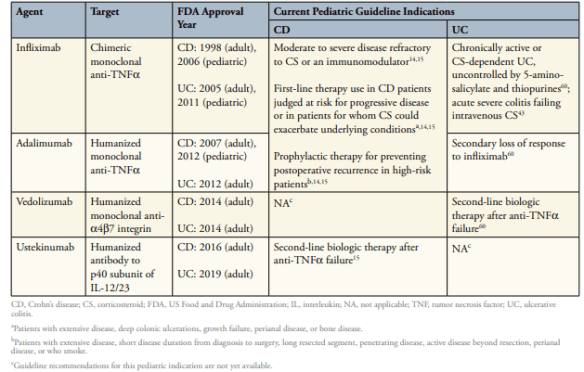
Biologics Used in Pediatric Inflammatory Bowel Disease

Related blog posts:
Disclaimer: This blog, gutsandgrowth, assumes no responsibility for any use or operation of any method, product, instruction, concept or idea contained in the material herein or for any injury or damage to persons or property (whether products liability, negligence or otherwise) resulting from such use or operation. These blog posts are for educational purposes only. Specific dosing of medications (along with potential adverse effects) should be confirmed by prescribing physician.  Because of rapid advances in the medical sciences, the gutsandgrowth blog cautions that independent verification should be made of diagnosis and drug dosages. The reader is solely responsible for the conduct of any suggested test or procedure.  This content is not a substitute for medical advice, diagnosis or treatment provided by a qualified healthcare provider. Always seek the advice of your physician or other qualified health provider with any questions you may have regarding a condition


Hemospray Efficacy and Rebleeding

A Ofusu et al. J Clin Gastroenterol 2020. doi:10.1097/MCG.0000000000001379. The Efficacy and Safety of Hemospray for the Management of Gastrointestinal Bleeding

This systematic review and meta-analysis included 19 studies and 814 patients.

  • 212 patients were treated with Hemospray as monotherapy
  • 602 patients were treated with Hemospray with conventional hemostatic techniques.

Key findings:

  • Overall pooled clinical success after the application of Hemospray was 92%
  • Overall pooled early rebleeding rates (<7 days) after application of Hemospray was 20%
  • Overall pooled delayed rebleeding rates after the application of Hemospray was 23% (<30 days)
  • There was no statistical difference in clinical success (RR, 1.02; 95% CI, 0.96-1.08; P=0.34) and early rebleeding (RR, 0.89; 95% CI, 0.75-1.07; P=0.214) in studies that compared the use of Hemospray as monotherapy versus combination therapy with conventional therapy.

Related study: D Chahal et al. Dig Liver Dis 2020. DOI: https://doi.org/10.1016/j.dld.2020.01.009 Full text: High rate of re-bleeding after application of Hemospray for upper and lower gastrointestinal bleeds Findings (n=86): Immediate hemostasis rate was 88.4%, but there was a high rate of re-bleeding (33.7%). Most re-bleeds occurred within 7 days (86.2%)

My take: Hemospray is effective in achieving immediate hemostasis but there are high rates of rebleeding. It may be eliminated by GI tract in as few as 24 hours after use.  Thus, for lesions at high risk for bleeding, hemospray is likely more of a last resort endoscopic option.

Related blog posts:

Nutrition4Kids and Nutrition4IBD

My colleague and partner, Stan Cohen, along with his outstanding advisory board, have put together two terrific (free) resources for both children and adults:

Both are up-to-date, user-friendly, authoritative and attractive websites that feature advice families can trust to help them understand their disease and options to live as full a life as possible. Between the two, there are:

  • Over 700 articles
    • Nutrition4Kids Categories: Eating at different ages, Healthy lifestyle, Nutrients, Diseases and disorders and Patient experience
    • Nutrition4IBD Categories: Understanding IBD, Treatment Options, Nutrition for IBD and Patient options.
  • Over 60 videos including 35 on food allergies (including FPIES and eosinophilic disorders) and 14 on tube-feedings, including one about a lacrosse player that is quite inspirational.
  • Amazing tools:
    • A food log and a symptom diary that patients can download to record how they are doing
    • a BMI calculator
    • a table of milk alternatives (created by our nutritionist Bailey Koch)
    • a tool which provides over 150,000 food labels for restaurant and packaged foods.
    • a cool tool where a patient can indicate their age, gender, whether they’re breastfeeding or pregnant (even which trimester they’re in), and it will tell what’s in over 200,000 foods and what nutrients and calories they need.
  • Healthy recipes with their nutrient values per serving.
  • This website relies on a group of 42 contributors including many from our group, psychologists, speech-language pathologists, nurses, dietitians, and families.
  • Other practices can link to our site, so they can share our medically-curated and accurate content and tools with their patient-families.

Eosinophilic Esophagitis -FAQs

A recent FAQ on Eosinophilic Esophagitis  Ronak Patel, MD  Ikuo Hirano, MD, AGAF: Full Text -GIHepNews (August 2020) Eosinophilic esophagitis: Frequently asked questions (and answers) for the early-career gastroenterologist

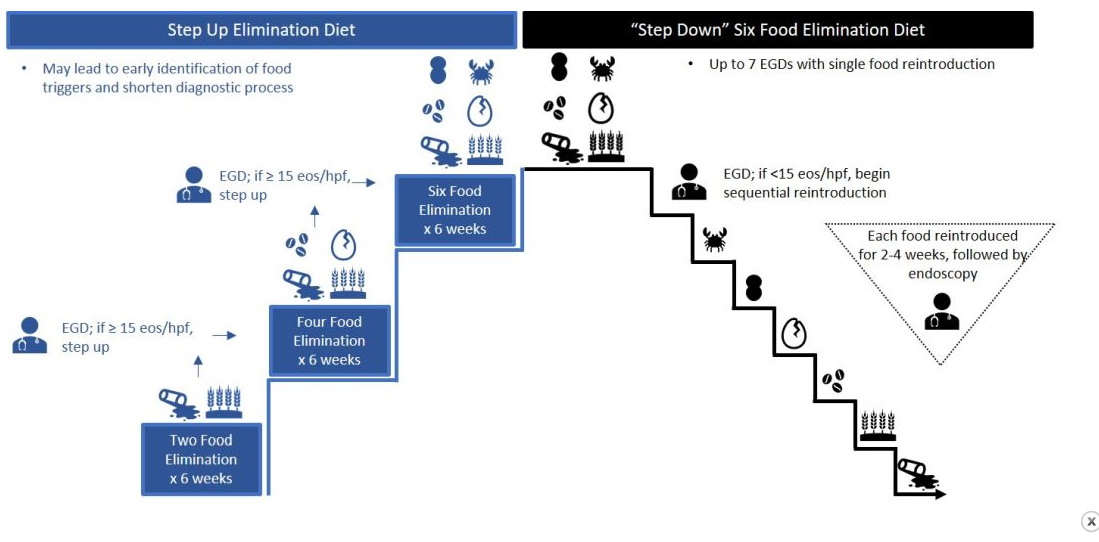
One aspect about this review that I liked was the dietary step-up –step-down therapy figure:

Reference: J Molina-Infante et al. J Allergy and Clincal Immunology. DOI:https://doi.org/10.1016/j.jaci.2017.08.038 Step-up empiric elimination diet for pediatric and adult eosinophilic esophagitis: The 2-4-6 study Results:  A TFGED (2-food) achieved EoE remission in 56 (43%) patients, with no differences between ages. Food triggers in TFGED responders were milk (52%), gluten-containing grains (16%), and both (28%). EoE induced only by milk was present in 18% and 33% of adults and children, respectively. Remission rates with FFGEDs (4-food) and SFGEDs (6-food) were 60% and 79%, with increasing food triggers, especially after an SFGED. Overall, 55 (91.6%) of 60 of the TFGED/FFGED responders had 1 or 2 food triggers. Compared with the initial SFGED, a step-up strategy reduced endoscopic procedures and diagnostic process time by 20%.

Related blog posts:

How Many Biopsies Are Sufficient for Diagnosis of Microscopic Colitis?

Briefly noted: Microscopic colitis is much more frequent in adults than in children; nevertheless, it is often important to exclude. A recent study (B Virine et al. Clin Gastroenterol Hepatol 2020; 18: 2003-2009. Full text: Biopsies From Ascending and Descending Colon Are Sufficient for Diagnosis of Microscopic Colitis) indicates that biopsies can be limited to the ascending and descending colon.

Methods: This was a retrospective study using biopsies from 101 consecutive patients with MC (52 cases of collagenous colitis, 42 cases of lymphocytic colitis, 7 combined cases),

Key finding:

  • In this study, microscopic colitis was detected with 100% sensitivity by analyzing biopsy specimens from the ascending and descending colon

My take: The authors note that previous guidelines have suggested taking 8 biopsy specimens.  Their findings support taking much fewer biopsies.

Related blog post/related article:


IB-Stim (Neuro-Stim) for Adolescents with Irritable Bowel

A recent study (A Krasaelap et al. Clin Gastroenterol Hepatol 2020; 18: 1987-1994.  Efficacy of Auricular Neurostimulation in Adolescents With Irritable Bowel Syndrome in a Randomized, Double-Blind Trial) with data from a double-blind trial provides evidence of short-term (4 week) efficacy of auricular neurostimulation therapy (aka. IB-Stim or Neuro-Stim).

Key findings:

  • The IB-Stim group (n=27, median age 15 years) had a ≥30% reduction in abdominal pain in 59% compared to 26% of the sham group (n=23)
  • A symptom response scale score of 2 or more was observed in 82% of patients who received IB-Stim vs 26% of patients in the sham group ( P ≤ .001)

Discussion points:

  • The authors indicate that the NNT for IB-Stim is 3 compared to 6-14 for other medical therapies (lubiprostone, linaclotide, and rifaximin)
  • The effects of IB-Stim were NOT sustained at follow-up 8-12 weeks and there was no significant improvment in functional disability or anxiety.  “The lack of long-term effect…likely reflects insufficient statistical power.”  The authors indicate that longer or repeated courses could be needed

My take: This study indicates that IB-Stim can be helpful, at least in the short term, for adolescents with IBS.  More studies showing long-term benefit would be helpful.

Related blog posts:

COVID-19 Toll on U.S. Children

From AAP News: AAP Report: 513,415 children diagnosed with COVID-19

  • The latest report shows a rate of 680 COVID-19 cases per 100,000 children.
  • Children make up 9.8% of the total cases and about 1.7% of all COVID-19 hospitalizations, up from 0.8% of hospitalizations in late May.
  • Roughly 1.9% of children diagnosed with COVID-19 have been hospitalized, according to data from the 23 states and New York City that are publicly reporting hospitalization data.
  • There also have been at least 103 pediatric deaths in 42 states and New York City, making up about 0.07% of all COVID-19 deaths. Roughly 0.02% of children who have contracted known cases of COVID-19 have died.
  • There have been 792 confirmed cases of multisystem inflammatory syndrome in children in 42 states, New York City and Washington, D.C., and 16 death

Why Celiac Serology Needs To Be Looked At Differently in Children with Type 1 Diabetes

A recent study (M Wessels et al. J Pediatr 2020; 223: 87-92Raising the Cut-Off Level of Anti-Tissue Transglutaminase Antibodies to Detect Celiac Disease Reduces the Number of Small Bowel Biopsies in Children with Type 1 Diabetes: A Retrospective Study) recommends changing the approach to celiac disease (CD) diagnosis in children with Type 1 Diabetes Mellitus (T1DM).

Background: The prevalence of CD among patients with T1DM is between 3-10%

Using a retrospective observational cohort with 63 children, the authors recommend raising the cut-off from performing biopsies from 3 times the ULN to 11 times ULN.

Here’s why:

  • This change in increases the specificity from 36% to 73% while reducing sensitivity from 96% to 87%.  In addition, this improves the positive predictive value from 88% to 94%, but lowered negative predictive value from 67% to 53%.  Overall, this leads to a reduction in “unnecessary biopsies.”
  • The authors note that while the serology sensitivity is reduced, it is still acceptable and justified because “normalization of elevated TG2A  can occur in up to one-third of patients.”
  • Another finding from this cohort was that 55% of children with Marsh 0 or 1 histology were symptomatic, indicating that symptoms are not specific for CD.

While the authors have recommended a higher threshold and advocated for repeating serology ~3 months later in those with lower titers, the associated editorial by Stefano Guandalini makes the following points:

  1. Raising the titer threshold would leave 13% of patients with celiac disease undiagnosed (or at least with a delay in diagnosis)
  2. “For lower titers, the physician will have to apply his or her knowledge and conscience in each individual case…we must be mindful of the serious risk of missing too many patients with celiac disease by applying a high threshold, a risk probably outweighing that of an unnecessary biopsy.”

My take: This study shows that in children with T1DM who have abnormal lower-value celiac serology, a careful discussion with parents is needed about the merits of endoscopy or deferring until persistent positivity.

Related blog posts:

Taken near Hunley bridge, Isle of Palms, SC