Link to CDC COVID-19 Website: Cases, Data and Surveillance


Link to CDC COVID-19 Website: Cases, Data and Surveillance
AAM Singer, DA Bloom, J Adler. Clin Gastroenterol Hepatol 2020; In Press: Factors Associated With Development of Perianal Fistulas in Pediatric Patients With Crohn’s Disease
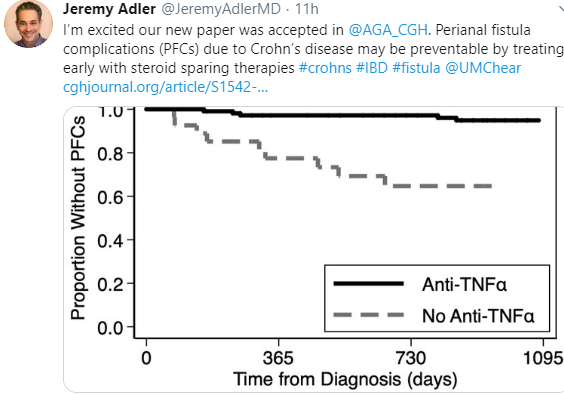
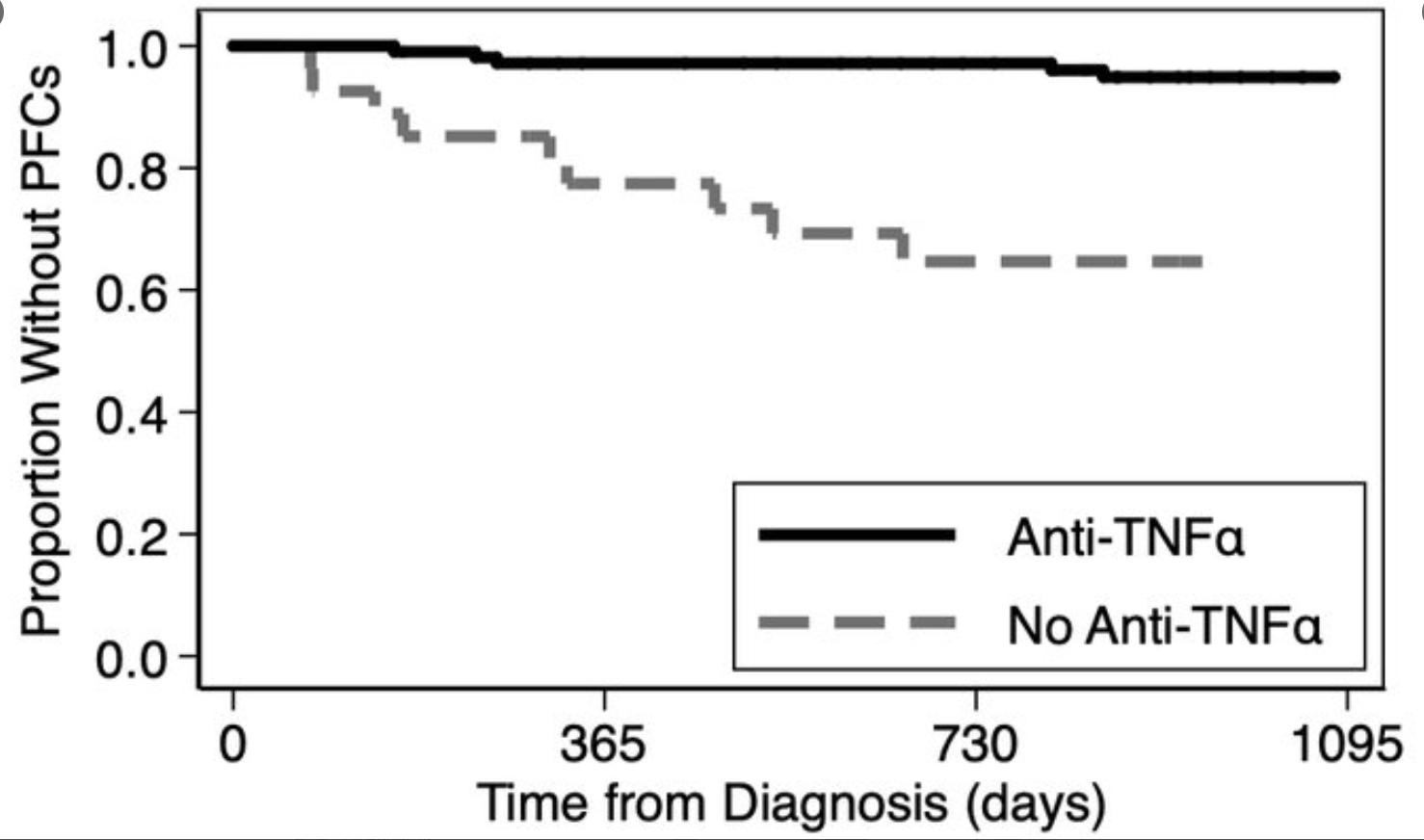
Also, related article:
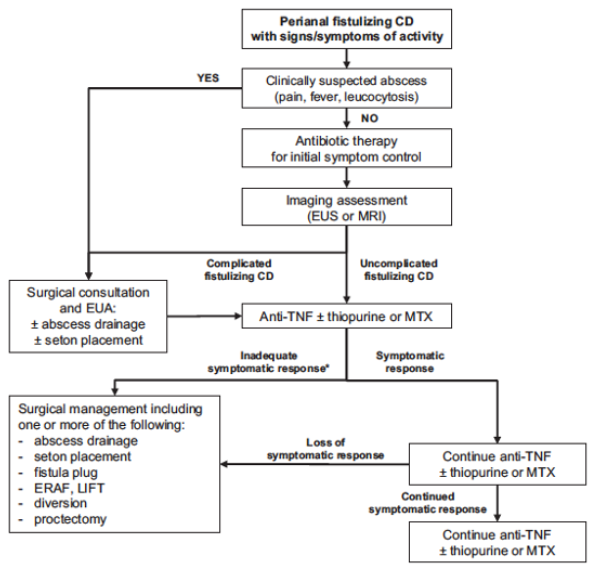
Full Text: Inflamm Bowel Dis. 2019 Jan 1;25(1):1-13. doi: 10.1093/ibd/izy247. Clinical Practice Guideline for the Medical Management of Perianal Fistulizing Crohn’s Disease: The Toronto Consensus.

Related blog posts:
Disclaimer: This blog, gutsandgrowth, assumes no responsibility for any use or operation of any method, product, instruction, concept or idea contained in the material herein or for any injury or damage to persons or property (whether products liability, negligence or otherwise) resulting from such use or operation. These blog posts are for educational purposes only. Specific dosing of medications (along with potential adverse effects) should be confirmed by prescribing physician. Because of rapid advances in the medical sciences, the gutsandgrowth blog cautions that independent verification should be made of diagnosis and drug dosages. The reader is solely responsible for the conduct of any suggested test or procedure. This content is not a substitute for medical advice, diagnosis or treatment provided by a qualified healthcare provider. Always seek the advice of your physician or other qualified health provider with any questions you may have regarding a condition.
The CDC, along with numerous states, are currently using aggregated viral testing that include assays for current infection along with antibody testing that detects prior infections. This muddies the picture on actual current coronavirus cases and makes it more difficult to determine if we are heading in the right direction.
From The Atlantic: ‘How Could the CDC Make That Mistake?’
An excerpt:
The Centers for Disease Control and Prevention is conflating the results of two different types of coronavirus tests, distorting several important metrics and providing the country with an inaccurate picture of the state of the pandemic. We’ve learned that the CDC is making, at best, a debilitating mistake: combining test results that diagnose current coronavirus infections with test results that measure whether someone has ever had the virus…
The widespread use of the practice means that it remains difficult to know exactly how much the country’s ability to test people who are actively sick with COVID-19 has improved….
Georgia …has also seen its COVID-19 infections plateau amid a surge in testing. Like Texas, it reported more than 20,000 new results on Wednesday, the majority of them negative. But because, according to The Macon Telegraph, it is also blending its viral and antibody results together, its true percent-positive rate is impossible to know…
On a national scale, they call the strength of America’s response to the coronavirus into question…the portion of tests coming back positive has plummeted, from a seven-day average of 10 percent at the month’s start to 6 percent on Wednesday…The intermingling of viral and antibody tests suggests that some of those gains might be illusory.
Related blog posts:
S Cesaro et al. J Pediatr 2020; 219: 196-201. This prospective study with 121 patients provides long-term survival information regarding Shwachman-Diamond syndrome which is characterized by exocrine pancreatic insufficiency, hematologic alterations, skeletal abnormalities and sometimes liver disease. Key findings:
My take: This study shows the hematologic morbidities associated with Shwachman-Diamond –important information for the pediatric gastroenterologist following these children for pancreatic insufficiency or liver-related abnormalities.
Related blog posts:
Also, a previous post (Do Button Battery Guidelines Need to be Revised?) reviewed an abstract suggesting that gastric button batteries could result in mucosal injury. This has now been published: (Gastrointestinal Endoscopy, DOI: https://doi.org/10.1016/j.gie.2020.04.037 In press) Gastric injury secondary to button battery ingestions: a retrospective multicenter review

Curbside humor: How do you make a tissue dance? Put a little boogie in it.

Island Ford National Recreation Area/Chattahoochee River
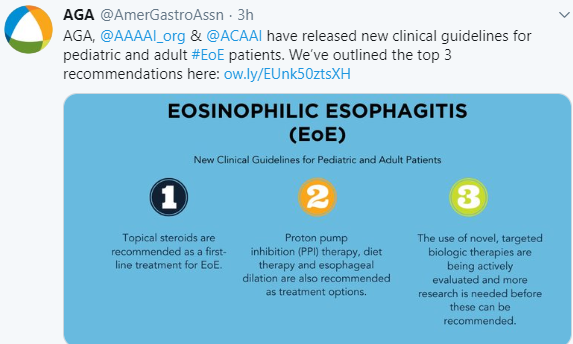
Full text (I Hirano et al. Gastroenterol 2020; 158: 1776-86): AGA Institute and the Joint Task Force on Allergy-Immunology Practice Parameters Clinical Guidelines for the Management of Eosinophilic Esophagitis
Full text: PDF
This guideline was developed through a collaboration between AGA and the Joint Task Force for Allergy-Immunology Practice Parameters, which comprises the American Academy of Allergy, Asthma & Immunology and the American College of Allergy, Asthma & Immunology. This guideline is jointly published in Gastroenterology and Annals of Allergy, Asthma and Immunology.
Technical review article (MA Rank et al. Gastroenterol 2020; 158: 1789-1810): Technical Review on the Management of Eosinophilic Esophagitis: A Report From the AGA Institute and the Joint Task Force on Allergy-Immunology Practice Parameters

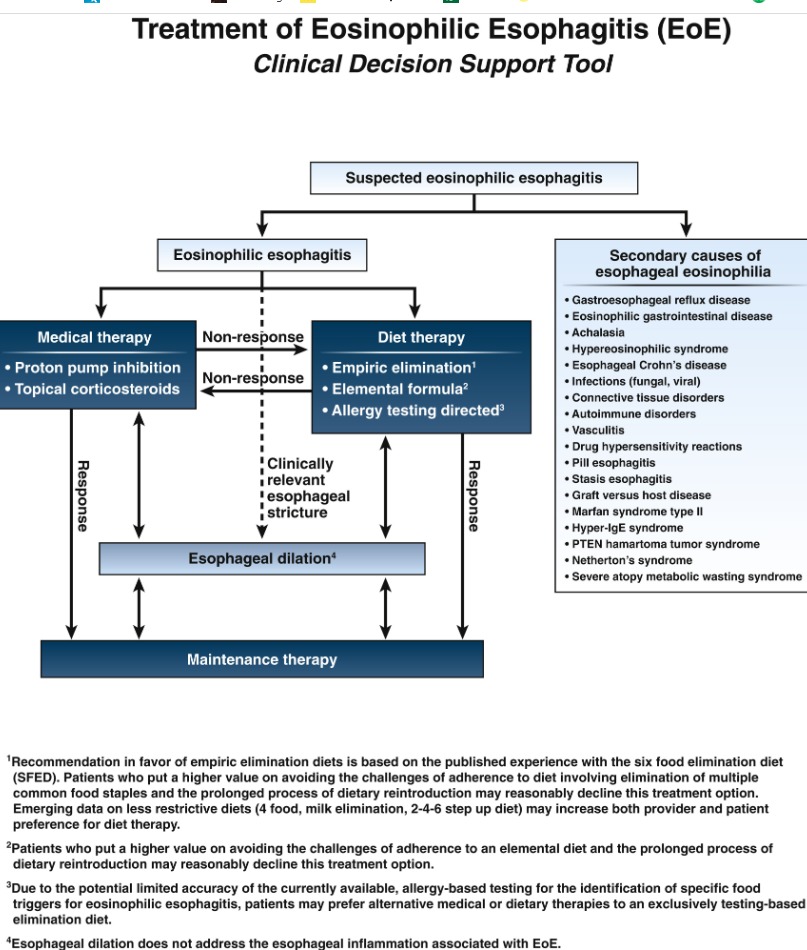
Link: Clinical Decision Support Tool
Link: Treatment of EoE Spotlight Poster
Related blog posts:
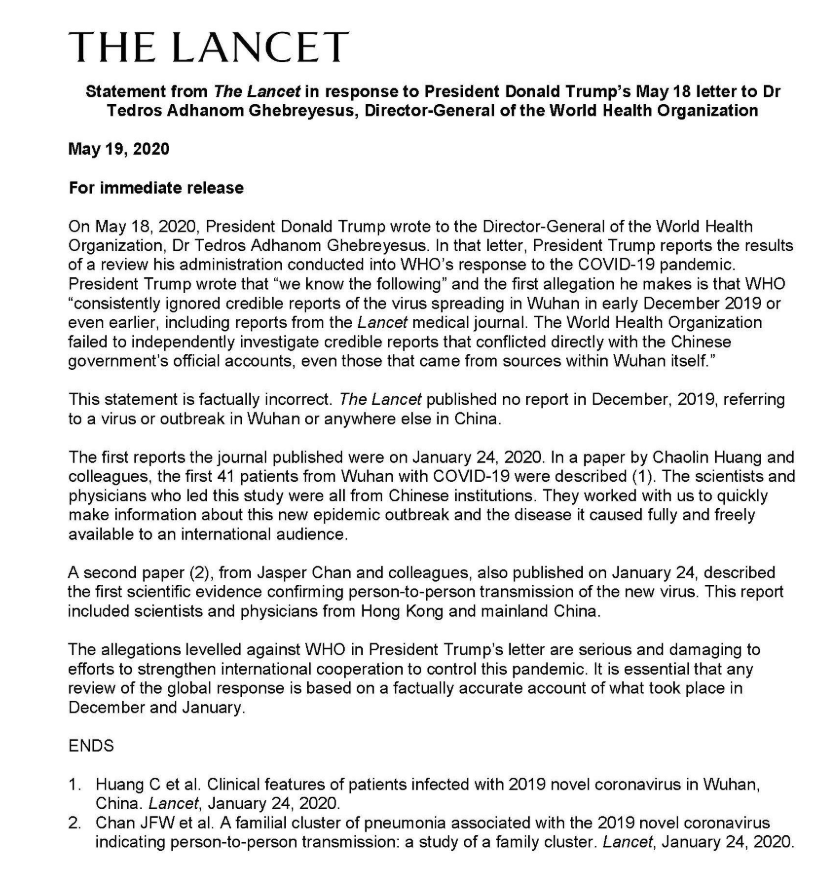
A recent ACG “Negative Issue” had some terrific articles –thanks to Ben Gold for sharing his issue.
Here are a few of the studies:
Related blog posts:
It’s come to this: Link: YouTube: Dirty Dancing Remake -Safest with a Lamp (this link is for Bernsie). 4 minute video.

The week that the U.S. President suggested that using disinfectants to treat the coronavirus could be helpful, there was a spike in calls to poison control centers: Calls to poison control centers spike after Trump disinfectant comments. In addition, coincidentally, a review article was published: Ingestion of Caustic Substances (RS Hoffman et al. NEJM 2020; 382: 1739-48).
Background:
Epidemiology:
Clinical Outcomes:
Approach to Management:
The authors present an algorithm (Figure 1) –Key points:
Grading Esophageal Injury -Zargar Classification:
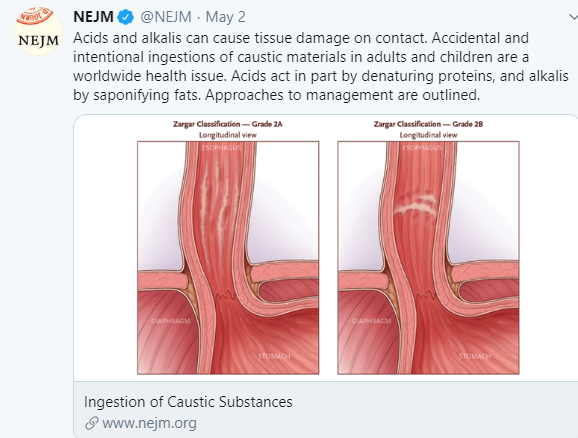
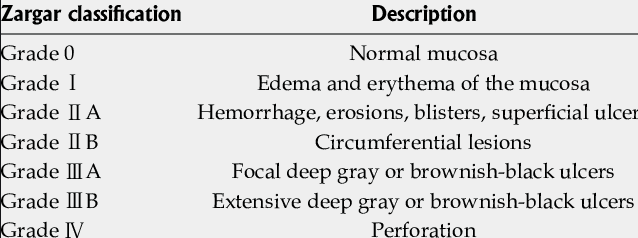
For patients too ill to undergo endoscopy, CT is an alternative
Use of Corticosteroids:
This issue is discussed at length. Though routine use of steroids failed to show benefit in several (underpowered) studies, the authors not that Usta et al (Pediatrics 2014; 133: E1518-24) “randomly assigned children with grade 2B esophageal injuries to 3 days of methylprednisolone ( 1 g per 1.73m2 of BSA per day) or placebo, plus 1 week of ceftriaxone and ranitidine…A significant benefit was reported in the methylprednisolone group.” Thus, “patients with grade 2B injuries, who have a high risk of progression to stricture and a low risk of perforation, are most likely to benefit from…glucocorticoid therapy.” The authors state this is in agreement with current guidelines (JPGN 2017; 64: 133-53).
Other Management:
My take: Most children with caustic ingestions will not need endoscopy. Sucralfate is a useful adjunct. A subset of children may benefit from 3 days of methylprednisolone.
Related blog posts:
Disclaimer: This blog, gutsandgrowth, assumes no responsibility for any use or operation of any method, product, instruction, concept or idea contained in the material herein or for any injury or damage to persons or property (whether products liability, negligence or otherwise) resulting from such use or operation. These blog posts are for educational purposes only. Specific dosing of medications (along with potential adverse effects) should be confirmed by prescribing physician. Because of rapid advances in the medical sciences, the gutsandgrowth blog cautions that independent verification should be made of diagnosis and drug dosages. The reader is solely responsible for the conduct of any suggested test or procedure. This content is not a substitute for medical advice, diagnosis or treatment provided by a qualified healthcare provider. Always seek the advice of your physician or other qualified health provider with any questions you may have regarding a condition
A recent commentary (KS Liem et al. Gastroenterol 2020; 158: 1185-90) reviews the challenge of stopping nucleos(t)ide (NUC) treatment for chronic hepatitis B viral (HBV) infection.
Key points:
My take: It is hard to argue with the author’s conclusion that “without the tools for proper patient selection, potential benefits of NUC discontinuation do not outweigh limitations of long-term NUC therapy for most patients in clinical practice.” This is due to the safety of NUC therapy and the frequency of relapse when NUC is stopped.
Related blog posts:
From NPR: New Evidence Suggests COVID-19 Patients On Ventilators Usually Survive
An excerpt:
A study of some New York hospitals seemed to show a mortality rate of 88%. But Cooke and others say the New York figure was misleading because the analysis included only patients who had either died or been discharged. “So folks who were actually in the midst of fighting their illness were not being included in the statistic of patients who were still alive,” he says….
The mortality rate among 165 COVID-19 patients placed on a ventilator at Emory was just under 30%. And unlike the New York study, only a few patients were still on a ventilator when the data were collected.
Curbside Humor:


Also: What do you get from a pampered cow? Spoiled milk!
Yesterday –E Schneider NEJM commentary (DOI: 10.1056/NEJMp2014836) on how the U.S. has lagged behind other countries in SARS-CoV-2 testing Full Text: Failing the Test
An excerpt:
Tragically, the United States, unable to match other countries’ response, has tallied the most cases and deaths in the world — and recent data suggest that those tallies are underestimates. Why has the U.S. response been so ineffectual? One key answer is testing, which has been a cornerstone of Covid-19 control elsewhere…
Having failed to test early enough to contain outbreaks, the country has fallen back on two mitigation strategies: accelerating drug and vaccine development and an unprecedented strategy of nonpharmacologic interventions (NPIs) involving draconian school and business closures, stay-at-home orders, and physical distancing
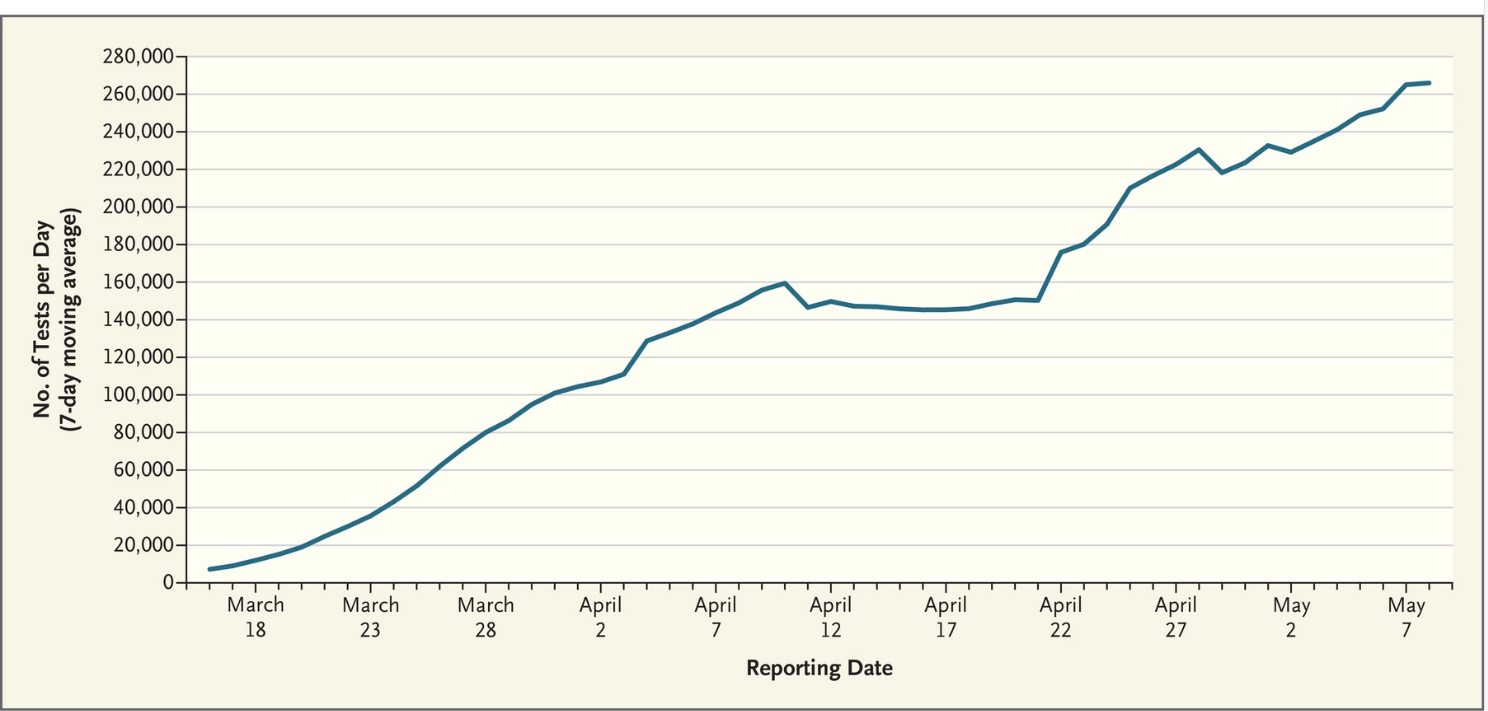
March 16 -May 8, 2020
______________________________________________________________________
T Lewis. Scientific American (May 12): How Coronavirus Spreads through the Air: What We Know So Far
An excerpt:
According to the U.S. Centers for Disease Control and Prevention and the World Health Organization, the novel coronavirus is primarily spread by droplets from someone who is coughing, sneezing or even talking within a few feet away. But anecdotal reports hint that it could be transmissible through particles suspended in the air…
“There is not much convincing evidence that aerosol spread is a major part of transmission” of COVID-19, Perlman says. That assessment does not mean it is not occurring, however…
Cowling hypothesizes that many respiratory viruses can be spread through the airborne route—but that the degree of contagiousness is low…
Most researchers still think the new coronavirus is primarily spread via droplets and touching infected people or surfaces. So diligent hand washing and social distancing are still the most important measures people can take to avoid infection.
From AJC: Georgia’s Latest Errors in Reporting COVID-19 Data
In the latest bungling of tracking data for the novel coronavirus, a recently posted bar chart on the Georgia Department of Public Health’s website appeared to show good news: new confirmed cases in the counties with the most infections had dropped every single day for the past two weeks.
In fact, there was no clear downward trend. The data is still preliminary, and cases have held steady or dropped slightly in the past two weeks.
DPH’s page has led readers to think that cases were dropping dramatically, even though lower case numbers were the result of a lag in data collection.
My take: Though, the number of reported cases has been fairly steady in Georgia, the amount of testing has increased; thus, even if the numbers hold steady, this likely reflects some improvement in the absolute number of infected individuals.


