Celiac Disease, Hepatitis B and Paul Harvey

Growing up, I heard a number of Paul Harvey broadcasts on the radio. Often there would be an important twist at the end and he would conclude with ‘and that’s the rest of the story.’

This came to mind after reading a recent article on celiac disease and hepatitis B infection:

N Habash et al. JPGN 2022; 74: 328-332. Celiac Disease: Risk of Hepatitis B Infection

Methods:

  • A cross-sectional study using the National Health and Nutrition Examination Survey (NHANES) database (2009–2014) 
  • And a retrospective analysis of HBV infection in two cohorts: Mayo Clinic cohort (1998–2021) and the Rochester Epidemiology Project cohort (REP; 2010–2020)

Key findings:

  • Based on NHANES database, the rate of HBV infection in the United States was  0.33%
  • Of 93 patients with CD, 46 (49%) were vaccinated for HBV and of the remaining 19,422 without CD, 10,228 (53%) were vaccinated
  • Twenty-two (48%) vaccinated patients with CD had HBV immunity and 4405 (43.07%) vaccinated patients without CD had HBV immunity
  •  In NHANES data, there were no cases of HBV infection in patients with CD. Among the 3568 patients with CD seen at Mayo Clinic and 3918 patients with CD in the REP database, only four (0.11%) at Mayo Clinic and nine (0.23%) of the REP patients had HBV infection.

This finding is probably applicable to other conditions in which HBV immunity is ascertained.

My take: In contrast to other small studies, this study showed that the “rate of HBV vaccination and immunity was similar in individuals with and without CD.” In addition, there was no increased risk of HBV infection detected in CD patients. Thus, testing for HBV is not necessary in patients with CD.

And that’s the rest of the story.

Related blog post

Functional Abdominal Pain in Children with Celiac Disease

F Cristofori et al. Clin Gastroenterol Hepatol 2021; 19: 2551-2558. Functional Abdominal Pain Disorders and Constipation in Children on Gluten-Free Diet

This prospective cohort (2016-2018, n=417, mean age 13.7 y) examined the frequency of functional disorders (based on questionnaire) in children with celiac disease (CD) who were receiving a strict gluten free diet (GFD) for at least one year.

Key findings:

  • Functional abdominal pain disorders (FAPDs) had a higher prevalence s among patients with CD (11.5%) than controls (6.7%)  (P < .05)
  • Irritable bowel syndrome (IBS) and functional constipation (FC) defined by the Rome IV criteria were more prevalent in patients with CD (7.2% for IBS and 19.9% for FC) than controls (3.2% for IBS and 10.5% for FC) (P < .05 and P < .001, respectively)
  • Younger age (P < .05) and a higher level of anti–transglutaminase IgA at diagnosis (P < .04) were associated with FAPDs (in particular for IBS) irrespective of GFD duration
  • A GFD did help with abdominal pain: After starting a GFD, 80% of children with celiac disease had resolution of stomach pain, whereas 9% started to complain of symptoms after starting a GFD

In the discussion, the authors speculate on the reasons for ongoing pain including inadvertent gluten exposure, intestinal inflammation/visceral hyperalgesia, altered microbiome, and refractory CD.

My take: Persistent stomach pain in CD is a common occurrence, even in those trying to adhere to a strict GFD.

Related blog posts:

Chattahoochee River, Atlanta

Favorite Posts of 2021

I am happy to say that this is the last nightcall that I will have this year!

Today, I’ve compiled some of my favorite posts from the past year. I started this blog a little more than 10 years ago. I am grateful for the encouragement/suggestions from many people to help make this blog better. Also, I want to wish everyone a Happy New Year.

GI:

IBD:

LIVER:

Nutrition:

Other Topics:

Thanks to Jennifer

Clever Study to Assess Utility of TTG IgA For Monitoring Response to a Gluten-Free Diet

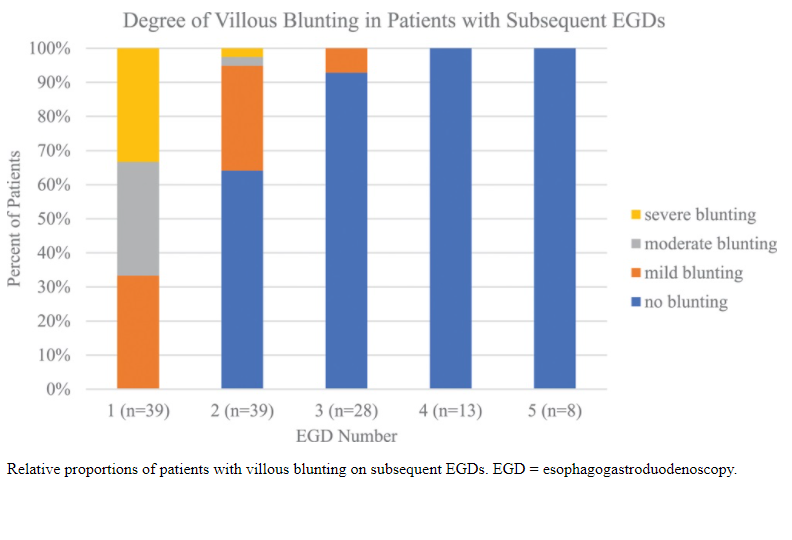
K Payne et al. JPGN Reports: 2021; August 2021 – Volume 2 – Issue 3 – p e097. Open Access Repeat Biopsy to Assess Duodenal Healing in Children With Celiac Disease and Eosinophilic Gastrointestinal Disorders

Background: “Current standard of care in the management of uncomplicated CD is not to undergo multiple esophagogastroduodenoscopies (EGDs)…  In this study, patients with both CD and eosinophilic gastrointestinal disorders (EGID) …) were identified to explore [the mucosal response to a gluten-free diet], as it is standard for patients with EGID to undergo repeat EGDs for disease surveillance.”

Key findings in this retrospective study from CHOP:

  • At second biopsy, 44% (17/39) of patients showed no histologic evidence of active CD and 36% (14/39) of patients had negative tTG-IgA values
  • 9/15 (60%) of patients with no evidence of CD on biopsy had abnormal tTG-IgA levels
  • 8/14 (57%) of patients with normal tTG-IgA levels had evidence of active disease on biopsy
  • Among the 18 who had been on a GFD for at least 2 years, 94% (17/18) had normal duodenal biopsies after 2 years, and 83% (15/18) had normal tTG-IgA values after 2 years
  • Of the patients with elevated tTG-IgA and normal duodenal biopsies, 66% (6/9) had inflammation elsewhere in the upper gastrointestinal tract, including 4 patients with active EOE and 2 patients with gastritis

My take: This study confirms that tTG-IgA levels are not optimal for monitoring. Current guidelines recognize this and recommend repeat biopsy in patients with persistent or relapsing symptoms even with negative serology

Related blog posts:

Celiac Disease and Lack of Response to Hepatitis B Immunization

A Aneja et al. JPGN Reports February 2021 – Volume 2 – Issue 1 – p e046: Open Access: Clinical Characteristics of Children With Celiac Disease Not Responding to Hepatitis B Vaccination in India

Methods: The study population from consisted of 3 groups—50 newly diagnosed CD children (group 1), 50 previously diagnosed CD children who were on gluten free diet (GFD) >3 months (group 2), and 100 age and gender matched healthy controls (group 3).

Key findings:

  • Positive anti-HBs response was found in 46% in newly diagnosed CD children, 60% in CD children on GFD, and 83% in healthy controls (P < 0.001)
  • Ongoing gluten intake has significant impact on protective immune response to Hepatitis B vaccine
  • 44 out of 45 (97.77%) nonresponders from CD group seroconverted after a single booster dose

My take: Check Hep B immune response in patients with celiac disease.

Related blog post: Improving Care Process in Celiac Disease

Celiac Advocacy: Food Labeling Modernization Act

Gluten-Free Watchdog: Let’s Make Some Noise! Everything you need to contact your members of Congress asking them to support the Food Labeling Modernization Act of 2021

There are multiple ways to reach out to representatives and senators. Choose whatever method works best for you–mail, email, phone call, or in-person. Below is some information to help make the process easier.

  • Find representatives HERE.
  • Find senators HERE.
  • Sample phone scripts and letters noted on webpage link

More information from Celiac Disease Foundation: Food Labeling Modernization Act of 2021 – Marilyn’s Message August 2021

“On August 3, 2021, the Food Labeling Modernization Act (FLMA) of 2021 (H.R.4917 and S.2594) was introduced by House Energy and Commerce Committee Chairman Frank Pallone, Jr. (D-NJ), House Appropriations Committee Chairwoman Rosa DeLauro (D-CT), and Senators Richard Blumenthal (D-CT), Sheldon Whitehouse (D-RI) and Ed Markey (D-MA). This legislation would update front-of-package food labeling requirements, require updates to the ingredients list on packaged foods, and apply consumer friendly labeling requirements, including the disclosure of gluten-containing grains...

As we know from the FDA’s Gluten-Free Labeling rule, food labels play an important role in managing celiac disease, yet federal labeling rules still do not require that food ingedients disclose if they containing barley or rye. This labeling change will allow concerned consumers to know, for example, if the malt syrup or natural flavorings in their food contains barley.

Food labels need to provide the simple, straightforward information that celiac patients need to evaluate products and make healthy choices.

Please take one minute to email your Members of Congress to support the Food Labeling Modernization Act of 2021 to make it easier and safer for individuals with celiac disease or gluten sensitivity to purchase food items by disclosing if foods contain gluten.”

Engineering New Treatments for Celiac Disease

This month’s Gastroenterology featured two new approaches for the treatment of celiac disease.

CP Kelly et al. Gastroenterol 2021; 161: 66-80. Full text: TAK-101 Nanoparticles Induce Gluten-Specific Tolerance in Celiac Disease: A Randomized, Double-Blind, Placebo-Controlled Study

IS Pultz et al. Gastroenterol 2021; 161: 81-93. Full text: Gluten Degradation, Pharmacokinetics, Safety, and Tolerability of TAK-062, an Engineered Enzyme to Treat Celiac Disease

In the first study, Kelly et al used TAK-101 nanoparticles in Phase 1 and Phase 2a trials. In the Phase 2a trial with 33 patients, TAK-101 induced an 88% reduction in change from baseline in interferon-γ spot-forming units vs placebo (2.01 vs 17.58, P = .006). Vh:Cd deteriorated in the placebo group (−0.63, P = .002), but not in the TAK-101 group (−0.18, P = .110) Overall, TAK-101 was well tolerated and prevented gluten-induced immune activation.

Graphical abstract from CP Kelly et al. Gastroenterol 2021; 161: 66-80.

In the second study, Pultz et al developed TAK-062 which is a novel, computationally designed endopeptidase to break down gluten under simulated gastric conditions in vitro and in healthy participants in the phase I study.  Residual gluten (collected through gastric aspiration in the phase I study) was quantified using R5 and G12 monoclonal antibody enzyme-linked immunosorbent assays. Key finding: In vitro, TAK-062 degraded more than 99% of gluten (3 g and 9 g) within 10 minutes. In the phase I study, administration of TAK-062 was well tolerated and resulted in a median gluten degradation ranging from 97% to more than 99% in complex meals containing 1–6 g gluten at 20–65 minutes postdose.

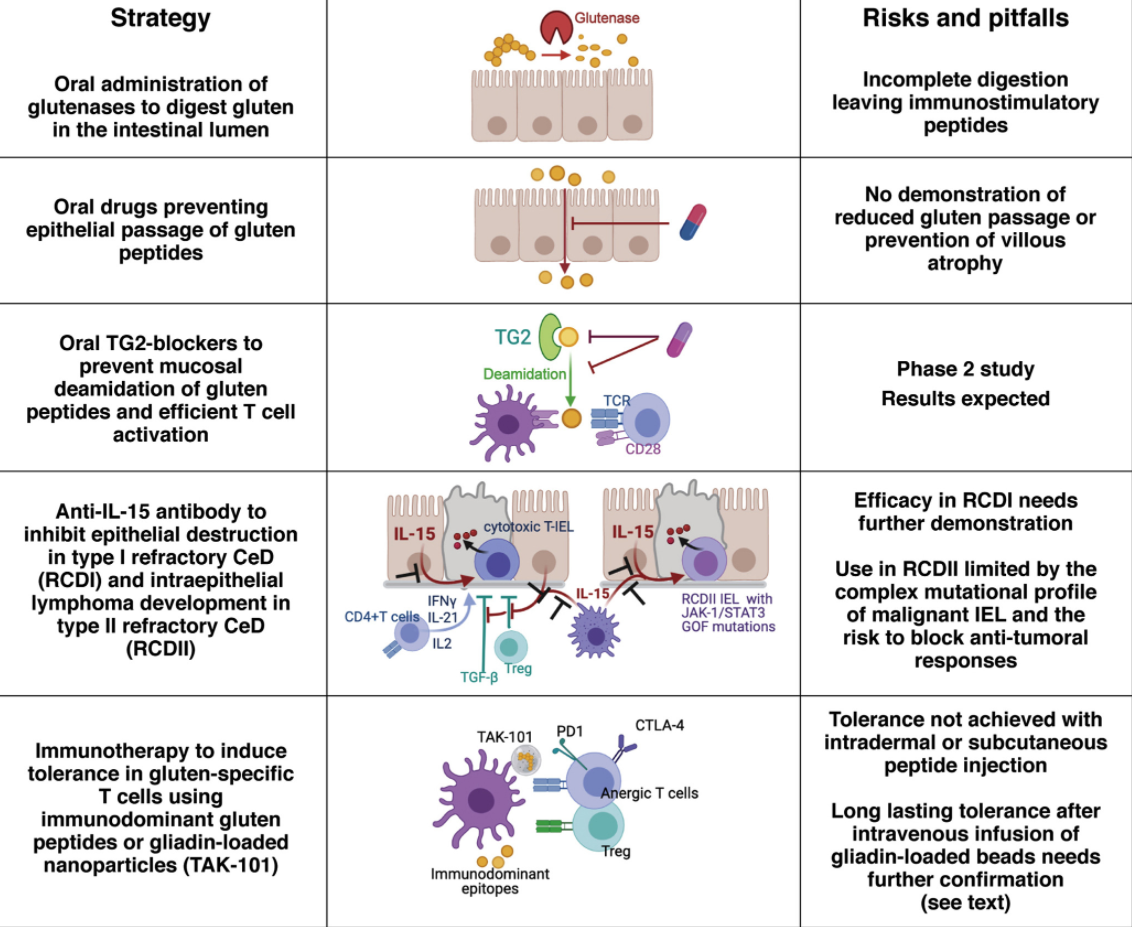
The associated editorial highlights these studies and reviews their limitations; in addition, the authors review the current non-dietary strategies (see below), pg 21-24: Full text: The Promise of Novel Therapies to Abolish Gluten Immunogenicity in Celiac Disease

From editorial, Gastroenterol 2021; 161: 21-24.

My take: These studies indicate that non-dietary treatments may be effective at some point, but not in the near future.

Related blog posts:

Oral Treatment of Celiac Disease & Research Optimist

A long time ago I heard a joke from a mentor about how can you tell if a person is an optimist.  An optimist is a person who finds a pile of manure under the tree on Christmas morning and declares: ‘Oh boy, I’m getting a pony.’

Researchers who are trying to identify oral treatments for celiac disease are probably true optimists. Yet, despite my skepticism, a recent study (D Schuppan et al. NEJM 2021; 385: 35-45. A Randomized Trial of a Transglutaminase 2 Inhibitor for Celiac Disease) provides the best proof yet that an oral treatment may be helpful.

In this 6-week randomized, double-blind, placebo-controlled study with 159 participants, treatment with ZED1227, a selective oral transglutaminiase 2 inhibitor reduced histologic injury compared to placebo; all patients were receiving a diet with 3 grams of daily gluten. Key findings:

  • Treatment with ZED1227 at all three dose levels attenuated gluten-induced duodenal mucosal injury. The estimated difference from placebo in the change in the mean ratio of villus height to crypt depth from baseline to week 6 was 0.44 (95% confidence interval [CI], 0.15 to 0.73) in the 10-mg group (P=0.001), 0.49 (95% CI, 0.20 to 0.77) in the 50-mg group (P<0.001), and 0.48 (95% CI, 0.20 to 0.77) in the 100-mg group (P<0.001)
  • The estimated differences from placebo in the change in intraepithelial lymphocyte density were −2.7 cells per 100 epithelial cells (95% CI, −7.6 to 2.2) in the 10-mg group, −4.2 cells per 100 epithelial cells (95% CI, −8.9 to 0.6) in the 50-mg group, and −9.6 cells per 100 epithelial cells (95% CI, −14.4 to −4.8) in the 100-mg group
  • Adverse events were similar to placebo; 3 (8%) patients in the 100 mg group developed a rash

The need for a treatment besides a gluten-free diet is significant; among adults, 40-50% do not achieve mucosal healing/recovery despite GFD institution; in addition, the diet is difficult and costly.

My take: I think it is still a long journey to find an effective & safe oral treatment for celiac disease.

Related blog posts:

Persistent Villous Atrophy in Celiac Disease Despite a Gluten-Free Diet

A recent study (F Fernandez-Banares et al. Am J Gastroenterol 2021; 116: 1036-1043. Persistent Villous Atrophy in De Novo Adult Patients With Celiac Disease and Strict Control of Gluten-Free Diet Adherence: A Multicenter Prospective Study (CADER Study) shows that there is a high likelihood of persistent villous atrophy among adults with celiac disease (CD) despite adherence with a gluten-free diet (GFD). Thanks to Ben Gold for showing me this paper.

Key findings:

  • Among 76 patients (median age 36.5 years) who were prospectively followed for 2 years, persistent villous atrophy was observed in 40 (53%). In this group, 72.5% were asymptomatic (based on Likert scales) and 75% had negative serology
  • Detectable fecal gluten immunogenic peptides (f-GIPs) were present in at least one sample in 69% of patients. (Two samples obtained at f/u visits which were ~every 6 months during study)
  • Excellent or good adherence to GFD was demonstrated in 68.4% of patients based on dietetic evaluations. Only 6 (8%) were clearly nonadherent
  • “There were no significant differences in the rate of clinical and serological remission between patients with villous atrophy and those with mucosal recovery”
  • The authors did not find potentially modifiable predictive factors

Discussion:

  • The authors note that serology is “not useful for monitoring patients on a GFD.” Anti-TTG2 and EMA, in a recent meta-analysis, had a pooled sensitivity of around 50%.
  • “Adults are significantly less likely than children to normalize their duodenal histology.”

Editorial:

  • The associated editorial by Rej et al (pg 946-948) outline a personalized approach for dealing with persistent villous atrophy:
    • In those with persistent symptoms/positive GIPs/elevated serology/micronutrient deficiency, the first step is careful dietetic assessment. After this, endoscopy could be considered to confirm presence or absence of mucosal healing.
    • In those with no symptoms and no abnormalities, use of monitoring endoscopy needs to be weighed against the costs as well as potential complications.
    • Other points in the editorial: 1. GIPs have poor concordance with mucosal healing and 2. causes of poor mucosal healing include the following: natural slow healing process, super sensitive to gluten, ongoing gluten exposure, and refractory celiac disease.

My take: This study shows that there is ongoing gluten exposure in the majority of patients even in those with excellent or good adherence to a GFD; in addition, it shows that clinical/serological markers are NOT effective in predicting mucosal healing in adults. Nevertheless, it is not clear that followup endoscopy is beneficial.

Related blog posts:

Forbes (7/1/21): 99.5% Of People Killed By Covid In Last 6 Months Were Unvaccinated, Data Suggests

Disclaimer: This blog, gutsandgrowth, assumes no responsibility for any use or operation of any method, product, instruction, concept or idea contained in the material herein or for any injury or damage to persons or property (whether products liability, negligence or otherwise) resulting from such use or operation. These blog posts are for educational purposes only. Specific dosing of medications (along with potential adverse effects) should be confirmed by prescribing physician.  Because of rapid advances in the medical sciences, the gutsandgrowth blog cautions that independent verification should be made of diagnosis and drug dosages. The reader is solely responsible for the conduct of any suggested test or procedure.  This content is not a substitute for medical advice, diagnosis or treatment provided by a qualified healthcare provider. Always seek the advice of your physician or other qualified health provider with any questions you may have regarding a condition

Persistently Abnormal Celiac Labs =High Likelihood of Celiac Disease

CM Trovato et al JPGN 2021; 72: 712-717. Diagnostic Value of Persistently Low Positive TGA-IgA Titers in Symptomatic Children With Suspected Celiac Disease

This retrospective study provides insight into the predictive value of persistently abnormal celiac labs in symptomatic children.

Inclusion criteria:  not eligible for a non-biopsy diagnosis AND children with at least 2 TGA-IgA measurements, endomysial antibody (EMA) assessment and esophagogastroduodenoscopy with biopsies

Methods: Patients were classified in groups according to median TGA-IgA values: Group A (TGA-IgA>1 ≤ 5 × ULN; defined as “low-positive”), Group B (TGA-IgA > 5 < 10 × ULN; “moderate-positive”), and C (controls).

Key findings:

  • In group A, CD was diagnosed in 142/162 (87.7%)
  •  In group B, all 62 children (100%) received a CD diagnosis

My take: In individuals with mild elevation of celiac serology, it is reasonable to recheck prior to confirming with endoscopy. However, those with persistently abnormal values are very likely to have celiac disease.

Related blog posts:

  • If TTG IgA at 1-fold ULN, then PPV 61%, NPV 98%, Sens 90%, Spec 90%
  • If TTG IgA at 2-fold ULN, then PPV 79%, NPV 97%, Sens 82%, Spec 96%
  • If TTG IgA at 5-fold ULN, then PPV 93%, NPV 94%, Sens 62%, Spec 99%
  • If TTG IgA at 7-fold ULN, then PPV 96%, NPV 91%, Sens 41%, Spec 100%
Near Hahn Woods, Atlanta