IBD Management in Pregnancy: Global Consensus

U Mahadevan et al. Clinical Gastroenterology and Hepatology 2025 (published ahead of print). Open Access! Global Consensus Statement on the Management of Pregnancy in Inflammatory Bowel Disease

Addendum -updated reference: U Mahadevan et al. Clinical Gastroenterology and Hepatology 2025; 23: S1-S60. Open Access! Global Consensus Statement on the Management of Pregnancy in Inflammatory Bowel Disease

This is a 60 page open access article. Table 1 lists 34 “GRADE” statements and Table 2 lists 35 consensus statements. This article is also jointly published in the following:

  • Gut
  • Am J Gastroenterol
  • Inflammatory Bowel Diseases
  • Journal of Crohn’s and Colitis
  • Aliment Pharmacol Ther

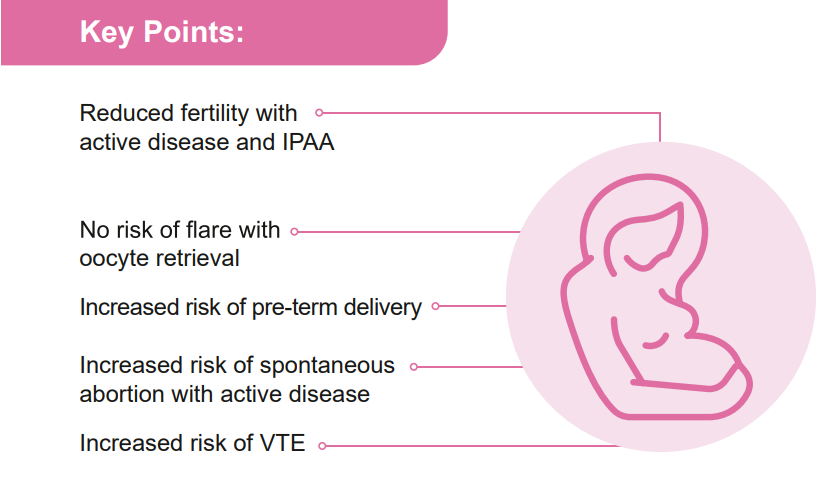
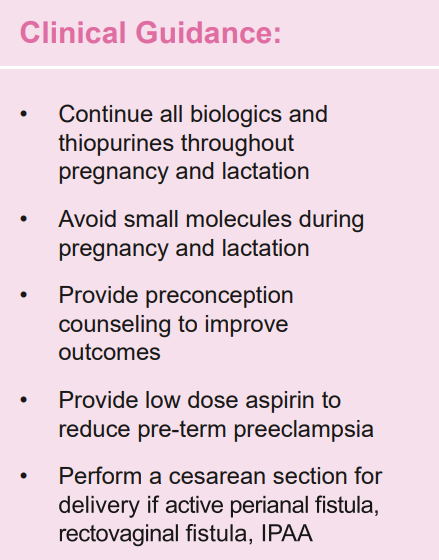
For Moms:

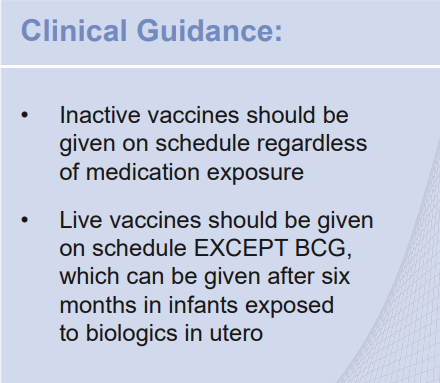
For Babies:
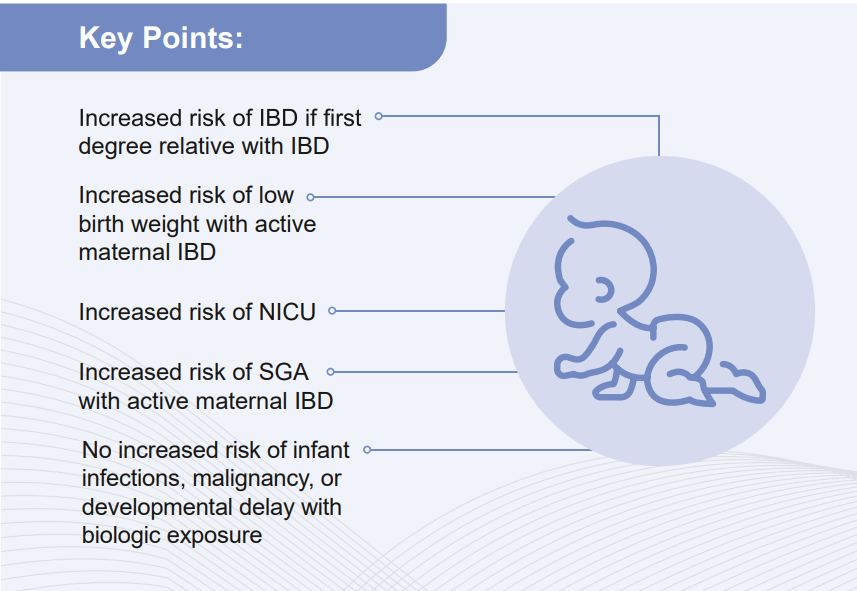
My take: This is a useful reference –mainly helpful for gastroenterologists rather than pediatric providers.

Related blog posts:

Blog Case Report: A Persistent Elevated AST in Teen with IBD and ADHD

A recent case reminded me of the quote by Helena Ravenclaw in Harry Potter: “”If you have to ask, you’ll never know. If you know, you need only ask.”

One of my colleagues recently diagnosed a teenage boy with ulcerative colitis. His past medical history was notable for ADHD. At the time of his evaluation, he was noted to have an elevated AST.

Labs:

  • June: AST 143, ALT 8, Hepatitis B immune
  • August: AST 190, ALT 10, Albumin 4.7, T protein 7.3, T bili 0.4, D bili 0.1, Alk phos 168; GGT 10, CPK 93

The concern at the time was whether his elevated AST should preclude using his ADHD medicine and whether there was an underlying liver disease. Based on the pattern of liver enzyme abnormalities, it was suspected that the patient had macro AST. A blood test was sent to the Mayo clinic and confirmed this diagnosis:

“”The sample was investigated for the presence of macro AST by polyethylene glycol (PEG) precipitation. Serum AST activity = 316 U/L. The AST result post-PEG precipitation = 22 U/L. The results obtained are positive for the presence of macro AST (93% of activity precipitated with PEG). Based on validation studies performed at the Mayo Clinic, a cut-off of >80% AST activity precipitated by PEG indicates the presence of macro AST.” This test is rarely ordered at the Mayo Clinic and is ordered as a miscellaneous test; it is not on the Mayo Clinic’s regular test menu.

Internet description of macro AST: Macro-aspartate aminotransferase (macro AST) is a rare, benign condition that causes a persistent elevation of aspartate aminotransferase (AST) levels in the blood. It’s caused by the binding of AST to immunoglobulins, which results in a high molecular weight macroenzyme that’s excreted from the serum more slowly than normal.

My take: Macro AST diagnosis is useful –it helps eliminate the concern for other conditions. Since it is quite uncommon, it is easier to think of this problem once you have seen it before.

Related blog posts:

Grand Point View Overlook at Canyonlands National Park

Granulomatous Lung Disease: Case for GI Doctors

JB McCannon et al. NEJM 2023; 389: 1902-1911. Case 35-2023: A 38-Year-Old Woman with Waxing and Waning Pulmonary Nodules

In this case report, A 38-year-old woman was evaluated because of dyspnea, chest discomfort, and waxing and waning pulmonary nodules. She had a prior history of ulcerative colitis. This article reviews reasons for pulmonary nodules including cancer, infection, vasculitis, connective tissue disorders, sarcoidosis and inflammatory bowel disease (IBD) which has a number of pulmonary manifestations including necrobiotic nodules.

In this case, the granulomatous lung disease was attributed to be an extraintestinal manifestation of IBD. She was treated with TNF-alpha targeted therapy which has been effective in a prior case report (J Crohns Colitis 202; 14: 480-489).

My first reaction to this article — I have seen this! However, our case was atypical in that the 15 year old patient presented with respiratory symptoms (no preceding GI diagnosis). It was noted that her gastric wall was severely thickened as an incidental finding on her chest CT which showed extensive tiny pulmonary nodules. Her endoscopy showed disease isolated to her stomach. Both her gastric findings and CT of her chest resolved with infliximab treatment. This included mucosal healing of her stomach on followup endoscopy.

CT scan showing severely thickened gastric wall
Mucosal appearance of stomach with erythema and numerous ulcerations prior to treatment

Related blog post: IBD Update January 2015 (Part 1) NEJM 2014; 371: 2418-27 -case report of 9 yo with  Crohn’s Disease and pulmonary nodules

More Data: COVID-19 Vaccine Effective in Patients with IBD & Maternal COVID-19 Vaccination Protects Infants

A Jena et al. Clin Gastroenterol Hepatol 2022; 20: 1456-1479. Open access: Effectiveness and Durability of COVID-19 Vaccination in 9447 Patients With IBD: A Systematic Review and Meta-Analysis

This was a systematic review and meta-analysis that included 46 studies.

  • Key findings:
    In 9,447 subjects who were completely vaccinated, the pooled seroconversion relative risk was 0.96 (95%CI, 0.94-0.97), and was higher for mRNA vaccines (0.97, 95%CI 0.96-0.98) than for adeno-associated vaccines (0.87, 95%CI: 0.78-0.93)
  • The pooled seroconversion rates were similar regardless of IBD therapy, and ranged from 0.93 to 0.99.
  • The pooled relative risk of breakthrough COVID-19 infections in vaccinated patients with IBD was not significantly different from that of vaccinated controls. However, a decay in antibody titers after 4 weeks from vaccination appeared to be accelerated in those on anti-TNF agents, immunomodulators or their combination.

My take: IBD patients benefit from complete COVID-19 vaccination similar to healthy controls.

Related blog post: COVID Booster Advice for IBD from Dr. David Rubin (@IBDMD)

NB Halasa et al. NEJM 2022; 387: 109-119. Open access: Maternal Vaccination and Risk of Hospitalization for Covid-19 among Infants

Using a case-control design, the authors found that complete (2 dose) vaccination during pregnancy —Key findings:

  • The effectiveness of maternal vaccination against hospitalization for Covid-19 among infants < 6 months was 52% overall, 80% during the delta period, and 38% during the omicron period.

My take: Vaccination protects mother and infant. “Maternal vaccination with two doses of mRNA vaccine was associated with a reduced risk of hospitalization for Covid-19, including for critical illness, among infants younger than 6 months of age.”

#MondayNightIBD and Fatigue

#MondayNightIBD is an open access learning forum on twitter. It was recently highlighted in Gastroenterology and Endoscopy News: A #MondayNightIBD Conversation: Fatigue, a Frustrating, Multifactorial Manifestation of IBD (requires login)

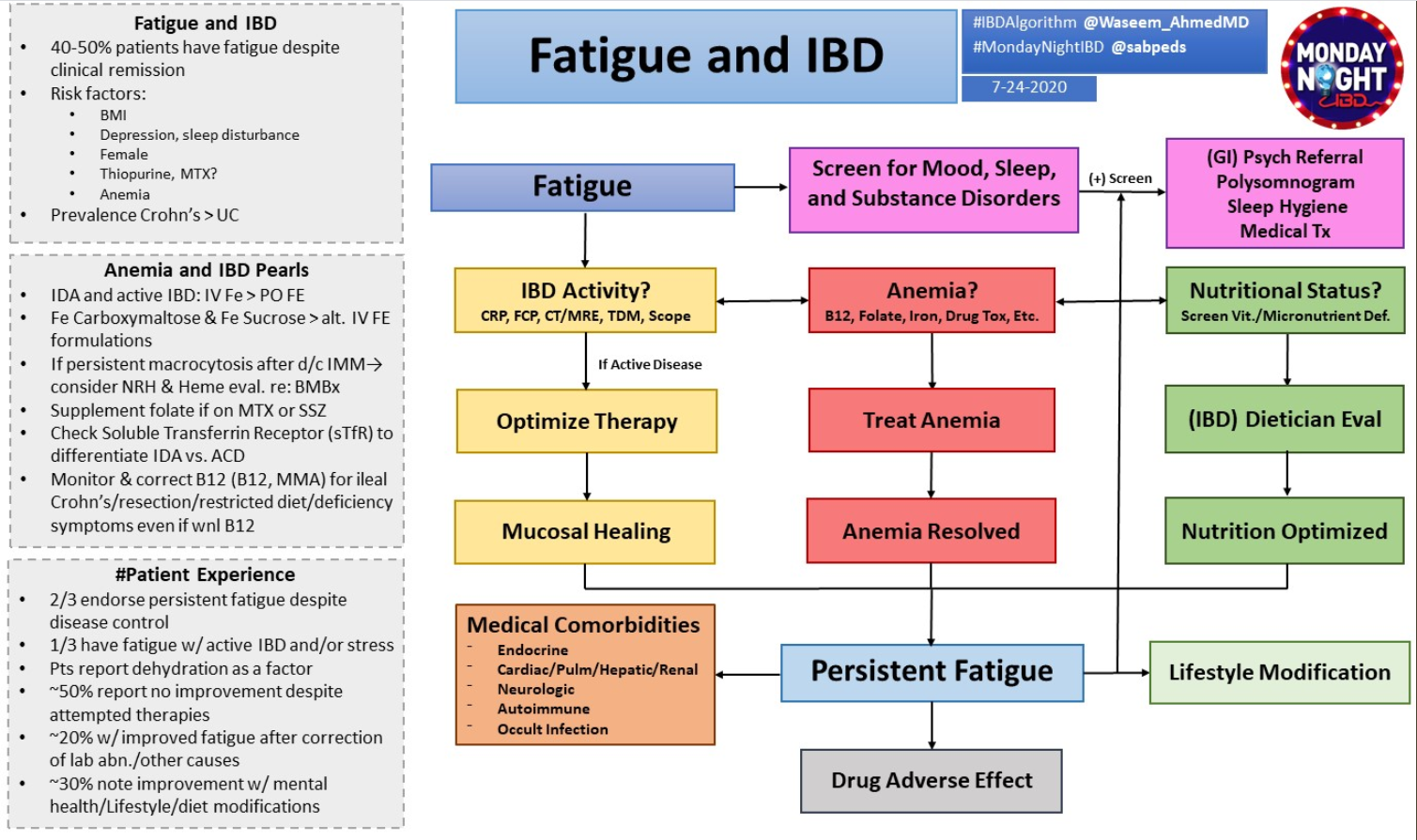
For the issue of fatigue and IBD, besides active IBD and anemia, the authors recommend considering medication side effects (especially from immunomodulators/corticosteroids and cannabis), mental health, sleep disorders, and nutritional concerns (?role for thiamine supplementation). Even when all these issues are addressed, many times fatigue persists.

Here is the proposed algorithm from July 24, 2020.

#MondayNightIBD has a lot of topics that they have covered including functional medicine, COVID, sexual health, utilizing social medicine, grief and pharmacology.

Sacroiliitis, NAFLD, IMIDs -Concurring Problems with Inflammatory Bowel Disease

I Levine et al. Inflamm Bowel Dis 2021; 809-815. Prevalence, Predictors, and Disease Activity of Sacroiliitis Among Patients with Crohn’s Disease

Key findings in this cross-sectional retrospective study (n=258, median age 30 yrs):

  • Overall, 17% of patients had MRI evidence of sacroiliitis, of whom 73% demonstrated bone marrow edema.
  • Female gender, back pain, and later age of CD diagnosis were associated with sacroiliitis (P = 0.05, P < 0.001, P = 0.04, respectively).
  • Disease activity (clinical, endoscopic, and radiographic), disease location and CD therapy were not associated with sacroiliitis on MRE.
  • More than two-thirds with MRE evidence of sacroiliitis were never seen by a rheumatologist.

A Lin et al. Inflamm Bowel Dis 2021; 947-955. Prevalence of Nonalcoholic Fatty Liver Disease in Patients With Inflammatory Bowel Disease: A Systematic Review and Meta-analysis

Key finding:

  • Data pooled from 27 studies showed the prevalence of NAFLD among IBD patients was 32% (substantial heterogeneity); this is “statistically significantly higher than the prevalence of NAFLD in the general population (25.2%; P < 0.001)”

M Attauabi et al. Inflamm Bowel Dis 2021; 927-939. Systematic Review with Meta-analysis: The Impact of Co-occurring Immune-mediated Inflammatory Diseases on the Disease Course of Inflammatory Bowel Diseases

A total of 93 studies were identified, comprising 16,064 IBD patients with co-occurring IMIDs and 3,451,414 IBD patients without IMIDs. IMIDs included the following:

  • Unspecified autoimmune disease
  • Diabetes type 1
  • Asthma
  • Grave disease
  • Spondyloarthropathy
  • Ankylosing spondylitis
  • Iridocyclitis
  • Uveitis
  • Rheumatoid arthritis
  • Polymyalgia rheumatica
  • Psoriasis/psoriatic arthritis
  • Primary Sclerosing Cholangitis
  • Celiac disease
  • Pyoderma gangrenosum
  • Pernicious anemia
  • Autoimmune hepatitis
  • Sarcoidosis
  • Giant cell arteritis
  • Primary biliary cholangitis
  • Hashimoto thyroiditis
  • Episcleritis
  • Sjogren syndrome

Key findings: Patients with IBD and co-occurring IMIDs were at increased risk of having extensive colitis or pancolitis (risk ratio, 1.38; 95% Cl, 1.25–1.52; < 0.01, I2 = 86%) and receiving IBD-related surgeries (risk ratio, 1.17; 95% Cl, 1.01–1.36; P = 0.03; I2 = 85%) compared with patients without IMIDs

Image below from Bahia Honda State Park (FL)

Alterations in Microbes and Impaired Psychological Function in Patients with Inflammatory Bowel Disease

Briefly noted: F Humbel et al. Clin Gastroenterol Hepatol 2020; 18: 2019-2029. Association of Alterations in Intestinal Microbiota With Impaired Psychological Function in Patients With Inflammatory Bowel Diseases in Remission

In a prospective study with 171 adults with IBD in remission, the authors combined

  1. measures of psychological comorbidities and quality of life (QoL)
  2. microbial analysis with 16S rRNA high-throughput sequencing

Key findings:

  • Microbiomes of patients with higher perceived stress had significantly lower alpha diversity
  • Anxiety and depressive symptoms were significantly associated with beta diversity

My take: This study adds another dimension to the idea of bidirectionality between psychological well-being and course of inflammatory bowel disease.  The microbiome may directly influence both psychological well-being and IBD activity.

Related blog posts:

1st Cases of COVID-19 in Pediatric Inflammatory Bowel Disease –All Mild

A recent case series, D Turner et al. JPGN June 2020 – Volume 70 – Issue 6 – p 727-733 doi: 10.1097/MPG.0000000000002729: Full text: Corona Virus Disease 2019 and Paediatric Inflammatory Bowel Diseases

  • Eight PIBD children had COVID-19 globally, all with mild infection without needing hospitalization despite treatment with immunomodulators and/or biologics. ..
  • Preliminary data for PIBD patients during COVID-19 outbreak are reassuring. Standard IBD treatments including biologics should continue at present through the pandemic, especially in children who generally have more severe IBD course on one hand, and milder SARS-CoV-2 infection on the other.

Related blog posts:

New and Improved Biomarker Blood Test for Crohn’s Disease?

A recent study (G D’Haens, O Kelly, R Battat et al. Gastroenterol 2020; 158: 515-26,editorial 463) describes the development and validation of a blood test panel to assess Crohn’s disease (CD) endoscopic activity level.  The authors evaluated a blood test which measured 13 proteins in the blood using samples from 278 patients.  Then there were two validation cohorts:

  • 116 biologic-naive CD patients -cohort 1
  • 195 biologic-exposed CD patients -cohort 2

The blood tests were used to develop an endoscopic healing index (EHI) score (0-100). Higher scores indicate greater disease activity.

Key findings:

  • EHI values below 20 identified remission with a sensitivity of 97.1%  and 83.2% in cohorts 1 & 2 respectively; specificity was 69% and 37% respectively.
  • EHI values below 50 points identified patients with highest specificity of 100% and 88% in cohorts 1 and 2 respectively.
  • EHI AUROC (area under the receiver operating characteristic curve) did not differ significantly from that of fecal calprotectin and were higher than measurement of serum CRP (in cohort 1 but not cohort 2).

The editorial notes that the EHI performed much better in younger, biologically-naive patients and that the EHI could potentially be incorporated into a treat-to-target strategy which would potentially entail followup endoscopy in those with EHI >50.

My take: While the stool calprotectin has some logistical barriers in many patients, the EHI is likely a much more expensive test and needs further validation.  For now, the combination of CRP and calprotectin are the best noninvasive biomarkers to assess CD activity.

Briefly noted: Vedolizumab-Induced Pulmonary Toxicity -Case report of a patient with ulcerative colitis who developed interstitial lung disease (Gastroenterol 2020; 158: 478-9).

Related blog posts:


IBD Pediatric Costs & Cannabis Still No Data for IBD

Happy birthday to my favorite follower!!!


A recent single-center study (AW Fondell et al. Inflamm Bowel Dis 2020; 26: 635-40, editorial by Joel Rosh, 641-2) examined the first-year costs of children with inflammatory bowel disease (IBD) in 2016.  There were 67 patients (43 with Crohn’s disease (CD), and 24 with ulcerative colitis (UC)).

Key findings:

  • Mean cost was $45,753; $43,095 for CD, $50,516 for UC
  • Severe CD (n=11) was $71,176 and severe UC (n=5) was $134,178; it is notable that only one patient with CD had surgery and only one patient with UC had surgery.
  • Overall cost distribution: 37% from infusion costs, 25% hospital costs, 18% outpatient procedures, 10% outpatient oral medications, 7% outpatient imaging and 3% outpatient visits.
  • 69% of CD patients and 33% of UC patients received biologics
  • 21% (n=9) of CD patients and 45% (n=11) of UC patients were hospitalized
  • Private payer reimbursement was a mean of $51,269 compared to $24,610 mean for Medicaid.

Limitations: 

  • In any cost analysis, many assumptions are needed.  For medications, for example, the author used pharmaceutical retail prices.  The actual costs are near-impossible to calculate as every insurance policy and every hospital system has a multitude of charges based on proprietary negotiations.
  • While this data comes from a referral center, all of the patients in the study were from Connecticut.

Due to the expense of care, Dr. Rosh points out that many insurers have often mandated the use of “standard dosing” of biologic therapy, “ignoring that robust data” indicate that this dosing is “the exception rather than the rule in pediatric IBD patients.”  These type of short-sighted interventions could affect long-term medical outcomes.

My take: There clearly are areas where costs can be reduced (eg. lower infusion costs, lower endoscopy costs, biosimilars).  However, no amount of cost cutting will change the conclusion that good care for IBD is expensive.

Briefly noted: TS Kafil et al. Inflamm Bowel Dis 2020; 26: 502-9.   This study examined evidence for cannabis effectiveness in IBD.  After performing a literature search, the authors could only identify five randomized controlled trials (n=185).  Each study used different doses, formulations and routes of administration.  No studies evaluated maintenance treatment and relapse in CD or UC.  Findings: “no firm conclusions can be made regarding the safety and effectiveness of cannabis and cannabionoids in adults with CD and UC.”

Related blog posts:


Cobb County -Concord Covered Bridge Historic District