EoP –Biomarker or Balderdash?

One of the categories in the game of balderdash is abbreviations.  Someone with extra time on their hands should invent a medical version with obscure acronyms as one of the categories.

An acronym that I recently discovered, EoP, which stands for eosinophil progenitor came to my attention from Dr. Benjamin Enav and Dr. Oral Alpan. they suggested two articles (both letters to the editor) related to EoP as a biomarker for eosinophilic esophagitis:

  • DW Morris et al. J Allergy Clin Immunol 2016;138: 915-8.
  • JT Schwartz et al. J Allergy Clin Immunol 2019; 143: 1221-3.

Both of these articles came from researchers at the Cincinnati Children’s Hospital.  In the first, the authors studied 31 children (17 with active eosinophilic esophagitis [EoE], and 14 with inactive EoE).  Key findings:

  • With a cutoff of 15.5 EoPs/mL, there were none of the 17 patients with active EoE below this threshold and 8 of 14 (57%) with inactive EoE were below this threshold.
  • At this cutoff, this pilot study predicted active EoE with a sensitivity of 100%, specificity of 57%, positive predictive value of 74% and negative predictive value of 100%.

The second study, also with 31 children, showed that the peripheral blood EoP levels were significantly increased in patients with active disease and correlated with the
EoEHSS (EoE histologic scoring system) composite ratio.

My take: These studies show that a blood level of EoP is a promising biomarker which could help avoid endoscopy in those with low levels of EoP.

Related blog posts:

Liver Shorts August 2019

JB Talcott et al. JPGN 2019; 69: 145-51.  This small study showed an association with prolonged cholestastic liver disease in children and poorest cognitive outcomes despite successful transplantation.  There were 28 participating children in this study, only 12 with chronic liver disease. Acute liver disease was not associated with deficits in cognitive function.  This study “reinforces the need for timely intervention.”

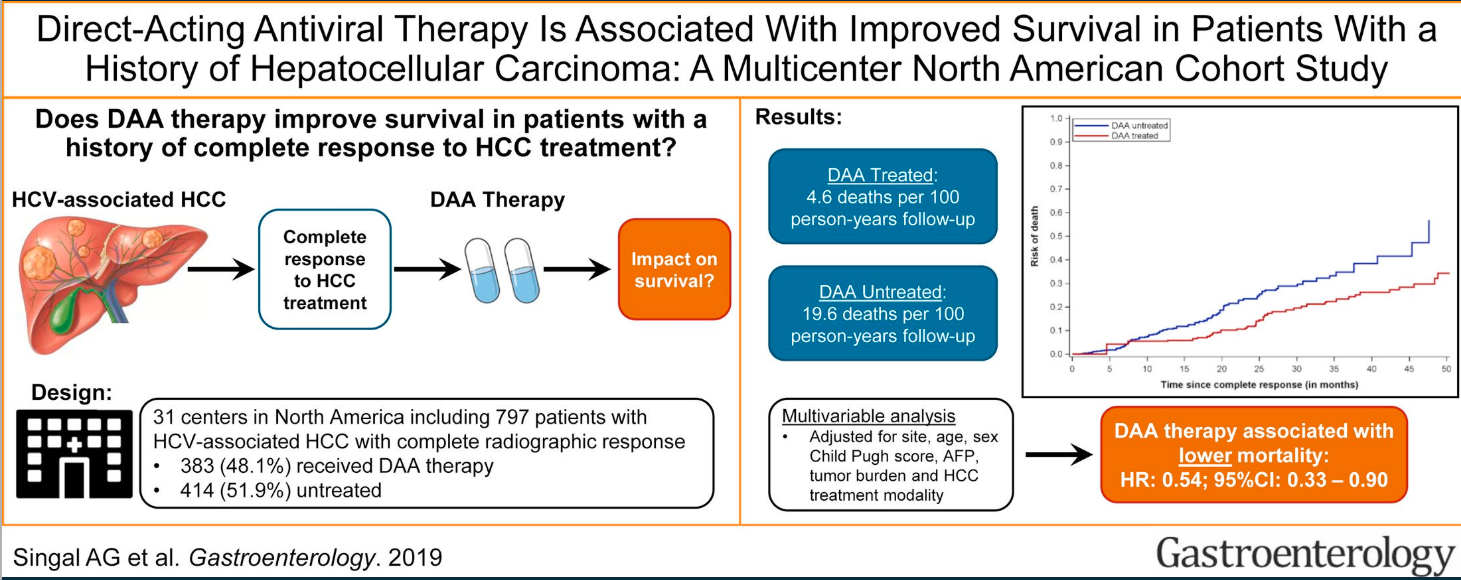
AA Butt et al. Gastroenterol 2019; 156: 987-96.  This study which used a Veterans database for chronic hepatitis C (HCV) infection (n=242,680) found that treatment with direct-acting antiviral therapy (hazard ratio 0.57) was associated with a significant decrease in risk of cardiovascular disease events.

F DiPaola et al JPGN 2019; 69: 152-59.  This study from the drug induced liver injury (DILI) network (2004-2017) with just 57 cases found that antimicrobials (51%) and antiepileptics (21%) were the leading causes of DILI in children. Related blog: Liver toxicity –Where to Look Online

P Huelin et al. Hepatology 2019; 70: 319-33. This study with 320 consecutive cases of acute kidney injury (AKI) in patients hospitalized for cirrhosis found that urinary neutrophil gelatinase-associated lipocalin (NGAL) (best at day 3) helped differentiate acute tubular necrosis from other types of AKI.

Rapid Progression from Acute Recurrent Pancreatitis to Chronic Pancreatitis

Briefly noted: QY Lin et al. JPGN 2019; 69: 206-11.  In this INSPPIRE cohort of 442 children, 251 had acute recurrent pancreatitis and 191 had chronic pancreatitis.

Key finding:

  • “Within 6 years after the initial acute pancreatitis attack, cumulative proportion with exocrine pancreatic insufficiency was 18% …diabetes mellitus was 7.7%”

My take: Patients with ARP need routine followup.

Related blog posts:

Bridge of the Gods, OR

MZRW for Constipation -Effective in Double-Blind Randomized Control Trial

A recent study (LLD Zhong et al. Clin Gastroenterol Hepatol 2019; 17: 1303-10) shows that a Chinese remedy MaZiRenWan (MZRW) which is a combination of 6 herbs is an effective agent for constipation based on a double-blind, double-dummy trial of 291 patients with functional constipation. Thanks to Ben Gold for this reference.

MZRW was dosed at 7.5 mg BID and Senna was dosed at 15 mg per day. Mean age of study participants was 45 years.

Key findings:

  • Complete response, defined as an increase of stooling by 1 or more BM per week, was similar between MZRW (68%) and Senna (58%) at week 8.  Both were superior to placebo which had a 33% complete response.
  • At week 16, MZRW had better response than senna or placebo, with complete responses of 47%, 21%, and 18% respectively.
  • No serious adverse effects were reported and there were no significant differences in renal or liver function between the groups.

My take: The authors note that this remedy has been around for 2000 years.  Their data show it appears to be a well-tolerated alternative for the management of constipation in adults.

Mount Batchelor, OR

“When is Celiac Disease Celiac Disease?”

A recent study (R Auricchio et al. Gastroenterol 2019; 157: 413-20, and editorial PR Green S Guandalini, pg 293-4) provides insight into the topic of “potential celiac disease.”

It is difficult trying to explain the concept of potential celiac disease (CD) to families.  Potential CD refers to the situation of having positive celiac serology but normal duodenal mucosa. In this study, the authors prospectively followed 280 children (age 2-18 yrs) with 2 consecutive abnormal serological tests (anit-TG2, EMA) along with normal duodenal architecture who continued a diet containing gluten.

Key findings:

  • 42 (15%) developed villous atrophy at median followup of 60 months
  • 89 (32%) became serologically-negative for CD
  • Cumulative incidence of progression to villous atrophy was 43% at 12 years.
  • The strongest predictive factor for villous atrophy was age: 7% of children less than 3 years developed flat mucosa, compared with 51% for age 3-10 and 55% for those older than 10 years

Advice on potential CD from editorial –titled “When is Celiac Disease Celiac Disease?”

  • Review the biopsies: were there adequate biopsy specimens? ≥4 from descending duodenum and ≥1 from duodenal bulb
  • Have a second specialist pathologist review specimens
  • If a patient with potential CD is symptomatic, institute a gluten-free diet and then follow for clinical and serologic response
  • If asymptomatic, “a wait and see approach is appropriate with interval biopsies every 2 years, if the elevated antibodies persist”

The editorial also note that none of the patients in this cohort would have been mislabeled with a diagnosis of CD using the non-biopsy approach as none of them had tTG antibodies >10 times the upper level of normal.

My take: This useful study should help with counseling parents about the likelihood of developing celiac disease in those with the “potential” label.  Younger children (<3 yrs), compared to older children, are less likely to convert from potential celiac disease to actual celiac disease..

Related blog posts:

Crater Lake, OR

How Long Should Be PPIs Be Used in Patients with Esophageal Atresia?

A recent study (FR Grunder et al. JPGN 2019; 69: 45-51) examines the use of proton pump inhibitor use after surgical repair of esophageal atresia; this involved a longitudinal cohort (n=73) with prospectively collected data over 11 years.

Background: While PPIs have been used for long-term treatment due to the high frequency of reflux and concerns regarding anastomotic strictures, the authors note that data on long-term outcomes/natural history and benefits/risks of this approach are lacking.

Key findings:

  • 48% of patients had PPIs discontinued at followup.
  • Among the 43 with PPI discontinuation, 40 had endoscopy results available.  Histologic abnormalities were noted in 8 (19%) which was lower than in the group receiving ongoing PPI use (n=19, 63%).. These 8 patients had PPI restarted.
  • Among patients unable to discontinue PPI therapy, there was a higher rate of prior anti-reflux surgical procedure, 27% compared to 5% who had anti-reflux procedure among group who were able to discontinue PPI therapy.
  • Patients more likely to remain on PPIs more frequently had a prior anastomotic leak and/or moderate to severe tracheomalacia.
  • The authors state that among patients receiving PPIs, there was more frequent recurrent pneumonia as well as more frequent use of inhaled beta-adrenergic agonists and steroids. However, this was not shown to be a causal association.  It is unclear whether these patients had more severe esophageal dysfunction or whether PPI use contributed to this outcome.

In their discussion, the authors note that PPIs have not been shown to reduce the rate of anastomotic strictures.  They argue that “PPI could be used more selectively in the following: in children with long-gap EA or anastomotic tension or anastomotic leak; after a first dilatation for anastomotic stricture rather than systematically, given the lack of preventive effect of PPI; and in children whose esophagoscopy demonstrates peptic esophagitis, eosinophilic esophagitis, or gastric metaplasia.”

My take: The authors are probably right that a large fraction of EA patients may not need long-term PPI use.  Selecting which patients will benefit will remain a challenge. Published guidelines recommend monitoring for GERD complications in EA, especially after stopping PPIs.

Related blog posts:

University of Virginia


Sunshine and Inflammatory Bowel Disease

A recent provocative study (EA Holmes et al. JPGN 2019; 69: 182-88) describes an inverse association between sunshine exposure and the development of pediatric inflammatory bowel disease (IBD).  Among a cohort of 99 children with IBD and 396 controls, the authors used questionnaires to estimate past sun exposure along with other variables.

Key finding:

  • “For each 10 min increment in leisure-time sun exposure in summer or winter there was a linear 6% reduction in the odds of having IBD (P=0.002)”

There was no corresponding data with regard to vitamin D status.

My take:  Being active and going outside are likely good for one’s health and there have been other studies suggesting more sun exposure could reduce the rate of Crohn’s disease. Does Sun Exposure Lower the Risk of Crohn Disease? | gutsandgrowth  Despite this, in my view, this study’s findings have limited value.

  1. There may be many confounders that separate children with more sun exposure from those with less exposure, including diets, exercise, camping, exposure to animals and soil, and many other variables. In addition, there may have been problems with recall bias.
  2. The role of vitamin D was not studied. In previous studies, the importance of vitamin D in its effect on the IBD/immune system have yielded inconsistent results.
  3. In those with IBD, suggesting that more sun exposure may have prevented IBD would not be helpful; this is due to the flimsy evidence and this information could be interpreted  as blaming the family.
  4. Correlation does not prove causation.  For example, a far-fetched association of correlation that is not likely to have a causal association: Rates of Drowning by Falling in Pools and Nicholas Cage Films (National Geographic: Nicholas Cage Movies vs. Drownings)

Related blog posts:

View from Wahkeenah Falls Trail, OR


Non-Adherence Leads to Treatment Escalation and More on Early Infliximab Trough Levels

Briefly noted: JK Carmody et al. AP&T 2019; first published 02 August 2019: https://doi.org/10.1111/apt.15445 Full text link: Longitudinal non‐adherence predicts treatment escalation in paediatric ulcerative colitis

In this cohort of 268 pediatric patients with ulcerative colitis in the prospective PROTECT study, non-adherence to mesalamine was associated with need for treatment escalation.

Key finding:

  • Declining adherence over time strongly predicted treatment escalation (β = −.037, P = .001). By month 6, adherence rate ≤85.7% was associated with treatment escalation.

As noted in a previous blog (Briefly noted: Induction Inflixmab Levels), a recent study (K Clarkston et al. JPGN 2019; 69: 68-74) identified target early infliximab trough levels for infliximab as≥ 29 for week 2 (infusion 2) and ≥18 for week 6 (infusion 3). Below is an associated figure:

Image courtesy of Michael Rosen twitter feed

IBD Briefs August 2019

A Levine et al. Gastroenterol 2019; 157: 440-50.  This study found that a Crohn’s Disease Exclusion Diet plus partial enteral nutrition induced sustained remission in a 12-week prospective randomized controlled trial with 74 children.  At week 12, “76% of 37 children given CDED plus PEN were in corticosteroid-free remission compared with 14 (45.1%) of 31 children given” EEN followed by PEN.  The associated editorial on pages 295-6 provides a useful diagram of various dietary therapy components for a large number of diets that have been given for IBD.  The editorial recommends:

“For now, simple dietetic recommendations such as consuming a well-balanced diet prepared largely from fresh ingredients and thereby avoidance of emulsifiers and additives and processed foods are appropriate for all patients.  In select patients,…a trial of dietary therapy alone with a diet such as CDED could be attempted for a short period of time, with close follow-up, and with agreement with the patient that failure to fully respond is an indication to escalate therapy.”  More dietary trials are ongoing.

Related blog posts:

NJ Samadder et al Clin Gastroenterol Hepatol 2019; 17: 1807-13. In this cohort from Utah 1996-2011 with 9505 individuals with IBD, 101 developed colorectal cancer.  Standardized incidence ratio (SIR) for CRC in patients with Crohn’s disease was 3.4, in ulcerative colitis 5.2, in patients with primary sclerosing cholangitis 14.8.  A family history of CRC increased the risk of CRC in patients with IBD to 7.9 compared to general population.  Family hx/o CRC increased the SIR by about double the CRC risk in IBD patients without a family hx/o CRC.

CR Ballengee et al. Clin Gastroenterol Hepatol 2019; 17: 1799-1806. In this study with 161 subjects from the RISK cohort, the authors found that elevated CLO3A1 levels in subjects with CD was associated with the development of stricturing disease but was not elevated in those with strictures at presentation and in those who did not develop  strictures.

AL Lightner et al IBD 2019; 25: 1152-68.  Short- and Long-term Outcomes After Ileal Pouch Anal Anastomosis in Pediatric Patients: A Systematic Review.  This review included 42 papers.

  • Rates of superficial surgical site infection, pelvic sepsis, and small bowel obstruction at <30 days were 10%, 11%, and 14% respectively.
  • Rates of pouchitis, stricture, chronic fistula, incontinence and pouch failure were 30%, 17%, 12%, 20% and 8% respectively with followup between 37-109 months.
  • Mean 24-hour stool frequency was 5.

MC Choy et al IBD 2019; 25: 1169-86.  Systematic review and meta-analysis: Optimal salvage therapy in acute severe ulcerative colitis.  Among 41 cohorts (n=2158 cases) with infliximab salvage, overall colectomy-free survival was 69.8% at 12 months.  The authors could not identify an advantage of dose-intensification in outcomes, though this was used more often in patients with increased disease severity, “which may have confounded the results.”

Hood River, OR

“We Have Ruined Childhood” and Possible Link to Depression, Anxiety and Suicide

A recent NY Times commentary (We Have Ruined Childhood) details the rising rates of depression, anxiety, and suicide and suggests a link between these mental health issues and a lack of childhood free play.

An excerpt:

No longer able to rely on communal structures for child care or allow children time alone, parents who need to work are forced to warehouse their youngsters for long stretches of time. School days are longer and more regimented…

The role of school stress in mental distress is backed up by data on the timing of child suicide. “The suicide rate for children is twice what it is for children during months when school is in session than when it’s not in session,..

For many children, when the school day is over, it hardly matters; the hours outside school are more like school than ever…

The areas where children once congregated for unstructured, unsupervised play are now often off limits. And so those who can afford it drive their children from one structured activity to another. Those who can’t keep them inside. Free play and childhood independence have become relics, insurance risks, at times criminal offenses

Many parents and pediatricians speculate about the role that screen time and social media might play in this social deficit. But it’s important to acknowledge that simply taking away or limiting screens is not enough. Children turn to screens because opportunities for real-life human interaction have vanished.

Related blog posts: