What I Don’t Want to See: Catastrophic Antiphospholipid Syndrome

SA Kahn et al. NEJM 2023; 388: 358-368. Case 3-2023: A 16-Year-Old Girl with Abdominal Pain and Bloody Diarrhea

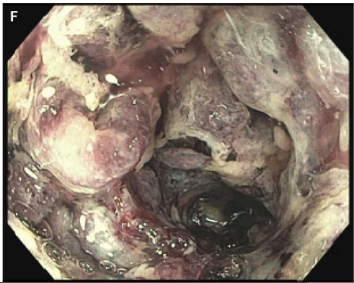
This case report of a girl presenting with abdominal pain and diarrhea identifies a rare etiology, catastrophic antiphospholipid syndrome (CAPS). CAPS can result in ischemic colitis. This patient underwent a colonoscopy which was normal in rectum but then became abnormal in the sigmoid colon:
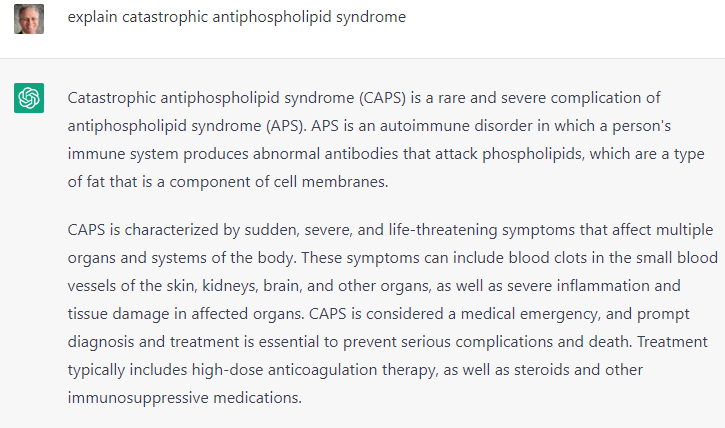
“CAPS is thought to result from the binding of antiphospholipid antibodies to cell surfaces, which activates endothelial cells, monocytes, and platelets and leads to inflammation, complement activation, and thrombosis. The formation of thrombi in patients with antiphospholipid antibodies is thought to be a multihit process.7 The presence of antiphospholipid antibodies in the blood is the first event, but the antibodies typically do not cause disease until another event occurs.”

Management of antiphospholipid antibodies: “Thrombotic disease manifestations are important in guiding therapy. For patients with antiphospholipid antibodies and no history of clotting, anticoagulation for primary thromboprophylaxis is generally not recommended…For patients with antiphospholipid antibodies and a history of unprovoked thrombosis (e.g., patients with APS), long-term thromboprophylaxis is recommended…For patients with more severe presentations — such as this patient, who had CAPS with thrombosis in multiple organs — treatment is more aggressive and involves targeting multiple steps within the CAPS cascade.”

From ChatGPT
My take: This 16 yo had a severe presentation and the case is a reminder that there are multiple reasons besides IBD for a teenager to have bloody diarrhea and abdominal pain.

Related blog posts:

How Low Can You Go with Split Livers?

Z Wang et al. Liver Transplantation 2023; 29: 58-66. Outcome of split-liver transplantation from pediatric donors weighing 25 kg or less

DJ Stoltz et al. Liver Transplantation 2023; 29: 3-4.(Editorial) Open Access! Exploring the lower weight limit of splitable liver grafts for pediatric recipients

From the editorial:

“In this issue of Liver Transplantation, Wang et al.7 describe the results of an innovative strategy to increase organ availability, particularly for low‐weight pediatric recipients, by utilizing a low‐weight donor population (≤25 kg) that historically has been avoided in pediatric split‐liver transplantation (SLT)…They found no significant differences in perioperative data, postoperative complications, patient survival, or graft survival between SLTs from donors ≤25 kg and the other three groups.”

Implications of study findings:

  • Splitting livers from donors weighing less than 25 kg will increase the pediatric donor pool and could improve waitlist mortality
  • Split smaller livers may mitigate “the clinical consequences of large‐for‐size syndrome and subsequent graft dysfunction”
  • “This approach requires a substantial level of surgical expertise to achieve comparable outcomes with more conventional operative techniques”
  • “1‐year graft survival for pediatric recipients receiving technical variant grafts was significantly worse at low‐volume centers performing an average of <5 pediatric liver transplantations per year” compared with high‐volume centers (89.9% vs. 95.3%; p < 0.001)
  • Limitations: Retrospective study. Also, only 22 of the split livers were from <25 kg donors

My take: Making the best use of this precious resource is a solemn responsibility. This study provides another reason for more transplants to be done in centers with a high level of expertise and more reasons to continue to use split livers. In those with sufficient expertise, even smaller livers can save two lives instead of one.

Related blog posts:

New Information on Neonatal Liver Failure

WS Thompson et al. Liver Transplantation 2023; 29: 118-121. Ultra-rapid whole genome sequencing: A paradigm shift in the pre-transplant evaluation of neonatal acute liver failure

In this case series, three patients had ultra-rapid whole genome sequencing (WGS). Case 1 identified PRF1 mutation consistent with familial HLH, Case 2 identified variants in FDXR implicated in a mitochondrial disorder and Case 3, found pathogenic mutations in ASL associated with agrininosuccinic aciduria.

The authors argue that ultra-rapid WGS which can provide information in as little as 12 hours and typically provides actionable results within 3 days. should be a first-line approach and would identify nearly all causative genetic reasons for neonatal acute liver failure. While GALD and viral etiologies would not be found, if there are no genetic causes, this would support the “initiation of empiric therapy.”

S Antala et al. Liver Transplantation 2023; 29: 5-14. Open Access! Neonates with acute liver failure have higher overall mortality but similar posttransplant outcomes as older infants

In this retrospective study with 1807 neonates and 890 infants (31-120 days) with ALF (identified in two large databases between 2004-2018), the key findings:

  • Neonates had higher death rates (46% alive without liver transplant, compared to 53% of infants who were alive without liver transplant)
  • Both groups had low liver transplant rates, with neonates less likely to be transplanted: 2% vs 6.4% (P<0.001)
  • Infants had higher rates of “unidentified” as etiology whereas neonates had higher rates of GALD and viral infections. Cardiac etiologies causing ALF were common in both groups, 24% of neonates and 18% of infants.

My take: Rapid genomic testing is very useful in infants/neonates with ALF. This population has a high mortality rate and a low rate of receiving liver transplants. Reducing the size for split liver donation could help with organ availability (see next post).

Related blog posts:

Why Telehealth Will Not Solve Health Care Disparities: Liver Care Experience

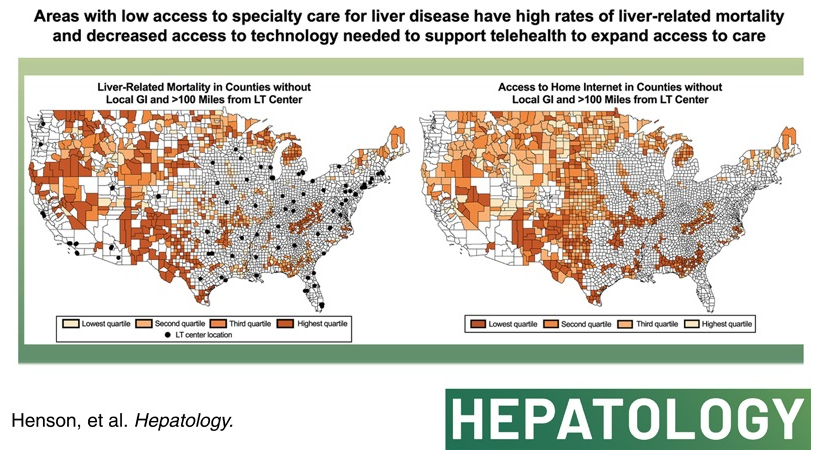
JB Henson et al. Hepatology 2023; 77: 176-185. Access to technology to support telehealth in areas without specialty care for liver disease

Key finding: Technology access was lowest in areas with low access to care and the highest burden of liver‐related mortality.

Editorial: S Wadhwani, JC Lai. Hepatology 2023; 77: 13-14. Open Access! The digital determinants of liver disease

An excerpt:

The authors found that counties with decreased access to gastroenterologists and liver transplant centers had increased county‐level liver‐related mortality. These counties tended to have residents who were more likely to be living in poverty, have lower educational attainment, have less access to primary care, and be living in a rural location. These same counties were less likely to have access to the high‐quality connectivity necessary to engage in telehealth appointments, demonstrating that telehealth in its current iteration will be unable to overcome health inequities in liver disease. For telehealth to be a viable solution to overcoming disparities in liver‐related mortality, the United States will need to tackle the “digital divide.”

My take: The same patients who have trouble seeing a liver specialist due to distance, transportation issues, and poverty are much less likely to have a good internet connection. Without this digital access, telehealth cannot help solve the disparity in care.

Related blog posts:

Pediatric Fatty Liver Disease is a Reversible Disease

S Lefere et al. Clin Gastroenterol Hepatol 2022; 20: 2317-2326. Open Access! Intensive Lifestyle Management Improves Steatosis and Fibrosis in Pediatric Nonalcoholic Fatty Liver Disease

In this prospective study with 204 children with severe obesity, intensive lifestyle changes were implemented. Key findings:

  • After 6 months, the median body weight loss was 16.0% in the 167 patients evaluated
  • Fibrosis improved in 75.0% (P < .001) (33% had F2 or higher fibrosis at baseline per elastography)
  • Fasting serum alanine aminotransferase and homeostasis model assessment of insulin resistance decreased significantly over the 1-year period (P < .001)

T Khurana et al. J Pediatr 2022; 250: 61-66. Clinically Meaningful Body Mass Index Change Impacts Pediatric Nonalcoholic Fatty Liver Disease

In this retrospective study with 784 children, Key findings:

  • Of these children, 168 (31%) had a BMIz (BMI z-score) change of >−.25 from baseline over a median of 367 days (IQR, 201-678 days). Thus, ~1/3rd of children achieved a drop in BMIz with lifestyle advice
  • A BMIz reduction of >.25 was associated with significant improvements in serum aminotransferase levels.

My take: These pediatric studies replicate similar findings from adult studies showing that modest reductions in weight are associated with improvement in NAFLD. However, most patients are not successful with lifestyle advice which underscores the need for pharmacotherapy.

Related blog posts:

Siesta Key, FL

Another Study Justifying Higher Infliximab Dosing in Pediatrics

S Lawrence et al. JPGN 2022; 75: 601-607. Optimized Infliximab Induction Predicts Better Long-Term Clinical and Biomarker Outcomes Compared to Standard Induction Dosing

In this retrospective observational cohort study (n=140 children), patients were started on 5 mg/kg/dose during induction. 78 children had “optimized dosing” with an infliximab level drawn prior to 3rd dose. A level <15 mcg/g was considered subtherapeutic. It is noted that combination therapy was much higher in the standard (not optimized) group (95% vs 42%).

Key findings:

  • Combined corticosteroid-free clinical and biomarker remission (CRP < 5 mg/L) was higher in the optimized compared to the standard cohort [65/78 (83%) vs 25/62 (40%), P < 0.001]. Remission rates correlated with trough levels; those in clinical remission had a median level of 3.6 compared to 2.0 in those without clinical remission.
  • The median post-induction trough was higher in the optimized group 4.2 mg/L vs 1.9 mg/L.
  • The optimized group were significantly more likely to achieve a therapeutic level (5 mg/L or greater): 44% vs 18%.

My take:

  1. The “optimized” group was not very well optimized –only 44% had a therapeutic level >5, but still performed much better than the standard group (which more often had combination therapy). This indicates a need to start with higher doses and reinforces the need for therapeutic drug monitoring.
  2. This study further shows that 5 mg/kg dosing is inadequate. In the standard group, even with combination therapy, only 18% achieved therapeutic levels.
  3. This article will be another one to include to try to persuade insurance companies that kids are different and need higher doses of infliximab.
  4. Though inconvenient for families, dosing more frequently is more effective than higher doses for improving trough levels (ie 5 mg/kg q4 wks results in better trough levels than 10 mg/kg q8 wks).

Here are some additional references on this topic (from a recent appeal):

For pediatrics, studies have shown that utilizing dosing of 5 mg/kg/dose results in subtherapeutic dosing in around 80%, especially if low albumin.  This places patients at high risk for developing antibodies to infliximab and complications from Crohn’s disease.

  1. LE Bauman et al Inflamm Bowel Dis 2020 Feb 11;26(3):429-439. Improved Population Pharmacokinetic Model for Predicting Optimized Infliximab Exposure in Pediatric Inflammatory Bowel Disease. The authors identified 228 pediatric patients with IBD and developed a pharmacokinetic model using weight, albumin, sedimentation rate and antibodies to infliximab (ATI) to help predict infliximab dosing that would achieve a therapeutic trough level (>5 mcg/mL). In their study, they also simulated 1000 patients and found that only 24% of patients receiving 5 mg/kg q8weeks achieved a therapeutic level; this increased to 56% for 10 mg/kg q8weeks
  2. Frymoyer A, Piester TL, Park KT. JPGN. 2016;62(5):723-727. Infliximab dosing strategies and predicted trough exposure in children with Crohn’s disease. Only 21% of children in this modeling study achieved a trough level >3 if the albumin was 3 or lower. The goal for trough level is NOW >5.
  3. JM Shapiro et al. JPGN 2016; 62: 867-72. Durability of Infliximab Is Associated With Disease Extent in Children With Inflammatory Bowel Disease.  In this study with 98 pediatric patients, 70% with extensive disease required dose escalation.
  4. Ungar B, Levy I, Yavne Y, et al. Clin Gastroenterol Hepatol. 2016;14(4):550-557.e552. Optimizing Anti-TNF-alpha therapy: serum levels of Infliximab and Adalimumab are associated with mucosal healing in patients with inflammatory bowel diseases. Getting good levels important to achieve healing/remission.
  5. NV Castelle et al. Clin Gastroenterol Hepatol 2022; 20: 465-467. Patients With Low Drug Levels or Antibodies to a Prior Anti-Tumor Necrosis Factor Are More Likely to Develop Antibodies to a Subsequent Anti-Tumor Necrosis Factor. Good levels are associated wtih fewer antibodies to infliximab.

Related blog posts:

On a recent trip to Florida, we picked up more than 40 sand dollars on a morning beach walk. This was during a cold snap, at low tide and after a storm.

Disclaimer: This blog, gutsandgrowth, assumes no responsibility for any use or operation of any method, product, instruction, concept or idea contained in the material herein or for any injury or damage to persons or property (whether products liability, negligence or otherwise) resulting from such use or operation. These blog posts are for educational purposes only. Specific dosing of medications (along with potential adverse effects) should be confirmed by prescribing physician.  Because of rapid advances in the medical sciences, the gutsandgrowth blog cautions that independent verification should be made of diagnosis and drug dosages. The reader is solely responsible for the conduct of any suggested test or procedure.  This content is not a substitute for medical advice, diagnosis or treatment provided by a qualified healthcare provider. Always seek the advice of your physician or other qualified health provider with any questions you may have regarding a condition.

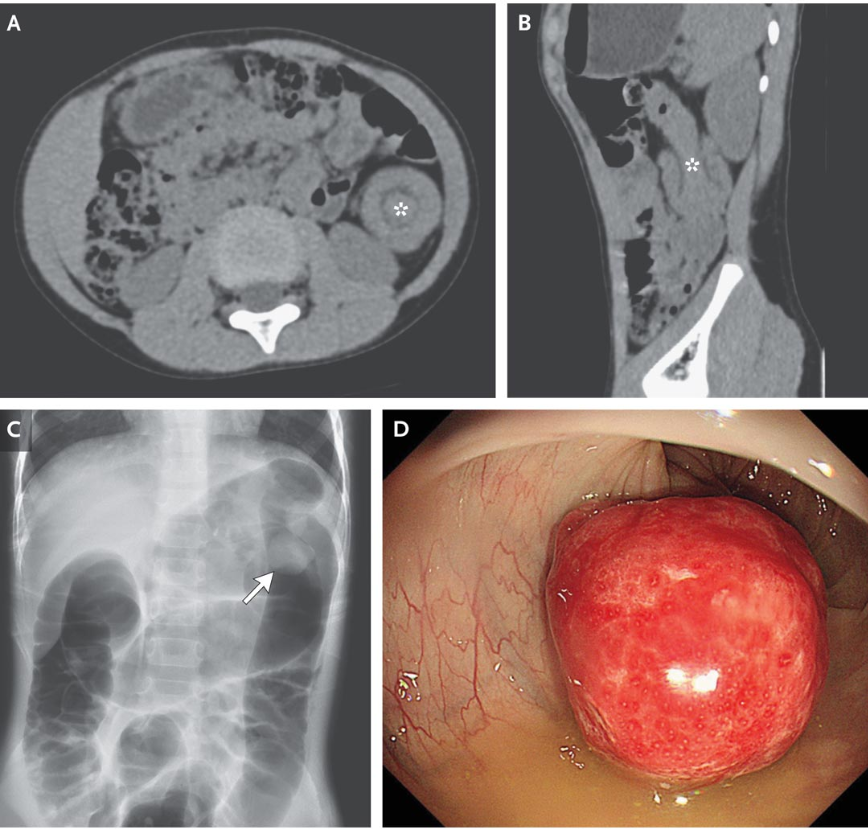
Image from NEJM: Colocolonic Intussusception

From NEJM Twitter feed:

“Colonic intussusception is a rare cause of intestinal obstruction in children, and most cases are ileocolic rather than colocolonic. A pathologic lead point, typically a juvenile polyp, is present in the majority of cases.” In this case, panel D shows a 2.5 cm pedunculated polyp which was thought to be the lead point.

Related blog posts:

“Is Salt at Fault?” in Inflammatory Bowel Disease

R Kuang et al. Inflamm Bowel Dis 2023; 29: 140-150. Is Salt at Fault? Dietary Salt Consumption and Inflammatory Bowel Disease

This review looks at the potential role of salt in relation to the epidemiology of inflammatory bowel disease. The general focus is that the prevalence/incidence of IBD has been increasing and there must be environmental/dietary factors involved. Could salt be one of those causal factors or is it merely a temporal association?

Key points:

  • Ultra-processed foods make up more than half of the daily caloric intake in developed countries such as the United States! and Canada and between one-third to one-fifth of diets in middle-income countries such as Brazil and Mexico.. Ultra-processed foods involve “fractioning of whole foods into substances, chemical modifications of these substances, frequent use of cosmetic additives and sophisticated packaging that allow producers to create highly profitable, convenient, and hyperpalatable products.” Ultra-processed foods are typically high in sugar, unhealthy fats, and salt and low in dietary fiber, protein, vitamins, and minerals. They are also calorie dense. For Americans, the primary source of sodium in the diet is from commercially processed foods.
  • At present, the typical American consumes over 40% more salt on a daily basis than is re-commended. Added salt is a key component of UPFs, whose increased consumption has been closely linked to this rise in the IBD incidence. Even though salt is a key component of UPFs, it has received limited attention in the investigation of IBD...Excess salt contributes to greater monocyte and T-cell-driven inflammation and a parallel loss of immunoregulatory mechanisms involving M2 macrophages and Tregs in the Th17 axis.
  • The authors argue that improvement in IBD with exclusive enteral nutrition is another factor indicating a potential role for salt reduction as beneficial. “Although these ultra-processed liquid nutrition formulas were high in sugars, emulsifiers, and carrageenan, they were very low in sodium content.”

My take: It is not clear what impact salt has on IBD. However, too much salt causes problems well beyond hypertension and may contribute to several inflammatory conditions, including IBD, asthma, and rheumatoid arthritis.

Related blog posts:

Unrelated website information: IBD-EII is a website which has tried to organize/summarize some of the more important IBD articles including a timeline of these publications and evidence for specific medications.

Atlanta Botanical Gardens. Garden Nights, Holiday Lights exhibit

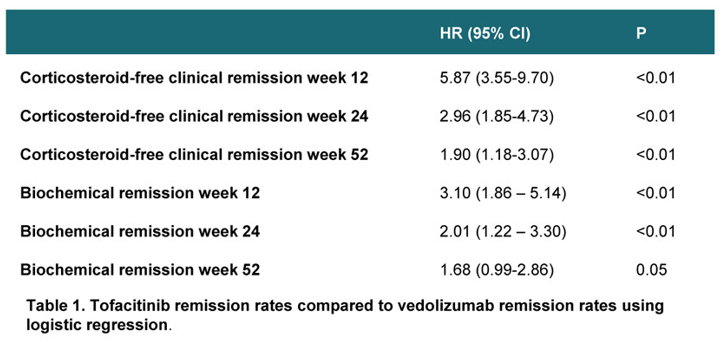
Tofacitinib Outperformed Vedolizumab in Anti-TNF-experienced Ulcerative Colitis

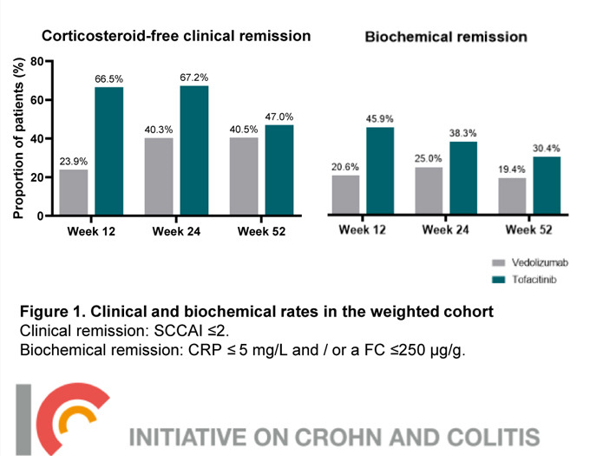
T Straamijer et al. Clin Gastroenterol Hepatol 2023; 21: 182-191. Open Access! Superior Effectiveness of Tofacitinib Compared to Vedolizumab in Anti-TNF-experienced Ulcerative Colitis Patients: A Nationwide Dutch Registry Study

Methods: Adults with ulcerative colitis (UC) previously who failed anti-TNF treatment and initiated vedolizumab (n=83) or tofacitinib (n=65) treatment were identified in the Initiative on Crohn and Colitis Registry in the Netherlands.

Key findings (Vedolizumab is in gray):

  • There was no difference in infection rate or severe adverse events.

My take: Coupled with more recent reassuring safety data on JAK inhibitors, this study makes a strong case for positioning Tofacitinib (or other JAK inhibitor) earlier in patients with moderate-to-severe ulcerative colitis. Given that vedolizumab outperformed adalimumab in a head-to-head study, this indicates that tofacitinib is a very effective therapy.

Related article: B Chen et al. Gastroenterology 2022; 163: 1555-1568. Efficacy and Safety of Ivarmacitinib in Patients With Moderate-to-Severe, Active, Ulcerative Colitis: A Phase II Study This phase 2 study with 146 patients examined the effectiveness of the selective JAK inhibitor Ivarmacitinib found a week 8 clinical response in 46% of those receiving 8 mg per day. The week 8 clinical remission rate was 22%-24% in the treatment groups compared to 5% in the placebo group.

Related blog posts:

Disclaimer: This blog, gutsandgrowth, assumes no responsibility for any use or operation of any method, product, instruction, concept or idea contained in the material herein or for any injury or damage to persons or property (whether products liability, negligence or otherwise) resulting from such use or operation. These blog posts are for educational purposes only. Specific dosing of medications (along with potential adverse effects) should be confirmed by prescribing physician.  Because of rapid advances in the medical sciences, the gutsandgrowth blog cautions that independent verification should be made of diagnosis and drug dosages. The reader is solely responsible for the conduct of any suggested test or procedure.  This content is not a substitute for medical advice, diagnosis or treatment provided by a qualified healthcare provider. Always seek the advice of your physician or other qualified health provider with any questions you may have regarding a condition.

POSE 2.0 Procedure for Obesity

Anyone who follows this blog closely knows my inherent attraction for study acronyms; it is too bad I am not a leading researcher because it would be really fun to come up with some hilarious acronyms.

The Primary Obesity Surgery Endoluminal (POSE) Procedure for the treatment of obesity (GL Nava et al. Clin Gastroenterol Hepatol 2023; 21: 81-89) prospectively enrolled 44 adult patients who underwent “a novel pattern of full-thickness gastric body plications to shorten and narrow the stomach using durable suture anchor pairs.”

Key findings:

  • This procedure used an average of 19 suture anchor pairs, with a mean duration of 37 ± 11 minutes, and was technically successful in all subjects
  • Mean percentage total body weight loss (%TBWL) at 12 months was 15.7% ± 6.8%. >15% TBWL was achieved by 58%
  • Improvements in lipid profile, liver biochemistries, and hepatic steatosis were seen at 6 months
  • Repeat assessment at 24 months (n = 26) showed fully intact plications. No serious adverse events occurred

My take: This study shows that endoscopic therapies for obesity are quite promising. However, endoscopic therapies and bariatric surgery may become 2nd or 3rd line therapies if oral medications are available that can achieve similar success. Though, medications could require indefinite treatment.

Related blog posts: