Bigger Data Needed and Other IBD Updates April 2020

R Pittayanon et al. Gastroenterol 2020; 158: 930-46.  In this systematic review of the relationship between gut microbiota and inflammatory bowel disease, 48 studies and 45 articles were included from a total of 2631 citations.  Overall, the authors found inconsistent results with differences in the abundances of some bacteria in IBD. My take: These microbiota studies use ‘big data’ to look for abnormal patterns in patients with IBD.  Overall, most of these studies support a reduced diversity among patients with IBD.  Specific variation in microbes varies widely and remains unclear if they are a cause or a consequence of IBD.

J Piercy et al. JPGN 2020; 70: 318-23. Among 90 adolescents with IBD, “perfectionistic concerns (self-critical and socially prescribed perfectionism) were associated with higher rates of adolescent-reported externalizing symptoms” Thus, perfectionism may help with self-management but lead to more stress and psychosocial symptoms.

S Jardine et al. Gastroenterol 2020; 158: 1000-15. This study used both TTC7A-knockout cells and a zebrafish model to screen compounds that have been FDA approved for treatment of inflammatory bowel disease caused by TTC7A deficiency.  The authors identified leflunomide that reduces apotosis and levels of active caspase 3 in TTC-7A-knockout cells and restored gut motility along with improvement of intestinal cell survival in zebrafish. This study has some amazing figures detailing the changes induced by leflunomide. My take: Although some centers have offered hematopoetic stem cell transplant (with dismal results), there is NOT a currently accepted treatment for TTC7A deficiency-induced IBD.  This study suggests an agent which may help.

CLD Prevost et al. AP&T 2020. https://doi.org/10.1111/apt.15681 Key finding:  Among patients exposed to anti‐TNF, the Lémann Index was lower in those who were exposed in the first 2 years of their disease (P = 0.015).  My take: Early treatment with anti-TNF agents can reduce risk of permanent bowel damage. This was seen as well in the RISK study which showed that anti-TNF therapy reduced the development of penetrating disease. (Related post: CCFA Update 2017, Part 3)
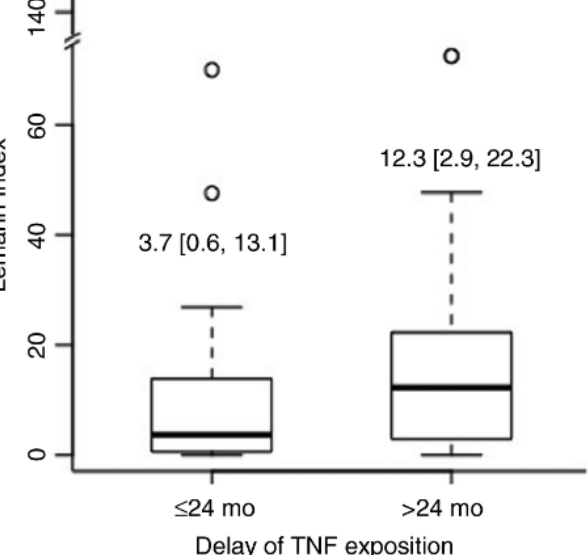

Full link: Bowel damage and disability in Crohn’s disease: a prospective study in a tertiary referral centre of the Lémann Index and Inflammatory Bowel Disease Disability Index

Two Studies: 1. COVID-19 Transmissibility 2.Fecal Microbiota Transplantation in 372 Children

A study in Nature suggests that more than 40% of SARS-CoV-2 infections (COVID-19 viral infections) are spread in the presymptomatic stage: Temporal dynamics in viral shedding andtransmissibility of COVID-19 (Thanks to Steven Liu for this reference).

An excerpt:
We report temporal patterns of viral shedding in 94 patients with laboratory-confirmed COVID-19 and modeled COVID-19 infectiousness profiles from a separate sample of 77 infector–infectee transmission pairs. We observed the highest viral load in throat swabs at the time of symptom onset, and inferred that infectiousness peaked on or before symptom onset. We estimated that 44% (95% confidence interval, 25–69%) of secondary cases were infected during the index cases’ presymptomatic stage, in settings with substantial household clustering, active case finding and quarantine outside the home. Disease control measures should be adjusted to account for probable substantial presymptomatic transmission.

——————————-

A recent retrospective multi-center study (MR Nicholson et al. Clin Gastroenterol Hepatol 2020; 18: 612-9) provides data on fecal microbiota transplantation (FMT) for Clostridium difficile infection (CDI). Congratulations to one of my partners, Jeffery Lewis, who is one of the coauthors. This paper’s abstract is noted in a separate blog: Large Study Show FMT Efficacy/Safety in Children.

Though this is a pediatric study, the authors included patients up to 23 years.  335 of the patients had followup for at least 2 months following FMT.

Key findings:

  • 81% of patients had a successful outcome after a single FMT and 86.6% after single or repeated FMT
  • Higher success rates were associated with fresh donor stool (OR 2.66), FMT via colonoscopy (OR 2.41), and with not having a feeding tube (OR 2.08)
  • Though not reaching statistical significance, patients with inflammatory bowel disease had a high failure rate of 23% (26/111).  Short bowel syndrome patients had a 50% failure rate (5/10), solid organ transplant recipients had a 56% failure rate (5/9), and patients with feeding tubes had a 32% failure rate (21/65).
  • Seventeen patients (4.7%) had a severe adverse event during the 3-month follow-up period, including 10 hospitalizations; however, the majority were unrelated to FMT. Specific adverse reactions that were related or may have been included aspiration pneumonia on day of procedure (n=1), IBD flare/colectomy (n=5), and vomiting/dehydration (n=1)
  • Common adverse reactions included diarrhea, abdominal pain, and bloating. (These symptoms have been reported in up to 70% of adults following FMT.)

The authors note that a prior systematic review had indicated that delivery of FMT via colonoscopy was more successful in adults (95% vs 88%), though there are some additional risks with colonoscopy.

It is worth considering that the failure rate in some patients could be due to misdiagnosis, particularly in certain populations like patients with IBD and or organ transplant recipients.  In these populations, PCR assays may result in false-positive diagnosis and should be confirmed with an ELISA assay.   While eradication of CDI with FMT improves clinical symptoms and reduces the use of antibiotics the true benefit and risks will not be known for a long time.  Does FMT increase or reduce the risk of downstream infections, autoimmune disease, and metabolic syndrome?

My take: Many of the concerns with FMT can only be adequately addressed with prospective studies (with strict definitions of CDI) and longer followup.

Related blog posts:

Island Ford, Sandy Springs

What Happens After The First Anti-TNF Agent Doesn’t Work?

A recent intriguing retrospective study (MJ Casanova et al. Inflamm Bowel Dis 2020; 26: 606-16, editorial 617-18) examines a large cohort (n=1122) who received either a 2nd or 3rd anti-TNF agent.  This relied on the ENEIDA registry which is a prospectively maintained registry from Spain with 11,866 patients. In this study, clinical remission was gauged with a Harvey Bradshaw Index score of ≤4 in Crohn’s disease (CD) or a partial Mayo score of ≤2 in ulcerative colitis (UC).

Key findings:

  • 45% of patients achieved remission with the second anti-TNF at 12 weeks (short-term); loss of response was 19% per patient-year subsequently. Patients with intolerance to the first drug had higher remission rates compared to those who switched due to secondary failure (52% vs 42%) or primary failure (52% vs 39%).
  • Among the 45% who responded to a second anti-TNF agent, 77% maintained remission at 1 year following switch.
  • There was similar initial response to a second anti-TNF among patients with CD and UC: 46% vs 41%, though patients with UC were more likely to lose efficacy.
  • Combination therapy was associated with a higher likelihood of failure, HR 2.4 (possibly as an indicator of more aggressive disease)
  • Among the 71 patients who progressed to a 3rd anti-TNF agent, 55% achieved remission at 12 weeks. 

Discussion:

  • The authors in their discussion not that “primary failure is considered a class effect phenomenon…However, our results indicate that remission may still be achieved with a second anti-TNF in approximately 50% of patients.”
  • The editorial notes that the results need to be interpreted with caution.  Therapeutic drug monitoring (TDM) which is not incorporated in this study is crucial in optimizing response and switching.  “Importantly, nearly two-thirds of patients with therapeutic drug levels in the study form the Mayo Clinic had no active inflammation.  Thus, a change in therapy would be inappropriate in this population.”

My take: This study indicates that a 2nd anti-TNF agent can be effective in those who do not respond to a 1st.  At the same time, careful assessment including TDM is needed when changing agents, especially in view of the limited number of effective therapies.

Related blog posts:

From Atlanta Botanical Garden

Ups (mostly) and Downs with IBD Epidemiology

Two articles describe both increasing and decreasing trends in the prevalence of inflammatory bowel disease (IBD).

  • Y Ye et al. Inflamm Bowel Dis 2020; 26: 619-25, editorial 626-27
  • M Torabi et al. Inflamm Bowel Dis 2020; 26: 581-90, editorial 591-92 

The first study by Ye et al provides the familiar message that IBD prevalence has been increasing in pediatrics and adults.  This study examined 2 large claims databases.  The Optum database covered ~18 million annually during the study period (total ~57 million from 2007-2017) and Truven covered ~44 million annually (total ~240 million since 1995)

Key findings:

  • Pediatric IBD prevalence increased by 133% from 2007 to 2016: from 33 per 100,000 to 77 per 100,000. Crohn’s disease (CD) was twice as prevalent as ulcerative colitis (UC) in the pediatric population (46 vs 22)
  • Adult IBD prevalence increased by 123% from 2007 to 2016: from 215 per 100,000 to 478 per 100,000. The prevalence rates of CD and UC were similar in adults: 198 vs 181)
  • The Northeast region had the highest prevalence of IBD, followed by Midwest, South and then West.
  • Based on these prevalence data, there are an estimated 58,000 children (2-17) and 1.2 million adults with IBD in U.S.   Or, 1 in 1299 children and 1 in 209 adults.

Limitations:

  • Diagnosis and data derived from claims database
  • Cases can vary significantly based on how sensitive the definition for IBD is in a given study.  In this study, the authors indicate in supplementary material, that the prevalence rates could be doubled in adults if they chose a more sensitive/less specific case definitions.

The second study by Torabi et al, which utilized the Manitoba Epidemiology Database (n=1.2 million) showed a decrease in IBD incidence.  The authors examined 296 small geographic areas (SGAs) and found that many had persistently high IBD incidence rates.

Key findings:

  • The incidence of IBD decreased from 1990 when it was 23.6 per 100,000 to 16.2 per 100,000 in 2012.
  • In the study period (1990-2012), there were 3114 cases of CD and 3499 cases of UC diagnosed in Manitoba

In the discussion, the authors speculate on the reasons for the decline in IBD incidence in an area with high rates of IBD.  Some of the change may be related to changes in the population mix –more immigrants from areas with lower rates of IBD.  In the editorial, it is noted that a recent systematic review (Lancet 2018; 390: 2769-78) indicated that the “incidence of IBD is stabilizing in Western countries.”

My take: There are a lot kids and adults with IBD.  The preponderance of epidemiology studies point to increasing incidence and prevalence.

Related blog posts:

Rock art during “social distancing”

Celiac Studies -Increasing Prevalence (Italy) and Nonadherence Risks

S Gatti et al. Clin Gastroenterol Hepatol 2020; 18: 596-603.   The authors screened 4570 children (5-11 year olds) from 2015-16; this study included 80% of eligible children from two metropolitan areas in Italy.

Key findings:

  • 77 cases of children met diagnostic criteria for celiac disease (54 met criteria and 23 prior known cases)
  • Prevalence in this population, overall, was 1.58% (2015-16); in 1993-95, the adjusted prevalence was 0.88%
  • Celiac disease autoimmunity was noted in 96 .
  • 1960 (43%) had celiac disease associated haplotypes

A Myleus et al. Clin Gastroenterol Hepatol 2020; 18: 562-73.  In this systematic review, 49 studies (out of initial 703) were included in final analysis to determine risk factors and outcomes with nonadherence to treatment with gluten free diet.

Key findings:

  • Large range of adherence rates: 23% to 98% (median rates were 75-87%).
  • Adolescents were at increased risk of non-adherence
  • Children whose parents had good knowledge had higher adherence rates
  • There was not improved adherence over time, despite improvement in palatable gluten-free foods.

One of the other findings in the study was the lack of consensus about what defines strict adherence and how to measure it.

My take: The first study is in agreement with many others which have demonstrated higher prevalence of celiac disease now compared to previously.  The second study shows that adherence with treatment is highly variable and difficult to measure.

Related blog posts:

Screenshot (797)

UNC Campus Pic (Chapel Hill)

Dose Escalation of Ustekinumab & Support Tool “Should I Have IBD Surgery?”

A recent large retrospective study (Effectiveness of Ustekinumab Dose Escalation in Patients with Crohn’s Disease. JE Ollech, et al. Clinical Gastroenterology and Hepatology, EPUB) shows that increasing the frequency of ustekinumab from every 8 weeks to every 4 weeks improves outcomes in those who are not responding optimally. Among 506 patients receiving ustekinumab, 110 had dose escalation.

From abstract:

Results

Following dose interval shortening, the patients’ median HBI [Harvey Bradshaw index] decreased from 4.5 to 3 (P=.002), the median level of CRP decreased from 8 mg/l to 3 mg/l (P=.031), and median level of fecal calprotectin decreased from 378 μg/g to 157 μg/g (P=.57). Among patients who had an HBI >4, a level of CRP ≥5mg/dl, a level of fecal calprotectin >250ug/g, or endoscopic evidence for disease activity before dose interval shortening, after the dose interval was shortened, 28% achieved clinical remission (an HBI score ≤4), 22% had a normal level of CRP (<5 mg/dl), 50% had reduced levels of fecal calprotectin, and 36% achieved endoscopic remission.

My take (borrowed from authors): “Shortening the ustekinumab 90 mg dose interval to 4 weeks for patients with CD who did not respond to doses every 8 weeks improved clinical and biological indices of disease activity. Patients who lose response to the standard dose of ustekinumab might benefit from dose interval shortening, which was effective and safe.”

Related blog posts:

From ImproveCareNow: Should I Have Surgery? A Shared Decision Making Tool  –Recommended for families in working through this difficult treatment decision.

Tiny door on the Atlanta Beltline

What is Going On With Pouchitis? & No More Handshakes

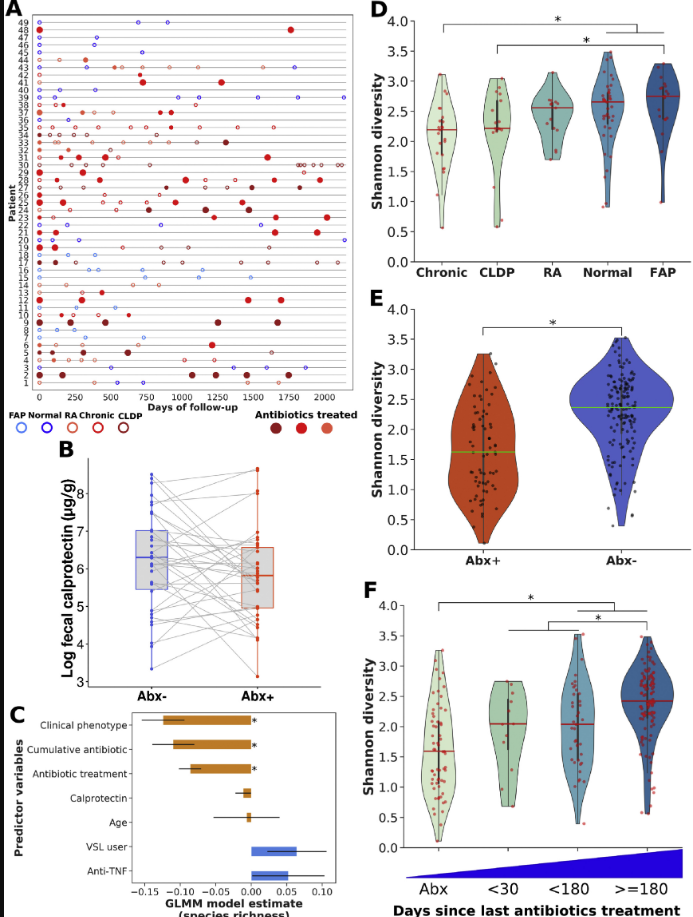
A prospective study (V Dubinsky et al. Gastroenterol 2020; 158: 610-24) followed 49 patients who had undergone pouch surgery for ulcerative colitis or for familial adenomatous polyposis (FAP).

The authors followed multiple parameters including calprotectin, metagenomes/bacterial diversity, antibiotic resistance testing, and virulence factors/toxins. 33 patients received antibiotics for a median of 425 days.  Most patients were treated with a combination of ciprofloxacin and metronidazole.

Full text link: Predominantly Antibiotic-resistant Intestinal Microbiome Persists in Patients With Pouchitis Who Respond to Antibiotic Therapy

Key findings:

  • Pouch phenotype: normal from UC (n=10), recurrent acute pouchitis (n=6), chronic pouchitis and Crohn’s-like disease of the pouch (n=27), and normal from FAP (n=6)
  • 79% of antibiotic-treated patients had a clinical response to each course of antibiotics
  • 89% of those who completed a 4-week course relapsed within 3 months
  • Median calprotectin values decreased by 40% in response to antibiotics
  • Antibiotic treatment reduced disease-associated bacteria including Clostridium perfringens, Ruminococcus gnavus, and Klebsiella pnneumoniae. However, F prausnitzii, a putative anti-inflammatory species, also decreased during antibiotic treatment
  • While antibiotic resistance was noted, these strains had a tendency toward lower potential for virulence and “did not induce secretion of inflammatory cytokines by epithelial cells”

Why do patients become antibiotic-dependent?

“We observed a drastic shift in microbiome composition on antibiotics cessation, characterized by blooms of nonintestinal bacteria, especially those originating from the oral cavity, as well as of opportunistic pathogens. Intestinal colonization by oral bacteria has been associated with UC and Crohn’s disease, and shown to trigger severe intestinal inflammation in germ-free mice…[this] drug-resistant microbiome may be fragile and unable to prevent colonization by exogenous bacteria that are ecologically fitter once antibiotics are discontinued.”

My take: This study provides insight into how antibiotics improve pouchitis; namely, they reduce disease-associated bacteria and promote an antibiotic-resistant microbiome with lower inflammatory potential.

Related blog posts:

Figure 1:

Link:  34 AAP Publications regarding COVID-19 and children

Deconstructing PPI-Associated Risks with Nearly 8 Billion Data Points and More on COVID-19 GI Symptoms (Video)

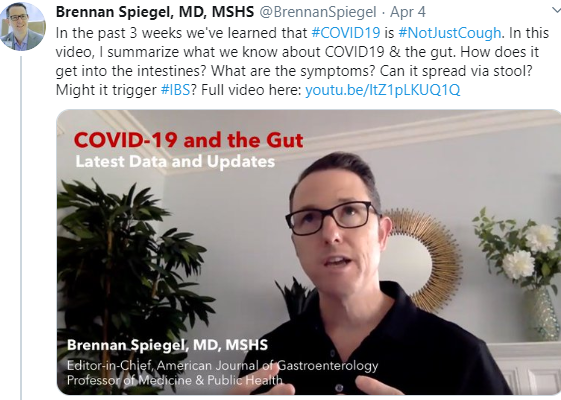
Link: 22 minute video —COVID-19 and the GI Tract -What We Know Right Now

———————

A recent study (C Ma et al. Gastroenterol 2020; 158: 780-82) used cross-sectional data from the National Ambulatory Medical Care Survey (NAMCS) (2006-2015) with a total 7,872,115,883 weighted observations.  They used this data to evaluate medication exposures and outcomes.

Key findings:

  • There was no association between PPI use and dementia, pneumonia, or intestinal infections.  There was a trend towards intestinal infections (AOR 1.48, CI 0.80-2.71) but this did not reach statistical significance. “Sensitivity analysis showed an association between PPI use and C difficile.”
  • There was an association with chronic kidney disease (CKD) (AOR 1.26); however, this was seen with a multitude of drug classes including statins, calcium channel blockers, and beta-blockers.

Discussion:

  • This study notes that a recent large randomized controlled trial found no statistically significant differences between those receiving PPIs and those receiving placebo except for intestinal infections.
  • With regard to CKD, “it is extremely unlikely that all of these medications increase the risk of CKD, and therefore, it is likely that these findings are due to residual confounding.”

My take: With the exception of C difficile/intestinal infections, this study provides further evidence of the safety of PPIs and a lack of association between these medications and purported PPI-related adverse events.  That said, it is still a good idea to limit use for appropriate indications.

Related blog posts:


Also, IOIBD recommendations for IBD patients and COVID-19 have been published.

Here is link as well:

IOIBD (International Organization for the Study of Inflammatory Bowel Disease) Recommendations (#76) for IBD Patients with Regard to COVID-19:

Full link: IOIBD Update on COVID19 for Patients with Crohn’s Disease and Ulcerative Colitis (3/26/20)


C difficile three-fer: Overdiagnosis with Multiplex Testing, Fidaxomicin Pediatric Approval, & Changing Incidence

Queen Elizabeth II -picture for the pandemic

JM Cotter et al. (J Pediatr 2020; 218: 157-65) reviewed 1214 C difficile positive results from a total of 6841 C difficile tests 2013-15 & 2015-17). Key findings:

  • In the later era of multiplex tests, there was a much higher rate of C difficile detection (1.7-2.3 times higher) and a much higher rate of detection.
  • However, 31% of the multiplex tests identified another organism which indicates a high likelihood of a false-positive test (C difficile colonization)
  • Many of these “C difficile infections” were detected simply due to ease of test ordering.  In addition, the test results should be viewed with suspicion particularly in low-risk individuals.
  • Nearly one-third of the C difficile infected patients were oncology patients who are known to have high rates of asymptomatic colonization.
  • In patients known to have high risk of asymptomatic colonization (eg. young, oncology, IBD), detection of C difficile infection may lead to anchoring bias resulting in diagnostic delays for other disorders.

My take: We know that we are approaching the diagnosis of C difficile infection the wrong way (see IDSA guidelines below), but it is so quick and easy.

Related blog posts:

  • Clostridium difficile Guidelines The diagnosis of CDI… Molecular tests (eg, nucleic acid amplification tests [NAATs], such as polymerase chain reaction), which do not differentiate colonization and infection, are now the most commonly used test for CDI among US hospitals. NAATs have the potential to misdiagnose patients with colonization as having CDI, particularly when used in patients with low likelihood of CDI. Thus, this guideline strongly reinforces the importance of practicing good diagnostic stewardship and limiting C difficile testing to patients with new-onset, unexplained, and clinically significant (ie, at least 3 unformed stools in a 24-hour period) diarrhea…formed stools should not be tested for C difficile, nor should patients be retested within 7 days of a previous negative C difficile test. In pediatric populations, because of the unclear role of C difficile as a cause of diarrhea in infants, children less than 12 months of age should not be tested…If diagnostic stewardship is not an achievable goal, use of NAAT alone is likely to lead to frequent misdiagnosis of CDI among patients with C difficile colonization. In these cases, NAAT alone should be avoided and a multistep algorithm that incorporates toxin testing is recommended.

From MDEdge Pediatrics: full link: FDA approves fidaxomicin for treatment of C. difficile-associated diarrhea

An excerpt:

Approval [by FDA] was based on results from SUNSHINE, a phase 3, multicenter, investigator-blind, randomized, parallel-group study in 142 pediatric patients aged between 6 months and 18 years with confirmed C. difficile infection who received either fidaxomicin or vancomycin for 10 days. Clinical response 2 days after the conclusion of treatment was similar in both groups (77.6% for fidaxomicin vs. 70.5% for vancomycin), and fidaxomicin had a superior sustained response 30 days after the conclusion of treatment (68.4% vs. 50.0%)…

The fidaxomicin pediatric trial was the first randomized, controlled trial of C. difficile infection treatment in children,” Larry K. Kociolek, MD

AY Guh et al. NEJM 2020; 382: 1320-30. The authors examined the U.S. Burden of CDI by using the Emerging Infections Program (35 counties in 10 states). Key findings:

  • 15,461 cases of CDI in 2011 and 15,5512 in 2017 detected which extrapolates to 476,000 national cases in 2011 and 462,400 national cases in 2017
  • When accounting for increased use of PCR assays, the authors estimate that the C difficile infectious burden decreased by 24% from 2011 to 2017 (due to a drop in health care-associated infections.

My wife has been receiving a lot of compliments for her daily jokes which she decided to post for all of the neighborhood walkers: “If number two pencils are so popular, why are they still number 2?”

What is the Current Standard of Care for PPE and Endoscopy Cases?

CC Thompson et al. Gastointestinal Endoscopy (EPUB), in a letter to the editor, respond to two recent studies on SARS-CoV-2 virus/COVID-19 and provide recommendations for PPE use in this era of COVID-19.

Here’s a link to manuscript: COVID-19 in Endoscopy: Time to do more?

Key points:

  • Reduce non-urgent cases. “We have cut our daily endoscopy volume by over 80% and closed our ambulatory endoscopy practice.”
  • Increase the use of telemedicine. “At present, telemedicine or virtual visits make up 91% of our upcoming clinic appointments.”
  • Physical distancing as advocated recently by WHO throughout a patient’s time in the endoscopy unit is stressed in the papers, with a 6-foot minimum between individuals.
  • Suggests “the need for a separate toilet as part of the isolation to minimize spread of infection due to bioaerosols from the toilet plume”
  • Our hospital system has recently changed policy to mandate that all employees wear surgical masks at all times while in the hospital and attest to their wellness online before reporting to work.
  • We suggest labeling each computer so the same provider uses that computer and chair for the entire day, and separating by at least 6 feet.
  • All endoscopic procedures (upper endoscopy, colonoscopy, EUS, ERCP) are aerosol-generating, referencing studies that show contamination of the endoscopist’s face during routine procedures. This makes all endoscopic procedures high risk from an infectious standpoint, and appropriate PPE is
    recommended… It makes little sense for healthcare providers to perform
    aerosolizing procedures, with patients coughing or passing gas on them, while not wearing an N95 mask or better
  • “It is important to use full PPE for all endoscopic procedures while in a pandemic such as this especially in areas with community spread, because no one is truly low risk given our ongoing difficulties with testing.”
  • “The mask can be reused as long as it is functional, not soiled, and not used in a suspected or COVIDpositive patient. It is important to cover the N95 to prevent soiling.”
  • “A study from China showed that no medical staff working in high-risk departments who wore N95s and practiced strict hand hygiene regardless of patient’s infection status became infected.”
  • “Testing all patients before high-risk procedures such as endoscopy is likely the best approach; however, this will depend on significant expansion of testing capabilities. Hopefully, the development of point-of-care testing with rapid results and increasing testing availability will make this a reality soon”

My take (in part from authors): “We are living through an unprecedented time and are all trying our best to protect our patients and ourselves under suboptimal conditions of limited PPE, limited testing, and limited data. ”  The recommendations in this article are based mainly on expert opinion and may need modifications based on new data and circumstances.

—————————-

IOIBD (International Organization for the Study of Iinflammatory Bowel Disease) Recommendations (#76) for IBD Patients with Regard to COVID-19:

Full link: IOIBD Update on COVID19 for Patients with Crohn’s Disease and Ulcerative Colitis (3/26/20)